Slow Blogging and the Long Take

Recently, I’ve been mulling over the notion of slow blogging, a movement that is gradually gaining attention. I first read about it in a blog I frequent.  In her post entitled “Slow, Stefanie has drawn out the essence of what slow blogging is. It’s all about thinking through, reading and studying in depth, chewing and digesting, and finally putting something meaningful down in words. I don’t know who initiated the idea. It may have sprouted up from various bloggers, those who care about the quality of their writing, and the effects of their posts. I urge my readers to visit the Oxford University Press blog post on the subject, and the Slow Blog Manifesto.

Yes, a Slow Blog Manifesto, written by Todd Sieling dated back to September, 2006. But for some uncanny reasons, just as I was working on my draft of this very post, after I’ve linked the SBM to my draft, it has now been taken off the WWW.  Hope this is not an omen of things to come.  Fortunately, before its disappearance, I had the chance to read and mull over his words:

“Slow Blogging is a rejection of immediacy.  It is an affirmation that not all things worth reading are written quickly.”

(It’s back!  Todd Sieling has just re-posted his SBM. He has created a whole new site just for this.  Click here to go there.  You may want to read his comment at the end of this post. I’m just going to leave the following paragraph as is.)

But then, all is not lost.  Barbara Ganley’s BGBLOGGING is still standing.  Ganley had taught writing at Middlebury College in Vermont for some years until quiting her academic job in recent months and ventured into uncharted personal exploration.  She is an advocate of slow blogging, and related the idea to the term meditative blogging, way back in November 2006.  Here’s the link to that post.

After more than two years, the notion has finally reached Arti of Ripple Effects. As my blog name suggests, I thrive on hindsights and delayed resonance. I may not have immediate response to all that I come across, but for those ideas I find stimulating, I would delve into and mull over, research and read about them, sometimes for a long while, before I dare to put thoughts into words. I’m glad I have finally found a name for the kind of writing and thinking with which I feel most comfortable all along.

leaves-on-pavement-webpage2

And that is why I find a recent article in the November issue of ‘The Atlantic’ so disconcerting.  In his article entitled “Why I Blog”, Andrew Sullivan , the prominent political commentator and blogger, describes blogging as postmodern writing that thrives on its immediacy. By nature it is rash and temporal.

“It is the spontaneous expression of instant thought. As a blogger, you have to express yourself now, while your emotions roil, while your temper flares, while your humor lasts.”

What Sullivan is pronouncing is that you may have an instant platform accessible by all in the blogosphere, and with links authenticating your sources, but what you write is as ephemeral as your breath, as unreliable as your mood, and as momentary as your fleeting thoughts. Time is of the essence in the blogging world.

I can understand such a perspective may apply to political and news blogs, where bloggers’ views and comments are almost on a par with professional journalists, or where bloggers are journalists, such as Sullivan himself.

But I’d just like to remind Sullivan that there are also those of us for whom blogging is not about beating to the punch, or channeling rants and angsts, or climbing to a higher ranking and authority. What we write may seem like ramblings at times, but they are thoughts that have gone through regurgitation, pondering, and conscious self-censure. For the writing I read in some of the blogs I visit, their quality is not undermined by the self-publishing nature of blog writing.  Their message is no less important, their style no less eloquent, their impact no less powerful than many conventionally published materials.

pilings-in-astoria-slow-blogging

Around the same time, I came across the post on the long take in Brett McCracken’s blog The Search. Do click on the link there to read the whole essay when you are there.  The long take is a technique where a camera follows its subject for an extended period of time without cutting, capturing life in real time. Viewers looking for instant gratification and fast actions would often find the long take boring, incongruent to the normal pacing of a normal movie. But as blog writer and movie critic Brett McCracken reflects, the long take leads us to confront life in a real sense, in real time:

I go to movies to recapture time—that achingly pervasive burden that keeps us so unceasingly busy in our normal lives. In the movies, time is “free.” We need not worry about our own time; all that is required of us is that we cede our imagination to the screen, where time is footloose and fancy free, dancing to and fro in flashback, flashforward, slow-mo, still, etc.
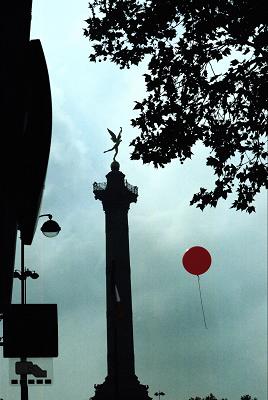
voyage-du-ballon-rougeA vivid example is Hou Hsiao-Hsien’s Flight of the Red Balloon which I reviewed in my last post.  Who would want to sit in a theatre to watch a balloon slowly drifting above the urbanscape, other than those who enjoy the grace of unhurried moments, those who consciously seek for poetics in the mundane, and those who take time to ponder the meaning conveyed by the filmmaker.

Slow blogging and the long take, two powerful ways to glean the indelible essence of life.

*****

Flight of the Red Balloon (2007, France, DVD)

flight-of-the-red-balloon

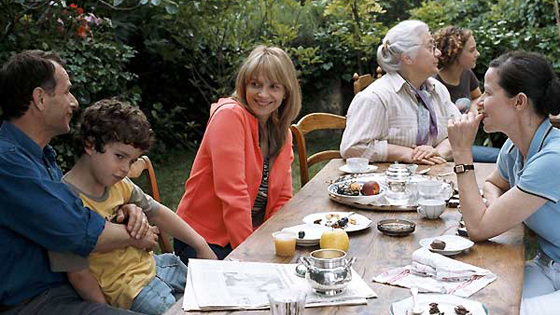
In celebration of its 20th anniversary, the Musée d’Orsay in Paris has commissioned four notable directors to create a series of commemorative films. One of them is Olivier Assayas with his Summer Hours (l’Heure d’été) which I have reviewed.  Another is the highly acclaimed Taiwanese auteur Hou Hsiao-hsien. Flight of the Red Balloon is a unique piece of film art gently crafted by Hou in homage to Albert Lamorisee’s Oscar winning short Le Ballon Rouge (1956). Hou has long been garnering awards in international film festivals throughout Europe and Asia since the 1980’s, albeit relatively unknown in North America. Flight of the Red Balloon is his first French language film.

The little boy in this 2007 rendition is Simon (Simon Iteanu), a child growing up in the hustle and bustle of Paris. With an absentee father somewhere in Montreal pursuing his writing, and a frantically busy mother Suzanne (Juliette Binoche), Simon is alone in an adult world. Overloaded with her work as a voice-over artist in a puppet production plus other personal matters, Suzanne hires Song (Fang Song), a film student from Beijing, to look after Simon for her.

Suzanne is the embodiment of urban frenzy. As a single mother, she has to shuttle between home and work, deal with the eviction of a bad tenant in her lower apartment, confront her non-committal husband on the phone to Montreal, and connect with her daughter in Brussel, all in a day’s work. Simon is most perplexed.  “Why are you so busy, Mama?”, he asks.

song-and-simon

Song, on the other hand, offers the tranquility that is needed to balance life in the midst of chaos. As a film student, she uses her hand-held camera to record Simon’s activities, and by her quiet demeanor and calm observing, she reflects pleasure in the mundane, everyday trivialities called life. This is reality show without sensationalism.  Hou has ingeniously conveyed his perspective of realism with artistic overtone. No doubt, there is a lack of plot, suspense, or climax, but there is character contrasts, cinematic offerings in sights and sounds, and realistic, natural performance. Juliette Binoche has once again assured me why she is one of my favorite actresses. And no, you are not watching paint dry, you are watching life unplugged.

The red balloon forms the focal point of Hou’s signature long take. The almost God-like omnipresence hovering over buildings in the Paris skyline is a joyful symbol of childhood. Its silent drifting is as elusive as the fleeting memories of happiness. Even little Simon achingly remembers the pleasant days he had shared with his much older sister, who is now living in Brussel. We are all trying to catch and hold on to fond memories and meaningful relationships. Yet as the busyness of urban living numb our senses, we ignore and shove away what we think is a hindrance to our time, just like the people rushing out of the subway station, shoving away the red balloon. Only a child would try to catch and befriend it.

Complementing the cinematic artistry is the equally mesmerizing piano music, meditative, serene and restoring, setting the mood and the preamble of the film.  Other musical numbers are equally soulful. Click here for the official IFC site where you can have a taste of the sights and sounds of the film.

felix-vallotton-le-ballon-1899I particularly enjoy the ending. As Simon goes on a school trip to the art gallery of the Musée d’Orsay, the children gather on the floor to talk about Félix Vallotton’s 1899 painting Le Ballon, he leans back, slightly removes himself from his school mates, and lays on his back. As he looks up to the glass canopy of the museum ceiling, he sees it again, the red balloon, watching over him, removed yet engaged, far away, yet ever so near.

~ ~ ~ Ripples


Fall on the B.C. Coast

Took a short trip out to the west coast last week. These pictures were all taken on October 30 in Victoria and Vancouver, still lush and colorful.

Fall’s foliage by the sea, composing nature’s own collage:

natures-collage-webpage

Or, was it Jackson Pollock leaving his mark?

jackson-pollack-on-the-coastal-shore-webpage

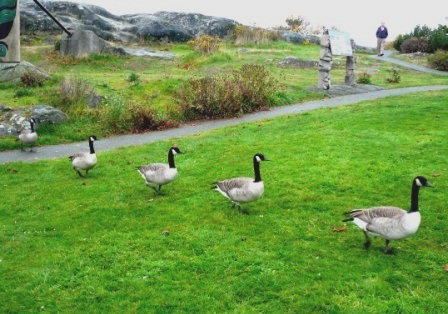
There must be some lessons for us to learn from theses Canadian geese, in organization and leadership… and integrity too: They walk as they fly.

walk-as-they-fly-webpage1

*****

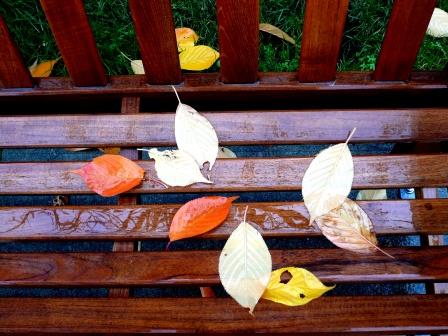
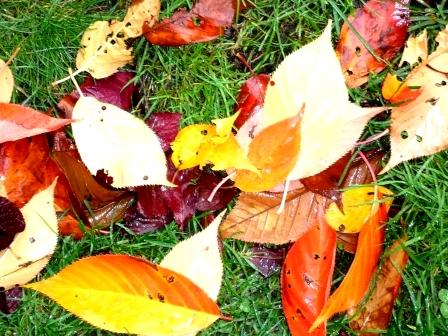
And in Vancouver, the beauty of fall’s foliage is best seen where they are, fallen, on the pavement, in the gutter, on the bench.

leaves-on-pavement-webpage1

fallen-leaves-on-bench-webpage

leaves-in-gutter-webpage

leaves-on-grass-webpage1

Came back home a few days ago, just in time to greet the first snow of the season. What a difference an hour’s plane ride can make!

All photos above taken by Arti of Ripple Effects https://rippleeffects.wordpress.com, October 2008. ALL RIGHTS RESERVED. DO NOT COPY.

Rewards and Awards of Blogging

Why do we blog? WordPress seems to have grasped the psyche of bloggers in five words: “Express yourself. Start a blog.” If being free to self-expression is the intrinsic reward of blogging, then being heard and read is the extrinsic reward. And, to top it all off, getting unexpected awards for what one already enjoyed doing is the icing on the cake.  A few months ago Arti had the first taste when she received the Excellent Blog Award.  This past week Arti has tasted more icing from fellow bloggers in the form of two awards.  In chronological order, they are:

The Premio Dardos from Ms. Place (Vic) of Jane Austen’s World. Thank you Vic for naming Arti as one of your 15 recipients of this award “that is given for recognition of cultural, ethical, literary, and personal values transmitted in the form of creative and original writing”. Thanks Vic for the honor and for the translation from Portuguese:“O conceito deste prémio passa por reconhecer valores culturais, éticos, literários e pessoais, transmitidos de forma criativa e original nos pedacinhos rabiscados por cada blogueiro que o receba.”

To meet the requirement, in turn, I am naming the following blogs to receive the same award.   To avoid duplication and to make it more meaningful, I have selected 10 instead of the 15 suggested.  Here are their excellent sites in alphabetical order:

  1. Austen Quotes is the blog of Lori Smith, writer of the book A Walk with Jane Austen, her personal experience of treading the paths of Jane’s in England.  She has inspired me with quotes from the works and letters of JA, some witty, some wise, some poignant, and all of them delightful.  Lori may have taken a hiatus due to physical ailment, but what she already has chronicled in her site is worth reading time and time again.
  2. Austenprose is a wealth of JA information and forum. Laurel Ann offers Janeites with a wealth of Regency knowledge, book discussion, interviews… a delight to visit every time.  This is one of the first blogs that got me hooked on JA…, no I wasn’t born a Janeite.  I only discovered this wonderful world a few years back.  And it’s blogs like this that feed me to my fill.
  3. Blogging for a Good Book is created by the staff of Williamsburg Regional Library.  In there you’ll find in-depth and insightful book reviews.  With several contributors, the blog offers a new post almost every day, keeping us up-to-date with newer titles. The quality writing and informative entries are enjoyable to read.
  4. Film Think is a site where films, theology, and criticism meet.  Writer M. Leary offers a wealth of resources and knowledgeable discussions and critique for those interested in the intellectual pursuit of the art of film, and its interaction with Christianity, criticism theory, other art forms, and their relevance in society today.
  5. Itinerant Idealist is Sarah’s journal  “in search of a soul awake”.  I’ve enjoyed her excellent writing.  In her casual way, Sarah embeds her prose and poems with style and spiritual insights.  Hers is one of the long time blogs I’ve been reading since the beginning of my own blog.  I’ve learned and gained much from reading her posts.
  6. Looking for Life’s Humor looks at life and brings out the joyous perspective.  As a mom with an autistic child, the writer of this blog depicts the humor and love that we often miss in many of life’s circumstances.  A heart-warming and delightful read in every post.  A truly enjoyable break in the midst of daily chores and chaos.
  7. Of Books and Bicycles As a book lover and an avid cyclist, Dorothy has successfully created a concoction of writings involving both…well maybe more about books.  Informative reviews and personal book experiences can be found here, while she has another site dedicated more to bikes and her training as a cyclist.
  8. So Many Books Stefanie chronicles “the agony and ecstasy of a reading life” with detailed research and insightful commentaries.  This is a literature lover’s blog.  Just the Blogroll is impressive enough, for there are probably hundreds of lit blogs on her list to provide almost unlimited avenues for blogging and reading pleasure.
  9. The Happy Wonderer It’s a joy every time I visit Ellen’s blog.  As a happy wonderer, Ellen wanders in the fields of photography, food, life, family, and the Bible, offering us musings, pictures, and inspiration, a celebration of life every day. This is one of the earliest blogs I found when I first started blogging, and I’ve been reading her since.  “To honor and encourage”, that is exactly so.
  10. The Task At Hand What Linda Leinen has created here in her relatively new blog is nothing short of a compilation of model writing.  Every single post is an example of style and inspiration.  At this point of her life she is a boat varnisher along the Texas Gulf Coast (how cool is that!), and she writes what she lives.  In her blog, she has woven artfully a tapestry of penetrative observations and skillful, affective writing.  I have gained and learned much from reading her every single post.

*****

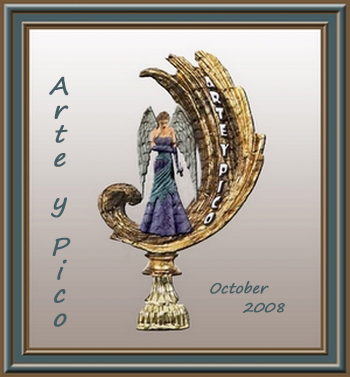
The other award I received just a couple of days ago is the Arte y Pico given by Linda of The Task at Hand. Directly translated from Spanish means “Art and Peak”, at the peak of its art. Linda has included Arti’s Ripple Effects for its “creativity, design, content and contribution to the blogging community, regardless of language”.  Thank you Linda, I’m greatly humbled by such an honor.

To fulfill the requirement of the Arte y Pico, I’m naming 5 other blogs to be recipients in turn.  Noting that it’s Spanish in origin, and the phrase “regardless of language”, I attempt to highlight some of the ones I visit that have a different geographical or cultural flavour, although I admit they are all in English.

  1. Blogging in Paris As a 64 years-old cancer survivor, Claude’s attempt at blogging is in itself inspiring.  She writes from Paris, and from her many travels in Europe, affecting us with her zest for life and eye for beauty.  It’s a mixed bag in her blog, some photography, some journal writing, some personal musings.  A delight to visit.
  2. Moderato brings a European perspective to the discussions of art, books, music, films, and literature.  The writer offers in-depth and well researched commentaries on the subjects.  A very fine and intellectual lit blog.  Some great You-tube clips to augment the enjoyment.
  3. The Errant AEsthete From New York, “Essentials for the Cocktail Swilling Savant”, ok, it may sound a bit exclusive, but the art, photography and visuals presented in the blog are stunning and often thought-provoking.  And since it’s located in the ever widening blogosphere, anyone can visit and better yet, no dress code.
  4. Hidden Art A blog for the arts and crafters among us. The name says it all… art can be found and creativity unleashed in almost every homely place.  I’ve enjoyed the casual atmosphere and the stimulating ideas for mixed media and paper arts that are achievable by those who, like myself, are not art school graduates.  Accessible art speaks a universal language.
  5. Edible Landscape This is a unique blog on food written by a young guy from Hong Kong, an interesting diversion from the blogs on food and cooking we see from North America.  Wilson concocts an international flavour with his fine, quality writing on food and restaurants.  What more, where do you ever read a 20-something young man writing about cooking and cuisine art with such expertise?

Wow, that’s a mouthful!  Why do we blog?  The above are some of the obvious answers.

Art Imitates Life, Life Imitates Art, or…

Neither. After reading Tomalin and Shields on the life of Jane Austen, I am inclined to draw that conclusion. The often sanguine outlook of Austen’s works is deceptive.  The seemingly jovial ending may lead some to assume they are reading the simplistic stories of a woman wrapped in romantic bliss all her life.

Reality is, that Austen could persevere, write and published is already an incredible achievement considering the confining social environment she was in. Instead of embracing the normative female role in comfort, she chose to trod the road less traveled to become a writer despite the gloomy prospect of poor spinsterhood,  enduring rejection even from her own mother. She wrote in secret and struggled in isolation. For a long period she battled depression. Upon her death, her beloved sister Cassandra could not attend her funeral because the presence of females at such events was not sanctioned, apparently for fear of any outbursts of emotion.

It is Austen’s imagination that empowers her to break free of her reality and to rise above her constraints. She has created her art from the palette of  the imaginary, as Tomalin has lucidly observed:

Hampshire is missing from the novels, and none of the Austens’ neighbours, exotic, wicked or merely amusing, makes recognizable appearance.  The world of her imagination was separate and distinct from the world she inhabited.

Austen’s contemporary, the renowned Gothic writer Ann Radcliffe, has attested that it is the imagination and not real-life experience which gives rise to story-telling. A scene in the movie Becoming Jane (2007) has vividly illustrated this point.

In the famous little book, The Educated Imagination, a must-read for any literature student, the late great Canadian literary critic Northrop Frye states that :

The world of literature is a world where there is no reality except that of the human imagination.

Austen has great proficiency in the language of imagination. In her novels, she has created a world that never was, but one that makes her readers yearn for. There is no Mr. Darcy in real life, or Elizabeth Bennet for that matter, but we could well use them as the ideal types to measure by, or, to strive for.

What about the satirist in Austen? How can the social critic be extracted from reality?  How can one write social commentaries devoid of real life input? Austen may have toiled in isolation for fear of social repercussion, she did not write in a vacuum.  While her art did not imitate her life, Austen had the chance to sharpen her observation from the very public sitting-room of her home and those of her relatives and friends, an opportunity that was conducive to her novel writing, as Virginia Woolf has pointed out.  Ever since her childhood, the Austen home was the hub of family readings and discussions.  Her brothers grew up to be men well versed in the fields of the military, clergy, and business.

In her ingenious way, by satirizing the things that ought not to be, Austen is bringing out the world that ought to be. In Frye’s words:

The fundamental job of the imagination in ordinary life, then, is to produce, out of the society we have to live in, a vision of the society we want to live in.

If art imitates life, it would be just a reproduction; if life imitates art, well… ours would be one very wacky world. But life could well be the reason for creating art, channeling our imagination to build a sublime vision of the ideal.

Visual: Starry Night by Vincent van Gogh

Update: This article has just been published in the Jane Austen Centre Online Magazine. Click here to go there for other interesting reads on Jane Austen and the Regency World.


*****


Summer Hours (l’Heure d’été, France 2008)

September is International Film Fest month in several Canadian cities.  Kicking off was the prominent TIFF (Toronto, world’s largest FF), now’s the CIFF (Calgary), and later on in the month, the VIFF (Vancouver).  Last year I was able to catch a glimpse from each one of these events.  But this year I’ll just stick with Calgary.

Went to see French director Olivier Assayas’ (Paris, je t’aime, 2006; Clean, 2004)  Summer Hours last night, the only screening in Calgary.  Writing the script himself, Assayas has created a film so realistic that it seems like a docudrama.  The story is about three adult siblings dealing with the estate of their mother (Edith Scob), a treasure house filled with objets d’arts, from furniture to vases, paintings to artist notebooks.  It’s a visual delight for the art lovers in the audience, albeit the camera doesn’t stay long enough for us to savor… I’d love to see more close-up lingering shots of the notebooks.

What’s realistic of course is, while the objects can easily be passed on from one generation to the next, the emotions and sentiments associated with them cannot.  The eldest son Frédéric (Charles Berling) wishes to leave the house as is so everyone in the family can still stop by and cherish the memories, but his other two siblings think otherwise.  Adrienne (Juliette Binoche) works as a designer in New York and is soon getting married.  Jérémie (Jérémie Renier) works with a sports manufacturing company in China and is settled there with his family.  Though all appreciate the memories of their childhood home in France and the artifacts within, they have their own life to live and family to raise elsewhere.  Their decision of how to deal with their mother’s estate is a practical one, sell it.

The Musée d’Orsay in Paris is the honorable recipient of these personal treasures.  Actually, Assayas was commissioned by the Museum to create the film in celebration of its 20th anniversary.  Here we see the pathos of turning family heirloom into museum pieces, albeit handled gently and meticulously by the staff.  Herein lies the crux of the film.  Assayas has depicted the human side of objets d’arts that we see in museums, how they could have been everyday household items, a table on which notes have been scribbled and letters written, a vase that has held many cut flowers from the garden.  These have been objects used and enjoyed privately by families, but are now desensitized, hung or displayed in a public arena.  The personal and subjective experiences could never be captured by the public eye.

The last scene is a closure for the pain of letting go.  The teenage grandchildren have one last chance to enjoy the house and its idyllic setting as they hold a large party for their friends.  The young immerse themselves in loud music, dancing, doping, and dipping in the pond, unaware of the passing of one era to the next.  A brief moment of sadness takes hold of the oldest granddaughter, as she savors a lingering memory in the garden.  She is joined by her boyfriend for a brief reminiscence and the next moment, they quickly dash back to the house to rejoin the party.  Assayas has painted the poignant in a most subtle manner.

~ ~ ~ Ripples

Glenn Gould: The Russian Journey (2002, TV)

 For two months, I had to stay away from home while my house underwent a major renovation.  After sequestered from TV watching for the whole summer, that was one of the first things I delved into as soon as I moved back last week.  A couple of days ago, in between re-runs of Olympics events, I was most gratified to watch this CBC/National Film Board documentary.  What a breath of fresh air and what an invigorating luxury I have been deprived of all summer!  Only on CBC.

The legendary Canadian pianist Glenn Gould (1932 – 1982) visited the Soviet Union in 1957, at the age of 24, the first concert pianist from North America to be extended and accepted an invitation to play behind the Iron Curtain.  Stalin died just four years ago.  The Cold War was at its climax.  Very few had heard of a Canadian pianist named Glenn Gould, what more, very few had heard Bach since the composer was banned by the totalitarian regime for the religiosity of his work. 

This 56 minutes documentary, which won the Grand Prize of the 2003 Montreal International Festival of Films on Art, is packed with valuable archival footage of the actual Gould concerts, meditative shots of the lone pianist against the grand Russian architectural backdrop, as well as some of Gould’s own reminiscence of the historic journey. Interspersed are interviews with significant personalities within the Soviet arts and music circles, sharing their life-changing Gould experiences.  Among them are prominent musicians such as the renowned pianist and conductor Vladimir Ashkenazy, and dissident cellist Mstislav Rostropovich, who sheltered the writer Solzhenitsyn and resulted in the Soviet government banning his performances.

Tatiana Selikman, a pianist and teacher at the Russian Academy of Music, recalls the day of Gould’s first concert in May, 1957.  She saw the poster and was curious about a pianist from Canada, playing The Art of the Fugue, which nobody ever played in Communist Soviet Union.  The Grand Hall of the Moscow Conservatory was sparsely seated.  Then the pale faced pianist came on stage, sat on a low chair, and unleashed a magical performance that mesmerized his small audience.  During the intermission, those in the concert hall dashed out to phone their friends, urging them to come right away.  As the concert resumed for the second half, the hall was packed to overflow.

And the rest is history…

What Gould brought to the Russian audience was not just Bach, or the intricacies of the Fugue, or the beguiling Goldberg Variations, but a new perspective.  Gould’s performance embodied the liberating effect of music, the freedom of artistic expression and the bold exhibition of individualism.  The audience was emancipated to a new found freedom that was not sanctioned under totalitarian rule.  Using the words of some of the musicians interviewed in the film, the Berlin Wall of music came down, warming the Cold War by a few degrees. For the first time, they were applauding something that was not Soviet.  And they were exhilarated.

The recent passing of the Russian dissident writer Alexander Solzhenitsyn, and the events taking place in Georgia, or even the Olympics, have whirled up sentiments in me that I thought was long gone… the pathos of hearing the muffled cries of the oppressed, be it political, social, or artistic. 

There are those who are indignant about the Canadian government subsidizing the Glenn Gould trip, arguing it was a waste of taxpayers’ money.  If a lone pianist can inspire the masses, and if music can soften the hearts of man, enhance international goodwill, and reiterate the ideals of humanity, I am all for it.  Would it not cost more to send hundreds of thousands of soldiers to the front line?

 ~ ~ ~ ½ Ripples

The documentary has been posted on YouTube in six parts.  Here is the beginning.  However, nothing compares to the big screen especially with Glenn Gould playing Bach:


                                                                              *****

Sketches of Frank Gehry (2005) DVD


“You can look anywhere and find inspiration.”

—- Frank Gehry

The past couple of months I’ve been tied down with previewing films for an upcoming International Film Festival that I haven’t time to watch films of my own choosing.  The past weekend I decided to cease the dry spell and watched the DVD I’ve purchased for a long while but haven’t the chance to view.  My only regret: Why did I wait so long?

This is a documentary about and made by two of my favorite artists:  Architect Frank Gehry and film director Sydney Pollack (Best Director 1985, Out of Africa), whom I sadly miss upon his untimely passing on May 26.  (To read my tribute to Sydney Pollack, click here.) Pollack worked on this film, his first documentary, over weekends
for about five years.  An official selection at the 2006 Cannes Film Festival, Sketches of Frank Gehry is his last directorial work.

Pollack has taken a simple and casual approach to present his long time friend Frank Gehry to the viewer, and that’s what impresses me.  The low-key yet artistic design of the film is a modest portrait of the architect whose body of work is often associated with rule-defying, bold and striking structures around the world.

Born 1929 in Toronto, Canada, Gehry moved to the United States with his family in 1947. His career spans four decades, establishing himself with renowned projects such as the Guggenheim Museum, Bilbao, Spain (1997), the Vitra Design Museum, Germany (1989), and more recently the Walt Disney Concert Hall, L.A. (2004). The personal and unpretentious portrayal of the architect brings out the mild and human side behind these massive physical structures.

Through informal dialogues, the filmmaker effectively captured the essence of artistic pursuit: the self-doubt during the creative process, the incubation and collaboration of ideas, the uncertainty of the soundness and appeal, and the ultimate exhilaration of the successful completion and reception of the work. Interestingly, the film works like a double-edged sword.  It explores the creative process of both the subject and the filmmaker.  And it is such revelation that makes the documentary so appealing.

In the beginning was the void:

Sydney:  Is starting hard?

Frank:  You know it is… I’m always scared that I’m not gonna know what to do.  It’s a terrifying moment.  And then when I start, I’m always amazed, “Oh, that wasn’t so bad.”

The veteran director had his uncertainties as well:

Sydney:  Several people approached him with the idea of making a documentary about him.  And when he asked me if I’d do it, I thought he was crazy.  Not just that I didn’t know anything about making documentaries, I don’t know anything about architecture.

“That’s why you’re perfect,” he said.

Maybe all our training and experience that we hang on to so dearly are impediments to a fresh, new perspective.

The film gives us the insider view of the Gehry creative process.  It is a collaborative effort involving inputs from design partners mulling over paper models and computer expertise transferring concepts to 3D digital mode. Despite the elaborate and sometimes long incubation period, every piece of work begins with the architect’s own signature squiggles on a blank piece of paper.

We see Pollack using a hand-held digital camera to capture more agile and personal shots. As the title suggests, the filmmaker interviewed and chatted with various artists, architects, critic, and even Gehry’s therapist to gain different perspectives into the heart and mind of the architect.  He was able to elicit some insightful comments.

Writer and curator Mildred Friedman has this to say about Gehry:

He’s an architect who’s also an artist.  He takes so many risks.  And that’s what artists do.  Artists take risks to do something new that no one has seen before.

Gehry’s therapist Milton Wexler:

A great many people come to me hoping they can change themselves, settle their anxieties, their problems, their marriage or whatever…  When an artist comes to me, he wants to know how to change the world.

And from Pollack, when talking about the epic and mythical Guggenheim Museum, Bilbao, Spain:

He sees that the whole reason for being an artist is that moment in somebody’s eyes when you reach him.

The nay-sayer is represented by Hal Foster, Professor of Art and Archaeology, Princeton University, who criticizes Gehry of making a spectacle of his work.  We also see montage of printed words from the media, such as “ugly”, and even “perverse”.

Responding to criticisms about Gehry’s galleries and museums competing with the very exhibits they showcase, Julian Schnabel, artist and filmmaker (The Diving Bell and the Butterfly, 2007), defends Gehry’s design with this audacious sum up:

I feel very comfortable in his spaces.  He understands scale.  And if it does compete with the art, maybe that art isn’t good enough.

Such thought-provoking comments are just some ideas one can mull over long after the film.

I must also mention the original score composed by Sorman and Nystrom.  Like a soothing balm, it is pure delight looking at Gehry’s fluid designs with the equally flowing and meditative musical rendering.

The special features on the DVD include a bonus 35 minutes interview and audience Q & A with Sydney Pollack at the L. A. Premiere of the film.  The icing on the cake, this feature offers Pollack’s reminiscence of the production and more thoughts on the creative process.  A valuable DVD to keep for anyone interested in the artistic expression of the human mind.

~ ~ ~ ½ Ripples

A note on the photos:  Arti has the pleasure of visiting two of Frank Gehry’s work.  The above photos are taken by Arti in October 2007 and February, 2008. The first two are the Walt Disney Concert Hall in L.A.  The last two are different views of The Peter B. Lewis Building at Case Western Reserve University in Cleveland, Ohio.  All Rights Reserved.

The source for the squiggles image:  Maclean’s Magazine.

My Blueberry Nights (2007)

Shown last year at the Cannes and several other Film Festivals before coming here for a general but limited release, My Blueberry Nights is director Wong Kar Wai’s first English language film. Since his legendary Chungking Express (1994), Wong’s films have attracted a cult following. I’ve thoroughly enjoyed his previous titles like In the Mood for Love (2000) and its sequel 2046 (2004). Let me just describe his style as “Film Noir in Postmodern Colors”. Wong’s films are atmospheric, flashy, up-close and penetrating. His characteristic use of mirrors and small, enclosed settings juxtaposes the reflective and the surreal. Many find him incomprehensible, frustrated at his sometimes self-absorbed artistry.

Wong’s signature directorial style found some new players here in My Blueberry Nights. In this debut film of popular jazz diva Norah Jones, Wong cast her against some very impressive acting talents including Jude Law, David Strathairn, Rachel Weisz, and Natalie Portman. Visually, MBN is a colorful cinematic kaleidoscope. Unfortunately, it remains merely so, for underneath the visual plane, there is not much substance in the script to gratify. It is almost painful to see acting talents uttering cliches and simplistic dialogues, and to even overact to compensate.

Jones is Elizabeth, newly dumped by her boyfriend and finding a confidant in cafe owner Jeremy, played by Jude Law. To escape from the pain of lost love, she leaves on a road trip on her own across America. Working as a waitress along the way, she meets characters who are in worse shape than she is: A police officer (David Strathairn) despair in love, his estranged wife (Rachel Weisz), and a weathered gambler who befriends her and teaches her a life lesson: never trust anyone. This role is played by Natalie Portman…ok, there might be a miscast here, but Portman has delivered some captivating performance. While this is Jones’ first time acting, her unseasoned and naive persona ironically is quite appropriate as the young and impressionable Elizabeth.

All the acting and singing talents however are not sufficient to rescue a deficient script. If you’re not a devoted fan of Wong Kar Wai, or any of the actors and singer here in this film, you might just like to manage your time better. I’ve admired some of Wong’s previous works, but am disappointed at this first piece in a new page of his career. Having said that, I look forward to his future endeavors.

~ ~ Ripples

                                          *****

CBC Disbands Radio Orchestra

Update April 1:  Reader Tom has alerted me to the site for online petition to save the CBC Radio Orchestra.  http://www.savecbcorchestra.com  Please sign the petition and spread the word. 

Another shocking news:  The CBC Radio executives have just decreed that The CBC Radio Orchestra is to be dismantled as of November, 2008, on the heels of Cutting Classical Music Programs on Radio 2. 

What a swift one-two punch!

Formed in 1938, mandated “to make engaging musical radio programs, commission and perform works by Canadian composers, showcase Canadian performers and conductors, and discover and expose Canadian excellence”, the orchestra has been a Canadian cultural and musical tradition for 70 years.

 Click here for the news coverage in the Globe and Mail of March 27, 2008.

Click here for the Vancouver Sun article on Canada.com: CBC Kills Radio Orchestra

Click here for the article:  The Day The Music Died in The McGill Daily.

Does the CBC management even have the right to do that?  I thought this is a publicly-owned national radio station.  A cultural and arts institution with 70 years of history can be chopped off the Canadian landscape by a few executives like a branch off an old tree in the backyard? 

With this executive order, the CBC has finished off a piece of North American history, disbanding the last radio orchestra in the continent.

Again, I was alerted to this piece of appalling news by my teenaged son…talking about axing classical music to attract younger audiences.  CBC has gravely miscalculated the musicality of our youth and done an utter disservice to them, depriving them of knowing and appreciating a heritage dating back to hundreds of years of human civilization.

To save Classical Music from being axed off the cultural tree, Click here for the Online Petition.

BTW, the Facebook Group ‘Save Classical Music on the CBC’ now has over 8,000 members…I’m not trying to stereotype, but would these not be some of the ‘younger audiences’ CBC is trying to woo?

                                                            ******

CBC Cutting Classical Music Programs

What a shock it is for me to learn that our national radio station CBC Radio 2, is choosing to axe more classical music programs to appeal to a ‘wider audience’.  Why, aren’t we who have been enjoying the arts and music, who have cherished the long tradition of these CBC productions, who have raised our children on them, teaching and nurturing them to appreciate their content, not a part of the general public? 

Click here for Russell Smith’s article in The Globe and Mail on March 13, 2008, “No classical?  Then kill Radio 2 and get it over with.”  Just let me try to fathom the motives behind these further cuts:

1.  Diversity.  If it’s diversity they are aiming at,  they should all the more leave the classical edge in because CBC Radio 2 is the only nation-wide English radio station in Canada that offers classical music.  Which station can I tune in for such extensive and in-depth coverage of the arts and artists, classical music and musicians, live concerts, commentaries, CD reviews and even an audience requests program? What alternative do I have when the only classical music station in Canada decides to go with the flow and become just another dial for easy listening or contemporary pop?  I feel like I’m a CBC copywriter doing a promo for the station…but why would they need me to tell them this?   To CBC Radio: Respect your role in the Canadian cultural landscape.  What ‘diversity’ are you offering if there are no choices in genre? If ‘diversity’, and ‘choice’ are such powerful words nowadays, honor the real meaning of these terms and not just utter them for political correctness. 

2.  Multicultural. The term “Classical Music” has often been misconstrued as being monocultural.  Are CBC program researchers and management not aware that many so called “classical” composers, especially the more contemporary ones, are from a diverse cultural background including not only Western European, but Central and southern European, Scandinavian, Russian, North American, South American, and Asian?  And do they not know that for this last group here, Asian-Canadians, especially appreciate classical music and particularly in the teaching of their young, the next generation of music lovers?  I for one can speak out on this issue where I personally and know and have come into contact with countless parents of Asian descent who have involved their children in the learning of classical music, and have nurtured numerous talented young classical musicians here in Canada.  Jan Wong in her recent book Beijing Confidential notes that there are 30 million piano students and 10 million violin students in China today.  Two of the most popular music icons among the young are Lang Lang and Yundi Li, both world renowned classical pianists in their 20’s. Wouldn’t it be odd that one can enjoy classical music on radio in China but not be able to in Canada?

3.  Education. If it’s just for the sake of our young, we owe them a great heritage if we do not nurture them to appreciate the roots of modern music. Without going deep into music theory, isn’t it true that our contemporary music evolves from classical foundations?  Calling it ‘classical’ sounds so politically incorrect, as it wrongly conveys ‘elitism’ or simply connotations of being passé. But, would you avoid teaching our next generation Canadian history just because history is passé? 

4.  Business. If it’s for marketing reasons, why add one more ‘easy listening’, ‘pop’, ‘jazz’ or ‘contemporary’ station to the already competitive business, why fight for market share while you can distinctly offer something very different and unique, a real alternative to the radio audience in Canada.  If you wish to morph into a more hip mode to appeal to the young, look for younger DJ’s for your classical music programs. If George Stroumboulopoulos (previously of MuchMusic) can become a Canadian news icon on CBC Television, I’m sure you can find young blood equally well versed in the classical music sector.  

5.  Identity. And if it’s Canadian identity they are seeking, trying to appease the ‘general public’ (as if we are not), then CBC Radio 2 should all the more realize, as a publicly owned radio station and a national institution, the classical music they are eliminating is not just a part of Canadian identity, but human civilization…and I suppose western or eastern, old or young, we are a part of that.

Enough said here.  My teenaged son who alerted me to this piece of incredulous news has sent me a link to the on-line petition.  Click here to sign.

Other reactions to this announcement:

 http://www.cbc.ca/arts/media/story/2008/03/04/radio-two.html

http://www.friends.ca/News/Friends_News/archives/articles03200802.asp

A Facebook group has already been formed:  “Save Classical Music on the CBC”, has gathered more than 8,000 members and counting.

The Easter Message


dominus-flevit-mt-of-olives.jpg 


When I Survey the Wondrous Cross

When I survey the wondrous cross
On which the Prince of Glory died,
My richest gain I count but loss,
And pour contempt on all my pride.

Forbid it, Lord, that I should boast,
Save in the death of Christ my God,
All the vain things that charm me most,
I sacrifice them to His blood.

See from His head, His hands, His feet,
Sorrow and love flow mingled down,
Did e’er such love and sorrow meet,
Or thorns compose so rich a crown?

His dying crimson, like a robe,
Spreads o’er His body on the tree;
Then I am dead to all the globe,
And all the globe is dead to me.

Were the whole realm of nature mine,
That were a present far too small;
Love so amazing, so divine,
Demands my soul, my life, my all.

—– Isaac Watts, 1707


   ***

Photo: Dominus Flevit Church, Mount of Olives, Jerusalem.  Taken by Arti of Ripple Effects, www.rippleeffects.wordpress.com, November 2007.  All Rights Reserved.