‘Faces Places’ with Agnès Varda and JR

From high art in the gallery (my last post) to street art, here catching the last chance for a Paris in July entry, I’m presenting the fascinating documentary, a road movie of making art in the open milieu of villages and among the working populace. Faces Places (2017) is an account of the venerable auteur of the Nouvelle Vague (The French New Wave: Goddard, Truffaut…) Agnès Varda (1928-2019), then at 89, going on a road trip with photographer and artist JR to scout for ordinary people to photograph in various obscure locales in France.

the world's longest baguette .jpg

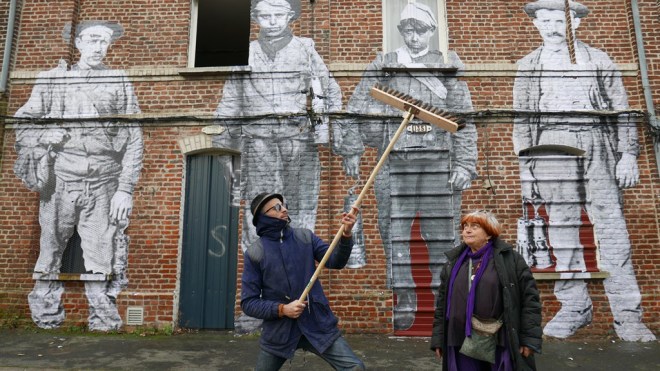
Their larger than life photo prints are then pasted onto buildings or open places for everyone to view, evoking the shared joy of living, working, and the collective memory of a meaningful past. Like this one with photos of pioneer miners pasted on a row of dilapidated homes slated for demolition in a miners’ community. The one remaining homeowner who refused to vacate her house was moved to tears upon seeing the completion of the project.

Miners from days past.jpg

Art undefined and unconfined, once pasted onto these surfaces, JR’s black-and-white photographic images convert the whole building or structure into an art form. The world is his canvas. Unlike Banksy, JR is transparent with his creative process, and lets the public view his work in progress. A TED Prize winner (2011), his large-scale, participatory art projects are installed all over the world, albeit sometimes illegally according to local laws, but the people welcomed him.

At age 89, Agnès Varda became the oldest nominee in Oscar history when Faces Places was nominated for Best Documentary for the 2018 Academy Awards. It’s now on DVD and Blu-ray. Her numerous older works may not be accessible for us so readily. Check your streaming or on demand services. I was able to watch two of her excellent films Vagabond (1985) and Cleo from 5 to 7 (1962, click on link to my review). Don’t miss this short clip on IMDb “Agnès Varda in Memoriam”.

The soul-stirring original music by Matthieu Chedid complement the meaningful duo collaboration. At the beginning, JR talks with Varda to organize the making of their joint project. We see them exchange the following dialogues:

AV:  What I like was meeting amazing people by chance.

JR:  So you want to carry on that way, with no plan or itinerary?

AV:  Yes. Chance has always been my best assistant.

JR:  Do you think chance will work for both of us?

AV:  Maybe.

From the film, we can see chance had worked for both of them marvellously.


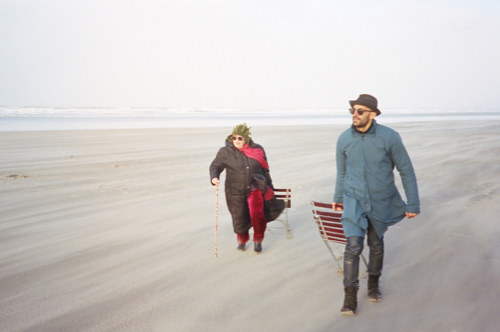
AVJR-Chairs-on-the-beach-Normandy (2).jpg


~ ~ ~ ~ Ripples


***


Paris in July is hosted by Tamara at Thyme for Tea

PIJ2019 Tamara

Other Paris in July 2019 Posts on Ripples:

Pictures at an Exhibition 

‘Coco Before Chanel’ directed by Anne Fontaine

‘Gemma Bovery’ to cool your summer day

‘A Sunday in the Country’ is an Impressionist Cinematic Painting

Pictures at an Exhibition

I didn’t go to Paris for these, but Vancouver, B.C.   I visited the Vancouver Art Gallery for their exhibition “French Moderns: Monet to Matisse, 1850-1950” in March this year. Here’s a description from their poster:

The works in French Moderns exemplify the avant-garde movements that defined Modern art from the late-nineteenth to early-twentieth centuries, tracing a formal and conceptual shift from depicting the pictorial to evoking the idea, from a focus on naturalism to the ascendance of abstraction.


VAG.jpg

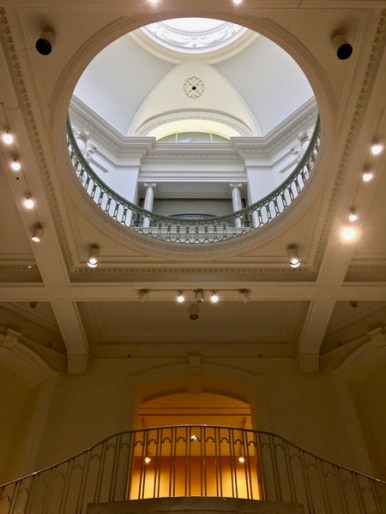
Before the art, there’s the architecture and interior, an art piece in itself:

Interior VAG.jpg

Interior.jpg


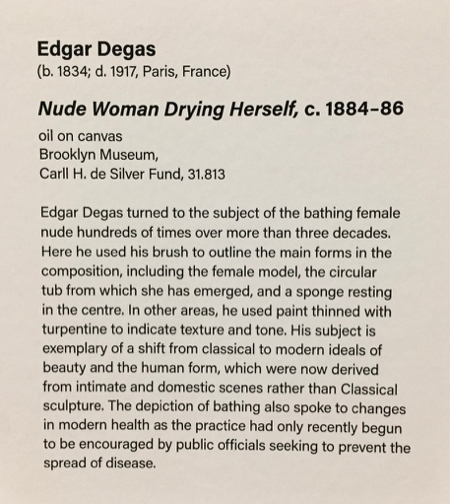
Some of the works with their description:

Degas.jpg

Edgar Degas.jpg


IMG_7502.jpg

Claude Monet, Rising Tide at Pourville, 1882. Along the Normandy coast.


IMG_7504.jpg

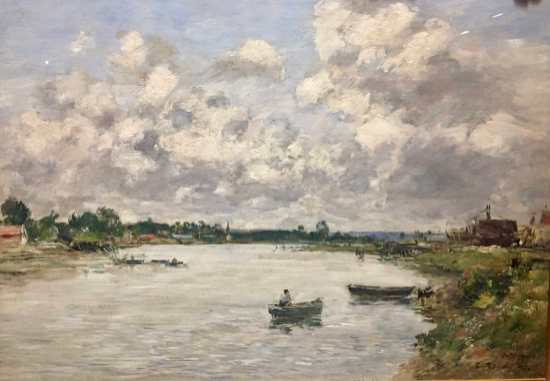
Eugène Louis Boudin, mentor of Monet. Sur les bords de la Touques, 1895.

IMG_7506 (1).jpg

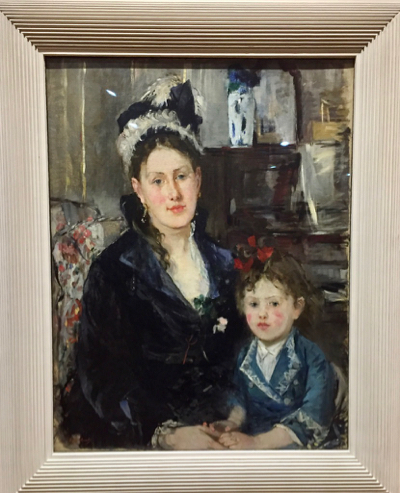
Berthe Morisot, Madame Boursier and Her Daughter, c. 1873.

IMG_7509


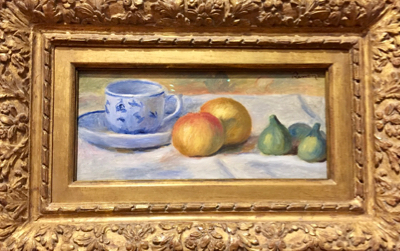
Pierre-Auguste Renoir, Still Life with Blue Cup, c. 1900


IMG_7511

Camille Jacob Pissarro, The Climb, Rue de la Côte-du-Jalet, 1875.

IMG_7513

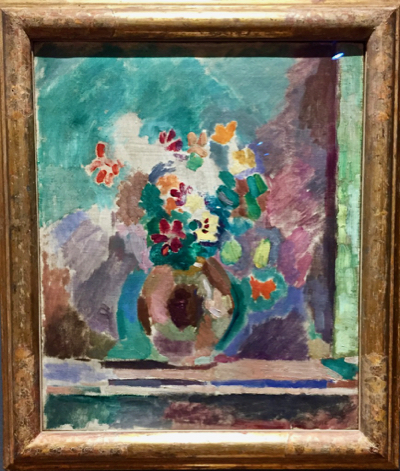
Henri Matisse, Flowers, 1906

IMG_7515


Gabriele Münter, Nightfall in Saint-Cloud, 1906. (Don’t you wish nightfall is like this?)

IMG_7518.jpg

Paul Cézanne, The Village of Gardanne, 1885-86.

I like this one the most:

IMG_7521 (1)

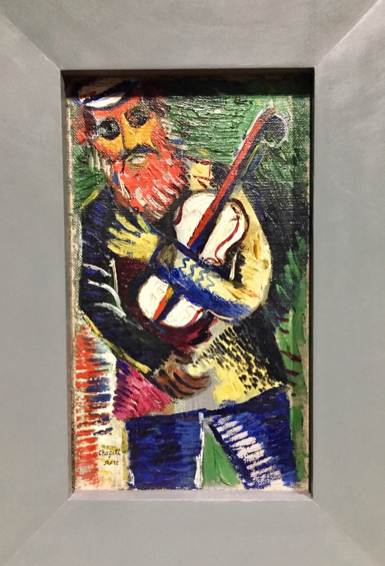
Marc Chagall, The Musician, c. 1912-14


***

This is my last post for Paris in July, 2019, hosted by Tamara at Thyme for Tea.

PIJ2019 Tamara

Other Paris in July 2019 posts on Ripple:

‘Coco Before Chanel’ directed by Anne Fontaine

‘Gemma Bovery’ to cool your summer day

‘A Sunday in the Country’ is an Impressionist Cinematic Painting

***


Related Posts on Ripple:

Art Gallery of Ontario

Tate Modern: Georgia O’Keeffe Exhibition

Alex Colville and the Movies

‘Coco Before Chanel’ directed by Anne Fontaine

According to the French Ministry of Culture department that produces and promotes French cinema, 27 percent of French movies were directed or co-directed by women in 2017 compared to 20.8 percent in 2008. (source article here) An improvement, but they are still not pleased with the disparity and working towards a more equal representation.

For comparison, in Hollywood, according to the annual USC Annenberg Inclusion Initiative study (Jan. 2018), the figure is 4%, after examining 1,100 popular films. Now this result is found in the midst of the #MeToo and #TimesUp movements. For those interested to find out more, here’s a comprehensive report from Annenberg (July, 2018) comparing many more aspects of the film industry.

I just find these stats alarming. This is not a post to present an analysis of the issue, that warrants a thesis, but these figures just need to be shared. For Paris in July this week, I’ve chosen a film that showcases a woman succeeding in a man’s world, overcoming what looked to be insurmountable odds. Among its many accolades, I find this one notable: Best Movie About Women, given by the Women Film Critics Circle Awards (2009).

Another film from French director Anne Fontaine. Unlike Gemma Bovery in last week’s movie, this is a real-life heroine.

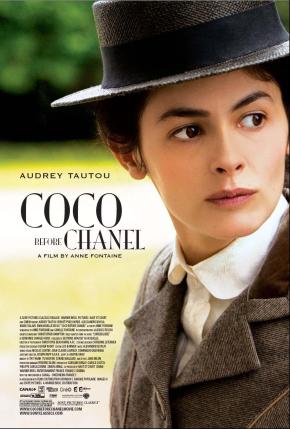
Coco Before Chanel (2009)

I’ve appreciated filmmaker Fontaine not doing a whole life biopic on the fashion icon, but focuses on her early years. What was her background? How did she overcome life’s obstacles to create a path for herself?  The intermingling of fate and choice is one important theme Fontaine had touched on in this cinematic account.


Coco Before Chanel


Gabrielle Chanel’s life is an extraordinary story, and Fontaine respects that. Before she became the world famous icon Coco Chanel, she was Gabrielle Chanel born on August 19, 1883, in Saumur, France.

The film opens with the camera following two young girls being driven to an orphanage. We soon find out they are sisters Gabrielle and Adrienne. What makes the scene sadder is that the driver of the horse-drawn cart in which the sisters are transported is their father. We never see his face. He doesn’t turn to say goodbye. He never visits.

That’s a short beginning. The next scene Fontaine shows us is fifteen years later in a cabaret where the sisters sing and dance. In there, Gabrielle (Audrey Tautou) meets Étienne Balsan (Benoît Poelvoorde), an older military man, paying passing interest in Coco, a name he’s created for her. Fontaine is effective to show us what Coco is like within just a few minutes of the cabaret scene. She’s a calm, self-assured woman, won’t sell herself to appease the guests; as a consequence, she and her sisters are fired. Looks like they’re happy to leave the place too.

They keep their day job as seamstresses but soon part as Adrienne is leaving with a man to live in Paris. Coco decides to go to Compiègne to look for Balsan. Balsan agrees to let her stay there in his country mansion temporarily but Coco has her resourcefulness to change Balsan’s mind. She learns to ride a horse on her own in a day, and soon breaks into the social circle of Balsan’s by distinguishing herself as a woman with style, talent and skills.

A raiser of race horses, Balsan’s social milieu and the horse races where members of the fashionable class exhibit their haute attires inspire the ingenuity of Coco. She begins to design hats for the ladies, and establishes herself as a unique contrarian. She wears a simple straw hat, alters a vest, a white shirt and a tie from Balsan’s closet to suit herself. Her style is “dresses without corsets, shoes with no heels, and hats with no feathers.”

Among Balsan’s business acquaintances is Boy Capel (Alessandro Nivola), a young Englishman. Coco’s short, intimate relationship with him soon changes her outlook in love and life. After a sad incidence, Coco becomes more independent, confident with herself and her skills, and determined to move to Paris to open a hat boutique. With the financial help from Balsan, she begins that first step, and the rest is history.

Tautou has come a long way from her role as Amelie. She is suitably cast as Coco, reflecting the character of the self-made persona. The signature suits she tailors for herself exude elegance devoid of adornments; the simple hats she designs for herself well-match her cool subtlety. Fontaine captures Coco with meticulous care, from nuanced expressions to her confident posture. Of course, kudos goes to costume designer Catherine Leterrier who won, deservedly, a César Award for Best Costume Design and garnered an Oscar nom.

Composer Alexandre Desplat’s score adds to the enjoyment. Not an epic of extraordinary stature, but like the hat Coco wears, the film is stylish without overstating, composed and effective.

~ ~ ~ Ripples 

Coco Before Chanel is on Netflix.

***

This is a review for Paris In July hosted by Tamara at Thyme for Tea.

PIJ2019 Tamara

Some Other Related Ripple Reviews of French Films:

Cleo from 5 to 7

Things to Come

I’ve Loved You So Long


‘Gemma Bovery’ to cool your summer day

This film by the French director Anne Fontaine could offer you a couple hours of  cool entertainment in a lazy, hazy summer afternoon.

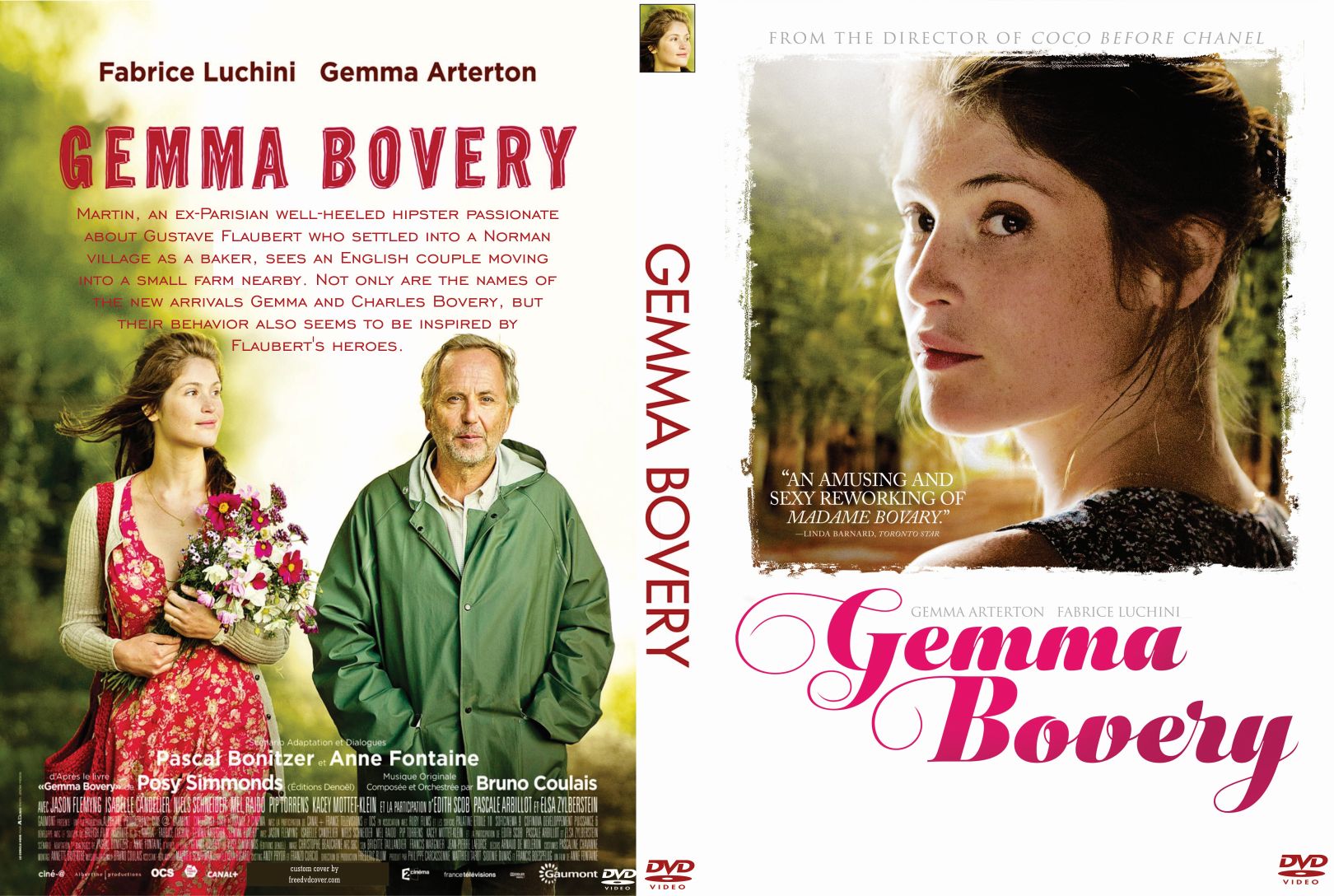
Gemma Bovery (2014)

Related image

Madame Bovary by Gustave Flaubert was published in 1856. There have been no less than half a dozen movie adaptations of this famous piece of literature, dating back as early as 1934 (dir. Jean Renoir). Only in 2014 did a female rendition emerge with Sophie Barthes in the helm and featured Mia Wasikowska as Emma Bovary. It’s a relatively conventional take on Flaubert’s literary classic.

Interestingly, in that same year, another movie version of Madame Bovary also came out. This one is by French director Anne Fontaine (born 1959). Under the helm of the versatile Fontaine, and in the spirit of Emma Bovary, this one looks like it’s a vignette from a parallel universe, defying traditional norms, laced with a deadpan, comical streak, and transported to modern day France.

Martin Joubert (Fabrice Luchini), a long-time academic publisher in Paris, moves back to Normandy to take over his father’s bakery, seeking for a peaceful and balanced life in the quiet region. A literature enthusiast, Martin’s antenna for the literary is sharp and sensitive. When a couple with the names of Charles and Gemma Bovery move into his adjacent house in the country, he quickly stands guard on the affairs of the young woman, as he knows the ending of the novel Madame Bovary by Flaubert. He uses all his male sense and sensibility to avoid a tragedy that could befall his new neighbours.

Director Fontaine’s title gives it away as a parody not to be taken too seriously. Gemma Arterton is a good choice as she appears to be a more convincing Gemma Bovery than Mia Wasikowska’s Emma Bovary. For those watchful for literary adaptations, Arterton was Tess of the D’Urbervilles (2008, TV miniseries) playing alongside Eddie Redmayne as Angel Claire. In a more recent year, Their Finest (2016) also saw her mastering her role poignantly.

Gemma is an interior decorator and Charles a furniture refurbisher. Parallel characters as in Flaubert’s novel appear in Gemma’s life after she moves into the Norman countryside, tempting her to fall into a similar track as Madame B.  Except, we don’t see her buying luxurious goods and remodelling her humble abode. Fontaine is bold to let her viewers see what Flaubert was describing with his words, albeit these scenes are short.

So, is Martin successful in avoiding a tragic end to his imagined literary heroine? No spoilers here. In a lazy, hazy summer afternoon, an ending short of crazy would not be worthwhile for a parody.


~ ~ 1/2 Ripples

**

Do you have a favourite French literature to movie adaptation?


Thanks to Tamara for hosting a 6th annual Paris in July event at Thyme for Tea.

PIJ2019 Tamara

‘A Sunday in the Country’ is an Impressionist Cinematic Painting

If the Impressionist painters were to make a movie, what would it be like? A Sunday in the Country (1984) could very well be an exemplar. French director Bertrand Tavernier used the camera as a paintbrush to tell his story, while the cast bring to life the human pathos that are deeper than a painting on the wall could convey. 

A Sunday in the Country - Un Dimanche à la Campagne (1984)

Monsieur Ladmiral is an elderly artist living in an idyllic country house on the outskirt of Paris. The setting is pre-WWI. M. Ladmiral is a widower, his daily routines assisted by a lived-in, indispensable housekeeper called Mercédès (Monique Chaumette). His home is cozy with classic charm, the adjacent studio, inspiring. The camera leads us to see every details of M. Ladmiral’s house and moves fluidly from far to close-in on the artist’s workplace, a quiet haven and a treasure trove of memories and life works. With his colours, Ladmiral attempts to capture traces of youth and life.

M. Ladmiral’s son Gonzague (Michel Aumont) and his wife Marie-Thérèse (Genevieve Mnich), together with their three children, come visit him from Paris every Sunday, but not frequent enough still. His two grandsons, Emile (Thomas Duvall) and Lucien (Quentin Ogler), add lively sparks to his serene environs, while little Mereille (Katia Wostrikoff) is simply adorable.

No matter how much Gonzague tries to give him, grandchildren and his family’s frequent visits, the son knows he’s a disappointment to his father. Deep in M. Ladmiral’s heart, he longs to see his daughter Irène (Sabine Azéma), who seldom visits. Irène is single, exuberant, fearlessly independent and cheerful, or at least, on the surface. She drives an automobile, a new invention. “Look at your sister Irene,” Ladmiral tells Gonzague. “She forges ahead.” Then after a beat, “you don’t.” Nice going, Dad.

The pace of the film is leisurely, taking its time for viewers to hear (or read the subtitle of) every single dialogue, capture every nuance, and observe every item in the mise en scène. Life is too precious to hurry by. As well, we get to appreciate the humour, but often as guise to underlying relational tensions.

Tavernier won Best Director at Cannes Film Festival in 1985 with A Sunday in the Country, as well as the César Award for his adapted screenplay. The film also saw Azéma who plays daughter Irene won the Best Actress César Award and Bruno de Keyzer for Best Cinematography.

The film is an adaptation from the French novel by Pierre Bost entitled “Monsieur Ladmiral va bientôt mourir”, translated in English: “Mr. Ladmiral will die soon”. Have to say, the movie title is much more appealing. One note though, be patient with the 1:40 min. of credits rolling at the beginning with just white words on black background without image. You’re looking into the mind of an old man. While the overall mood is warm and amusing, the undercurrents of  disappointment, mortality, and separation gently flow throughout the film.

On that Sunday as Gonzague and his family are visiting, Irene drops in unannounced in her automobile. Free-spirited Irene is a fresh breeze to the hot countryside, her automobile a progressive symbol for everyone to admire. She charms with her energetic presence and spontaneous delights. But as viewers, we are privy to her psyche and anxiety when she’s alone. Tavernier deals with the past and the present seamlessly, melding them as if showing us memories are natural extension of our present self, so’s our imagination. As she stands by the window looking out to the lawn, we see Irene’s flashback of her mother saying, “When will you stop asking so much of life, Irene?” 

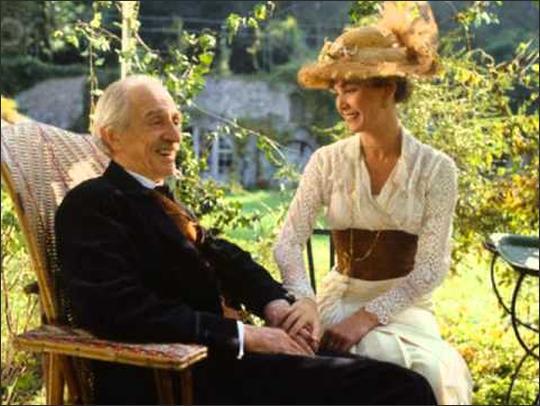
Irene’s visit is short, albeit one that leaves a significant impact on her father. She takes him on a ride in her automobile to a guinguette for a drink and a dance, an episode that’s bound to be indelible in M. Ladmiral’s last memories. Guinguettes were open-air taverns in the outskirts of Paris where people would come on Sundays to have drinks and casual meals, listen to music, and dance. In the style of Renoir’s Bal du moulin de la GaletteTavernier paints a beautiful Impressionist movie moment in this scene:

hero_EB20030511REVIEWS08305110301AR

During the memorable father-daughter chat at the guinguette, M. Ladmiral talks about his own style, and admits that he’s a traditionalist unable to catch up with the changes other painters have brought about. Unable or unwilling, no matter, he’s at least honest to himself in painting the way he does, he tells Irene. In tearing eyes, daughter looks fondly at her father and asks him to dance with her.

Irene has to leave right after she drives her father home from the guinguette, upon receiving an upsetting telephone call. Later that evening, Gonzague and his family have to catch the late train back to Paris as well. After seeing them off, M. Ladmiral walks back home from the train station alone. For an old man, every goodbye could be the last.

But the final scene appears to turn the tide. M. Ladmiral goes into his studio, takes down the painting he’s been working on, a still-life subject he’s painted numerous times before and in a style he’s been following all his life. He replaces it with a blank canvas on the easel, sits down, and looks at it ponderously. Like his son’s, his life, too, has been a disappointment to himself. What M. Ladmiral is thinking staring into a blank canvas at that moment is up to anyone’s interpretation. What I see is a slight, nuanced smile on his face. Every blank canvas is a fresh start no matter how old you are.


~ ~ ~ ~ Ripples


***


This film review is a participation of the 6th Paris in July event at
Tamara’s Thyme for Tea. 

PIJ2019 Tamara

Related Posts on Ripple Effects:

Arles: In Search of Van Gogh

Séraphine and the wrought-iron chair

Inspired by Vermeer


We all need intermissions

… in between movies. Get out of the dark chamber. Off the snack-littered couch. Watch the large screen Nature has to offer.

480 Bike.jpg

Nothing is ‘just a sparrow’. Or, just some rocks. Here’s the true colour of the water in Lake Louise, Alberta. The famous, majestic lake you’ve probably seen on postcards or travel websites, but here you get to see the tiny sparrow by the Lake:

Sparrow.jpg

Blurry? Yes, so’s Monet’s paintings.

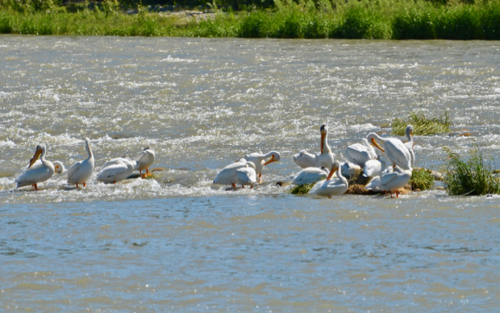
After a few days of rain, yesterday’s sunlight brought me out to the river. My heart leapt up when I saw these Pelicans preening in the morning sun:

500

500 Pelicans

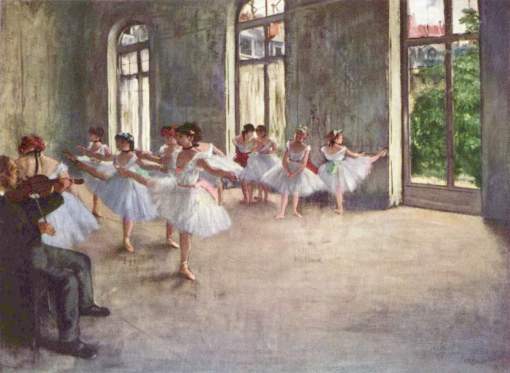
Makes me think of Degas’ ballerinas:

degas

Blurry? You wouldn’t mind a bit, I bet.

***


‘An Elephant Sitting Still’ is a last outcry of a young talent

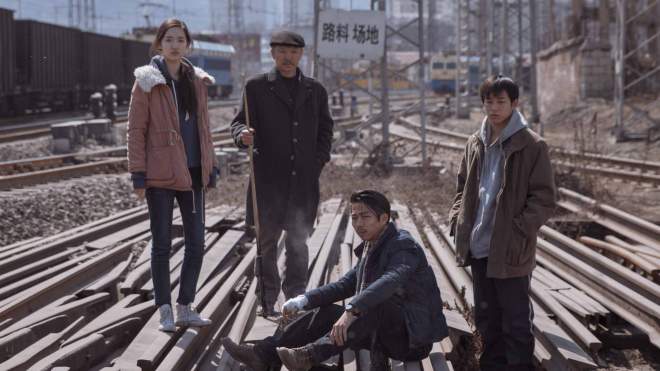
ElephantSittingStill

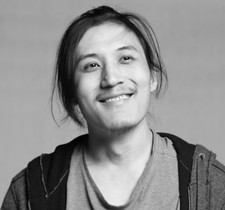
I watched An Elephant Sitting Still while covering the Minneapolis St. Paul International Film Festival in April. It remains one of the most unforgettable films in my recent memory, the directorial debut of Hu Bo, a Chinese writer-turned-filmmaker. Hu’s incisive narratives of the human condition won Best First Feature and the FIPRESCI Prize at Berlin International Film Festival in 2018. Sadly, this is the young director’s first and last film, for his career trajectory ended abruptly in October, 2017. Hu took his own life during post-production. He was 29. The feature has since played in numerous international film festivals garnering accolades which Hu himself would never have known.

Hu Bo graduated from Beijing Film Academy majoring in directing. Later went to Taiwan to further his training and came under the mentorship of the venerable auteur Hou Hsiao-hsien (The Assassin, 2015) and subsequently the Hungarian art film director Béla Tarr (The Turin Horse, 2011). Other than making short films and writing screenplays, Hu had authored short stories and an award-winning novella. His debut feature An Elephant Sitting Still was adapted from his short story of the same name.

Hu BoAt the 55th Golden Horse Awards in Taiwan last November, An Elephant Sitting Still won Best Feature Film, Best Adapted Screenplay, and Audience Choice Award. The Best Film prize was presented to Hu’s mother by the Taiwanese American director Ang Lee (Life of Pi, 2012; Crouching Tiger, Hidden Dragon, 2000) who reached out to her with a poignant embrace.


An Elephant Sitting Still is a 230-minute cinematic allegory wrapped in haunting realism. In an unnamed town in Northern China, four characters struggle with their own personal predicament too messy to untangle, all in a day’s time. The four narratives intersect in Hu’s incisive screenplay.

A high school student, Wei Bu (Peng Yuchang), while defending a friend, accidentally pushes a school bully down the stairs leading to his death. Even more tragic, Wei later finds out he has been deceived by the very friend he tries to protect. Wei has to run away as the bully’s older brother Yu Cheng (Yu Zhang), a local gangster, is out looking for him. Yu himself is a man riddled with guilt as he has just witnessed his best friend dash out of the window to his death upon finding out Yu has been sleeping with his wife.

Meanwhile, Wei tries to persuade his unrequited crush, schoolmate Huang Ling (Wang Yuwen) to leave with him. Huang herself has to deal with her alcoholic single mother and is further troubled by the reverberation of her scandalous relationship with her school’s vice dean. The fourth character is a grandfather, Wang Jin (Li Congxi), who is pushed out of his son’s home as the young family needs to move to a smaller apartment in another place so to register their daughter for a better school. A dismal future awaits him away from his granddaughter.

Hu parallels the dilapidated urban environs with the inner world of his characters. Long takes and tracking shots place viewers right in the midst of relational conflicts. A Steadicam follows their uncertain footsteps; blueish-grey overtone transmits the bleakness of their situation. Hu takes time to let the camera linger on his characters’ faces, capturing their troubled psyche. Their seemingly emotionless appearance is reminiscence of Bresson’s ‘non-actors’. Often, their reticence conveys depths that words deem unnecessary.

There’s still another character which is mentioned but remains invisible, and that’s the Elephant. We’re told at the start of the film that it sits very still in a circus in the city of Manzhouli, a distance away. It’s indifferent to people’s taunting and objects thrown at it. The Elephant’s quiet composure exudes a mythical element these characters seem to yearn for. Here, realism is mixed with a touch of magic. As the four-hour film draws to an end, the sequence transcends rationale. Two young people, Wei and Ling, together with the grandfather Wang and his granddaughter depart on a journey to Manzhouli in search for the Elephant.

The ending shot is mesmerizing as the bus to Manzhouli stops temporarily in the night, the passengers get down for a stretch. From a distance, we see our protagonists stand in front of the beam from the bus and start playing hacky sack. The long stay of the camera on them is surreal but needed. The quest for the mythical being is motivational zeal for life, even just for a momentary pleasure. Then we hear off screen the sound of an elephant braying.

The Book Big Crack

Big Crack.jpgIn April I took a trip to Hong Kong and there in a bookstore I found the source material for the film, Big Crack*, written by Hu under his pen name Hu Qian. The book is a compilation of short stories, one of them being ‘An Elephant Sitting Still’, as well as Hu’s award-winning novella Big Crack’. I was eager to explore Hu’s worldview and compare his writing with his cinematic work.

‘An Elephant Sitting Still’ is a 15-page short story. Its protagonist is Yu in the movie, having slept with his best friend’s wife and struggling with guilt as he’s the reason for his friend’s suicide. Yu is drawn to search for the Elephant in Manzhouli, maybe for a redemptive reason. Towards the end, he finds the mythical beast, jumps into its cage and submits himself to let it deal a deadly blow to him, a fate he’s all too willing to accept, a soul that has been hinged on a meaningless existence. The other film materials are mostly philosophical concepts from the novella ‘Big Crack’

Hu’s writing is more direct and visceral than his cinematic creation. In the novella ‘Big Crack’, his characters are students in a bottom-tiered art college somewhere near a remote northern town. The term ‘waste land’ is used to refer to the campus and its adjacent town. The term is also used in the movie. In the book, the words ‘waste land’ are ubiquitous, together with Existential, nihilistic concepts like having no exit and nauseating stenches – as in the beginning of the film with Wei’s father’s furious complaint. In the novella, rampant violence is frequent among different dormitories of the school, often exploding in bloodshed. Violence is more restrained in the film, but often leading to tragic end.

I presume Hu’s use of the phrase ‘waste land’ is an allusion to T. S. Eliot’s epic poem. Eliot wrote ‘The Waste Land’ after WWI as the poet lamented the cultural and spiritual breakdown of Europe. Physical ruins could be rebuilt, but the collapse of moral and spiritual values was hard to replaced.

In what I think is a defying act in a country that monitors and censors Christianity in the public arena, Hu quoted the following verses from the Bible, words printed in bold:

“The Lord saw how great the wickedness of the human race had become on the earth, and that every inclination of the thoughts of the human heart was only evil all the time…. Now the earth was corrupt in God’s sight and was full of violence. God saw how corrupt the earth had become, for all the people on earth had corrupted their ways.”

The Invisible Elephant

Hu is piercing in his observation of the moral void and dry, cracked condition of the human soul; the meaninglessness of life as he saw it could have become too overwhelming for him. But what about the Elephant? Is there a sliver of light coming through that crack?

Some had interpreted the Elephant as a symbol of the government, but considering the way that the beast appeals and draws the protagonists to seek for it, almost like a pilgrimage, that parallel just isn’t probable. Some critics had attributed it to the endurance needed to forsake the world and confront troubles with passive resistance.

When I first came across the mention of the Elephant sitting still, the Beatles song “The Fool on the Hill” came to mind. The lyrics point to a similar quietude and peaceful being, some see the lyrics as a reference to God, “He was oppressed and He was afflicted, yet He did not open His mouth…” I incline to interpret as this, for evidence is overwhelming in Hu’s writing that he was troubled by the depravity of the world as he saw it and wanted to seek for what or who could have been the redemptive way.

As the closing credits roll to the end, we hear the mood has changed from the past three plus hours. We hear jubilant singing voices mixed with the theme music ‘Elephant’, sound of joy for the first time. And in the credits the following acknowledgement appears, ending the whole film:

“Original Acappella, Laomudeng Church Sunday Service Hymn”**

Before his death, a second feature was on the drawing board. Hu named it The Gate of Heaven. The spiritual yearning of this young talent is achingly apparent.


~ ~ ~ ~ Ripples

***


*It’s my understanding that the book comes in only its original Chinese edition. There has yet been an English translation.

** Upon online research, I found that the Laomudeng Christian Church is serenely situated on the top of a mountain in Yunan, famous for its secluded and peaceful environs. The high-pitched A Cappella singing of its congregants is well-known.

Photo Sources:

Film still from Ripple file originally from MSPIFF
Hu Bo photo from Festival Scope Pro
Big Crack book photo from Amazon.com


The Favourite: How important is Historical Accuracy in a Period Movie?

Yorgos Lanthimos’ The Favourite is on my Top Ripples 2018 list. I added it in after I’d already posted my annual wrap. I judged it mainly on the basis of its aesthetics, film as an art form, the acting, cinematography, and overall styling.

I went into the theatre with no prior knowledge of the historical details. So, with no a priori burden as a fact-checker, I just let my curiosity lead me, and soon I was transported to a very different world in a very different time. The Favourite shows us Queen Anne’s court in early 18th C. England, where the Whigs fight against the Tories, where men wear wigs and stay indoor cheering on ducks racing or hurling fruits at a naked, good-humoured and heavy-set man (easy target) who finally slips on the fruity and juicy floor, while women play with guns and shoot pigeons outdoor, and pretty good aims they are too, both with the pigeons and in narrowly missing the human target, just as a warning.

the favourite

The film is all about the relational triangle between three women. The trio of actors are undoubtedly the distinguished assets of the production: Olivia Colman as Queen Anne, Rachel Weisz her intimate confidante Lady Sarah Churchill, and Emma Stone as Abigail, Sarah’s cousin and novice chambermaid, soon the new favourite of the Queen’s. Abigail is a quick study; in no time they are all drawn into a three-way tug-of-war. Although initially coerced by the leader of the Tories, Robert Harley (A wigged and made up Nicholas Hoult, long way from About A Boy, 2002), to spy on Anne and Sarah, who sides with the Whigs, Abigail later learns to use Harley’s influence as leverage to her advantage.

Against the historic backdrop of the war with France, the film is an intriguing look into a royal court and partisan politics, but the most meaty story is the power struggles among the three women, and how conflicting dynamics, sexual politics, emotional manipulation, jealousy, and treachery will ultimately consume all. If you’re on an existential quest for meaning, look elsewhere. This film is pure entertainment, irreverent, surreal, sumptuous in set design, costumes, make-up, and spot-on in editing and acting; but it’s not for the serious meaning seeker.

The Cinematography effectively augments the overall aesthetics. Director of photography (DP) Robbie Ryan used a fisheye lens and a roving camera to sweep wide-angled shots, giving us a lively, larger but distorted view, like looking into a fishbowl, which is totally compatible with the genre, for to say The Favourite is a comedy is an understatement. The film is more a farce, and at times outrageous to the point of gratuitous sensationalism. The effect is acerbic sarcasm.

But there are plenty pleasing things to look at as the camera captures the sumptuous set design. The fluid, almost 360º camerawork pans like an all knowing eye. That in itself is ironic, for hidden agendas are ubiquitous among the characters. Shot in 35 mm film, Ryan utilizes natural lighting, and in the dark, a single candle light, all work to serve up a classy, Rembrandt-like impression.

The music too, plays a prominent role in establishing the overall classical tone, Vivaldi, Bach, Handel… yet with a splash of contemporary touch as well, like, Elton John’s “Skyline Pigeon” on harpsichord, and piano. Incidentally, in a few scenes, a long-lasting single note or two – which I’m sure even Philip Glass would find too minimal – will repeat and repeat to pull the string of tension, keeping viewers edgy and uncomfortable. Considering Lanthimos’ previous Cannes winning films The Killing of a Sacred Deer (2017) and The Lobster (2013), The Favourite is relatively conventional in style as a period movie.

I have no favourite among the trio, all three deliver spot-on performance, lively in restraints or outbursts. Colman’s gout-stricken Queen Anne is ludicrous and simple minded, but only in appearance. In a candid moment in front of Abigail, she pours out her inner hurts, so much tragedy in her life: 17 pregnancies, none survived. The 17 rabbits she keeps in her bedchamber are symbols representing each one of her loss, twelve miscarriages and stillborn, five dead children. Doting on them is Anne’s way of dealing with her loss.

And kudos to Abigail who at one point has indeed shown genuine sympathy for the Queen’s plight. Anne is perceptive of this too, a point well earned in Abigail’s favour. Stone is well cast in her role, her initial naiveté shines through. She soon learns that is her best weaponry, and uses it well as she turns into a master of manipulation behind the youthful and innocent mask.

Weisz’s Sarah is cool, scheming, head-strong and controlling. She is the voice and brain of Queen Anne, and yet we can see too that there is a strain of care underlying the strong front. Love speaks the truth, she tells Anne at one point, and the Queen seems to accept Sarah’s opinion with docility – including comment such as “you look like a badger”, citing the smeared eyeshadow on her face – that is, until Abigail shows up.

A palace is a decadent place where power reigns supreme for whoever that happens to grab it for the moment. A mud bath for two could easily shift the dynamics of power balance. It’s intriguing and hard to discern if Anne’s fondness of lesbian pleasures is not so much a result of her innate senses but an intentional bait to control. Ultimately all three fall prey to uncensured misery. The closing shot shows there’s no winner, only the mashed up image of the two remaining in the Queen’s chamber, blurring and overlapping with the propagation of rabbits. And what are they, these rabbits, but symbols of death and remembrance of loss? Surely not a comedic ending.


~ ~ ~ Ripples

________________


After watching the film I went online to learn more about Queen Anne and the historic background of the movie. Here are some of my findings (Warning: Spoilers):

There were no rabbits – They are but director Lanthimos’ own creation. But does it matter that the real-life Queen Anne didn’t have a soft spot for bunnies? I feel they are quite effective here in the film, contrasting Anne’s soft heart and Abigail’s callous, sadistic dealing with those around her, notable is the scene where she steps on one almost crushing the poor creature flat on the floor. Quite like a movie adaptation of a book, a film is a totally different entity and art form for expression.

Abigail did not poison Sarah Churchill – I can understand, to advance the plot and consistent with Abigail’s callous scheming to get rid of obstacles in her way. However, maybe a slight apology to the real Abigail Hill in history for portraying her like a Lady Macbeth?

Queen Anne had a husband – Queen Anne married Prince George of Denmark in 1683.  She had been married for 19 years before she came to the throne and reigned for 12 years, 1702–1714. Prince George died six years into her reign in 1708. According to some historic records, their marriage was strong and she was devastated by his demise. Abigail arrived in Anne’s palace in 1704, married Samuel Masham in 1707, Sarah stripped from her royal position in 1711. There’s an overlap of several years with Anne’s husband still alive when Abigail came into Anne’s court.

There is no mention at all in the film about Anne’s husband Prince George. Anne was portrayed as a single woman with a lesbian lover, Sarah Churchill, then later shifted her favourite to Abigail. The main thrust of the film is built on a lesbian love triangle. Is that also within the creative license held by the filmmaker?

Sarah and Anne’s real relationship remains unclear – Historic records show Anne and Sarah were inseparable since childhood, thus fostering a long-time mutual devotion to each other. The two had exchanged letters with passionate descriptions. As for the new favourite, Abigail, there was rumour that a song was circulated by the Whigs suggested that Anne committed “dark deeds at night” with a “dirty chambermaid.”

Letters from Anne to Sarah still exist and it’s clear there was a deep love between them – until Anne shifted to a new favourite, and in the movie, all due to Abigail’s scheming.

In a BBC News article, Queen Anne biographer Anne Somerset and playwright Helen Edmundson, who wrote the 2015 play on the relationship between Anne and Sarah performed by the Royal Shakespeare Company, both agreed that “no one can now be entirely sure of the nature of the relationship between Anne and Sarah.” Further, “we should be wary of assuming that attitudes to sex, friendship and romance were the same as they are today.”

Such an ambiguity may just be too enticing a bait to pass by for a film director to tailor it for today’s audience. Does a period movie based on history need to be ‘faithful’ to it, or, the artist holds the creative license to imagine and create. Many period films do have discrepancies with historic facts. Perhaps, like adaptations from books, filmmakers can be revisionists as well?

***

Some links to historical background:

The woman behind Queen Anne’s reign, BBC News

Anne (1665 – 1714), BBC History

The True Story Behind The Favourite, TIME

Was Queen Anne Really Caught in a Lesbian Love Triangle? Fact Checking The Favourite, People

***

Related Post:

The King’s Speech: Fact and Fiction

Top Ripples 2018

Here’s the other one of my perennial posts, a wrap for the year. Books I’ve read and film experience that top the year for me. Here are the lists, in no particular order:

MOVIES

I’m appreciating foreign language films more and more, for they offer some of the best examples of what cinematic arts can offer, not CGI sparked spectacles. In my Top 10 list, the first four are from non-English speaking countries. They are also short-listed for the coming Academy Awards Best Foreign Language Film category. Links are to my reviews.

Roma

Shoplifters

Capernaum

Burning

A Star Is Born

Wildlife

The Favourite

Free Solo

Shirkers

The Kominsky Method

I must mention two films that I’d highly anticipated but somehow didn’t connect as I’d wanted to. Maybe if I’ve the chance to watch them again I might change my mind: Cold War and First Reform.

Two movies from 2017 which I hadn’t watched until January this year that should be mentioned here:

Three Billboards Outside Ebbing, Missouri

The Shape of Water


BOOKS

These are not necessarily published in 2018, but the best books that I’ve read this year. I’m not a ‘quantity reader’, nevertheless, a look back at my Goodreads record, I can’t believe I ate all these (links are to my reviews):

The Guermantes Way by Marcel Proust (after 3 years, finally finished)

Middlemarch by George Eliot

The Portrait of a Lady by Henry James

Pachinko by Min Jin Lee

Crime and Punishment by Fyodor Dostoevsky

Of Human Bondage by Somerset Maugham

Not Quite, Note White: Losing and Finding Race in America by Sharmila Sen

David Copperfield by Charles Dickens

The World of Yesterday by Stefan Zweig

Hillbilly Elegy: A Memoir of a Family and Culture in Crisis by J. D. Vance

***

Selective Top Ripples from past years are listed on the side bar. Click on the pictures to my reviews.

Again, thanks for visiting the Pond and throwing in your two pebbles. I’ve enjoyed every single ripple. Hope you’d found a quiet respite here for thoughts and renewal.

And to all, may 2019 bring you more great books and movies to cherish.

HAPPY NEW YEAR!

***

Update: This post should be written on the last day of the year. Since I’d posted it, I saw another film today which I feel should be included here on the Top Ripples 2018 list, and that’s The Favourite (Just opens today in our City). I’m taking The Rider out to keep the list of 10. The Rider I found I’d already included it in my Top Ripples list last year.

‘Roma’ and the Power of Childhood Memories

This awards season, a black-and-white film stands out. Many have noted its cinematography and director Alfonso Cuarón’s versatility, from his multiple Oscar-winning space drifting Gravity (2013) and adaptation of P. D. James’s dystopian thriller Children of Men (2006) to the current Roma, a semi-autobiographical work. Surely I agree to all these, but it’s the personal resonance that the film evokes that makes it so memorable for me.

ROMA.jpg
Yalitza Aparicio as Cleo in Alfonso Cuarón’s Roma. Photo courtesy of TIFF.

I first saw Roma at the 2018 Toronto International Film Festival in September. The large screen effects are enfolding. Cinematography is thoughtful and the state-of-the-art Dolby Atmos sound mixing–especially the climatic ocean scene towards the end of the film–was totally engulfing, as if I was alone in the raging sea, despite sitting in a fully packed theatre.

Watching it again this time on my laptop streaming from Netflix is another experience. The intimacy and allowance for repeat viewing and listening to specific dialogues (re-reading the subtitles) are the obvious benefits. Especially with our local theatres not screening the film, the streaming service has a definite role to play in bringing the worthy feature to more viewers. Certainly if Roma plays in your local theatre, do watch it on the big screen as the production was meant to be seen.

What’s most moving is the director’s gentle rendering of his maid and nanny Cleo (first-time performance by Yalitza Aparicio) in his childhood home in Roma, an upper-middle class neighbourhood in Mexico during the years 1970-71. Cuarón juxtaposes Cleo’s personal ordeal with the political backdrop of the time, and weaving an unassuming life of a maid with episodes of an earthquake, a fire and a threatening ocean climatic scene. Other than these, the everyday work of a maid are deceptively mundane, for underlying are the emotive elements of human relationships.

Cleo is an essential member of the household, cleaning, cooking, serving, and taking care of the four children and their parents. She’s the one who puts the younger ones to bed and wakes them up in the morning. From the nuanced, naturalistic framing and some deeply affective moments, Roma is an ode to those who care for children not just out of duty but genuine love.

The reciprocal sentiments from the children, mom Sofia (Marina de Tavira) and grandma Teresa (Verónica García) make the glue that hold the family together at a critical time when the father (Fernando Grediaga) disappears, supposedly on an academic trip to Quebec but coincidentally is seen on the street with another woman. Here the role played by Cleo, a maid, is delicate and precarious. “No matter what they tell you, we women are always alone,” wife Sofia says to Cleo one night returning home by herself half drunk. Cleo shares her pain.

The film belongs to Yalitza Aparicio who plays Cleo with unadorned naturalness. Before this first time acting, she was a preschool teacher. This could well explain her instinctive fondness for the children under her care in the film. Cleo has her personal sad experience with a young man with a different agenda, and it is the family and the children that rekindle her zeal after a personal tragedy, a remarkable exchange of mutual support and kindness.

As the cinematographer himself, Cuarón’s planning of shots is meticulous and masterful. The camera captivates from the opening credits. We see the close-up frame of what looks like clay tiles of the ground, yes, they are, as water is splashed on them and sounds of sweeping and cleaning are heard. As the story unfolds we learn that it is Cleo cleaning dog wastes in the family porch. But don’t lose sight of this seemingly mundane scene. Once water is splashed on the flat, dirty tiles they reflect an open sky above with an airplane flying across from afar. That is the exact ending shot of the film. From waste-filled clay tiles on the ground to the open sky, water is the agent of reflection, a cleansing element, and towards the end, water marks a confirming love and new zest for life.

Last week, I made a long distance phone call to the maid and nanny of my family when I was growing up in Hong Kong. She is 97 years old now and living on her own, still goes to the market to buy fresh ingredients to cook for herself. I was able to chat with her and send well wishes. Childhood memories are powerful markers of identity and experiences; thanks to Roma for evoking such while one is unaware, as it works magic in creating new imagery to sustain them.


~ ~ ~ ~ Ripples


***

‘Shirkers’ Could Well Kick Off Another #Movement

Writer-director Sandi Tan’s bio reads like an anime heroine. Born in Singapore, where chewing gum is outlawed and family expectations confining, teenager Sandi led a subversive life immersed in the rad, forbidden culture of Singapore. At the prodigious age of 14, she wrote for “Big O”, a magazine of Singapore’s underground rock scene. At 16, she started her own zine “The Exploding Cat” with best friend Jasmine Ng. It attracted a cult following; they received fan letters from New York, London, Paris, Jerusalem, even from prisons. But that’s not the exciting part. At the ripe old age of 19, Sandi made the first indie road movie of Singapore, with a few devoted cinephiles and curious onlookers.

Sandi Tan in Shirkers

It all began when an enigmatic American expat called Georges Cardona arriving in Singapore and started a film class attended by mostly 18 and 19 year-old girls. Sandi started Georges’ class with great aspirations. He took her and a few other gals under his wings, went on night drives after class and introduced them to the French New Wave.

In the summer of 1992, energized by youthful zeal, Sandi made a movie called “Shirkers” with people from her filmmaking class, a remarkable feat. She wrote the script and played the main role, a 16 years-old assassin called “S”. Her best friend Jasmine was editor; another friend Sophie Siddique was producer, and Georges, the director. Sophie as executive producer wrote a letter to Kodak and received all film supplies free. How they rounded up supporting actors and extras, location scouts, sound and techs was an endeavour only youthful verve would attempt.

After the completion of the filming, Sandi and her friends left Singapore for University; she went to England, Jasmine to New York, and Sophie to L.A. Georges remained in Singapore. And that was when the girls lost contact with him. None of them had seen any of the footage, and Jasmine had all the intention to return after school term to do editing work. Georges had disappeared without a trace and taken with him all the 16mm reels of their “Shirkers” film. A large chunk of the girls’ life had gone missing, especially Sandi’s, who had put her heart and soul into the venture, and who, on her own, had gone on a road trip in America with Georges, by then her best friend, a man twice her age with a wife and kid.

With Georges’s mysterious exit, the filmmaking dream of the clan had all but vanished into thin air. After finishing university in England, Sandi went back to Singapore and wrote for Singapore’s Straits Times as a film critic, apparently a dream detoured. Yet life went on. A few years later she proceeded to NYC for film school at Columbia University and later settled in the U.S. She had since made a couple of short films and written a novel, The Black Isle (Hachette USA), which was well received. But at the back of her mind, she could not forget “Shirkers”. Then, twenty-five years later, that fateful day arrived.

Without giving out spoilers, somehow events led to the recovery of the complete “Shirkers” in its original condition in 70 canisters of 16mm film, together with storyboards, scripts, mementos and props used in the production. An amazing turn.

The present documentary is not only about the creative process in filmmaking by a group of young enthusiasts, but also a chronicle of a period in Singapore’s social and cinematic history. What’s more, Sandi Tan’s feature could well kick off something like the #MeToo Movement, not about sexual advantage taken by the powerful, but about adults in mentoring positions toying with the hopes and dreams of their protégé, about the betrayal of trust and the robbing of rightful ownership of creative endeavours. But of course, Georges could well be just a deeply disturbed soul shirking from real life challenges and responsibilities.

Shirkers the documentary is a cinematic collage of 16mm film, digital, Super 8, slides, animations, hand-drawn illustrations and writing, a visual cacophony of creative expressions. Cinematographer Iris Ng (The Apology, Stories We Tell) has done a realistic capture of old friends reuniting with the Jasmine and Sophie interviews plus those of other personnel associated with the original production. Jasmine is now a filmmaker and Sophie faculty of Film at Vassar.

The editing in bridging the 25-year-gap is seamless, the mood personal and quirky. Notable also are the sound mixing and the original score. Shirkers is more than just a chronicle of a mysterious lost-and-found, but a narrative that transcends grievances to situate personal experience in a larger social and cultural context.

Shirkers premiered at the 2018 Sundance Film Festival in January where Sandi Tan won the World Cinema Documentary Directing Award. The film was later acquired by Netflix and released October 26 via the streaming service.

Latest news is that Shirkers is among the 166 entries for Best Documentary Feature in the coming Oscars. Nominations for the short-list will be announced on Tuesday, January 22, 2019. The 91st Academy Awards show will be broadcast live on Sunday, February 24, 2019.


~ ~ ~ Ripples


***

Update Nov. 16: Shirkers has just been nominated for Best Documentary Independent Spirit Award.

‘Burning’: From Short Story to Big Screen

Burning is based on the short story “Barn Burning” by the popular Japanese writer Haruki Murakami, the translated English version first published in the November issue of The New Yorker in 1992. Acclaimed Korean director Lee Chang-dong has fleshed out the minimalist narrative of Murakami’s story and created an extended ending, turning Burning from mere rumination into a dramatic suspense thriller, shedding traces of a myriad of literary allusions. That is the appeal of the works by the Korean novelist-turned-filmmaker.

Winner of the FIPRESCI Prize and a nominee for the Palme d’Or at Cannes this year, Burning had its North American premiere on September 9 at the Toronto International Film Festival. As well, South Korea has announced that Burning will be its official entry to the Best Foreign Language Film race at the 91st Oscars in 2019. The acclaimed film will be released in November in selective cities.

More than fifty years before Murakami’s short piece appeared in The New Yorker, back in 1939, a short story of the same name, “Barn Burning”, was published in Harper’s Magazine. Its author was William Faulkner. It was a dramatic story of class discrepancy in the American South, the chasm between the rich and the poor and the hateful revenge of a tenant farmer burning down the properties of his land owner. Interesting to note that Murakami made no mention of Faulkner in his story, which can be seen as a modern-day version of the American author’s work.

Director Lee’s adaptation shares similar meaning-imbued elements as his last feature Poetry from eight years ago. While his previous work is a character study of a grandmother trying to seek out a way to renew her life, in Burning, Lee focuses on the young, specifically, the millennials, and contrasting the social chasm between the rich and the poor with two characters.

burning_01
Yoo Ah-in as Jongsu in ‘Burning’. Photo courtesy of TIFF.

Jongsu (Yoo Ah-in) graduated from university majoring in creative writing. At present he is doing menial jobs as a living while trying to write a novel. On a delivery one day he comes across an old schoolmate, Haemi—impressive performance by newcomer Jun Jong-seo—working as a raffle promoter on the street. She recognizes Jongsu as according to her, they used to live in the same community when they were children. That brief encounter sparks off a precarious relationship between the two.

Due to some legal entanglement of his father’s, Jongsu has to leave the city to return to his father’s impoverished farm to look after it. He sleeps in a run-down shack, drives a rusty truck and clears the waste of the only cow left. At the same time, Haemi is going on a trip to Africa, and has asked Jongsu to go to her small apartment to feed her cat while she is away. This he gladly obliges.

But when Haemi returns after some time, she brings with her another man, Ben (Steven Yeun of the TV series ‘The Walking Dead’), a third person to the intimate relationship Jongsu had wanted to establish with Haemi.  Ben is more than just a disruptor but an enigma. He lives in a high-end apartment, dresses stylishly, drives a Porsche and exudes sophisticated tastes. He does not hold a job nor seem to mind Jongsu’s presence, but invites him home and brings him into his circle of friends. “The Gatsby in Korea” as Jongsu figures him, Ben is a man with a mysterious past and unsearchable intention.

burning_steven-yeun_1 (1).jpg
Steven Yeun as Ben, ‘The Gatsby in Korea’.

Things become more intriguing and uncomfortable when one night, Ben confides in Jongsu that he burns greenhouses for his own pleasure. He would scout out his target and set fire to it while watching from afar. The next one he has in mind actually is quite close to where Jongsu is staying, near his father’s farm. Here we see Murakami’s interesting flip of Faulkner’s story. Instead of a hateful man from a lower economic class driven by jealousy and bitterness to commit arson, we have the resourceful rich burning down greenhouses, but for what reason?

Unlike Murakami, Lee alludes to Faulkner, but also takes up Murakami’s suggestion that it is not only poverty or revenge that drives one to commit incendiary acts, but ennui, self-indulgence, or mere emptiness can also prod one towards inexplicable behaviour.

Steven Yeun, the Korean-American actor known for the TV series “The Walking Dead”, takes up his first major role in a Korean film. Yeun’s portrayal of an amoral, metrosexual may well be a modern-day parallel of Camus’s L’Etranger, The Stranger.  His often expressionless, but not unpleasant, face could well have conveyed the inner psyche of a rootless and purposeless existence.

One time at a social gathering, Haemi imitates the African ‘hunger dance’ in front of Ben and his friends. First, she acts with small, silent gestures showing the ‘little hunger’ of the literal, physical pang then changing to the ‘great hunger’ with her arms reaching upward and swaying to signify the empty soul reaching out in search of fulfilment. Watching her, Ben’s response is a yawn and a slight smile. Then a quick cut to a loud, electrifying night club scene with Haemi dancing wildly in a smoky, hazy atmosphere. Lee’s cinematic storytelling is stark and to the point.

The director’s rendering of passion and the human psyche is enhanced by Hong Kyung-pyo’s mesmerizing cinematography and the engaging score by Mowg and other incidental music, presenting sequences that are at times dreamlike, and at times, sadly realistic. In a stirring scene, Haemi dances again, this time against the setting sun out in Jongsu’s farm, her silhouette captivating her audience of two subtle rivals, one genuine, the other, unsearchable.

The plot thickens towards the last section when Jongsu tries to connect with Haemi after some time but finds her missing. Her apartment has been vacated, her phone disconnected. The next time he sees Ben, Ben is with another woman and admitted no knowledge of Haemi’s whereabouts. The disappearance of Haemi ignites Jongsu’s suspicion and drives the tension towards an explosive denouement which Lee adds to Murakami’s short story. It is an ending that is a surprise and yet also natural in context. Lee brilliantly brings his viewers full circle back to Faulkner with his layered storytelling.

Just like his previous works Poetry (2010) and Secret Sunshine (2007), Lee has shown once again that he is not only a masterful director but an astute observer of human psyche and behaviour.

***

~ ~ ~ 1/2 Ripples

Note: My review above was originally published in Asian American Press on Sept. 12, 2018. I thank AAPress for permission to repost here.

***

Update Nov. 16: “Burning” just nominated for Best International Film (South Korea) at the Film Independent Spirit Awards.