Top Ripples 2018

Here’s the other one of my perennial posts, a wrap for the year. Books I’ve read and film experience that top the year for me. Here are the lists, in no particular order:

MOVIES

I’m appreciating foreign language films more and more, for they offer some of the best examples of what cinematic arts can offer, not CGI sparked spectacles. In my Top 10 list, the first four are from non-English speaking countries. They are also short-listed for the coming Academy Awards Best Foreign Language Film category. Links are to my reviews.

Roma

Shoplifters

Capernaum

Burning

A Star Is Born

Wildlife

The Favourite

Free Solo

Shirkers

The Kominsky Method

I must mention two films that I’d highly anticipated but somehow didn’t connect as I’d wanted to. Maybe if I’ve the chance to watch them again I might change my mind: Cold War and First Reform.

Two movies from 2017 which I hadn’t watched until January this year that should be mentioned here:

Three Billboards Outside Ebbing, Missouri

The Shape of Water


BOOKS

These are not necessarily published in 2018, but the best books that I’ve read this year. I’m not a ‘quantity reader’, nevertheless, a look back at my Goodreads record, I can’t believe I ate all these (links are to my reviews):

The Guermantes Way by Marcel Proust (after 3 years, finally finished)

Middlemarch by George Eliot

The Portrait of a Lady by Henry James

Pachinko by Min Jin Lee

Crime and Punishment by Fyodor Dostoevsky

Of Human Bondage by Somerset Maugham

Not Quite, Note White: Losing and Finding Race in America by Sharmila Sen

David Copperfield by Charles Dickens

The World of Yesterday by Stefan Zweig

Hillbilly Elegy: A Memoir of a Family and Culture in Crisis by J. D. Vance

***

Selective Top Ripples from past years are listed on the side bar. Click on the pictures to my reviews.

Again, thanks for visiting the Pond and throwing in your two pebbles. I’ve enjoyed every single ripple. Hope you’d found a quiet respite here for thoughts and renewal.

And to all, may 2019 bring you more great books and movies to cherish.

HAPPY NEW YEAR!

***

Update: This post should be written on the last day of the year. Since I’d posted it, I saw another film today which I feel should be included here on the Top Ripples 2018 list, and that’s The Favourite (Just opens today in our City). I’m taking The Rider out to keep the list of 10. The Rider I found I’d already included it in my Top Ripples list last year.

Dano’s ‘Wildlife’ elicits showcase performance from Carey Mulligan

Wildlife is a detailed capture of the dissolution of a marriage, from the point of view of the couple’s only child. It is also a coming-of-age story as 14 year-old Joe comes to realize the elusiveness of permanence in his parents Jerry and Jeanette’s once loving relationship. If all these names sound too common, that just might be one implication of the film – a specific look into a general human condition.

Wildlife
Carey Mulligan and Jake Gyllenhaal as Jeanette and Jerry in ‘Wildlife’. Photo courtesy of TIFF.

The film adaptation of Richard Ford’s novel is a selection in the Special Presentations program at the 2018 Toronto International Film Festival, screened as a Canadian premiere. It is the directorial debut of actor Paul Dano, co-writing the screenplay with Zoe Kazan (The Big Sick, 2017).

To those unfamiliar with Dano, maybe these titles will help you locate where he’s coming from and appreciate the variety of works he’s been in. Remember Little Miss Sunshine (2006)? He’s Olive’s older brother Dwayne who reluctantly gets into the yellow VW Beetle van and takes a vow of silence, or the dubious preacher confronting Daniel Day-Lewis in There Will Be Blood (2007)as the harsh slave driver in 12 Years a Slave (2013), or in the 2016 TV mini-series War & Peace as Pierre. Not the handsome leading man but always the character actor.

The small family in Wildlife consists of Jerry Brinson (Jake Gyllenhaal), a golf pro who has just moved into the town of Great Falls, Montana, with his wife Jeanette (Carey Mulligan) and son Joe (Ed Oxenbould). Just as they thought they’re settling in Jerry is fired from his job as a golf instructor in a country club. After waiting for a while for her husband to absorb the loss of job and pride but with no solution in sight to the household finance, Jeannette decides to come out of the home to look for work, ultimately finding a position as a swimming instructor at the Y.

That just may not be the cause of the conflict. What begins the total meltdown is when Jerry, out of the blue, packs up and follows a group of men heading to the forests to fight a wild fire fiercely raging near Great Falls, not knowing when he will return or if he can get out of it unscathed. Feeling utterly alone and abandoned, Jeanette begins to react to her precarious situation by venting with some out-of-character behavior. The successful businessman Warren Miller (Bill Camp), Jeannette’s swim student at the Y, just happens to be a convenient escape route. All these familial changes and development are observed uncensored by their sensitive teenaged son Joe.

From this his first attempt at directing, viewers would be gratified to find Dano to be an actor’s director; especially with the excellent cast he has under his helm, this is doubly rewarding. Dano lets the camera rest on the close-up faces of his characters to elicit superb performance, taking his time to capture the nuances in restraints, outburst, or just about any sort of inner feelings to surface.

Carey Mulligan.jpg
Carey Mulligan in ‘Wildlife’. Photo courtesy of TIFF.

This is one of the best, if not the best, performance I’ve seen Carey Mulligan in, changing from the loving wife and devoted mother to the angry and desperate single mom with a son to raise, to totally losing it, testing the boundaries of norms and behavior, and finally to the determined woman striking out on her own yet still bound by unseverable, familial ties. Mulligan deserves an Oscar nom for her role as Jeannette.

Watching his mother get close to Miller, Joe is torn between devotion and incredulity.  Although a successful businessman, Miller is a limping, older man. Joe is utterly perturbed by his mother’s capricious turn. Dano creates some poignant scenes depicting the interactions between mother and son during dad’s absence from home. Often the passive observer, Joe is restrained with countless questions he cannot express in words.

Mulligan gets all the juicy lines. After Jerry is gone to fight the wild fire, Jeanette brings Joe along to Miller’s house for dinner, putting on heavy make-up and dressing in a seductive night gown. She dances with the man intimately in front of her son. In another occasion, she dons cowgirl attire and admires herself in front of the mirror, reminiscing her younger days. Jeanette answers her son’s dazed expression with this line:

“It’s good to know your parents were once not your parents.”

There is a former life in every parent that even the closest child would not have known or understood. There are many thought-provoking lines in the film, but this one is particularly poignant.

Dano takes the liberty to follow the spirit of the text and creates a cinematic ending. His visual wrapping up is clear and spot-on, especially the scene at the studio where Joe works part-time. The final frame of the three sitting down together for a studio shot with Joe between his parents speaks volumes. A wild fire may have been put out, but the smouldering lingers; and the one keeping it under control may well have been a teenaged firefighter.


***


Update Nov. 16:

3 Nominations for “Wildlife” at the Film Independent Spirit Awards – Best First Feature, Best Female Lead, and Best Cinematography.


Finally, Guernsey from Book to Screen

It was nine years ago that I posted a book review of The Guernsey Literary and the Potato Peel Pie Society, the post-WWII set, epistolary novel by Mary Ann Shaffer and Annie Barrows. It’s a book of letters between the writer Juliet Ashton and her publisher, and later the members of the Guernsey Literary and Potato Peel Pie Society, which is an impromptu excuse made up by quick-thinking Elizabeth to avoid arrest by German soldiers as she and her friends are caught walking home after curfew.

To prepare for German advances, residents on Guernsey evacuated their children and sent their young men to war. Later as the Channel Islands were under enemy occupation, the people were stripped of their freedom and had to endure hunger, casualties and disappearances of loved ones.

Here are some thoughts in my book review post:

“Despite the subject matters, readers will find the book witty and delightful. Authors Shaffer and Barrows have depicted a myriad of lively characters, charmingly joined in their humanity by their strengths and weaknesses.  Yes, we can also visualize the madness of war. But we’re relieved to see too that people can weather hardship much better when they have a common bond, here, in the reading and sharing of fine literary works.”

A few years ago I read that the NYT Bestseller would be turned into a movie and that Kate Winslet would play Juliet Ashton, and later, Rosamund Pike. And so we wait. Now we have Lily James, and I’m glad. She’s a younger Juliet, but her screen presence is always appealing, albeit the adaptation doesn’t give her much of a chance to shine as in Mamma Mia! Here We Go Again. She belongs in the singing and dancing limelight, maybe not unlike her character Lady Rose in Downton Abbey.

Lily James as Juliet Ashton (1).jpg

Matthew Goode (Henry Talbot from Downton) as Sydney, Juliet’s publisher, is a solid supportive figure. Surely what he wants is more books from her, but Sydney knows she can’t be forced to do anything she doesn’t want to. Nice play between the two, and some effective scenes as he tries to help Juliet dispel haunting war memories.

How do you turn letters into a movie? Director Mike Newell focused on storytelling and it worked. The helmer of Mona Lisa Smile (2003) and perhaps the more memorable, Four Weddings and a Funeral (1994), had chosen to depict the dramatic narratives in the letters rather than the actual reading and writing of them; the writing part can be done by another character, the typewriter.

There are fewer literary mentions in the movie, and the book club scenes are kept to a minimum but interesting. Don’t miss the one at the end when the credits roll. We hear the sound of the typewriter, remember Atonement? With just two hours for the movie, naturally a lot of the details are skimmed out. What’s left are the essentials, loss and love.

Kudos to Penelope Wilton (Isobel Crawley of Downton, of course, and many more), she leads all the way by holding the suspense, the reason for her pain. We see her expressive face conveys tensions and deep sadness. Viewers who have not read the book would find the movie a mystery slowly being revealed as Juliet investigates the Society’s history. I appreciate Wilton’s face, from which I can clearly see how the loss of loved ones can drag one down to mere existence and nothing more, if not for Kit (Florence Keen).

Joining the roles as Society members are veteran actor Tom Courtenay as Eben, Katherine Parkinson as Isola, and Kit Connor as Eli. The fine cast let us visualize the events of the book as experiences of real persons. This may well be the very reason why some hesitate to embrace movie adaptations of the literary. To the purists, the imageries and characters conjured up in their mind while reading reign supreme and they’d guard them with much possessiveness. In this case, however, I find the adaptation offers something that’s not in the book. I can see the restraints of the characters, the burden as keepers of secrets, their faces telling stories and then withholding some.

Jessica Brown Findlay (Lady Sybil from Downton) as Elizabeth is well cast, albeit not much time is spent on exploring her love story with the German soldier Christian (Nicolo Pasetti, limited appearance). The resolution to such a dilemma and its fallout will never be easy to find.

As for the love interests, or disinterest, Glen Powell aptly plays the rich American Mark Reynolds. Recognize him from Hidden Figure? He’s John Glenn there. Here, he’s the high flying socialite publisher. After Guernsey, Juliet has to be frank with him, and with much apology, returns his engagement ring. After just a short exchange, he gets up from the table, says goodbye and walks away, only to return quickly to pluck the champaign bottle from the ice bucket before he leaves for good. Just spot-on. Is that in the book?

True love belongs to Dawsey Adams (Michiel Huisman, Game of Thrones) who begins it all with his letter to a name and address written on a book he happens to stumble upon. The moment he encounters Juliet as she sets foot on Guernsey, his fate is sealed. Dawsey is good at restraints, until he can’t hold it anymore at the end. The setting may be different but who gets to pop the question remains true to the book.

A movie as well can offer the scenery which the book can’t. But then again, imagination may still be needed as the shooting location is not actually Guernsey Island but North Devon. Click on the link to check it out.

What doesn’t need imagination is also my favourite scene: Dawsey’s carving of the juicy roasted pig.


~ ~ ~ Ripples

***

Guernsey Literary and Potato Peel Pie Society is on Netflix.


Middlemarch: You be the Screenwriter

It’s a wrap. Here’s my finale for our Middlemarch in May Read-Along.

You may be a print purist, don’t want to see a movie made. Just take this as an imaginary writing exercise then:

You’re offered the job of writing a screenplay, the tall order of turning Eliot’s 800-page novel into a movie. The task at hand is to choose from the numerous storylines and just focus on a few that your feature will cover.

The following are some of the main storylines and thematic matters in Eliot’s Middlemarch. This list is just off the top of my head, feel free to add in. Which ones would you select and elaborate?

**

Sisterhood between Dorothea and Celia

Dorothea’s marriage to Casaubon

Celia and Sir James Chettam

Mr. Brooke’s political involvement

Politics, power and influence in Middlemarch

The mysterious cousin of Casaubon: Will Ladislaw’s backstory

Relationship between Casaubon and Ladislaw

Newcomer Lydgate: the young, aspiring doctor

Old vs. New: The introduction of new ideas and methods and their reception or rejection in Middlemarch

Lydgate’s character: idealism vs. practice

The Vincy family: Mr & Mrs., Fred and Rosamund

The Caleb Garth family: Mr. & Mrs., Mary Garth

Fred Vincy and Mary Garth

Fred’s lifestyle, his love and dreams, and his change

Rosamund’s lifestyle, her love and dreams, and her change (or, has she?)

Featherstone: The subjective construction of will and estate

Mary Garth’s moral dilemma in dealing with Featherstone’s order regarding his will

Farebrother and family: Farebrother’s role in joining Fred and Mary despite his secret love for her.

Raffles the disruptor of Bulstrode’s life: the wages of sins, or, the consequences of actions that last beyond the statute of limitations

Ladislaw’s true identity and Bulstrode’s dark history

Raffles’ falling ill and Bulstrode taking him in for fear of reverberation, hence leading to the suspected ‘wrongful death’ incident and the presumed guilty of bribery between Bulstrode and Lydgate.

Will Ladislaw being victim of class discrimination and racial prejudice in the provincial town of Middlemarch

Family finance, debts and gambling endangering a fragile marriage between Fred and Rosamund

How to choose a mate, keys to a happy marriage

Difference between romance and love, looking at three pairs of relationships: Lydgate and Rosamund, Fred and Mary, Dorothea and Will

And for that matter, how about intellectualism vs. passion, the marriage of Dorothea and Casaubon

Choices of actions of the characters based on values (or lack of), principles, and plain gut

Poverty, welfare, and social actions, responsibilities of the rich

Male/Female relationships in marriage and society, and how Dorothea both fulfills prescribed duties and overrides expectations.

Finally, probably the most important element in a movie, the emotional impact it elicits in your viewers: Which of the above storylines will you focus on to bring out such effects?

We all love the Finale of the book. But why does Eliot spend so few pages in describing the love relations between Dorothea and Will? They are seldom seen together, and in the rare occasions that we do see them, they’re caught in awkward and embarrassing situations. Would you give them more screen time together in a positive light?

I think one reason Eliot doesn’t elaborate on their courtship could be because she doesn’t want to mislead her readers that this is a ‘romance novel’. Rather, she brings out a kind of sublime love between the two, particularly on the part of Dorothea, a noble love that motivates her to give up her wealth, position and the familiarity of Middlemarch. These in Dorothea’s views are but shackles restraining her to do what she wants and to love freely.

Finally, any casting suggestions?

**

A huge thank-you to all participants and spectators for your input, comments and posts. It’s been a pleasurable ride, even though the length and numerous storylines and characters may have bogged us down occasionally. I appreciate the pebbles thrown into the Pond to make all those ripples.

Enjoy your summer!


Summer Reads before the Coming Movies

What to read next? I’m sure that’s not a question in many readers’ mind as their TBR pile is high. But if you love to read the books before watching the movie adaptations, or looking for summer reads, here are some titles that might pique your interest.

Where’d You Go Bernadette? by Maria Semple

Fun to listen to, love that voice in the audiobook. But if you’re a print aficionado, this  would make one breezy summer read and a movie to look forward to this fall. Cate Blanchett is Bernadett Fox, with Kristen Wiig and Judy Greer. Directed by Richard Linklater, who gave us the ‘Before…’ trilogy, Boyhood, and many other wonderful films.

Bel Canto by Ann Patchett 

Ann Patchett’s 2001 novel won the Orange Prize for Fiction and the Pen/Faulker Award. A world-renown opera singer is trapped in a hostage crisis and the subsequent events. Based on a true incident in the Japanese embassy in Lima, Peru in 1996-1997. A movie adaptation has been brewing for some years and finally it’s made. Julianne Moore plays the lead role. Directed by Paul Weitz (About A Boy)

Crazy Rich Asians by Kevin Kwan

Kevin Kwan’s Crazy trilogy is highly readable. Don’t get turned off by the titles like I was at first. They’re no-holds-barred satires that are bound to be eye-openers to many readers. A modern day, Asian version of Lizzy meeting Mr. Darcy. Movie adaptation coming out later this summer and will be a testing ground for audience world-wide with its all Asian cast and director. “Fresh Off the Boat” TV series star Constance Wu plays NYU prof Rachel Chu, Michelle Yeoh (Crouching Tiger), Ken Jeong (Dr. Ken) are in. Jon M. Chu (Now You See Me 2) directs.

The Sisters Brothers by Patrick DeWitt

Among the multiple awards Canadian writer Patrick DeWitt won with his 2012 novel was the Stephen Leacock Medal, which means it’s very humorous. A story about the brothers who share the last name Sisters. If you’re into dark but comedic Westerns, here’s your pick. A-listers Jake Gyllenhaal, Joaquin Phoenix, John C. Reily star. Acclaimed French director Jacques Audiard (Rust and Bone) helms. Story takes place in Oregon and California during the 1850’s. Shot in Romania and Spain. That’s movie making today.

**

Other interesting titles just announced or in development:

David Copperfield by Charles Dickens

Entitled The Personal History of David Copperfield which I believe was the original Dickens title, is now being adapted once again into a contemporary version. Exciting to see old classics not only survive but getting creative remakes for modern-day appeal. This may not sit well with purists, but hey, our world is changing and spinning crazily every minute, so might as well enjoy the ride. This one stars Dev Patel as David Copperfield. You remember that’s the promising young man from Slumdog Millionaire, and after that, some worthy titles. He’s come a long way. An apt choice, I’d say. Tilda Swinton, Ben Whishaw, Hugh Laurie all in.

How to Stop Time by Matt Haig

Benedict Cumberbatch acquired the film rights of Haig’s newest novel even before it’s published. So must be good. Cumberbatch will star as the 41 year-old man who actually has been living for centuries. Must contain some secrets of staying young, or maybe just a condition that you wouldn’t want. British novelist and journalist Haig’s books have been translated into 30 languages world-wide.

“The Judge’s Will” by Ruth Prawer Jhabvala

Ruth Prawer Jhabvala’s last short story will be adapted into film to be directed by Alexander Payne. The ideal screenwriter for this one? James Ivory of course. Ismail Merchant, James Ivory, Ruth Prawer Jhabvala, the literary-to-film triangle, my all time faves. You can read the story right here at The New Yorker online.

**

And here are some literary titles remade for TV series or movie on the small screen now or coming up:

King Lear by William Shakespeare

Vanity Fair by William Makepeace Thackeray

Little Women by Louisa May Alcott

Howards End by E. M. Forster 

The Miniaturist by Jessie Burton


***


Middlemarch Book II – IV: Inkblot Test

We’ve come to the midpoint of our tentative reading plan. Hard to believe one month’s gone by already. Instead of a review of all the chapters, how about a Middlemarch inkblot test?

What word comes to your mind when you see the following:


  • Dorothea 
  • Casaubon 
  • Ladislaw 
  • Fred 
  • Rosamond 
  • Lydgate 
  • Celia 
  • Mr. Brooke 
  • Mary Garth


I’ll just stop with these ones. Have your views about these characters changed from first you met them?

Any surprises in the storylines?

Which characters do you click ‘Like’?

What to do with the ones we don’t? Is Eliot having fun with Austen’s idea of creating characters whom no one would much like?

Favorite Quotes?

Here are some of mine, for various reasons, but mostly for Eliot’s power of association in her descriptions.

Will Ladislaw’s thought about Dorothea:

“To ask her to be less simple and direct would be like breathing on the crystal that you want to see the light through.”

About Dorothea’s predicament:

“I suppose it was that in courtship everything is regarded as provisional and preliminary, and the smallest sample of virtue or accomplishment is taken to guarantee delightful stores which the broad leisure of marriage will reveal. But the door-sill of marriage once crossed, expectation is concentrated on the present. Having once embarked on your marital voyage, it is impossible not to be aware that you make no way and that the sea is not within sight –– that, in fact, you are exploring an enclosed basin.”

And if Eliot were among us today, she would likely be vocal in the #Metoo and #Timesup movements:

“Society never made the preposterous demand that a man should think as much about his own qualifications for making a charming girl happy as he thinks of hers for making himself happy.”

***

Your two pebbles?

Wood Duck.jpg


***

Other posts from our Read-Along participants:

Men of Middlemarch

Middlemarch –– Ladislaw’s Force of Unreason

Middlemarch by George Eliot –– Completed today


Middlemarch Book I: What are siblings for?

Dorothea and Celia Brooke remind me of the Dashwood sisters Elinor and MariAnne. Like MaryAnne, Celia, being the younger, holds much respect and love for her older sister. Unlike the sisters in Austen’s novel however, here in Middlemarch so far, I just wonder who is Sense and who is Sensibility.

What are siblings for if not to act as a sounding board to test one’s opinion? This is a scene fit for a prime time TV comedy. Celia, just learned that Mr. Casaubon is the only guest coming to dinner––the setup to that special dinner she is totally oblivious––thus allowing her to speak her mind freely to Dorothea:

_______

“I hope there is some one else. Then I shall not hear him eat his soup so.”
“What is there remarkable about his soup-eating?”
“Really, Dodo, can’t you hear how he scrapes his spoon? And he always blinks before he speaks. I don’t know whether Locke blinked, but I’m sure I am sorry for those who sat opposite to him if he did.”
“Celia,” said Dorothea, with emphatic gravity, “pray don’t make any more observations of that kind.”
“Why not? They are quite true,” returned Celia, who had her reasons for persevering, though she was beginning to be a little afraid.
“Many things are true which only the commonest minds observe.”
“Then I think the commonest minds must be rather useful. I think it is a pity Mr. Casaubon’s mother had not a commoner mind: she might have taught him better.” Celia was inwardly frightened, and ready to run away, now she had hurled this light javelin.

_______

What follows of course is the bombshell that shatters the sounding board for any sense or sensibility.

Sibling Waxwings
I’ll just throw in this pair of Waxwings, they look like they’re siblings.


Another pair of siblings that makes a lively scene is Fred Vincy and his sister Rosamund. Talking about using the word “superior” to denote certain young men, Fred says:

_______

“Oh, there are so many superior teas and sugars now. Superior is getting to be shopkeepers’ slang.”
“Are you beginning to dislike slang, then?” said Rosamond, with mild gravity.
“Only the wrong sort. All choice of words is slang. It marks a class.”
“There is correct English: that is not slang.”
“I beg your pardon: correct English is the slang of prigs who write history and essays. And the strongest slang of all is the slang of poets.”
“You will say anything, Fred, to gain your point.”
“Well, tell me whether it is slang or poetry to call an ox a leg-plaiter.”
“Of course you can call it poetry if you like.”
“Aha, Miss Rosy, you don’t know Homer from slang. I shall invent a new game; I shall write bits of slang and poetry on slips, and give them to you to separate.”
“Dear me, how amusing it is to hear young people talk!” said Mrs. Vincy, with cheerful admiration.

_______

What are siblings for if not to act as target of javelin or indulgence for a doting mother.

How’s your reading coming along?

________

Some Middlemarch posts from our Read-Along participants:

Dolce Bellezza

Gladsome Lights 


Middlemarch in May: Let the Fun Begin!

A few quotes to set the stage for our Read-Along of Middlemarch by George Eliot.

BBC History Website:

“She used a male pen name to ensure her works were taken seriously in an era when female authors were usually associated with romantic novels.”

**

From “George Eliot: A Celebration” by A. S. Byatt, as introduction to Modern Library’s edition of Middlemarch:

“She had no real heir as “novelist of ideas” in England… Her heirs are abroad—Proust in France, Mann in Germany. Which brings me to another reason for loving her: she was European, not little-English, her roots were Dante, Shakespeare, Goethe, Balzac, not just, as Leavis’s “Great Tradition” implies, Jane Austen. She opened gates which are still open.”

**

From “Why Read George Eliot”, by Paula Marantz Cohen in American Scholar, Spring 2006:

“Eliot’s voice, in its assumption of a wiser, juster, more all-encompassing perspective, is the ligament of her novels. It elevates them from ingenious storytelling to divine comedy…

As Virginia Woolf observed, Eliot wrote novels for grown-up people. Our society and our relationships would be saner and better if more grownups read her.”

**

Last but not least, let’s kick off Middlemarch in May with Henry James’s lively reflections on George Eliot, as quoted in Colm Tóibín’s article “Creating The Portrait of a Lady in The New York Review of Books, July 19, 2007 Issue:

“A specter haunted Henry James: it was the specter of George Eliot. He visited her first in 1869, when he was twenty-six, and wrote to his father:

‘I was immensely impressed, interested and pleased. To begin with, she is magnificently ugly—deliciously hideous…. Now in this vast ugliness resides a most powerful beauty which, in a few minutes, steals forth and charms the mind, so that you end up as I ended, in falling in love with her. Yes behold me literally in love with this great horse-faced blue-stocking.’

Three years later, when Middlemarch appeared, James wrote from Rome to his friend Grace Norton:

A marvellous mind throbs in every page of Middlemarch. It raises the standard of what is to be expected of women—(by your leave!) We know all about the female heart; but apparently there is a female brain, too…. To produce some little exemplary works of art is my narrow and lowly dream. They are to have less “brain” than Middlemarch; but (I boldly proclaim it) they are to have more form.”

**

Let the fun begin!


____________________


Other posts from Read-Along participants:

Middlemarch Has Me Laughing So Soon by Gretchen at Gladsome Lights


My invite post:

Middlemarch in May Read-Along

My Middlemarch Review Posts:

Middlemarch Book I: What are siblings for?

Middlemarch Book II to IV: Inkblot Test

Middlemarch Wrap: You be the screenwriter


‘Middlemarch in May’ Read-Along

In 2015, BBC Culture contributor Jane Ciabattari surveyed 82 book critics around the world outside UK, “from Australia to Zimbabwe”, and asked them to rate the greatest English novels of all time. Guess which book came up on top of the list? Guess right. Middlemarch by George Eliot. Why outside the UK?  To find out “What does the rest of the world see as the greatest British novels… for a collective critical assessment… a global perspective”.

For her 19th C. classic to appeal to critics today, George Eliot must have done something right. I must discover the mystery. Interesting that I’d read Rebecca Mead’s My Life in Middlemarch a few years ago and enjoyed it even without reading the eponymous work. But I’ve been saying to myself, I need to put an end to this cultural deprivation. You’ll never know, there just might be a new movie adaptation brewing somewhere with a postmodern streak. I have to read the original first.

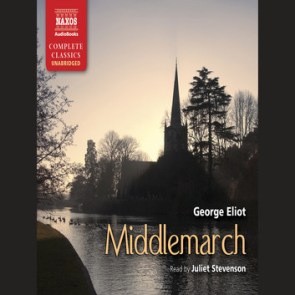
My personal plan is to read the hard copy and listen to the audiobook narrated by Juliet Stevenson whichever and whenever I like during the process. Read at home, listen while driving or doing something else. That usually works best for me. Feel free to use whatever reading format you prefer.

MiddlemarchMiddlemarch Audiobook

As the lovely month of May is approaching, you’re welcome to join me and Bellezza and others here and here to read Middlemarch. We will take it leisurely. While we start in May, I’ll leave the ending date tentatively at the end of June. But if by ‘leisurely’ it means July or even further, I’m totally fine with it. (Bellezza would know how flexible I am with our previous read-along) I always find reading with a deadline more a pressure than pleasure.

You might have read it before, so here’s a chance to dust off your copy from the shelf, as we read or reread together and connect online, no matter where you are, from Australia to Zimbabwe. You may like to share via a blog post, leave a comment, or send a tweet. How’s this for a hashtag: #MiddlemarchinMay on Twitter.


***

A Good Friday Trial

DSC_0280

“Then went the jury out, whose names were Mr. Blindman, Mr. Nogood, Mr. Malice, Mr. Love-lust, Mr. Live-loose, Mr. Heady, Mr. Highmind, Mr. Enmity, Mr. Liar, Mr. Cruelty, Mr. Hate-light, Mr. Implacable, who everyone gave in his private verdict against him among themselves, and afterwards unanimously concluded to bring him in guilty before the judge. And first among themselves, Mr. Blindman, the foreman, said, I see clearly that this man is a heretic. Then said Mr. Nogood. way with such a fellow from the earth! Ay, said Mr. Malice, for I hate the very look of him. Then said Mr. Love-lust, I could never endure him. Nor I, said Mr. Live-loose; for he would be always condemning my way. Hang him, hang him, said Mr. Heady. A sorry scrub, said Mr. High-mind. My heart riseth against him, said Mr. Enmity. He is a rogue, said Mr. Liar. Hanging is too good for him, said Mr. Cruelty. Let us despatch him out of the way, said Mr. Hate-light. Then said Mr. Implacable, Might I have all the world given me, I could not be reconciled to him; let us forthwith bring him in guilty of death. And so they did; therefore he was presently condemned to be had from the place where he was, to the place from whence he came, and there to be put to the most cruel death that could be invented.”

–– John Bunyan
Pilgrim’s Progress


***

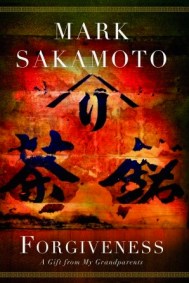
Canada Reads 2018: Book Review of ‘Forgiveness’ by Mark Sakamoto

Mark Sakamoto’s family memoir was first published in 2014. The book reemerges now due to the Canada Reads 2018 event. The annual battle of the books is CBC’s reading campaign. Five Canadian media and entertainment celebs will defend one of the five shortlisted books in a national broadcast March 26-29. The panelists will vote down one book each day to arrive at the winner. Audience can tune in on the debates via radio, TV and live stream online.

Mark Sakamoto is a lawyer by training and has enjoyed a varied career. In Forgiveness, he writes about his grandparents’ real-life experiences, two contrasting, traumatic WWII accounts. The subtitle of the book is telling, Forgiveness: A Gift from my Grandparents.

Forgiveness (1)Mark Sakamoto’s maternal grandfather Ralph MacLean is from the Magdalen Islands in the east  coast of Canada. In 1940, he enlisted with the army voluntarily together with his friend. After a few months’ training they were sent overseas to Hong Kong, oblivious to the perils into which they were driven. With the British already retreating a hopeless post, MacLean’s garrison didn’t have a chance to defend the then British Colony. In a few short weeks after their arrival, all two thousand or so Canadian soldiers were either dead or turned POWs forced to live in sub-human, horrific conditions under their Japanese captors.

… the fate of 819 men was sealed. They would never return home. The remaining 1,155 survivors would be forgiven if they sometimes felt they were the unlucky ones.

Later, MacLean was shipped to Japan to work for the Japanese war effort, from POW to slave laborer. That he survived at all was a miracle.

Cut to the other side of the world in Canada. Mark’s paternal grandparents Mitsue and Hideo Sakamoto were born in British Columbia and lived in a fishing community. Grandma Mitsue’s father, together with thousands of other Japanese Canadians, had their own boats and were doing well as fishermen in a closed-knit community.

During the time Ralph MacLean was barely surviving as a POW in Japan, the Sakamotos, being Japanese Canadians, went through their own battle in a land they called home. Their families were interned and sent to rural Alberta as forced farm laborers. The family fishing boat, and all their possessions were confiscated. Together with thousands of Japanese Canadians–many Canadian born–Mitsue, Hideo and everyone in their extended families, young and old, were put on a train barely suited for human passengers, under the watchful eyes of policemen with rifles, and transported to Lethbridge, Alberta. There Mitsue and Hideo were separated with their parents as they were sent to different farms to work as laborers, living in shacks of wood planks and dirt floor.

After the war, Ralph MacLean came back from Japan and settled in Calgary, Alberta. Mitsue’s families knew they had no home to return to in B.C. after receiving a compensation cheque of $25.65 from the Canadian government for the loss of all their properties. They decided to remain in Medicine Hat, Alberta. Fate has it that Ralph’s daughter Diane and Mitsue’s son Stan met in a high school dance. When Ralph eventually met his future son-in-law, who looked like one of his wartime tormentors, he knew he needed to leave the past behind. The two families first met at a dinner in Mitsue’s home:

Mitsue and Ralph became instant friends. There was an unspoken understanding between them… they had both discarded the past, keeping only what they needed. They did not compare hardships or measures injustices. They knew there was no merits to that.

Two families who had suffered torments of varying degrees during the war and for very different reasons came together as their children joined in marriage. What a wonderful story. Yet the above short few lines are all that readers can find relating to how the two families came together. Despite the extraordinary personal experiences, the book fell short of delivering a satisfying read.

With the bold, one-word title, “Forgiveness”, it is surprising that the author leaves us with little internal reflections or insights. For Ralph, having gone through so much trauma and physical torments, we are told in only a few lines how he came to the state of forgiveness, that is when he read his Bible during the last days in the Japanese war camp, turning to Mark 25:11, “And when you stand praying, if you hold anything against anyone, forgive him, so that your Father in heaven may forgive you your sins.” That is all being mentioned, just the quote. It seems a lot of the forgiveness is left to the reader’s own assumption and speculation.

It matters little that it lacks literary style, or that the writing is conversational. The short sentences make it a fast read and descriptions are vivid, especially the war years. While the thematic materials are worth telling, the book lacks editorial work to make it a cohesive whole. There are sections that are disjointed, the chapters uneven. There are moments where readers have to join the gaps on their own. The photos are helpful for readers to visualize, but there are no captions right underneath except all stated in a list at the back of the book, not too drastic a fault but an inconvenience still.

Structurally, the first two-thirds of the book about the war years are stark personal experiences many North Americans are not familiar with. These painful, eyewitness accounts told to the author by his grandparents are informative and necessary for us to know. But after that, the last part of the book about Mark and his parents, especially at the end how he had to care for his mother’s debilitating addictions after his parents’ divorce reads like another story unrelated to the earlier part, and Ralph and Mitsue seem to have disappeared.

Nevertheless, for the personal torments of Ralph’s as a POW under Japanese hands during WWII, and the maltreatment of Japanese Canadians had undergone at the same time right here in Canada, Sakamoto’s book is of value as eyewitness accounts to history and a cautionary real-life tale of how we ought to go forward as a civilized society. The last section of the book could well lead to another personal memoir dealing with the urgent social issue of addictions.

***

Forgiveness: A Gift from my Grandparents by Mark Sakamoto, HarperCollins Publisher, Toronto, 2014.

My review copy provided by the Publisher.

***

RELATED POSTS:

The Railway Man by Eric Lomax Book Review

The Railway Man (2013) Movie Review


Books to read in pairs

Often I find some books are better read together, back to back. They have similar settings or subject matter, and it’s always interesting to see the different perspectives and connections, intentional or not. A testimony to the six degree of separation.

Here are a few. Can you name some more from your reading experience?

Pachinko by Min Jin Lee and Forgiveness by Mark Sakamoto

Pachinko is a family saga set in a period of history that’s seldom told in North America, the first part of the 20th century in Korea and Japan. Annexation of Korea is to put it mildly, prelude to the Pacific War later when the Japanese army invaded her neighbouring countries during WWII. The sufferings of those in the frontline and those at home are vividly depicted in Sakamoto’s family memoir: his maternal grandfather as a prisoner of war in Hong Kong and later shipped to Japan as slave laborer, while his paternal grandmother and her family mistreated in internment right in their homeland of Canada. (detailed reviews coming up)

**

Do not say we have nothing by Madeleine Thien and The Noise of Time by Julian Barnes

Barne’s biographical vignettes of Russian composer Dimitri Shostakovich during Stalin’s reign is like a compendium to Madeleine Thien’s Do Not Say We Have Nothing which depicts the three choices one can make when confronting a ruthless, totalitarian Ruler. Thien’s fictional characters struggled to survive during Mao’s cultural revolution and the subsequent years. Speak truth to power, unfortunately, is not a viable alternative. Death and oblivion will be the certain and swift consequences.

**

Nutshell by Ian McEwan and Hamlet by William Shakespeare

McEwan’s modern day, in utero version of the Bard’s incestuous mayhem. Very perceptive, considering its from the voice of a baby in the womb.

**

Circling the Sun by Paula McLain, West With the Night by Beryl Markham, and Out of Africa by Karen Blixen

Don’t think of the accented Meryl Streep in the movie Out of Africa, just imagine the ‘real’ Karen Blixen, on her farm in Africa, a tough woman on her own most of the time, and then there’s an acquaintance (can’t say friend) Beryl Markham, a female aviator, equally pioneering, a Brit expat in Africa, doing more than the discovery of the land but also of the man in Karen’s life, no, not Robert Redford.

**

Mrs. Dalloway by Virginia Woolf and The Hours by Michael Cunningham

One day in the life of Mrs. Dalloway can have so much meaning under the pen of Virginia Woolf. The Hours are equally perceptive, internal depiction of three women in different periods of time. And throw in The Hours the movie after, an excellent adaptation and hauntingly worthy of Woolf’s literary style.

**

The Portrait of a Lady by Henry James, Mrs. Osmond by John Banville, and Middlemarch by George Eliot. 

Mrs. Osmond is Banville’s imaginary sequel to Henry James’s The Portrait of a Lady. Seems it all point to bad choices when the protagonist naive and a little too idealistic. I’m exploring how George Eliot’s Middlemarch may be a precursor to these novels of the young and restless and marital mismatch.

And here’s an invite, Middlemarch in May (makes a nice hashtag) is a read-along I’ll be joining with Bellezza and other readers. It starts in May, and it’s our intention to finish before summer, hopefully. Feel free to join us and explore the Dorothea Brooke connection to Isabel Archer, and I’m sure other delights as well along the way.

***