Somewhere (2010)… or Nowhere

I collected a few thoughts on screenwriting, or fiction writing in general, from watching Sofia Coppola’s “Somewhere” (2010).

The film was winner of the Golden Lion at Venice Film Festival last year in the ‘Emerging Film’ category.  As daughter of Francis Ford Coppola, Sofia Coppola must have breathed films from birth.  She is also an Oscar winner for Best Original Screenplay with “Lost In Translation” (2003), which also brought her an Oscar nom in the Best Director and Best Picture categories.

While I had enjoyed her “Lost In Translation”, a sensitive, existential rendering framed in the context of cultural cacophonies, I sat through “Somewhere” feeling detached and unmoved. But I did make some mental notes on how to write better… especially when I compared it with another film depicting a similar theme, Mike Leigh’s “Another Year“.

I’ve appreciated the overriding intent of “Somewhere”, the portrayal of a pointless life in the midst of Hollywood stardom. Behind the façade of glamour is a sad man, failed in his marriage, aimless, smothered with ennui. The setting of the film is significant too. From the movie poster we see the iconic Hollywood hotel Chateau Marmont, a historic landmark that’s synonymous with fame and celebrity. That is where our protagonist, actor Johnny Marco lives, at the moment.


So here are some mental notes I made on writing while watching “Somewhere”:

1.  We all know it: Show, not tell. But too much showing can be force feeding.

Case in point: The film starts off with the sound of a car engine revving, then we see a black Ferrari come on screen from the left, circling round and go off screen.  We wait for it to come back, then go round and offscreen again. This goes on for, I forgot to count, maybe four times. Then it stops, and a man gets out.  We later find out he is the main character, Johnny Marco (Stephen Dorff).  Got it… his life is going in circles, heading nowhere.

But just to confirm that we are on the right track, we’re shown some more.  We see Johnny Marco so drunk he falls down the stairs and breaks his arm.  We see him lying in bed watching exotic dancers performing in front of him, only to fall asleep before they finish their routine. We are shown again another time, another pair of exotic dancers in his room, this time he gives a bored little clap. We see him womanizing, partying, driving his Ferrari aimlessly on the road. We see him being ushered to promo sessions and photo shoots, in unfeeling mode, and answer questions from the press.  And as if not enough pounding, we hear a reporter asking the explicit question, which by now has become so contrived: ‘Who is Johnny Marco?’

This is not just the first 30 minutes to set up the mood and character, this is throughout the film.  So I noted: once you’ve got your point across, move on.

2.  Stir up empathy, not inflict vicarious suffering.  You don’t have to drag your audience to the level of boredom to depict boredom. Like, we don’t have to be turned into stutterers before we can appreciate the struggles of a stammering king.  There is a scene where Johnny has to sit down and have his face plastered with goo to make a mold of an old man. We see him plastered bit by bit until his head is covered with goo.  The static camera then stays on this plastered head, as we wait with him for the goo to dry.  Lucky we are spared after a minute and a half.  I appreciate the long take if it conveys meaning in an aesthetically pleasing way, but here it is almost didactic in its expression of tedium and ennui.

3. Bring up a contrast. Yes, in this case, Johnny Marco’s 11-year-old daughter Cleo (Elle Fanning) is a perfect foil.  Staying with her father for a short while before going to summer camp, Cleo’s life is nothing short of wholesome. She is angelic in her innocence and beauty; in contrast to her Dad, she is happy and purposeful. She figure skates, plays tennis, swims, cooks, does Sudoku, plays Guitar Hero and Wii with youthful vitality.  Johnny is mesmerized. Despite a failed marriage, Cleo is the best thing that happens in his life… and in the film as well.

4. Put the character in the context of a story, even though it is just a character study or that it is static. For the viewers to appreciate the character on a deeper level, they must see the person in various predicaments, which are missing here.  Without a story as vehicle, we only see a two dimensional character.  I thought of Mary (Lesley Manville) in “Another Year”.  Very similar to Johnny here, Mary is a sad and utterly despondent character.  Also, like Johnny, she is going nowhere even at the end, where she is spiralling further down the hole of loneliness.  Not unlike Johnny here.  Yet I found “Another Year” appealing because the other significant characters continue to show us their life story. The foil there is Tom (Jim Broadbent) and Gerri (Ruth Sheen). Through the four seasons, we see how they treat each other and deal with life, and relationships are being depicted. It is still a character study with no major dramatic climax, yet the film can hold my interest because I am watching Mary through the frame of Tom and Gerri’s story.

5.  Throw in a dash of humor, even though especially when your character is in utter sadness.  Unlike “Lost In Translation”, “Somewhere” is almost devoid of humor. A laugh or two is probably the fastest way to dissolve the audience’s aloofness. Back to “Another Year”, Mary is not a lovable character. She is delusional, dependent, aimless and weak.  As audience, we are impatient with her unhappiness, because we feel she is solely responsible for her plight. But humor disarms our critical stance and gently prods us to sympathize her.  Her character does not change and become loveable at the end, but we learn to be more gracious and give her some allowance.  We find that it is not so static after all, for we the audience, unknowingly, have been changed.

~ ~ 1/2 Ripples

***

CLICK HERE to read my review of Another Year.

CLICK HERE to read my review of The King’s Speech.


Big Movies, small films

‘Big’ and ‘small’ are relative terms.

According to Box Office Mojo, the production budgets for this year’s Oscar Best Picture nominees are as follows (in million of dollars):

Toy Story 3:  200

Inception:  160

The Social Network:  40

True Grit:  38

The Fighter:  25

127 Hours:  18

The King’s Speech:  15

The Black Swan:   13

The Kids Are All Right:  4

Winter’s Bone:  2

Strange that we call some motion pictures ‘movies’, and others ‘films’.  Other than the generic meaning which is used interchangeably, they sometimes denote certain inherent differences. The money that goes into making them just might be a factor: The higher the cost, the more likely it’s a movie… the lower, a film.  A movie is likely a Hollywood studio production, with better-known stars, big budget marketing, and aims at popularity among a wider spectrum of viewers.  A film is more or less associated with indie, art-house, and caters to a much smaller range of audience.

Such was the dichotomy between last year’s Oscars’ David and Goliath scenario: Avatar and The Hurt Locker.  And I was glad to see the little guy win.

But this year is a bit different.  Many of the Best Picture nominees are small budget productions.  They draw big buzz because of the pictures themselves, the quality of their productions, their subject matter, and the characters that drive the story.  They all depict little persons achieving big, however reluctantly.

Here’s a small glimpse of what’s big in some of these stories:

127 Hours:  The real life, harrowing ordeal of Aron Ralston, who is caught in a small crack of a big boulder and how he used a penknife to cut his arm off to free himself.  James Franco nominated for Best Actor.

True Grit:  A small, 14 year-old girl by sheer guts and determination, ventures out in the big, wild West to seek justice for her father’s death. Newcomer Hailee Steinfeld nominated for Best Supporting Actress.

Winter’s Bone: A teenaged Ozark Mountain girl trying to keep her family intact in utter poverty, and save the shack they call home by finding her father who has fled bail for drug dealing, an act that threatens the big crystal meth economy of the area. 20 year-old Jennifer Lawrence nominated for Best Actress.

The Fighter:  A down and out boxer with a small name like Micky Ward from a dysfunctional home in a drug-infested neighbourhood bounces back to win the WBU champion.

The Social Network:  A college student called Mark Zuckerberg in his little dorm room launching a big business by changing the way people in the whole wide world connect and socialize. Jesse Eisenberg nominated for Best Actor.

The King’s Speech:  A big role of a king being filled by a small, shy man hampered by a debilitating stammer big as cancer.  It could be all psychological, sure, that’s why it’s insurmountable… and overcoming it takes big courage.  Colin Firth nominated for Best Actor.

A small person overcoming big obstacles one small step at a time always makes a good story. It is so with the little character, true also with the little film.

Oscar Nominations 2011

Here are the ten movies you might like to watch before the 83rd Academy Awards on Feb. 27:

Best Picture Nominees:

  • Black Swan
  • The Fighter
  • Inception
  • The Kids Are All Right
  • The King’s Speech
  • 127 Hours
  • The Social Network
  • Toy Story 3
  • True Grit
  • Winter’s Bone

For a complete list of nominees and to watch the announcement from this morning in case you missed it at 5:30 am (PT) or 8:30 am (ET), CLICK HERE.

The nominations count are as follows: King’s Speech = 12, True Grit = 10, Social Network = 8, Inception = 8, The Fighter = 7, 127 Hours = 6

The King leads the pack.  A royal flush they say, hope that’s the hand on Oscar night.  Colin Firth, Helena Bonham Carter, Geoffrey Rush, and director Tom Hooper all get nods. Other categories include Art Direction, Cinematography, Costume Design, Editing, Original Score, Sound Mixing, Screenplay.  To read my review of The King’s Speech, CLICK HERE.

The surprise here is True Grit.  The Coen brothers’ film got snubbed at the Golden Globes and comes back with a vengeance.  Two years in a row they get the nod for Best Picture, after last year’s A Serious Man (my review here).   True Grit is a remake of the 1969 Western for which John Wayne got his Oscar.  Here we have a distinct Coen style film with smart dialogues and great acting.  “Nothing is free except the grace of God,” the beginning voice-over says, matched with the tune of the old hymn ‘Leaning on the Ever Lasting Arms’… I was amused to see how these two notions echo at the end of the film. At 13, Hailee Steinfeld beat out 15,000 other girls in the audition to get the role of tough and articulate Mattie Ross, seeking justice for her daddy’s death.  Now one year later, she has landed at the Oscars. Amazing. Also, Jeff Bridges gets the nom again, after snatching the Best Actor Oscar from Colin Firth last year.  It’s interesting to note that, while Colin Firth can act with half a voice, Jeff Bridges here shows us he can act with just one eye.

I’m excited to see Mike Leigh finally getting recognition for his poignant original screenplay for Another Year.  Unfortunately, the film does not get any more Oscar nods.  Veteran British actors Jim Broadbent, Ruth Sheen, and Lesley Manville give a performance of deep resonance.  Lesley Manville is no less deserving than anyone on the list of Best Actress nominees.  This is one of the most neglected movies of 2010.  I saw it at the Calgary Film Festivals last year.  I know some cities are just showing it now. Don’t miss it.  CLICK HERE to read my review.

Toy Story 3.  The animated feature that gets into the major league, following the only two other animations ever to be nominated in a Best Motion Picture category, Up (2009) and Beauty and the Beast (1991).  The theme of growing up and parting with your beloved and familiar finds its way into a touching animation that may well appeal to parents more than kids.  The idea of a child leaving home for college has been used in several movies in recent years, most notably, The Blind Side (2009) and The Kids Are All Right (2010).  I’ve watched all of this year’s ten Best Picture nominees. But, don’t laugh, Toy Story 3 was the only time I’d shed a few tears.

For Best Documentary Feature, I’m glad to see our notorious graffiti artist Banksy’s film Exit Through the Gift Shop has not evaded the Academy.  To read my review CLICK HERE.

The Academy Awards will take place on Sunday, Feb. 27.  This time Anne Hathaway and James Franco (a Best Actor nominee himself for 127 Hours), the youngest of Oscar hosts, are set to offer a fresh new look.  Hathaway had proven her versatility dancing and singing with Hugh Jackman two Oscars ago, and Franco has been hailed as the new Renaissance Man…  Just hope they will live up to expectations.

Austen Inspired Acceptance Speech

2011 is the 200th anniversary of the publication of Jane Austen’s Sense And Sensibility, her first published novel.  And since we are in the midst of Awards Season, inundated (or soon to be) with speeches, I’d like to join these two occasions and celebrate both Austen and fine speeches.

The 1995 film adaptation of Sense and Sensibility had received numerous awards, most notably accolades for Emma Thompson’s screenplay, which had garnered the Golden Globe, BAFTA, and ultimately, the Oscar. I have posted this before a few years ago, but think it is high time we read or reread Austen’s wonderful novel and be entertained again by the very talented Emma Thompson.

Also, I’m sure you would love to read a transcript of it, one of the most unique awards acceptance speeches of some time. Since the event occurred some fifteen years ago, I have taken the liberty to annotate (in parentheses) and format it in a way to enhance your reading pleasure.

Here it is, Emma Thompson’s Acceptance Speech at the 53rd Golden Globe, 1996, for Best Adapted Screenplay, Sense And Sensibility:

“I can’t thank you enough, Hollywood Foreign Press, for honouring me in this capacity.  I don’t wish to burden you with my debts, which are heavy and numerous, but I think that everybody involved in the making of this film knows that we owe all our pride and all our joy to the genius of Jane Austen.  And, it occurred to me to wonder how she would react to an evening like this.  This is what I came up with:

Four A.M.   Having just returned from an evening at the Golden Spheres, which despite the inconveniences of heat, noise and overcrowding, was not without its pleasures.  Thankfully, there were no dogs and no children.  The gowns were middling.  There was a good deal of shouting and behaviour verging on the profligate, however, people were very free with their compliments and I made several new acquaintances.

  • Miss Lindsay Doran (producer), of Mirage, wherever that might be, who is largely responsible for my presence here, an enchanting companion about whom too much good cannot be said.
  • Mr. Ang Lee (director), of foreign extraction, who most unexpectedly appeared to understand me better than I understand myself.
  • Mr. James Schamus (co-produceer), a copiously erudite gentleman, and
  • Miss Kate Winslet (role of Marianne Dashwood) , beautiful in both countenance and spirit.
  • Mr. Pat Doyle, a composer and a Scot, who displayed the kind of wild behaviour one has learnt to expect from that race.
  • Mr. Mark Canton, an energetic person with a ready smile who, as I understand it, owes me a vast deal of money.
  • Miss Lisa Henson — a lovely girl, and
  • Mr. Gareth Wigan — a lovely boy.

I attempted to converse with Mr. Sydney Pollack (executive producer), but his charms and wisdom are so generally pleasing that it proved impossible to get within ten feet of him.  The room was full of interesting activity until eleven P.M. when it emptied rather suddenly.  The lateness of the hour is due therefore not to the dance, but to the waiting, in a long line for a horseless carriage of unconscionable size. The modern world has clearly done nothing for transport.

P.S. Managed to avoid the hoyden Emily Tomkins who has purloined my creation and added things of her own.  Nefarious creature.

With gratitude and apologies to Miss Austen, thank you.”

***

Transcript of Emma Thompson’s speech taken from the book The Sense And Sensibility Screenplay & Diaries by Emma Thompson, published by Newmarket, 2007.

Note here on the back of the cover page these words:

ACKNOWLEDGEMENTS

“I should like to acknowledge the profoundest debt for my having developed any sense of humour to Jane Austen, Monty Python and The Magic Roundabout


The Golden Globe Speeches

While I was all eager to watch the 68th Annual Golden Globes last night, I was feeling bored from the beginning, after the first award of Best Supporting Actor was handed out. With Geoffrey Rush (The King’s speech therapist) losing the award, I will always miss the acceptance speech from him. I’m sure he had prepared something brilliant and witty to say. That would be the speech I had hoped for, but now, will never get to hear.

Most of the speeches last night were banal and uninspiring, exceptions were few. Even Robert De Niro’s for winning the Cecil B. DeMille Lifetime Achievement Award was lacklustre.  What sounded like self-deprecating humor could well have de-mythicized the acting profession and brought it down to the level of just another job to feed the kids.

Annette Bening had a sweet ending to her acceptance speech for Best Actress, comedy or musical, for The Kids Are All Right. After thanking the cast, she acknowledged “the 1962 winner of the Golden Globes for Most Promising Actor, my husband Warren Beatty.” They looked wonderful together, after all these years.

Canadian viewers must be delighted to hear Paul Giamatti, Best Actor, comedy or musical for Barney’s Version, as he acknowledged Canadian author Mordecai Richler and his family, and the film’s shooting location “up in an incredible, beautiful city, Montreal, which I dream about, an incredible place in a great nation, Canada. I salute the great nation of Canada.”

The audience stood and cheered as Michael Douglas came on stage at the end, making his first public appearance in Hollywood after receiving treatments for throat cancer: “That’s got to be an easier way to get a standing ovation,”  he quipped.  He presented the Best Movie Award to The Social Network, which won four Golden Globes last night.

.

.

The best speech of the night came from Colin Firth. Just like his role in The King’s Speech, reflecting his persona and style, his speech was an exemplar of finesse and character.

Here is Colin Firth’s acceptance speech for Best Actor, Drama, for The King’s Speech:

“Getting through the mid stage of your life with your dignity and judgement in tact can be somewhat precarious and sometimes all you need is a bit of gentle reassurance to keep on track. I don’t know if this qualifies as gentle reassurance, but right now this is all that stands between me and a Harley Davidson. I owe a very great debt to my supernaturally talented fellow cast members, my exquisite no-nonsense Queen, Helena and my wayward Royal older brother Guy [Pierce]. Geoffrey Rush and Tom Hooper, my two other sides of a surprisingly robust triangle of man love, somehow moved forward in perfect formation for the last year and a half or so… Tom with his scorching intelligence and Geoffrey who has now become my true friend and geisha girl. David Seidler, I know something of what you went through to create this…. at a time in my life when I truly appreciate the value of longevity in my relationships, Harvey Weinstein has made an improbably number of good films. We have had 20 years together, which is not bad going for a showbiz marriage. Thank you, Harvey. But the very best thing of all has been Livia [his wife] and all the beautiful things she’s given me and I think I can cope with just about any age as long as I can still see her.”

Who can be more deserving to win?

***

For a full list of Golden Globes nominees and winners, CLICK HERE to the official Golden Globe Site of the Hollywood Foreign Press Association.

To read my review of The King’s Speech, CLICK HERE.

Colin Firth’s Speech quoted from The Telegraph.

Photo source: The Telegraph http://www.telegraph.co.uk/culture/film/film-news/8260914/Golden-Globes-2011-Colin-Firth-wins-Best-Actor-as-The-Social-Network-takes-four-awards.html


More Gifts … Books and Movies

Continue from last post… succumbing to the Boxing Day craze.

Other than the art calendars, I found these bargains, books that kick off my 2011 reading plan and some DVD’s at very collectible prices:

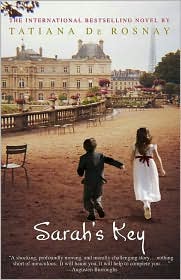
Sarah’s Key by Tatiana De Rosnay

Already made into a movie (Elle s’appelait Sarah by French director Gilles Paquet-Brenner) premiered at Cannes and TIFF last year.  A journalist discovering a holocaust story about a ten year-old Jewish girl who tried to save her younger brother from the police by locking him in a cupboard.  The key will play a major part in a moral dilemma.  This much I know and it’s already captivating, especially with Kristin Scott Thomas playing the role as the journalist in the film.


The Finkler Question by Howard Jacobson

The winner of the 2010 Man Booker Prize.  Here’s the description from the Man Booker’s official site: “a scorching story of friendship and loss, exclusion and belonging, and of the wisdom and humanity of maturity. Funny, furious, unflinching, this extraordinary novel shows one of our finest writers at his brilliant best.”  I’ve enjoyed reading some of the past winners and look forward to this one.


Extremely Loud & Incredibly Close by Jonathan Safran Foer

I got this over the holidays and have already finished reading it.  I have mixed feelings about it. The 9/11 story from the POV of a 9 year-old boy is poignant, and the way JSF presents and illustrates (the visuals) it is a new reading experience for me.  A movie is in the works with Tom Hanks and Sandra Bullock co-starring.  Mmm…


Music of Chance by Paul Auster

I have quickly devoured this one over the holidays together with the turkey.  The reason I was looking for this book is because of the movie.  I first saw the film adaptation a few years back and it stirred in me an unsettling resonance beyond words.  It’s a modern day Sisyphus story pitting man against chance, absurdity, and himself.  You must read it and then see the film, which unfortunately, is so overlooked that you’ll have a hard time finding it. But it deserves high acclaim, especially the performance by James Spader.  The film is also one of the best ‘Book Into Movie” adaptations I’ve seen.


In Search of Lost Time (Vol. 1) Swann’s Way by Marcel Proust

Translated by Moncrieff and Kilmartin.  I know many of you have read Proust and some may be Proust scholars, let me know what you think.  As for me, its attraction is simple.  How can you resist a beautiful Modern Library Classic edition with such an appealing cover?  It’s comforting just to see and touch it.  I’ve downloaded an e version into my Stanza app some time ago, but could never get into it by reading it on my iPhone.


The Early Work Of Philip K. Dick, (Vol. 1): The Variable Man And Other Stories

The main reason I got this, yes, it’s also a bargain at $5, hardcover… but the main reason is it contains a story I was looking for: ‘The Adjustment Team’, which is an upcoming movie (with Matt Damon and Emily Blunt).  I’m not a Sci-fi fan, but did enjoy some of Dick’s works adapted into films, like Minority Report (2002).  Others including Blade Runner (1982) and Total Recall (1990) are all ‘classics’ now in the Sci-fi film genre.


And some very collectible DVD’s:

When Harry Met Sally


I finished Nora Ephron’s I Remember Nothing and Other Reflections not too long ago.  It’s a revealing and amusing memoir.  That’s what prompted me to grab this DVD when I browsed the 50% off table at Chapters (Canada’s equivalent of Barnes & Nobles), about $5.  When Harry Met Sally (1989) is Ephron’s breakout screenplay in the romantic comedy genre.  After that is history… Sleepless In Seattle (1993), You’ve Got Mail (1998), and most recently, Julie and Julia (2009).  But do you know she also wrote the screenplay for Silkwood?

Children of a Lesser God


This is probably one of the most forgotten films that deserves more mention.  There is inherent difficulty in the execution of a film where one of the two major characters is a deaf-mute.  But the relationship and the communication conflicts between Marlee Matlin as a student in a deaf school and William Hurt as a speech teacher just show how realistic these obstacles are.  Marlee Matlin won the Academy Award for Best Actress in 1987 for her role, not bad for a debut. Her affective performance was made even more poignant due to her real life impediment.  It has been decades now since I first saw it in the theatre. I was delighted to be able to find a copy to keep, $4.

Scorsese: The Martin Scorsese Film Collection


A classy box set of four films:

  • Raging Bull — Special 2 Discs Edition, lots of special features. Classic Scorsese that gave Robert De Niro the Oscar, plus seven noms for the film.
  • The Last Waltz — Bob Dylan, Eric Clapton, Neil Young, Joni Mitchell, Van Morrison, Neil Diamond, Emmylou Harris… this is rock history in film.
  • New York, New York — Liza Minnelli and Robert De Niro, a spectacle.
  • Boxcar Bertha — Barbara Hershey and David Carradine… historical too.

And the best is the price: I paid $10.

***


Now let me shift gear to the 68th Golden Globes this Sunday, January 16…

The King’s Speech (2010)

CLICK HERE to read my new post ‘Oscar Winners 2011’

Update Feb. 27, 2011: The King’s Speech just won 4 OSCARS: Best Picture, Best Director Tom Hooper, Best Actor Colin Firth, Best Original Screenplay David Seidler.

Update Feb. 13, 2011: The King’s Speech just won 7 BAFTA’s: Best Film, British Film of the Year, Best Actor, Best Supporting Actor & Actress, Best Original Screenplay, Best Music.

Update Jan. 30, 2011: The King’s Speech just won the Best Cast in a motion picture and Colin Firth Best Actor at the Screen Actors Guild Awards tonight.

Update Jan. 30, 2011: Tom Hooper just won the Directors Guild Award.

Update Jan. 17, 2011: Colin Firth just won the Best Actor Golden Globe last night. To read his acceptance speech, click here.

Colin Firth must be feeling the pressure now.  I don’t mean the likely Oscar contention.  I mean, how is he going to surpass himself in his next film?  That’s the trouble with having reached your career best, so far.

But that is not going to be an issue at this point, because it is in celebratory mode right now, yes, even before the Oscars.

The King’s Speech first premiered at the Toronto International Film Festival in September, 2010, and won the audience award.  Since then, it has seen more and more accolades.  At present, the film has been nominated for seven Golden Globes and four SAG Awards on this side of the Atlantic.  Colin Firth, Geoffrey Rush, Helena Bonham Carter have all won their acting categories at the British Independent Film Awards in December, with David Seidler seizing Best Screenplay, and the movie garnered the Best British Independent Film Award.

A moving real life story about the struggle of King George VI (Colin Firth) to overcome a life-long stammer, as he was reluctantly crowned king after his older brother King Edward VIII (Guy Pearce) abdicated the throne in 1936 for love of an American divorcee.  Bertie, as his family called him, was fortunate to have a devoted and loving wife (Helena Bonham Carter), who found him an unconventional speech therapist from Australia, Lionel Logue (Geoffrey Rush).  The film builds on the development of their friendship leading to the exhilarating climax at the end, when the King gives his first war-time speech to his nation, rousing up their support against Germany.

It all began with screenwriter David Seidler being evacuated out of Britain to America upon an imminent Nazi attack at the brink of WWII.  To the then three-year-old Seidler, the treacherous trans Atlantic ordeal was so devastating that in his subsequent childhood years after arriving America, he had to struggle with a debilitating stammer.  During the war years, he had listened on the radio to the speeches by King George VI, whom he learned was a fellow stutterer.  With the King as a model, Seidler was motivated to overcome his own stammer.

The idea of telling the true story of his personal hero remained with Steidler for decades. He had been doing research on the King and found the son of his speech therapist Lionel Logue, Valentine, who had preserved his father’s notes.  As a loyal ex-subject, Steidler wrote the Queen Mother requesting her approval to use her late husband’s story for a movie.  The following was the reply from Clarence House, the official residence of the Prince of Wales:

“Dear Mr. Seidler, thank you very much for your letter, but, please, not during my lifetime.  The memory of those events is still too painful”

The Queen Mother passed away in 2002, at the age of 101.  Seidler could now publicly work on a story that had captivated him all his life.  But the Royal Family needs not worry.  The screenplay that Seidler has written, and the film that ultimately comes out from director Tom Hooper is every bit dignified, respectful and artistically executed.  What more, the very human suffering and the exhilaration of overcoming an impediment are movingly told.  Overall, the film is a poignant portrayal of a courageous man, a beautiful friendship, and a loving family.

Colin Firth has presented to us a reluctant hero, won us over from the start with his vulnerability and insignificance, and kept us on his side with his perseverance and loyalty.  As the Queen Mother had put it, it is painful to watch him struggle to be heard.  The walk to the microphone, then an advancement in technology, is as grim as the dead man walking to his execution. No wonder there is the Brahms’ Requiem.

In an interview, Seidler mentions how Firth had asked him for specifics on the stuttering experience, and strived to live it in his performance. Powerful method acting indeed as Firth found himself so involved in the role that he had experienced tongue-tied episodes at public speaking.  Click here to listen to the in-depth interview with David Seidler at Stutter Talk. For a pre-Oscar interview with Seidler, Click Here to find the link to a BBC news clip.

Geoffrey Rush is the crucial partner in the bromance.  Without his devotion and humour, the relationship between therapist and client could not have risen to the level of trusting friendship necessary for effective treatment.  It is not a cure, but the breaking down of barriers, psychological and social.  Herein lies one important element of the film’s success, humour.  We are treated with lighthearted moments in the midst of struggles, unleashing the humanity to shine through.

As for the music. First off, I must say I’ve enjoyed the original music by Alexandre Desplat.  The timing and editing is particularly effective, an example is the rehearsal scene.  But the reverberations have been the selections of German music, in particular, Beethoven’s 7th second movement the Allegretto being used at the climatic King’s speech.  My view is that the war was against Nazism, the tyranny and atrocity committed by Hitler and his regime.  Considering Beethoven’s struggles with his own hearing loss, and his vision of freedom and brotherhood, he could well be a universal symbol of resistance and resilience, significant beyond national boundaries. And who can protest against the lofty and hauntingly moving Allegretto.  I’d say, good choice of music for the climax.  And after that, the mutual look between the two friends into each other’s eyes with the warm, soothing slow movement of the Emperor Concerto, what better way to end the movie.

What better way to start the new year.

~~~ 1/2 Ripples

***

To read my post Oscar Winners 2011 CLICK HERE

To read my post on the book The King’s Speech: How One Man Saved The British Monarchy by Mark Logue and Peter Conradi, CLICK HERE To “The King’s Speech: Fact and Fiction”

To listen to the historical archive of the actual speech by King George VI, click here.

For a review and critique of the music in The King’s Speech:

‘The Music of The King’s Speech’

Movie Music UK: Alexandre Desplat

Mary Kunz Goldman, music critic

To read a detailed Colin Firth Interview

To see a video clip of Colin Firth interviewed at TIFF

2010: Another Year of Books and Films

The discussion of movies is frequently more interesting than the movies themselves.

——   A. O Scott, NYT Movie Critic

Thanks to A. O. Scott, in his recent article on Films, Themes, and Trends, he has spelt out for me the raison d’etre of Ripple Effects.  As I always say, I’m just throwing a pebble into the pond.  It’s watching the splash and the out-reaching ripples that makes it so gratifying.  Thanks to all your responses, the discussions following the posts have made it all worthwhile.

2010 is my record year for movies watched. As a previewer for an international film festival, I’ve had the experience of viewing over 50 features, docs, and shorts in one month.  As a film lover, I’ve seen another 50 more of my own choice in the other months.  They are not all 2010 productions.  The oldest film for me this year is a silent black and white Ozu work, A Story of Floating Weeds (1934).  I’ve also discovered Robert Bresson.  His Diary of a Country Priest (1950) is probably one of the best Book Into Film adaptations I have encountered.

But, to remain timely, and we all like lists, here are Arti’s favourite movies released in 2010 (in no particular order).  Click on link to read my review:

  1. The King’s Speech (review coming up)
  2. The Secret In Their Eyes
  3. Another Year
  4. Nowhere Boy
  5. Never Let Me Go

Is it coincidental that all of the above except one are from the UK?  The Secret In Their Eyes is Argentinian.  It won the Best Foreign Language Film Oscar for 2010.

**

Favourite books read in 2010 (again, in no particular order):

  1. Snow Country by Yasunari Kawabata
  2. Diary of a Country Priest by Georges Bernanos
  3. The Music of Chance by Paul Auster
  4. Never Let Me Go by Kazuo Ishiguro
  5. Theatre by William Somerset Maugham

**

Favourite Interesting Search Engine Terms (words people use to arrive at Ripple Effects this year):

  • elegance of the hedghog movie restroom music
  • banksy telephone booth
  • bird front view
  • darcy wet shirt
  • colin firth wet darcy
  • wet colin firth
  • colin fith
  • darcy kiss amanda in lost austen
  • little miss sunshine van
  • free great gatsby iphone
  • imprisonment in snow country
  • revolutionary road insane son controlling mother
  • to see the lost cattails soft winds and roses
  • what color are pussy willows?
  • virginia woolf’s crusading novel a room of one’s own
  • pregnant man giving birth
  • giving birth naturally
  • noomi rapace piercings
  • vw van
  • flotsam? i’ve gotsam
  • funny things inside mad magazine
  • the girl with the dragon typo
  • stranger
  • lust

Just a sampler showing you how eclectic Ripple Effects can be.

I look forward to throwing more pebbles in the coming year.  Again, a hearty thank-you to all my regular readers and occasional visitors.  Thank you for taking the time to comment.  You are the fuel for this journey called blogging, and without your responses and discussions, there’s simply no raison d’etre for Arti to press forward another year.


To All, A Happy New Year!

Dive in, make waves… it’s warmer than you think.

***

Upcoming Books Into Films

Looking for book suggestions for yourself or your book group in the coming year? The following is a list of books being planned for a movie adaptation. Books turning into movies always generate a lot of debates and discussions.  Better still, read the book then watch the movie together… I’m sure more debates will ensue.

Hope the following list can furnish you or your group with some ideas. Do note that these titles are in various stages of development, meaning some may come out in the next year or two, some may take longer if they get started at all.  Click on titles (links) for more details.

***

1984 by George Orwell

A Thousand Splendid Suns by Khaled Hosseini

The Adjustment Team (short story) by Philip K. Dick (Film: The Adjustment Bureau)

The Adventures of Tintin: The Secret of the Unicorn by Hergé

All Quiet on the Western Front by Erich Maria Remarque (Daniel Radcliffe)

American Pastoral by Philip Roth

Anna Karenina by Leo Tolstoy (Keira Knightly)

Atlas Shrugged by Ayn Rand

Bel Ami by Guy de Maupassant (short story)

The Bell Jar by Sylvia Plath

Blink by Malcolm Gladwell

The Book Thief by Markus Zusak

Brave New World by Aldous Huxley

The Chronicles of Narnia: The Silver Chair by C. S. Lewis

The Corrections by Jonathan Franzen

Don Quixote by Miguel de Cervantes

East of Eden by John Steinbeck

Extremely Loud and Incredibly Close by Jonathan Safran Foer (Tom Hanks, Sandra Bullock)

Fahrenheit 451 by Ray Bradbury

Flowers for Algernon by Daniel Keyes

The Giver by Lois Lowry

The Great Gatsby by F. Scott Fitzgerald (Carey Mulligan, Leonardo DiCaprio)

Hamlet by William Shakespeare

The Help by Kathryn Stockett

The Historian by Elizabeth Kostova

The History of Love by Nicole Krauss

The Hobbit by J. R. R. Tolkien

The Invention of Hugo Cabret by Brian Selznick

Ivan the Fool by Leo Tolstoy

Jane Eyre by Charlotte Brontë

Life of Pi by Yann Martel

The Lincoln Lawyer by Michael Connelly

Middlemarch by George Eliot

On Chesil Beach by Ian McEwan

On the Road by Jack Kerouac

One Day by David Nicholls

One for the Money by Janet Evanovich

Paradise Lost by John Milton

The Piano Tuner by Daniel Mason

Pride and Prejudice by Jane Austen (A new take: Jane Austen Handheld)

Pride and Prejudice and Zombies by Seth Grahame-Smith

Pygmalion by Bernard Shaw (My Fair Lady, Carey Mulligan, Emma Thompson script)

The Screwtape Letters by C. S. Lewis

Sense and Sensibility by Jane Austen (A Latina spin: From Prada to Nada)

Tender is the Night by F. Scott Fitzgerald (Matt Damon, Keira Knightly)

The Three Musketeers by Alexandre Dumas

The Tiger by John Vaillant

Tinker Tailor Soldier Spy by John Le Carré (Colin Firth)

Water for Elephant by Sara Gruen

Wuthering Heights by Emily Brontë

***

For a more updated list, click here to “More Upcoming Books Into Movies”.

If you know of any other titles, you are welcome to add to this list by leaving the info in the comment section.

CLICK HERE for WordPress Tag: Book Into Film.


The Great Gatsby: A New Version

UPDATE: To read my review of The Great Gatsby (2013), CLICK HERE.

**

Well… not yet.  But seldom has a movie generated so much buzz even before it is made. The debates take on several fronts.

First off, there’s this argument of whether we need another Gatsby adaptation. There have been three full feature film versions of the classic novel by F. Scott Fitzgerald, as early as 1926, then in 1949. The most familiar for us modern day viewers is the 1974, Francis Ford Coppola screenplay, Robert Redford and Mia Farrow version. So more than thirty years now.  It would be interesting to see what a 21st century interpretation is like.

Then there’s the cast.  It’s been reported that Leonardo DiCaprio is the new Jay Gatsby, Tobey Maguire the narrator Nick Carraway, and stirring the frenzy, director Baz Luhrmann’s announcement of Carey Mulligan as Daisy Buchanan.

I’m totally delighted with the cast selection.  While he may not be very convincing as an aging Howard Hughes (The Aviator, 2004), DiCaprio could make a very natural Jay Gatsby. Tobey Maguire’s quiet, observant demeanor, like his role in Cider House Rules (1999), would be a suitable Nick Carraway, although he might not have the poise as Sam Waterston back in 1974.

I’m all for Carey Mulligan, but still I feel she would have to fight against type to play Daisy Buchanan. Far from the innocent school girl in An Education, or the caring and sensitive Kathy in Never Let Me Go, it could be a challenge to portray a frivolous and capricious Daisy.  But if she could beat out names such as Natalie Portman, Abbie Cornish, Michelle Williams, Blake Lively, Scarlett Johansson, Amanda Seyfried, Rebecca Hall and Kiera Knightly in her audition to get the part, I trust she has what it takes to deliver. I’m excited to see her given a chance to extend further her acting talents.

That leaves us with the debate of whether the new interpreter could do Fitzgerald’s novel justice.  Director Baz Luhrmann’s previous works seem to embody a Gatsby house party: Moulin Rouge (2001), Strictly Ballroom (1992), Australia (2008), and his very postmodern take of Romeo + Juliet (1996), which, I admit, is one of the few movies that I had to quit watching after the first 15 minutes.

The online arguments against Luhrmann’s directing surround his over-the-top and superficial renditions of his previous movies.  His ability to translate the layered and nuanced descriptions of this literary classic into film is challenged outright.

That leads us to a more fundamental issue.  In my review of the film The Hedgehog (2009), one reader has left this thought-provoking question in the comment:

Is it possible that, no matter how well or poorly the job is done, there are some books that simply don’t make the transition from print to film with their essence intact?

As the postmodernists would have it, books and films are two different textual entities.  Fidelity is no longer something to strive for, but the appreciation of intertexuality.  Both ought to be taken in its own right, can’t be literally tranlated, can’t be compared.  And if Barthes has the final say, you just have to take it as is with whatever Luhrmann brings us since that’s his interpretation.  The author is dead… here literally and metaphorically.

***

No matter what, I won’t judge before it’s even being made. Nonetheless, I do have a few words to appeal to Mr. Luhrmann:

Please don’t waste a talented cast, and a brilliant literary work. Offer us quality and depth of interpretations and not just the frothy splendour of the Jazz Age.  Consider lines like these and create the complexity and ambivalence in your characters:

I wanted to get out and walk eastward toward the park through the soft twilight, but each time I tried to go I became entangled in some wild, strident argument which pulled me back, as if with ropes, into my chair.  Yet high over the city our line of yellow windows must have contributed their share of human secrecy to the casual watcher in the darkening streets, and I was him too, looking up and wondering.  I was within and without, simultaneously enchanted and repelled by the inexhaustible variety of life.

While there’s no doubt you are capable of capturing the “gleaming, dazzling parties,” reveal also the undercurrents of anxiety, sadness, and ennui.  And in the midst of the seeming conviviality, give us the nuanced actions of inner quest, the search for real relationship in a mansion of party crashers, and the lingering hope of love:

A wafer of a moon was shining over Gatsby’s house, making the night fine as before, and surviving the laughter and the sound of his still glowing garden.  A sudden emptiness seemed to flow now from the windows and the great doors, endowing with complete isolation the figure of the host, who stood on the porch, his hand up in a formal gesture of farewell.

And above all, do justice to Jay Gatsby, honor his deep devotion for his love and not mock his attempt.  For behind the façade of materials and wealth, he is the one with the heart.  Show us how “the vague contour of Jay Gatsby had filled out to the substantiality of a man.”

Remember, it is the heart that gratifies your viewers, not the glitz and glamour.

And please, not a musical.

***

Nowhere Boy (2009)

“He’s a real Nowhere Man
Sitting in his Nowhere Land
Making all his nowhere plans for nobody”

—– John Lennon’s ‘Nowhere Man’

Other than the iconic first chord of ‘A Hard Day’s Night’ at the beginning of the movie, there is no mention of The Beatles in Nowhere Boy, which is fitting.  After all, the film is not about the Beatles, but a teenaged boy by the name of John Lennon growing up aimless and angry, and how he found passion and poured his life into a goal that finally led him to become one of the most important music figures of our time.

An apt title.  Lennon had had a tumultous childhood.  Raised by his aunt Mimi since five years-old, he did not meet his birth mother again, Mimi’s younger sister Julia, until he was 15.  The film picked up from there until he went to Hamburg in 1960.  Screenwriter Matt Greenhaigh had crafted a moving relational story based on the book written by John Lennon’s half-sister, Julia Baird, entitled Imagine This: Growing Up with My Brother John Lennon.

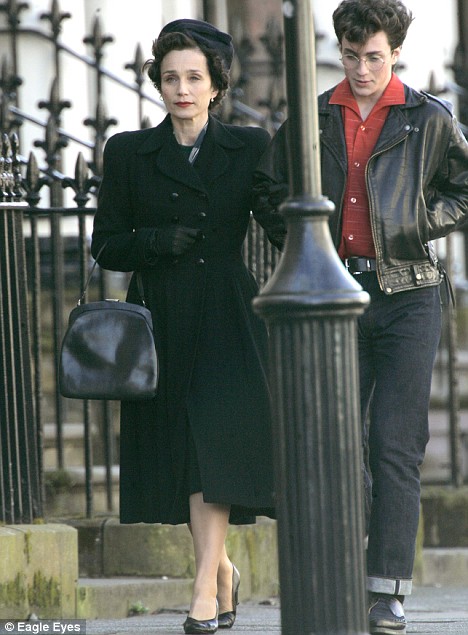
I’ve particularly enjoyed the mother-son relationship depicted so poignantly in the movie, and the tug of war between the one who has given birth to and the one who has raised the child.  For me, there is also a bit of competition, comparing the two amazing actors, Anne Marie Duff as Julia, Lennon’s birth mother, and Kristin Scott Thomas, as Aunt Mimi, who has raised the boy, stayed with him through thick and thin, and watched him emerge into a man of importance.

Everyone who watches a movie does so from his/her own frame of reference and perspective. While I’ve enjoyed the pre-Beatles era music and the early rock and roll in the film, as well as the human interest of youth striving to gain some sense of self, I’m nevertheless drawn to Scott Thomas’s role as Aunt Mimi.  She has shown what a mother is, even though she is not the one who has given birth to John.  She is someone who stays and not escapes, who takes care of daily tedium, who instills the ever unpopular notions of discipline and responsibility, and who takes nasty insults and hurting actions from a rebellious and still maturing teenager, all because of love.  Scott Thomas’s marvellous performance as the strict and stern Mimi is an effective foil against Duff’s frolicking Julia.  Both performances are moving.

Aaron Johnson has done a marvellous job in portraying a tormented soul torn between these two women. Meeting his birth mother Julia at 15, he can feel right away the thickness of blood.  On the outset, his musical talent has come from Julia, and his free spirit a natural extension of hers, yet he knows he is also tied to Mimi, and despite her restrained persona, he knows she has loved him deeply.

On his first gig as the Quarrymen, John is introduced to a fifteen year-old well-mannered teen by the name of Paul McCartney, nicely played by Thomas Brodie Sangster. Again, an effective foil between the two.  Paul is gentle, polite, chooses tea over beer, and does not have to bust and bang to release his pent-up emotions.  He also helps John with his guitar skills, teaching him more chords, and suggesting they write their own songs.  Paul definitely has it all collected under a stronger self despite the loss of his own mother just a year earlier.  Thus marks the beginning of a valuable friendship.

The fine production is significant considering it is a fact-based biopic of a period of Lennon’s life that has not been explored on film. Cinematographer Seamus McGarvey (Atonement, 2008) has crafted some colorful renditions for this period film.  The two sisters are also color-coded, Julia in red and pink, and Mimi, back and grey.  A bit too dramatic at times, but the point well taken, maybe something to do with director Sam Taylor-Wood being a visual artist before this her first feature film.  Also, some scenes may look melodramatic, but I was so immersed in the story I had thoroughly enjoyed them. The most moving scenes come at the end, and all the way through the credits.  That is when real photos and actual historical accounts are revealed, a poignant resonance to the film.

At the beginning of the end credits, we see that the film is dedicated to Anthony Minghella (1954-2008), the Oscar winning director who had brought us the The English Patient (1996), Cold Mountain (2003) and The Talented Mr. Ripley (1999), to name a few.  Minghella was instrumental in encouraging director Sam Taylor-Wood to make the transition from visual artist to filmmaker, and had worked with her on her short Love You More, which has earned her a nom for the Golden Palm at Cannes 2008.

Nowhere Boy garnered four BAFTA nominations including Outstanding British Film and Outstanding Debut Director for Sam Taylor-Wood.   Both Scott Thomas and Duff were nominated for BAFTA and The British Independent Film Awards, which Duff won, as well as the London Critics Circle Film Awards. Johnson’s impressive performance also led him to noms and wins.  Overall, a moving tribute to a pop icon and the two mother figures that had shaped his early life.

~~~ Ripples

The Hedgehog: Movie Review (Le Hérisson, 2009, DVD)

To read my book review of The Elegance of the Hedgehog, CLICK HERE.

I’m sure it must be a major challenge to turn Muriel Barbery’s The Elegance of the Hedgehog into a movie.  I admire director/screenwriter Mona Achache’s courage.  She has taken up a tall order to make her full feature directorial debut.  How do you deal with all the ubiquitous internal dialogues, philosophical ruminations, literary allusions, and turn the story that takes place inside a Paris apartment into a full length film, holding viewers’ attention for 100 minutes?  Overall, Achache has done well on a formidable task… including building the set, the whole luxury apartment façade from scratch, from the workable old-style elevator to the cast iron gate in the front entrance.

But, maybe that’s the easy part.

.

.

In the film, we look at things from 11 years-old Paloma’s point of view, for she is constantly video-taping the people and the happenings both in her own suite and those in her apartment building.  She intends to produce some sort of a visual philosophical treatise, her legacy, as she plans to take her own life on her 12th birthday.  This is a clever alteration, shooting video instead of writing a journal, for the visual effects.   We see a very intelligent girl (Garance le Guillermic), having concluded that life is utterly absurd, decides not to spend her life in a fishbowl as everyone else. With her artistic talents, Paloma has used her drawings as a kind of personal record-keeping; from her point of view, some delightful animations are added to enhance the appeal of the film. Paloma is an interesting and amiable character that ironically brightens up the film with some humorous deadpan takes.

The movie is an abridged and simplified version of the book, that is expected.  But while it has some stylish manoeuvring in presenting the story, I’m disappointed that the crux of the premise has not been focused upon. My major concern then, must turn to the other character.  The main speaker of the book is Madame Michel, Renée, the 54 year-old autodidact, the concierge of the luxury apartment.  Yes, we see her outward appearance following exactly what the book has described:

I am a widow, I am short, ugly, and plump… I live alone with my cat, a big, lazy tom… neither he nor I make any effort to take part in the social doings of our respective species.  Because I am rarely friendly–though always polite–I am not liked, but am tolerated nonetheless…

Well, maybe not the ‘ugly’ part.  But yes, we see the Hedgehog alright, but what about its elegance?

Josiane Balasko has put on a meticulous performance as Madame Michel, a bit too much even, for her grumpy persona has hidden all humor the character could have diffused, as the book has rendered.  But other than the faithful characterization on the surface, it is more important that the inner world, the clandestine and ignored persona of Renée be depicted.  What makes the book so appealing is Renée’s inner quest, not only for intellectual ideals (yes we see her reading and her secret library in the film), but her appreciation of art as a form of transcendence, her search for beauty in the mundane, her ability to seize the moment of permanence in the temporal, as Barbery has written: “pure beauty at the heart of ephemeral passion”.  It is such wisdom that Paloma finally realizes, and which changes her mind about suicide.  This crucial theme is not shown in the movie, and I count that as a major deficit, despite the conscientious effort in following the outward details of the book.

Director Achache, who has also written the screenplay, chooses to replace these gratifying thoughts with the cliché statement of  “It’s what you’re doing the moment you die that’s important.”  Well, ok… maybe she’d like to write a book with that premise, but I’m afraid it might not be the essence of the source material here.

Yes, we still have the new tenant Kakuro Ozu (Togo Igawa), who has wisely looked past the ordinary façade of a socially lower-ranked concierge, and chooses to embark on a romantic journey with his new-found friend.  And yes, we have the chance to see his newly renovated Japanese suite, even his Mozart-playing toilet, as well as an excerpt from the Japanese director Ozu‘s The Munekata Sisters. Achache has followed the particulars faithfully. I wish she had had explored the essence, transporting her viewers from the mundane to a transcendent plane, albeit just momentarily.

I must add though, the music has come through most effectively.  Thanks to Gabriel Yared, whatever that is missing has been displayed musically by the meditative tunes and the longing voice of the cello.  The Oscar winning composer has created such memorable scores for The English Patient (1996), which won him an Oscar, and nominations for Cold Mountain (2003), and The Talented Mr. Rippley (1999).  Here in The Hedgehog, his musical rendering is beauty itself.

The DVD is in French with English subtitles.  Special features include the making of and deleted scenes. Unfortunately, they are all in French with no subtitles.  While watching the luxury apartment building being set up from scratch is interesting,  without subtitles, the comments from the director and actors in the making of featurette cannot be appreciated as they should be.

~ ~ 1/2 Ripples