Diversity Wins at TIFF 2018

It’s a wrap for the 43rd Toronto International Film Festival as the awards were handed out on Sunday, September 16, 2018, at the TIFF Bell Lightbox Theatre 1. The top prize, the Grolsch People’s Choice Award went to Green Book, a world premiere at TIFF18. Directed by Peter Farrelly, the comedy-drama stars Mahershala Ali as classical pianist Don Shirley and Viggo Mortensen as a working-class Italian-American bouncer getting the job to drive Ali on the road in the American South during the 1960’s. Ali won an Oscar for his role in Moonlight (2016), Mortensen is a two-time Oscar nominee. Looks like the film has just got a huge boost with this win and will travel far in the upcoming Awards Season.
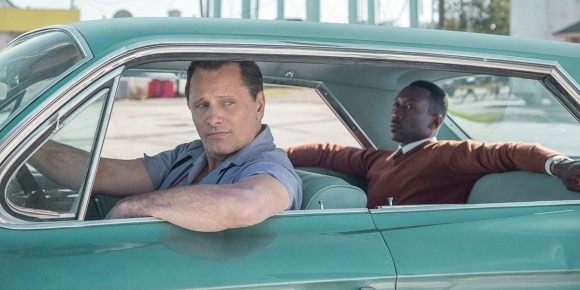
greenbook
Viggo Mortsensen driving Mahershala Ali in “Green Book”. Photo courtesy of TIFF.

If Beale Street Could Talk, a world premiere at TIFF18 and director Barry Jenkins’ follow-up to Moonlight (2016) was the People’s Choice Award First Runner-Up. Based on the novel by James Baldwin, the film tells the love story of a young African American woman trying to prove her imprisoned lover’s innocence. In the TIFF webpage, the film is described as a ‘gorgeous tone poem on love and justice.’

ifbealestreetcouldtalk_01
KiKi Layne and Stephan James in “If Beale Street Could Talk”. Photo courtesy of TIFF.

Alfonso Cuarón’s Roma (my review) came third in the People’s Choice Award. A Canadian Premiere at TIFF18, it is an artistic rendering of a young maid’s experience in a middle-class home in Mexico City during the 1970’s. Of note is the black-and-white film is regarded as a semi-autobiographical account of Mexican director Cuarón, the first Hispanic and Mexican to win the Academy Awards for Best Director with his sci-fi work Gravity (2013).
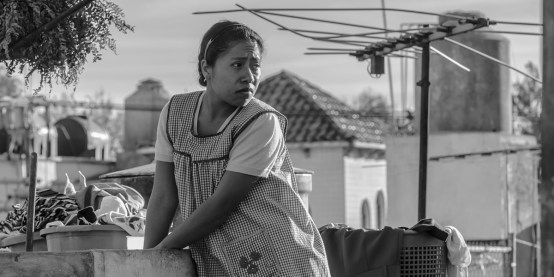
ROMA.jpg
Yalitza Aparicio as Cleo in Alfonso Cuarón’s “Roma”. Photo courtesy of TIFF.

The high-profile contenders First Man directed by Damien Chazelle with Ryan Gosling as astronaut Neil Armstrong, and Bradley Cooper and Lady Gaga’s A Star is Born did not place.

TIFF’s People’s Choice Award winner is often regarded as a predictor of the next Oscar Best Picture. Past winners that went on to capture the Oscar include Slumdog Millionaire, The King’s Speech, and 12 Years A Slave.

Capturing the People’s Choice Documentary Award is Free Solo, International premiere at TIFF18, directed by E. Chai Vasarhelyi and Chinese-American mountaineer/photographer Jimmy Chin. The duo chronicled the renowned rock climber Alex Honnold’s scaling free solo — without safety ropes — up the 3,000-foot cliff of El Capitan in California’s Yosemite National Park.

People’s Choice Award from the Midnight Madness program went to the The Man Who Feels No Pain, World Premiere at TIFF18, directed by Vasan Bala, one of the young, new wave filmmakers in India. This is a cinematic fusion throwing in Hong Kong martial arts comedy Stephen Chow styling, the agility of Jacky Chan, the Bollywood sensation, the American Superhero momentum, and the inspiration of Buster Keaton. Fits right in the Midnight Madness program of introducing new works by a new generation of filmmakers.

Platform Prize went to Cities of Last Things, directed by Ho Wi Ding. This world premiere at TIFF18 is a collaboration of filmmakers from Taiwan, China, USA, and France. From TIFF’s webpage, “a seamless blending of genres, from sci-fi to noir to romance, the Malaysian-born Ho commandingly employs cinematic language as a tool to discuss the root of our collective sadness, which is perhaps the very thing that makes us human.”

NETPAC Award for the world premiere of international and Asian film went to The Third Wife from female writer-director Ash Mayfair of Vietnam. A film about a 14-year-old girl’s struggles after she becomes the third wife of a wealthy landowner, set in 19th century rural Vietnam.


***


Dano’s ‘Wildlife’ elicits showcase performance from Carey Mulligan

Wildlife is a detailed capture of the dissolution of a marriage, from the point of view of the couple’s only child. It is also a coming-of-age story as 14 year-old Joe comes to realize the elusiveness of permanence in his parents Jerry and Jeanette’s once loving relationship. If all these names sound too common, that just might be one implication of the film – a specific look into a general human condition.

Wildlife
Carey Mulligan and Jake Gyllenhaal as Jeanette and Jerry in ‘Wildlife’. Photo courtesy of TIFF.

The film adaptation of Richard Ford’s novel is a selection in the Special Presentations program at the 2018 Toronto International Film Festival, screened as a Canadian premiere. It is the directorial debut of actor Paul Dano, co-writing the screenplay with Zoe Kazan (The Big Sick, 2017).

To those unfamiliar with Dano, maybe these titles will help you locate where he’s coming from and appreciate the variety of works he’s been in. Remember Little Miss Sunshine (2006)? He’s Olive’s older brother Dwayne who reluctantly gets into the yellow VW Beetle van and takes a vow of silence, or the dubious preacher confronting Daniel Day-Lewis in There Will Be Blood (2007)as the harsh slave driver in 12 Years a Slave (2013), or in the 2016 TV mini-series War & Peace as Pierre. Not the handsome leading man but always the character actor.

The small family in Wildlife consists of Jerry Brinson (Jake Gyllenhaal), a golf pro who has just moved into the town of Great Falls, Montana, with his wife Jeanette (Carey Mulligan) and son Joe (Ed Oxenbould). Just as they thought they’re settling in Jerry is fired from his job as a golf instructor in a country club. After waiting for a while for her husband to absorb the loss of job and pride but with no solution in sight to the household finance, Jeannette decides to come out of the home to look for work, ultimately finding a position as a swimming instructor at the Y.

That just may not be the cause of the conflict. What begins the total meltdown is when Jerry, out of the blue, packs up and follows a group of men heading to the forests to fight a wild fire fiercely raging near Great Falls, not knowing when he will return or if he can get out of it unscathed. Feeling utterly alone and abandoned, Jeanette begins to react to her precarious situation by venting with some out-of-character behavior. The successful businessman Warren Miller (Bill Camp), Jeannette’s swim student at the Y, just happens to be a convenient escape route. All these familial changes and development are observed uncensored by their sensitive teenaged son Joe.

From this his first attempt at directing, viewers would be gratified to find Dano to be an actor’s director; especially with the excellent cast he has under his helm, this is doubly rewarding. Dano lets the camera rest on the close-up faces of his characters to elicit superb performance, taking his time to capture the nuances in restraints, outburst, or just about any sort of inner feelings to surface.

Carey Mulligan.jpg
Carey Mulligan in ‘Wildlife’. Photo courtesy of TIFF.

This is one of the best, if not the best, performance I’ve seen Carey Mulligan in, changing from the loving wife and devoted mother to the angry and desperate single mom with a son to raise, to totally losing it, testing the boundaries of norms and behavior, and finally to the determined woman striking out on her own yet still bound by unseverable, familial ties. Mulligan deserves an Oscar nom for her role as Jeannette.

Watching his mother get close to Miller, Joe is torn between devotion and incredulity.  Although a successful businessman, Miller is a limping, older man. Joe is utterly perturbed by his mother’s capricious turn. Dano creates some poignant scenes depicting the interactions between mother and son during dad’s absence from home. Often the passive observer, Joe is restrained with countless questions he cannot express in words.

Mulligan gets all the juicy lines. After Jerry is gone to fight the wild fire, Jeanette brings Joe along to Miller’s house for dinner, putting on heavy make-up and dressing in a seductive night gown. She dances with the man intimately in front of her son. In another occasion, she dons cowgirl attire and admires herself in front of the mirror, reminiscing her younger days. Jeanette answers her son’s dazed expression with this line:

“It’s good to know your parents were once not your parents.”

There is a former life in every parent that even the closest child would not have known or understood. There are many thought-provoking lines in the film, but this one is particularly poignant.

Dano takes the liberty to follow the spirit of the text and creates a cinematic ending. His visual wrapping up is clear and spot-on, especially the scene at the studio where Joe works part-time. The final frame of the three sitting down together for a studio shot with Joe between his parents speaks volumes. A wild fire may have been put out, but the smouldering lingers; and the one keeping it under control may well have been a teenaged firefighter.


***


Update Nov. 16:

3 Nominations for “Wildlife” at the Film Independent Spirit Awards – Best First Feature, Best Female Lead, and Best Cinematography.


It Takes an International Film Festival to Remind Us

It takes an International Film Festival to remind us that we live in a world with many countries and myriad of cultures, languages and experiences beyond our own. The Toronto International Film Festival (TIFF) opens a window looking out towards such a diverse human kaleidoscope. (All photos in this post are by Diana Cheng, Sept. 2018)

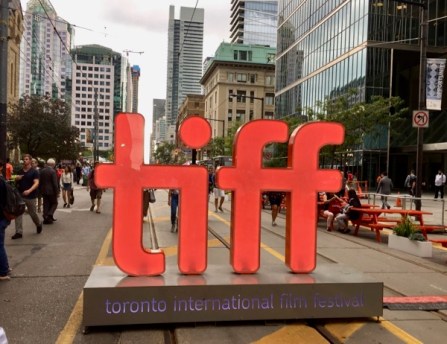
TIFF on Festival Street

What better time than now for us to press on to connect and share when it seems the progress we had made in recent decades had been dismantled in no time. What better means than through the visceral medium of film art in exposing views, eliciting empathy, and inspiring minds. Films could well be the best avenue to reach out and understand, as well, to be understood.

TIFF is the largest public film festival in the world. Its top prize is judged by the audience. Named the Grolsch People’s Choice Award, the annual winner is often a predictor of the next Oscar Best Picture. Some past winners include Slumdog Millionaire, The King’s Speech, 12 Years A Slave.

Glamour aside, the variety of its film selections are examples of diversity and opened doors to places and issues that are foreign to many in the Western world. But then again, finding the gem of universality may just be the serendipitous reward.

This year, the number of films in TIFF’s various programs comes to about 342, representing 83 countries, from Algeria to Kazakhstan to Vietnam, just to go down the alphabetical list. These official selections are chosen from a total of 7,926 submissions, 6,846 from around the world, 1080 from Canada domestically. Among these three hundred some titles, over 80 languages are used. After watching half a dozen of the international entries, reading subtitles at the bottom and watching the whole screen at the same time will become a skill you’ll be happy to have acquired.

Share Her Journey

Further, the Share Her Journey Rally on Saturday, September 8, lends a voice to the #MeToo and #TimesUp movements, pressing for respect and equality for women on both sides of the camera. Attended by hundreds and led by actress Geena Davis among other distinguished guests, the Rally represents a united front to shatter the glass ceiling in the film industry. This year at TIFF, 35% of films are by women filmmakers, a statistic that TIFF is aiming at improving.

During the first few days kicking off the Festival, King Street West was closed for a few blocks for pedestrians to enjoy the fun, food, and free samplings. Here are some sights on Festival Street.

Fusion food is the best sign of diversity. Check these menus out:

Food Truck Menu where East meets West

Fusion

Or, be transported to Paris just for a dream trip:

On Festival Street

and stop for a latté and croissant at Bistro Air France, if you don’t mind waiting:

Bistro Air France

To many, the fun part of TIFF is waiting. Many wait for hours to get just one glimpse of their favourite stars to arrive at a red carpet, there are several in different venues in downtown Toronto:

Star Gazing

Here’s another one, also waiting for their faves:

Still Waiting

**

(All photos in this post are by Diana Cheng, Sept. 2018)

In the days ahead, my list of film reviews on both Asian American Press and Ripple Effects will include (director’s name after title):

Burning, Lee Chang-dong, S. Korea, N. American Premiere
Capernaum, Nadine Nabaki, Lebanon, N. American Premiere
Hotel Mumbai, Anthony Maras, Australia, World Premiere
Kursk, Thomas Vinterberg, Belgium, Luxembourg, World Premiere
Maya, Mia Hansen-Løve, France, World Premiere
Roma, Alfonso Cuarón, Medico, Canadian Premiere
Shoplifters, Hirokazu Kore-eda, Japan, Canadian Premiere
Shadow, Zhang Yimou, China, N. American Premiere
The Wild Pear Tree, Nuri Bilge Ceylan, Turkey, France, Germany, Bulgaria, North American Premiere
Wildlife, Paul Dano, U.S.A., Canadian Premiere

Just to name a few. More reviews coming up. Check out the details of the programs from tiff.net


***

Arti at TIFF and Ripple on Rotten Tomatoes

DSC_0718

Two major news. Yes, the above title says it all.

I’m in Toronto now, all geared up to watch the screenings of a dozen films I’ve selected at the Toronto International Film Festival Sept. 6 – 16. Will keep you posted on the sights and sounds here.

There are 342 films in TIFF’s various Programs, submitted by filmmakers from 84 countries. Among the selections, 254 are full feature films, 88 shorts. These are selected from 7,926 submissions from all over the world.

Following a Ripple tradition, presenting titles from book to screen, here are some of TIFF’s feature productions that are adaptations from published, written sources:

First Man, dir. by Damien Chazelle, Ryan Gosling as Neil Armstrong, based on the book First Man: The Life of Neil Armstrong by James R. Hansen

Beautiful Boy dir. by Felix Van Groeningen based on two memoirs, Beautiful Boy by father David Sheff and Tweak by son Nic. Steve Carell and Timothée Chalamet play father and son.

Burning dir. by Chang-dong Lee, based on the short story “Barn Burning” by Haruki Murakami, which (in my opinion) is in turn based on the short story of the same name by William Faulkner.

The Hate U Give dir. by George Tillman Jr., based on the book of the same name by Angie Thomas (2017 National Book Award longlist, Young People’s Literature)

If Beale Street Could Talk dir. by Barry Jenkins (2017 Oscar winner ‘Moonlight’), based on the book of the same name by James Baldwin.

The Front Runner dir. by Jason Reitman, based on the book All the Truth Is Out by Matt Bai. Hugh Jackman as the 1987 presidential candidate Gary Hart.

The Sisters Brothers dir. by Jacques Audiard, based on the book of the same name by Patrick Dewitt (shortlisted for the Booker Prize 2011)

Wildlife dir. by Paul Dano, based on the book of the same name by Richard Ford. Carey Mulligan and Jake Gyllenhaal star.

A Million Little Pieces dir. by Sam Taylor-Johnson, based on the (controversial) memoir by James Frey

**

The second piece of news actually is equally exciting. My movie reviews on Ripple Effects are now approved to be included in the Rotten Tomatoes® review aggregation website. That means, yes, my two pebbles will be counted in the Tomatometer® score for a movie which I’ve reviewed on Ripple and submitted to them. (This actually is a spin-off as they first approved me for my reviews on Asian American Press.)

Nothing’s changed. Just feeling good that the Ripples from the Pond can have far-reaching Effects.

***


Let ‘Things to Come’ be a Cooling Respite

July’s gone, but we’ll always have Paris.

There are many words I can use to describe the Paris born, veteran (here’s one of them) French actress Isabelle Huppert. Prolific, versatile, and age-defying. In 2016, two of her works came to prominence in the awards circuit, two features that show her in distinctly different roles that won her acclaims across the Atlantic. Playing a vigilant woman who schemingly fight back a rapist in her neighborhood in Elle, Huppert garnered a Best Actress Golden Globe and an Oscar nomination.

Things to Come

The other feature is Things to Come. Huppert is Nathalie Chazeaux, a philosophy professor, a published academic writer and editor, a mother of two almost grown children, a wife, a daughter, and a woman at the crossroads in her life.

On the career and academic front, Nathalie’s just been told by her publisher that her textbook would no longer be needed. On the home front, her husband of 25 years, Heinz (André Macron), has just confessed to her that he’s seeing another woman and will be leaving Nathalie to live with his younger love. Even though on good terms with their parents, her two children have grown enough to move away from home. As a daughter, Nathalie has to deal with a dementia-afflicted mother (Edith Scob) who calls her cell phone even while she’s teaching, delusional and threatening suicide. What is Nathalie to do?

Here, I must mention another crucial figure in the production, and that’s director Mia Hansen-Løve, who won Best Director with this feature at the Berlin International Film Festival in 2016. At eighteen, Hansen-Løve was cast by French director Olivier Assayas and later starred in another of his works. Partnered with him for a while, she’d chosen her own path, studying philosophy, writing for the prestigious French film magazine Cahiers Du Cinema, and later, directing.

Daughter of two philosophy professors, Hansen-Løve’s preoccupation with intellectual discourse is apparent in Things to ComeIn an interview, she’d said, “… for me, cinema is nothing but another way to practice philosophy… cinema is a search for wisdom, a search for good and for beauty, like philosophy could have been a search for my parents.” The intellectual exploration of what’s good and Utopian predominates in Things to Come. The film is worth a second, or third viewing just to capture the dialogues.

While she may be tossed like a floating weed in the torrents of life, Nathalie enjoys the fruit of her labor in her former star pupil Fabien (Roman Kolinka), now a writer and activist. However, as she’d influenced Fabien in his pursuit of philosophy and writing, he’d also chosen his own path by living with a few anarchists in a remote cabin in the French countryside. His outlook diverges from hers and which she can’t agree, ironically, that’s the reward of her teaching: training one to think for oneself and to choose one’s own path independently.

Upon his invitation, Nathalie had spent a few days there, an idyllic ,rural setting for her to recuperate from a life unhinged. She’s got her mother’s cat with her, Pandora, a cat that’s not used to the wild but takes off the instant Nathalie takes her out of the cabin. Lost for hours but Pandora finally finds her way back to the country abode in the middle of the night. ‘Instinct’, Fabien says. And that just might be what Nathalie needs to hang on to at this moment of her life.

Surely, Things to Come is a ‘thinking’ film, but viewers will also enjoy the nuanced performance of the cast, and what the camera reveals in the form of natural beauty and serenity for one to search things out. What more, Hansen-Løve lets us see both the larger scale of a flaw-ridden society and the trivial foibles in the interactions between Nathalie and Heinz.

Female viewers would likely find affiliation with Huppert’s role of an urban, professional woman who has to juggle many hats to fulfill her duties. Nathalie’s search for direction at the crossroads may not necessarily lead to obvious answers, but she manages to find comfort and joy in the birth of her grandchild, an endearing scene to end the film.

More importantly, Nathalie seems to have carved out a quiet solitude. an independence to mull on the unfathomable in life. Still searching, but in the meantime, she seems to have found a respite, a new solace to face what things may come.


~ ~ ~ ~ Ripples 


***

‘Cleo from 5 to 7’: A Film for Paris in July

Summertime… and the viewing is nostalgic. On a lazy, hazy summer afternoon, what better way to spend your time than to catch up on classic films that you’d missed through the years, or, rewatch them. Sure, a glass of pink lemonade and some chocolate-dipped madeleines would add to the enjoyment.

Here’s a wonderful film by the venerable Belgium born French director Agnès Varda, who turned 90 on May 30 this year. Just exactly what she was doing a few weeks before her 90th birthday?

On May 12, Varda joined Cate Blanchett in leading 82 female industry figures to walk up the stairs on the red carpet at the Cannes Film Festival, a silent protest symbolizing the challenges women face in climbing the industry ladder. Blanchett gave a speech in English, Varda in French.

Cleo from 5 to 7 (Cléo de 5 à 7) is a 1962 film by Varda, a Cannes Palme d’Or nominee the next year. The story takes place on one single day in the life of a popular recording singer Cleo (as in Cleopatra) who loves everything beautiful looking. But early in the day she receives all sorts of bad omens about her health. Her zest for life fizzles through the day as she would be calling her doctor to find out the result of the medical test she’d taken a couple days ago.

Cleo from 5 to 7.jpg

We follow Cleo on the longest day in 1962, yes, that’s the first day of summer, which could have brought her vitality and joy. How does the fear of illness and mortality affect the beauty-seeking and fun-loving Cleo? It totally changes her outlook. Instead of being cooped up in her apartment with musicians rehearsing her songs, she steps out into the streets of Paris to escape the gloomy sense of despair.

Don’t worry, this is not Sarte or Camus. Cleo is just a gal seeking to be loved, and for the first time in her life, fearing for her own mortality. Varda takes us along the streets of 1962 Paris, and offers us naturalistic scenes of cafes and roadside buskers, and leads us into an art studio as Cleo looks for her friend who works as a model for sculptors.

Finally, she’s alone in a park, the serene, meditative milieu is the ideal setting for her to meet Antoine. The encounter is the magic she needs. The rest you ought to see it for yourself. Varda’s pace is leisurely, her viewpoint insightful, and the ending is satisfying. Maybe by now, Cleo learns the difference between beautiful-looking and beauty.

The original music is soothing and cooling for a summer day, composed by Michel Legrand (who is the piano player in the movie). Legrand is a three times Oscar winning French film composer. Which three times? Yentl (1983), Summer of ’42 (1971), The Thomas Crown Affair (1968).

As I said, summer is the best time for nostalgic viewing.


~ ~ ~ ~ Ripples

***

Paris in July is hosted by Tamara of Thyme for Tea, an annual summer blogging event.

Paris in July 18

***


Summer Reads before the Coming Movies

What to read next? I’m sure that’s not a question in many readers’ mind as their TBR pile is high. But if you love to read the books before watching the movie adaptations, or looking for summer reads, here are some titles that might pique your interest.

Where’d You Go Bernadette? by Maria Semple

Fun to listen to, love that voice in the audiobook. But if you’re a print aficionado, this  would make one breezy summer read and a movie to look forward to this fall. Cate Blanchett is Bernadett Fox, with Kristen Wiig and Judy Greer. Directed by Richard Linklater, who gave us the ‘Before…’ trilogy, Boyhood, and many other wonderful films.

Bel Canto by Ann Patchett 

Ann Patchett’s 2001 novel won the Orange Prize for Fiction and the Pen/Faulker Award. A world-renown opera singer is trapped in a hostage crisis and the subsequent events. Based on a true incident in the Japanese embassy in Lima, Peru in 1996-1997. A movie adaptation has been brewing for some years and finally it’s made. Julianne Moore plays the lead role. Directed by Paul Weitz (About A Boy)

Crazy Rich Asians by Kevin Kwan

Kevin Kwan’s Crazy trilogy is highly readable. Don’t get turned off by the titles like I was at first. They’re no-holds-barred satires that are bound to be eye-openers to many readers. A modern day, Asian version of Lizzy meeting Mr. Darcy. Movie adaptation coming out later this summer and will be a testing ground for audience world-wide with its all Asian cast and director. “Fresh Off the Boat” TV series star Constance Wu plays NYU prof Rachel Chu, Michelle Yeoh (Crouching Tiger), Ken Jeong (Dr. Ken) are in. Jon M. Chu (Now You See Me 2) directs.

The Sisters Brothers by Patrick DeWitt

Among the multiple awards Canadian writer Patrick DeWitt won with his 2012 novel was the Stephen Leacock Medal, which means it’s very humorous. A story about the brothers who share the last name Sisters. If you’re into dark but comedic Westerns, here’s your pick. A-listers Jake Gyllenhaal, Joaquin Phoenix, John C. Reily star. Acclaimed French director Jacques Audiard (Rust and Bone) helms. Story takes place in Oregon and California during the 1850’s. Shot in Romania and Spain. That’s movie making today.

**

Other interesting titles just announced or in development:

David Copperfield by Charles Dickens

Entitled The Personal History of David Copperfield which I believe was the original Dickens title, is now being adapted once again into a contemporary version. Exciting to see old classics not only survive but getting creative remakes for modern-day appeal. This may not sit well with purists, but hey, our world is changing and spinning crazily every minute, so might as well enjoy the ride. This one stars Dev Patel as David Copperfield. You remember that’s the promising young man from Slumdog Millionaire, and after that, some worthy titles. He’s come a long way. An apt choice, I’d say. Tilda Swinton, Ben Whishaw, Hugh Laurie all in.

How to Stop Time by Matt Haig

Benedict Cumberbatch acquired the film rights of Haig’s newest novel even before it’s published. So must be good. Cumberbatch will star as the 41 year-old man who actually has been living for centuries. Must contain some secrets of staying young, or maybe just a condition that you wouldn’t want. British novelist and journalist Haig’s books have been translated into 30 languages world-wide.

“The Judge’s Will” by Ruth Prawer Jhabvala

Ruth Prawer Jhabvala’s last short story will be adapted into film to be directed by Alexander Payne. The ideal screenwriter for this one? James Ivory of course. Ismail Merchant, James Ivory, Ruth Prawer Jhabvala, the literary-to-film triangle, my all time faves. You can read the story right here at The New Yorker online.

**

And here are some literary titles remade for TV series or movie on the small screen now or coming up:

King Lear by William Shakespeare

Vanity Fair by William Makepeace Thackeray

Little Women by Louisa May Alcott

Howards End by E. M. Forster 

The Miniaturist by Jessie Burton


***


‘The Rider’ is Poetry on Screen

“The Rider” opens this weekend in selective cities. If it’s screening in your area, don’t miss it.

The Rider

What is a cowboy to do if he cannot live the cowboy life again? Too remote? Substitute ‘cowboy’ with any other activities you love to do, or a role that defines you. Take that away, and what do you have left?

The film focuses on the struggles of a rodeo star and expert horse trainer Brady Blackburn as he rebuilds his life and identity after a severe head injury. Upon the prognosis of his doctor, Brady should never go back to riding and rodeo again, for another injury would be fatal.

“The Rider” is an American feature, unique in its subject matter while its director is an unlikely candidate to share the insight. Chloé Zhao was born in Beijing, had studied in London, then Massachusetts and New York. “The Rider” is her second feature. In her short directorial career, she has gone to Cannes twice, nominated in 2015 for the Caméra d’Or (“Golden Camera”), Cannes’ award for the best first feature film, and winning The CICAE Art Cinema Award in 2017 with “The Rider”. That is, among other international accolades. Zhao is an exemplar of a global citizen in filmmaking.

Chloé Zhao

The actors for “The Rider” exude authenticity, for they are actual cowboys and their family, all playing themselves. Brady Jandreau takes the role of Brady Blackburn, reflecting his real-life persona, a cowboy who is much admired and respected in the rodeo community. His father Tim and sister Lily form the Blackburn family in the film. Zhao’s directorial skills shine forth as she leads the non-actors in front of the camera, capturing them in their natural speech and actions, in particular, offering viewers realistically the dexterity involved in the wrangling work. But the film goes much deeper than the actions.

Recovering from the near-fatal injury pits Brady into a precarious existence and conflicting relationship with his father Wayne (Tim Jandreau). As a tough cowboy himself, Wayne had all along brought Brady up to be resilient and competitive, but now father had to dissuade son from the risky pursuit of bronco riding and rodeo activities. Nursing a wounded body and a tormented mind, Brady has to deal with the painful task of redefining himself. Temporarily working in a supermarket and wearing a store uniform makes Brady a displaced person, a persona out of meaningful context, both to himself and to those who recognize him as they come into the store.

While there are tense undercurrents with his dad, Brady cherishes the intimate bond with his sister Lily (Lily Jandreau), who expresses herself from her own peculiar, internal world. Kudos to Zhao for casting the real-life brother and sister in the film, they need not be experienced actors to conjure up some genuine, moving scenes.

Much of the film’s effectiveness goes to the inspiring cinematography, exposing quietly Brady’s tormented soul. The opening sequence sets the stage right away with riveting close-ups of a horse and its breathing. As the camera turns from beast to man, we see the extent of the injury Brady sustains as he gets out of bed and follows the routine needed to care for his own body, striving to return to a past life and regain some sense of normalcy.

In other sections of the film, the camera pans the vast landscape of the South Dakotan plains with a tiny figure that is Brady walking or riding through. “The Rider” is visual poetry on a subject that is seldom explored, and cinematographer Joshua James Richards is most effective in transposing Brady’s internal quest lyrically on screen: “A horse’s purpose is to run in the prairies; a cowboy’s is to ride.”

Brady’s good friend Lane Scott (Lane Scott) is a painful reminder of the risks a cowboy takes. Paralyzed and brain damaged after a fall in a rodeo event, Scott now communicates barely by spelling out words one letter at a time signing with his fingers. Poignantly, Zhao depicts Brady’s every visit with Lane in the hospital as an encounter of love and hope without sentimentality.

Zhao is nuanced and eloquent in creating impressionistic scenes. And when horse and man are juxtaposed in such intimacy, the parallel is striking. As Brady puts it, when a horse is badly hurt it has to be put down, that is the humane thing to do; when a cowboy is badly hurt, he has to continue to live, for that is what humans are supposed to do. As we come to the turning point of the film towards the end, the presence of family love and support appear to be the key to moving on.

A rare gem of a film. Watch it with a quiet heart.

~ ~ ~ ~ Ripples


***

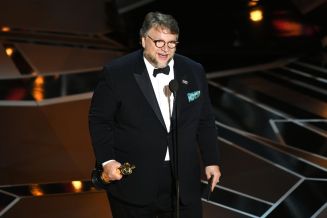
“I am an immigrant” Oscar winning director Guillermo del Toro speaks for millions

Who isn’t from a lineage of immigrants in this relatively new continent of ours ‘discovered’ just a few hundred years ago. Even the indigenous of our land are thought to have had migrated from elsewhere. In his acceptance speech for Best Director at Sunday’s 90th Academy Awards, Mexican film director, writer, and producer of The Shape of Water Guillermo del Toro conveys multiple truths. Indeed, multiplicity looks to be the trend forward.

del Toro

“I am an immigrant,” del Toro declares, these four words bold and clear, albeit humbly and thankfully.

The director continues:

“In the last 25 years I’ve been living in a country all of our own. Part of it is here, part of it in Europe, part of it everywhere.”

del Toro highlighted another truth by saying that being a part of a diaspora, home can be anywhere. While some may oppose to it, one cannot deny the effects of globalization is a breaking down of barriers, the fusing of cultures, and the forming of the world citizen.

del Toro is the third Mexican director to win the Best Picture Oscar. He follows two of his countrymen–‘The Three Amigos’ as they’re called– basking in the Oscar limelight in recent years, Alfonso Cuarón for Gravity in 2013 and Alejandro González Iñárritu in the subsequent two years for Birdman and The Revenant.

“… I think that the greatest thing that our art does and our industry does is to erase the lines in the sand. We should continue doing that when the world tells us to make them deeper.”

The making of the Oscar winning feature The Shape of Water is a testimony of border crossing. Written and helmed by a Mexican director, the film stars a London, England, born Sally Hawkins, supported by a cast of American actors. Original music written by a French film composer, Alexandre Desplat, who won his second Oscar with his water music (his first was The Grand Budapest Hotel in 2015). Director of photography is Danish cinematographer Dan Laustsen. The movie nominated for thirteen Academy Awards and winning four is shot and produced in Toronto and Hamilton, Ontario, Canada. Toronto production designer Paul D. Austerberry and his team garners an Oscar for their creative work, bringing del Toro’s fantastic imagination to life.

del Toro sure knows what it means to erase lines in the sand.

Kazuo Ishiguro

A parallel figure can be found in the world of another art form. The 2017 Nobel Laureate in Literature Kazuo Ishiguro was born in Nagasaki, Japan, in 1954. When he was five, he followed his family to England. At first his parents thought their sojourn would be a short couple of years, but the family ended up staying there ever since. Immigrants as well. Ishiguro had not returned to visit the country of his birth until thirty years later.

His earliest novels are set in Japan confronting Japanese issues; his later works expand out to other locales and even crossing literary genres. His most well-known novel is perhaps The Remains of the Day which was adapted into film starring Anthony Hopkins and Emma Thompson. It is bona fide a British novel.

Is he a Japanese writer or an English writer? Ishiguro was asked this boundary-setting question after his Nobel win. In his own words on the British Council Literature webpage: “I am a writer who wishes to write international novels. What is an ‘international’ novel? I believe it to be one, quite simply, that contains a vision of life that is of importance to people of varied backgrounds around the world. It may concern characters who jet across continents, but may just as easily be set firmly in one small locality.” Only by eliminating borders can one reach the universal.

del Toro had it right when he used the metaphor of lines in the sand. Often borders are not carved in stone but fluid and arbitrary. Surely you can make them deeper. But sand being sand, the lines can be readily washed away as the tides of change come rolling in.

***

I thank Asian American Press for allowing me to repost my article in full.

Related Posts:

The Shape of Water is All Enfolding

Don’t Just Drive Past The Three Billboards

Mudbound: From Book to Screen


Don’t just drive past Three Billboards

Three Billboards outside Ebbing, Missouri is a ‘Coen-esque’ feature with Fargo (1996) star Frances McDormand. This might well be one of the better Brit-U.S. collaborations in recent, tumultuous years. And McDormand just might head to another Best Actress Oscar win after Fargo.

Caution: The following discussion involves a minor spoiler. Not so much a spoiler in plot but in idea. I can’t be more obscure in reviewing the film if I’m to delve into meaning.

***

In British writer/director Martin McDonagh’s debut feature In Bruges (2008), the main character, a hitman, Ken (Brendan Gleeson), explains to his angry crime boss Harry (Ralph Fiennes) why he didn’t kill his young protégé Ray (Colin Farrell) as Harry had ordered, saying: “He has the capacity to change. We all have the capacity to change.”

Three Billboards outside Ebbing, Missouri is McDonagh’s damatization of this pivotal idea in full force: We all have the capacity to change. Viewers may not like the characters or their speech, but the dark comedy leads us to the point where we’ll find it worthwhile to hold our judgment, no matter how despicable they behave or speak. And that is the main reason for the gratifying ending of Three Billboards: Change. A change from distraught to calmness, from tension to release.

three-billboards-poster-2

Indeed, language is the spoken expression, the tip of the iceberg. What lies beneath and beyond language is the essence of a character. McDonagh’s script is starkly effective in presenting the different sides of his characters. Not that we should make excuses for their wrongs, but that everyone has a backstory and a present reality to deal with.

Mildred Hayes (Frances McDormand) has lost her teenage daughter Angela (Kathryn Newton) to a most violent, horrific crime, ‘raped while dying’. She is frustrated by the inability of the police to bring in any arrests. The three billboards she pays for outside Ebbing, Missouri advertise to the world her rage, targeting police chief Willoughby (Woody Harrelson). It’s her intention that the publicity they draw could lead to some effective police actions.

McDonagh is apt to instil humour into the sombre subject matter. The dialogues are sharp and the actors deliver. Call it a dramedy if you will, but the spontaneous laughters generated in the theatre are bittersweet, for they are acerbic depiction of racism, injustice, and the grieving rage of the unconsoled.

The three billboards pit Mildred against the town except for her co-worker Denise (Amanda Warren) in the gift shop and an admirer James (Peter Dinklage) in the bar. Her action has put her otherwise devoted son Robbie (Lucas Hedges) in an awkward position in school and inflamed her ex Charlie (John Hawkes), whose 19 year-old girlfriend Penelope (Samara Weaving) is totally oblivious to what’s going on in town. Dixon (Sam Rockwell) from the police station shows his utter disgust with unchecked impulses.

While the ensemble cast deserves kudos, the pivotal acts fall on three characters. Their superb performance augments the incisive and thoughtful script.

McDonagh wrote the role of Mildred Hayes with Frances McDormand in mind, and she delivers with a punch. Her actions as an angry and helpless mother is stark and brutish, but McDonagh also shows us her vulnerable side, a mother who is regretful of the argument she’d had with her daughter on that fateful day, mournful for a daughter who’d never come home, and embittered by the ineptness on the part of the police. McDormand indwells her role so effectively that she makes me see only the angry Mildred, and totally forget the pregnant, innocent police woman in Fargo.

Sam Rockwell’s dimwitted, racist Dixon stirs up non-stop laughs in the theatre. His ultimate change is the powerful force that makes the latter half of the story so gratifying.  Rockwell’s performance is spot-on. McDonagh wants us to have a last laugh on him too: Dixon’s heart may have melted by some kind, motivating words from chief Willoughby, but his intellect remains intact.

Woody Harrelson plays Chief Willoughby with a heart. He is a tough police chief and yet underneath is a kind man, a loving husband to his wife Anne (Abbie Cornish) and a devoted father to his two young girls. Furthermore, Mildred is not the only one bearing life’s harsh blows. While Mildred reacts with rage, Willoughby deals with repressed fears.

A few kind words can cause immense change. And when one person changes, the ripple effects are contagious. The latter part of the film with its twists and turns slowly reveal how positive changes ripple on. For often underneath the hard surface lies a moldable heart. I particularly appreciate the audacity of McDonagh’s writing. Among the tough and macho, love is noted as the key to hold up oneself as love leads to calmness, and calmness to thoughtful actions.

Tying up the emotional bond is the music, in particular, the Irish folk song “The Last Rose of Summer”. Thomas Moore’s lyrics and the soft yearning of Renée Fleming’s voice sings out the sad tune in Mildred’s heart, a cry for justice and the dispelling of emptiness and loss. In the opening scene, the song introduces us to the three billboards as Mildred drives by and contemplates her vengeful scheme, the song reprises as vengeance engulfs a distraught heart and leads to a violent act. Ironically, that scene becomes a pivotal turnaround for Dixon in the police station.

‘Tis the last rose of summer left blooming alone
All her lovely companions are faded and gone
No flower of her kindred, no rosebud is nigh
To reflect back her blushes and give sigh for sigh

The juxtaposition of a quiet Irish folk tune with a fictional, small American town dealing with the fallouts of a horrific, unsolved crime may sound incompatible, but it’s poignant and effective here.

Old loves are irreplaceable, yet regrets cannot heal deep wounds. Lovely companions may have faded, but new ones can be forged, albeit not the same nature, but there’s  hope for new bonds. The last rose of summer dissolves to the first red leaf of fall. It could still be a beautiful season.

~ ~ ~ ~ Ripples

The Shape of Water is all Enfolding

In his review of Guillermo del Toro’s Pan’s Labyrinth (2006), Roger Ebert described it as a fairy tale for adults. Well Roger, the director of fantastical cinematic imagery has given us another one. Compared to Pan’s Labyrinth, this is a simpler and less horrifying tale. The Shape of Water is a delightful love story with a gratifying, requiting end.

The Shape of Water is set during the Cold War, in 1962 U.S., inside a high security, science research centre. Richard Strickland (Michael Shannon) oversees a new arrival from the Amazon (South America that is), a monstrous beast, and if he cares to really examine the creature with an appreciative eye, a beautiful Amphibian Man (clandestinely played by Doug Jones). Yes, the reverse of Hans Christian Andersen’s The Little Mermaid.

In the research centre is Dr. Holffstetler (Michael Stuhlbarg), who has to tend to his covert mission, it is the Cold War after all, but from a scientific point of view, does have an appreciative eye for the creature.

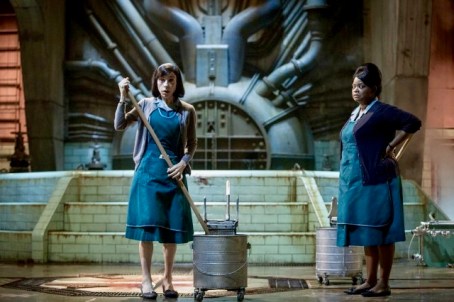
The Shape of Water (1)

At the bottom of the rung are the janitorial staff, Elisa and Zelda, and with them the story comes alive. Sally Hawkins and Octavia Spencer’s duo performance is worth your movie ticket. They are the heart and soul of the story, something which the villain lacks. As a fairy tale, we can identify who that is right away, and the irony of who the monster is quickly becomes apparent.

Elisa is mute, she cannot speak but can hear what you say, so be careful. She knows a language that you’ll need a translator to understand, so be careful about that too. Thanks to Zelda, her official interpreter, she knows what not to translate as Elisa speaks her mind to ruthless Strickland.

Elisa’s neighbour is Giles (Richard Jenkins), an artist who does appreciate the Amphibian Man. He is of immense help to Elisa, a faithful friend to her despite endangering his own life. As a fairy tale, we see the good among the characters in sharp contrast to the villain.

As she cleans the facility, Elisa soon comes to appreciate the Amphibian Man, and the creature soon relates to her as she is, not as a handicapped, low-ranking cleaner. The two forge a bond stronger than any dangerous obstacle. The film moves into the second half as a thriller and leads us to see how love overcomes such obstacles. Love not just between the two obvious characters, but from those built upon friendship and mutual respect. As for the Amphibian Man, he is more powerful than just brute force as the story reaches its climax.

As the Awards Season is well underway, all leading to the finale, the Oscars, we see The Shape of Water gaining tremendous momentum. Among other accolades, it won the AFI Award for Movie of the Year, two Golden Globes: del Toro for Best Director and Alexandre Desplat for Best Original Score, and just received 12 BAFTA nominations. While Sally Hawkins and Octavia Spencer both get acting noms, they face strong contenders such as Frances McDormand (Three Billboards Outside Ebbing, Missouri) and Saoirse Ronan (Lady Bird).

The Shape of Water is a simple depiction of human longings and our universal need for connection. It’s a fairy tale love story and not a treatise on controversial subjects for debates. It offers some interesing cinematic visualization, like the beginning scene of Elisa’s apartment under water. The underwater romantic rendition towards the end of the movie, coincidentally, elicits another indelible cinematic moment from my memory, an underwater love scene also involving a woman who cannot speak, a film with which Marlee Matlin won her Best Actress Oscar with her heart-wrenching performance, and that’s Children of a Lesser God (1986).

Surely, water, the shape of it, all enfolding, is the main idea, for that’s what love is like.

~ ~ ~ 1/2 Ripples


Top Ripples 2017

The following is a list of books, movies, and events that stirred up the most ripples for me in 2017. Note that the books and movies are not necessarily releases from 2017 but just what I’ve had the privilege to encounter this year. If you don’t see your book here, it could be that it’s on my TBR list for the coming year. If you don’t see your fave movie here, it could be that I haven’t watched it or that I have but, indeed, it’s not here. Click on the links to read my reviews.


MOVIES

Three Billboards Outside Ebbing, Missouri directed by Martin McDonagh

Mudbound directed by Dee Rees

Certain Women directed by Kelly Reichardt

The Big Sick directed by Michael Showalter

Stefan Zweig: Farewell to Europe directed by Maria Schrader

Wind River directed by Taylor Sheridan

Things to Come directed by Mia Hansen-Løve

Silence directed by Martin Scorsese

The Rider directed by Chloé Zhao (55th NYFF)

The Road to Mandalay directed by Midi Z (NYAFF)

Calvary directed by John Michael McDonagh


BOOKS

At the Existential Cafe: Freedom, Being, and Apricot Cocktails by Sarah Bakewell

Little Fires Everywhere by Celeste Ng

Mudbound by Hillary Jordan

Nutshell by Ian McEwan

Wildlife by Richard Ford

The Noise of Time by Julian Barnes

The God of Small Things by Arundhati Roy


EVENTS

Visit to MoMA Click on the link to my post.

NYFF at Film Society of Lincoln Center: In September I had the chance to attend press screenings of the 55th New York Film Festival. CLICK HERE for all my reviews on AAPress.

Other than hanging out at the Film Society of Lincoln Centre for the screenings, I’d experienced NYC on the bus, in the subway, and simply on foot, some days close to 20,000 steps, making my NYC trip extra rewarding. Here are some pics of the memorable experience.

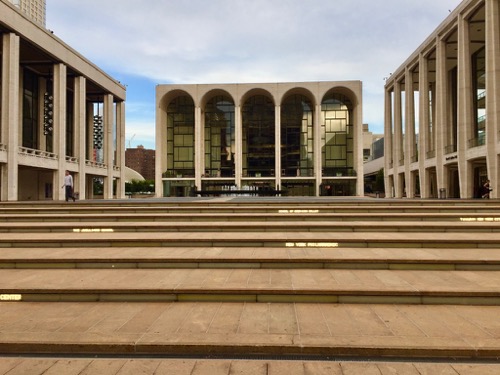
Lincoln Center:

IMG_5673.jpg

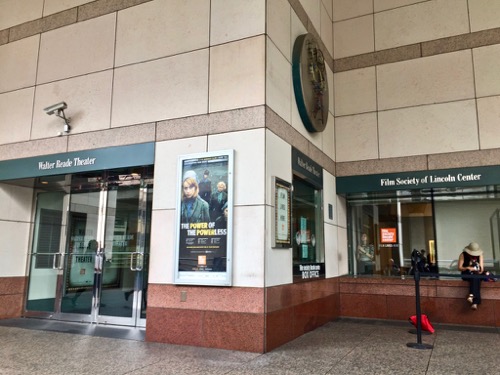
Film Society of Lincoln Center where the screenings took place:

IMG_5676

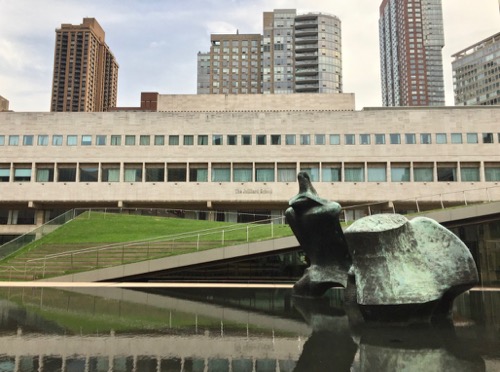
The Juilliard School:

IMG_5670 (1)

Central Park:


Reflection in Central Park


One World Trade Center:

IMG_5907.jpg

IMG_5860

IMG_5852 (1).jpg

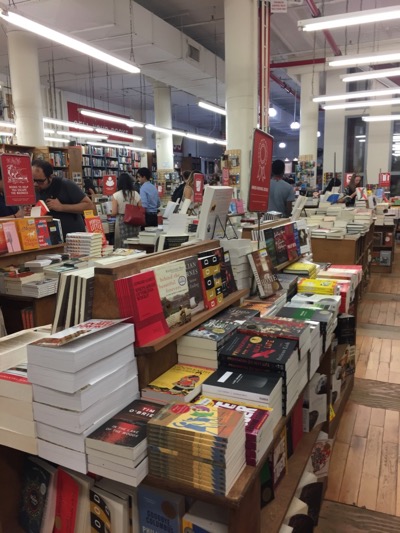
Strand Bookstore:

IMG_5691

IMG_5688

Brooklyn Bridge:

IMG_5784.jpg


IMG_5828

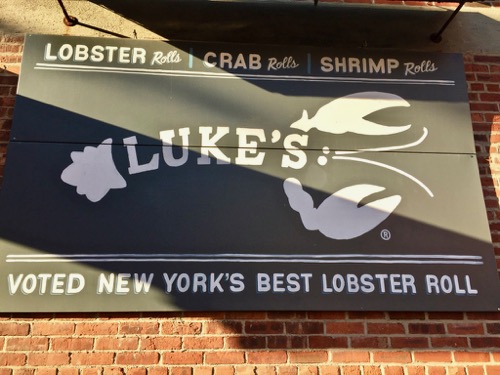
Where I found the best lobster roll I’d ever tasted, at the foot of the Brooklyn Bridge:

IMG_5837


And that’s a wrap.


***

And to all, a wonderful 2018 for books, films, and rewarding encounters!