The Proximidade: Celebrating Closeness

Arti of Ripple Effects is honored to receive The Proximidade Blogging Award from ds of  third-storey window.  A wonderful view she has over there.  Thanks again ds!

“The Proximidade Award believes in the Proximity – nearness in space, time and relationships. These blogs are exceedingly charming. These kind bloggers aim to find and be friends. They are not interested in prizes or self-aggrandizement! Our hope is that when the ribbons of these prizes are cut, even more friendships are propagated. Please give more attention to these writers! Deliver this award to eight bloggers who must choose eight more and include this clever-written text into the body of their award.”

proximade_award1

This is a while back now.  Although ds is very generous as to spare us the obligation to pass it on, I feel I should share this award by naming  some worthy recipients whose blog has closed the gap among us, in one way or another, narrowing our physical distances through common interests and other higher ideals.

It’s my pleasure to pass the Proximidade Award to the following Blogs, in alphabetical order:

Book Club Girl — for closing the gap between authors and readers by her own radio show ‘Authors on Air’.

Classy Music — for drawing us closer with news and views of classy musicians and their performance.  Take note, ye fans of Susan Boyle and Paul Potts.

FilmChat — Movie reviewer Peter Chattaway (no kidding) engages us with insightful and interesting dialogues between faith and film.

Jane Austen Today —  Great job Laurel Ann and Vic,  in connecting Janeites the world over by their excessively diverting blog.   (LA and V:  I’m still working at finding ‘classics’ blogs for the ED Award.)

Visual Dialogues — Blogging from Hong Kong, Molly Mavis closes the gap between East and West with her perceptive photography.

I trust you’ll find the above blogs informative and entertaining, well deserving the Proximidade Award.

Man On Wire (2008, DVD): Romancing the Towers

man-on-wire1When the idea of building the World Trade Center Twin Towers began to germinate in NYC, on the other side of the globe, a young man in France started to weave a dream.  He wanted to walk across the top of the Towers on a wire after they were built.  Six years later, with the Towers nearing completion, Philippe Petit fulfilled his dream a few days short of his 25th birthday.  On August 7, 1974, he stepped on a wire strung across the roof top of the then tallest buildings in the world.  Hailed as ‘The Artistic Crime of the Century’, Philippe Petit’s breathtaking, and illegal, high wire act is the ultimate test of the human spirit, pushing the limit of audacity and strength.

Based on Philippe Petit’s book To Reach The Clouds,  Man On Wire has won over 20 film awards only a few short months after its release, ultimately receiving the Oscar Best Documentary for 2008.  Director James Marsh chronicles the extraordinary endeavor of Philippe Petit by means of interviews, dramatic re-creation, and archival footage.  Before the WTC, Petit had walked across the two steeples of the Nortre Dame Cathedral in Paris, and the Sydney Harbour Bridge.  The WTC Towers meant the summit of his aspirations.  In a Sundance Film Festival interview, he described his act as ‘marrying the Towers’.

 Director James Marsh has chosen a very human angle to present his subject, such that we’re not just watching an extraordinary circus feat.  The documentary reveals a child growing up with unusual physical talents.  It vividly depicts the fearlessness of youth, the weaving of a fairy tale, the bond of friendship without which Philippe could not have achieved, and finally the euphoria of a dream fulfilled.  The smile on Philippe’s face while on the wire says it all.

The interviews in the film have also brought some very personal elements into this enthralling event.  We see Philippe’s childhood friend and accomplice Jean-Louis overcome with emotion, now more than 30 years later, as he recalls and is still moved by the immensity of the experience.

It’s a crime, no doubt, but it’s team work of the highest level of difficulty.  That they had to haul hundreds of pounds of wire and equipment up to the roof top, shoot the wire across, anchor it safe, all without detection was itself an incredible feat.  Once that was done, the rest was easy for Philippe, he just needed to walk on the wire suspended 1,350 feet above ground.

And that is when the artful part comes in.  Philippe had not just walked on tightrope, but performed with grace and serenity, movements conjuring up images of ballet on air.  For 45 minutes, he slow-danced across the Towers eight times, lay, knelt, and sat on the wire to the amazement of the awestruck crowd on the ground.  There was unspeakable beauty in his magnificent boldness.

Police had to threaten him with a helicopter to get him off.  He and his friends were immediately handcuffed, taken to jail, and Phillipe undergone a psychiatric examination.  He was later released and given a life-time pass to the Towers.  When asked why he did it, he answered:

“There’s no why… Life should be lived on the edge.”

Excellent special features that come with the DVD include Philippe Petit’s 1973 Sydney Harbour Bridge Crossing, exclusive interview with Philippe Petit, and an animated short film based on the children book by Mordicai Gerstein “The Man Who Walked Between the Towers”, narrated by Jake Gyllenhaal.  Further,  in this post 9/11 world, the DVD is even more significant in that it chronicles someone who had taken the arduous steps to appreciate and to relate to the Towers in a most memorable way.

And then there’s the music.  I admit it’s the music that has enthralled me from the start, yes, even with just the menu.  While Michael Nyman has written some fantastic original score for the documentary, it’s French composer Eric Satie’s pieces that so captivate me.   Satie’s Gymnopedie No. 1 is the music that augments the beauty of Philippe’s poetic walk on wire.

While most of us would rather watch life being lived on the edge from the comfort of our living room, we would be inspired nonetheless to venture out of our couch for a little more excitement, and motivated to take just a bit more risks with our life.  For us ordinary folks, maybe living life to the fullest is an aspiration challenging enough.

~ ~ ~ ½ Ripples

  “If no one ever took risks, Michaelangelo would have painted the Sistine floor.”      — Neil Simon 


Philippe Petit and James Marsh Interviews:

Click here for the  NPR’s Studio 360 Interview

Click here for the Sundance Film Festival Interview on YouTube



Jesu, Joy of Man’s Desiring

J. S. Bach’s Jesu, Joy of Man’s Desiring has never ceased to stir my heart.  Of all the renditions, none can grab me so movingly as Josh Groban in his captivating performance with the mesmerizing Lili Hayden on the violin.

Bach wrote the Cantata that contains this excerpt in 1723.  Its lyrics articulate for us what is unspoken in the depth of our souls, releasing our yearnings for a transcendent Creator, magnificent yet compassionate, afar yet ever so near.

Jesu, joy of man’s desiring
Holy wisdom, love most bright

Drawn by Thee, our souls aspiring
Soar to uncreated light

Word of God, our flesh that fashioned
With the fire of life impassioned
Striving still to truth unknown
Soaring, dying round Thy throne

Through the way where hope is guiding
Hark, what peaceful music rings
Where the flock, in Thee confiding
Drink of joy from deathless springs
Theirs is beauty’s fairest pleasure
Theirs is wisdom’s holiest treasure
Thou dost ever lead Thine own
In the love of joys unknown

*****

Glenn Gould: The Russian Journey (2002, TV)

 For two months, I had to stay away from home while my house underwent a major renovation.  After sequestered from TV watching for the whole summer, that was one of the first things I delved into as soon as I moved back last week.  A couple of days ago, in between re-runs of Olympics events, I was most gratified to watch this CBC/National Film Board documentary.  What a breath of fresh air and what an invigorating luxury I have been deprived of all summer!  Only on CBC.

The legendary Canadian pianist Glenn Gould (1932 – 1982) visited the Soviet Union in 1957, at the age of 24, the first concert pianist from North America to be extended and accepted an invitation to play behind the Iron Curtain.  Stalin died just four years ago.  The Cold War was at its climax.  Very few had heard of a Canadian pianist named Glenn Gould, what more, very few had heard Bach since the composer was banned by the totalitarian regime for the religiosity of his work. 

This 56 minutes documentary, which won the Grand Prize of the 2003 Montreal International Festival of Films on Art, is packed with valuable archival footage of the actual Gould concerts, meditative shots of the lone pianist against the grand Russian architectural backdrop, as well as some of Gould’s own reminiscence of the historic journey. Interspersed are interviews with significant personalities within the Soviet arts and music circles, sharing their life-changing Gould experiences.  Among them are prominent musicians such as the renowned pianist and conductor Vladimir Ashkenazy, and dissident cellist Mstislav Rostropovich, who sheltered the writer Solzhenitsyn and resulted in the Soviet government banning his performances.

Tatiana Selikman, a pianist and teacher at the Russian Academy of Music, recalls the day of Gould’s first concert in May, 1957.  She saw the poster and was curious about a pianist from Canada, playing The Art of the Fugue, which nobody ever played in Communist Soviet Union.  The Grand Hall of the Moscow Conservatory was sparsely seated.  Then the pale faced pianist came on stage, sat on a low chair, and unleashed a magical performance that mesmerized his small audience.  During the intermission, those in the concert hall dashed out to phone their friends, urging them to come right away.  As the concert resumed for the second half, the hall was packed to overflow.

And the rest is history…

What Gould brought to the Russian audience was not just Bach, or the intricacies of the Fugue, or the beguiling Goldberg Variations, but a new perspective.  Gould’s performance embodied the liberating effect of music, the freedom of artistic expression and the bold exhibition of individualism.  The audience was emancipated to a new found freedom that was not sanctioned under totalitarian rule.  Using the words of some of the musicians interviewed in the film, the Berlin Wall of music came down, warming the Cold War by a few degrees. For the first time, they were applauding something that was not Soviet.  And they were exhilarated.

The recent passing of the Russian dissident writer Alexander Solzhenitsyn, and the events taking place in Georgia, or even the Olympics, have whirled up sentiments in me that I thought was long gone… the pathos of hearing the muffled cries of the oppressed, be it political, social, or artistic. 

There are those who are indignant about the Canadian government subsidizing the Glenn Gould trip, arguing it was a waste of taxpayers’ money.  If a lone pianist can inspire the masses, and if music can soften the hearts of man, enhance international goodwill, and reiterate the ideals of humanity, I am all for it.  Would it not cost more to send hundreds of thousands of soldiers to the front line?

 ~ ~ ~ ½ Ripples

The documentary has been posted on YouTube in six parts.  Here is the beginning.  However, nothing compares to the big screen especially with Glenn Gould playing Bach:


                                                                              *****

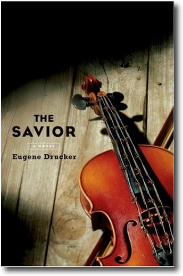
The Savior: Book Review

The Savior is the debut novel written by Eugene Drucker, the founding member of the renowned Emerson String Quartet.   It is a fictional Holocaust story, but what it depicts is not far-fetched.  Based on his father Ernst Drucker’s experience as a violinist in Germany during the 1930’s, and mingled with his own performing episodes in hospital wards and infirmaries, Drucker has created a riveting and believable narrative. Most importantly, he has packed into the short 204 pages some questions that humanity has long found impossible to solve, the problem of human depravity and personal redemption.

In the book, the protagonist Gottfried Keller is a young German violinist during WWII. Due to a weak heart, he cannot serve his country in the front line, but he is drafted into the Nazi war machine by the SS for an experiment in a Holocaust death camp. Under the cultured yet ruthless Kommandant, Keller is to play four solo violin concerts to selective Jewish prisoners. The expressed purpose is to test whether music has the power to revive languishing souls.

As I read the summary on the book cover, the image of the movie Shawshank Redemption (1994) came to mind. When the character Andy Dufresne (Tim Robbins) sneaks into the prison control room and broadcasts Mozart’s Sull Aria from The Marriage of Figaro over loud speakers out to the prison grounds, the inmates are instantly mesmerized by the beauty of the duet, the music transporting them from their confinement to lofty realms.

But what readers are confronted with here in The Savior is a drastic contrast. When Keller plays the Bach sonata in G minor for the inmates, he witnesses the horror of despair. The melodies act like whips on their flesh, cruel reminders of the hopelessness they are in. The intricacies of the fugue evoke searing pain rather than the expected comfort and relief, driving them to eerie moans and groans, exasperated in unrestrained sobs and anguish.

The irony is apparent. The redemptive power of music is but a myth. The violinist, acting as a life-giver or at least a boost to waning souls, is but a pawn in a game of cruelty. As the story unfolds, the violinist, the savior himself, finds desperate need for self redemption. Memories of his past, the choice of security over love, come back as torrents pounding on his conscience.

In the discussion of St. Matthew Passion with the young prison guard Rudi, Keller struck the chord of betrayal and remorse. As pathetic as attempting to pull one’s weight off the ground, both Keller and Rudi find It impossible to redeem themselves. The part a person plays in the overall scheme of atrocity needs to be dealt with. Being a pawn in the game does not excuse one from responsibility, even though the issue is a complex one.

As an expert in musicology and a professional musician, the author is able to effectively weave the music of Paganini, Ysaÿe, Hindemith, and Bach into literary form, an expertise only a violinist like himself can provide. The book excels in these detailed renderings of musical and literary tapestry.

However, the mere 204 pages of succinct narrative could be expanded to better handle the complexity of the issues and characterization the book is dealing with. The unfolding of Keller’s love affair with his Jewish girlfriend Marietta could be told in more details to allow the poignancy to linger.

Overall, a captivating story and a springboard to further pondering.

~ ~ ~ Ripples

The Savior by Eugene Drucker, Simon and Schuster, 2007, 204 Pages.

 CLICK HERE TO VIEW A VIDEO of Eugene Drucker playing Bach’s “Chacone” from Partita No. 2 and his explanation of its role in the book The Savior.


                                                            *****

Mamma Mia! (2008) Movie Reivew

If beach reads is to superficial page-turners, then summer movies is to mindless, senseless, jovial entertainment.  If you allow yourself to devour less than literature under the summer sun, you can have your fill by indulging in Mamma Mia!  Why not, what other times of the year can we immerse ourselves in superficiality, if not in the name of summer fun.

Like the recent re-emergence of past heroes such as Indiana Jones, Rocky Balboa, and the like, I suspect making Mamma Mia! is the mid-life fix for its actors and actresses.  And for stars like Meryl Streep, where else can you, as a 59 year-old, sing and dance like a rock diva, jump up and down on your mattress like it’s a trampoline, dance to you heart’s content on a Greek Island with the whole village backing you, and make a splash, literally, to end a wild number.  Looks like Streep has the time of her life making this movie.  What more, she’s got Pierce Brosnan, Colin Firth, and Stellan Skarsgard swinging and jiving with her.

On the eve of her daughter’s wedding, Donna (Streep) finds herself faced with three of her past lovers who have shown up upon receiving invitation from the bride to be, Sophie (Amanda Seyfried).  Before getting married to her sweetheart Sky (Dominic Cooper), Sophie feels the urgency to find her real father and have him walk her down the isle. Director Phyllida Lloyd did a passable job churning out a simplistic but fun-filled movie adaptation of her Tony Award winning musical.  What captures the audience is not so much the story but the popular songs written by ABBA’s Benny Andersson and Bjorn Ulvaeus.  Titles like “Mamma Mia”, “Take A Chance On Me”, “Dancing Queen”, “Knowing Me, Knowing You”, “The Winner Takes It All”, “SOS”, and “I Have A Dream”… supply the bulk of the movie goers their mid-life fix.

So who cares if it’s a silly, senseless, mindless escape.  At least, it works… well, more or less.  As I sat in the packed theatre, where families had to sit separately to find seats, where teenage boys came with their mothers, where I heard middle-age men laughing out loud, and where I caught myself watching the movie with a smile on my face and tapping my toes to the tunes, it sure worked as a great escape.  Don’t expect in-depth characterization, complexity in plot structures, insightful dialogues, and please don’t mind the miscast (Bond in song?)… it’s summer after all.

Adapted from the successful musical showcasing the songs of the sensational Swedish group ABBA, Mamma Mia! the movie features authentic singing from the movie stars themselves.  Yes, there are LOL moments listening to them singing in their amateurish voices.  Don’t expect professional vocal performance… from Pierce Brosnan?  The fun is hearing him seriously belt out “SOS”, now that’s entertainment.  And all ye fans of Colin Firth, he has definitely smashed the Darcy image, if it still lingers in your Janenite mind.  Here you can see him play the guitar, sing, hang loose, and dance like a rock star.

There seems to be no middle ground in our summer movies this year:  Mamma Mia! is as light and giggly as The Dark Knight is dark and gloomy.  If you can overlook the subliminal implications seeping through Mamma Mia:  The celebration of promiscuity and the appeal of the stereotypical senseless female, then this movie adaptation is a sure escape.  But if you’re expecting more, I’m sure there are other offerings under the lazy summer sun.

Photo Source:  Seattle Times and Universal Pictures


~ ~ ½ Ripples

Update December 11:  Mamma Mia! has just been nominated for a Best Picture Award (Comedy or Musical) at the 2009 Golden Globes, and Meryl Streep nominated for the Best Actress (Comedy 0r Musical) category.

Music in my iPod

My son left me his old iPod when he visited me over the weekend. No, he doesn’t get the privilege to enjoy country living because he has to stay in the city for his summer job.  So, technically it’s not my iPod. But just the same. I’ve declared what’s in there my music. He has categorized all music into genres, easy for me to sort out what I like. And, what a pleasant surprise to find so many gems in there, wonderful embellishment for my pristine living out here in the log home.

There are 1,696 selections for me, grouped  into genres. I admit there are ones that I won’t venture into, like metal and rap, but there are enough categories for me to choose from.  Imagine my feeling listening to the music and looking out towards the open, green fields, distant snow-capped mountains underneath a canopy of dramatic clouds, against a big, blue sky…it’s not out-of-this-world, for I’m right in it! Magnificent!

So…what’s in my 18-year-old’s iPod?  Lots I can indulge in.  Here are some samples…

Classical:

  • Bach’s Partita played by Nigel Kennedy
  • The Complete Goldberg Variations played by Glenn Gould
  • The Art of the Fugue, The Well-Tempered Clavier all by Gould
  • Beethoven’s Symphony #6 Pastoral (For real!)
  • Chopin’s Sonatas, Etudes and Nocturnes
  • Holst’s The Planets  (How cool is that!?)
  • Rachmaninoff’s Piano Concertos
  • Tchaikovsky’s Cello Concertos

Classics:

  • ABBA
  • Andy Williams
  • The Beach Boys
  • The Beatles
  • Bette Midler (She’d be happy to be categorized as ‘Classics’)
  • Bob Dylan
  • Don McLean
  • Frank Sinatra
  • Gordon Lightfoot (Yes, Alberta Bound)
  • Joan Baez
  • Jimi Hendrix
  • Leonard Cohen
  • Simon & Garfunkel
  • Van Morrison

Jazz:

  • Art Tatum
  • Dave Brubeck Quartet
  • Duke Ellington
  • Eva Cassidy (Yes, he put her under Jazz)
  • George Gershwin
  • Glenn Miller,
  • John Coltrane
  • Miles Davis
  • Norah Jones
  • Ray Charles

Rock, Pop and Soundtracks:

  • Elton John
  • Jason Mraz
  • Mariah Carey & Whitney Houston
  • The Rolling Stones
  • Amy Adams
  • Broadway Musicals Cats, Les Miserables,
  • The Phantom of the Opera

With this techno luxury of sound bytes, who needs to go to the city!  And…I’m relieved to know there isn’t much of a generation gap here after all…

                                                               ******

Motherhood and Music

This just happened over the weekend…

It was your typical wedding banquet. The elegant ballroom, the thirty some round tables tastefully decorated, the introduction of the wedding party, the welcoming of out-of-town guests, the buffet, the clinking of glasses…

All the usual stuff at your usual wedding celebration…until…the mother of the groom played Tchaikovsky at the piano.

As a promising, award-winning pianist in the then North Vietnam years back, her talent and future were stifled under the harsh political climate. Thanks to the sponsorship of a Canadian church, the family immigrated to Canada, starting a new life in freedom.

Not long after that, a tragic work-related accident claimed the life of the father. The mother continued to run the family business and raised her young children all by herself, instilling in them the love of music, while laying aside her own musical career…

Until, as a most moving gift of love, she practiced again for her son. On his wedding day, as the lights dimmed, she walked over to the grand piano in the banquet hall, and played with such depth of expression and poignancy, two selections from Tchaikovsky’s The Seasons, May: White Night, and June: Barcarolle. The 300 guests were silent, mesmerized, deeply moved…then the standing ovation.

The love of a mother, the power of music … what a wonderful way to bring up a child, what a remarkable beginning of a marriage.

***

JunoFest: Celebrating Classical at the Junos

Junos 2008 Venue Calgary Pengrowth Saddledome

What do Toronto classical composer Brian Current, Montreal cellist Matt Haimovitz, or violinist James Ehnes have in common with Anne Murray, Avril Lavigne, Feist, Jann Arden, Paul Brandt, or Michael Bublé?

They are all Canadian musicians sharing the limelight in this year’s Juno Awards coming up April 6.

The Canadian Music Awards extravaganza is to be held this Sunday April 6 in Calgary’s Pengrowth Saddledome.  Click here for the official website of the 2008 Juno Awards.

Before the grand event, there is going to be a celebration of classical music.  A first ever JunoFest will be held in Calgary’s Grand Theatre this Saturday.  The event celebrating classical music is organized by CBC Radio 2, the Canadian Music Centre Prairie Region, the 2008 Juno Awards Host Committee, and the Honens International Piano Competition.  It will feature works and performance by nominees in the classical music categories of this year’s Juno Awards.

Click here to read the April 2 Calgary Herald article on JunoFest.

Items on the JunoFest program include work by Toronto composer Brian Current (nominee for Classical Composition of the Year), performance by Montreal cellist Matt Haimovitz (nominee for Classical Album of the Year), and the renowned violinist James Ehnes (nominee for two Album of the Year).

Cellist and McGill faculty member Matt Haimovitz’s work may be most effective in dispelling the myth of Classical music being elitist and passé.  His work embraces both the classical and modern day popular genres, as well as the multicultural roots of folk music.  From his own repertoire, he has an eight-cello rendition of Jimi Hendrix’ war protest song Machine Gun, and from his multicultural, fusion CD “Goulash”, Led Zeppelin’s Kashmir in a four-cellos arrangement.

As we go further into this so-called postmodern era, we’re going to see the increasing blurring of the line between “classical” and “contemporary”.  And why not, we’re already enjoying a proliferation of fusion food.

This is another reason CBC Radio 2 should all the more venture into this brave new world.  Instead of cutting classical music programs, instill fresh and creative ideas to present the exciting development of “classical music” in the 21st century, and act as a bridge to draw closer the cultural and musical chasm.  Just look into the myriad of modern day film scores, Crouching Tiger Hidden Dragon, The Kite Runner, Atonement, just to name a few, you’ll be surprised how much you enjoy ‘fusion’ music.  You may not recognize the classical music theory on which the compositions are based, but you’ll be enthralled just the same.

Calgary’s Pengrowth Saddledome Photo Source: aol travel

CBC Disbands Radio Orchestra

Update April 1:  Reader Tom has alerted me to the site for online petition to save the CBC Radio Orchestra.  http://www.savecbcorchestra.com  Please sign the petition and spread the word. 

Another shocking news:  The CBC Radio executives have just decreed that The CBC Radio Orchestra is to be dismantled as of November, 2008, on the heels of Cutting Classical Music Programs on Radio 2. 

What a swift one-two punch!

Formed in 1938, mandated “to make engaging musical radio programs, commission and perform works by Canadian composers, showcase Canadian performers and conductors, and discover and expose Canadian excellence”, the orchestra has been a Canadian cultural and musical tradition for 70 years.

 Click here for the news coverage in the Globe and Mail of March 27, 2008.

Click here for the Vancouver Sun article on Canada.com: CBC Kills Radio Orchestra

Click here for the article:  The Day The Music Died in The McGill Daily.

Does the CBC management even have the right to do that?  I thought this is a publicly-owned national radio station.  A cultural and arts institution with 70 years of history can be chopped off the Canadian landscape by a few executives like a branch off an old tree in the backyard? 

With this executive order, the CBC has finished off a piece of North American history, disbanding the last radio orchestra in the continent.

Again, I was alerted to this piece of appalling news by my teenaged son…talking about axing classical music to attract younger audiences.  CBC has gravely miscalculated the musicality of our youth and done an utter disservice to them, depriving them of knowing and appreciating a heritage dating back to hundreds of years of human civilization.

To save Classical Music from being axed off the cultural tree, Click here for the Online Petition.

BTW, the Facebook Group ‘Save Classical Music on the CBC’ now has over 8,000 members…I’m not trying to stereotype, but would these not be some of the ‘younger audiences’ CBC is trying to woo?

                                                            ******

CBC Cutting Classical Music Programs

What a shock it is for me to learn that our national radio station CBC Radio 2, is choosing to axe more classical music programs to appeal to a ‘wider audience’.  Why, aren’t we who have been enjoying the arts and music, who have cherished the long tradition of these CBC productions, who have raised our children on them, teaching and nurturing them to appreciate their content, not a part of the general public? 

Click here for Russell Smith’s article in The Globe and Mail on March 13, 2008, “No classical?  Then kill Radio 2 and get it over with.”  Just let me try to fathom the motives behind these further cuts:

1.  Diversity.  If it’s diversity they are aiming at,  they should all the more leave the classical edge in because CBC Radio 2 is the only nation-wide English radio station in Canada that offers classical music.  Which station can I tune in for such extensive and in-depth coverage of the arts and artists, classical music and musicians, live concerts, commentaries, CD reviews and even an audience requests program? What alternative do I have when the only classical music station in Canada decides to go with the flow and become just another dial for easy listening or contemporary pop?  I feel like I’m a CBC copywriter doing a promo for the station…but why would they need me to tell them this?   To CBC Radio: Respect your role in the Canadian cultural landscape.  What ‘diversity’ are you offering if there are no choices in genre? If ‘diversity’, and ‘choice’ are such powerful words nowadays, honor the real meaning of these terms and not just utter them for political correctness. 

2.  Multicultural. The term “Classical Music” has often been misconstrued as being monocultural.  Are CBC program researchers and management not aware that many so called “classical” composers, especially the more contemporary ones, are from a diverse cultural background including not only Western European, but Central and southern European, Scandinavian, Russian, North American, South American, and Asian?  And do they not know that for this last group here, Asian-Canadians, especially appreciate classical music and particularly in the teaching of their young, the next generation of music lovers?  I for one can speak out on this issue where I personally and know and have come into contact with countless parents of Asian descent who have involved their children in the learning of classical music, and have nurtured numerous talented young classical musicians here in Canada.  Jan Wong in her recent book Beijing Confidential notes that there are 30 million piano students and 10 million violin students in China today.  Two of the most popular music icons among the young are Lang Lang and Yundi Li, both world renowned classical pianists in their 20’s. Wouldn’t it be odd that one can enjoy classical music on radio in China but not be able to in Canada?

3.  Education. If it’s just for the sake of our young, we owe them a great heritage if we do not nurture them to appreciate the roots of modern music. Without going deep into music theory, isn’t it true that our contemporary music evolves from classical foundations?  Calling it ‘classical’ sounds so politically incorrect, as it wrongly conveys ‘elitism’ or simply connotations of being passé. But, would you avoid teaching our next generation Canadian history just because history is passé? 

4.  Business. If it’s for marketing reasons, why add one more ‘easy listening’, ‘pop’, ‘jazz’ or ‘contemporary’ station to the already competitive business, why fight for market share while you can distinctly offer something very different and unique, a real alternative to the radio audience in Canada.  If you wish to morph into a more hip mode to appeal to the young, look for younger DJ’s for your classical music programs. If George Stroumboulopoulos (previously of MuchMusic) can become a Canadian news icon on CBC Television, I’m sure you can find young blood equally well versed in the classical music sector.  

5.  Identity. And if it’s Canadian identity they are seeking, trying to appease the ‘general public’ (as if we are not), then CBC Radio 2 should all the more realize, as a publicly owned radio station and a national institution, the classical music they are eliminating is not just a part of Canadian identity, but human civilization…and I suppose western or eastern, old or young, we are a part of that.

Enough said here.  My teenaged son who alerted me to this piece of incredulous news has sent me a link to the on-line petition.  Click here to sign.

Other reactions to this announcement:

 http://www.cbc.ca/arts/media/story/2008/03/04/radio-two.html

http://www.friends.ca/News/Friends_News/archives/articles03200802.asp

A Facebook group has already been formed:  “Save Classical Music on the CBC”, has gathered more than 8,000 members and counting.

The Easter Message


dominus-flevit-mt-of-olives.jpg 


When I Survey the Wondrous Cross

When I survey the wondrous cross
On which the Prince of Glory died,
My richest gain I count but loss,
And pour contempt on all my pride.

Forbid it, Lord, that I should boast,
Save in the death of Christ my God,
All the vain things that charm me most,
I sacrifice them to His blood.

See from His head, His hands, His feet,
Sorrow and love flow mingled down,
Did e’er such love and sorrow meet,
Or thorns compose so rich a crown?

His dying crimson, like a robe,
Spreads o’er His body on the tree;
Then I am dead to all the globe,
And all the globe is dead to me.

Were the whole realm of nature mine,
That were a present far too small;
Love so amazing, so divine,
Demands my soul, my life, my all.

—– Isaac Watts, 1707


   ***

Photo: Dominus Flevit Church, Mount of Olives, Jerusalem.  Taken by Arti of Ripple Effects, www.rippleeffects.wordpress.com, November 2007.  All Rights Reserved.