Saturday Snapshot February 8: Cabin Fever continues…

The snow and cold persist. I’ve to revisit Southern France to assuage cabin fever. Here are more photos from my Provence travels in the summer of 2010.

Avignon, the historic centre of Western Christendom in the Middle Ages. Its Palais des Papes, or, Palace of the Popes, is a UNESCO World Heritage Site. The Medieval Gothic architecture was designed as a fortress and palace, residence for the Popes. Six papal conclaves were held there in the 14th century.

Palais des PapesSigns pointing to others historic monuments:

Signs

The Bridge of Avignon, Pont St. Bénezet, or Pont d’Avignon, was built between 1177 – 1185, rebuilt in 1234 after it was damaged in a siege by Louise VIII, King of France. It was an important crossing over the Rhone River. Only four arches now remain:

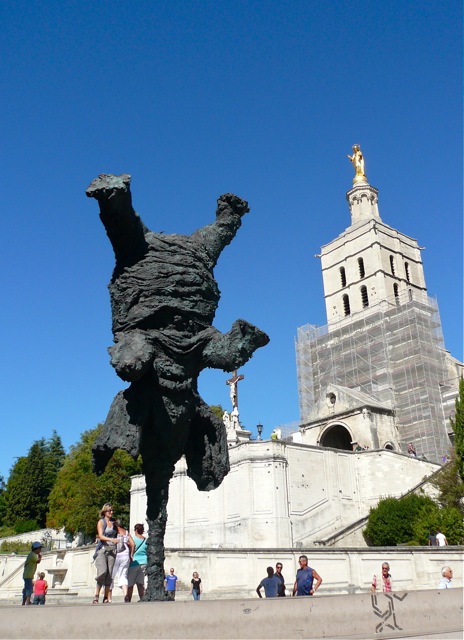
Pont d'AvignonNot all serious history though… Right outside the Palais Des Papes, I saw an elephant doing Yoga:

Elephant outside Palace of the PopesA closer look:

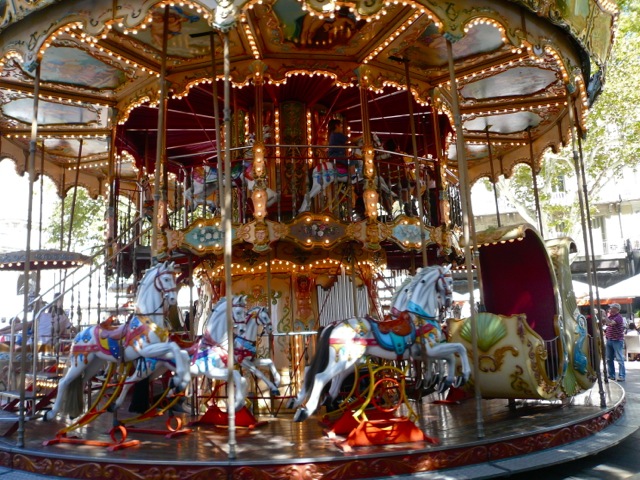
Elephant doing YogaAnd in the town centre, this beautiful merry-go-round:

Entertainment in town centreAnd puppeteers getting ready for a skeleton show:

Street performersSnap back to reality… no elephant in the room or dancing skeleton. And it’s -16C outside. Just let me hop back on that merry-go-round…

***

Saturday Snapshot is hosted by Melinda of Metro Mommy Reads.
CLICK HERE to see what others have posted.

ALL PHOTOS TAKEN BY ARTI OF RIPPLE EFFECTS.
DO NO COPY OR REBLOG

***

The Secret Life of Walter Mitty (2013): The Love Hate Gap

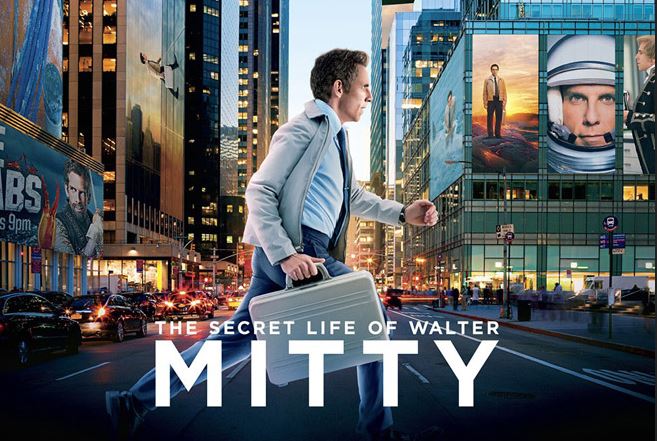
This new adaptation loosely based on James Thurber’s 1939 short story was a highly anticipated year-end movie, possibly aiming for a spot in the coming awards season. It was released on Christmas Day, 2013, only to meet with disappointing critical reviews.

The-Secret-Life-of-Walter-Mitty

Any movie version derived from James Thurber’s short story first published in the March 18, 1939, issue of The New Yorker is allowed plenty of room for reinvention, since the original story is only about 2,000 words in length. If you’re interested to read or reread it, here’s the link. The story saw its first movie adaptation in 1947, starring Danny Kaye as Walter Mitty.

In Thurber’s story, Walter Mitty is a man living with an overbearing wife. He intersperses his meagre existence with heroic daydreaming. Behind the wheel of his car driving his wife to the hair salon, he would zone-out and imagine himself a fighter pilot piercing through a storm. At another time he would cast himself as a world-renowned surgeon saving a dying patient on the operation table, or as an expert shooter, or a war hero.

Over the years, Thurber’s Walter Mitty seems to have turned from a fictional character into a concept. The daydreamer has gathered mass appeal. Walter Mitty the character unleashes the escapist in us. It takes us out of our mundane, ordinary life and catapults us to brave, new worlds. It empowers and makes a hero out of Everyman.

This recent movie version has taken up such a challenge with fine colours. Walter Mitty (Ben Stiller) works for LIFE magazine which has just been acquired, and a major downsizing ensues. The upcoming issue will be the last of its print edition. As the ‘Negative Assets Manager’, Walter Mitty is responsible for the cover. ‘Negative assets’ means, literally, the negatives of photo collection. And here’s the rub, the slide that is meant for this last cover is missing. Feeling responsible, Walter Mitty takes up the challenge to seek out its reclusive photographer Sean O’Connell (Sean Penn), who leaves his tracks in the remotest parts of the world.

Not quite a dramatic story arc, not quite a believable motive either, considering the digital age of the setting, seems an unrealistic task to conduct a real-life globetrotting search for a missing slide. But out of curiosity, I let the story lead and enjoy what comes next.

The arduous journey to find the mystical photographer offers me an array of visually stunning and surreal Walter Mitty-esques sequences. The initiation is when Walter Mitty jumps onto a moving helicopter in Greenland, upon imagining his love interest Cheryl (Kristen Wiig) singing ‘Ground Control to Major Tom’, urging him to take flight. Other breathtaking scenes that follow include longboarding by an erupting volcano in Iceland (my favourite), scaling the mountains in Afghanistan, and playing soccer with Himalayan dwellers against the setting sun.

Soccer match in the setting sun

In the office, Walter Mitty is the target of bullying from the hatchet man of the acquisition Ted (Adam Scott). Walter is also the secret admirer of coworker Cheryl. Too timid to declare his love, he hides behind eHarmony to hopefully connect with her anonymously. After Walter’s adventurous journey to find the mystic photographer, he is transformed into a braver man; ultimately, his true colours shine through, fantasy fulfilled.

Shirley MacLaine plays Walter Mitty’s supportive mother, an endearing role. Together with Kathryn Hahn as Walter’s sister, they bring some normality into our protagonist’s life. The three offer a few heart-warming moments.

Now, mind the gap. From the reviews and audience feedbacks, it looks like this is one of those ‘love-it’ or hate-it’ movies. Here are the stats of approval on Rotten Tomatoes: critics 48%, audience:76% On Metacritics it is similar: critics 54% and viewers 76%.

Why the discrepancy? I must stress that there are critics who love it, and, audience who don’t. Not that this is purely a ‘critics vs. viewers’ kind of showdown. But we do see the obvious gap between the two groups. What accounts for the gap? Here’s my analysis and speculation:

Those who hate the movie, see Ben Stiller. They see this as a self-serving project of the A-list Hollywood star directing himself in a role that sends him to all the improbable heroic scenarios. They see the production as a self-absorbed ego trip. Unrealistic storyline, much ado about nothing.

Those who love the movie, or find it entertaining and enjoyable, see Walter Mitty. They see the daydreamer, the self-defeating underdog going on a series of life-transforming adventures. They see the Wlater Mitty of today, a tiny screw in the humungous economic machine, dispensable, unappreciated, the tireless worker saving the day. They see love requited; they see dreams fulfilled.

What if… What if this whole production is Ben Stiller’s Walter Mitty fantasy realized? Why should we mind? Anyone too high on the A-list to have no need for a Walter Mitty moment?

~ ~ ~ Ripples

Related Links: 

CLICK HERE To read the short story by James Thurber, ‘The Secret Life of Walter Mitty’, published in The New Yorker, March 18, 1939.

CLICK HERE to read an article detailing the LIFE magazine covers in the movie: “Walter Mitty and the Life Magazine Covers that Never Were”. 

***

Saturday Snapshot January 25: Cabin Fever

It’s January 25, and we’re deep in winter. I don’t need any more photos to remind me of our seasonal deal, snow and ice. Saw the movie The Secret Life of Walter Mitty a couple of days ago. And Oh, how I need to unleash the Walter Mitty in me now, and let my mind zoom off to distant lands, warm, temperate, and colourful.

So here I am, travelling back to the summer of 2010, taking a road trip in Provence, France. A cure for cabin fever: I breath in the warm air, feast my eyes on colours and relive a most memorable family vacation.

We took a day trip from Avignon to Vaison la Romaine and Chateauneuf du Pape, passing through vineyards, stopping by markets.

A vineyard beside a 12th Century chapel in Vaison la Romaine:

Vineyard by 12th Century Chapel in Vaison

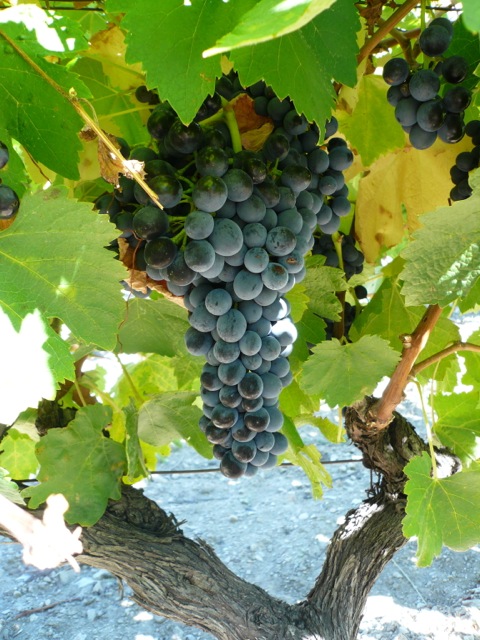
Grapes on vine

A street market. The colours … what a contrast to our wintry white and grey:

Street Market in Vaison

Colourful pots

Colours Colorful rolls

Motor carI like the kid here. What was he looking at?

The Kid

Or here, the yellow rose. Imagine opening your front door and be greeted by a cheerful, yellow rose:

The Yellow Rose

And the fan here. Just looking at it can cure cabin fever. Let your inner Walter Mitty take you for a ride:

The Fan

***

Saturday Snapshot is hosted by Melinda of West Metro Mommy Reads. CLICK HERE to see what others have posted.

ALL PHOTOS TAKEN BY ARTI OF RIPPLE EFFECTS. DO NOT COPY OR REBLOG.

***

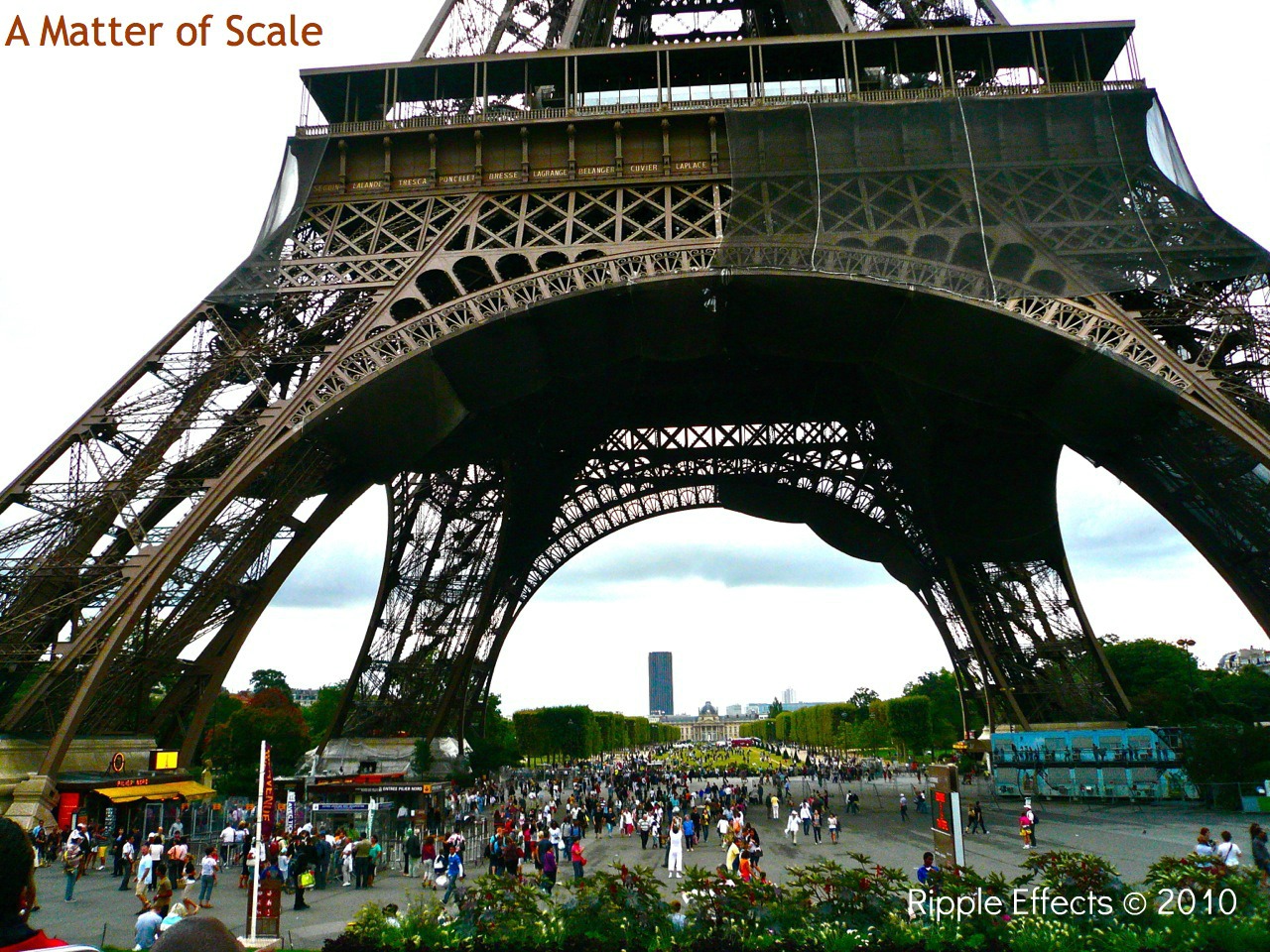
Saturday Snapshots July 28: Paris Montage

The Brasserie Balzar
Near the Sorbonne, Sarte and Camus’s frequent hangout where they dined and debated. Insert shot of Menu: Breakfast for 6 Euros includes a croissant, tartine, confiture, hot drink, orange juice.

A View of the Tower
Size is relative. 

The Paris Apple Store
Probably the most elegant of all the Apple branches.

The Paris Collage
As you can see, I got a bit carried away playing with the features in the photo editing site Picmonkey.

Again, Saturday Snapshot is hosted by Alyce of At Home with Books, Paris in July at Bookbath and Thyme for Tea.

Thanks to Zara Alexis for pointing me to PicMonkey.com for making these collages and watermarks.

***

Saturday Snapshots July 21

Once again, Saturday Snapshots framed by a Paris in July backdrop…

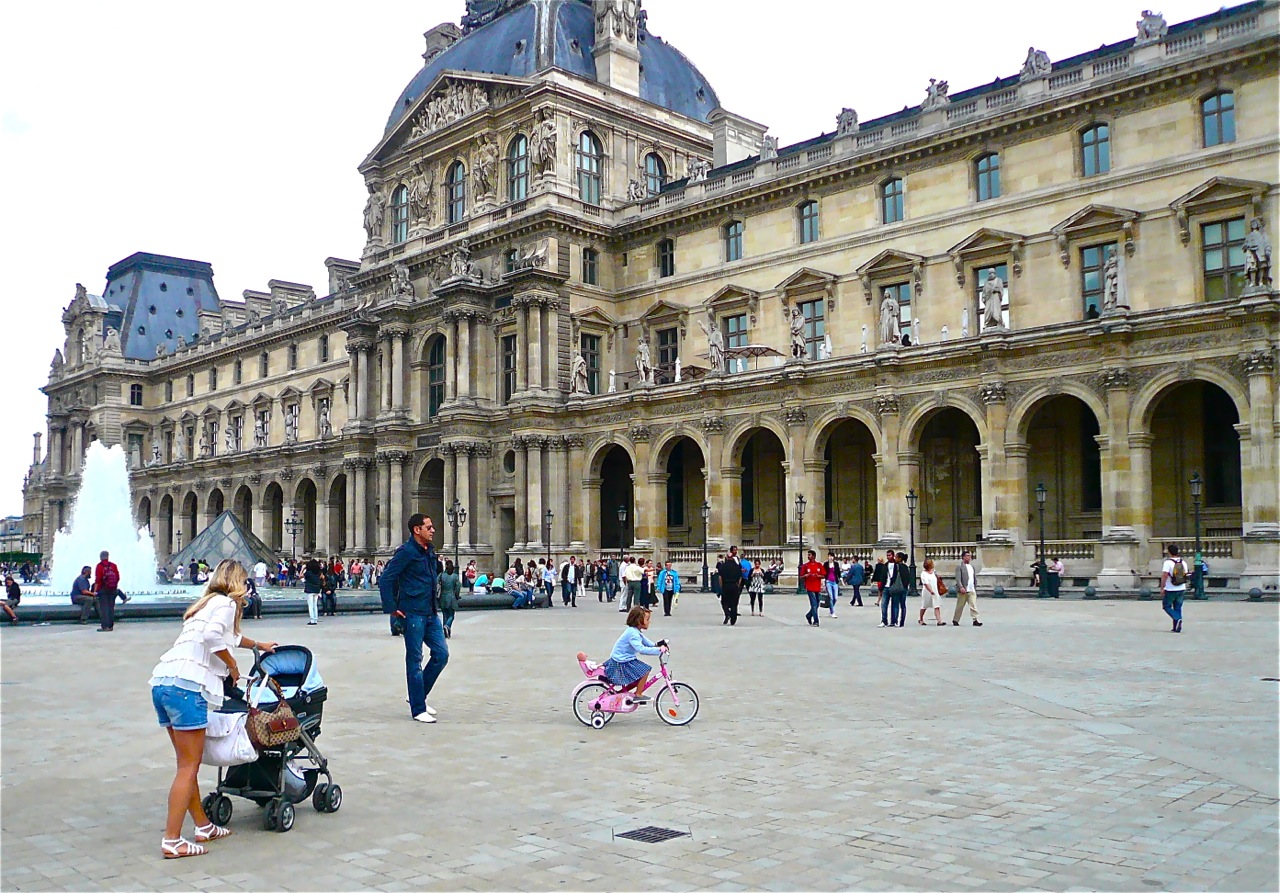
I was pleasantly surprised to find the open space outside the Louvre being used not only for tourist line-ups but as a spot for a family outing.

Dad can keep an eye on Sis biking, while Mom gets baby ready for a video shoot.

And Li’l Bro rides into the sunset.

***

Saturday Snapshot hosted by Alyce of At Home With Books, Paris In July at BookBath and Thyme for Tea.

***

Arles: In Search of Van Gogh

Watching the movie Séraphine (my last post) made me think of another artist tormented by mental illness. Vincent Van Gogh (1853-1890) was born in the Netherlands. His artistic imagination was ignited when he moved to Paris in 1886 and saw the works of the impressionists. But the prolific period of his life began only after he went south to Arles.

I visited Provence in August, 2010, went on a walking tour of Arles following the footsteps of Van Gogh. For Paris in July hosted by Karen of Bookbath and Tamara of Thyme for Tea, I’m reposting an excerpt of my travelogue here. Some of you may remember my series of travel posts, but many of you have come to Ripple Effects only recently. Please join me as I revisit Arles and its nearby St-Rémy-de-Provence.

***

Van Gogh moved to Arles from Paris in 1888, seeking the tranquility that was so elusive to him in the big city. In his letter to his brother Theo upon arrival to Arles, he wrote:

It seems to me almost impossible to be able to work in Paris, unless you have a refuge in which to recover and regain your peace of mind and self-composure. Without that, you’d be bound to get utterly numbed.”  — Tuesday, Feb. 21, 1888.

The fresher and more colourful palette is apparent during this most prolific period of the artist’s life. Bright yellows, blues, shorter and swirling brush strokes established his signature style.

As for me, I was a bit disappointed to see the sunflowers have already withered in late August. Fields of yellow were now massive brown. They would be harvested at a later time for their oil, a good reminder that, for tourists, it’s the view and the photos, but for those living here, it’s their livelihood. The lavenders on the Luberon mountains too had long passed the season. Note to myself: Early to Mid July is best if I ever come this way again.

But all was not lost. I was gratified to follow some of Van Gogh’s footsteps as I explored the clearly posted Van Gogh sites in the town, the scenes and locales where the artist so vividly captured in his paintings.

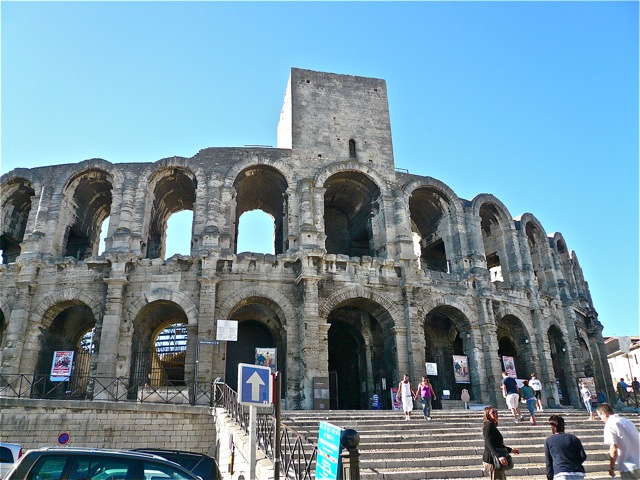
Arles is a Roman town. What more prominent landmark to reflect its past glory than the Roman Arena in the town centre. Why all the arches? The free flow of pedestrian traffic. The full seating capacity, 20,000 people, could exit the Arena in 7 minutes.

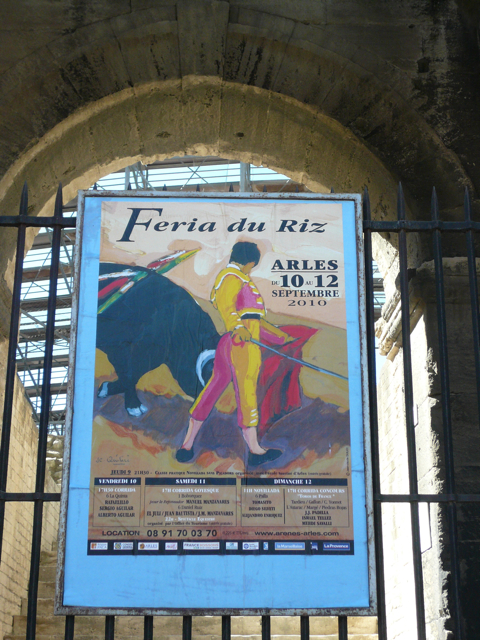
Used by gladiators in ancient time, the Arena is still the venue for bullfights:

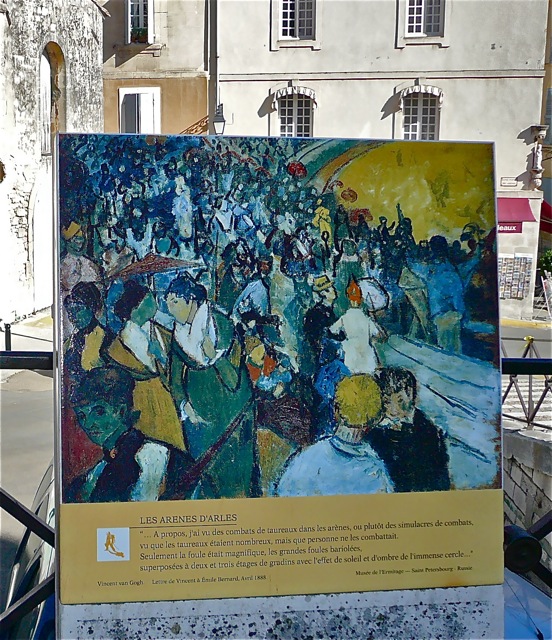
But Van Gogh’s interest was not so much in the violent action of bullfighting than the people, as his painting Spectators In The Arena At Arles (December, 1888) clearly shows:

The Café Terrace on the Place du Forum was his hang-out, renamed Café Van Gogh now. The yellow café upon the backdrop of the blue, starry night had deeply inspired the artist:

Café Terrace At Night (September, 1888):

Van Gogh had wanted to make Arles a hub for fellow artists. Upon his urging, Gauguin came to join him in October, 1888. The two painters frequented the Café Terrace many a night but only for two short months. What happened on December 23rd was reported by the local paper the next day:

At 11:30 pm., Vincent Vaugogh [sic], painter from Holland, appeared at the brothel at no. 1, asked for Rachel, and gave her his cut-off earlobe, saying, ‘Treasure this precious object.’  Then he vanished.

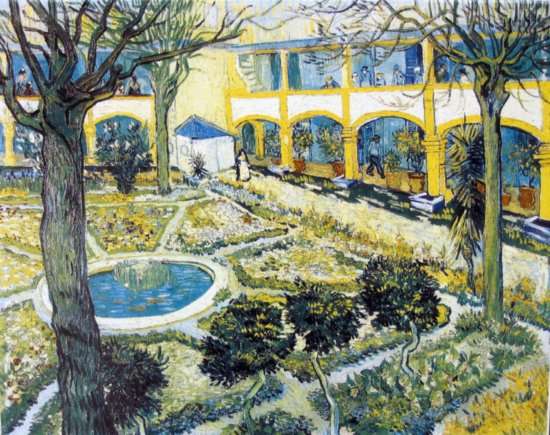
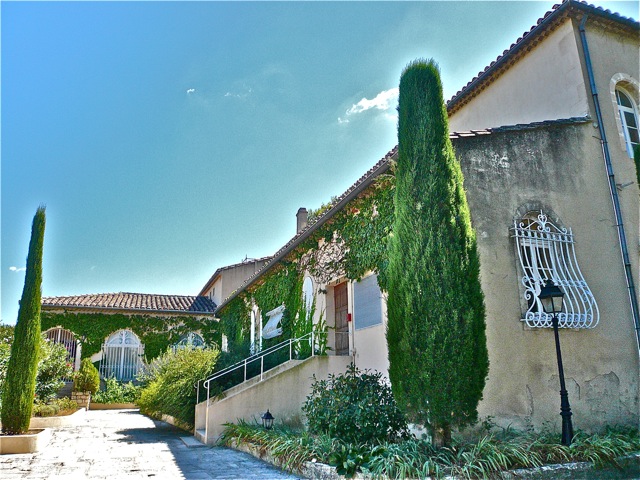
After this incident, Van Gogh was admitted to a local hospital, now the Espace Van Gogh in Arles, a cultural centre:

And here is Van Gogh’s rendering when he was staying there:

In January, 1889, Van Gogh returned home to his ‘Yellow House’ (which has now been torn down and reconstructed), but for the next few months, suffered onslaughts of hallucinations and delusions. His view of his own condition nevertheless was lucid and even progressive for his time. His letter to Theo is poignant, as he openly faced his predicament and earnestly sought a solution:

And for the time being I wish to remain confined, as much for my own tranquillity as for that of others.

What consoles me a little is that I’m beginning to consider madness as an illness like any other and accept the thing as it is, while during the actual crises it seemed to me that everything I was imagining was reality.”

— Sunday, April 21, 1889.

On May 8, 1889, he checked himself into the Saint Paul de Mausole, the mental hospital at St-Rémy-de-Provence. Under the care of his doctor Théophile Peyron, the artist’s condition improved and he thrived in the idyllic environment there. Art therapy had brought healing and prolific output. Van Gogh stayed there for a year and created more than 150 paintings.

Dr. Théophile Peyron out at the front garden of Saint Paul de Mausole hospital:

The olive grove outside:

Olive Grove (June, 1889):

To his brother Theo, he wrote on Sunday, May 11, 1890:

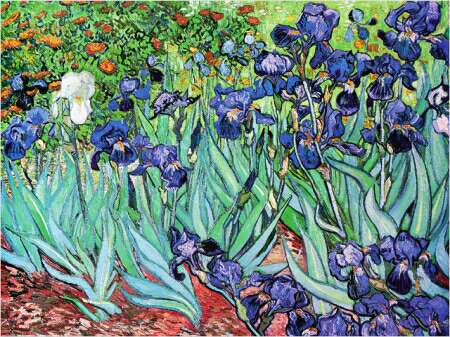
At the moment the improvement is continuing, the whole horrible crisis has disappeared like a thunderstorm, and I’m working here with calm, unremitting ardour to give a last stroke of the brush. I’m working on a canvas of roses on bright green background and two canvases of large bouquets of violet Irises…

My Van Gogh trip ended at St. Rémy, and so be it. I’ve seen the sites wherein the artist was at his most prolific. I’ve seen the town and surroundings where he found inspiration.  I’ve seen his final solace where he attained some stability and painted with passion. I’d like to keep these as memories of my travel to Provence. I could hardly bear to think of his last days, discharged from St. Rémy just a few days after the above letter, headed north to Auvers-sur-Oise on the outskirt of Paris, and in just two short months, succumbed to the recurrence of his illness. He shot himself in the chest with a revolver on July 27, 1890, and died of his wound two days later.

Back to the thoughts I wrote about: How do we keep art from turning into a cliché? I think it takes a certain awareness of the artist as a person, plus a measure of empathy and respect for the struggle to live and create… and realizing that the beautiful works are often triumphs in spite of life’s overwhelming adversities, rather than the natural products of bliss and fortune.

To wrap up my travel posts, and taking the risk of turning it into a cliché albeit my motive is pure, here’s the YouTube clip again, Don McLean’s tribute to Vincent:

***

My five-part travelogue on England and France:

  1. Tate Modern & Billy Elliot
  2. Bath’s Persuasion
  3. Paris: The Latin Quarter
  4. Art and Cliché
  5. Arles In the Steps of Van Gogh

Saturday Snapshot & Paris in July

Here are my photos for two blogging events: Saturday Snapshot hosted by At Home With Books and Paris in July over at BookBath.

In August, 2010, I was in Paris, stayed at a small hotel on a side street in the Latin Quarter, across from the Sorbonne. And just recently I was reading the book The Hundred-Foot Journey (my last post). In the book, the protagonist Hassan was offered a place to start his own restaurant, at 11 Rue Valette, near the Panthéon. When I came to that part of the book, I quickly went Googling and found, ta-da! Hassan’s restaurant was within walking distance of the hotel I stayed in.

This is what happens, you fuse together reality and fiction… that’s the joy of reading. And I could even imagine stopping by the restaurant to have a taste of Hassan’s haute French cuisine.

No, I didn’t get to Hassan’s Le Chien Méchant, but found this little cinema not far from our hotel on another narrow side street, Cinema du Panthéon, and it was showing the acclaimed film Des Hommes Et Des Dieux.

I had an urge to go in and watch it, but on second thought, I was in Paris, a French film showing in Paris would probably not have English subtitles.

I did get to see the film Of Gods and Men (2010) when I came back home, French with English subtitles.

***

The Rant of the Armchair Traveller

From the comments in my last post, seems like Egyptology is a favorite subject of many, if not now, at least some time in our curious life. I’ve had the chance to visit Egypt twice during my travels to the Middle East. Since now is the warm month of May, kicking off the travelling season, and alas, since going anywhere far is a remote possibility for me at present, an armchair revisit is timely, if only to suppress burning wanderlust.

Here are some file photos from my last trip to Egypt five years ago. I only stayed in Cairo and its vicinity. But from my recent reading of Lord Carnarvon and Carter’s King Tut Tomb discovery, I regret I didn’t venture further to the Valley of the Kings in Luxor. However, I did see the iconic King Tut’s mummy mask at Cairo’s Egyptian Museum. Photography was forbidden, so no King Tut’s portrait here.

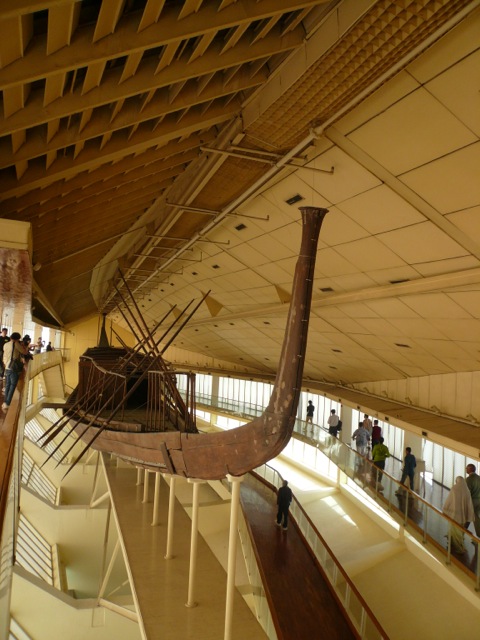
But I can show you another marvellous exhibit. In 1954, a Pharoah’s boat dating back four millenium was dug up in pieces and since reassembled. Beautifully showcased in another museum near the Great Pyramid of Giza. Photos were allowed here, but Arti’s pocket Lumix wasn’t enough to capture the magnificent whole. If you’re interested, click here to a full description.

Pharaoh’s Boat buried 26th Century B.C.

Another view:

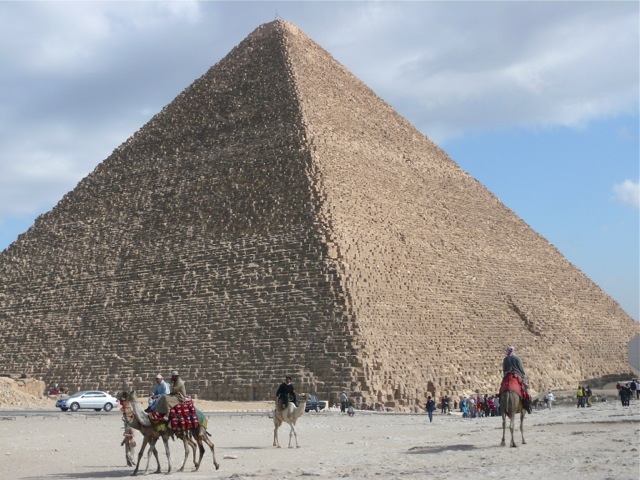
The Pyramid and the Sphinx are probably what travellers go to Egypt for. While the Sphinx is a limestone statue of the mythical creature with the lion body and the human head, the Pyramid was piled up in stones. Can’t say which one is easier to make.

The oldest of the Seven Wonders of the Ancient World that is still standing, The Great Pyramid of Giza was built for the fourth dynasty Egyptian Pharaoh Khufu, a 20 year construction process which concluded around 2560 B.C. (Wikipedia data) As for Arti, no exact date was needed. Standing at the foot of the humungous pile of neatly stacked up stones was an experience itself.

The Great Pyramid of Giza

Not far from the Pyramid, The Sphinx:

The Pyramid and The Sphinx

A closer look… so what if I’ve lost a nose, I still stand sit after all these years:

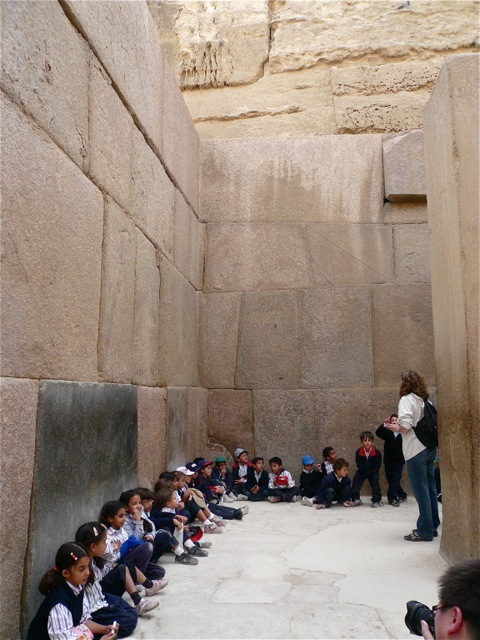
Let the stones speak:

and the children listen:

We were travelling in a bus through the desert, and stopped for a view. Here are some other children I saw, took this picture through the window:

Mount Sinai, the legendary place Moses received the Ten Commandments from God. At the foot of the mountain range is St. Catherine’s Monastery:

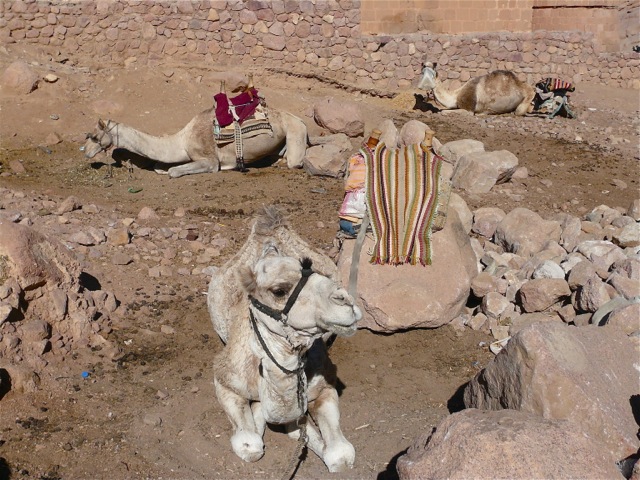
 Man’s best friend. They wait without complaint:

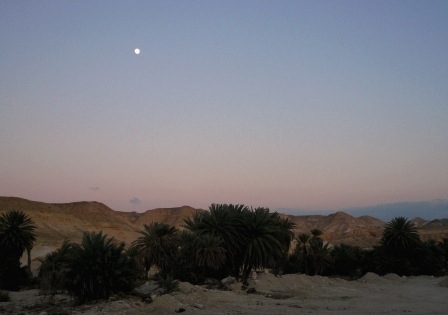
The desert is mesmerizing regardless of the hour:

Desert moon at dusk

While I faithfully pick up mail for neighbors gone to Paris, or read with pleasure blog posts of your recent travels, I feel like jumping on the armchair bandwagon and join the massive global tourism movement. Ok everyone, I’m coming along.

***

Salk Institute, La Jolla, CA

Hope lies in dreams, in imagination, and in the courage of those who dare to make dreams into reality.  — Jonas Salk

American medical researcher and virologist Jonas Edward Salk (1914-1995) discovered the polio vaccine in 1955. In 1960, he founded the Salk Institute for Biological Studies, to create a collaborative environment for exploring the basic principles of life.

Some of the renowned consulting scientists at the conception of the Institute included Warren Weaver, who first coined the term “molecular biology’, and Francis Crick, co-discoverer of the DNA molecule. The Salk Institute remains one of the top research facilities in the world, generating five Nobel Laureates since its inception.

The building of the Salk Institute began in 1962 on 27 acres of pristine land donated by The City of San Diego. The site is endowed with a vantage point 350 feet above the Pacific Ocean on the coastal bluffs of La Jolla.

Jonas Salk commissioned the renowned architect Louis I. Kahn (1901-1974) to design the structures: “Create a facility worthy of a visit by Pablo Picasso.” Kahn proficiently rose to the challenge.  The Salk Institute was completed in 1965. In 1992, it received the American Institute of Architects Twenty-Five Year Award.

So much for the objective facts. Here’s my experience.

I joined an architectural tour of the site. As I came to the courtyard, the entrance to the main area, I was confronted with this view. This could well be the most existential space I’d ever set foot on:

What first captivated me was the void in between the two mirrored structures. The buildings on both sides act as a frame to augment the negative space in the middle. That lookout is towards the Pacific Ocean. As I saw it then, it looked like a misty unknown, an entrance towards eternity.  The last part of Terrence Malick’s film The Tree of Life came to mind.

“Architecture is the reaching out for the truth.” — Louis I. Kahn

Through the massive centre court made of travertine marble flows a stream towards the direction of the ocean, a visual metaphor for life. The water collects into a pool at the end that leads to a small waterfall, then recirculates:

Angled walls offer view from every step:

“The sun never knew how great it was until it struck the side of a building.” — Louis I. Kahn

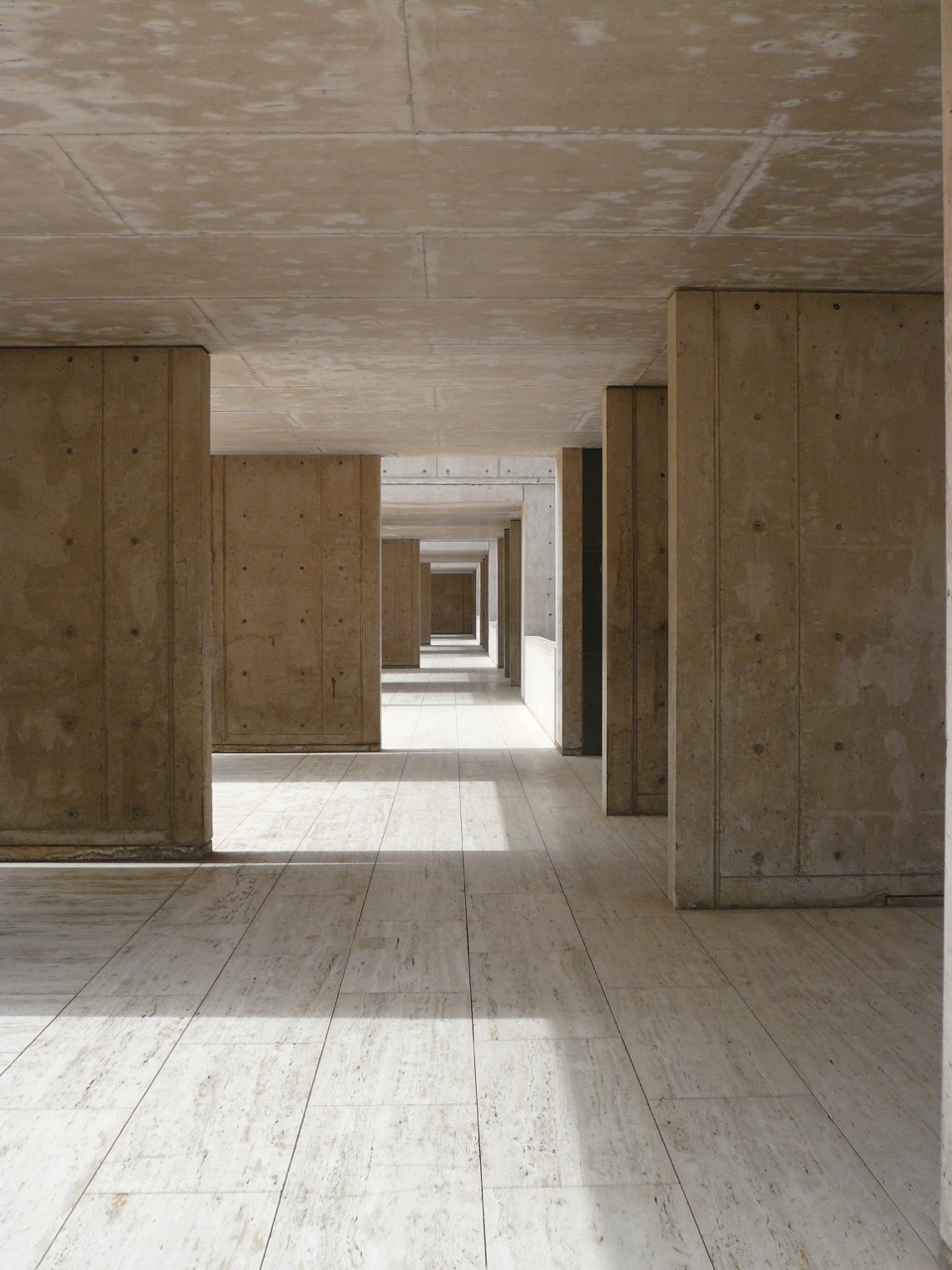
Like parallel mirrors, concrete walls can form infinite, interesting vantage points:

Every room of the senior scientists looks out into the ocean… for creativity, inspiration, and the view of the greater scheme of things.

***

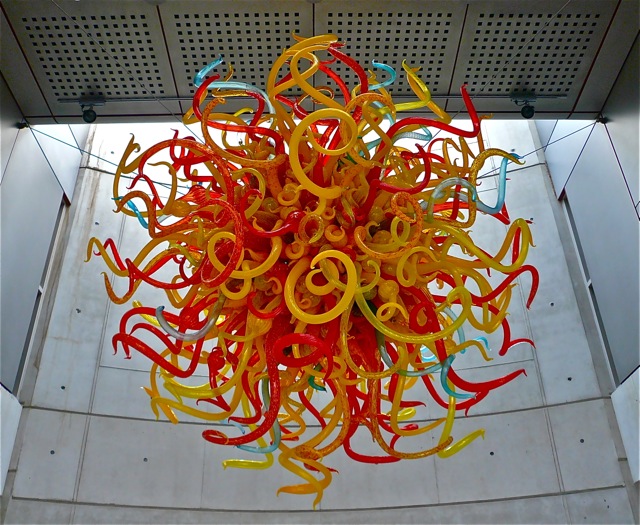
At the reception building where we met to begin the tour, I discovered the work of another artist: Dale Chihuly’s glass work The Sun, suspended from the ceiling:

Chihuly’s glasswork is a showcase of colors and vibrancy, depicting visually the exploratory spirit of the Institute. And I think, a wonderful contrast to the minimalist concrete walls around.

***

As soon as I came back home, I took out a DVD which I’d bought some years now but still haven’t yet watched. How wonderful to have that waiting for me: 2004 Oscar Nominee for Best Documentary, a film by Nathaniel Kahn My Architect: A Son’s Journey.

Son of Louis Kahn and Harriet Pattison, Nathaniel Kahn embarked on a journey to discover the father who died when he was only eleven, a father whom he wishes to have known more before a heart attack ended his life inside a washroom at a New York Subway station.

The film is not only a personal journey, but a reconciliation, a late and poignant search for a father and a son’s identity. Further, it’s a tribute to a great architect from his peers, as his son seeks out those who had known the architect professionally: Philip Johnson, I. M. Pei, Frank O. Gehry, Moshe Safdie, Robert A. M. Stern.

It is also about three women and their families who had experienced the joy and pain of being Kahn’s own, a complicated predicament in his life and after his death.

It is also a virtual gallery of the magnificent works situated all over the world. The most impressive to me, other than Salk Institute, is the one on the cover of the DVD, The National Parliament Building in Dhaka, Bangladesh.

“Design is not making beauty, beauty emerges from selection, affinity, integration, love.” — Louis I. Kahn

***

All photos of Salk Institute taken by Arti of Ripple Effects, Feb. 2, 2012. All Rights Reserved.

Photo of DVD cover from myarchitectfilm.com

***

Click here to read more about Louis I. Kahn

Click here to see glass artist Dale Chihuly’s works.

Click here to read more about the architecture of Salk Institute

Click here to read more about Salk Institute

Click here to read my review of the film The Tree of Life

***

A Change of Scenery

What a difference a few hours of air travel can do… this past week I’ve come out of hibernation above the 49th parallel and travelled to balmy San Diego. My world was transformed from snow-capped rockies to surf’s up ocean… and was rewarded with some spectacular sights.

Surf's Up
Birds of Paradise
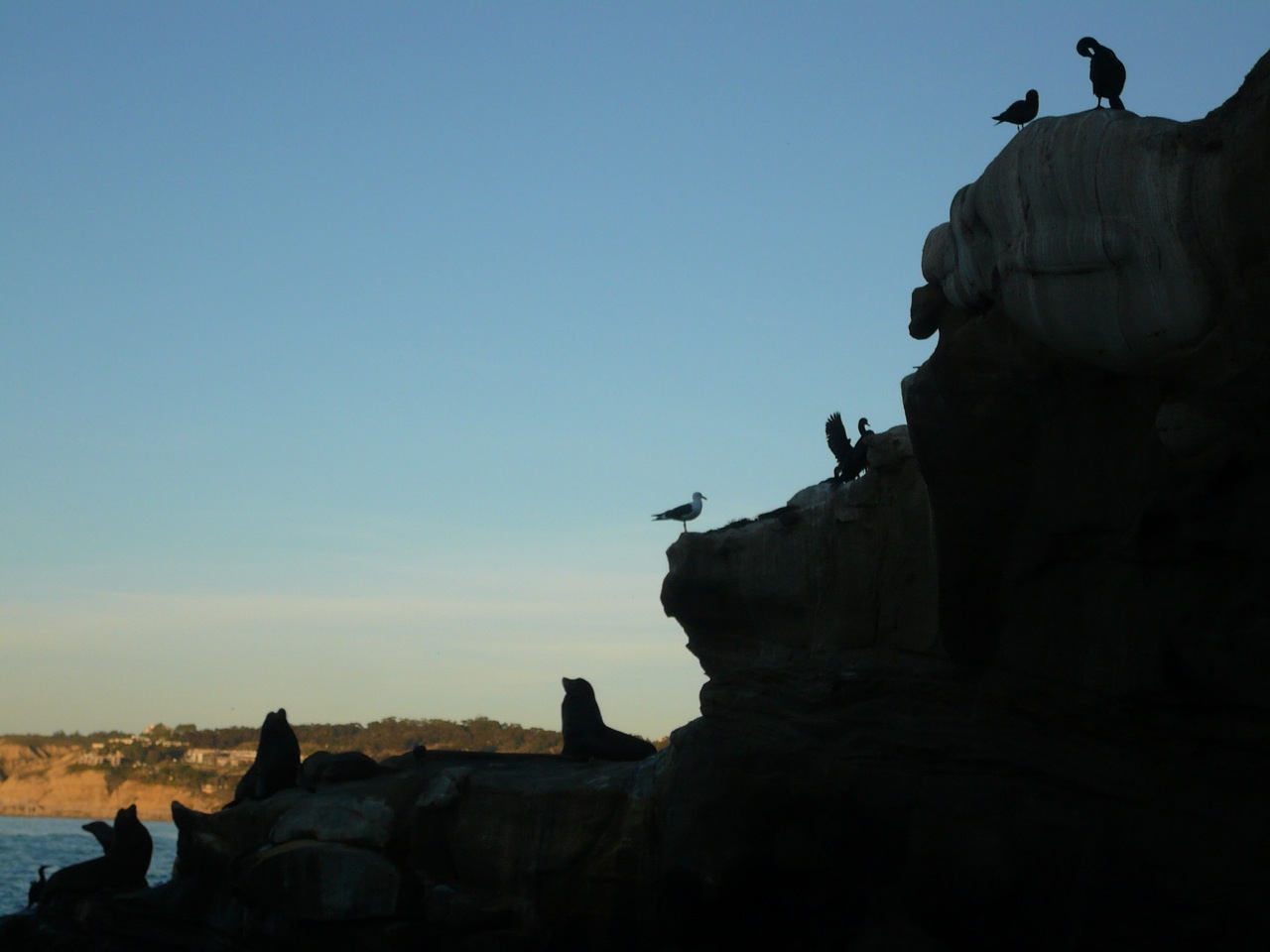
Birds and seals at La Jolla Cove
Palms in Sihouettes
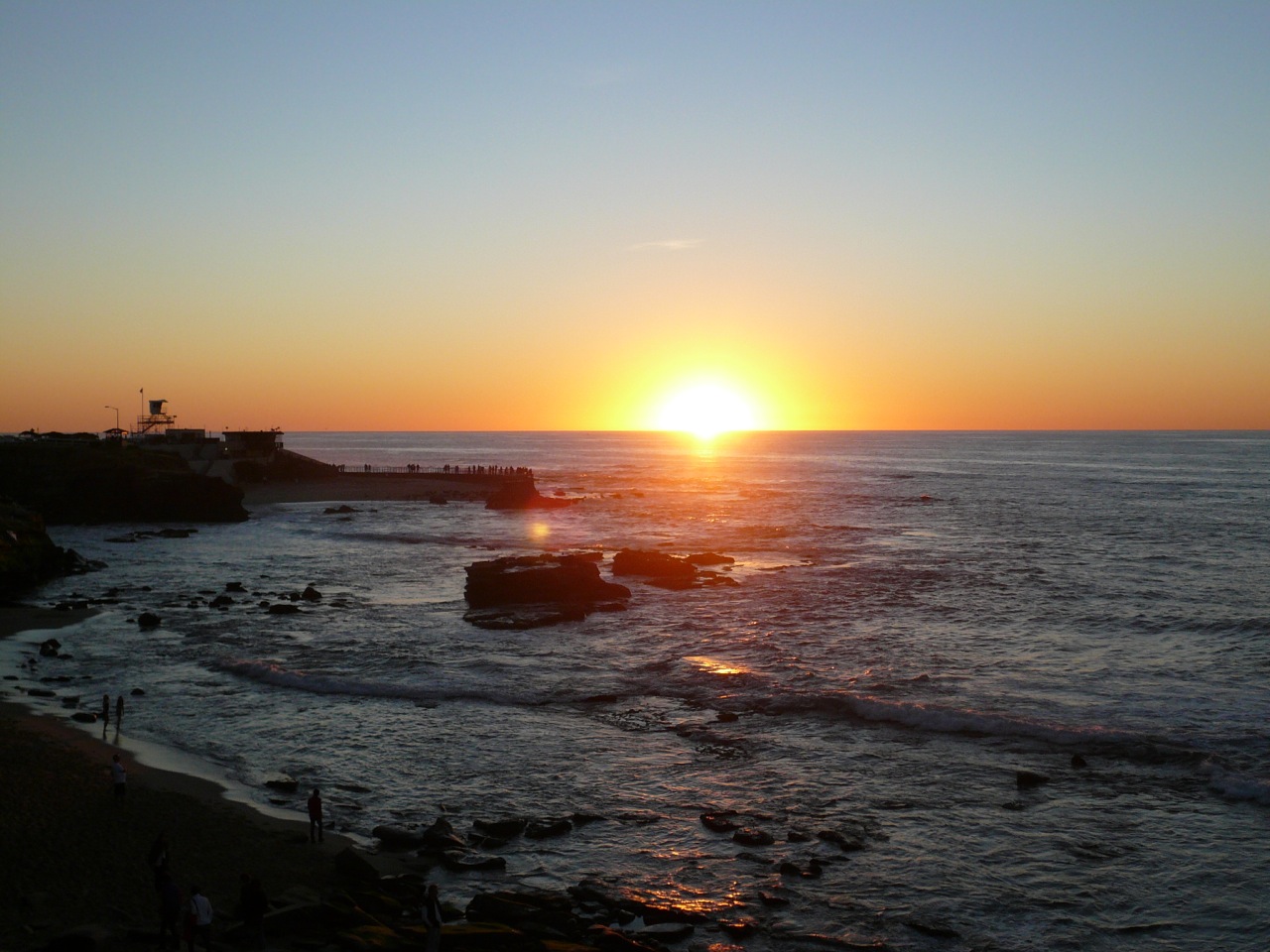
Pacific Sunset

From the ocean to inland, with my Ohio cousin in Thelma and Louise style, we drove through the Mojave Desert, and arrived at Las Vagas. No, not for the slot machines, but was amused to see the town literally painted red celebrating the Chinese New Year: The Year of the Dragon. Here’s a fascinating masterpiece from Jean Philippe Patisserie: A life-size dragon, about 8 feet long and a cherry blossom tree all made of milk, dark, and white chocolate, lanterns of rolling fondants, pearls and flowers of sugar:

The next day, we took a bus tour into Arizona, a five hour drive to the South Rim of the Grand Canyon… a sight no dragon can match:

The Grand Canyon: view from the South Rim

Fred Harvey, a visionary immigrant from London, started the Fred Harvey Company there in the South Rim of the Grand Canyon. In the late 1800’s to the turn of the century, his company and the Santa Fe Railway changed the scene of hospitality by creating comfortable and reasonably priced tourist facilities and meals. Above all, he had the revolutionary spirit to hire a female architect Mary Colter to design the buildings at a time where the Southwest was dominated by macho inhabitants. Her buildings are all on the National Register of Historic Places today.

Mary Colter was an architectural pioneer. For forty years, she designed for the Fred Harvey Company. Her works blended with the natural environs and the native inhabitants of the Grand Canyon. Her materials were mostly wood and stone, her style rustic. Here’s the Bright Angel Lodge where Harvey offered many women employment opportunities. The waitresses in the dining room were known as Harvey Girls.

Bright Angel Lodge

Another Colter work: The Lookout Studio, which offers a breathtaking vantage point to the Grand Canyon.

Lookout Studio

I was pleasantly surprised to find this plaque at the entrance of the Lookout Studio:

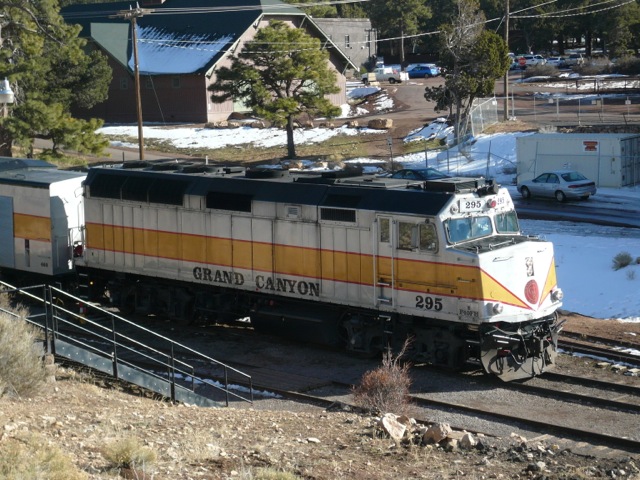
The Grand Canyon Railway begins in Williams, Arizona, and for 60 miles, bring its passengers north through beautiful forest and mountain scenery to their destination at the Grand Canyon. The first passenger train arrived at the Canyon in 1901. During the 1960’s, travel was taken over by the automobile. But today, it has resurfaced as a vibrant mode of tourist attraction.

More sights to share… coming up.

***

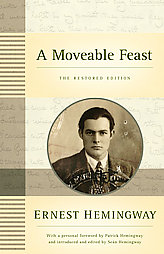
A Moveable Feast (Restored Edition) by Ernest Hemingway

Reading A Moveable Feast is like walking along the sea shore. On the fine sandy beach you see many attractive shells, but you don’t have a bucket with you. You pick the finest ones and put them in your pockets, until they’re full. But every step you take further, you see more that you want to keep. This post is too limited for me to display all the shells I’ve collected, but allow me to just pour them out from my pockets, without sorting, sand and all.

I first read about the term “Moveable Feast” while sitting in an Anglican church in Vancouver, flipping through the The Book of Common Prayer. After some googling later, I got the idea. A feast in the liturgical calendar that you commemorate no matter which date it falls on year after year. In the Foreword of this restored edition, Hemingway’s son Patrick (with second wife Pauline Pfeiffer) writes:

The complexity of a moveable feast lies in the calculation of the calendar date for Easter in a given year, from which it is simple enough then to assign a calendar date to each and every moveable feast for a given year. Palm Sunday is seven days before Easter.

A memorable experience that will follow you all the years of your life. You’ll cherish it whenever and wherever you are. Hemingway’s friend A. E. Hotchner suggested this title. Author of the biography Papa Hemingway, Hotchner recalls Hemingway once said to him:

If you are lucky enough to have lived in Paris as a young man, then wherever you go for the rest of your life, it stays with you, for Paris is a moveable feast.

Like Rick says to Ilsa in “Casablanca”: “We’ll always have Paris.” Same sentiment.

A Moveable Feast is Hemingway’s memoir written from notes he had forgotten in two steamer trunks stored at the Ritz Hotel in Paris since 1928. In 1956 he repossessed the treasure trove, upon the urging of the hotel management. The book details his experience while living in Paris from 1921 to 1926, when the author was in his early 20’s. The memoir was first published posthumously in 1964. The Paris Years was a period when Hemingway, just married Hadley Richardson, young and care-free, decided to give up journalism to strive at being a novelist.

He would write in a rented room or in a café over café crème,
meet Gertrude Stein for critique of his writing, go back home for lunch with wife Hadley, or have oysters and wine in a restaurant, socialize with Fitzgerald, Ezra Pound, and other expats, borrow piles of books from Sylvia Beach’s library in her bookshop Shakespeare and Company, visit Luxembourg gardens and museum…

Two people, then, could live comfortably and well in Europe on five dollars a day and could travel.

No wonder Gil in “Midnight in Paris” dreams of such a life.

What strikes me initially is Hemingway’s frankness, sometimes blatant description of his opinion about the people he met. Like the first time he saw the artist Wyndham Lewis through Ezra Pound:

I watched Lewis carefully without seeming to look at him, as you do when you are boxing, and I do not think I had ever seen a nastier-looking man… I tried to break his face down and describe it but I could only get the eyes. Under the black hat, when I had first seen them, the eyes had been those of an unsuccessful rapist.

According to grandson Sean Hemingway who edited and wrote the introduction of this restored edition, Hemingway developed his sharp eye and ear during these Paris years. Here’s an account of Scott Fitzgerald when Hemingway first met him in the Dingo bar:

Scott was a man then who looked like a boy with a face between handsome and pretty. He had very fair wavy hair, a high forehead, excited eyes and a delicate long-lipped Irish mouth that, on a girl, would have been the mouth of a beauty. His chin was well built and he had good ears and a handsome, almost beautiful, unmarked nose.

This is only a little excerpt in a two page description of Scott’s appearance. It’s sentences like these that stand out for me. They all point to the writer at work: observing.

I kept on looking at him closely and noticed…”

“I kept on observing Scott.

And putting down in words later:

I wasn’t learning very much from looking at him now except that he had well shaped, capable-looking hands, not too small, and when he sat on one of the bar stools I saw that he had very short legs. With normal legs he would have been perhaps two inches taller.

But it was Scott’s talents despite his eccentricities and alcoholism that formed the building blocks of their friendship.

When I had finished the book [The Great Gatsby] I knew that no matter what Scott did, nor how preposterously he behaved, I must know it was like a sickness and be of any help I could to him and try to be a good friend. …   If he could write a book as fine as The Great Gatsby I was sure that he could write an even better one. I did not know Zelda yet, and so I did not know the terrible odds that were against him.

It is perhaps with such candour and devotion in writing that he constantly sought to “write one true sentence.” Woody Allen has grasped the essence in this juicy line from “Midnight in Paris”:

No subject is terrible if the story is true, if the prose is clean and honest, and if it affirms courage and grace under pressure.

The restored edition brings back sections missing in the earlier 1964 publication which was edited by fourth and last wife Mary. According to Sean Hemingway, this restored work represents the content that Hemingway himself had intended the book to have, with the chapter “Nada y Pues Nada” (Nothing And Then Nothing) written three months before his suicide.

The second last chapter “The Pilot Fish and the Rich” shows he was remorseful over the breakdown of his first marriage to Hadley towards the end of his Paris days. A mutual friend they both knew, journalist Pauline Pfeiffer, came in between them. “You love them both now… Everything is split inside of you and you love two people now instead of one.”

But A Moveable Feast belongs to Earnest and Hadley and their young son Bumby.  “… this is how Paris was in the early days when we were very poor and very happy.” As a reader, I feel a sense of loss as I come to the end, for Earnest and Hadley were so much in love the first few years in Paris:

She: ‘And we’ll never love anyone else but each other.’

He: ‘No. Never.’
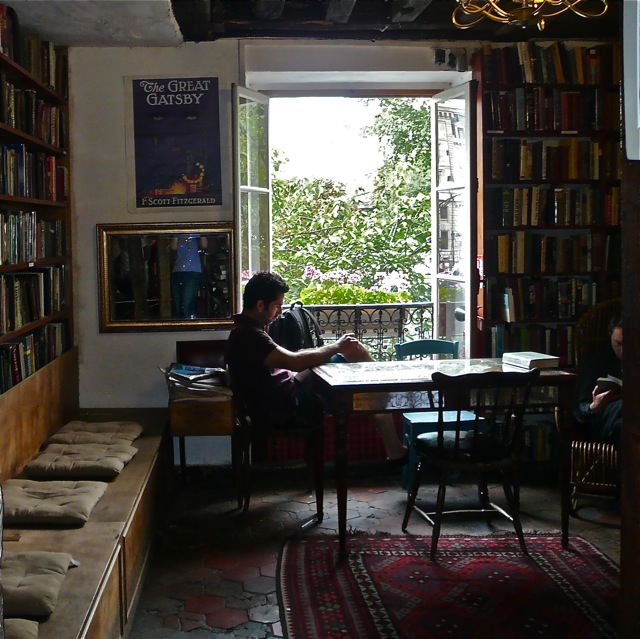
Their 2-room rental walk-up with no electricity and no hot water had been a haven of warm meals and intimate talks. It was the time when he was “a young man supporting a wife and child … learning to write prose.” Their short marriage lasted only six years. In 1927 Hemingway married Pauline, four months after divorcing Hadley.

The last section at the end of the book is entitled “Fragments”. These are “false starts”, beginning paragraphs of an introduction Hemingway tried to write for this book. Interestingly, every one of these attempts starts with: “This book is fiction.” Many include this sentence: “I have left out much and changed and eliminated and I hope Hadley understands.” In another fragment he wrote: “No one can write true fact in reminiscences…”

I’m baffled. But maybe unnecessarily. From our very subjective mind, our often hazy view of what did happen and what we wish to have happened and what could have happened, we conjure up a fusion. Should there be a clear line separating them? It’s because the demarkation of fact and fantasy is fluid that we can appreciate the arts, such as the film “Midnight in Paris.” The events that happen to Gil after midnight would remain fondly with him as reality, so real that they change his decision regarding his future. Facts or fiction… or fusion?

~ ~ ~ 1/2 Ripples

***

A Moveable Feast: The Restored Edition by Ernest Hemingway, published by Scribner, NY, 2009, 240 pages. Foreword by Patrick Hemingway, introduced and edited by Sean Hemingway.

This post is to participate in the Paris In July blogging event hosted by Karen of BookBath and Tamara of Thyme for Tea. You can also find another review of A Moveable Feast here at Dolce Bellezza.

To read my review of “Midnight In Paris”, CLICK HERE.

Photos: Paris, Shakespeare and Company, Writers’ portraits and The Library in Shakespeare and Company taken by Arti of Ripple Effects, Aug. 2010. All Rights Reserved.

Click on the following links for some insightful interviews:

National Post Interview with Sean Hemingway on the restored edition

Interview with Woody Allen on making “Midnight In Paris”

The Royal Visit: William and Kate in Alberta

The whirlwind visit by the Duke and Duchess of Cambridge William and Kate to Alberta has come and gone. I’m glad that they cared to visit Slave Lake where 40% of the town had been destroyed by wildfire in May, but has now come under another disaster, flooding.

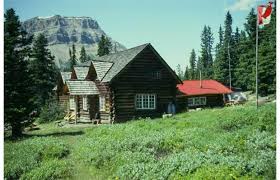
Arti is also impressed by the royal couple’s secret hideout July 6 near Lake Louise. Well, maybe it’s not totally their choice, but kudos to whoever that was responsible for the arrangement, they opted for the historic and secluded Skoki Lodge:

Skoki Lodge

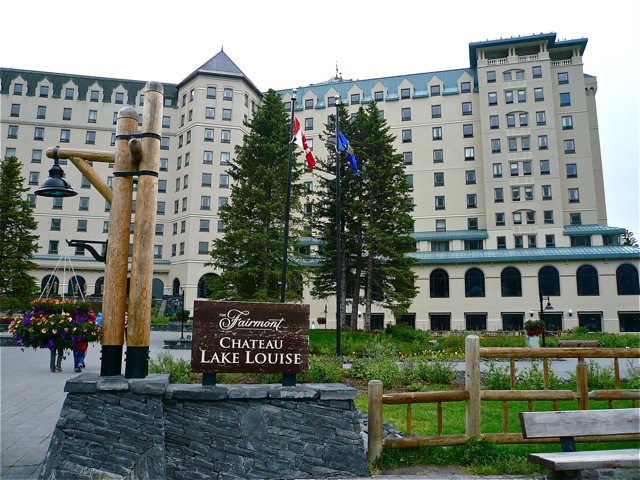
Rather than the grand and monumental Chateau Lake Louise facing the world famous Lake:

At first sight, the Chateau is more fitting for a royal than the little rustic log cabin that’s Skoki Lodge. But this may well be a statement clearly transmitted … William and Kate are as unassuming as their down-to-earth mountain abode.

A day after the royal couple has left Lake Louise by helicopter to the Calgary Stampede, Arti drove a couple of her own visitors to the Lake. We encountered strong winds and drizzles under an overcast sky. But I hope William and Kate had had a brighter view of this magnificent natural beauty, and saw the glacier that was shrouded in low mystic clouds when we were there:

.

As for their Calgary arrival for the Stampede, it’s quite a moving story. The bright yellow dress that Kate was wearing as she got off the helicopter could well be the most appropriate attire (rather than Western wear), for she represented a real-life princess Diamond Marshall had wished to meet in person. Six year-old Diamond has stage 4 cancer. Through the Make-A-Wish Foundation, she was chosen to present flowers to Kate. Here’s her letter written to the Duchess of Cambridge:

Diamond Marshall Diamond Marshall And The Death Of Cynicism: When The Duchess Of Cambridge Made A Wish Come True

Diamond Marshall1 Diamond Marshall And The Death Of Cynicism: When The Duchess Of Cambridge Made A Wish Come True

The most authentic moment, Diamond dashed out to hug Kate and presented to her a bouquet of flowers and her own hand-made friendship bracelet in a heart-shaped box. What did she think of the other half of the royal couple?  “He was a little bit handsome,” she said.

CLICK HERE to read the story of Diamond Marshall.

.

Kate and William did have their chance to don a white cowboy hat (Calgary’s honorable gift to distinguished guests). On July 7, Wednesday night, two members of Arti’s household had the invite to a reception organized by PM Stephen Harper. Arti’s own CS (turned CG in June) had the very close encounter of extending his long arm to shake both the hands of William and Kate. In the frenzy, CG’s iPhone photos were a bit blurry.  But here’s a sharper view of the two royals at the Calgary Stampede:

Kate and William will have their all dressed-up, glamorous red carpet reception with the celebs, the rich and famous of Los Angeles at their next stop after Calgary. But I’m sure only here in Alberta can they relax in a Rocky Mountain log cabin, dressed in jeans and plaid shirts, and where Kate can receive an impromptu hug from a six-year old cancer patient who dashes out to show her excitement, and where sincere authenticity can be freely expressed and cherished.

***

Key: CS=College Student, CG=College Grad

Photo Source: Skoki Lodge from Travel Alberta, Calgary Herald; Diamond Marshall & Kate Middleton, Todd Korol, AP; Kate and William at the Calgary Stampede, Reuters Phil Noble; Diamond Marshall’s letter from this site; Chateau Lake Louise and the fog-shrouded Lake Louise, Arti of Ripple Effects.

***