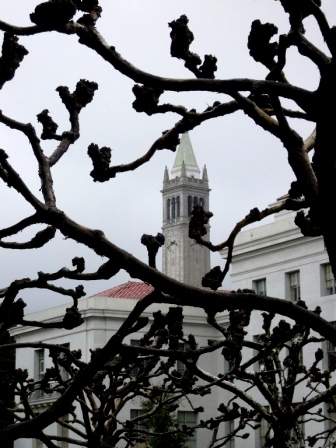
Urban Sanctuary

June has been a month of travelling for me. From the natural beauty of Vancouver to über busy and congested Metro Toronto, I’ve shifted gear and gone from park to overdrive in two short weeks. Quiet garden paths have been replaced by the 12-lane Highway 401, rain forest has turned into concrete jungle. And so I was pleasantly surprised by this serendipitous find right in the heart of downtown Toronto. Amidst the hustle and bustle, I found this sanctuary… literal and spiritual, the Trinity College Chapel on the campus of the University of Toronto:

Every step into the magnificent architecture instills awe and wonder, every artefact a symbol:

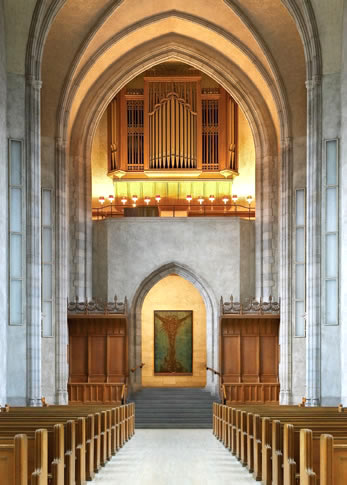
Looking back to the choir loft is another stunning view (this photo from Wikipedia):

The painting on the wall in the narthex, a crucifix, is entitled “Mediterranean Christ” by the artist Juan Sala Santonja:

***

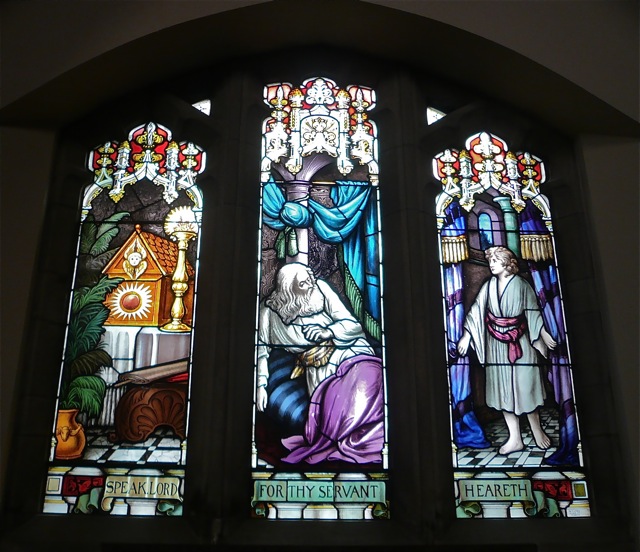
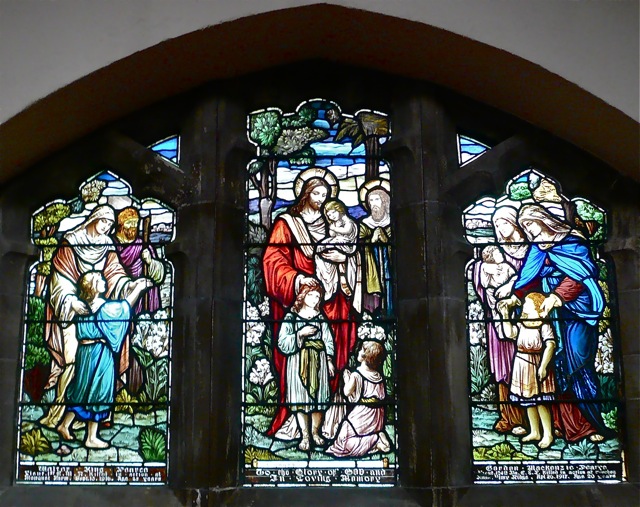
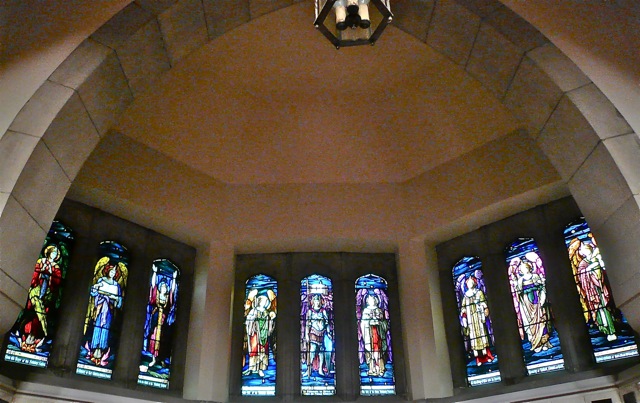
Another joy of discovery is Grace Church On the Hill, Anglican. My expectation of my short sojourn in Toronto had never been stained glass or religious art. But here I was, beholding Biblical themes in beautiful stained glass:

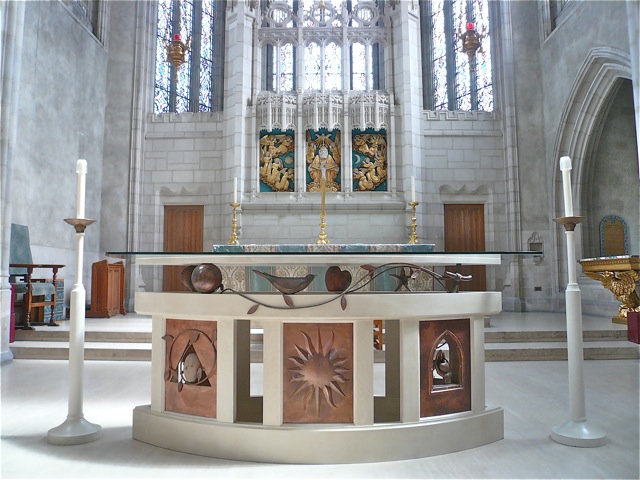
This contemporary wall sculpture created by Catherine Widgery of Montreal juxtaposes well among the stained glass, for its message points to a similar theme:

Entitled “By Her Own Radiant Light”, John Milton’s verse is engraved on a brass plaque beside the installation:

By her own radiant light, though sun and moon

were in the flat sea sunk.

And Wisdom’s self

oft seeks to sweet retired solitude,

Where, with her best nurse

Contemplation,

She plumes her feathers,

and lets grow her wings.

The pamphlet beside the art installation conveys the meaning: As the Moon’s illumination is the reflection of the Sun, Christian disciples are reflectors of the Greater Light. The phases of the moon suggest an eternal cycle of life, death and rebirth. Loss returns to fullness; darkness becomes light. The fragments of reflected light on water form a triangle below the full moon. Each fragment of light is a single piece of metal, cut and assembled so as to suggest the light’s effect on the surface of the water. At the heart of the circle, the light reflected on the surface is brilliant and intense, and diminishes as it spreads farther from the source.

As someone who’s always drawn to ripples, I spotted this installation right away as I entered the  sanctuary. Reading Milton’s verse and the explanation of the art work helped me gain a deeper appreciation of the visual symbolism.

No rain forests and greenery, but I was drawn to explore another landscape, one where art and imagination formed a bridge towards the unseen and spiritual, no less powerful in bringing out the wonders of creation and the Creator, the Source of Light and Wisdom.

***

CLICK HERE to watch a video clip with visual artist Catherine Widgery

PHOTOS: All photos were taken by Arti of Ripple Effects except the one noted from Wikipedia. Arti’s photos taken in June, 2011. All Rights Reserved.

Arles: In The Steps of Van Gogh

Solution to Arti’s Cryptic Challenge #4: Arles

While Paris has her cultured beauty and sophistication, I’d appreciated the change of scenery and warmer weather as I headed south to Provence.  Three hours via the TGV took us to the historic City of Avignon, site of the Papal Palace before the Vatican. We stayed in Avignon for three days, taking daily excursions out to nearby towns.  Arles was a must-see on my list.

Van Gogh moved to Arles from Paris in 1888, seeking the tranquility that was so elusive to him in the big city.  In his letter to his brother Theo upon arrival to Arles, he wrote:

It seems to me almost impossible to be able to work in Paris, unless you have a refuge in which to recover and regain your peace of mind and self-composure. Without that, you’d be bound to get utterly numbed.”    — Tuesday, Feb. 21, 1888.

The fresher and more colourful palette is apparent during this most prolific period of the artist’s life.  Bright yellows, blues, shorter and swirling brush strokes established his signature style.  As for me, I was a bit disappointed to see the sunflowers have already withered in late August.  Fields of yellow were now massive brown.  They would be harvested at a later time for their oil, a good reminder that, for tourists, it’s the view, but for those living here, it’s their livelihood.  The lavenders on the Luberon mountains too had long passed the season.  Note to myself:  Early to Mid July is best if I ever come this way again.

But all was not lost.  I was gratified to follow some of Van Gogh’s footsteps as I explored the clearly posted Van Gogh sites in the town, the scenes and locales where the artist so vividly captured in his paintings.

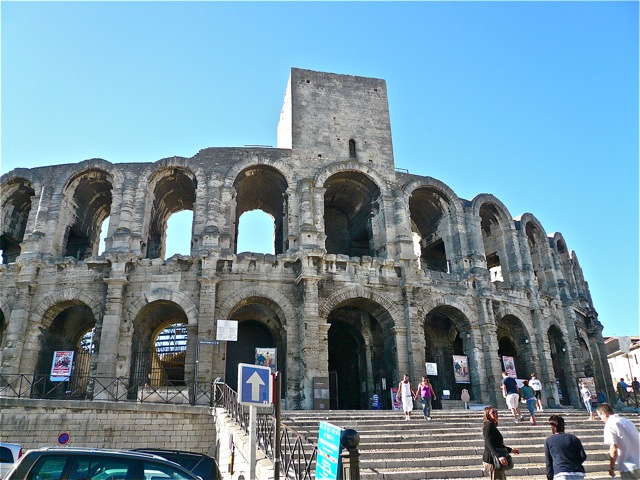
Arles is a Roman town.  What more prominent to reflect its past glory than the Roman Arena in the town centre.  Why all the arches?  The free flow of pedestrian traffic.  The full seating capacity, 20,000 people, could exit the Arena in 7 minutes.

.

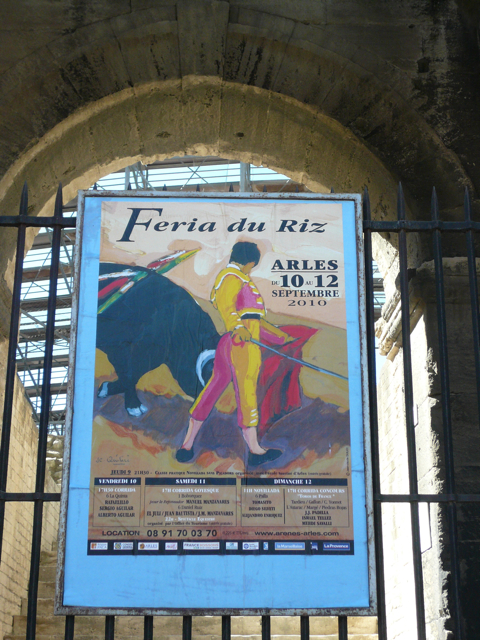
Used by gladiators in ancient time, the Arena is still the venue for bullfights:

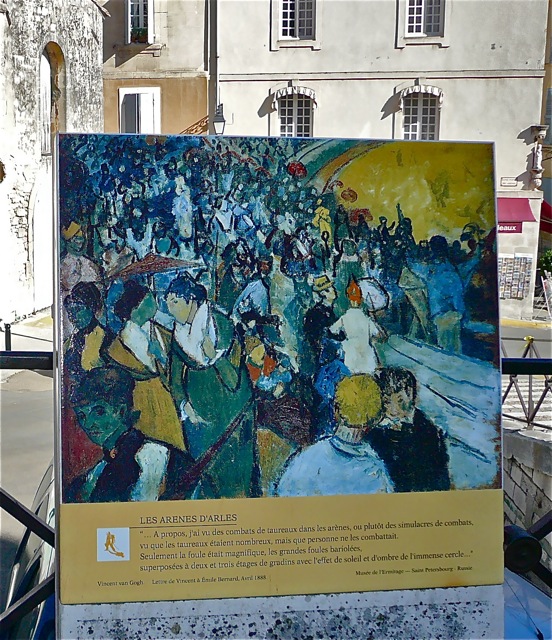
But Van Gogh’s interest was not so much on the violent action of bullfighting than on the people, as his painting Spectators In The Arena At Arles (December, 1888) clearly shows:

The Café Terrace on the Place du Forum was his hang-out, renamed Café Van Gogh now.  The yellow building upon the backdrop of the blue, starry night had deeply inspired the artist:

Café Terrace At Night (September, 1888):

Van Gogh had wanted to make Arles a hub for fellow artists.  Upon his urging, Gauguin came to join him in October, 1888.  The two painters frequented the Café Terrace many a night but only for two short months.  What happened on December 23rd was reported by the local paper the next day:

At 11:30 pm., Vincent Vaugogh [sic], painter from Holland, appeared at the brothel at no. 1, asked for Rachel, and gave her his cut-off earlobe, saying, ‘Treasure this precious object.’  Then he vanished.[1]

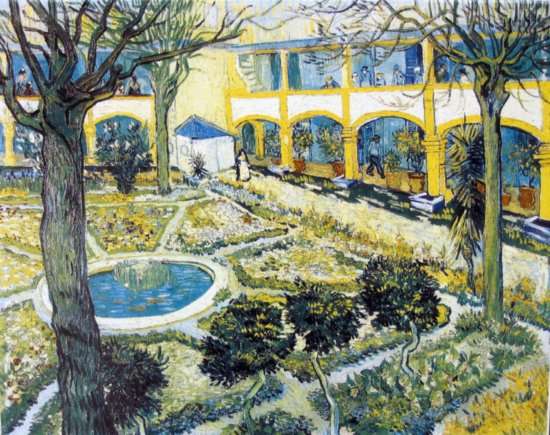
After this incident, Van Gogh was admitted to a local hospital, now the Espace Van Gogh in Arles, a cultural centre:

In January, 1889, Van Gogh returned home to the Yellow House, but for the next few months, suffered onslaughts of hallucinations and delusions. His view of his own condition nevertheless was lucid and even progressive for his time.  His letter to Theo is poignant, as he openly faced his predicament and earnestly sought a solution:

And for the time being I wish to remain confined, as much for my own tranquillity as for that of others.

What consoles me a little is that I’m beginning to consider madness as an illness like any other and accept the thing as it is, while during the actual crises it seemed to me that everything I was imagining was reality.”

— Sunday, April 21, 1889.

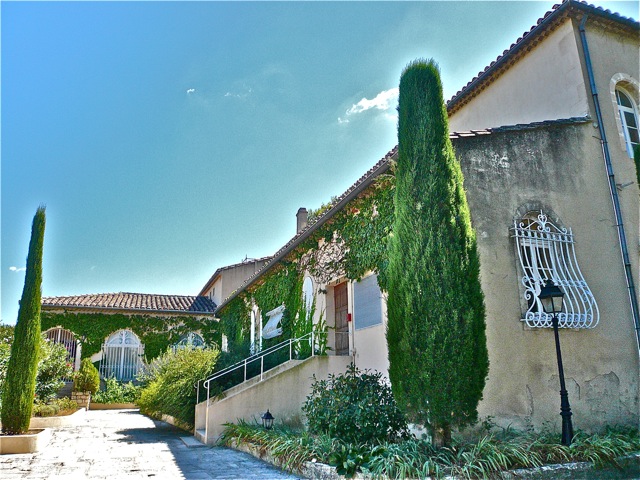
On May 8, 1889, he checked himself into the Saint Paul de Mausole, the mental hospital at St-Rémy-de-Provence.  Under the care of his doctor Théophile Peyron, the artist’s condition improved and he thrived in the idyllic environment there.  Art therapy had brought healing and prolific output.  Van Gogh stayed there for a year and created more than 150 paintings.

Dr. Théophile Peyron out at the front garden:

.

The olive grove outside St. Paul hospital:

.

To his brother Theo, he wrote on Sunday, May 11, 1890:

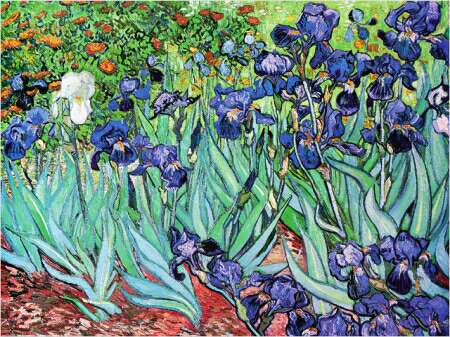
At the moment the improvement is continuing, the whole horrible crisis has disappeared like a thunderstorm, and I’m working here with calm, unremitting ardour to give a last stroke of the brush.  I’m working on a canvas of roses on bright green background and two canvases of large bouquets of violet Irises…

My Van Gogh trip ended at St. Rémy, and so be it.  I’ve seen the sites wherein the artist was at his most prolific.  I’ve seen the town and surroundings where he found inspiration.  I’ve seen his final solace where he attained some stability and painted with passion.  I’d like to keep these as memories of my travel to Provence.  I could hardly bear to think of his last days, discharged from St. Rémy just a few days after the above letter, headed north to Auvers-sur-Oise on the outskirt of Paris, and in just two short months, succumbed to the recurrence of his illness. He shot himself in the chest with a revolver on July 27, 1890, and died of his wound two days later.

Back to the thoughts I wrote about in my last post: How do we keep art from turning into a cliché?  I think it takes a certain awareness of the artist as a person, plus a measure of empathy and respect for the struggle to live and create… and realizing that the beautiful works are often triumphs in spite of life’s overwhelming adversities, rather than the natural products of bliss and fortune.

To wrap up my travel posts, and taking the risk of turning it into a cliché albeit my motive is pure, here’s the YouTube clip again, Don McLean’s tribute to Vincent:

Some Van Gogh links:

An excellent and comprehensive site for Van Gogh’s letters, 900 of them, poignant account of his life.

The Van Gogh Museum, Amsterdam

Van Gogh Gallery online

Wikipedia: Vincent Van Gogh

***

[1]  Rick Steves’ Provence and French Riviera 2010, published by Avalon Travel, p. 69.

Art and Cliché

My musing on high art and popular culture earlier in my trip came to a new twist as I visited the Louvre. I just couldn’t help but wonder: Can art be too popular? When does art turn from a form of aesthetics into a subject of parody? Will mass popularity reduce an objet d’art into a cultural cliché?

Here’s what prompted my query:

.

Even more fascinating is this view twenty feet away:

.

And in comparison, here’s another gallery in the Louvre displaying lesser known works:

.

.

When does art become a cliché?  In our case, the Mona Lisa…

When you see her in comics, or paint-by-number sets in dollar stores, or morph into Alfred E. Neuman on Mad Magazine’s cover, or into Monica Lewinsky on the New Yorker, or find her on The Far Side Gallery, or in The Simpsons, or a Pantene commercial showing off her revitalized curly hair, or when you find 450 parodies of her image on a single website. According to an image tracking source, the Mona Lisa is the most used and abused image in advertising.

I know, other artists had created altered versions of Mona Lisa from early on. Eugene Bataille (Sapeck) painted her smoking a pipe, Marcel Duchamp added a moustache and goatee, Salvadore Dali fused himself into her image.

Poor girl, she didn’t even know what hit her, or how her one time, private sitting for da Vinci had generated so many imaginative renditions centuries down the road, as people are still using, or abusing, her image for private gains. She should have bargained for residual payments.

Are we more comfortable now that the barrier of ‘high art’ has been broken?  Are we enjoying the legacy and freedom the Dada Movement and the Surrealists had claimed for us?  I must declare outright, I’m not particularly a fan of the Mona Lisa, but I’m just a bit annoyed seeing other similar misuse, like Michelangelo’s David in boxers, or Venus de Milo wearing sunglasses.

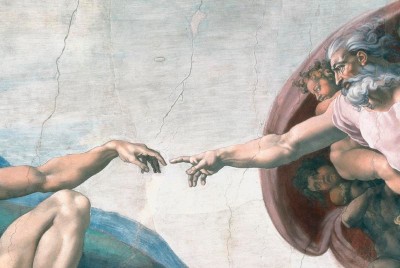
Other vulnerable examples are not hard to find. Think of this magnificent piece of painting in the Sistine Chapel… another easy target for cliché and parody:

Or this self portrait of a tormented soul:

.

Or take these beginning haunting notes from a brilliant symphony, they have become an expression of suspense not much deeper than the tune in Final Jeopardy:

.

The opening chorus of this masterpiece has now been reduced to a punctuation mark in our vernacular, an exclamation used for scenarios from finding your lost keys to losing 10 pounds:

Isn’t the advertising industry supposed to be the flagship of creativity?  And, when it comes to the creative process, aren’t we supposed to flee from clichés and produce fresh expressions? Isn’t originality a goal to strive for anymore? Or, has parody become the new genre and proof of ingenuity in our time?

And I’m just too tired to go into all the zombie and vampire versions of Jane Austen’s novels…

Paris: The Latin Quarter

Solution to Arti’s Cryptic Challenge #3: Paris

It was pure serendipity that I’d picked a hotel right in The Latin Quarter.  At the time of my booking I wasn’t aware of so culturally rich a Parisian sector I’d be staying, and with many attractions on my list within walking distance.   The Latin Quarter derived its name from the fact that Latin was widely spoken in the area during Medieval time.  This has been the academic and literary part of Paris, and remains so today. Bookstores are everywhere, almost all in French though, many specializing in philosophy.

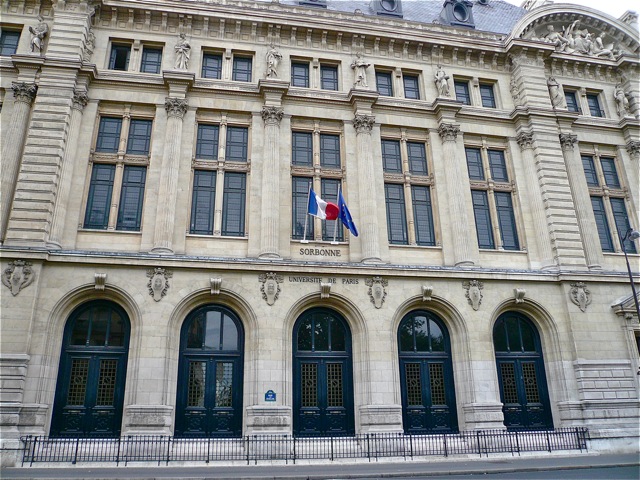
Our hotel is situated right across from the Sorbonne, Universite de Paris.  Unfortunately it was closed during the summer months, the guard at the gate making sure people stay out, so I did not get a chance to go inside or browse in their bookstore.

.

The Panthéon is also located in The Latin Quarter, about a 15 minutes walk from where we stayed.  It is the burial site of several renowned intellectual and literary figures of France, including Voltaire, Rousseau, Hugo, Zola, Pierre and Marie Curie:

.

Not just as a memorial ground, the Latin Quarter is a vibrant sector where writers, intellectuals and academics congregate, meet each other to engage in discourses over coffee or a glass of wine. Here is a restaurant where Camus and Sartre were among its prominent patrons, now a tourist point of interest on the map, Le Brasserie Balzar:

.

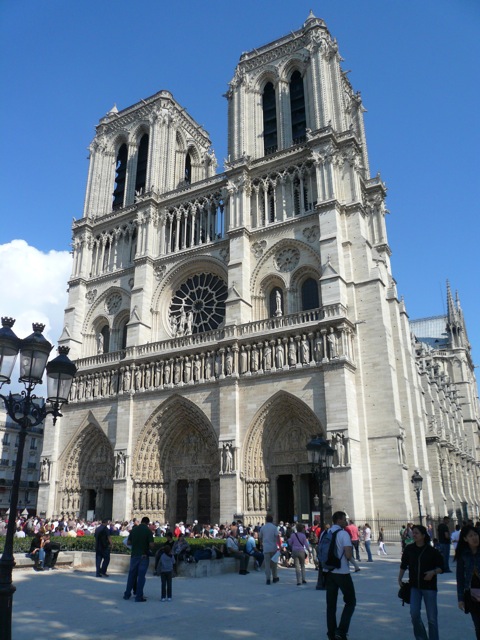
Heading down rue St. Jacques from Balzar, I walked towards the River Seine.  I could see from afar the Notre Dame:

.

.

But I wasn’t going to make my way across just yet, for I’ve found the number one item on my must-see list situated on this side of the Seine, the Left Bank, and that was the legendary bookstore-library, Shakespeare and Company:

.

.

On November 17, 1919, American expatriate Sylvia Beach opened the English language bookstore-library in Paris, and turned the page in literary history.  Beach was not merely a bookseller, but a multi-faceted literary personality, a writer and a subject for other writers, the publisher of James Joyce’s Ulysses in 1922, the proprietor of a literary hub that welcomed expatriate writers to mingle, read, write and stay.  In one of her many literary parties she introduced F. Scott Fitzgerald to James Joyce, the former was too intimidated to approach Joyce himself.   Many icons of the ‘Lost Generation’ had been affiliated with the literary hang-out, including Hemingway, Gertrude Stein, Ezra Pound, to name a few.  Click here for a historic photo of Beach and Joyce in front of Shakespeare and Company.

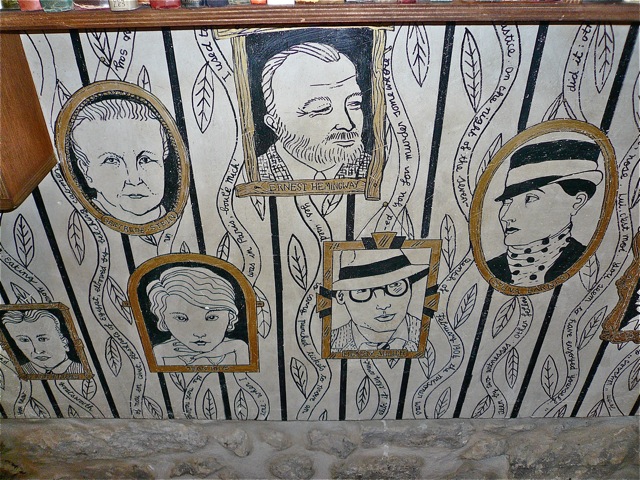
Hemingway and some of the ‘Lost Generation’ found on the walls of the bookstore:

.

.

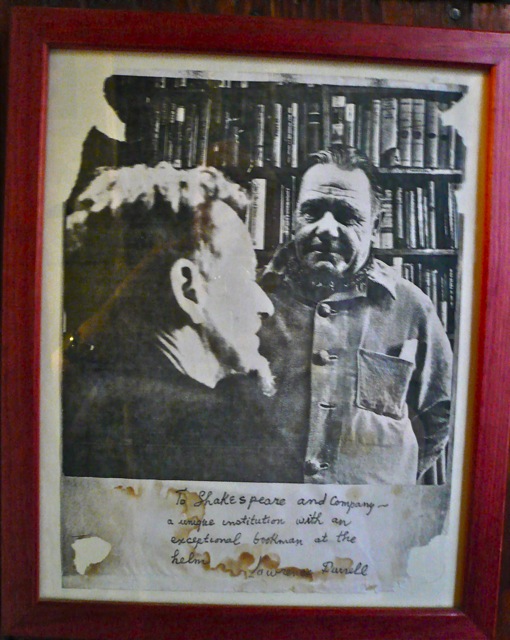
Closed down during WWII, the new owner George Whitman, another American expat and a friend of Beach’s,  re-opened its doors in 1951 in the present location on the Left Bank of the Seine.   Now in his 90’s, Whitman has stood by his commitment not to sell his little bookstore to developers, and kept the tradition alive: a sanctuary for writers.  For almost 60 years now, Whitman, himself a writer and a poet, has offered lodging and writing opportunities to countless aspiring souls.  The bookstore is now run by daughter Sylvia Beach Whitman.  According to its website, Shakespeare and Company has served more than 50,000 heads on the pillows of its 13 bed facilities for free, accommodating such literary figures as Henry Miller, Anais Nin, Lawrence Durrell, and Alan Ginsberg.  Click here for a personal account of what it’s like staying at Shakespeare and Company, and some house rules.

A mementos from Lawrence Durrell:

.

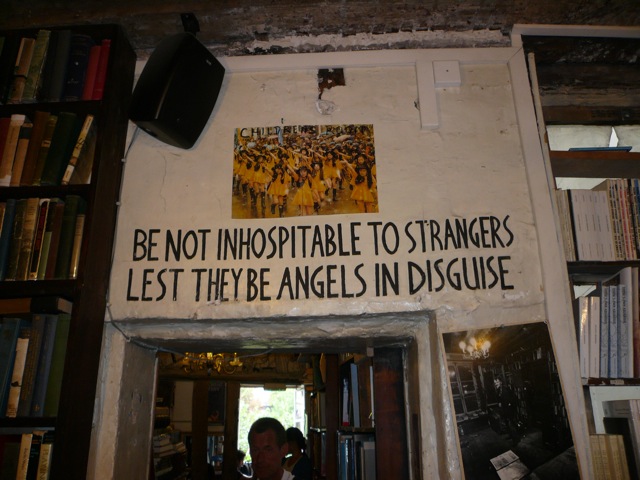
Upholding the spirit of hospitality:

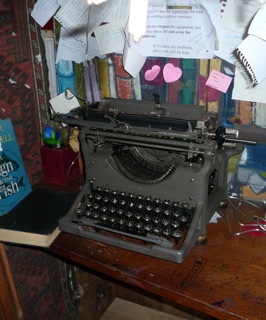
Typewriter for use, tradition alive and well:

Some impromptu music-making:

.

Just last week, even the editor of the New York Times has declared the inevitable, that the print version of the New York Times will end some time in the future. Under the sweeping torrents of eBooks and ePublishing, seems like independent bookstores are fighting an uphill, if not a losing, battle.  I wish the Whitman family well in standing strong against the tide.  From a little bookshop-library, it has stayed true to its tradition, and by so doing, gained a spot on the historic map of Paris.  In 2006, Whitman was honoured by the French Minister of Culture with the Order of Arts and Letters. More than just a point of interest for tourists, Shakespeare and Company has now become a cultural institution that just, hopefully, might not be so easily demolished to make way for new development along the Seine.

Click here to read an interesting article and personal interview with George Whitman from Bloomberg, yes, Bloomberg.

***

All Photos Taken By Arti of Ripple Effects, August 2010.  ALL RIGHTS RESERVED.

Bath’s Persuasion

Solution to Arti’s Cryptic Challenge #2:  Bath

From London’s Paddington Station we took the 90 minute train ride to Bath Spa, saving us half the time than with the bus.  The City of Bath is a UNESCO World Heritage Site.  Its magnificent Roman Baths and stylish Georgian streets and architecture make this a wonderful gem for tourists.  The first time I visited there was in December, 2007. For a more general overview of the beauty of Bath you can find my two previous posts here and here.

In this revisit, I was a more intentional traveller.  I let Austen’s Persuasion be my guide.  With a detailed street map of Bath in my hand, I went exploring the places mentioned in the novel, coincidentally, many of them I missed in my last visit.

“I was not so much changed…” was Anne Elliot’s words to Captain Wentworth upon seeing him eight years after turning him down.  The termination of their relationship was not her own intention, but duty had driven her to yield to Lady Russell’s persuasion.  It would have been a “throw-away” for Anne at 19 to engage with “a young man who had nothing but himself to recommend him, and no hopes of attaining affluence, … uncertain profession, and no connections.” (p. 20)

But the star-crossed lovers are granted the bliss of a second chance, and rightly grab it this time.  Austen’s setting of Bath in the book is no coincidence.  The Georgian City was the centre of fashion and the epitome of genteel society, a hotbed of social phenom for the critic and satirist in Austen.  Jane had lived in Bath herself for four years, 1801 – 1805, with her sister Cassandra and their parents.  Ironically, she was unpersuaded by its attractions according to her biographer Claire Tomalin.

Austen aptly uses Bath’s addresses for the purpose of her characterization.  Geographical location is everything in a class-conscious society, as Keiko Parker’s excellent article Jane Austen’s Use of Bath in Persuasion points out.

First off,  there’s the Pump Room, where in Jane Austen’s days people socialized and met one another, gathered to drink the therapeutic water, catch the latest fashion, simply to see and be seen.  The magnificent structure and decor makes The Pump Room a fine restaurant now:

Despite its grand decor, the areas around the baths are residences for the common folks in Austen’s time.  Mrs. Smith, the poor, infirmed widow with whom Anne maintains a loyal friendship, lives in the Westgate Buildings close to the Baths.  Anne becomes a laughing stock for the snobbish Sir Walter when he hears of her least favourite daughter is determined to visit Mrs. Smith instead of accepting an invitation to Lady Dalrymple’s, someone belonging to the upper echelon of society:

“Miss Anne Elliot, you have the most extraordinary taste! Everything that revolts other people, low company, paltry rooms, foul air, disgusting associations, are inviting to you.” (p. 113)

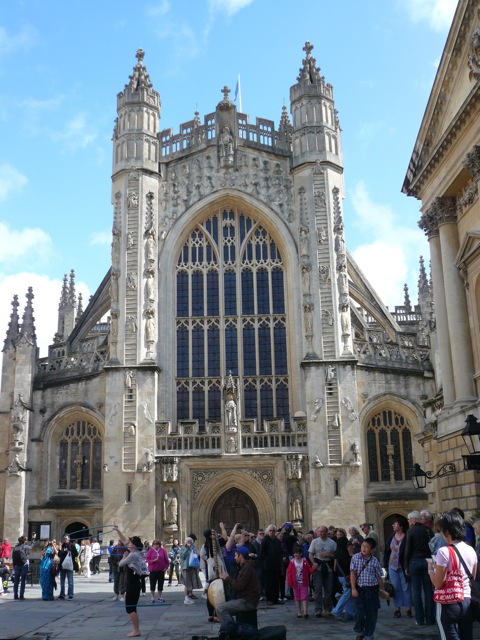
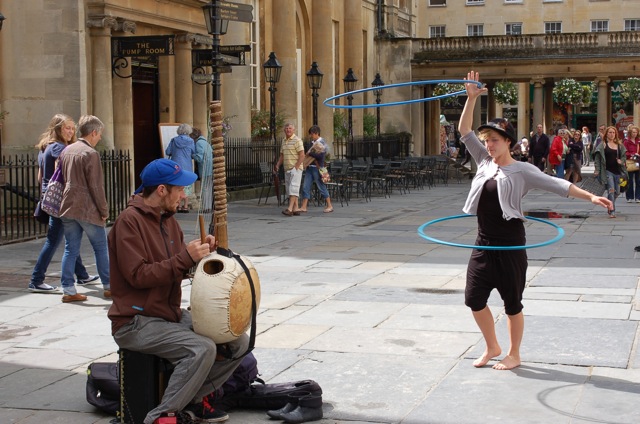
Today, the open area outside the Pump Room by the Roman Baths is perhaps the most popular tourist gathering place. Tour buses stop at the Bath Abbey for pick up and drop off, buskers perform in the open space outside the Roman Baths and Pump Room:

.

Nearby is Sally Lunn’s Bun, originated in 1680 by a young French refugee, in the oldest house of Bath, ca. 1482.  Now a restaurant on top with the cellar a museum that houses the original kitchen and cookwares, Sally Lunn’s serves this traditional creation: a large, soft, round bun that can go with just about anything.  But probably best like this, simply with garlic butter:


The beautiful street corner outside Sally Lunn’s:
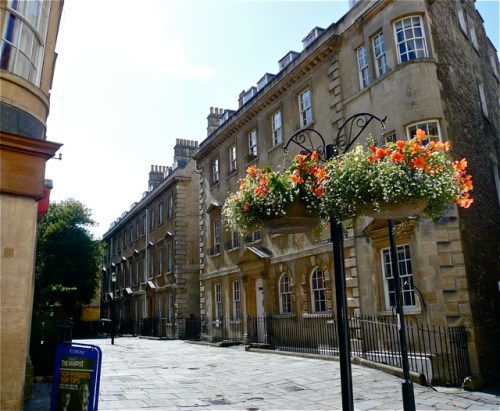
.

Further up the town, there’s Milsom Street, a vibrant commercial area of shops and businesses.  The first time Anne saw Captain Wentworth again in Bath was on Milsom Street.  Here’s a present day view of the same site:
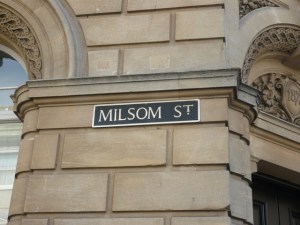
.

.

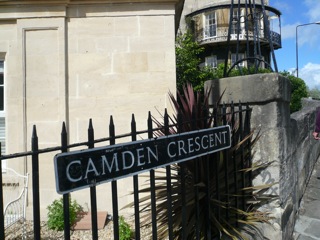
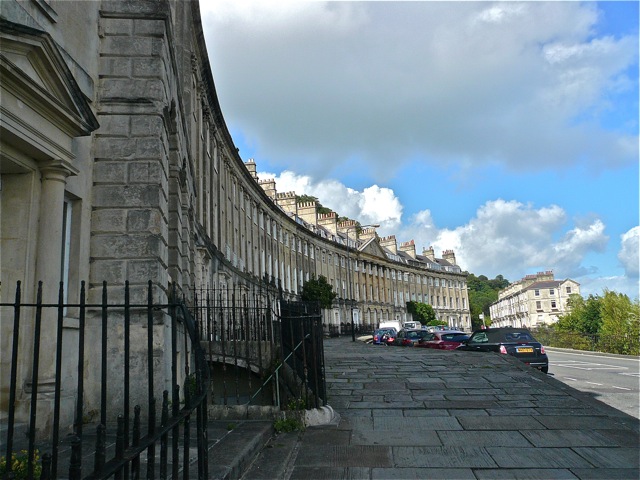
As for Sir Walter himself, despite having to rent out his country mansion Kellynch Hall to avoid financial ruins, he has no intention that his retreat to Bath should compromise his status and comfort.  It’s only natural that others are curious: “What part of Bath do you think they’ll settle in?”  The answer is quite obvious:  the part that is befitting their social standing.  According to Keiko Parker’s insightful article, physical elevation in Bath directly corresponds to social standing.  The highest point at that time would have to be Camden Place, which is today’s Camden Crescent.  While I was looking for it,  the ‘Ye Old Farmhouse Pub’ was mentioned to me as the marker.  I was glad to find it while walking up Landsdown Road, for it was indeed quite an uphill walk.

.

.

“Sir Walter had taken a very good house in Camden Place, a lofty, dignified situation, such as becomes a man of consequence; and both he and Elizabeth were settled there, much to their satisfaction.

Anne entered it with a sinking heart, anticipating an imprisonment of many months…” (p. 98)

Just typical Austen, the overt contrast of characters using something indirect, here, the sense of place.

The houses on Camden Crescent has unobstructive view of lower Bath.  They are not grand mansions, but then again, location is everything.  The following are some of the houses found on this road across from the escarpment:

.

And where do Sir Walter’s tenants Admiral and Mrs. Croft lodge during their short stay in Bath?  On Gay Street, not too high, not too low: “… perfectly to Sir Walter’s satisfaction.  He was not at all ashamed of the acquaintance, and did, in fact, think and talk a great deal more about the Admiral than the Admiral ever thought or talked about him.” (p. 121)

Elizabeth is not even half as kind as her vain and snobbish father.  Regarding the Crofts’ arrival in Bath, she suggests to Sir Walter that “We had better leave the Crofts to find their own level.” (p. 120)

In contrast, Anne has a good impression of the Admiral and his dear wife, the kind and down-to-earth couple, Mrs. Croft being the sister of Captain Wentworth having minimal bearing on Anne’s fondness of them. During their sojourn in Bath to mend a gouty Admiral Croft, Anne enjoys watching them strolling together, “it was a most attractive picture of happiness to her.” (p. 121)

So I’m just not a bit surprised to see their temporary lodging in Bath being on Gay Street.  Who else had lived there?  Jane Austen herself: #25 to be exact:
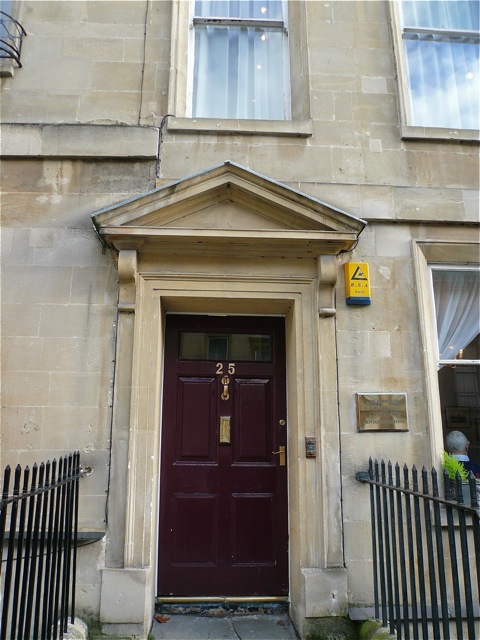
.

As for a suitable place for socializing, Sir Walter and his favourite daughter Elizabeth choose the Upper Assembly Rooms, a much newer development closer to their upper, more fashionable side of town, although he would prefer entertaining in private which is even more prestigious.

The Assembly Rooms are a magnificent architectural legacy in their own rights.  Designed by John Wood the Younger, who raised the £20,000 needed for the venture, the ground-breaking project began in 1769 and opened for public use in 1771.  It was the biggest investment in a single building in 18th Century Bath. Four public rooms made up the suite:  The Octagon, Ball Room, Card Room, and Tea Room.

“Sir Walter, his two daughters, and Mrs, Clay, were the earliest of all their party at the rooms in the evening; and as Lady Dalrymple must be waited for, they took their station by one of the fires in the Octagon Room (p. 131).

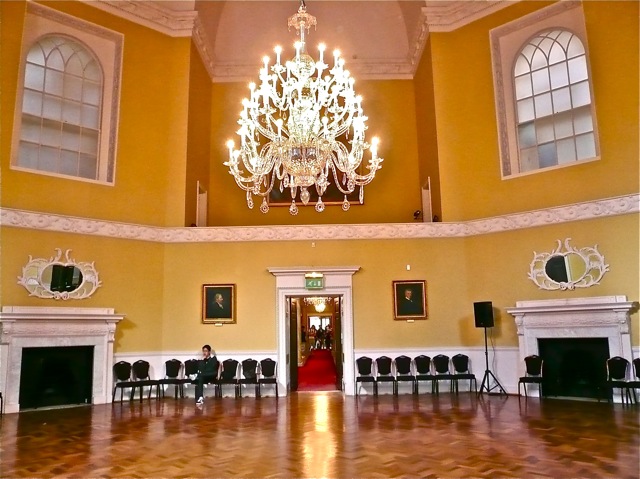
Here’s the exquisite Octagon Room:

Regarding the chandelier, there’s this interesting account in The Authorised Guide (p.7):

“On 15 August 1771 Jonathan Collett quoted £400 for supplying five cut-glass chandeliers for the Ball Room.  They were up in time for the opening of the Rooms in September, but the following month disaster struck when ‘one of the arms of the chandilers in the Ballroom fell down during the time the company was dancing, narrowly missing  Gainsborough.  What could be salvaged from the set was made up into a single chandelier, which now hangs in the Octagon.”

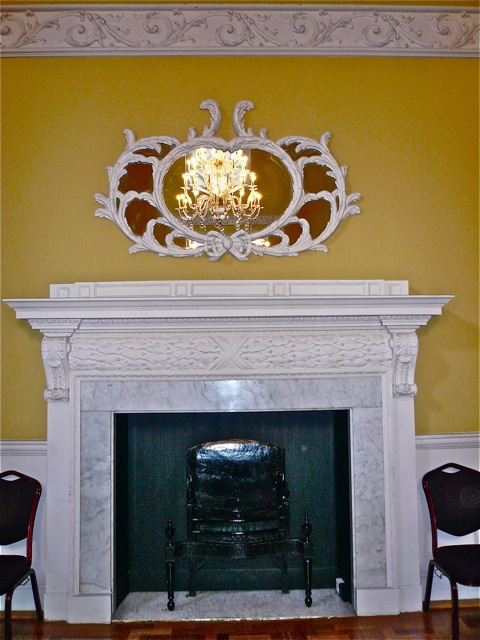
I was just simply amazed at how long these chandeliers had lasted, well over 300 years, and in excellent shape.  Their brilliance had not faded, evolving first from candlelight, then to gas, and now electric:

.

Anne and her party attend a music program in the Concert Hall.  That’s a function in the Tea Room.  Despite the name which seems to convey a small and cozy setting, the Tea Room is a gorgeous room of 60 ft. by 43 ft. dimension.  On one end is a magnificent colonnade of the Ionic order.  Subscription concerts are regular events held in the Tea Room. Mozart and Haydn had written compositions to be performed there, with Haydn himself having graced the magnificent venue.
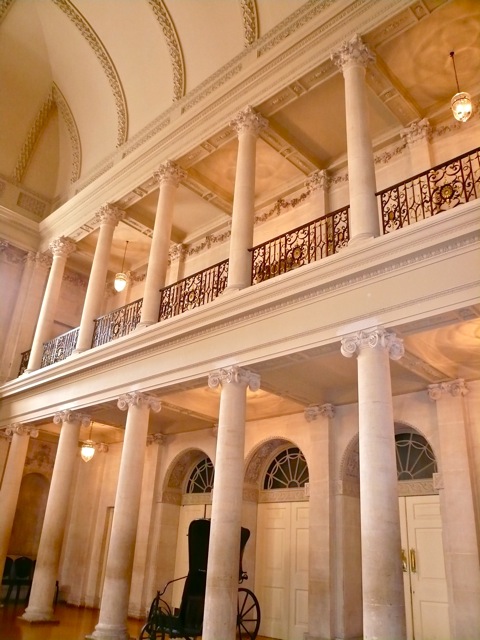
.
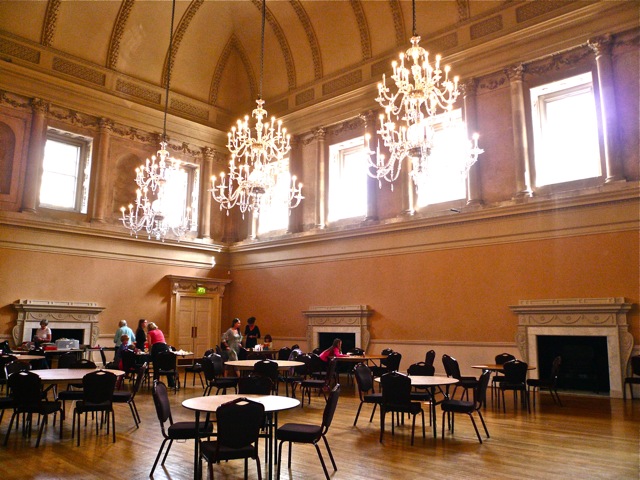
.

But what does Anne Elliot think about all the grandeur?  After earlier in the Octagon Room talking with Captain Wentworth, who has openly expressed his long-held passion for her, Anne, overwhelmed by a great flood of euphoria, now walks into the Concert Room (Tea Room):

“Anne saw nothing, thought nothing of the brilliancy of the room.  Her happiness was from within.  Her eyes were bright, and her cheeks glowed; but she knew nothing about it.  She was thinking only of the last half hour…” (p. 134)

As a visitor to the historic venue, I was captivated by the well-maintained interior and its elegance, and presently amused and surprised to find this display in between two columns: The Chair, which is mentioned several times in Persuasion. The Bath Chair was invented right here in the Georgian City to transport the rich and the sick.  It could be steered by the passenger:

.

.

Jane might have noticed the frivolity and seen through the façade of high society of her time, and sharply depicted her observations in her brilliant novels, but as a modern day tourist and Janeite, I’m just amazed at how well history has been preserved, and that all these locations and life had been experienced by Jane herself. She might have the burden of society on her, which ironically had inspired and unleashed her talents, but for me, a present day tourist and reader of her works, I am totally persuaded that Bath is a place I will definitely revisit some more in the future.

***

All photos taken by Arti of Ripple Effects, August 2010.  All Rights Reserved.

References:

1. Jane Austen: A Life by Claire Tomalin, Penguin Books, 2000.

2.  Persuasion by Jane Austen, The Modern Library Classics, Introduction by Amy Bloom, Modern Library Paperback Edition, 2001.

3. The Authorised Guide: The Assembly Rooms, Bath. Published by the Heritage Services division of Bath and North East Somerset Council in association with the National Trust.  Written by Oliver Garnett and Patricia Dunlop.

4. “What Part of Bath Do You Think They Will Settle In?”: Jane Austen’s Use of Bath in Persuasion by Keiko Parker.  Retrieved Online http://www.jasna.org/persuasions/printed/number23/parker.pdf

A Late Summer Hiatus

As the holidays draw to an end ever so quickly, and before I take off for a couple of weeks to recharge, it’s time to take stock and wrap up for the summer of 2010.
After watching 56 films in two months as a previewer for an upcoming international film festival, I don’t miss the cineplex for this summer’s offering. Yes, I’ve seen Inception.  And no, I didn’t dream that I saw it… although I remember waking up a couple of times. Anyway, its effect on me is quite similar to Avatar‘s, something I wouldn’t rave about except just say: ‘Been there, done that’.  The Girl With The Dragon Tattoo may well be the best summer movies in my opinion.

As for books, I’ve read a few, not a long list, but enough to keep me busy, relaxed, informed, and inspired. I’m glad I’ve discovered Tim Keller, pastor of the vibrant Redeemer Presbyterian Church of Manhattan.  His Reason For God has restored hope in me that it’s possible to embrace both faith and reason.  Seldom have I come across such an intellectual and sensible approach to the seeming dichotomy.

I must also mention Somewhere Inside: One Sister’s Captivity In North Korea and the Other’s Fight to Bring Her Home by Laura and Lisa Ling.  The book is a riveting account of journalist Laura Ling’s harrowing ordeal as a captive of the North Korean regime, and her remarkable release back to freedom together with her translator Euna Lee.  A testament of hope, resilience, the power of love, and the humanity we all share. An absorbing read, well told inside out.

Also, Bellezza’s Japanese Literature Challenge 4 has really done its job.  For it was a challenge indeed reading Kenzaburo Oe’s Rouse Up O Young Men of the New Age! Another more leisurely but no less intense work is Kazuo Ishiguro’s Never Let Me Go. I’ve purposely delayed posting about it until I’ve seen its movie adaptation coming out in September.  I’m looking forward to the film version, with Carey Mulligan as Kathy, Keira Knightly as Ruth, and Andrew Garfield (our new Spider-Man) as Tommy.  That would be for my commitment to C. B. James’s Read the Book/See the Movie Challenge over at Ready When You Are, C.B.

So now, my two weeks of late summer hiatus.  Just for fun, here’s Arti’s Cryptic Challenge… some hints as to where I’ll be in the next little while …  and most likely what you’ll see posted on Ripple Effects comes September.

1.  Don’t mind the gap:  risky when boarding, but good pointer for parenting.

2.  “I am not yet so much changed…”  Upon this re-visit, I don’t expect much change either, for it has kept quite the same for hundreds of years.

3.  From “Lost Generation” to “Beat Generation”, Beach to Whitman, it has much to offer other than curb appeal.

4.  And finally, this little clip on YouTube is my best prep:

Enjoy what’s left of your summer.  I’ll be happy to hear from you about your summer reads, movies, and wrap-up.  Feel free to leave your comments here and I’ll try to read and reply them whenever I find a free WiFi hot spot.

Alaska!

Arti disappeared from Cowtown for a few days and reappeared in Ketchikan, Alaska.  That’s the cause for the delay in replying some of your comments from the last post.  I decided to rid myself of all internet and phone access so I could make these short few days a real getaway.

But herein lies the nagging dilemma:  Is there a better way to access nature other than the commercial route?  Arti had to follow the crowd and board a cruise ship, not her choice of transport, but … what are the options?

So here it is, a visual account of my journey at sea to Ketchikan, the south-western tip of Alaska, north of Vancouver, British Columbia, Canada.

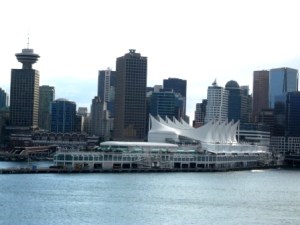
We set sail at the Canada Place Terminal.  On deck looking out, Port Vancouver’s famous architectural sails look slightly surreal, a virtual outdoor gallery of sculptures larger than life:

Canada Place View from Deck

Leaving Port Vancouver:

Leaving Port of Vancouver

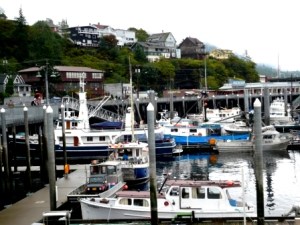
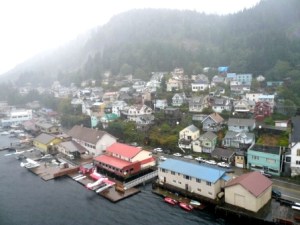
After a couple of days at sea, we arrived at Ketchikan, Alaska.  Among  other things like being the salmon capital of the world, Ketchikan is famous for its rain, measuring its precipitation in feet, not inches.

Here’s Ketchikan under overcast sky:

Ketchikan under overcast sky

A little  more cheery scene:

Ketchikan, Alaska

Ketchikan is also home to The Tongass Rain Forest, the largest national forest in the United States.  It is part of the Pacific Temperate Rain Forest Region, which is second in size to the world’s largest Amazon Tropical Rain Forest.

Moss on treesArti ventured into this area with a naturalist. Together with 15 others in our group, we trod the trails of the Alaska Rain Forest Sanctuary.  Here are the sights I’ve sailed all the way for:

.

.

.

.

.

Berries UndergrowthColorful undergrowth

.

.

.

MushroomOne of the many species of mushrooms, some giant ones grow on trees.

.

.

Devil's Paw Food for the BearsDevil’s Paw, food for the bears.  Underneath are poisonous hooks, but the bears deftly eat off the stems of the plant.
.

.

Ferns and mossFerns and moss: Even tree branches are covered with moss.  As the branches grow heavier, they will break off the tree, fulfilling a natural pruning process.

.

.

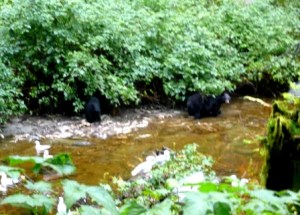
Momentarily, we came to a creek.  Yes, salmon swam up here: Right in the middle of a rain forest we saw gulls gathering, competing with the bears for the salmon in the water.  We were fortunate to see a mother bear with two cubs.  Here in this fuzzy (sorry, Arti was too excited) photo, you can see, even though ‘bearly’, the mother and one of her cubs on the left:

Bears having lunch

And this next one is out of this world.  Gulls flying all around above the creek, a magical, even mythical sight to behold:
Rainforest Gulls

Reindeer

We next visited a reindeer farm.  I’ve seen elks and deers in my neck of the woods in Alberta, but this is the first time I saw reindeers.  Here’s a curious fella:

When we left Ketchikan, it was pouring rain:

Leaving Ketchikan in the rain

On our way back to Vancouver, we cruised through the Inside Passage.  It offered one of the most beautiful sights in the whole journey:

Sailing through the Inside Passage

.

Of course, it’s Arti’s nature to find ripples everywhere:

Ripples

.

Ripples 3

.

.

.

.

The Inside Passage at dusk, the silence punctuated only by the calls of gulls and frolicking dolphins splashing in and out of the quiet water.  Yes, I saw the synchronized dances of two dolphins jumping out of the water and diving back in, but it was just too impromptu to capture by my camera.

The Inside Passage at Dusk

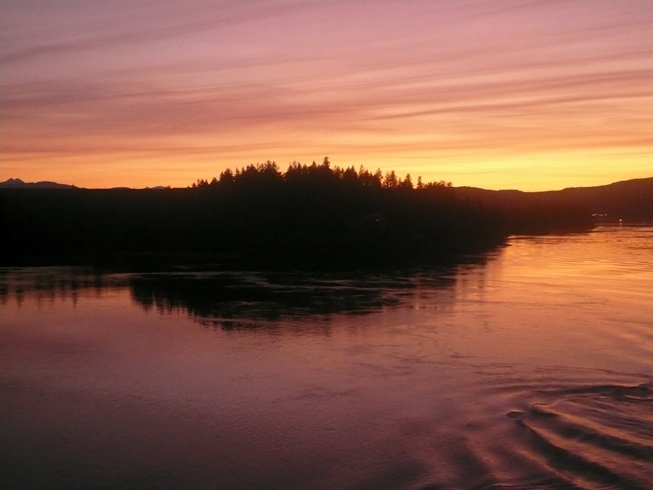
This is my best memory, sunset along the Inside Passage:

Sunset in the Inside Passage

*****

Photos taken by Arti of Ripple Effects, September, 09.  All Rights Reserved.

From Banff to Jasper

My cousin and her husband came to visit from Ohio.  They wanted to see ‘the most beautiful highway in the world’.  Not that I’m touting my own horn, but if they didn’t mention it I wouldn’t have known of such a claim.  That’s the stretch of roadway from Banff north to Jasper National Park here in Alberta.  Since I considered that part of the country my neck of the woods (relatively speaking), I was glad to take to the road with them as a guide.  Yes, I admit beauty may be subjective, but I’m sure you’ll agree these are some of the most extraordinary sights one can behold.

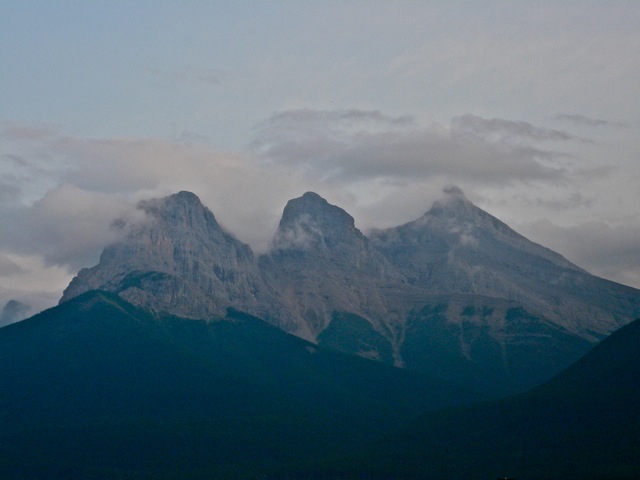
Canmore, Alberta, is the gateway to Banff National Park.  This little town hosted some of the ’88 Winter Olympics events at its Nordic Centre.  Here’s a view of the nearby Three Sisters Mountain at dusk when we arrived:

P1010421_2

From Canmore we headed to Banff National Park the next morning.  Despite the commercialized Banff Avenue, we could still get close to the wild near the Bow River. Elkie was so busy munching his lunch that he seemed oblivious to his human intruders:

P1010403_2

P1010414_3

From Banff, we continued on the Trans Canada Highway to Lake Louise and Moraine Lake. If you happen to have an old Canadian twenty-dollar bill, take a look at the back of it.  Here’s the real thing, Moraine Lake:

P1010472_2

From Moraine Lake, we headed north on highway 93, the Icefields Parkway, towards Jasper National Park. This stretch of the road offered some of the most beautiful sceneries in the world.

Bow Lake at the bottom of glaciated mountains.  The beautiful emerald color is the result of rock flour, moraines grounded to fine powder suspended in the water:

P1010465_2

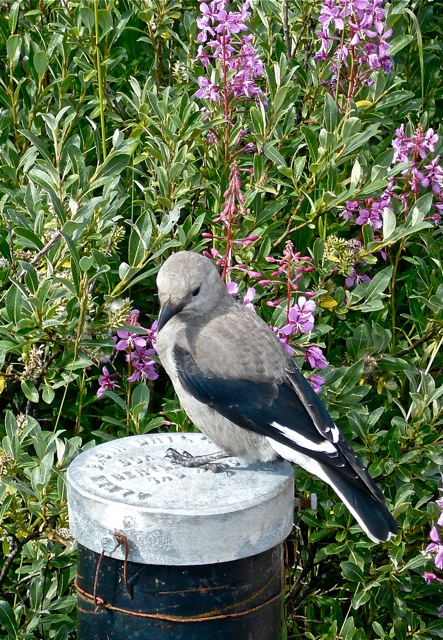
The Clark’s Nutcracker is a common bird in the area, among wildflowers by the glacier water:

P1010468_2_2

P1010457_2

.

.

The serene Waterfowl Lake:

P1010454

After a couple of hours drive, we entered Jasper National Park.  The major attraction as soon as we entered was the Columbia Icefields, the largest body of ice in the Rocky Mountains.  It spans 325 sq. km (130 sq. miles),  with an estimated depth of 365 m. (1,200 ft.)  Elevation averages 3,000 m. (10,000 ft.)

Mount Andromeda:

P1010430_3

The Athabasca Glacier spans an area of 6 sq. km (2.5 sq. mi), with a depth of 90 – 300 m. (270 – 1000 ft.) Its elevation about 2700 m (8900 ft).  Yes, there we were, in the middle of August in our summer clothes, thousands of feet above sea level, walking on the remnant of the last ice age over 10,000 years ago.  Here’s the magnificent view:

P1010445_2

That was only the entrance of Jasper National Park, but more than we could fathom for our short excursion.

**

Header Picture:  Bow Lake, Banff National Park, Alberta, Canada.

All photos taken by Arti of Ripple Effects https://rippleeffects.wordpress.com August, 2009.  ALL RIGHTS RESERVED.

Vancouver Journal

Arti is blogging from Vancouver these two weeks. Here are some initial sights from yesterday’s roaming.

Rhododendrons everywhere:

Rhododendron everywhere

Rhododendron in bloom

Views from Spanish Bank:

Vancouver Skyline

Vancouver skyline from Spanish Bay

Solitary Moment

Solitude at Spanish Bay

Woodpecker hard at work and play

Woodpecker at work and play

Despite the temperamental weather, Arti will be soaking in all the views, making best use of her solitary moments to peck away … oh, who cares whether it’s for work or play. The woodpecker knows there’s no boundary separating the two.

ORIGINAL PHOTOS AND TEXT BY ARTI OF RIPPLE EFFECTS. ALL RIGHTS RESERVED. MAY, 2009.

IF YOU SEE THIS ON A SITE OTHER THAN RIPPLE EFFECTS, YOU’RE SEEING A POST THAT’S BEEN COPIED WITHOUT PERMISSION. CLICK HERE TO GO TO THE ORIGINAL SITE https://rippleeffects.wordpress.com

Ottawa: The Calm before the Storm

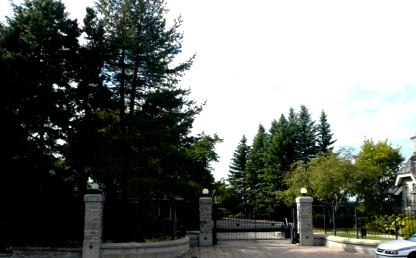
I was in Ottawa two days before our PM Stephen Harper went over to the GG house Rideau Hall to announce that he was dissolving Parliament and that we’d be heading to the polls October 14. Everything looked calm and quiet outside 24 Sussex Drive, the Harper residence:


As a Westerner, this is only my second visit to our nation’s capital, all due to the fact that our son is attending university in Ontario. So, this is our second year sending him off. After 30 some years in Canada, I’ve been hiding out in the West until now. Is this indicative of western alienation? Umm… Hard to say, but the truth is, I’d been to Washington, D.C. even before I set foot in Ottawa. All you Ontario folks, I know what’s on your mind: From the West, eh?

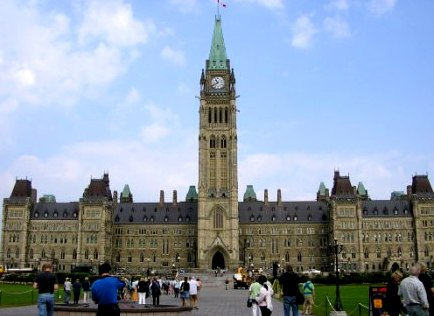
No matter, I’m just as proud and impressed now that I’ve seen the Parliament buildings and other honourable establishments of our nation. Here are some of them.

The Parliament Building:

The Parliament and the Library from The Ottawa River:


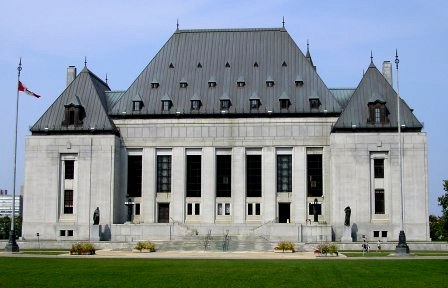
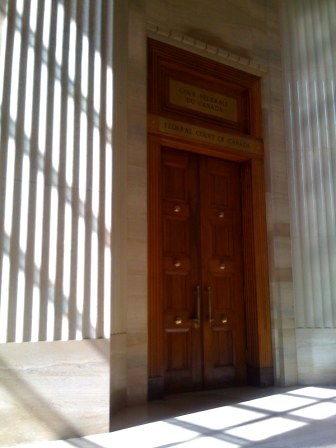
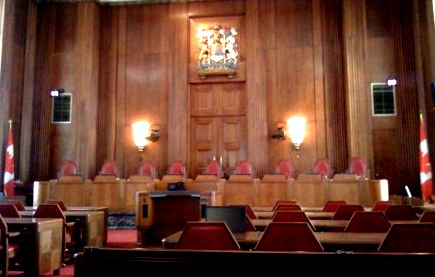
And for someone whose only contact with the court of law is from watching Boston Legal, actually setting foot in The Supreme Court of Canada is truly an awesome experience:


Other landmarks: Chateau Laurier


Notre-Dame Basilica


The Museum of Civilization


              Au revoir Ottawa … Now, let the Games begin.


                                                              *******

All pictures taken by Arti of Ripple Effects https://rippleeffects.wordpress.com

All Rights Reserved, 2008.  Do Not Copy.

Ohio Journal

Spent a few days in Ohio a couple of weeks ago. No, this is not about the Debate. But I did have some memorable moments. Here are some pictures I took during my February visit to Cleveland and Kent, Ohio.

The Rock and Roll Hall of Fame in Cleveland, designed by I. M. Pei. Reminiscence of another Hall of Fame…The Louvre:

rock-and-roll-hall-of-fame-cleveland-oh.jpg

Case Western Reserve University in Cleveland is home to several prominent landmarks. The Peter B. Lewis Building houses the Weatherhead School of Management. Frank Gehry’s design never ceases to delight and surprise:

the-school-of-mgmt-frank-ghery-design.jpg

The Cleveland Museum of Art:

the-cleveland-museum-of-art.jpg

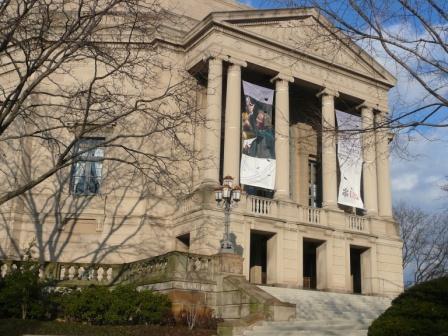
The Severance Hall, home of the Cleveland Orchestra:

severence-hall.jpg

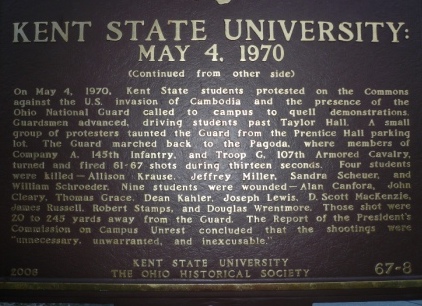
On a more sombre note, I had the chance to visit the student protest site at Kent State University. On May 4, 1970, the Ohio National Guard was sent out to quell an anti-Vietnam-war demonstration. Four Kent State University students were killed and nine wounded. Several Memorials as well as detailed account of the incident were set up at the site:

may-4-memorial-kent-state-u.jpg

student-memorial.jpg

sign-on-student-memorial.jpg

plaque-at-memorial-site.jpg


silhouetted-trees-at-dusk-in-student-protest-site.jpg

As I left the site, it was almost dusk. A red cloud rose up in the distant sky. The scene of silhouetted branches reaching up to the heavens reminded me of another student protest in another place, in which the Square was washed clean of blood the very next morning, wiping out all traces of the tragedy.

What a contrast.

**********

Photo Source: Arti of Ripple Effects, February 2008. All Rights Reserved. www.rippleeffects.wordpress.com

San Francisco Weekend

Spent the past weekend in SF.  The whole Sunday evening was wasted in the airport, couldn’t see the SAG Awards, nor Masterpiece Theatre’s Mansfield Park.  But from what I’ve read in some of your blogs, I didn’t miss much on the PBS’s third installment of The Complete Jane Austen.

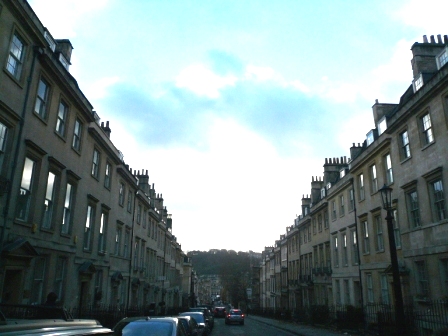
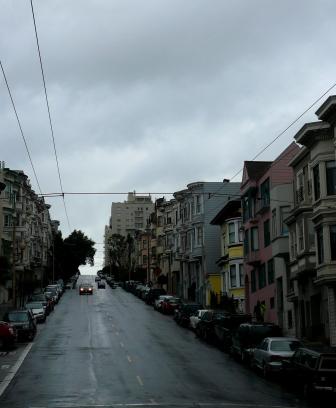
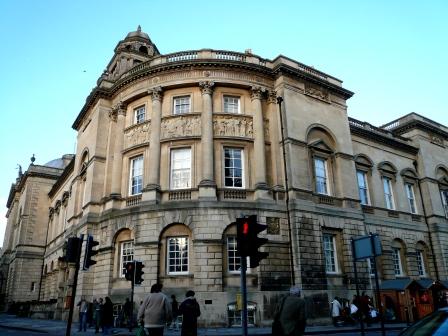
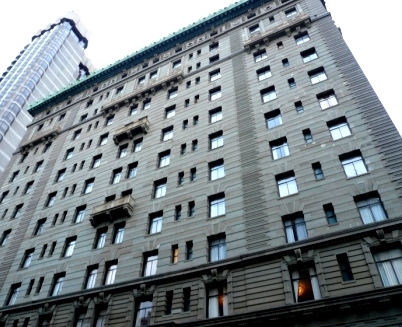
I did have an enjoyable time in SF.  For some reasons, maybe because of the rain, I found SF, some parts of it at least, to resemble Bath, England. I know, by rational thinking, the two places cannot be more different, historic Bath and modern day SF?  But here are some of the pictures of both places:

Gay Street Bath Gay Street, Bath

Union Street SF  Union Street, SF

The Guild Hall, Bath  Guild Hall, Bath

Union Street Bldg, SF Union St. Bldg., SF

The Empire, Bath The Empire, Bath


 Downtown Hotel, SF

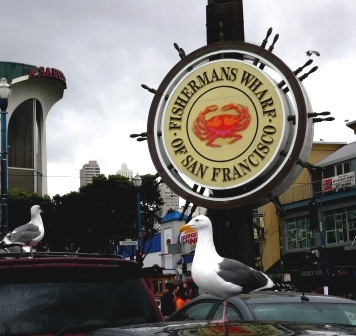
Of course, there are sights and sounds that are uniquely SF:

Fisherman’s Wharf

Crabs

 SF Streetcar

And UC Berkeley, in the rain:

UC Berkeley

Sproul Hall UC Berkeley

Broken Plates Wall