‘Past Lives’ and the Road not Taken

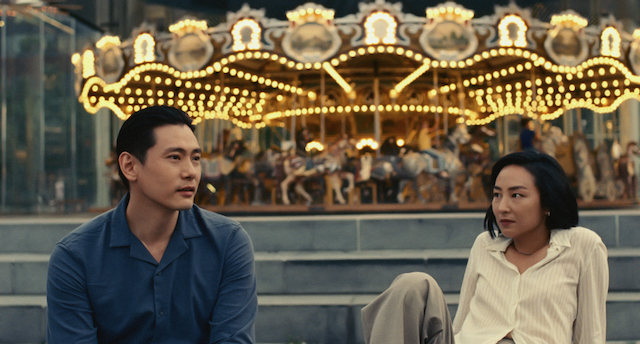
Hae Sung (Teo Yoo) visits Nora (Greta Lee) in New York, a scene from “Past Lives”. Photo courtesy of Elevation Pictures

“Past Lives” is a meticulously crafted feature that is autobiographical in nature, naturalistic in style, and far-reaching in its resonance. The directorial debut of Korean-Canadian playwright Celine Song who is now based in the US, it premiered at Sundance early this year and subsequently was nominated for a Golden Berlin Bear at the 73rd Berlinale. Most recently on July 2, its accolades continued at the Hollywood Critics Association Midseason Awards winning Best Indie Film, Best Actress for Greta Lee and Best Screenplay for Song.

Nora (Greta Lee), immigrated to Canada from South Korea when she was twelve, following her parents’ decision. As a child, she has always been Na Young (Moon Seung-ah), now given a new name, Nora, by her father as they prepare to leave. Her departure severs a close tie with her childhood sweetheart Hae Sung (Seung Min Yim).

Twelve years later, Nora makes a move to New York City from Canada in pursuit of a career in writing, a decision this time of her own choosing. While there, she happens to come into contact with Hae Sung (Teo Too) online. The two meet again via texts and Skype but that connection is short-lived as Nora initiates a termination, for she wants to focus on her writing career and setting roots in her newly adopted home. Fast forward some more years, Hae Sung comes to New York in person to seek her out. Nora’s past thus re-emerges. 

In a writer’s retreat, Nora meets Arthur (John Magaro) and they soon fall in love. When Hae Sung comes to New York, Nora has been married to Arthur for seven years. Despite being in a secure and loving marriage, Nora feels the conflicts of navigating between two men from the present and the past, as well as choosing a path for the future. ‘Yet knowing how way leads on to way’ as the poet Robert Frost poignantly utters, she laments the loss that comes with only one path to tread, one road to take. 

While it may sound like a typical immigrant story–the ambivalence of losing and gaining as one makes decisions about leaving one’s homeland to start a new life in a foreign country–Nora’s narrative ripples out beyond the immigrant experience. We are all constrained by time and space. Somewhere in our life, we are bound to have left behind a part of ourselves, our childhood, our roots as we move forward to another stage of life.

In the opening bar scene where Nora sits in between her husband and her childhood sweetheart, she is the interpreter of two languages, navigating between cultures, and juggling two identities of self. Nora finds herself acting as an intermediary between two men who love her but in different ways and as a different persona, Nora and Na Young. This is a real-life scenario Song had once found herself in and which became the initial spark of the making of “Past Lives.”

Arthur is in an awkward situation. In one of the pivotal scenes, an intimate husband and wife conversation in bed, he tells Nora that she speaks Korean in her dreams, “there’s a part in you that I won’t be able to know.” That part is the first twelve years of Nora’s life where Arthur was absent and which Hae Sung longs to recapture. Arthur admits, “I can’t compete.” However, instead of handling the conflict as a clichéd love triangle, Song has turned it into a cinematic pondering of life choices, what one leaves behind and what one gains in a new chapter of life. 

Magaro delivers a superb portrayal of the ambivalence in Arthur’s predicament. His screen presence and dialogues with Nora offer much clarity. As well, his is a character that has the power to elicit deep empathy from viewers, on top of adding some subtly humorous moments. I wish there is more of such screen time for this admirable role. Arthur’s mature love for Nora overrides any jealousy or traces of inferiority complex when Nora casually compares the two men, effectively shifting viewers’ attention from the reunion of childhood sweethearts to this third party, the loving and silent husband stepping aside to let his wife dwell on her past. 

And Nora appreciates Arthur’s love, albeit it doesn’t eliminate the lament she feels about the loss of a former self. Having transplanted in New York City, she has gained a new cultural identity as a ‘Korean-American.’ After meeting Hae Sung again, she finds him firmly rooted as a ‘Korean-Korean.’ Song’s dialogues are astute. Lee’s screen presence is affable and nuanced, a pleasant character with whom viewers can readily empathize. Hae Sung seems to subscribe firmly in In-Yun, the Korean concept of predestined fate.

Young Hae Sung (Seung Min Yim) and young Nora (Moon Seung-ah) part ways. Photo courtesy of Elevation Pictures

There is a recurring shot which speaks volume. A fork in the alley where young Hae Sung and Na Young walk home after school in Seoul. Two roads diverge. On the left is the boy continuing his way, on the right is his sweetheart, walking up the steps, two separate paths, two life trajectories. It’s not about taking the road less travelled as Frost would tell with a sigh, but the road not taken that keeps the traveller thinking what could have been. While such is a typical existential pondering of the immigrant experience as one leaves one’s homeland to start another life, it is also a universal question as we concede our limitation as humans, feeling the loss of opportunities or the what if’s with the road not taken. Song’s feature is like a visual depiction of Frost’s poem, illustrating a real life scenario. 

Song excels here in elliptical storytelling. Some sequences are almost dreamlike with blocked-out dialogues, or a still camera pointing at Hae Sung and Nora gazing at each other in silence; viewers are free to imagine what’s going through their minds.

However, with the short 105 minutes film duration, I feel more time could have been spent on a deeper characterization of Hae Sung in Korea. What kind of a man has he grown into other than merely the soju drinking young man or later just the outward changes in appearance; and how he still clings to a childhood image of Na Young now that they are adults. If Hae Sung can be developed into a more solid, three-dimensional character instead of like a ghost of Nora Past, the conflicts could have a more powerful impact. 

Surely, this is Nora’s story, and Lee has delivered effectively with pathos and realism. Further, Song has proven herself to be a filmmaker to watch in the future. 

~ ~ ~ Ripples

___________________________

I thank Asian American Press for the permission to repost my review here in full.

Upcoming Books to Screen Reading List

A Gentleman in Moscow by Amor Towles

Towles’ 2016 novel is currently filming and will likely come out at the end of 2023 or early 2024. Ewan McGregor plays Count Alexander Rostov who, in the aftermath of the Bolshevik Revolution, is kept under house arrest in at the Metropol Hotel across the street from the Kremlin, a sentence laid down by a Bolshevik tribunal. The book is developed into an 8-episode TV series on Amazon. Quite an original story idea and the dramatization will likely liven up the seemingly mundane life of the aristocrat banished to the servants quarter of a luxury hotel.

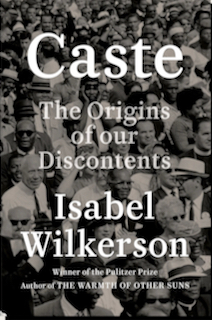
Caste: The Origin of our Discontent by Isabel Wilkerson

Oscar-nominated Ava DuVernay is producing, directing and writing the screen adaptation of Pulitzer Prize winner Isabel Wilkerson’s critically acclaimed non-fiction work, using a multiple story structure to investigate the ‘unspoken system that has shaped America and chronicles how lives today are defined by a hierarchy of human divisions dating back generations.’ DuVernay has been a powerful filmmaker and spokesperson probing systemic inequality, the nation’s discriminatory past and present. Her works include Selma (2014), 13th (2016), and When They See Us (2019). Caste will be a Netflix movie.

Crying in H Mart by Michelle Zauner

The memoir of the lead musician of the indie pop band Japanese Breakfast is Goodreads Choice Awards for Memoir in 2022. Zauner movingly describes how she comes to terms with her identity as a Korean-American when she goes back to her root in Oregon to care for her mother suffering from terminal cancer. Music and food strengthen their bond. The actor in The White Lotus and director of The Electrical Life of Louis Wain Will Sharpe will direct. A casting call went out on Twitter to play Zauner on screen. Just a thought… Zauner could be a prime candidate to play herself.

Killers of the Flower Moon: The Osage Murders and the Birth of the FBI by David Grann

Where there’s oil, there will be blood. One of the most-touted movies of 2023 is this adaptation of the non-fiction book by Grann, winner of the 2018 Edgar Award. Grann chronicles the discovery of oil in the Osage County in Oklahoma where several of the natives there were murdered. The Osage Murders is the newly created FBI’s first big case, with its young director J. Edgar Hoover rising to the challenge. Premiered at Cannes in May and under the helm of Martin Scorsese, with a superb cast with Leonardo DiCaprio, Robert De Niro, Lily Gladstone, Brandon Fraser, Jesse Plemon, John Lithgow, and Tantoo Cardinal, herself a highly decorated Canadian aboriginal actress, the movie will be nothing short of epic.

Mrs. March by Virginia Feito

Reads like a Patricia Highsmith psychological novel with a touch of mystery… in particular, Edith’s Diary. Suspense novels nowadays often feature an unreliable narrator stringing out a sequence of events and perceptions that blur the line between reality and the delusionary. Emmy winner Elisabeth Moss’s new production company is developing the movie and Moss will play the title character. I’ve listened to the audiobook and look forward to seeing how Moss portrays the internal multiverse of Mrs. March. The old classic The Three Faces of Eve (1957) comes to mind. Feito is writing the screenplay.

Idaho by Emily Ruskovich

Ruskovich is an O. Henry Prize winner and this her debut novel has garnered praises on its originality, masterful language and imagery. A family spending a hot August day in an Idaho mountain collecting birch wood faces a fateful turn in their lives. A psychological thriller exploring dementia and its ripple effects. The New Yorker review has this powerful statement: ‘The book is also an affecting portrait of how love can endure when memory fails.’ This one is high on my TBR list. Another title Elizabeth Moss’s new production company is developing.  

Tomorrow, and Tomorrow, and Tomorrow by Gabrielle Zevin

2022 Goodreads Choice Awards for Best Fiction. Here’s another example of some outstanding Asian American writers and artists not known for their mixed racial roots and identity but have approached the subject in their novels nonetheless. Zevin, whose mother is Korean and father Jewish, touches on such an issue from an original and fresh perspective: two young people meet in the real world of video game creation. I’ve listened to the audiobook and found it to be one of the most unique and interesting reads I’ve come across in recent years. Zevin’s other book The Storied Life of A. J. Fikry is now streaming on various platforms.

The Zone of Interest by Martin Amis

British writer Martin Amis’s 2015 Walter Scott Prize winning novel is turned into a film directed by Jonathan Glazer. Premiered at this year’s Cannes Film Festival and garnering the Grand Prix and the FIPRESCI Prize. The story is a macabre juxtaposition of horror and a love affair. The commandant of the Auschwitz concentration camp, Rudolf Höss, and his wife strive to build an idyllic family home situated right next to the death camp. To add to the horrific irony and complexity, a Nazi official has an affair with the commandant’s wife. Critics have cited Amis’s book as a very different Holocaust novel, and the movie has now become a notable in the 2023 international awards circuit.

Emily Henry’s Books to Screen

For beach read fans, summer reading has to include Emily Henry’s novels. If you’re a fan of hers and like to see her works on screen, here’s the good news: all three of Henry’s popular books are in development into rom-coms:

People We Meet on Vacation  
The 2021 Goodreads Choice Awards for Romance Novel is to be directed by Brett Haley. Screenwriter Yulin Kuang’s adapted script has already received endorsement and high praise from Henry herself.

Book Lovers
Two years in a row, Henry won the 2022 Goodreads Choice Awards for Romance with Book Lovers, perhaps a contemporary queen of the genre? Sarah Heyward is set to write the script, movie will be produced by Tango (Aftersun, 2022)

Beach Read
Just announced is that the Emmy nominated writer director Yulin Kuang, screenwriter for People We Meet on Vacation, is taking the helm to write and direct Beach Read, Henry’s third popular fiction to be transported onto screen. Contemporary rom-com, breezy, light, and… will it re-create the wave that Nora Ephron was once so well-known for?

***

The Owl Family’s Debutante

Another spring brings another owl baby. While I can’t tell if it’s the same owl family, it’s interesting that a Great Horned Owl family would use the same tree cavity to make their nest every spring to welcome their newborn(s), year after year.

Here it is, about a month ago, a brand new baby peeking out of the nest. Can you spot baby owl in this picture?

And now a few weeks later, baby has grown to almost the size of mommy owl, and the family has vacated their nest. So, it’s wonderful to see them out on a tree. Baby still has the downy coat on, but what impresses me is mommy owl—I like to think it’s the mother owl staying close to baby, as father owl usually goes to find food—like a sentinel watching closely, looking noble and stoic:

But of course, a mother is always a mother, and baby is always her baby, no matter how big he or she has grown. I’m glad that I was able to capture these endearing moments, albeit a little blurry since they were very far up a tree from a distance. Baby’s on the right in these pictures:

***

(Glitches while posting this. Have to repost. Previous post entitled Baby’s Day Out. Issues with the date. This post is published on Saturday May 27, 9:40 am.)

Remembering Gordon Lightfoot: Pussy Willows, Cattails, Soft Winds and Roses

The passing of Gordon Lightfoot yesterday at the age of 84 evokes a stream of nostalgic consciousness. The following is an old post dating back to more than ten years ago. I wrote it after visiting Unionville in Ontario; the profusion of cattails by the pond stirred up memories of listening to Lightfoot’s song. As a tribute to the Canadian music legend, I’m reposting it here.

____________

Took a short trip to Ontario last week and came home overwhelmed with nostalgia. It all started when I visited the town of Unionville and saw these, crowds and crowds of cattails growing profusely at the pond, the fields, and by the footbridge:

.

For some inexplicable reasons, I’m much fond of cattails. The first time I learned about them was from listening to the song by Gordon Lightfoot… before I’d actually seen one.

Some time in the 70’s, for many afternoons I sat in the art room of a high school somewhere in Alberta, working on some art project, but mostly doing nothing at all while listening to Gordon Lightfoot.  Mr. Hannington held a laissez faire art class… we could do just about anything, or nothing.  Usually, there would only be three or four of us in the room.  We would just sit around, chat, daydream, and immerse in the voice of Gordon Lightfoot on the radio.

I didn’t turn out to be an artist, while one of us did.  But I’ve remained partial to cattails, mesmerized by the song and the singer.  Those Lightfoot afternoons in the art room emerged from the depth of hazy memories, the lyrics were the soft winds caressing naked limbs as I walked in this natural reserve in Unionville.

Pussywillows, cattails, soft winds and roses
Rainpools in the woodland, water to my knees
Shivering, quivering, the warm breath of spring
Pussywillows, cat-tails, soft winds and roses

Catbirds and cornfields, daydreams together
Riding on the roadside the dust gets in your eyes
Reveling, disheveling the summer nights can bring
Pussywillows, cattails, soft winds and roses

Slanted rays and colored days, stark blue horizons
Naked limbs and wheat bins, hazy afternoons
Voicing, rejoicing the wine cups do bring
Pussywillows, cattails, soft winds and roses

Harsh nights and candlelights, woodfires a blazin’
Soft lips and fingertips resting in my soul
Treasuring, remembering, the promise of spring
Pussywillows, cattails, soft winds and roses

(To my artist friend CD: Keep the fire burning.)

***

Some of you had left comments in that old post. If you’re interested to know what you had said, click on the link to find out.

‘Living’: The Old Becomes New

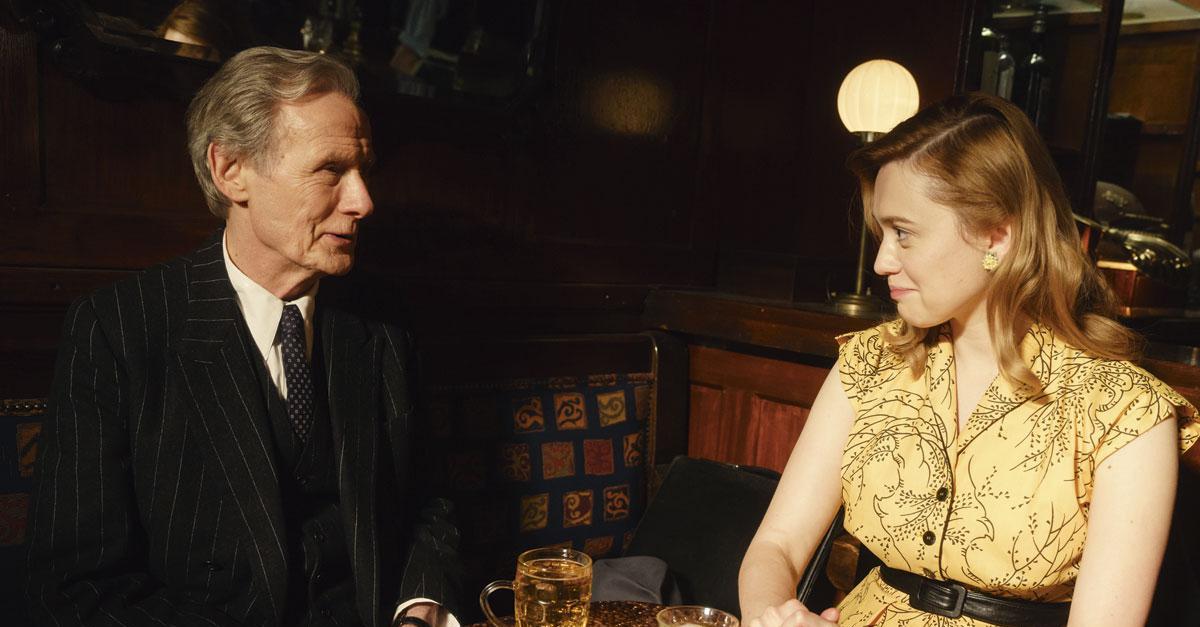
Living is based on the Japanese auteur Akira Kurosawa’s classic Ikiru (1952, meaning of title: ‘to live’). Nobel laureate Kazuo Ishiguro adapted it to make an English version with Bill Nighy in mind when he wrote the screenplay, creating a setting in 1950’s London. Interestingly, Kurosawa himself was inspired by Leo Tolstoy’s The Death of Ivan Ilyich when he made Ikiru, and with his eloquent camera, transposed the Russian master’s novella into a Japanese story on screen.

With Living, the Japanese-British novelist Ishiguro has succinctly condensed Kurosawa’s 142 minute film into a shorter feature of 102 minutes, helmed by South African director Oliver Hermanus. It’s interesting to note the cross-cultural transferral, for the film is about the universal theme that we all share as a humanity, living a meaningful life in the face of death.

This is one of the less-hyped movies during the 2022 Awards Season, despite the film getting two Oscar nominations: Best Adapted Screenplay for Ishiguro, and Best Actor for Bill Nighy, his first and long due Oscar nod.

It’s timely that I finally get the chance to watch Living now in April, a month that signifies new births. Considering the change in the main character Mr. Williams (Bill Nighy), even the idea of resurrection is apt when taken metaphorically, from death to life, ironically, for a man who has just been diagnosed with terminal illness.

As the head of the public works department at County Hall for numerous years, Williams is contented with following the bureaucratic daily routine by the clock, pushing papers to other departments, or, if the file has to stay in his, stalling it till it becomes extinct.

The camera angles give us a vivid perspective. From the overhead shot above the train station, we see a mass of uniformity, men in dark suit and bowler hat heading to work. Looking down from above, they are small and insignificant. And from the slow motion of them walking, we see the wheel of work turning, ever so slowly, in mundane routine heading to the office and the same vehicle bringing them home at the end of the day.

After Williams gets the confirmed diagnosis of cancer and that he will have just six months to live, there appears the audio motif of a clock ticking; this time, it’s not to remind him of work routine but the limited time of life remaining.

In the wake of the ominous news, Williams’ reactions change from stoically bearing the shock to actively seeking a meaningful existence, and ultimately finding a purpose that he feels can fulfill his life. Nighy’s performance is immersive, reserved, and nuanced, and at times, allowing a ray of deadpan humour to seep through. If the restrained ‘Englishness’ is what the actor naturally possesses, or one that he has fully grasped in his cultural milieu, then it has served him perfectly in this role.

In an online interview, Ishiguro explains this ‘Englishness’ as a metaphor:

A certain type of Englishness becomes a universal metaphor for something that is inside all human beings, the need to conform, perhaps a fear of emotions, the frustration of wanting to express yourself but not being able to break out of your professional role, or the role that society has given you. There were many things I thought we could talk about of the whole human condition by looking at this type of figure.

Many scenes in Living are direct parallels of Kurosawa’s Ikiru with his protagonist Kanji Watanabe (Takashi Shimura). Both men confide their terminal illness not to their son who lives with them, but to a stranger in a restaurant, sharing their last wish, that is, to live life, for a change. The sympathetic listener brings the despondent man to various places for him to ‘live it up’. In both films, we see the same places but in different cultural context, amusement parks, bars, dance hall, strip club, but what Williams and Watanabe find are but superficial, ephemeral flares.

The ultimate change in Williams is sparked by a young, female staff Margaret Harris (Aimee Lou Wood), who needs his reference as she has found a new job. Meeting her by chance on the street, Williams invites her to have a ‘simple’ lunch with him at the Fortnum, where he can write her reference letter. It’s there that we see Williams break out with a genuine smile for the first time, forty-one minutes into the movie. Harris’s youthful and vivacious spirit later inspires Williams to go back to the office as a new man after his few days of escapade, to get down to work and this time, doing something that’s meaningful and benevolent.

A crucial addition in Living, and kudos to Ishiguro, is bringing in a young, new worker, Peter Wakeling (Alex Sharp), to the public works department, first day on his job. From his fresh, untainted eyes, we see the novice civil servant being open and ready to accept whatever the bureaucratic system requires of him. His boss Williams’ new-found purpose and subsequent change at work has left him with an indelible impression. And with co-worker Miss Harris, a warm storyline of budding romance adds flavour to the film, albeit introduced a bit late towards the end.

One poignant scene in both films is the protagonist singing in a bar. For Nighy, this is probably the best cinematic moment for him to leave his mark as a soulful singer, a deep and heartfelt performance in contrast to his farcical ‘Christmas is all around’ in Love Actually (2003). The scene here in Living is when a slightly drunk Williams asks the pianist at a pub to play as he sings ‘The Rowan Tree,’ a Scottish folk song that evokes longing for the past and loved ones gone.

Later, in the remake of Kurosawa’s iconic scene from Ikiru, we see Williams sitting on a swing and hearing his moving reprise of the song, this time sober and clear of what’s waiting for him. As the final credits roll, the mesmerizing voice of Lisa Knapp stirs ripples in my heart long after the visuals end.

‘The Rowan Tree’ sung by Lisa Knapp

________________

~ ~ ~ 1/2 Ripples

Thoughts at Easter 2023

“Easter, which turns a terrible Friday into Good Friday. It is almost too brilliant for me to contemplate; it is like looking directly into the sun; I am burned and blinded by life.

There are times when I feel that He has withdrawn from me… but Easter is always the answer to My God, my God, why has thou forsaken me!

Easter is the most brilliant of all blessings.”

–––––– Madeleine L’Engle, The Irrational Season

Holy Sonnet 10

Death, be not proud, though some have called thee
Mighty and dreadful, for thou are not so;
For those whom thou think’st thou dost overthrow
Die not, poor Death, nor yet canst thou kill me.
From rest and sleep, which but thy pictures be,
Much pleasure; then from thee much more must flow,
And soonest our best men with thee do go,
Rest of their bones, and soul’s delivery.
Thou’art slave to fate, chance, kings, and desperate men,
And dost with poison, war, and sickness dwell,
And poppy’or charms can make us sleep as well
And better than thy stroke; why swell’st thou then?
One short sleep past, we wake eternally,
And death shall be no more; Death, thou shalt die.

––––––– John Donne

“Truly, truly, I say to you, unless a grain of wheat falls into the earth and dies, it remains alone; but if it dies, it bears much fruit.”

–––––––– John 12:24

“… without a few days in hell, no resurrection is possible.”

–––––––– Mary Karr, Lit

And a lighter thought, the all brilliant Madeleine L’Engle again:

Pride is heavy.
It weighs.
It is a fatness of spirit,
an overindulgence in self.
This gluttony is earthbound,
cannot be lifted up.
Help me to fast,
to lose this weight.
Otherwise, O Light one,
how can I rejoice in your
Ascension?

———————

He is risen.

Happy Easter!

***

Not quite spring, but…

April may be the cruellest month for the poet, but for me, it’s a time for newness and hope. It’s Easter month, but winter’s not totally gone yet for us, despite the official arrival of spring according to the calendar.

Many of you might be enjoying colorful roses blooming in your garden, this is what I see when I head out to the woods today––the last day of March––snow-covered creek and dried cattails from autumn past:

But the Pond is teeming with life, a cacophony of bird calls from everywhere. Here’s our first robin coming back from afar, the sure sign of spring:

Plenty of buds for the hungry chickadee:

And from afar, a coyote, which doesn’t look too enthused about the changing season. I’ve to warn a mother pushing a baby carriage nearby:

On the river, it’s a different picture:

It’s courting season already. The male Goldeneyes doing their mating dance… stretching their necks upright and singing their tune. The females (brown heads) don’t seem too interested though:

Oops just a bit too close. It’s been a few months of house-bound inactivity, don’t mind me getting excited for a better pic:

***

‘The Quiet Girl’ Movie Review: From the literary to the visual

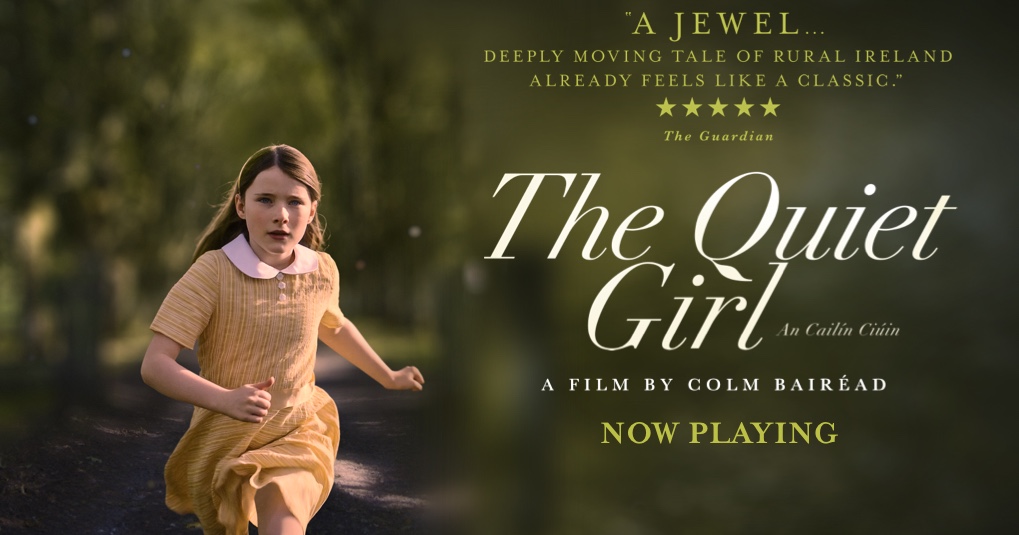
The Quiet Girl (An Cailín Ciúin) is the first Irish-language film to be nominated for an Oscar, representing Ireland in the Best International Feature category in this year’s 95th Academy Awards held on March 12th.

In this his debut feature, Irish director Colm Bairéad adapts Claire Keegan’s short story “Foster” in a style that’s akin to the literary source. Together with director of photography Kate McCullough (Normal People, 2020), Bairéad has created on screen a sparse and sensitive rendering of Keegan’s story, camera shots that are calm storytelling and restraints that convey emotional depth. The choice of the 4:3 Academy aspect ratio gives the feeling of a time past, like an old home video preserving a young girl’s memorable experience.

Cáit (Catherine Clinch) is sent away to spend the summer with her mother’s relatives, Eibhlín (Carrie Crowley) and Seán Cinnsealach (Andrew Bennett). Having lived in an impoverished household full of siblings and one more expecting, with a father who takes ‘liquid supper’ before coming home and an overburdened mother, Cáit experiences for the first time in her short stay at the Cinnsealach’s quiet and childless farm home what it means to be cared for, and towards the end, learns that keeping silent can be an act of love.

Just like Keegan’s style of using the minimal to convey much, The Quiet Girl is sparse and sensitive in its visual storytelling. Eibhlín is shown to be kind right from the beginning, Seán less so, hardly acknowledges Cáit. His reticence is nuanced though, a slight turn of his head even when he’s facing the TV and with his back to the child betrays a moment of thought, of self-reflection. Seán’s coming around is endearing, like the moment he leaves a single cookie on the table as he walks by Cáit in the kitchen. Actions speak louder than words.

In the bedroom she’s in, Cáit observes the wallpaper with train images and the boy’s clothing she now wears, as her own suitcase is still in her Da’s car trunk as he has forgotten to leave it with her in his rush to leave. She observes her new environment and the people she’s with, and gets some shocking information when a nosy neighbor spills out the Cinnsealachs’ tragic past to her.

As one who has just read Keegan’s short story and been deeply moved by her writing, I come to this review not to compare how ‘faithful’ the film adaptation is, which it is, but that how some of the ‘cinematic moments’ in the book are transposed on screen.

Writer director Bairéad has added some scenes of Cáit in school and at home at the beginning of the film, enhancing the characterization of the girl, quiet and alone, even at home. While the ponderous visual storytelling deserves praise, I do find in certain moments, Bairéad could have added just a bit more dramatic effects, not for gratuitous purpose, but to elicit a more powerful punch towards the cathartic end.

[The following contains spoiler]

Two examples I have in mind. First is when Seán decides they should stop letting the girl wear the boy’s clothes and that he’ll drive them to town to buy Cáit new clothes for herself. That’s a defining moment bringing up a painful, unspoken past, and stopping their substituting Cáit for the one they had lost. Eibhlín is picking gooseberry at the kitchen table with Cáit. Here’s the excerpt from Keegan’s story about the very moment her husband tells them to go change and get ready to go into town to buy clothes for Cáit:

The woman keeps on picking the gooseberries from the colander, stretching her hand out, but a little more slowly each time, for the next. At one point I think she will stop but she keeps on until she is finished and then she gets up and places the colander on the sink and lets out a sound I’ve never heard anyone make, and slowly goes upstairs.

That sound that the girl has ‘never heard anyone make’ is bone chilling even when I was just reading the words, and would have been a most effective cinematic moment to convey pain and grief. Unfortunately what could have been a stirring moment for viewers did not materialize in that scene.

The second is more crucial, a scene that I take as the climax of the story, the girl’s accident at the well. More intensity in visual storytelling, or even just sound instead of the subtle handling of the incident––not for the sake of mere dramatic effects but to show the gravity of the mishap and its implications–– is needed to elicit more potently the poignant act of silence later when Cáit is determined not to mention the accident to her mother who has sensed something must have happened when the girl comes home sneezing.
The cathartic ending of the film is to be applauded for it has brought out Keegan’s powerful writing most vividly. What’s more heartrending than just reading is that we can see the face of the girl running and hear the final word she utters to Seán as she flies into his embrace. That is the power of film.

~ ~ ~ Ripples

__________________________

This is my third post participating in the Reading Ireland Month hosted by Cathy 746 Books.

Previous posts:

“Foster” by Claire Keegan: Short story review

The Banshees of Inisherin: Movie review

‘Foster’ by Claire Keegan

Reading Ireland Month 2023 has led me to the short stories by Claire Keegan. I’m excited for this ‘new discovery’. Keegan’s is the kind of writing I admire, sparse but telling, simple prose revealing deep emotional undercurrents. 

“Foster” the short story written by Keegan first appeared in The New Yorker. It was later published as a standalone work in book form in 2010. Keegan in an interview had stressed that it was not a novella but a long short story. The book cover in the photo is a new edition that came out in 2022.

The story is written from the point of view of a young girl from an impoverished family, both materially and emotionally. She is sent far away to stay with her mother’s sister Edna and her husband John Kinsella for the summer to lift the burden off her busy mother who has a house full of children and one more expecting. The Kinsellas are childless and live in a farm house in rural Wexford county.

The age of the girl isn’t mentioned, most probably around eight or nine. Interesting too that her name isn’t mentioned except just a few times, Petal, maybe giving a sense of the neglect she has been having all her young life. The title is ironic, I find, for the word foster often comes in contradiction in a lesser sense, or secondary, to natural birth parents. But here during her short stay at the Kinsellas, the girl has made new discoveries she has not experienced before, what it means to be loved and cared for, and begins to learn kindness and self-worth. Moreover, she is also exposed to the complexity and the dark range in the adult world, the loss and pain that come with life.

Foster has been adapted into film with the new title The Quiet Girl. It is Ireland’s official entry to the 95thAcademy Awards held this past Sunday, a nominee in the Best International Feature category, with its language being Irish (Gaelic). I still haven’t the chance to watch it, now a must-see movie for me. Hopefully I can watch it soon before the Reading Ireland event ends.
When I read “Foster”, I noticed that Keegan’s style is an exemplar of that writing advice we hear often: show, not tell. In some passages, Keegan instills in my mind visuals like watching a scene in a good film, actions and nuanced expressions speak clearly in depicting the characters with no need for dialogues. A couple of examples:

Here’s when the girl and his father whom she calls Da have a meal with the Kinsellas after he has dropped her off before heading right back home:

When we sit in at the table, Da reaches for the beetroot. He doesn’t use the little serving fork but pitches it onto the plate with his own. It stains the pink ham, bleeds.

Here’s another example, when Edna brings into her house some fresh rhubarb stalks from her garden for the girl’s father to bring home:

My father takes the rhubarb from her, but it is awkward as a baby in his arms. A stalk falls to the floor and then another. He waits for her to pick it up, to hand it to him. She waits for him to do it. Neither one of them will budge. In the end, it’s Kinsella who stoops to lift it.

‘There now,’ he says.

Just this short description has revealed the character and the relational dynamics among the three adults. Furthermore, these two passages also tell much about the girl, deep within her reticence, she is observant, precocious, and the reader can assume too that she must be eager to experience what’s waiting for her in the days ahead living with these two ‘foster parents’ for the summer.

The Kinsellas hold a family secret, one that’s heavy in their heart and mind, albeit unspoken. Again, Keegan’s writing comes through with subtle yet powerful revealing. The girl learns of their past from a nosy neighbour, and that is a moment of awakening for her. What happens later in the climax I will not spoil anyone’s reading pleasure. However, John Kinsella’s kind words to her observing her quiet demeanour earlier in the story, we know the girl will keep close to her heart for a long time:

‘You don’t ever have to say anything,’ he says. ‘Always remember that as a thing you need never do. Many’s the man lost much just because he missed a perfect opportunity to say nothing.

As she mulls over the Kinsella’s hidden past, and her own experience while staying with them, she is now empowered by love and loyalty to keep silent that which needs to be kept in confidence. The girl might be reticent, but the single word she utters ending the story is most poignant and heart-wrenching. Again, Keegan has used the minimal to bring her readers to the depths of pathos and meaning.

~ ~ ~ ~ Ripples

This is my second post in participation in the Reading Ireland Month hosted by Cathy 746 Books.

Previous post: The Banshees of Inisherin Movie Review

***

‘Everything Everywhere All at Once’: An After Oscar Review*

In this the universe that we all know, a movie from the indie studio A24 called “Everything Everywhere All at Once” just won seven Academy Awards out of its eleven nominations, including Best Picture, Best Director, Original Screenplay, Best Actress, Best Supporting Actor, Best Supporting Actress, and Best Editing. The date is March 12th, 2023, at the 95th Academy Awards held in the Dolby theatre in Los Angeles, California. 

A historic night as this is the first Sci-Fi genre movie to win Best Picture, and Michelle Yeoh the first Asian to garner the Best Actress honor in the ninety-five years of Oscar history. As well, the movie has set a record of the most acting wins together with Best Picture and Best Director wins from a single movie. “Everything Everywhere All at Once” is now A24’s highest-grossing feature of all time, surpassing $100 million at the box office. Surely there are still laundry and taxes to do, but at this point in time in this universe of ours, this is a defining moment in the film industry.

Oscar winning directors Daniel Kwan and Daniel Scheinert, the Daniels, have created more than just a Sci-Fi movie. Calling it genre bending sounds outdated now as its multiverse jumping idea in their Best Original Screenplay fuses science fiction, action, comedy, and family drama all at once. Genre jumping might be a better term to describe the Daniels’ creative mode of filmmaking.

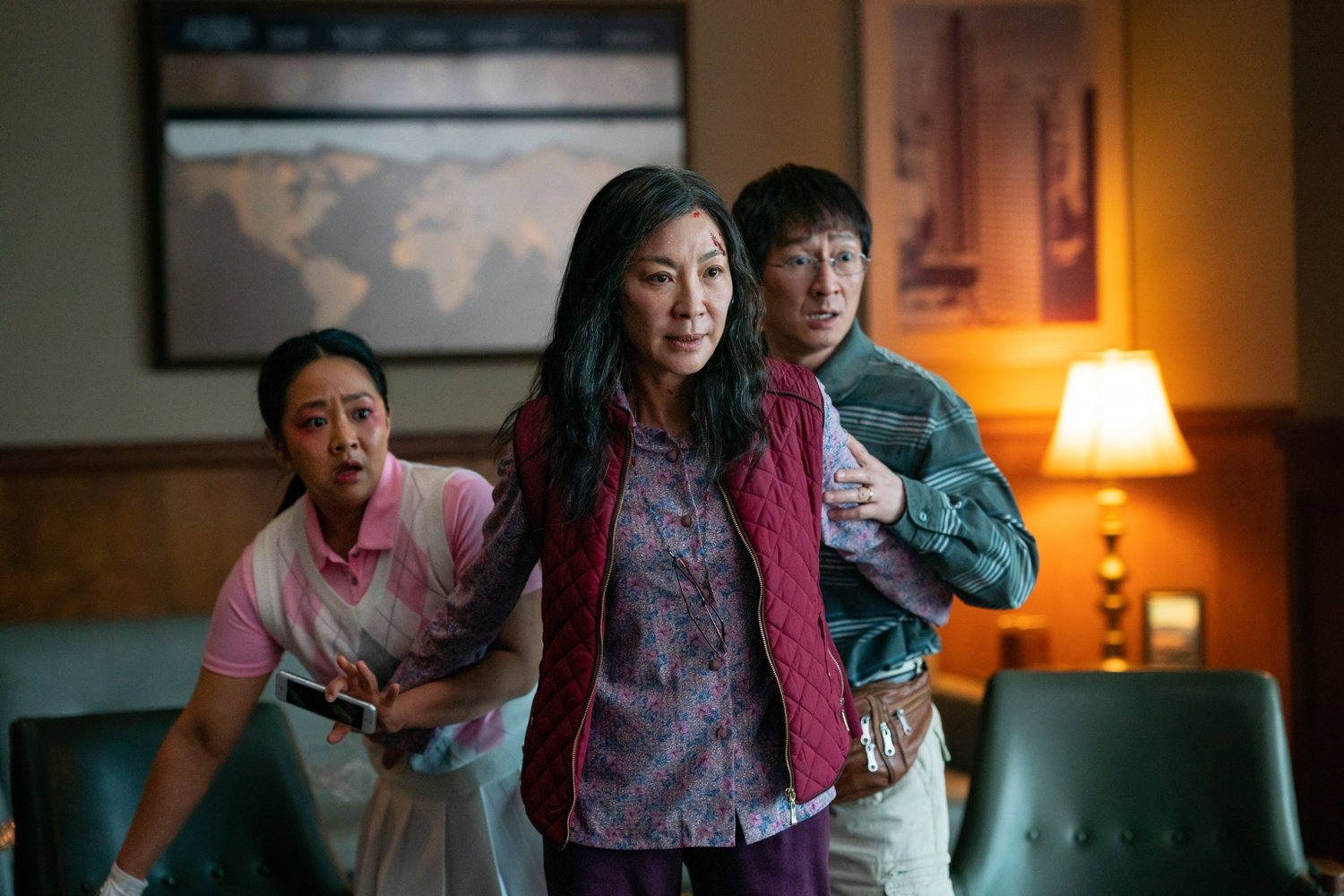
Never underestimate a middle age immigrant laundromat owner, wife and mother. Evelyn Wang (Yeoh) has lots on her plate as she has to deal with the mountainous paperwork facing an IRA audit, a daughter dangerously depressed, and husband Waymond initiating a divorce proceeding. Unbeknownst to her is that in another universe, she is Evelyn the superhero whose mission is to save the multiverse from the villain Jobu Tupaki, who, lo and behold, is her daughter Joy’s destructive alter ego. 

Ke Huy Quan’s comeback to the acting scene after decades of absence and winning the Oscar Best Supporting Actor is extraordinary. Credits to the casting director (Sarah Halley Finn) and the Daniels’ foresight, for Quan is the perfect guy to play Waymond. His movie role and his real-life persona look to be a perfect match. Quan has won over sixty awards for this role and now garnering the ultimate acclaim. After his magnificent action sequences in the IRS building, the fanny pack just might enjoy a comeback as well. 

From a background in New York City’s comedy and improv scene, Stephanie Hsu goes all out in her dual portrayal as Joy, the despondent daughter who feels unseen and unloved by her mother Evelyn, and her alter ego in another universe: Jobu Tupaki, the powerful and destructive villain in the multiverse taking everyone with her into a nihilistic hole, sucked into the everything bagel which she has created and pitted all her despair, pain and guilt on it, an absurdist escape from her meaningless existence.

Creating a multiverse action movie to tell a family story with all its generational dysfunction and disappointment is outside the box thinking. The Daniels’ concept and execution are audacious and innovative, incorporating multiple forms of visuals, animations, and symbolism. Every battle between Superhero Evelyn and Jobu Tupaki is a metaphor for the mother/daughter conflict. As a daughter whose self-image has hit rock bottom, Joy is in despair having failed to live up to her mother’s expectations, choosing to jump right into the everything bagel. Evelyn, not just a superhero but more importantly, a mother, fights to snatch her daughter back. 

In a silent scene without spoken dialogues––a much-needed respite from the chaos and sensory overload––Joy the rock chooses to fall off the cliff into oblivion. And what does the mother rock do? She moves to the edge of the precipice and rolls down after her daughter. This may sound ludicrous, but this soundless scene with the two rocks is one of the most poignant cinematic moments in the movie.

IRS paper pusher Deirdre, played by Oscar winning Best Supporting Actress Jamie Lee Curtis, is a follower of Jobu Tupaki in another universe. Her interactions with Evelyn offer some of the spontaneous fun in the movie. Action comedy at its best, not just in the fight scenes, but also in the universe where they have hotdog fingers, their feet and toes ever versatile. Debussy would have been impressed to hear Deirdre’s version of ‘Clair de Lune’ on the piano.

The last person to make up the award-winning ensemble cast is 94 year-old James Hong as grandfather Gong Gong. Hong’s earliest roles in his seventy years of acting were with such classic figures like Cary Grant and Groucho Marx. Here his role is understated but nuanced. Just the scene in the elevator where Waymond urgently tells Evelyn her multiverse mission, using an umbrella to block out the security camera, the oblivious Gong Gong is sitting in his wheelchair casually picking his teeth, one of the many hilarious scenes in the movie.

Finished shooting in just thirty-eight days, the Covid lockdown gave Oscar winning editor Paul Rogers solitary time to complete a tall order, putting together scenes from multiple universes, of multiple timelines, and in extreme variation of locales, real and imaginary, to make sense of a story that needs multiple viewings for one to grasp its layered meaning. 

Within the dense and oversaturated visuals and actions, the Daniels have packed in homages to iconic filmmakers like Wong Kar Wai and Stanley Krubrick, fun and significant insertions. Memorable is the scene emulating Wong’s “In the Mood for Love,” when Waymond reveals to Evelyn his romantic self: “In another life, I would have really liked just doing laundry and taxes with you.” This is the way he fights, with kindness and love. And that’s the key to Evelyn’s ultimate change.

And what’s with the googly eyes? That’s Waymond’s mark of existence, harmless fun. He puts them on everything. Evelyn dislikes them at the beginning. In the final battle against Jobu Tupaki and her forces, she puts one on her own forehead. Like a third eye, she begins to see things from a new perspective.

Waymond, seemingly weak, holds a powerful weapon: kindness. “This is how I fight,” he says, moving Evelyn to emulate in the last action scene. When everyone has their googly eyes on, their deadly weapons are turned into innocuous objects; a hand grenade now becomes a perfume atomizer. Universal human kindness wins the final battle. 

Didn’t get the metaphors and wacky symbolism? Good reason to re-watch. “Everything Everywhere All at Once” is a movie that demands multiple viewings. Outside the box filmmaking requires outside the box viewing. Those familiar with the Marvel, DC, or Manga universes could be more ready to appreciate it. 

A thought about diversity. The Daniels are themselves an exemplar of mixed-race collaboration. “Everything Everywhere All at Once” succeeds not just because of diversity but universality: The mother daughter reconciliation, the husband wife rekindling of first love, and the theme of kindness and love overcoming malice would override any specific cultural or racial border. And here’s my hope for the future of filmmaking, go for universality. That which joins us as a humanity will naturally include diversity. Specific representation is important, but the utopic end would be one when race and color are not the defining focus but the common ground that we share as a human society.

~ ~ ~ 1/2 Ripples

__________________

*This article first appeared the day after the Oscars in Asian American Press, on Monday, March 13th. I thank AAPress for allowing me to re-post my review in full here on Ripple Effects.

__________________

The Banshees of Inisherin: To be friend or not to be friend

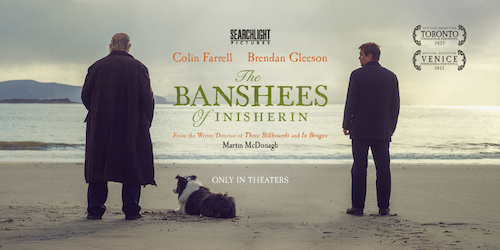
Like his previous movie Three Billboards Outside Ebbing, Missouri (2017), writer director Martin McDonagh opens The Banshees of Inisherin with a quiet and peaceful song. The lush green landscape of the island of Inisherin merging with the calm and harmonious chorus pulls us into this cinematic fable right away. McDonagh loses no time to bring out the heart of the matter, the sudden fallout of a lifelong friendship between Pádraic (Colin Farrell) and Colm (Brendan Gleeson). In parallel, across the island on the mainland, the Irish civil war rages. The year is 1923. 

The juxtaposition of mellow, ponderous music with outward conflicts always makes interesting contrasts, just like mixing comedy with drama, humour and sadness, which McDonagh is so apt in doing. An acclaimed British-Irish playwright whose plays have been performed in the West End and on Broadway, McDonagh is astute in his dialogues, embedding them with humour and poignancy to reveal the nature of the characters:

Pádraic’s sister Siobhán (Kerry Condon) likes to read and is the most sensible character in the movie. In one scene, Siobhán is reading.

Pádraic: How’s the book?
Siobhán: Sad.
Pádraic: Sad? You should read a not sad one, Siobhán, else you might get sad.
Siobhán: Mm.
(pause)
Siobhán: Do you never get lonely, Pádraic? 
Pádraic: Never get wha?
Siobhán: Lonely.
Pádraic: (mutter in annoyance) No. “Do I never get lonely?” What’s the matter with everybody? 

That could give a hint why Colm stops being friends with Pádraic because “he’s dull”. Colm is older and he now thinks more about how he will be remembered when he’s gone. A fiddle player, Colm spends his time playing and composing music. “I just don’t have a place for dullness in my life anymore,” he tells Siobhán. So, when Pádraic, baffled and hurt, confronts his old friend, “you used to be nice,” Colm engages with him about the value of being nice versus being remembered. Mozart, though living in the 17th century, he says, is still being remembered today for his musical legacy. Paintings last; poetry lasts. Who’s going to remember your niceness?

Even though happy go lucky, Pádraic is now saddened by the sudden termination of friendship. He doesn’t care about Mozart, or whatsisname Borvoven, but he remembers his Mammy and Daddy, they were nice, and his sister, “she’s nice. I’ll remember her, forever.” But Colm counters, no one else would remember them other than you. Colm may be facing an existential crisis, seeking for something more permanent or trying to leave a legacy, but McDonagh’s humour seeps through simple dialogues and not let the high ideals of his character be taken too seriously by movie viewers. In this scene, Siobhán has the last word. She corrects Colm, “it was the 18th century, anyway. Mozart. Not the 17th.” Then turns and walks away. This is a dark comedy, after all. 

The superb cast brings out McDonagh’s writing perfectly. Farrell and Gleeson reunite after In Bruges (2008, Oscar nom for McDonagh’s original screenplay). It’s fun watching the pair engage, a simple, usually happy Pádraic stonewalled by his best friend’s sudden withdrawal of friendship, not only that, but shocked by his drastic action to cut off one of his own fiddler finger every time Pádraic talks to him.

Condon as Siobhán is most apt in representing the rational mind amidst this absurd development. Her later decision to seek a saner and more meaningful existence is poignant. The yellow coat she wears is a bright symbol of hope. The fourth character that makes up this outstanding ensemble of actors is Barry Keoghan as Dominic, the jester who is probably the saddest of them all and one who sees more clearly than he appears.

One more crucial character must be credited, and that’s Jenny the miniature donkey (Jenny), which plays a pivotal role in the final act, inciting a drastic action from Pádraic. Friendship between man and animal just might be more steadfast than between humans. And that last vengeful resort by Pádraic brings back a similar scene in Three Billboards.

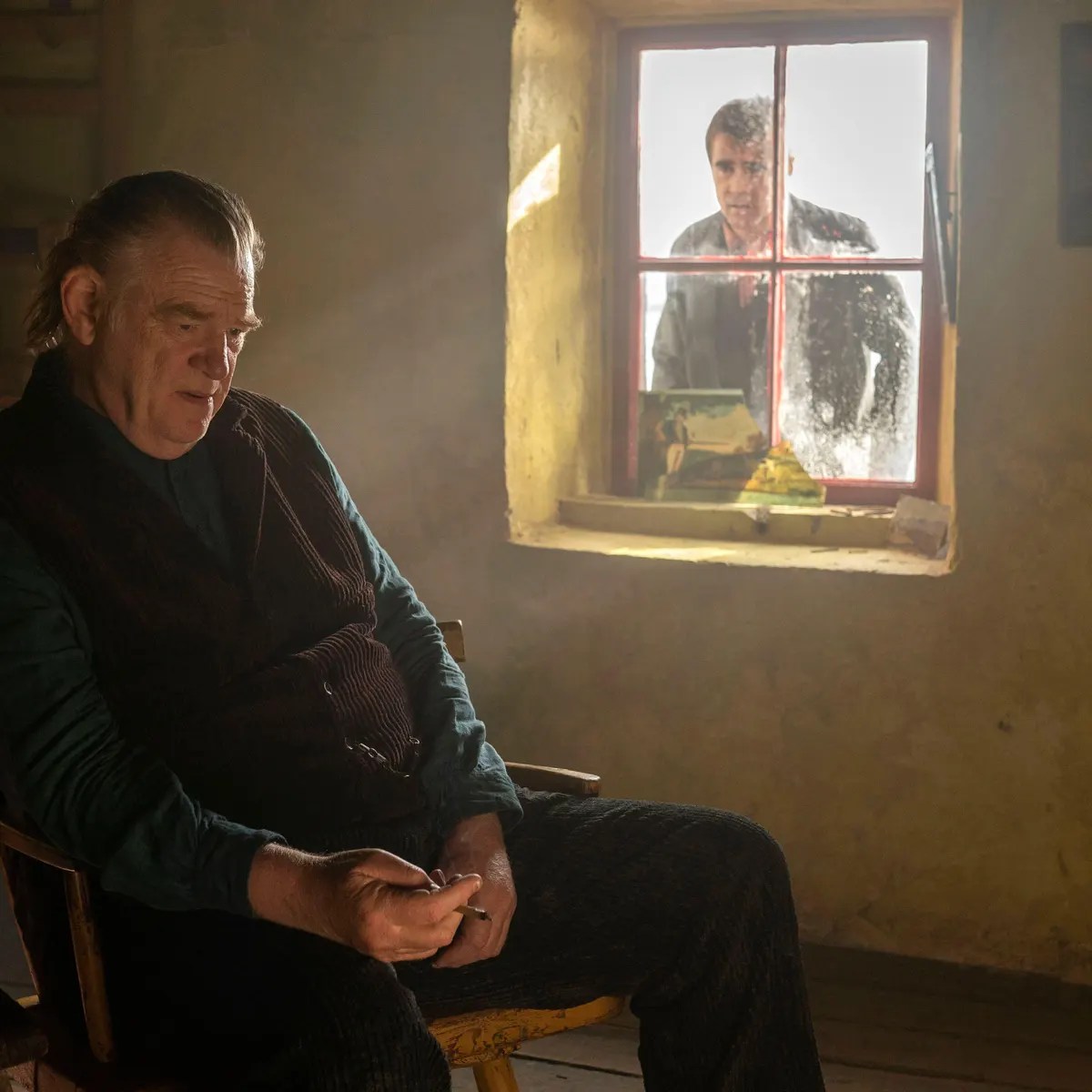
Director of photography Ben Davis’s camera is crucial in revealing the deeper meaning of McDonagh’s fable. Often we see Pádraic on the outside peering through the window into Colm’s home, or into the pub looking for Colm. Poor Pádraic now is an unwanted outsider, rejected and isolated, reminiscence of similar shots in Bresson’s Diary of a Country Priest. Or, the metaphor of the Banshee, the omen of death, represented by Mrs. McCormick (Sheila Flitton), her creepy appearance exemplifies the ever-present threat of mortality, just like the Grim Reaper in Ingmar Bergman’s The Seventh Seal (1957). They don similar costume too. And the ubiquitous religious symbols and activities––the statue of the Virgin Mary on the island, the cross, the Latin mass––just make one question how their faith is relevant in the actions of these islanders.

The Banshees of Inisherin is nominated for nine Oscars in the coming awards night to be held on March 12: Best Picture, Martin McDonagh for Directing and Original Screenplay, Colin Farrell for Best Actor, Kerry Condon Supporting Actress, Brendan Gleeson and Barry Keoghan both for Supporting Actors, Film Editing, and Music (Original Score).

~ ~ ~ 1/2 Ripples

***

Related posts mentioned in this review:

Don’t Just Drive Past Three Billboards

Diary of a Country Priest: Film Adaptation (1951)

***

March is Read Ireland Month 2023 at Cathy 746 Books. You can read the screenplay of The Banshees of Inisherin online here.  Upcoming posts will include books by Irish writers and possible book to screen adaptations. 

***

JLC 16: The Swan and the Bat by Keigo Higashino

Take this as a preview rather than a review. Why, this book has not been translated into English yet. The prominent Japanese mystery writer Keigo Higashino has written more than sixty novels but only eleven had been translated and published in English so far.

The latest, A Death in Tokyo, was published in Dec. 2022 by Minotaur Books. Its original Japanese title 麒麟の翼 (The Wing of the Kirin) was actually published in Japan more than ten years ago in 2011. I’ve read eight of Higashino’s translated mystery, including A Death in Tokyo. So, after finishing it, I thought I would have to wait a few years before I have the chance to devour another.

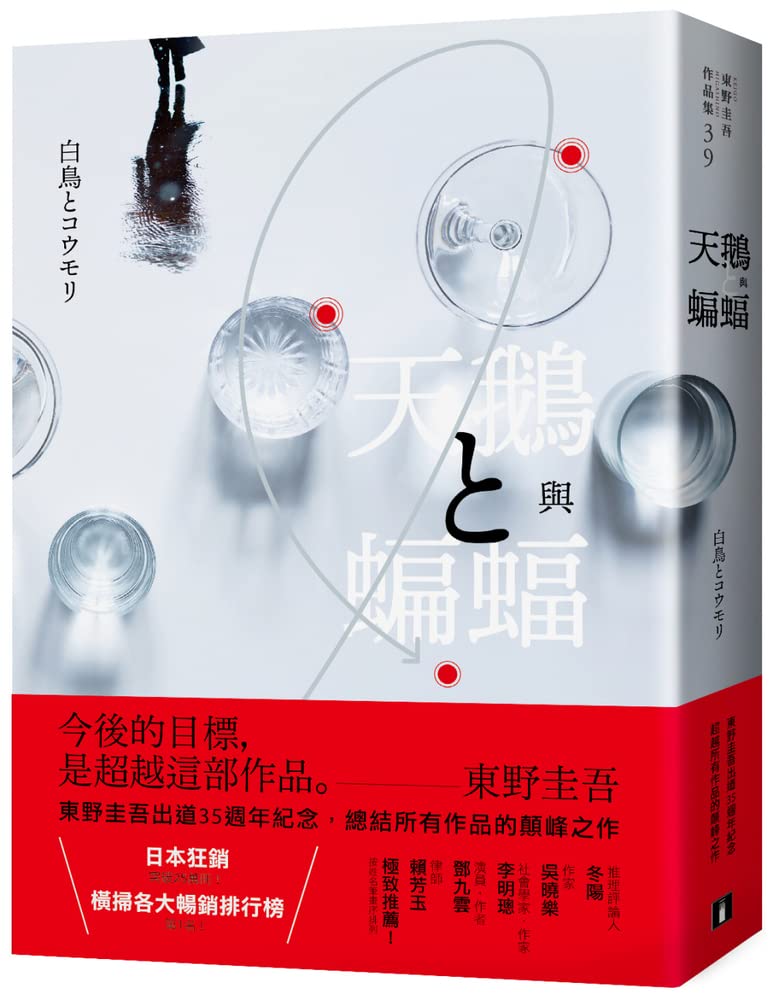
That’s why I couldn’t believe what I found when I came across The Swan and the Bat in our local library. Not sure if it’s Higashino’s latest but it was published in Japan in 2021, and translated into Traditional Chinese language published in Taiwan in 2022. And it’s brand new, beautiful and untouched in its transparent plastic wrap.

Here’s the synopsis of the story. A respected lawyer in Tokyo is murdered. Not long after that, a man goes to the police and gives himself up, confessing that he’s the murderer and not only that, revealing that he had committed a previous unsolved murder thirty years ago. The novel touches on issues such as the propriety of the statute of limitations, and the impact of crime on the victim’s family as well as the culprit’s. The puzzling thing is, why does this man take the initiative to go to the police and offer his confession on both crimes?

Not sure what the future English translation will be like but reading the Chinese version, there are words and concepts we seldom find in mystery novels written in English: sin and redemption, guilt and forgiveness, and the readiness to offer apology. Characters are bound more by their conscience than the law. In Dostoevsky’s Crime and Punishment, Raskalnikov gets away with murder for a while, trying to rationalize his way out of psychological torments. Higashino’s character does not rationalize but sacrifice.

A thoroughly intriguing read. Different from previous Higashino’s novels in that The Swan and the Bat has a more contemporary setting where social media plays a major role in the court of public opinion, radiating added pain in the victim’s and the perpetrator’s family. Rather than depending on the police to solve the crimes, two people from families on opposing sides of the adversarial legal system play Sherlock on their own, making the novel more complex and captivating.

If this will be translated into English in the future, I would not hesitate to read it again. The Swan and the Bat (title might be changed in the English version) has become my best Keigo Higashino book replacing The Devotion of Suspect X which sits securely in second place.

Thank you to Dolce Bellezza for hosting Japanese Literature Challenge for the sixteenth year.