Saturday Snapshot: Gliding Into The Sunset

On Thanksgiving Monday (Canada, Oct. 8), I stopped by Iona Beach in Richmond, B.C.  On the smooth water illuminated in a golden hue were Mallards gliding into the sunset.

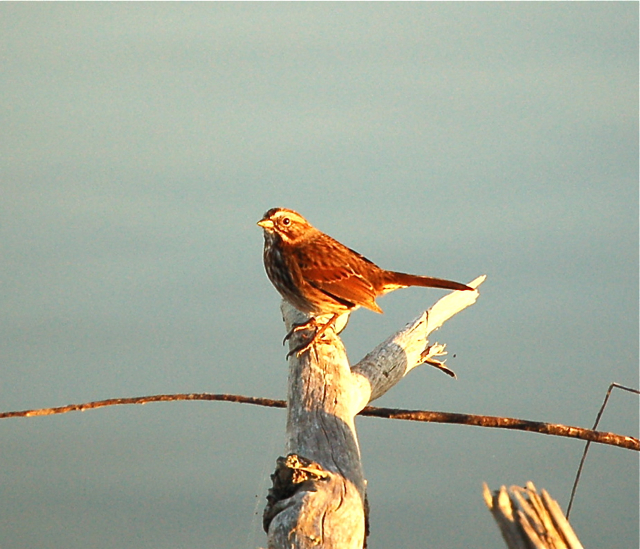
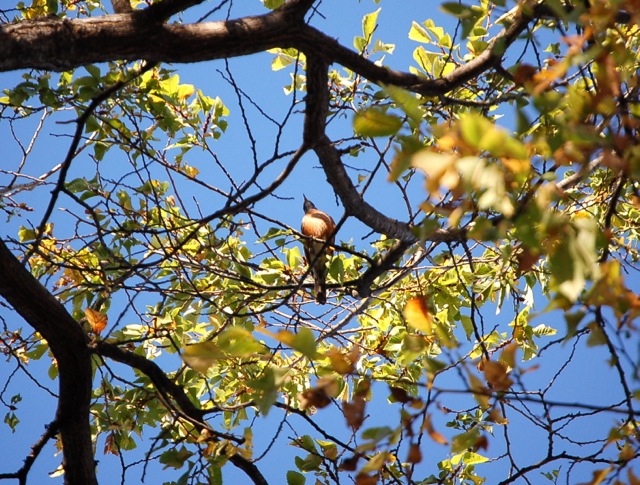
The common Sparrow too was swept in an amber tone. In that frame, nothing seemed common anymore.

And finally, I saw the sun slide down the distant sky. What a sight to wrap up Thanksgiving. If anything’s common… it’s common grace.

***

Saturday Snapshot is hosted by Alyce of At Home With Books.

A Note About These Photos: No colours had been added nor saturation altered in any of them.

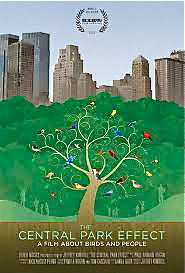
Birders: The Central Park Effect (2012)

This is a must-see for all bird watchers, nature lovers, or anyone who lives in an urban jungle, thinking how one can stay there and escape at the same time. And, one would soon find this one-hour documentary just too short.

Beautifully shot, this exquisite gem of a film features its main characters the birds in Central Park. No make-up, no staging, no studio set-ups, all natural surrounding. Appearing also are the humans who dedicate their time, and some, their life in pursuing the sightings of these avian celebrities. The interviews of the birders show they are a species all their own.

Baltimore Oriole

Central Park is another major character in the film. I didn’t know this before, that it is completely man-made. The trees were planted there, the landscaping and ponds designed and built by human hands. But it is also nature. More than 200 species of birds pass through Central Park each year. During migration periods in the spring and fall, it is the hot spot of traffic thoroughfare, the hub of north-south continental flight routes.

Jeffrey Kimball is the film’s producer, director, cinematographer and narrator. I was so eager to see him in person for the Q & A after the film at the Vancouver International Film Festival on Oct. 8. Unfortunately, he had to rush back to his wife due to a medical emergency. I wish her well of course.

Common Yellowthroat

The 60 mins. documentary starts off right away by bringing us up-close to the avian paradise that is New York City’s Central Park, and with interviews of their inhabitants’ human admirers. What’s more interesting to hear than the exhilarating tone of the humans are the cheerful chirping of bird calls and songs throughout the film.

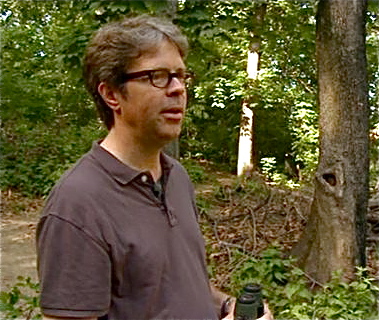
As a newly converted birder, I don’t need Jonathan Franzen to tell me the joy of birding, but it’s good to hear him share his view just the same: it’s ‘addictive’, that he would ‘miss work’ to go out to Central Park to have his fix of birdwatching. Oh, it’s also ’embarrassing’ too.

Jonathan Franzen

Yes, that’s the view of another birder, adult male. He shares that it’s been noted that birdwatching is not manly. There are guys who would carry their fishing rod and tell their wives they are heading out fishing, too embarrassed to admit actually it’s a birding they will go. It’s just… not cool.

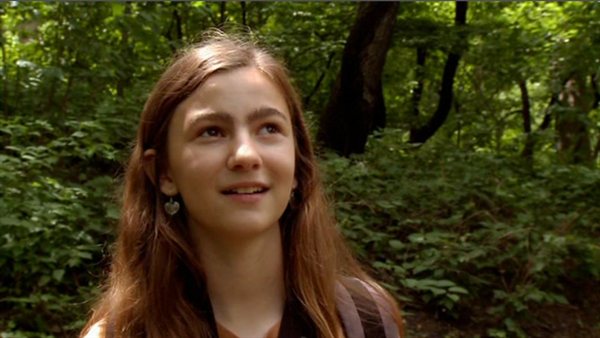
Anya Auerbach, 15, echoes that sentiment. Not cool, geeky even. But does she care? The answer is obvious. She is not into fashion like her peers, but she is into something deeply gratifying.

Anya Auerbach

As any birder would readily admit, binoculars hanging on their neck, and maybe a camera with a long lens on the side, they look like walking geeks, to be spotted and laughed at. But as they weigh the joy of actually seeing that rare thrush, to be labelled and misunderstood is a small price to pay.

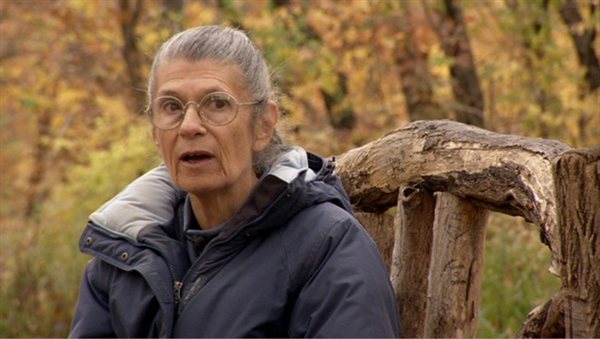
Starr Saphir is the matriarch of birding in Central Park. She has been leading birding groups in the spring and fall, four times a week for over 30 years. She could well be a walking specimen of the psychosomatic benefits of birding. Diagnosed with terminal breast cancer for a decade, Saphir testifies to how watching birds keeps her going. “Looking at birds really takes away sadness…” When one considers the fleeting nature of life, the joy is even more precious.

Starr Saphir

Chris Cooper disappears from his human social circle every year between April to Memorial Day. His friends know from experience that he has gone birding in Central Park. They understand his obsession. In the film, we can see his contagious enthusiasm.

Chris Cooper

Birdwatching is like collecting. The numbers count, how many species you’ve seen, which ones, the rarer the higher valued. It’s like seeing a unicorn… or, a bit more down-to-earth, it’s like you’ve seen pictures of a movie star, but when you actually see her/him in person, it’s a totally different feeling and experience.

“It’s mystical,” another birder articulated.

And to correct a misguided notion, birding is not a hobby, as one dedicated birder explains. Like raising children, it is a “deeply human activity.”

The Annual Central Park Christmas Bird Count is the longest running citizen science survey in the world. It is disheartening to note that the bird counts are dropping significantly in recent years.

Birds are nature’s celebrities, seeing them gives a birder deep pleasure and exhilaration. What’s most precious though, they are oblivious to their fame. They don’t flaunt their beauty, they don’t pose for pictures. They are as natural as can be.

As the credits roll at the end of the film, we see all those deserved to be named: species of birds that have appeared in the film.

~ ~ ~ 1/2 Ripples

CLICK HERE to the official site of the documentary Birders: The Central Park Effect.

Photo Source: BirdwatchingDaily.com

***

Anna Karenina Read-Along: Parts 1 – 4

CLICK HERE to the second and concluding post Parts 5-8: And the Curtain Falls

CLICK HERE to read my movie review of Anna Karenina (2012)

Thanks to Joe Wright’s upcoming film adaptation, I’m motivated to go past that famous first line to embark on this read of over 800 pages. Also thanks to you who are willing to come along with me, and those who are cheering us on, I have more fun than doing this alone.

Reading Anna Karenina for the first time, my immediate impression is that it is lighter than I’ve expected, melodramatic and even comical at times. Last month I just finished listening to an audiobook version of Dostoevsky’s Crime and Punishment, so I can feel the difference in tone as soon as I begin. Despite its being a more relaxed read, it strikes me with how sharp Tolstoy’s observations of human nature are, and how masterful he is in piercing through the human psyche, no less than Dostoevsky’s heavy dealing of crime or punishment…. ummm, this may well be Tolstoy’s take on the subjects as well.

In reading this first part of the book, I’m particularly amused by Tolstoy’s sensitive and spot-on descriptions of his characters. Here’s an early example. Levin, insecure in front of Kitty and his formidable rival Vronsky, responds to Kitty’s mother Countess Nordston as she sarcastically mentions him to Vronsky:

 ‘Konstantin Dmitrich (Levin) despises and hates the city and us city-dwellers,’ said Countess Nordston.

‘My words must have a strong effect on you, since you remember them so well,’ said Levin, and, realizing that he had already said that earlier, he turned red. (p. 51)

People turn colour a lot in the book, and I’m most curious to see that on screen.

Tolstoy’s observation of love, or maybe, his understanding of men, oddly, is articulated by Anna:

I think,’ said Anna, toying with the glove she had taken off, ‘I think… if there are as many minds as there are men, then there are as many kinds of love as there are hearts. (p. 138)

Anna’s words here remind me of a modern cinematic version of Anna KareninaThe English Patient. In response to Almasy’s (Ralph Fiennes) statement that “A thing is still a thing no matter what you place in front of it”, Katherine Clifton (Kristin Scott Thomas) responds: “Love? Romantic love, platonic love, filial love…? Quite different things, surely.” Is it merely coincidental that such a similar observation is pointed out in both cases by the female protagonist while the male character seems oblivious… just wondering.

But it is with the theme of forgiveness Tolstoy toys with that I’m most intrigued. No pun intended here, but I find some major twists and turns are based on this very notion of forgiveness in an ironic way. At the start Anna is the one urging Dolly to forgive her husband Stiva Oblonsky’s extramarital affair. No sooner has she succeeded as a mediator she becomes deeply entwined in one herself, one that apparently she cannot find a way out.

‘Be careful what you pray for,’ as if Tolstoy is saying. Anna desires forgiveness from her husband Alexi Alexandrovich. And he, upon seeing her suffer the near-death illness, throws away his wrath and grudges and forgives her unreservedly. Having read up to this point of the story, it appears that his spiritual epiphany is genuine.

Alas, Anna doesn’t realize that the whole package of forgiveness offered by her husband requires a mending of ways and a renewal of the marriage relationship. She has pleaded for magnanimity, now she gets it, and it sure doesn’t taste like what she’d wanted. Her brother Oblonsky tells Alexi Alexandrovich:

She’s crushed, precisely crushed by your magnanimity.” (p. 430)

What she wants isn’t forgiveness, but release.

It’s interesting to see how Tolstoy intersects and contrasts the three storylines of marriage relationship. Levin and Kitty at this point are only at the planning stage of their marriage, but look to be the couple that is bound for most bliss among the three. And if forgiveness does harvest its desirable crop, it can be found here in Levin discarding his grudge on Kitty’s rejection of his first proposal and the insult he has felt. He could well sympathize with Kitty, herself being a victim of her own delusional crush on Vronsky.

Levin’s agrarian idealism makes an interesting contrast to the high society of Petersburg and Moscow. I don’t know what will happen next with Levin and Kitty, will he move to the city or she to the country, will their love last? But that’s exactly the fun of reading, it lures you on. Why, Anna Karenina the novel used to be published as serial installments in a periodical from 1873 – 1877. The master storyteller must have known where to stop at the end of every episode.

Having seen the trailer for the upcoming film adaptation, I get an inkling of how screenwriter Tom Stoppard (Shakespeare In Love, 1998) stylizes the classic. So as I read, I look out for scenes and mentions of the stage, opera, and other spectacles. There are lots.

All the great world was in the theatre.” (P. 128)

Alexi Alexandrovich goes to the opera and concerts frequently, and Vronsky prefers the comical Opera Bouffe to the more serious ones. The horse race is watched by all, while Anna’s reaction to Vronsky’s fall is watched most carefully by her husband. They are all watching each other, being the audience and the actors at the same time. And we the readers are all observers of this whole spectacle of a literary extravaganza.

Oh the joy of reading together. If only we could watch together as well…

Here are the links to other Read-Along participants (if you’ve written a post on Anna Karenina, do leave a comment so I can link to it):

Janell of An Everyday Life

Bellezza of Dolce Bellezza

Stefanie of So Many Books

oh of This Writing Life

***

In my original plan, the date for our second and final post to wrap up this Read-Along is November 11. I just realized that is Veterans Day in the U.S. and Remembrance Day in Canada. You may have a special post in mind to mark the occasion. So let’s change our wrap up post to November 15, which will also coincide with the U.S. release of the film the next day:

Anna Karenina Read-Along Parts 5 – 8 Concluding Post to come out NOVEMBER 15.

***

CLICK HERE to view the trailer of the film Anna Karenina (2012), directed by Joe Wright (Atonement, 2007; Pride & Prejudice, 2005), screenplay by Tom Stoppard (Shakespeare In Love, 1998, and the brilliant play Rosencrantz and Guildenstern Are Dead, 1967)

.

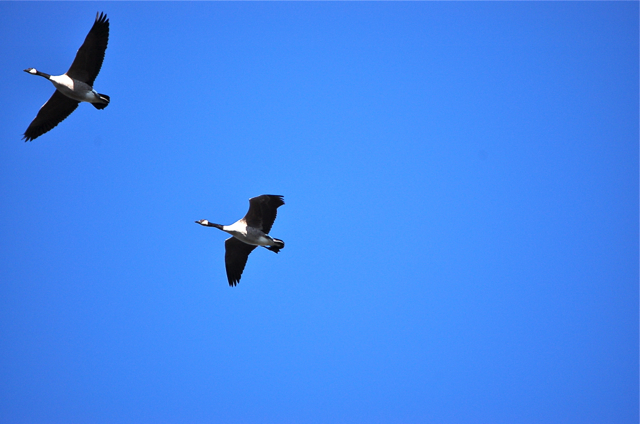
Saturday Snapshot Sept. 29: Canada Geese

While I was birdwatching this week, I saw a flock of Canada Geese fly overhead in perfect V formation. With my recently trained quick reaction, I pointed my camera up, framed them so beautifully in my viewfinder, and CLICK. Shoot, my camera was turned off. Another quick reaction, I turned it back on and tried again… catching the tail end of the troop.

Here it is, better late than never:

Thanks to Alyce of At Home With Books for hosting Saturday Snapshot, let me have a chance to hone my eye-hand coordination.

***

Tomorrow September 30 is our Anna Karenina Read-Along First Post: Parts 1-4. Stop by again to join in the discussion and make some ripples.

***

Midnight’s Children Film Adaptation

Midnight’s Children is Calgary International Film Festival’s Red Carpet Opening Gala presentation. Directed by Indo-Canadian, Oscar nominated Deepa Mehta (Water, 2005) in close collaboration with author Salman Rushdie, the film’s screening on September 20 marked its Western Canadian premiere.

Midnight’s Children won the Booker Prize in 1981, and the Best of the Booker in 2008. While the novel is magic realism in genre, the film adaptation is a realistic, almost exact transposition of the novel into screen. Author Salman Rushdie asserts his authority in condensing 533 pages into 148 minutes of screen time, offering us a concise rendition of an epic story spanning four generations. “It was an exercise in discovering the essence of the book,” Rushdie said in an interview on CBC radio.

The audience has much to gain not only from Rushdie adapting his own work, but also from his voiceover narration. This is especially beneficial for those who have not read the novel. Here, the narrator is speaking directly to the viewers, and not like the book narrator Saleem telling his story to Padma as the reader eavesdrops. Rushdie’s narration strings together time, places, events, emotions and nuances into coherence.

Not only is the condensing of an epic a daunting task, the actual production faced numerous hurdles in the process. Director Deepa Mehta had to shoot the film in Sri Lanka under another title to avoid protests, but even there still had to deal with obstacles including Iran’s pressure to stop the filming.

Mehta has proficiently brought the story to screen with relatively fast pacing, engaging us with a kaleidoscope of sights and sounds as we zip past sixty years of India’s history. From Kashmir in 1917 to Bombay 1977, it brings us through the ending of British rule, the birth of a nation, the Partition of India and Pakistan, later the war of independence of Bangladesh, and finally, the Emergency under the government of Indira Gandhi.

Amidst the torrents of history emerges the main character Saleem Sinai. The film begins with his grandfather Dr. Aziz (Rajat Kapoor) in Kashmir, examining his patient and future wife Naseem (Shabana Azmi) through a perforated sheet. Humour adds to the enjoyment of seeing the scene visualized.

Then comes the next generation of Saleem’s parents Amina (Shahana Goshwami) and her husband Ahmed Sinai (Ronit Roy), moving to Bombay, giving birth to a baby boy at the stroke of midnight, the dawn of India’s independence on August 14, 1947. But baby Saleem is a changeling with another baby born the same time, Shiva, by the hands of Mary (Seema Biswas) the nurse.

Young Saleem is played by the charming Darsheel Safary. He has an appealing and affable screen presence, brightening up the film instantly when his story comes into focus. Saleem discovers that he has the special power to summon all midnight children to appear in his mind, children born at the stroke of India’s birth.

It is interesting to see how these Midnight’s Children Conferences convene, and watch the confrontations intensify between Saleem and his rival changeling, Shiva. If there’s any line that sticks out from the movie, it is this: Wars are often fought between friends. These Conferences only mirror the adult world of governments and nations, as we see conflicts and wars unfold chronologically with Saleem being tossed in the torrents of it all.

Music adds an interesting touch to the film. British colonial culture is reflected by Wee Willie Winkie’s (Samrat Chakrabarti) busking tunes in Methwold’s Estate as well as the hymn singing in Saleem’s boys school. We also see the change of political climate with Saleem’s sister Jamina (Soha Ali Khan) humming Indian melodies with her sweet young voice at home. After the family moves to Pakistan, she later grows up to be a popular singer supported by the Pakistani leader, as Saleem warns her, something doesn’t smell right. Throughout, music in the film enriches the storytelling, adding more colours to the cultural canvas.

After a forced surgery to correct his snotnose, the now adult Saleem (Satya Bhabha) gains a special power of smell, and is glad to welcome the smell of love. And love it is that leads him later to marry Parvati, another midnight’s child, abandoned by Shiva and carrying his son. It is love that prompts Saleem to raise Shiva’s child as his own. He knows it full well as he himself is not his parents’ son by birth. In turn, his reunion with his nanny Mary in a pickle factory later in Bombay ends with the moving moment when he acknowledges her role in raising him, addressing her as mother.

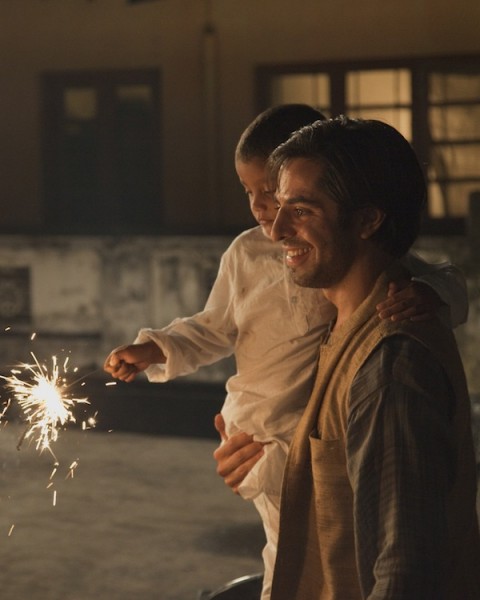
The character of Saleem carries the story affectively throughout, culminating in the final moment of love, for a son who is not his own, for a nation that has brought him pain and hardship. The last scene is another birthday of Saleem’s, thus India’s. Against the celebrative fireworks in the night sky, Saleem holds his son, a second generation of magical children, and looks out towards a brighter future, with the love that is essential to fuel the furnace of hope.

Indeed, the tone of the film is less acerbic and irreverent than the book, the two spanning a gap of 30 years. The milder cinematic version nevertheless is no less engrossing. With the realization of characters and emotions plainly in sight, it is effective in its conveyance of pathos and sentiments.

The shortfalls of a 148 minute cinematic adaptation from a long written work could be expected. The mega canvas of countless lives, deaths, and historical events in the book may appear cursory in the film and sometimes quickly wrapped up by the narration instead of being dealt with in greater depth. Nevertheless, all in all, the cinematic offering is entertaining and engaging, its characterization authentic, making it an enjoyable rendition of Rushdie’s literary work.

~ ~ ~ Ripples

***

CLICK HERE to read Midnight’s Children’s book review posts on Ripple Effects.

A NOTE ABOUT MOVIE PHOTOS: These images are used according to the Fair Use guidelines for criticism, comment and educational purposes. CLICK HERE for more information.

***

A Whole New World: Saturday Snapshot September 15

An Autumn birdwatching course I just started brings me to a whole new world I haven’t explored before. Of course I’ve observed birds, appreciated and even photographed them occasionally, but never so up close and personal, and purposeful.

Some in my group are equipped with long 400mm lens, nature paparazzi. But we leave nature be, of course, and being so far away from our subjects, no invasion of privacy. This pensive Gull isn’t a bit bothered by us.

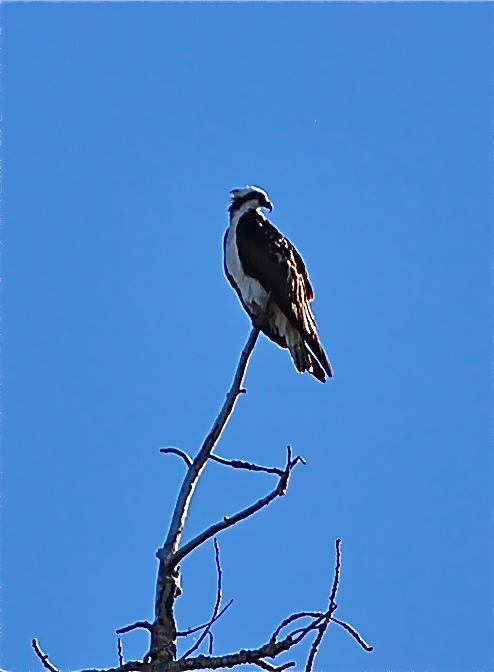
With just a 50-200mm lens, this is the best I can do. The Osprey is harder to capture of course. With a little help from iPhoto, here’s a closer look of her/him perched high up in a tree, and even farther cruising in the bright blue sky.

I can only wonder why it has taken me so long to come to such a fascinating world. 12 more weeks to go, yes, into the snow likely.

***

Saturday Snapshot is hosted by Alyce of At Home With Books.

Life of Pi by Yann Martel: Take the Literary Journey before the 3D Experience

CLICK HERE to read my review of Ang Lee’s film Life of Pi in 3D

**

“I have a story that will make you believe in God.” — Life of Pi

I usually like to read the book first before seeing the film. I know full well that the two are different forms of artistic medium, but I’m intrigued by the adaptation process of transposing the literary into the visual. So, before Ang Lee’s 3D production comes out in the fall, I’ve recently reread Life of Pi, the 2002 Man Booker Prize winner by Canadian author Yann Martel.

After finishing Midnight’s Children a couple of months ago, also in preparation for the upcoming film version, I feel like I am all toned-up for magic realism.  Life of Pi leads me to retake a magical journey. This time around, I am much fonder of the delightful tale, deceptively simple and yet full of insights. The reader might first find the tidbits of animal facts and behavior amusing, only to resonate with their parallels in the human society.

Martel’s allegory is at times humorous, at times poetic and poignant, and throughout, engaging storytelling with heart and soul.

Pondicherry entered the Union of India on November 1, 1954. The Pondicherry zoo is in the Pondicherry Botanical Gardens. It is founded, owned and operated by Santosh Patel, father of Piscine Molitor Patel, more succinctly, Pi, the protagonist of our story.

Pi grows up in the zoo, animal lover by nature, animal keeper by nurture, and God seeker by creation. So when his father decides to sell the zoo, due to a lack of interest from the public, Pi, though young, understands it is only a sign of the times. The zoo and religion, both are misconstrued as confinement:

I know zoos are no longer in people’s good graces. Religion faces the same problem. Certain illusions about freedom plague them both.

Pi’s father plans to leave India and start a new life in Canada. Other than the lack of prospect in the zoo business, Mrs. Ghandi’s government measures also play a part in his decision. In June, 1977, the Patel family steps on board the Japanese cargo ship Tsimtsum and set sail for Canada, with them are the animals sold to various zoos in North America.
Here begins the adventure of Pi. Unable to sleep one night, Pi walks out of his cabin only to hear an explosion moment later. Thus his life is spared as he is thrown into a lifeboat while his family is still trapped below deck. All alone, 16 year-old Pi looks back from the lifeboat in horror and watches helplessly as the ship carrying his family quickly sinks into the dark, oblivious ocean.

For 227 days, Pi drifts in the vast open sea in a 26-foot lifeboat. Not quite alone, for there with him are a zebra, an orangutan named Orange Juice, a spotted hyena, and a 450-pound Bengal tiger called Richard Parker. Soon, there remain only two of them, Richard Parker by his mere physical might, and Pi, by his intelligence and resourcefulness.

Suddenly his brute strength meant only moral weakness. It was nothing compared to the strength in my mind.

Wise beyond his years, Pi has to use available resources to get food and water, set up routines, defend himself from predators, assert his spacial and social dominance, and above all, conquer loneliness and despair. Ironically, in the minimal existence on the 26- foot lifeboat, Pi finds motivation to live in the company of the hungry Bengal tiger Richard Parker. He has successfully turned a threat into comradeship.

After many days, they drift towards an island of meerkats. There Pi finds an abundance of algae and meerkats as food. Complacency begins to set in until the chilling discovery of human teeth drives him out to sea again.

What sets this book apart from just another survival, castaway story is its spiritual quest lyrically expressed. Pi is a deeply religious soul. While he has embraced various paths in his search, his ultimate goal is to find God. It is in his tumultuous ordeal, a tiny speck in the vast ocean, tossed and thrown by unconquerable elements that Pi experiences the presence of God. The author’s seemingly straight forward adventure embeds a magical, existential allegory.

In bare existence, Pi can still find exhiliaration in the smallest of blessings:

… You get your happiness where you can. You reach a point where you’re at the bottom of hell, yet you have your arms crossed and a smile on your face, and you feel you’re the luckiest person on earth. Why? Because at your feet you have a tiny dead fish.

And in the midst of utter despair, the spiritual faculty can still respond. Amidst turmoils and rough seas, Pi rejoices as he beholds the wonders of creation, the inexhaustible menagerie of life, and nature displayed, raw and uncensored. One time, a magnificent bolt of lightning arouses a thunderous cosmic effect without and within, striking him speechless:

This is miracle. This is an outbreak of divinity. .. this thing so vast and fantastic. I was breathless and wordless. I lay back on the tarpaulin, arms and legs spread wide. The rain chillded me to the bone. But I was smiling… I felt genuine happiness.

That momentary happiness is finally realized in true salvation. Pi and Richard Parker are saved as their boat drifts near the shore of Mexico where they are rescued. Richard Parker quickly disappears into the jungle. But the story doesn’t end there. It’s the last bit that makes Life of Pi even more thought-provoking.

Two Japanese employees of the shipping company come to interview Pi in order to find out the cause of the shipwreck. As they question the lone survivor of the Tsimtsum in a Mexican hospital, they respond to Pi’s retelling of his ordeal with polite skepticism and denial. The magical is not easily accepted by realists.

Author Yann Martel tells us a compelling survival story only to have it negated by two people convinced of its implausibility, rationalists bent on seeking evidence based only on reasoning. Fantasy and imagination are often readily presumed to be falsehood.

With Pi’s tale being dismissed by the interviewers, Martel has ingeniously crafted an allegory showing us the value of stories, teasing us with the definition of truth and reality, while transporting us to a realm beyond the limits of the intellect… maybe on that level, somehow, like Pi, we can get a glimpse of God.

~ ~ ~ ~ Ripples

Life of Pi by Yann Martel, Vintage Canada Edition, 2002, 354 pages.

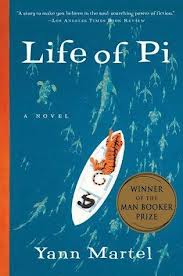
The three cover images on this post: Vintage Canada edition, U.S. Mariner Books edition, and movie-tie-in edition coming out October, 2012, also from Mariner Books.

This review has been published in the August 31, 2012 print issue of Asian American Press. Online edition here. For those curious about what Arti is like, the mystery is revealed there.

CLICK HERE to watch the TRAILER of the film, opener of the 50th New York Film Festival on Sept. 28th, 2012.

CLICK HERE for a list of highly anticipated film adaptations from literary sources coming out this fall.

***

Coda

I had the pleasure to meet author Yann Martel in a reading two years ago. He was very friendly and affable, took time to chat with me, signed my copy of the book and another one I’d intended for my son. Not a tale, here are the photos:
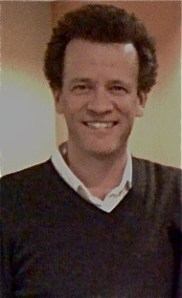
In the title page of my son’s copy, he wrote:

“To ___,

May you reach the coast of Mexico.”

Don’t we all need to find shore to land?

***

This Fall: Read the Book Before you See the Film

UPDATE: This list will be updated whenever there’s new info. So, bookmark it if you like. Just added Lincoln (Team of Rivals), The Reluctant Fundamentalist, and The Hobbit: An Unexpected Journey. CLICK ON THE TITLES to read my book and film reviews. For others, the link will lead you to info of the production.

**

Some highly anticipated film adaptations from literary sources will be coming out this fall. Released in this latter part of the year, to be premiered at major film festivals, some of them are poised for the Awards Season next spring.

Here’s an update of these great expectations. The Great Gatsby for some reasons has delayed its release until next summer, so one less book to read if you’re to finish them before the movies come out.  These titles also make good selections for book groups:

Anna Karenina by Leo Tolstoy

To premiere in the UK and at Toronto International Film Festival (TIFF) on the same date, September 7. You still have time to read this masterpiece before the film comes out as a general release in November. You may need to read a bit more than 10 pages a day if you start now. But still doable. Update: The Read-Along has just been completed. The film is now screening in selective cities. Read my book reviews here for first half and here for the last parts.

.

Cloud Atlas by David Mitchell

To premiere at TIFF on Sept. 8. Legendary filmmakers Tom Tykwer (Run Lola Run), Andy and Lana Wachowski (The Matrix) join hands to make this ‘unfilmable’ acclaimed literary work. Tom Hank, Halle Berry, Jim Broadbent…

Update: The film has been released and has received mixed reviews. 

Dangerous Liaisons by Pierre Choderlos de Laclos

How about this… The French notorious literary classic Les Liaisons Dangereuses by Pierre Choderlos de Laclos, published in 1782, adapted into film in the 21st C. with a setting in 1930’s Shanghai, China, helmed by Korean director Hur Jin-Ho, cast with Chinese and Korean actors. I’ve seen two adaptations in the past, Michelle Pheiffer/John Malkovich’s Dangerous Liaisons (1988) and Annette Bening/Colin Firth’s Valmont (1989), but this one strikes me as something totally different.

Great Expectations by Charles Dickens

In time to mark this bicentenary of the birth of Charles Dickens, a showcase of British talents: screenplay by David Nicholls (Tess of the D’Urbervilles, When Did You Last See Your Father) directed by Mike Newell (Four Weddings and A Funeral, Harry Potter), Ralph Fiennes (The English Patient), Helena Bonham Carter (The King’s Speech), Jeremy Irvine (War Horse)…

.

The Hobbit by J. R. R. Tolkien

World premiere Nov. 28, 2012 in New Zealand for Part 1 of the Trilogy, ‘The Hobbit: An Unexpected Journey’, ‘The Hobbit: The Desolation of Smaug’ in Dec. 2013, and ‘The Hobbit: There and Back Again’ in July, 2014. Peter Jackson attempts to reprise his Rings magic with cast from previous Rings Trilogy Elijah Wood, Ian McKellen, Cate Blanchett, Orlando Bloom… Again, we’ll get to see beautiful New Zealand as setting.

.

Les Misérables by VIctor Hugo

A film version of the stage musical to be released in December. Directed by Oscar winner Tom Hooper of The King’s Speech. If you want to hear them sing, here’s the chance… Anne Hathaway, Hugh Jackman, Russell Crowe, Helena Bonham Carter, Amanda Seyfried…  The trailer is mesmerizing. Update: The production has just been shown in industry screenings and received euphoric reception. Major contender for 2013 Oscars.

.

Life of Pi by Yann Martel

To open the 50th NY Film Festival on Sept. 28 with its world premiere. I’m glad this 2003 Booker Prize winning novel by Canadian author Yann Martel finds its film adaptation in the hands of Oscar winning director Ang Lee. From the trailer, I have the feeling that Lee has masterfully grasped the magical realism of the book. Lee’s versatility ranges from Jane Austen (Sense and Sensibility) to martial art (Crouching Tiger, Hidden Dragon). I highly anticipate this one, albeit as someone prone to motion sickness, I’m apprehensive about seeing the rough ocean journey in 3D.

.

Midnight’s Children by Salman Rushdie. Film Review

To premiere at the Gala Presentation at TIFF Sept. 9. Salman Rushdie turns his Best of the Booker, epic novel into screenplay, working closely with Canadian director Deepa Mehta on the film production. I’m interested to see how magic realism transposes from the literary to the visual, albeit I know full well the two are different forms of artistic medium. For the few of us who had spent four months reading along, I think the only regret we have might be that we can’t go to see the film together.

.

Mr. Pip by Lloyd Jones

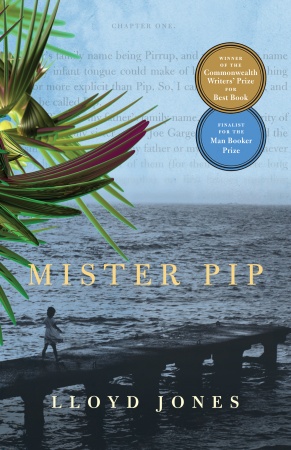
Winner of the 2007 Commonwealth Prize, Lloyd Jones’s character Pop Eye Mr. Watts brings to the Papua New Guinea island of Bougainville during the civil war in the 1990s not just Charles Dicken’s Great Expectations, but friendship to a 13 year-old girl Matilda. Film adaptation directed by Chronicles of Narnia‘s Andrew Adamson. And for all you fans of ‘House’, Mr. Pip is none other than Hugh Laurie.

.

On The Road by Jack Kerouac

First screened at Cannes Film Festival in May and later in Europe, producer Francis Ford Coppola’s adaptation of this beat generation classic finally comes to North American at TIFF this Sept. Directed by Walter Salles (Motorcycle Diaries) and with a cast including Kristen Stewart, Amy Adams, Viggo Mortensen, Kirsten Dunst.

.

The Reluctant Fundamentalist by Mohsin Hamid

Published in 2007, the book was included in Guardian‘s list of 50 books that defined the decade and shortlisted for the Booker Prize. The story of a young Pakistani working in NYC, graduated top of his class from Princeton, finding love in an American girl, and success on Wall Street, has his world turned upside down after 9/11. The film just opened the 69th Venice Film Festival last night. Directed by the acclaimed, India-born Mira Nair (Monsoon Wedding, The Namesake), the film and the book should stimulate lively discussions in your book group. Stars Riz Ahmed, Kate Hudson, Kiefer Sutherland, Liev Schreiber.

Teams of Rivals by Doris Kearns Goodwin. Film Review.

It has been noted that Steven Spielberg ensured the film rights to Goodwin’s book even before she wrote it. His film Lincoln is partly based on it, an epic production that reportedly involves more than 140 speaking parts. Acclaimed as a strong Oscar 2013 contender, the film portrays Lincoln’s tenacious fight for the passage of the 13th Amendment.

.

What Maisie Knew by Henry James

James’s novel published in 1897 has its film adaptation set in modern day New York City. It depicts a family break down from the point of view of a six-year-old girl as she is torn between her parents going through a divorce. Film directed by Bee Season and The Deep End’s Scott McGehee and David Siegel, Julianne Moore and Alexander Skarsgård star.

.

***
Posts you may like:

Lincoln (2012): Some Alternative Views

Anna Karenina Read-Along: Parts 1-4, Parts 5-8

Midnight’s Children Read-Along

Midnight’s Children Film Adaptation: Movie Review

Life of Pi by Yann Martel: Read the book Before the 3D Experience

CLICK on the following links to my previous posts for lists of film adaptations from other literary titles in development or with film rights sold:

Great Film Expectations

Upcoming Books Into Movies — List 3

More Upcoming Books Into Movies

***

Saturday Snapshot August 25: Fifth Blogiversary

Five years ago in this last week of August I started Ripple Effects on WordPress. I still remember that first prompting from my son that I should start a blog.

“What’s that?” I asked.

I just can’t capture all that have come along since then.

To all of you who have visited, subscribed, followed, read, commented, and shown your support and encouragement in ways you might not have realized, I thank you all.

Here’s a cup of latte to celebrate and a teaser: How do you drink the latte without disturbing the beautiful foam art on top?

Well, it was pure serendipity that I managed to do just that. This is the photo during that occasion. I only have the ‘Before’ but not thought of taking an ‘After’ shot. But trust me, it wasn’t a mirage when I got near to the bottom of the cup.

What did I do? I was chatting away with a friend for maybe 10 minutes before I started sipping it slowly. By that time the top foam had been cooled down a bit and slightly ‘dried’. Disclaimer: I haven’t tested it again, but I will. Just to see if it really wasn’t a mirage that I saw.

Saturday Snapshot is hosted by Alyce of At Home With Books.

Anna Karenina Read-Along: 10 Pages a Day

CLICK HERE to read my Concluding Post: Parts 5 – 8 And The Curtain Falls

CLICK HERE to read my post on Parts 1 – 4 of Anna Karenina. 

***

I’ve done the math. From today till the new movie adaptation’s general release (Nov.16) there are exactly three months. So that means finishing this 800 some pages novel needs reading about 10 pages a day. A doable plan.

Here’s the edition I’m using, the Penguin Classics Deluxe Edition. Feel free to explore others.

If you are one of the few like me who haven’t gone past that famous first line, now’s the chance to do it together. And for the majority of you who have read it, how about a reread before watching the award-aiming movie directed by Joe Wright of Pride & Prejudice (2005) and Atonement (2007) fame, with Keira Knightley, Jude Law, Aaron Johnson, Matthew Macfadyen, Michelle Dockery, Olivia Williams…

Not that we need them to lure us into reading Tolstoy.

Or that we need TIME to tell us Anna Karenina holds the no. 1 spot on their Top Ten Greatest Books of All Time.

I’ve totally enjoyed the camaraderie of a read-along in the Midnight’s Children experience. So, short of going to see the movie together, we can read the book as a virtual book group.

Here’s the simple plan. We’ll divide the eight parts of the book in half and just do two posts in the next three months, about seven weeks apart and from now till the first post:

Post 1: Part One to Four — September 30

Post 2: Part Five to Eight — November 15

A doable plan, isn’t it? Hope you can join in. Let me know in a comment so I can link to your blog. If you’re not a blogger, you can also read-along with us. Join in our discussion with your comment on the day of the posts.

Happy reading!

***

From your comments, here’s a list of those joining our Anna Karenina Read-Along:

Stefanie of So Many Books

Bellezza of Dolce Bellezza 

Loucas Raptis of The Monster of Wrangellia 

Janell of An Everyday Life

Becca of Becca’s Byline

Vanessa

oh of This Writing Life

… so far. You’re still welcome to join us. Post your thoughts on Sept. 30 and Nov. 11 and/or just hop around to our posts to join in our discussions if you’re not a blogger.

***

To Rome With Love (2012)

If you’ve been writing and making one movie every year, you’re faced with a greater challenge after each production. It’s an annual increment of difficulty. You need to create something original and not recycle old jokes, not a clone from your previous works but still imbued with your own style and signature.

A movie a year, that’s what Woody Allen has been doing for over four decades. Hats off to him for his creative energy and motivation. I’m more than willing and ready to overlook the ones that are not so great in his repertoire. For me, his misses are still better than some others’ hits.

And for those who still linger in the Annie Hall/Manhattan trance, I’d say, move on. His recent works may not be as unique and stylish as those in his earlier days, they are still entertaining and funny in their Woody Allen way.

Last year’s Midnight In Paris is an Oscar worthy hit. First you think, then you laugh. This year, Allen brings us To Rome With Love. You can just laugh. It is not as cerebral as Midnight. You don’t get to meet Hemingway or Dali, instead, you see the vignettes of ordinary folks who happen to be living in or visiting Rome.

An interesting film structure here, and in the hands of an auteur, it looks alright to tell four totally unrelated stories at the same time. The plots are interwoven well, albeit the ending, or endings, seem a bit abrupt.

Here they are, simple stories in the hands of a veteran writer/director…

A prominent American architect (Alec Baldwin) revisits Rome where he  studied architecture in his youth. He encounters a young architecture student (Jesse Eisenberg) and is most ready to offer the young man his advice, not on his profession but relationships, as he sees the young man succumb to the lure of his wife’s (Greta Gerwig) best friend (Ellen Page) staying shortly in their home while recuperating from a failed relationship.

It seems in every Woody Allen film, there’s a pseudo-intellectual. This role falls surprisingly on Ellen Page, giving us a fresh view of the young Canadian actress, a departure from Juno, Whip It, and Inception. Jesse Eisenberg is dreamy and sweet, unlike his Mark Zuckerberg in The Social Network. And Alec Baldwin is… Alec Baldwin.

Six years after Scoop, Woody Allen comes back on screen in his own movie as a reluctantly retired opera director. He travels with his wife (Judy Davis) to Rome to meet his daughter’s fiancé and his family. While in their home, he can’t resist the talent he finds as he hears the father sing in the shower. The real-life, acclaimed tenor Fabio Armiliato has many chances to sing in this movie, but in a very different setting. Some hilarious scenes, albeit they look like they are made in the expense of culturally stigmatizing. But I admire that Armiliato is willing to go along with the wacky Woody scenarios.

A third story line is a mistaken identity subplot with a newly-wed couple moving to Rome from a small town. As the wife (Alessandra Mastronardi) steps out of the hotel room to get her hair done, a prostitute (Penelope Cruz) drops in, to the horror of the husband (Alessandro Tiberian). His relatives are just outside the door soon after so the two have to improvise.

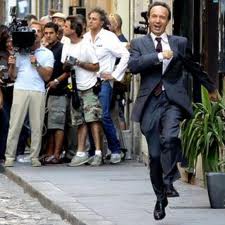
The fourth story is very funny and could well be Allen’s commentary on the making of celebrity by paparazzi. An ordinary citizen, well-played by the animated Roberto Benigni (Won Oscar for his role in Life is Beautiful), is turned into a celebrity for no apparent reason. He is chased everywhere by the paparazzi, interviewed on TV, asked the most trivial questions like what he has for breakfast, shaver or razor, boxer or brief… Uncanny parallels of what social media make of us, everyone can be readily exposed, everyone can be a celebrity if only one has enough followers. The simple lesson here is, they can drop you as quickly as they pick you up. Unfollow by just a click.

A breezy summer treat. The scenes may seem episodic but they are smoothly woven. Again here, the actors are the major assets, especially when you need to improvise as some scenes look like. Every character likable, and the overall effect enjoyable. Not epic but still an entertaining piece of Allen humor. After all, you don’t churn out an epic every year.

~ ~ ~ Ripples

***

A NOTE ABOUT MOVIE PHOTOS: These images are used according to the Fair Use guidelines for criticism, comment and educational purposes. CLICK HERE for more information. CLICK HERE to read the Report of the Ad Hoc Committee of the Society For Cinema Studies, “Fair Usage Publication of Film Stills” by Kristin Thompson.

***