Books to read in pairs

Often I find some books are better read together, back to back. They have similar settings or subject matter, and it’s always interesting to see the different perspectives and connections, intentional or not. A testimony to the six degree of separation.

Here are a few. Can you name some more from your reading experience?

Pachinko by Min Jin Lee and Forgiveness by Mark Sakamoto

Pachinko is a family saga set in a period of history that’s seldom told in North America, the first part of the 20th century in Korea and Japan. Annexation of Korea is to put it mildly, prelude to the Pacific War later when the Japanese army invaded her neighbouring countries during WWII. The sufferings of those in the frontline and those at home are vividly depicted in Sakamoto’s family memoir: his maternal grandfather as a prisoner of war in Hong Kong and later shipped to Japan as slave laborer, while his paternal grandmother and her family mistreated in internment right in their homeland of Canada. (detailed reviews coming up)

**

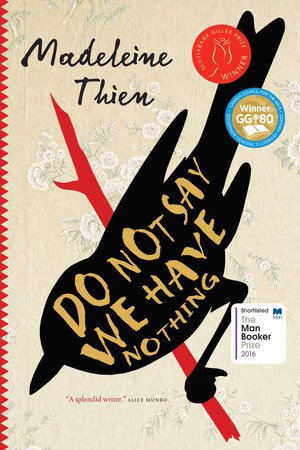
Do not say we have nothing by Madeleine Thien and The Noise of Time by Julian Barnes

Barne’s biographical vignettes of Russian composer Dimitri Shostakovich during Stalin’s reign is like a compendium to Madeleine Thien’s Do Not Say We Have Nothing which depicts the three choices one can make when confronting a ruthless, totalitarian Ruler. Thien’s fictional characters struggled to survive during Mao’s cultural revolution and the subsequent years. Speak truth to power, unfortunately, is not a viable alternative. Death and oblivion will be the certain and swift consequences.

**

Nutshell by Ian McEwan and Hamlet by William Shakespeare

McEwan’s modern day, in utero version of the Bard’s incestuous mayhem. Very perceptive, considering its from the voice of a baby in the womb.

**

Circling the Sun by Paula McLain, West With the Night by Beryl Markham, and Out of Africa by Karen Blixen

Don’t think of the accented Meryl Streep in the movie Out of Africa, just imagine the ‘real’ Karen Blixen, on her farm in Africa, a tough woman on her own most of the time, and then there’s an acquaintance (can’t say friend) Beryl Markham, a female aviator, equally pioneering, a Brit expat in Africa, doing more than the discovery of the land but also of the man in Karen’s life, no, not Robert Redford.

**

Mrs. Dalloway by Virginia Woolf and The Hours by Michael Cunningham

One day in the life of Mrs. Dalloway can have so much meaning under the pen of Virginia Woolf. The Hours are equally perceptive, internal depiction of three women in different periods of time. And throw in The Hours the movie after, an excellent adaptation and hauntingly worthy of Woolf’s literary style.

**

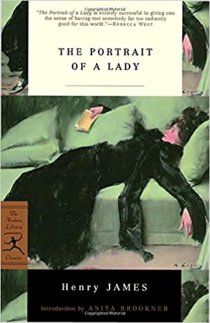
The Portrait of a Lady by Henry James, Mrs. Osmond by John Banville, and Middlemarch by George Eliot. 

Mrs. Osmond is Banville’s imaginary sequel to Henry James’s The Portrait of a Lady. Seems it all point to bad choices when the protagonist naive and a little too idealistic. I’m exploring how George Eliot’s Middlemarch may be a precursor to these novels of the young and restless and marital mismatch.

And here’s an invite, Middlemarch in May (makes a nice hashtag) is a read-along I’ll be joining with Bellezza and other readers. It starts in May, and it’s our intention to finish before summer, hopefully. Feel free to join us and explore the Dorothea Brooke connection to Isabel Archer, and I’m sure other delights as well along the way.

***


The Portrait of a Lady, Sequel, Remake(?)

The Portrait of a Lady by Henry James

First, thanks to Bellezza’s open invite to a read-along, posting the photo of John Banville’s newest book Mrs. Osmond, a sequel to The Portrait of a Lady by Henry James. I’d seen the 1996 movie adaptation directed by Jane Campion (The Piano, 1993), but had never read James’s novel. What better time to read both books than now.

The Portrait of a Lady

I got hold of The Portrait of a Lady (Modern Library, just love the cover) read part of it then turned to a sound recording (unfortunately couldn’t find the Juliet Stevenson narrated version). Prompted by JoAnn, I interspersed reading with listening and gleaned much pleasure doing that. Here’s my very short, 5-Star Goodreads review:

“Actually I was listening to the Blackstone Audio version of the book as well as reading  parts of the book to ascertain facts in the story or just savour the passages again. James’s portrait of Isabel Archer is one of the saddest fictional heroines I’ve come across. A reminiscence of Anna Karenina emerged as I read the latter part, but Isabel is a character much more likeable for me. Should she be destined to a ruined life due to a naive misjudgement, ok, maybe even foolishness, by marrying Gilbert Osmond? Osmond is evil personified, and I just can’t shake off the face of John Malkovich (from the movie) whenever I read about his cold, domineering hand over Isabel. Isabel definitely needs redemption and saving grace. So I do hope John Banville’s Mrs. Osmond will grant her that.”

The Portrait of a Lady by Jane Campion

Since the image of John Malkovich kept creeping up my mind as I read the book, I quickly turned to the movie adaptation right after I finished the book. I remember I was most disturbed by Osmond’s callous treatment of Isabel when I first watched it years ago; he appeared as a chilling, silent villain, bullying his innocent victim mercilessly. His stepping on Isabel’s floor-length dress to stop her from walking away was still vivid in my mind.

Nicole Kidman

Now as I saw the movie again, I find the feature more style than content. The tilted camera shots? A bit contrived. Malkovich is still evil, and Kidman still the innocent victim, but there isn’t much complexity in the characterization. The editing and much abridged dialogues leave a vacuum. Considering the rich descriptive prowess of Henry James, much is left to be desired in the film. Yes, I’m one who advocates for the appreciation of books and films as two different art forms, and should not be doing a literal comparison when judging the adaptation. Well, I’m not. I’m weighing the film on its own merits. Yes, set design is rich and some artistic shots, but overall pales despite the sumptuous colours. And, what happened to Nicole Kidman’s hair? As much as I’d appreciated Campion’s works, especially her Oscar winning (Best Original Screenplay) film The Piano, I do feel maybe it’s a good time to do a remake of The Portrait of a Lady.

Mrs. Osmond by John Banville

After the movie I turned right away to Banville’s book. Here’s my review on Goodreads:

Mrs. Osmond

“I jumped to this book right after reading Henry James’s The Portrait of a Lady. As I understand this new work of Banville’s to be a ‘sequel’ to James’s book, I had high expectations of the Booker winning author carrying Isabel Archer’s (Mrs. Osmond’s) story forward, taking her through twists and turns and eventually letting her find redemption and a new life. However this was not to be exactly as I’d envisioned.

Mrs. Osmond is divided into two Parts. Maybe for the benefit of those who haven’t read or reread The Portrait of a Lady in preparation for his book, Banville retells James’s story in Part I. While he’s very detailed in his descriptive style, and to his credit, creeping inside the minds of his characters, he repeats himself frequently in reminding his readers how Isabel Archer got deceived by Madame Merle and fell into the marriage trap of Gilbert Osmond’s. So basically the story remains static throughout Part I.

(Spoiler Alert in the following)

Part II leads us to Isabel’s own scheme of turning the tables on Osmond and Merle, and let them have a taste of their own medicine by just transferring the ownership of her residence the palazzo in Rome over to Madame M. and let the culprits be trapped with each other. That’s all there is to her plan, and it’s an expensive vengeance. As for her own dear life and its purpose for the remains of her days, the path is as obscure as before, albeit Banville has dropped a hint of the suffrage movement being a meaningful direction.

While Mrs. Osmond may not be as gratifying as I’d expected, this is an interesting concept, taking literary classics and imagining a sequel. Now that could lead to a brave new genre of fiction writing.”

A Movie Remake, anyone?

If there’s one, who’d you like to see playing the role of Isabel Archer? Gilbert Osmond? Madame Merle? Director?


***


Related Post:

Can a movie adaptation ever be as good as the book?


Jane Austen’s Persuasion: A Bath Walking Tour

As a tribute to the Bicentenary of Jane Austen’s death, July 18th, 2017 to be exact, I’m reposting my personal encounter with the city of Bath, Jane’s home for four years and the setting of Persuasion.

***

The second time I visited Bath, I was a more intentional traveller. I let Austen’s Persuasion be my guide.  With a detailed street map in my hand, I went exploring the places mentioned in the novel, many of them I missed in my first visit.

“I was not so much changed…” was Anne Elliot’s words to Captain Wentworth upon seeing him eight years after turning him down.  The termination of their relationship was not her own intention, but duty had driven her to yield to Lady Russell’s persuasion.  It would have been a “throw-away” for Anne at 19 to engage with “a young man who had nothing but himself to recommend him, and no hopes of attaining affluence, … uncertain profession, and no connections.” (p. 20)

But the star-crossed lovers are granted the bliss of a second chance, and rightly grab it this time. Austen’s setting of Bath in the book is no coincidence.  The Georgian City was the centre of fashion and the epitome of genteel society, a hotbed of social phenom for the critic and satirist in Austen. Jane had lived in Bath herself for four years, 1801 – 1805, with her sister Cassandra and their parents. Ironically, she was unpersuaded by its attractions according to her biographer Claire Tomalin.

Austen aptly uses Bath’s addresses for the purpose of her characterization. Geographical location is everything in a class-conscious society, as Keiko Parker’s excellent article Jane Austen’s Use of Bath in Persuasion points out.

First off,  there’s the Pump Room, where in Jane Austen’s days people socialized and met one another, gathered to drink the therapeutic water, catch the latest fashion, simply to see and be seen. The magnificent structure and decor makes The Pump Room a fine restaurant now:

Despite its grand decor, the areas around the baths are residences for the common folks in Austen’s time. Mrs. Smith, the poor, infirmed widow with whom Anne maintains a loyal friendship, lives in the Westgate Buildings close to the Baths. Anne becomes a laughing stock for the snobbish Sir Walter when he hears of her least favourite daughter is determined to visit Mrs. Smith instead of accepting an invitation to Lady Dalrymple’s, someone belonging to the upper echelon of society:

“Miss Anne Elliot, you have the most extraordinary taste! Everything that revolts other people, low company, paltry rooms, foul air, disgusting associations, are inviting to you.” (p. 113)

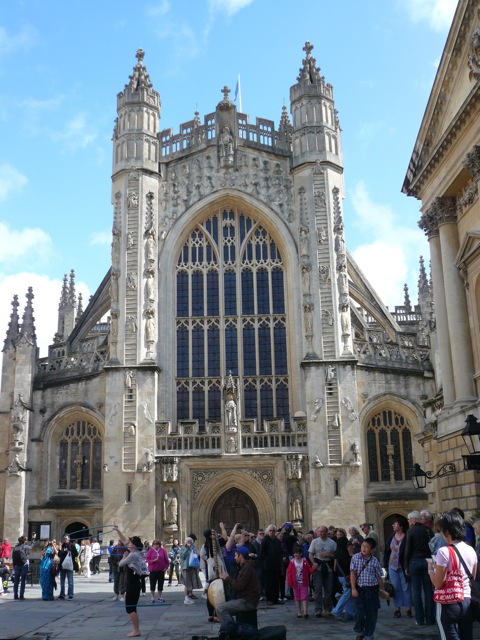
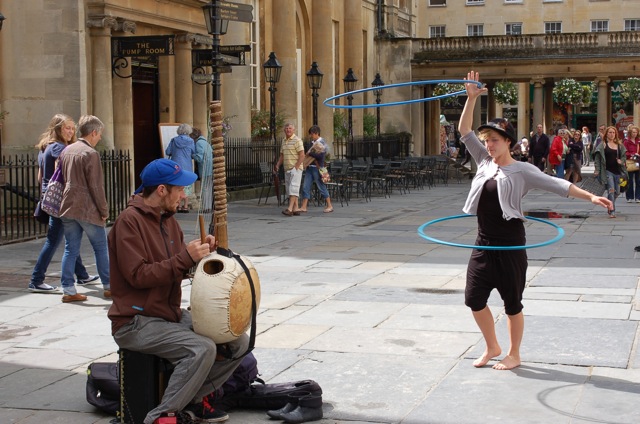
Today, the open area outside the Pump Room by the Roman Baths is perhaps the most popular tourist gathering place. Tour buses stop at the Bath Abbey for pick up and drop off, buskers perform in the open space outside the Roman Baths and Pump Room:

Nearby is Sally Lunn’s Bun, originated in 1680 by a young French refugee, in the oldest house of Bath, ca. 1482. Now a restaurant on top, the cellar a museum that houses the original kitchen and cookwares, Sally Lunn’s serves this traditional creation: a large, soft, round bun that can go with just about anything. But probably best like this, simply with garlic butter:

The beautiful street corner outside Sally Lunn’s:
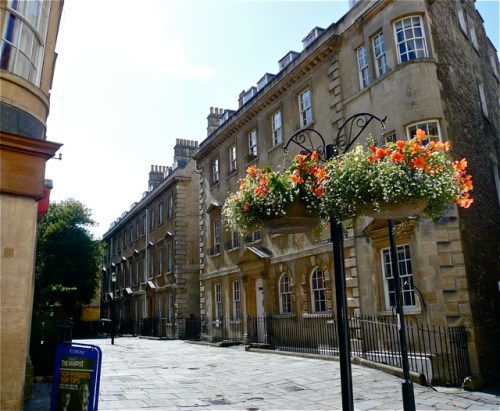
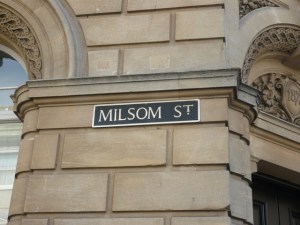
Further up the town, there’s Milsom Street, a vibrant commercial area of shops and businesses.  The first time Anne saw Captain Wentworth again in Bath was on Milsom Street.  Here’s a present day view of the same site:
.

As for Sir Walter himself, despite having to rent out his country mansion Kellynch Hall to avoid financial ruins, he has no intention that his retreat to Bath should compromise his status and comfort.  It’s only natural that others are curious: “What part of Bath do you think they’ll settle in?”  The answer is quite obvious: the part that is befitting their social standing.

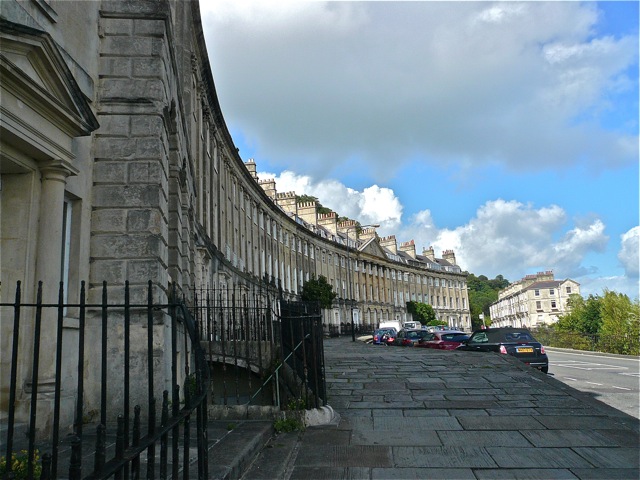
According to Keiko Parker’s insightful article, physical elevation in Bath directly corresponds to social standing. The highest point at that time would have to be Camden Place, which is today’s Camden Crescent. While I was looking for it, the ‘Ye Old Farmhouse Pub’ was mentioned to me as the marker. I was glad to find it while walking up Landsdown Road, for it was indeed quite an uphill walk.

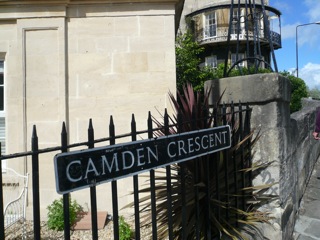
“Sir Walter had taken a very good house in Camden Place, a lofty, dignified situation, such as becomes a man of consequence; and both he and Elizabeth were settled there, much to their satisfaction.

Anne entered it with a sinking heart, anticipating an imprisonment of many months…” (p. 98)

Just typical Austen, the overt contrast of characters using something indirect, here, the sense of place.

The houses on Camden Crescent has unobstructive view of lower Bath.  They are not grand mansions, but then again, location is everything. The following are some of the houses found on this road across from the escarpment:

And where do Sir Walter’s tenants Admiral and Mrs. Croft lodge during their short stay in Bath?  On Gay Street, not too high, not too low: “… perfectly to Sir Walter’s satisfaction.  He was not at all ashamed of the acquaintance, and did, in fact, think and talk a great deal more about the Admiral than the Admiral ever thought or talked about him.” (p. 121)

Elizabeth is not even half as kind as her vain and snobbish father.  Regarding the Crofts’ arrival in Bath, she suggests to Sir Walter that “We had better leave the Crofts to find their own level.” (p. 120)

In contrast, Anne has a good impression of the Admiral and his dear wife, the kind and down-to-earth couple, Mrs. Croft’s being the sister of Captain Wentworth having minimal bearing on Anne’s fondness of them. During their sojourn in Bath to mend a gouty Admiral Croft, Anne enjoys watching them strolling together, “it was a most attractive picture of happiness to her.” (p. 121)

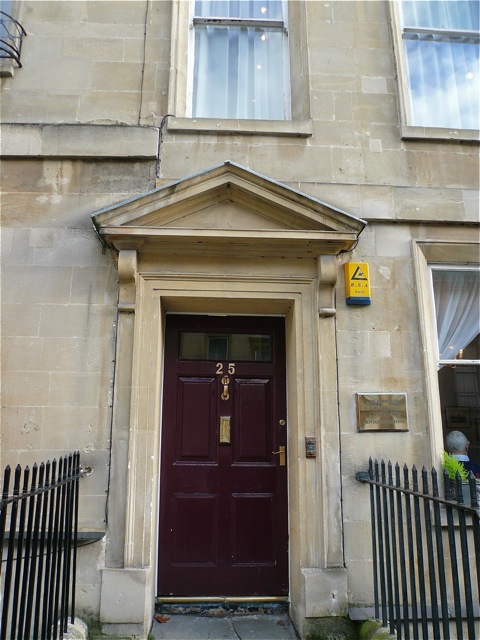
So I’m just not a bit surprised to see their temporary lodging in Bath being on Gay Street.  Who else had lived there?  Jane Austen herself: #25 to be exact:
As for a suitable place for socializing, Sir Walter and his favourite daughter Elizabeth choose the Upper Assembly Rooms, a much newer development closer to their upper, more fashionable side of town, although he would prefer entertaining in private which is even more prestigious.

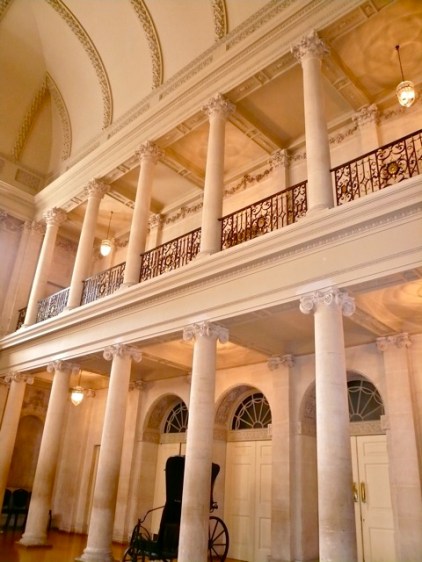
The Assembly Rooms are a magnificent architectural legacy in their own rights.  Designed by John Wood the Younger, who raised the £20,000 needed for the venture, the ground-breaking project began in 1769 and opened for public use in 1771.  It was the biggest investment in a single building in 18th Century Bath. Four public rooms made up the suite:  The Octagon, Ball Room, Card Room, and Tea Room.

“Sir Walter, his two daughters, and Mrs, Clay, were the earliest of all their party at the rooms in the evening; and as Lady Dalrymple must be waited for, they took their station by one of the fires in the Octagon Room (p. 131).

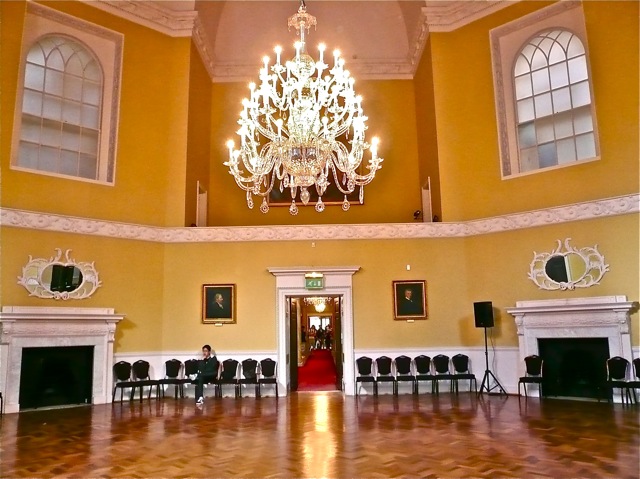
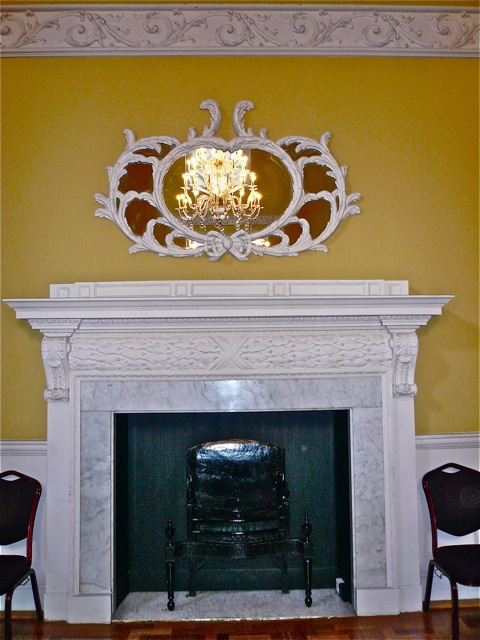
Here’s the exquisite Octagon Room:

Regarding the chandelier, there’s this interesting account in The Authorised Guide (p.7):

“On 15 August 1771 Jonathan Collett quoted £400 for supplying five cut-glass chandeliers for the Ball Room. They were up in time for the opening of the Rooms in September, but the following month disaster struck when ‘one of the arms of the chandilers in the Ballroom fell down during the time the company was dancing, narrowly missing  Gainsborough. What could be salvaged from the set was made up into a single chandelier, which now hangs in the Octagon.”

I was just simply amazed at how long these chandeliers had lasted, well over 300 years, and in excellent shape. Their brilliance had not faded, evolving from candlelight to gas, and now electric:

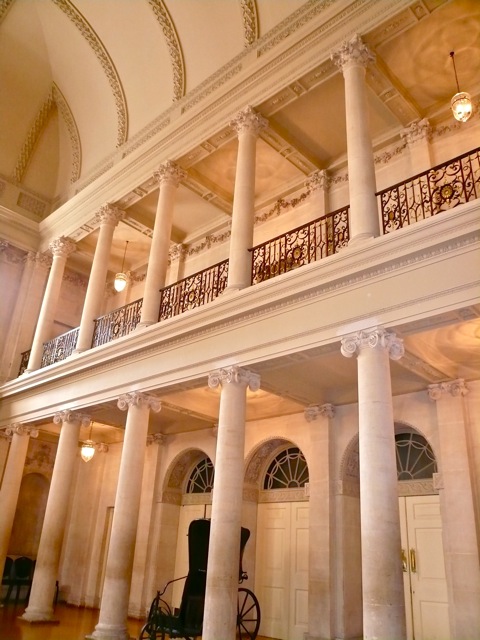
Anne and her party attend a music program in the Concert Hall.  That’s a function in the Tea Room. Despite the name which seems to convey a small and cozy setting, the Tea Room is a gorgeous room of 60 ft. by 43 ft. dimension.  On one end is a magnificent colonnade of the Ionic order.  Subscription concerts are regular events held in the Tea Room. Mozart and Haydn had written compositions to be performed there, with Haydn himself having graced the magnificent venue.
.
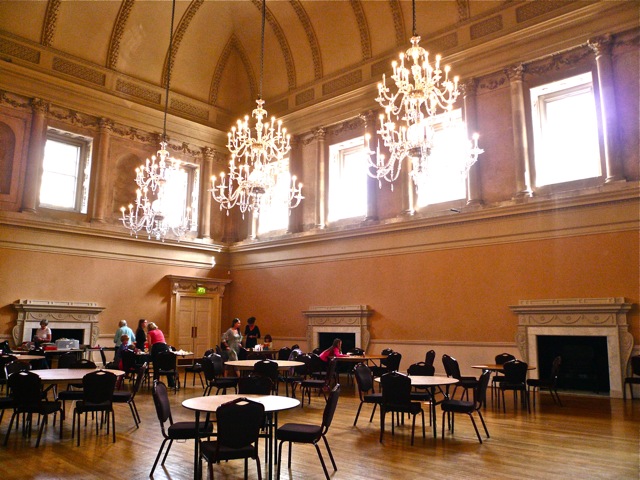
But what does Anne Elliot think about all the grandeur?  After earlier in the Octagon Room talking with Captain Wentworth, who has openly expressed his long-held passion for her, Anne, overwhelmed by a great flood of euphoria, now walks into the Concert Room (Tea Room):

“Anne saw nothing, thought nothing of the brilliancy of the room.  Her happiness was from within. Her eyes were bright, and her cheeks glowed; but she knew nothing about it.  She was thinking only of the last half hour…” (p. 134)

As a visitor to the historic venue, I was captivated by the well-maintained interior and its elegance, and presently amused and surprised to find this display in between two columns: The Chair, which is mentioned several times in Persuasion. The Bath Chair was invented right here in the Georgian City to transport the rich and the sick.  It could be steered by the passenger:

.

Jane might have noticed the frivolity and pierced through the façade of high society of the time with her critical eyes, but as a modern day tourist, I’m just amazed at how well history has been preserved, totally persuaded that Bath is a place I will definitely revisit some more in the future.

***

All photos taken by Arti of Ripple Effects, August 2010.  All Rights Reserved.

References:

1. Jane Austen: A Life by Claire Tomalin, Penguin Books, 2000.

2.  Persuasion by Jane Austen, The Modern Library Classics, Introduction by Amy Bloom, Modern Library Paperback Edition, 2001.

3. The Authorised Guide: The Assembly Rooms, Bath. Published by the Heritage Services division of Bath and North East Somerset Council in association with the National Trust.  Written by Oliver Garnett and Patricia Dunlop.

4. “What Part of Bath Do You Think They Will Settle In?”: Jane Austen’s Use of Bath in Persuasion by Keiko Parker.  Retrieved Online http://www.jasna.org/persuasions/printed/number23/parker.pdf

***

To join in the celebration of Jane Austen 200, I’ll have more Austen posts coming up this week.
Do Not Say We Have Nothing Book Review

April 3rd UPDATE: Do Not Say We Have Nothing shortlisted for the Baileys Prize.

***

First the Booker, then the Giller and the GG, and now longlisted for Baileys Women’s Prize for Fiction, this voice must be heard. I thank Asian American Press for allowing me to post my review here in full, and Penguin Random House Canada for my reviewer’s copy.

***

Just a few months after it was published in May, 2016, Madeleine Thien’s Do Not Say We Have Nothing was shortlisted for a Booker Prize and had won the top two Canadian literary awards, the prestigious Scotiabank Giller Prize and the Governor General’s Award for fiction. That is extraordinary achievements for the Vancouver born, Montreal based writer.

Thien creates her third novel on a large canvas, spanning from the decades leading to Mao’s Cultural Revolution in 1960’s China and onward to the Tiananmen Square protests and government crackdown in 1989. Even though her novel does not stem directly from a personal experience like others’ such as Dai Sijie’s semi-autobiographical Balzac and the Little Chinese Seamstress, or the eye-witness account of journalist Jan Wong’s Red China Blues, Thien’s outsider’s stance is far compensated by her extensive and detailed research, not just 20th Century history of China but down to the streets and local teahouses. Further, the absence of a first-person experience is replaced by an exuberance of imaginary characters and storytelling, all intricately woven with actual accounts of historical figures and events.

While not being an eye-witness, Thien’s cultural lineage could have brought her into a kind of insider’s realm. Born to Malaysian-Chinese immigrant parents in Canada, Thien’s previous writing had depicted the unique perspective framed by her upbringing. The stories in her collection Simple Recipes (2001) have revealed poignantly the cultural and generational conflicts that could exist in a North American Asian family. Further, Thien’s previous novel Dogs at the Perimeter (2011) had prepared her well to venture into the abyss of human atrocity, with the backdrop of Khmer Rouge’s infamous killing fields in Cambodia. Do Not Say We Have Nothing presents a larger landscape and a more ambitious undertaking than her previous works.

Madeleine Thien

This is how the book opens, simple yet powerful:

“In a single year, my father left us twice. The first time, to end his marriage, and the second, when he took his own life.”

Here we hear a voice, seemingly nonchalant, but still lucid and sad. This is the voice of the protagonist, Marie. She was ten years-old and living with her mother in Vancouver when she learned of her father’s suicide in Hong Kong. The year was 1989. Not long after this news, Marie’s mother took in nineteen-year-old Ai-ming from China, alien and undocumented, escaped out of the country during the Tiananmen crackdown.

Ai-ming’s short refuge in Marie’s home bonded the two like sisters. As well, she opened the eyes of young Marie to life inside a totalitarian regime. The radio played only eighteen pieces of approved music. Her father, Sparrow, would listen to illegal music secretly and hum the melody of his own composition when he thought no one was around. Ai-ming’s interactions with Marie have prodded her—now twenty years later and a professor of mathematics at Simon Fraser University—to search for the truth about her father Kai and his mentor, Ai-ming’s father Sparrow, as well the tragic personal and national history that had consumed their lives.

With Ai-ming’s help, Marie and her mother began to decipher a secret hand-copied manuscript Kai had kept, “The Book of Records”, passed on to him from Sparrow, an allegorical account of their life in China, outward journey and clandestine dreams, “things we never say aloud”. As a young child, Marie was overwhelmed. Now as an adult, she is driven all the more to pursue the truth of her own family history.

It is not easy to follow Thien’s story in the first few chapters as there are many characters introduced with their own backstory. Time frame switches back and forth, spanning two continents. As I entered Chapter 4, I had to draw up a character chart, as I was looking into a kaleidoscope of three generations and other colourful figures against tumultuous events. If the book had included such a chart at the beginning, it would be most helpful for readers.

We follow Marie’s discovery as she comes to learn that her father Kai used to be a gifted piano student at the Shanghai Conservatory of Music, and Sparrow, a prominent composer, was his teacher there. Together with Sparrow’s young cousin Zhuli, a prodigious violin student, the three forged an unspeakable bond. They cherished each other’s dreams with youthful fervors, which all were altered if not extinguished when Mao ignited his Cultural Revolution.

When she was small, Zhuli discovered by accident her parents’ secret storage where they hid their treasures of western classical music records and books. This led to her parents, Swirl and Wren the Dreamer, to be charged as counter-revolutionary. They were publically criticised and humiliated, then sent to separate labour camps in the remote northwest of China in the name of ‘re-education’. Zhuli was taken secretly to her aunt, Big Mother’s Knife, Sparrow’s mother, and there she grew up. The woman who brought her there had met her aunt only once while on the train. As she ate a lot of the White Rabbit brand candies, we know her by that name. The White Rabbit told Zhuli about her parents’ situation matter-of-factly:

“They’ve been sent for re-education, that’s all… Since you’ve never been educated at all, it seemed pointless to send you along with them.”

This is just one incident where Thien deftly dispenses humour amidst somber events. This is what makes the book enjoyable to read. The subtle humour often is the wrapping of the resilience of human spirit hidden among tragic happenings.

Thien’s story is embedded in historical facts. The prestigious Shanghai Conservatory of Music was shut down in 1966 during the Cultural Revolution, its five hundred pianos destroyed, denouncement and physical battering of the professors and students had resulted in deaths and suicides. Bearing the brunt of the persecution was the unyielding Conservatory President He Luting, beaten but not bent.

Due to their political affiliation, Sparrow’s parents Big Mother Knife and Ba Lute are spared, but what remains in Sparrow is a compromising existence, being sent to work as a factory work for twenty years after the shutdown of the Conservatory. Kai the pragmatist chooses to follow the mainstream and becomes a Red Guard. Young Zhuli sets foot on a tragic path.

With such a setting, it is only natural that Thien would use classical music as the leitmotif of her composition. Shostakovich, Beethoven and Bach are like witnesses to the unfolding of human atrocity, their melodies the fuel that sustains whatever internal fervour that remains. Shostakovich, himself a composer treading a precarious line between authenticity and self-preservation under Stalin’s rule, is an apt metaphor of the situation the trio have to face. The different choices made by Sparrow, Kai and Zhuli well represent the paths that are opened to an artist facing political persecutions.

On another note, and true to her Canadian root, Thein lets pianist Glenn Gould and his two recordings of Bach’s Goldberg Variations be a recurring motif in her story. Bach’s ethereal and invigorating theme and variations belong to Sparrow, the sustenance for his inner life despite deadening circumstances outside.

As the canvas is huge, Thien’s subject matters are numerous. The details and complexity may be a hindrance to readers’ enjoyment. Yet Thien’s voice is close and personal. Do Not Say We Have Nothing, the title taken from the workers anthem the ‘Internationale’, deserves our listening ears. As an instructor of the then newly established MFA Program in Creative Writing at City University of Hong Kong from 2010, Thien experienced first-hand the abrupt cancellation of the program in 2015 “as a result of internal and external politics” as stated in her Acknowledgement at the back of the book. In her article in The Guardian (May 18, 2015), she notes that students from the Program had published essays in support of the Occupy Central student-led democracy movement, the ‘Umbrella Revolution’, that brought Hong Kong to a standstill. That personal experience could well have informed and given her the potent, insider’s voice in her novel writing.

***

~ ~ ~ ~ Ripples


New Announcements of Books to Screen

Some exciting announcements of upcoming adaptations:

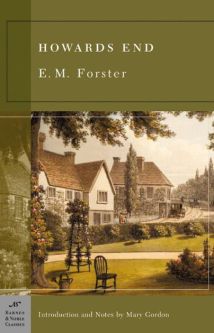
howards-end-by-e-m-forsterHowards End by E. M. Forster

E. M. Forster’s 1910 novel Howards End is to be adapted into a four-part TV miniseries produced by BBC and Starz, to be helmed by the Oscar nominated Manchester by the Sea director Kenneth Lonergan. Hayley Atwell plays Margaret Schlegel, Matthew Macfayden takes the role of Henry Wilcox, and Tracey Ullman is Aunt Juley Mund. I just can’t help but compare this new cast to that of the, shall I say, definitive 1992 Merchant Ivory production with Emma Thompson, Helena Bonham Carter, Anthony Hopkins and Vanessa Redgrave. Inimitable. Yet, I’m glad to hear of a rebirth of this brilliant E. M. Forster novel.

.

guernsey-literary-and-potato-peel-pie-societyThe Guernsey Literary and Potato Peel Pie Society by Anne Barrows and Maryanne Shaffer
At long last, the best-selling novel (2009) is finally adapted for the big screen, renamed Guernsey. Phew! While its popularity has subsided by now, I hope the movie will revive it, for it’s a delightful read and the characters are resilient residents on German occupied Guernsey Island during WWII. Written as a series of letters between a London writer Juliet Ashton and her friend and publisher Sydney Stark and later, with the charming Guernsey folks, the book exalts the power of reading, not potato peeling. How do you turn epistles into a movie? We’ll have to see. Downton Abbey‘s Lily James will play Juliet, after first Kate Winslet then Rosamund Pike dropped out. Hope this will go to completion. The director is Mike Newell, known for Great Expectations (2012), Mona Lisa Smile (2003), and perhaps the most memorable, Four Weddings and a Funeral (1994).

.

the-child-in-timeThe Child in Time by Ian McEwan

At last something to look forward to after Downton. Ian McEwan’s Whitbread winning novel (1987) about the perpetual trauma of a lost child will be adapted into a 90 min. TV drama co-produced by BBC and Masterpiece. Benedict Cumberbatch to star. With the Sherlock series going down an erratic rather than rational path, I hope this one is a more grounded outlet for Benedict’s superb acting skills, like his Parade’s End (2013). This is his second time in a McEwan novel. Back in 2007, he played a supporting role in the Oscar nominated Atonement, relatively unknown, stressing on the ‘relatively’. And hats off to actors who can navigate freely between the big and small screen platforms.


.

51p921wTKtL._SX308_BO1,204,203,200_ (1).jpg

The Sea Change by Elizabeth Jane Howard

Glad to learn that Kristin Scott Thomas (I’ve Loved You So Long, The English Patient) is stepping out from her long acting career into the director’s chair, and acting too in this adaptation of English author Elizabeth Jane Howard’s novel. While I haven’t read any of Howard’s works, I’d seen the screenwriter Rebecca Lenkiewicz’s, and that’s her screenplay for the Oscar winning Polish film Ida (2013). I highly anticipate Lenkiewicz’s new work. Glad she’s collaborating with Scott Thomas in her directorial debut. Mark Strong is said to be in talks to join the project. Of course, my dream cast would be Colin Firth with Kristin Scott Thomas.


.

crazy-rich-asians

Crazy Rich Asians by Kevin Kwan

According to director Jon Chu (Now You See Me 2), this will be “the first all-Asian cast feature from a Hollywood studio in a long, long time.” Umm… since Joy Luck Club (1993) that is. A risk or a good opportunity? Constance Wu (TV’s “Fresh Off the Boat”) is on board to play a major role. If you’ve not read the book, rest assure that with a title like this, it has got to be a satire, and not a get-rich-quick manual. Not that I’m crazy, nor rich, but reading Kwan’s imaginary yet true-to-life characters is an extravagantly wild ride. His astute and bold satire of modern day’s opulent Singaporean families (his own cultural background) is what Jane Austen would have loved to poke fun of if she found herself in a 21st century rich Asian home. But of course, just like the writing of our dear Jane of yesteryears, the heroine (Rachel in Kwan’s book) is your everyday middle class, highly educated yet modest gal growing up in (immigrant) America, finding (surprise!) that her boyfriend actually is Mr. Darcy incognito when she travels back with him to his family home in Singapore for the wedding of his best friend. I highly anticipate this one, but with great trepidations. They better make this work, or it could easily be a disaster of ethnic proportions.

***

Related Post on Ripple Effects:

Howard’s End by E. M. Forster
Ida’s Choice: Thoughts on Pawlikowski’s Ida
I’ve Loved You So Long movie review
The Guernsey Literary and Potato Peel Pie Society Book Review

Books to TV Adaptations

It’s a consolation that no matter how crazy the world spins, one can always retreat into books for respite. And film adaptations, when done well, can double the enjoyment. And now, there are TV mini series.

As if you need more suggestions to read this fall, here are some titles that are in various stages of development, but this time, not on the big screen but for TV. TV looks to be the next great realm to conquer, for even A-list movie stars and directors have started to cross over. It’s not surprising then that more books are being turned into TV miniseries.*

Here are a few upcoming titles:

The Luminaries by Eleanor Catton

the-luminaries

The 2013 Man Booker Prize winning novel is to be made into a six-part BBC drama series. Author Catton will be writing the adaptation herself. Six parts to put the 832 page book into perspective. Set in the New Zealand gold rush era, the Victorian mystery tale is a first for Catton in TV writing. Other than the longest book to win the Booker Prize, Catton is also the youngest winner at 28.
A thriller, suspense, with lots of characters and stories during the 19th C. New Zealand gold rush; sounds like a wealth of materials to turn into a TV miniseries.


The Miniaturist by Jessie Burton

The Miniaturist.jpg
BBC loves suspense thrillers. Here’s another one. The Miniaturist is British actress Jessie Burton’s debut novel that had sold over 1 m copies in 37 countries. Set in 17th C. Amsterdam, the story looks like a version of the movie Crimson Peak. A young bride married to a merchant trader is left in his huge mansion alone with his sister most of the time. Her wedding gift is a cabinet-sized replica of their home. A miniaturist comes in to create the items of the mansion in smaller, parallel version. Secrets begin to unveil as the miniature house takes shape. Sounds eerie.


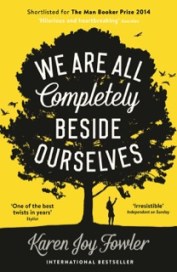
We Are All Completely Beside Ourselves by Karen Joy Fowler

we-are-all-completely-besider-ourselves-2


On this side of the Atlantic, we too have the Book into TV kind of phenom. HBO is turning Karen Joy Fowler’s Booker shortlisted, PEN/Faulkner Award winning novel into a miniseries. Now this one I’ve read, and I admit it’s quite incredulous a story. Natalie Portman is to produce and star and is ready to create a sisterly bond with a chimpanzee as they grow up together in the same home. That’s the storyline, but do they now have to train a chimp to star with her?


American Gods by Neil Gaiman

american-gods

Gaiman fans rejoice. A new TV series to come in 2017 based on his multiple award-winning fantasy American Gods, with the author writing the episodes. Gaiman is prolific in various realms and no stranger to TV productions. Many will likely remember his Coraline, turned into the Oscar nominee for Best Animated Feature Film in 2010. For TV, there are Dr. Who, Lucifer, Eternals and his short stories into miniseries. Now American Gods, old mythological super beings challenged by modern day gods in America; they exist as people believe in them. Their names: Media, Technology, Internet, …


Alias Grace by Margaret Atwood

alias-grace-book-cover.jpg

Canada will not be left behind. Our own wonder woman Sarah Polley, actress and director, is adapting the work of another prominent Canadian, Margaret Atwood. Alias Grace will be a six-hour miniseries to air on CBC-TV and Netflix. Polley’s previous adaptation of a short story by Alice Munro, retitled Away From Her, brought her an Oscar nom for Best Adapted Screenplay (2008). Alias Grace is in good hands then. Historic fiction inspired by a 19th c. double murder, the story is about a maid named Grace Marks who was convicted, had spent 30 years in prison, and finally exonerated.


Are you aware of other book to TV adaptations? Do fill me in and expand this list.

* See ‘Comments’ for clarification.

***

Reviews of Adaptations on Ripple Effects (for a complete list, click here):

Stillman’s Love & Friendship: More than Book Illustration

Brooklyn: From Book to Film

Life of Pi

Never Let Me Go

Away From Her

Can a movie adaptation ever be as good as the book?

Literary TIFF

The Toronto International Film Festival (Sept. 8 – 18) is just a week away. While many movie fans will be charging up their cell phones to catch some pics or selfies with the stars on the red carpet, Arti here at the Pond is interested in spotting the film adaptations of books, or those with literary interest.

This is a photo of the Toronto skyline from Lake Ontario on a hazy morning. Arti took the pic during TIFF14 two years ago. Yes, she’s heading there soon for TIFF16. So stay tuned for future posts.

Hazy Toronto Morning

Here’s a list of some literary titles at TIFF16:

A Quiet Passion 

Not based on a book but no short of literary interest. This is a cinematic biopic of the American poet Emily Dickinson. What’s more, it’s a new film written and directed by the venerable English auteur Terence Davis, who brought us such acclaimed works as Sunset Song (2015), The Deep Blue Sea (2011), and The House of Mirth (2000). Cynthia Nixon plays Emily Dickinson, with Jennifer Ehle as her sister Vinnie. Yes, that Jennifer Ehle. Love to see her in another period role but I know, hard to be rid of the Lizzy Bennet image.

American Pastoral 

Philip Roth actually has two movie adaptations of his books coming out this fall. One is Indignation (2008). The other is American Pastoral (1997), which won him a Pulitzer and was considered a seminal work in his oeuvre. Roth later won the Man Booker International Prize in 2011. The prolific author has long been regarded as the astute depicter of the 20th C. Northeastern Jewish-American psyche. Interesting fact of this adaptation is that it’s the directorial debut of Scottish actor Ewan McGregor, who will also take up the role of Roth’s famous character Seymour ‘Swede’ Levov. How well can he pull it off? Dakota Fanning and Jennifer Connelly co-star.

Julieta 

Based on three short stories by Alice Munro, Canada’s first Nobel Laureate in Literature (2013). Juliet is the protagonist of “Chance”, “Soon”, and “Silence”,  from Munro’s 2004 volume Runaway. So why the name Julieta? Well, these stories are being transported from a Canadian setting into Spain. The film is helmed by director Pedro Almodóvar, who is described as “the most internationally acclaimed Spanish filmmaker since Luis Buñuel” (IMDb). Almodóvar won an Oscar for his writing/original screenplay with “Talk To Her” (2002). Hopefully this adaptation is worthy of Munro’s source material. I’m curious to see how a totally Canadian story is transplanted into a Euro-Spanish milieu.


Certain Women

Another film adaptation based on short stories, this one by author Maile Meloy, from her book Both Ways is the Only Way I Want It (2009). The adaptation tells the story of three women and boasts a high calibre cast with Kristen Stewart, Michelle Williams, and Laura Dern. It is helmed by Kelly Reichardt who had directed Michelle Williams in Wendy and Lucy (2008) to critical acclaims. Last I read is that some elements of the stories had been altered to appeal to a contemporary audience.


Paterson

This 2016 Cannes Film Festival Palme d’Or nominee explores an interesting concept: A bus driver by day, a poet by night in Paterson, New Jersey. Can’t find a better named actor than Adam Driver to take up this unique dual occupational role. Writer/director Jim Jarmusch takes the helm. No stranger to Cannes, Jarmusch’s Broken Flowers (2005, remember Bill Murray?) won the Cannes Grand Prize of the Jury in 2005. The director’s versatility has brought us very different kinds of works throughout his career.


The Salesman

Since the 1990’s, several Iranian film directors have gained high praises internationally for their cinematic works. The recent death of Abbas Kiarostami is a loss on a grand scale for film art. Another distinctive figure is his younger friend and compatriot Asghar Farhadi, whose A Separation is the first Iranian film to win an Oscar (Best Foreign Language Film, 2012). After that Farhadi crafted another multiple-award-winner The Past (2013). This year he brings us The Salesman. The name is a big hint of its literary affiliation. The story is about the disintegration of a marriage as a couple perform Arthur Miller’s play Death of a Salesman as Willy and Linda Loman. Life imitates art, or vice versa? Farhadi is a master of probing conflicts in domestic relationships. At Cannes earlier this year, The Salesman won Farhadi the Best Screenplay and Shahab Hosseini the Best Actor award.

The Secret Scripture 

After a long wait, and a change in the cast, the film adaptation of Irish writer Sebastian Barry’s Booker shortlisted work is finally completed. In the book, the narrator is a 100 year-old mental hospital patient recalling her life. The old and her younger self are played by Vanessa Redgrave and Rooney Mara respectively. The director is Jim Sheridan, the six-times Oscar nominee who introduced us to Daniel Day-Lewis with the excellent productions of My Left Foot: The Story of Christy Brown (1989) and later In the Name of the Father (1993).


Unless

Born in Oak Park, Illinois in 1935 and after her marriage became a Canadian citizen in 1971, Carol Shields received honours from both countries and internationally as well. The Stone Diaries won the Pulitzer in 1993, among many other accolades, while Unless (2002) was shortlisted for the Booker Prize. Here’s the intriguing tale of Unless: a mother one day finds her runaway daughter living on the street and mute. Oscar nominated Catherine Keener plays the mother Reta Winter. Downton Abbey fans should note, Mr. Bates Brendan Coyle also stars.


***


Summer Reading

The remaining summer month isn’t going to be long enough for a slow reader like me to finish all the books I’ve started. There are 7 titles on Goodreads that I’m ‘currently reading’, one of them has been there since the Jurassic Period. Ok, maybe not that long, but I haven’t given up The Guermantes Way just yet, so I won’t delete it. I’m sure Proust understands, for there are more pressing matters.

First off, the horrific terror attack and mass murder in Nice sparked off an urge in me to, somehow, in whatever way, connect with France. It’s a bit late to participate in the blog event ‘Paris in July’. But since Nice, I’d started two France related books. And then there’s Germany, and now a priest inside a church while conducting mass…

Here are two titles I’m reading with European connection:

The Angel of the Left Bank: The Secrets of Delacroix’s Parisian Masterpiece by Jean-Paul Kauffmann

Angel of the Left BankThis enticingly thin paperback has been sitting on the shelf quietly for years. I’ve long wanted to read it although I’d no idea what it was about, one of the hand-me-downs from my son’s college reads. Now that I’ve started it, I know this one’s going to be a slow cook. Even though just 217 pages, I know I can’t rush it. Exactly as the title denotes, the book is about one painting, Eugène Delacroix’s (1798-1863) ‘Jacob Wrestling with the Angel’, a wall mural in the Chapel of the Holy Angels inside The Church of Saint Sulpice in Paris. Why did Kauffmann write about this particular painting? Why did Delacroix choose to paint this enigmatic episode of the Bible? Who is the ‘Angel’? I want to find out the hidden story behind the creation of this masterpiece. Apparently there are secrets to be told.  I’m most curious to see the epiphany that both the painter and the writer must have experienced relating to it. Simply put, for us who feel there are days wrestling means nothing close to a TV pseudo sports program, maybe this book could be an enlightenment.
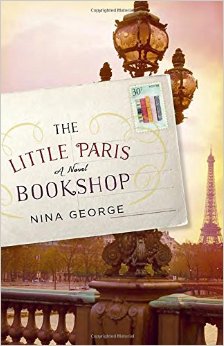
 

The Little Paris Bookshop by Nina George

Paris bookshopFirst published in Germany, now an international bestseller, The Little Paris Bookshop is a barge floating on the Seine River in Paris. Monsieur Perdu, the ‘Literary Apothecary’, is the owner. Now this is an interesting concept. M. Perdu prescribes books for any ailment his customers happen to be afflicted with. Bibliotherapy if you will. Not a bad idea. He has a book suggestion for everyone he encounters, so a clever way for German author Nina George to weave in her views on various literary works, her salutation to literature and reading. But of course, George isn’t just leading a book club discussion but telling a story. So she deftly brings us to learn more about M. Perdu’s past. While well-versed in bibliotherapy, M. Perdu has a wound that’s deep and sore, for he’s a victim of a lost love. Can the Apothecary heal himself? All signs point to a heartening, summer read.


Here’s one that I think I’ll finish first:

Words Without Music by Philip Glass

words-without-music-a-memoirThis one beats all my current reads in capturing my attention and interest. The contemporary composer Philip Glass (born 1937) is renowned as a ‘minimalist’ in his musical style, a label he frowns upon. Now about a quarter into Glass’s memoir, so mainly about his early life and the start of a career, I find what’s minimal is only the physical materials of life, the lack of money to pursue his dream. As for passion and talents, Glass is endowed with abundance, and the artistic milieu in which he immersed himself is astoundingly rich and fertile. Above all, the Bohemian living during his early days is idyllic. That’s why I’m mesmerized by his story, the pursuit of a dream driven by pure passion and inner drive.

Born in Baltimore to a middle-class, secular Jewish family, Glass left home at just 15 to enter the University of Chicago, majoring in philosophy and mathematics. After that, he knew he wanted a career, no, a life, in music, against the wishes of his mother and uncles, who ran a family building supplies business in his hometown and wanted him to take over some day. But Glass was determined to march to a different drummer. After Chicago, he went to NYC mainly to get into Juilliard, not knowing he wasn’t even qualified. So he started with an extension course to work his way in. Later as a full-fledged Juilliard student, he devoured every learning opportunity. He had earned his living doing all sorts of jobs, laborer, steel mill worker, taxi driver. Later to Paris, India, Glass shows us a life journey full of gratifying struggles and interesting encounters. What more, the memoir is a social history of the Beat Generation. Deeply immersed in the zeitgeist of the time, Glass’s personal connections with other musicians, artists, poets, writers, theatre actors and producers, and filmmakers make a fascinating insider’s story. His contact list a who’s who of the Beat Generation. Lots of ripples stirred up in me and definitely a future post coming.


This one patiently waits:

The Moviegoer by Walker Percy

The MoviegoerI had listened to the audio book a few years back, and wanted to reread it right away, but didn’t. After that, I forgot about it. By chance I saw it in the Bookstore at Regent College on UBC campus a couple months ago, I quickly took that single copy out from the shelf. There are few books I buy at regular price, this is one of them. I want to revisit it; with my own copy, I can write on the margin, and I know I will with this one. Despite the title, it has nothing to do with the glamour of Hollywood movies, or the pop entertainment culture of the day. Rather, this National Book Award winner (1961) is internal, reminiscent of European writers like Camus or today’s Tom McCarthy.
 

These two will take a while to get to:

The Truth According to Us by Annie Barrows

The Truth According to UsBarrows’ previous book is the wildly popular The Guernsey Literary and Potato Peel Pie Society published eight years ago. I’d enjoyed the lively characters in Guernsey amidst the troublesome setting of WWII, with the island occupied by German soldiers. Just curious to read children’s author Barrows’ first solo publication for adults. The Truth brings Barrows back to the home state of her aunt and primary writer of Guernsey, Mary Ann Shaffer, who died before completing the book. Family saga in small town West Virginia in 1938. If you’ve read this one, how is it compared with Guernsey? Should I even start it?
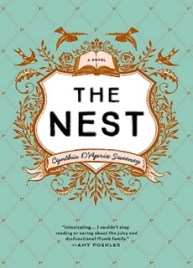


The Nest by Cynthia D’Aprix Sweeney

The+Nest+-+book+coverIf I want a breezy summer beach read, maybe I should start with this one. But this too can wait. I got it mainly because of the future film adaptation. Sweeney’s debut work reportedly fetched a 7-figure advance from Ecco; not surprisingly, film rights were snatched up soon after. What should be noted is: by whom? Well, as evidence of the booming book/movie enterprise, Amazon Film it is, and Jill Soloway (Transparent) will direct. Note also, just saying, here’s a book with Amy Poehler’s endorsement on the cover. Have you read it? Are you looking forward to its movie adaptation?

 

***

Related Review Posts on Ripple Effects:

Inside Llewyn Davis: A Serious Man in Greenwich Village

The Guernsey Literary and Potato Peel Pie Society

The Elegance of the Hedgehog

August: Osage County


I’m nobody! Who are you?

April is still here I’m glad. Here’s a timely piece to join in the celebration of National Poetry Month.

***

I’m nobody! Who are you?
Are you nobody, too?
Then there are two of us – don’t tell!
They’d banish us, you know.

How dreary to be somebody!
How public, like a frog
To tell your name the livelong day
To an admiring bog!

Emily Dickinson (1830-86)


DSC_0739

Oh the comfort of anonymity, no need to trend, to like or be liked, to climb the social media ladder, to reach new heights with more followers. Dickinson sure enjoyed her reclusive life, felt fine with being an unknown. Most of her poems were published posthumously, including this one.

***


In Other Words: Lahiri’s Reconstruction of Self

In Other Words book cover

A couple of years ago, I was surprised to read about Jhumpa Lahiri moving to Italy to live, even just for a few years. Author of four works of fiction – Interpreter of Maladies, The Namesake, Unaccustomed Earth, and The Lowland – at the prime of her writing and teaching career, having received the O. Henry Award in 1999, the Pulitzer in 2000, and her latest The Lowland shortlisted for the Booker in 2013, Lahiri decided to uproot her family and move to Italy to totally immerse in the Italian language. That means speaking, reading and writing in Italian.

In Other Words is Lahiri’s brave and candid account as a language learner. It compiles twenty-one essays and two short stories which she wrote in Italian. She uses the metaphor of swimming out into the lake instead of safely hugging the shore to refer to her Italian language learning experience. From her descriptions of the challenges and risks, the loss of anchor, the inability to express herself and be literate, let alone literary, the disorientation, the total humbling, her Italian venture is more like jumping off a precipice to billowy waters of unfathomable depth.

My hat off to Lahiri’s honest revealing of her frustrations and strive for a new identity; yes, after all, language is a major determinant of identity, one which is, unfortunately, superseded by one’s outer appearance and racial features. So it is heart-wrenching to read that despite her love of the Italian language, her total devotion to adopt it not just to live but as a tool of her trade as a writer, she is often seen as an outsider, a foreigner, barred from acceptance. Even when she speaks to Italians fluently in their language, they would respond to her in English.

English, that’s the rub. I was surprised to read that, while the author had achieved so much in her literary career as a writer in English, she chose to discard it to totally immerse in Italian. In the chapter entitled “The Metamorphosis”, she candidly admits that her writing in Italian (which she had been learning in America for some twenty years before) is a flight:

“Why am I fleeing? What is pursuing me? Who wants to restrain me?
The most obvious answer is the English language. But I think it’s not so
much English in itself as everything the language has symbolized for me…
It has represented a culture that had to be mastered, interpreted. I was
afraid that it meant a break between me and my parents. English denotes
a heavy, burdensome aspect of my past. I’m tired of it….”

Of course, that’s also the language that she loved, and succeeded with. The conflict in identity, first as an Indian immigrant with Bangali as her mother tongue, then as a writer in English who had garnered the Pulitzer Prize – an award that she felt she did not deserve – had shrouded her with unresolved tensions. Lahiri had felt deeply the tug of war between her parental heritage and adopted land. A rejection of both had silently crept in. Italian provides a way out:

“Italian offers me a very different literary path. As a writer I can demolish
myself, I can reconstruct myself, I can join words together and work on
sentences without ever being considered an expert. I’m bound to fail when
I write in Italian, but, unlike my sense of failure in the past, this doesn’t
torment or grieve me.”

Unbelievably surprising and honest, written in Italian and translated by The New Yorker editor Ann Goldstein, the bilingual book opens up to a dual English and Italian version. The short essays chronicle the progress of not only an insightful identity search and reconstruction of selfhood, but an invaluable personal documentation of second – no, additional – language learning journey. If this book was published a couple of decades earlier, I would likely have another topic for my thesis in my graduate work on second language learning; not only that, my view of English being the lingua franca, the language holding linguistic hegemony, would have completely changed as well.

After reading In Other Words and my surprising discovery of Lahiri’s ‘tormenting sense of failure’ with the English language (for all its symbolic meaning) or even her ‘undeserving’ feeling towards her award in her writing, I am relieved of a hidden burden. I don’t feel so badly about having had to constantly check and re-check my English: prepositions, idiomatic expressions, phrasal verbs usage, subject verb agreement… All the hurdles that confront me every time I write a post or an article. If Lahiri can be so candid about her frustrations and errors when it comes to language learning, why can’t I?

~ ~ ~ ~ Ripples 

***

My thanks to Asian American Press for allowing me to post my book review here on Ripple Effects. The last paragraph is added in just for my Ripple readers.

Related Posts on Ripple Effects:

 The Namesake by Jhumpa Lahiri: Book Review

The Namesake (2006, DVD): Movie Review

Unaccustomed Earth by Jhumpa Lahiri


The Outsider Visualized

Just finished rereading Albert Camus’s The Outsider (or, The Stranger, L’Étranger). For some reasons, I find these two photos which I took late last fall well represent my thoughts. Words may come later in another post; until then, these visuals will suffice.

The Outsider 2

IMG_3400 (1)

***

Top Ripples 2015

Here are the books and movies, experiences and encounters that I’d rated 4 Ripples this year. Click on the links to read my reviews.

**

~ ~ ~ ~ Ripples 2015 Movies

The Assassin 

Brooklyn 

Clouds of Sils Maria

Ex Machina

Mustang (Review upcoming)

Spotlight

**

Worthy mentions  ~ ~ ~ 1/2 Ripples

Bridge of Spies

The End of the Tour

Jafar Panahi’s Taxi

Leviathan

The Martian

Room 

Suffragette

Testament of Youth

**

At the Cineplex, I’d also enjoyed four National Theatre Live performances on screen direct from the London stage. All of these are memorable. CLICK HERE to read my post on the first three, and HERE for Hamlet:

The Hard Problem by Tom Stoppard

The View from the Bridge by Arthur Miller

Man and Superman by Bernard Shaw

Hamlet by William Shakespeare (with Benedict Cumberbatch)

**

As in years past, the number of books I’ve read is only about half of the films I’ve seen, a stat that I’d like to improve in the future. Here are the Top Ripples in books I’ve read in 2015, not all published in this year obviously.

Nora Webster by Colm Tóibín

Brooklyn by Colm Tóibín

Satin Island by Tom McCarthy

The Age of Innocence by Edith Wharton

Beware of Pity by Stefan Zweig

The Post Office Girl by Stefan Zweig

Terrapin: Poems by Wendell Berry

Leavings by Wendell Berry

Slouching Towards Bethlehem: Essays by Joan Didion

**

Here, I must mention my 4 Ripple Experience: Fall Foliage Road Trip across four New England States two weeks in Sept/Oct., prompting me to write 10 blog posts when I came back. Starting here.

Kancamagus Hwy

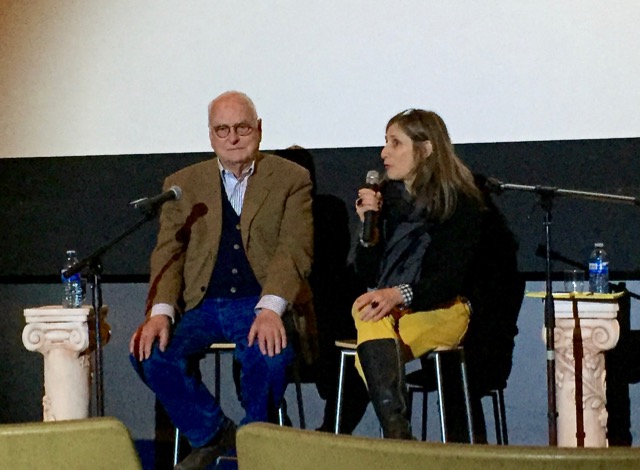
Another 4 Ripple Encounter is attending the Merchant Ivory Retrospective in December. I’d never thought I could actually see director James Ivory in person. And so I did. It was fascinating listening to the 87 year-old, legendary director who’d brought us A Room with a View (1985), Howards End (1992), The Remains of the Day (1993), and many other literary to film adaptations talk about the working dynamics of Ismael Merchant, writer Ruth Prawer Jhabvala and himself in the creative process.

Here’s a photo of the occasion, a Q & A session with film critic Katherine Monk after the screening of Heat and Dust, adaptation of the Man Booker winning novel (1983) by Ruth Prawer Jhabvala:

James Ivory1


And that’s a wrap for 2015.


***

Related posts you might like to read:

Howards End by E. M. Forster

The Merchant Ivory Dialogues 

Ruth Prawer Jhabvala: A Tribute to Rootlessness

Can a Movie Adaptation Ever be as Good as the Book

***