‘Certain Women’: To Connect on a Vast Landscape

The common denominator is the landscape: Montana. Open country, clear, fresh air. The expanse of space could mean the freedom to roam. As we look into the four female characters, however, the vastness of the landscape and the cold winter could infer separateness and the need for connections. In the internal landscape, an assertion of self.

Director Kelly Reichardt (Wendy and Lucy, 2008) has chosen three short stories by Maile Meloy to form a cinematic triptych. Meloy’s stories are lean and succinct. Correspondingly, Reichardt’s style is minimal as with her previous works. She brings together three loosely linked stories that can stand on their own. To review them in a succinct way, I’ll use three words as my focal point for each.

Certain Women.jpg

Authority

Laura (Laura Dern), a woman lawyer in Livingston has to deal with a disgruntled client, Fuller (Jared Harris), who was injured in his construction job. As he has accepted a settlement, he can have no further claim for tort. Laura has explained this to him time and again, but he refuses to believe her until one day, they drive a few hours to another town to seek a second opinion from a personal injury lawyer, a male. As Fuller listens to the lawyer stating the same reason as Laura has been telling him all along, he just says ‘Okay’ and seems to accept the fact. Laura laments: “If I were a man, I could explain the law and people would listen and say ‘Okay.’ It’ll be so restful.”

A few days later, a hostage-taking incident occurs in the middle of the night, and Laura is called by the police. It’s Fuller taking a security guard hostage at a government office and wants her to go in to read him his file regarding compensation. Laura goes in and calmly diffuses the tense situation. The incident sends Fuller to prison. He seems content when Laura visits him. Laura finds a changed and much calmer Fuller. He appreciates her visit, and just wants an occasional letter from her to keep in touch. Laura does have authority after all, albeit may not be as she has hoped in the professional front. Her influence rests on her considerate demeanor making an impact on a personal and human level. And for this, Fuller learns to appreciate.

Authenticity

A city woman Gina (Michelle Williams) wants to build a country dream house, not to move in but as a weekend home. She has her eyes on a pile of sandstones that belong to long time resident of the land, Albert (Rene Auberjonois). The sandstones hold the history of the area, for they are from the original school house. We see the cracks in Gina’s relationship with her husband Ryan (James Le Gros) as they try to smooth-talk Albert, Gina seemingly caring but assertive in what she wants, while Ryan is apologetic and conciliatory. Why would a city woman want a pile of old sandstones for her country home? For authenticity, Ryan tells Albert. Ouch, is that supposed to be helpful or is he being sarcastic? Further, their daughter Guthrie (Sara Rodier) seems to be harder to placate as she is dragged along to the country reluctantly. The crevice in the mother-daughter relationship looks to be a tough fissure to fix.

Alienation

The most moving segment comes last. A young lawyer Beth Travis (Kristen Stewart) has to drive a few hours several nights a week after work from Livingston to Belfry to teach a night course on school law, a prior commitment before she found her present job. At the night class, she encounters a ranch hand, Jamie (Lily Gladstone), who drops in out of curiosity. The short moments of sharing as she accompanies Beth to a diner after class for a meal before she drives back home stir up deep longings. Gladstone’s restraint is particularly moving. Nuanced performance from both.

While she may be adroit with horses, it’s a human connection that Jamie yearns for. She comes to every class until one night, the students are told that the class will be taught by another teacher as Beth has quit due to the long drive. Eager to look for her, the ranch hand drives to Livingston to search for a lawyer named Beth Travis. What follows is an aching attempt to reach out towards an unrequited end. The last scene of the same horse-tending routines Jamie gets back to speaks poignantly. Life goes on despite…

~ ~ ~ 1/2 Ripples

***

Source materials: Short stories by Maile Meloy “Tome” and “Native Sandstone” from the collection Half In Love, and “Travis, B.” from Both Ways is the Only Way I Want it.
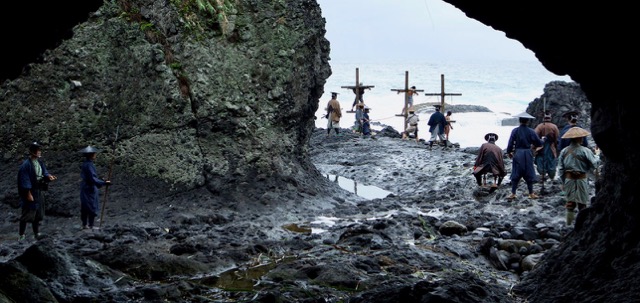
Voicing out for ‘Silence’ and other adaptations

It’s a bit sad to see Martin Scorsese having had to defend the cinema. He wrote the piece in the May 31 issue of The Times Literary Supplement in response to the review of his film Silence by the novelist and literary critic Adam Mars-Jones. It is telling that the director didn’t write a defence of his film, but cinema itself.

Here’s the contentious viewpoints of Mars-Jones’s review, entitled “Subtle absolutisms”:

The transposition of a novel like Endo’s Silence into film, however “faithful”, can only amount to a distortion, an exaggeration overall however many elements of the book are represented.

and this:

In a book, too, reader and writer collaborate to produce images, while a film director hands them down.

Really? Is a movie, and in this case, Scorsese’s adaptation of Japanese writer Shūsaku Endō’s novel Silence, a piece of “subtle absolutisms” as Mars-Jones’s title suggests? Do viewers in the theatre have no say but to receive from whatever mood or themes the director hands down to them, devoid of ‘collaboration’? Has the director presented to us – subversively as the title implies – his interpretations and we remain as the silent, passive, unthinking targets?

We’ve heard it before, haven’t we, that a movie leaves no room for the imagination. We can see it all, so explicitly displayed, in actions, colour, and mood, while readers reading a book interact with the book author to create a mental picture as they read, exercising their imagination.

Silence (1)

Any regular visitor to the Pond knows Arti disagrees with such criticisms. Even a two-dimensional painting can evoke in viewers a myriad of responses, let alone moving pictures. And how we interpret and interact with such sequential, moving images can be as diverse and subjective as our personalities and life experiences.

If as Mars-Jones says “those images [have] their predetermined progress in a darkened space imposes mood insistently” and if Scorsese embeds his ‘subtle absolutisms’ so ingeniously, the film should bring out very similar responses, predominantly one, as Mars-Jones has concluded: “desolation.”

But as one who dwells in a liminal, in-between space of two cultures, I’ve come across very different reactions to the film Silence. Such could well be said are the results of internal collaborations viewers have had while experiencing Scorsese’s visual storytelling. Indeed, the film has aroused different responses across cultures.

Among Western critics, it’s usually the aesthetics, acting, cinematography, and mood that are the key features noted, as with Mars-Jones’s review. Many point out they’d like to see the roles reversed with the two actors Andrew Garfield and Adam Driver. Many have noted that the film is being ‘faithful’ to the book, however, falling short of discussing the significance of such ‘faithfulness’.

This is an important point when reviewing the film. I usually do not seek how faithful a film is to its original literary work, for the two are totally different art forms, each expresses in its own terms and the appreciation of such should not be measured using the same criteria. When it comes to Scorsese being ‘faithful’ to Endo’s descriptions and narratives, unlike Mars-Jones’s critique of ‘exaggeration’, I find the director is unusually restrained here. He follows closely with Endo’s narratives, his treatment of the persecutions of Japanese Christians poignant and heart-stirring, inferring meaning rather than exposing gratuitous images. All such restraints point to Scorsese’s admiration and respect for the author and his work. At times, I feel Endo’s writing even more graphic.

On the other hand, among Asian viewers, especially among Chinese Christians (overseas and in Hong Kong), the film stirs up deep, theological resonance. Many have shared their heartfelt responses in the print and social media, heated debates ensue among believers, and even from the Sunday pulpit. The film’s characterization emerge as the prime subject for debates: Is Father Rodrigues a true Christian? Can apostasy be pardoned in the face of coercion? What does the last scene tell us about Rodrigues? Can one lead a two-faced, dichotomized life of faith like the hidden Japanese Christians? Or with some, the film has prodded the reflexive to see oneself in the Judas character Kichijiro. A call for empathy for those under authoritarian pressures to give up their faith appear to be an unexpected result, albeit the other side would push for perseverance no matter what.

Rather than the overhanging cloud of near desolation as Mars-Jones points out, the film had stirred up ripples of vibrant discussions around the issues of salvation, suffering, apostasy, betrayal, denial, and redemption. Many of the views I’ve read reflect a pleasurable gratitude as having indulged in a thought-provoking film well made, their faith energized as they ponder on soul-stirring applications to their life.

Perhaps there’s a Roland Barthes parallel here. The death of the author comes after a piece of work is written, for it has reached its destination. Now it’s the reader’s turn to interact and give it meaning. Maybe it is so with film as well. As the director completes his production, it is given a new state of being when it is screened. As viewers interact with it, interpreting and extracting personal meaning, appreciating those elements that strike a chord with their own life experiences, they’re giving life to it in the cinema of their minds.

***

RELATED POSTS ON RIPPLE EFFECTS:

Reading the Season: Silence by Shusaku Endo

Silence the movie arrives in the most unwelcome time

Can a movie adaptation ever be as good as the book?


Two Films for Thoughts at Easter

I’ve tried different words for the title: Two films for the uninterested, indifferent…

So you think Easter is too maudlin an occasion for you. You’re not fond of bunnies, nor church services, and this talk about death and new life has become too clichéd. That’s ok. How about watching a couple of films? No, not Mel’s Passion, you know how the story goes. Something different.

First is a rather tame one. Previously on Ripple, I’d written about the book by Georges Bernanos’s The Diary of A Country Priest (1936), here’s the film adaptation (1951). Watch it for its artistic values and for the appreciation of a French film legend, Robert Bresson.

Robert Bresson is one of the most influential figures in French cinema. The acclaimed New Wave director Jean-Luc Godard once noted: “Robert Bresson is French cinema, as Dostoevsky is the Russian novel and Mozart is German music.”

I know, Austrians would say Mozart was Austrian, but this just shows his influence has crossed borders. Same with Bresson, who is acclaimed as one of the forefathers of the French New Wave, even though his style is not experimental. Swedish iconic director Ingmar Bergman had specifically cited Diary of a Country Priest as influence for his Winter Light.

Do note this: Bresson was a professed agnostic. His adapting a work by the Catholic writer Bernanos shows the moving power and the universal appeal of the book. The parish of Ambricourt in the story is a microcosm of the human world. The seemingly placid village hides a spiritually barren landscape and a cocoon of malice. The young priest, an unwelcome alien, is barred from entry into the inner world of its residents.

the-gate-of-le-chateau

Watch for its cinematography. Watch for its symbolism. I won’t go into details again. CLICK HERE to read my full review after you’ve finished this post.

***

A 1951, black and white film may not pique your interest. Here’s a modern version, and a word of warning: Definitely not for the faint of heart.

Calvary.jpeg

Calvary, the acclaimed 2014 Irish film written and directed by John Michael McDonagh (The Guard, 2011). It won the Prize of the Ecumenical Jury at the Berlin International Film Festival that year among other accolades, and Brendan Gleeson garnered several Best Actor awards in the festival circuit.

Unlike the young priest in Diary, Father James (Brendan Gleeson) chooses to enter the priesthood in his middle age. He was married before, now a widower, has an adult daughter Fiona (Kelly Reilly). He has his past, but has made a clean start, to serve with integrity in an Irish rural town. Like the young priest in the French town of Ambricourt, Father James’ sincerity and total commitment is met with ridicule and hostility, albeit on the surface, the town folks seem to be relatively friendly to him.

How has the world changed since Bernanos’s time? Plenty, not just for the way people conduct their lives, but the Catholic Church has left a tarnished image of sexual abuse.

The opening scene sets an ominous overtone of what’s to come. It is Sunday, Father James sits in the confessional. On the other side a man tells his story explicitly of being raped by a priest when he was seven years old. That horrifying experience lasted for five years almost every other day, rendering him irreparably damaged. He utters a death threat to Father James: one week later he will meet him on the beach and he will kill him.

Why kill Father James? He’s an innocent priest, a good one as a matter of fact. The man says: “There’s no point killing a bad priest. But killing a good one? That’d be a shock. They wouldn’t know what to make of that. I’m going to kill you cos you’ve done nothing wrong.”

Retribution for the crimes of the Catholic Church? Resolving personal bitterness? Administering justice?

A startling opening that turns into suspense as the film progresses. Father James recognizes the voice. He knows who he is, but we as audience don’t. The director leads us to look into the lives of several characters, allowing us to ponder who it is that wants to kill the priest. Sounds familiar? “Lord, who is it?” But Father James knows, and he still treats the man with a pastoral heart.

“I’m going to kill you cos you’re innocent.” Every day of the week, Father James lives with that threat. Each passing day sends him closer to the hill called Calvary. But Father James goes on with his work, caring, being a friend, ministering, including to his own daughter who has recently attempted suicide. He is heartbroken; she feels she can go on now knowing he cares.

Not saying that he’s a saint. How can you live with such a threat from a man who seems to mean business. Father James is all too human… and that’s the side that appeals. To say it’s been an eventful week is an outright understatement. Things just get too personal, and Father James copes with all the wits he can muster. He needs not turn water into wine, there’s plenty around. He waits. We wait.

Then Sunday comes. He prepares himself and heads to the beach.

The very last scene is one of the most heart-wrenching endings I’ve seen, and it’s not at the beach, not with Father James.

It’s about the ripple effects of Calvary: one man bearing the sins of all.


~ ~ ~ ~ Ripples
for both films

***

Related Posts on Ripple:

Robert Bresson’s Au Hasard Balthazar (1966): A Timeless Parable

Ida’s Choice: Thoughts on Pawlikowski’s Ida (2013)

Homage to Flannery O’Connor: Looking for Intrusions of Grace in Films

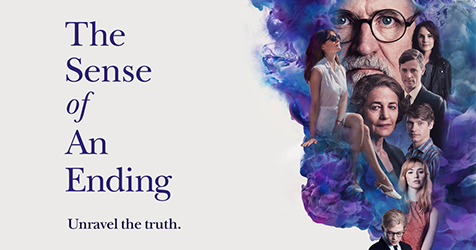
The Sense of an Ending the Movie

When I first knew that The Sense of an Ending was being adapted into a movie, I thought whoever that took up the project had a tall order. That it’s a Booker Prize winner automatically adds pressure and expectations, but the more important consideration is the nature of the book, introspection saturated with internal dialogues.

The novel is powerful and intense in that, in merely 150 pages, Barnes has dismantled the scaffold of self-knowledge in his protagonist by challenging the accuracy of his memories. The eerie effect is, that can happen to us too. How accurate are our memories of ourselves, of others, of events in our life? It’s crucial because what we remember about them build up the person who we think we are today.

So, who had taken up this difficult task to helm the movie? It’s Ritesh Batra, the Mumbai born, Indian director who brought us the interesting film The Lunchbox (2013). Batra has an excellent cast to work with, that should have made his job a bit easier. But one can see he follow the script pretty closely and that’s what made me wish there could be more stylistic touch. Similarly, the screenplay by Nick Payne could have been spiced up a bit. However, its being overall loyal to Barnes’s novel, except a few addons, may have cleared up some ambiguity for the reader.

The Sense of an Ending

In his old age, Tony Webster (Jim Broadbent) received a registered letter notifying him of a small inheritance from someone he had known way back in his university days. The money isn’t the important thing, it’s the diary that is supposed to go with it that opens up a door to his past. And so begins the story. Tony has to rethink everything about himself (younger played by Billy Howle), his first love Veronica Ford (younger played by Freya Mavor), Veronica’s family, in particular his mother Sarah (Emily Mortimer), and his school friends Adrian Finn (Joe Alwyn, who plays Billy Lyn in Ang Lee’s 2016 movie).

There are hits and misses in this adaptation. Broadbent delivers a solid performance as the clueless Tony Webster, a man who has lived all his life lacking the lucidity of seeing himself and others in the proper light, or is it selective memory? The little bit of addon is good, letting Tony set up an old camera shop to get him out of bed everyday. It’s also a good link because when he first met Veronica, she was toying with one, and he had received one from her as a gift as well. Herein lies the linkage of the object with the distant past.

Tony has his ex-wife Margaret (Harriet Walters) to thank, for she humours him by meeting him time and again just to listen. She may be doubting what Tony is telling her, but she is patient and wait for him to slowly rediscover himself. That’s what a good listener does, isn’t it, she helps you question yourself.

Adding the plotline of Tony’s daughter Susie (Michelle Dockery) giving birth to a baby is effective. Those who miss Downton Abbey would be glad to see Mary Crawley again, in a new role. But the real effect here is that her giving birth to a newborn son leads me to appreciate the title of the book, something that I did not quite get when I was reading. I wondered about the relevance of the book title when I was reading it. The movie’s last scene clears this up for me. After all these years of misinformed self-knowledge, Tony finally comes to the end of a chapter in his old age, still not too late. With the renewed relationship with his ex Margaret, and a new grandchild, Tony is ready to call an end to a clueless life and start anew. Once more, with feeling.

The weakest link I feel is with the elderly Veronica character played by Charlotte Rampling. It’s a missed opportunity for the director to draw out more from this veteran actor. Unlike in the book, which depicts an absolutely frustated Veronica, possibly traumatized by what had happened to her in life, finding Tony not understanding a bit about the past. “You just don’t get it, do you?” Exasperated, she has said this several times in the book, if my memory serves me correctly.

So here in the movie, the most crucial scenes ought to be Tony’s meeting with the older Veronica for the first time after all those decades and Veronica seeing Tony still oblivious to what had happened. But no, we see an utterly aloof Veronica, too calm for those tense cinematic moments. “You just don’t get it, do you?” has not been said even once, if my memory serves me correctly.

And the most crucial line in the pub when Tony finds out the truth, it ought to be the climax but the scene is so understated that any built up has been eroded. Now he gets it, and what reaction does he show at the moment and afterwards? I feel it’s the director’s job to augment the moment, and let it ripple into the next sequences. I’m sure the cast can easily oblige. Just for the sake of eliciting more emotional engagement from the viewers. I remember how sensational it felt when I came to that part in the book.

Overall, it’s a pleasure watching these veteran actors in the same production. Together with the above-mentioned cast members, there are also Matthew Goode, the history teacher, but not in a scene with Michelle Docerty, and Merchant Ivory star James Wilby playing the small role of Veronica’s father.

That it is shot on location in London, especially watching Tony meet Veronica again on “the wobbly bridge” leading to Tate Modern is particularly poignant in light of recent events. Overall, a watchable adaptation to go with the book.

~ ~ ~ Ripples

***

Related Posts on Ripple Effects:

The Sense of an Ending Book Review

The Lunchbox Movie Review

The Salesman: A Timely Film

It’s time we get used to reading subtitles.

The Salesman is one of five nominees for Best Foreign Language Film in the upcoming 89th Academy Awards on February 26. Due to the executive order banning travellers from seven Muslim countries, Iranian director Asghar Farhadi will not be attending. The director has indicated he will not accept any exception made for his case. Co-star Taraneh Alidoosti has stated she will boycott the ceremony as a protest.

Whose loss is it that Asghar Farhadi is banned from coming to the Academy Awards?

After the untimely passing last year of Iranian auteur Abbas Kiarostami (Certified Copy, 2010), Farhadi continues to carry the legacy of fine Iranian filmmaking with international accolades. Starting with About Elly, which he won Best Director at Berlinale in 2009, Farhadi went on to capture both the Oscar and the César Award in France for Best Foreign Language Film with A Separation (2011). The Past (2013) brought him two Cannes prizes. His newest work The Salesman won a Best Screenplay for the writer/director and a Best Actor award for his star Shahab Hosseini at Cannes last year. Now North American viewers have a chance to see this engaging family drama.

thesalesman_poster_2764x4096-copy

The story starts off with an evacuation of an apartment building on the verge of collapsing. A couple, Emad (Shahab Hosseini, A Separation, About Elly) and Rana (Taraneh Alidoosti, About Elly) are among the anxious residents fleeing the building. We can see large cracks on the wall in their bedroom. Responding to the shout for help, Emad diverts to his neighbor’s unit to carry his adult, mentally ill son on his own back to go down the stairs. A seemingly spontaneous move in the rush of evacuation, Farhadi lets us see an act of kindness from his main character.

A friend offers Emad and Rana a recently vacated apartment unit to stay. Its previous tenant still has her belongings stored in one room. She has left in haste, a shady figure who has frequent male clients coming to her unit. Emad only learns of this after a violent incident that happens to his wife. Rana is alone in the unit one night. She leaves her apartment door ajar for Emad, thinking he will come home soon while she steps into the shower.

Emad returns home to see traces of blood on the stairs and soon learns that his wife has been taken to the hospital emergency by neighbors. We as viewers do not know exactly what has happened but can conjecture by the circumstance. We see a traumatized Rana with stiches on her forehead. She is released to recover at home, but refuses to let Emad call the police. Later, as Emad discovers a cell phone and a set of keys left by the intruder, he decides to investigate on his own and takes matters into his own hands.

Since the incident, husband and wife begin to drift slowly apart, Rana being reticent and Emad vigilant. Here we see Farhadi’s signature cinematic handling: incisive depiction of domestic tensions shrouded in Hitchcokian suspense. We soon forget we are watching an Iranian couple living in Tehran. As with his previous works, Farhadi is effective here in engaging his viewers and to elicit empathy for both the husband and the wife despite their very opposite response to the attack.

Emad and Rana belong to a local theatre group. They are presently rehearsing for a run of Arthur Miller’s Death of a Salesman, playing Willy and Linda Loman. Farhadi deftly intertwines the on-stage and the real-life couple with intricate parallels. In the play, we see the demise of Willy Loman and the end of a relationship; in their real life, we see Emad and Rana’s marriage deteriorate, and a demise of a different kind for Emad. The cracks on the wall above their bed at the opening scene is now an apt metaphor, their once close bond slowly crumbles.

Actually, there are two plays involved in the film. The obvious one is Miller’s. The other is easy to miss. During the day, Emad is a teacher. In one scene, we see him teaching a play called The Cow, a work written by the prolific Iranian writer Gholām-Hossein Sā’edi. Reminiscent of Kafka’s The Metamorphosis, The Cow evokes much enthusiasm in his class of teenage boys. The play is an allegory about a man who owns the only cow in a village; his daily life is closely tied to the animal, his identity defined by his ownership of this unique possession. When one day he loses his cow in an accident, he ends up turning into one.

Here are two prominent lines. A student asks: “How can you turn into a cow?” Emad answers: “Gradually.” Sounds like a joke, but no student laughs. Farhadi subtly leads us to see how.

The last part of the film is the most crucial. Emad’s good detective work leads him to come face to face with the attacker. He has him locked in a room in their previous, vacated apartment. Playing to the attacker’s fear of revealing to his wife and family what he had done, Emad calls them to come over. Farhadi is brilliant in leading us to a situation where we as viewers are challenged to empathize all his characters despite their opposing sides, and to weigh in on what we would have done. He puts his viewers in the position not as a judge, but witness.

Slowly we are led to see how a man can lose the veneer of civility and change into something else as he allows revenge dominates his emotions. The kind and helpful man we see in the opening scene is now shrouded in a different sentiment. In the most nuanced and quiet manner, Farhadi lets us visualize Emad’s earlier reply to his student, how a man can gradually change into a different being. Or, is it a latent potency we all have that different circumstances would elicit a different aspect of our self?

At this juncture, Farhadi reveals to us a multi-faceted man. A helpful neighbour, loving husband, well-liked teacher, and a cultured stage actor. When put in a situation where vigilante justice takes over, and revenge molds the mind, or even when the social expectation of being a protective male head in a marriage prevails, is Emad free to act? If the accused pleads for his own release, and the victim herself is willing to forgive, should the husband carry out his reprimand? On the other hand, should the attacker just go free?

In the final shot, we see Emad and Rana sit beside each other as make-up is applied to get them ready for their parts as Willy and Linda. Their expressions in the mirrors make one haunting image to end the film.

Banned from entering the United States, what Farhadi will lose are the glitz and glam of the Oscars. By his absence at the ceremony, the Academy will lose the chance to honor an internationally acclaimed director who is a master in revealing human frailties and eliciting from viewers the very empathy we so need in this testing time.

Fortunately we can still watch his film.

~ ~ ~ ~ Ripples

***

Arrival: From Novella to Film

The following discussion is relatively spoiler free. To talk about the novella and the film without giving out the most crucial piece of information is like writing with both hands tied at my back, and trying to hold a pen with my mouth to scribble down words. A difficult task. But it’s all worth it, as that’s the main thrust of the story: to communicate takes effort and hard work.

After watching the movie, spellbound for two hours, I left the theatre knowing  I must get hold of the story to read. I found it here. But, I most likely will seek out Ted Chiang’s other sci-fi fiction to explore more, despite not being a regular reader of the genre. His writing just grabs me with its insight and sensitivity.

Novella: “Story of Your Life”

The source material of the movie Arrival is Ted Chiang’s “Story of Your Life”, winner of the Nebula Award in 2000.  A host of aliens had touched down in numerous spots in different countries on Planet Earth; in the U.S. alone there are nine. Their intention does not appear to be conquest. With multiple tentacles that look somewhat like an octopus, they are hence called heptapods by their cautious human observers. In order to understand their purpose, the U.S. Government sends teams of physicists and  linguists to establish communication with the foreign arrivals. They do this via the aliens’ transparent, face-to-face meeting devices, again, nicknamed by humans “the looking glass”. The large, two way glass separates the two living species, but joining them is the desire to communicate peacefully using each other’s language.

An ideal case Chiang has depicted. One, that the aliens come in peace; two, that humans respond with peaceful means all for the purpose of understanding and communication. A much needed case study for us Earthlings today. While they have set up military base surrounding the alien spacecraft in the open field to stand guard, the commander Colonel Weber leaves the task of communicating with the foreign arrivals to linguist Dr. Louise Banks and physicist Dr. Gary Donnelly.

Running parallel to this major plot line we see a more intimate story of human interactions, Louise and her daughter. Chiang’s writing is emotionally subtle and sensitive as he juxtaposes different episodes to depict the bond between Louise and her daughter through the stages of her life, as infant, child, teenager and later adult. Every stage we read some realistic situations. The human mother-child relationship is not without conflicts, but all interwoven with the bond of love. That’s the whole package of motherhood, the joys, the risks, the pains.

The language the aliens use to communicate with humans looks like a system of semagrams, each semantic symbol referring to a concept. It doesn’t appear to have a phonetic association, i.e., can’t be read out audibly, but is visually transmitted. Here’s Chiang’s eloquent description through Louise’s words:

“If I wasn’t trying to decipher it, the writing looked like fanciful praying mantids drawn in a cursive style, all clinging to each other to form an Escheresque lattice, each slightly different in its stance.”

I just love this idea: “An Escheresque lattice”. Fascinating.

MOVIE: ARRIVAL

Arrival.jpg

A movie will be the best means to depict such kind of a language system. But then again, the movie Arrival is much more than illustrations of the story. In this case, Arrival is one of the most apt transference of art forms, from literary to cinematic that I’ve seen.

Arrival the film has magically lifted the story out of the page. It has transferred the imaginary onto a visual plane in an aesthetic and inspiring way. We see the alien spacecraft suspended just slightly above ground in the open field like a vertical Hindenburg, or a stylistic installation of an objet d’art balancing in midair.

Canadian director Denis Villeneuve (Sicario, 2015; Incendies, 2010) and cinematographer Bradford Young (Selma, 2014) had transported Chiang’s eloquence from page to screen affectively, emotionally enhanced. The juxtapositions of time is seamless and effective, spurring my curiosity to think. Villeneuve leads us through a passage of cerebral perplexity, prodding me to decipher, to try to understand, like linguist Dr. Louise Banks (Amy Adams) does through her experience.

Amy Adams’ nuanced performance is effective in emotional capture. That’s the key factor for the film to work. Kudos also to Jeremy Renner as physicist Dr. Ian Connelly. The leading man Renner, who usually plays the cool hero in other movies here steps aside to let Louise run the show, offering his support and tender loving care wherever needed, most moving in the climatic scene.

Of course there are alterations and elaborations for dramatic effects. In situations like this where different countries on Planet Earth need to operate in a united front to share information and knowledge, there’s bound to be conflicts and dissensions. So some countries decide on military action to assault and take down the arrivals soon after attempts at understanding fail.

Computer technology might have helped Louise to decipher each symbol and finally the whole train of alien thoughts, it is her inner passion that drives her to persist and continue with the peaceful means to communicate, against the order of Colonel Weber (Forest Whitaker) to withdraw the operation and leave the military to handle the situation.

Computer technology is crucial no doubt, but it is the human heart that has motivated Louise Banks to reach out, to achieve a Non-Zero-Sum Game: a win-win situation for both sides. The aliens’ gains does not necessarily mean human’s loss. Both sides can benefit from their exchanges.

In the grand scheme of things, however small the individual human may seem, the significant acts could be the everyday choices one makes. For Louise Banks, choosing to take up the role as a frontline translator to liaise with unknown aliens is a courageous act, but then again, so is choosing to embark on love and to take up the whole package of motherhood, with all that her choice will entail.

***

Short Story and Film:

~ ~ ~ ~ Ripples

TIFF16 Review: After The Storm

“After the Storm” was screened at TIFF in September. Next week, it will be at BFI London FF and after that, the Chicago IFF. My review was first published on Asian American Press. I thank the editor for allowing me to post my review here on Ripple Effects.

***

Japanese auteur Koreeda Hirokazu graced the Toronto International Film Festival once again this year with his new feature, “After the Storm”. Since 1995, with his multiple award-winning feature “Maborosi”, Koreeda has been a staple at TIFF, which has screened every one of his feature films. His recent works are still fresh in many viewers’ minds, “Still Walking” (2008), “Like Father, Like Son” (2013), and “Our Little Sister” (2015).

With all the avant garde and experimental, new waves of filmmaking bursting out at film festivals every year, Koreeda’s traditional style of storytelling offers a fine balance and an affirming voice. His films focus on the contemporary Japanese family, bringing out themes arising from the individual and extending to the universal. Humanity is what Koreeda is interested in, and his treatment of human foibles and failures is kind and forgiving. “After the Storm” is no exception.

Ryota (Abe Hiroshi) used to be an award-winning author. But for years he has not produced any more works. Divorced from his wife Kyoko (Maki Yoko) and sorely missing his 9 year-old son Shingo (Yoshizawa Taiyo), Ryota is at the bottom of his life. Months behind in his child support payments, he is laden with debt, entrapped by a gambling habit that’s hard to kick. It runs in the family it seems, for his late father had also been a gambler. With his work at a detective agency, Ryota would try all means to squeeze extra cash out of his clients, including deception and even extortion.

Koreeda’s dealing of Ryota is gentle and sympathetic. While he may look unkempt, the six-foot-two actor Abe Hiroshi has his charm and charisma. We see the nasty side of Ryota as he slips into his mother’s cramped unit in a housing project, looking for anything of value he could lay his hands on for pawning. A moment later, Koreeda lets us have a glimpse too of the other side of Ryota, that of a son to an ageing mother Yoshiko (Kiki Kilin). The mother-son portrait is witty and tactful, punctuated with heartwarming humour. It is a reunion of the two actors, also as mother and son, from Koreeda’s 2008 feature film “Still Walking”.

Mother knows best, even when your son doesn’t live with you any more. Deep in her heart, Yoshiko wishes to see her son reunite with her daughter-in-law Kyoko whom she is very fond of. She also treasures the affectionate bonding with grandson Shingo. If only they could get back together as a family, that would be a big relief and comfort, growing old can then be much bearable.

One evening, a passing storm keeps them together in Yoshiko’s home for the night. The impromptu reunion, though awkward, is probably gratifying for every one of them. Koreeda is, alas, a realist. Life is full of disappointments. However close they have come to bonding once again, the moment is short-lived. But the reminiscence and dynamics of the small family’s once intimate relationship regurgitates enough to spark off a renewal for Ryota. While they may continue on with their own separate ways, a new perspective has subtly wiggled in. Perhaps, there’s hope after all. The young, green grass covered with raindrops the morning after the storm is a refreshing metaphor.

koreeda

The film was shot in the housing project where Koreeda had spent his youthful years. That was where his mother lived after his father had passed away. In the Q & A session, Koreeda admitted that certain incidents in the film did happen in the director’s own family. When writing the script though, once he has created his characters, Koreeda would let them run free and so they would develop themselves. Their stories just came out naturally.

Answering questions in Japanese with a translator beside him, Koreeda humbly thanked his Toronto audience, whom he had in mind when he made his films, as TIFF had screened every one of his features. He noted that as we grew older, we had to deal with disappointments, for life often didn’t turn out to be what we’d like to see. “After the Storm” shows us that Koreeda has dealt with his characters’ life disappointments with a forbearing spirit. As for viewers of his films, Koreeda does not disappoint.

~ ~ ~ 1/2 Ripples

***

Other reviews of Koreeda films on Ripple Effects:

Our Little Sister: A Respite from Summer Superhero Movies

Like Father, Like Son: Parent and Child Reunion 

A Quiet Passion at TIFF16

“A Quiet Passion” is a biopic of the reclusive 19th century American poet Emily Dickinson. It is written and directed by the esteemed English auteur Terence Davies, who brought us the adaptation of Edith Wharton’s novel “The House of Mirth” in 2000, “The Deep Blue Sea” based on Terence Rattigan’s play in 2011, and last year’s “Sunset Song”, a beautiful cinematic rendition of Scottish writer Lewis Grassic Gibbon’s work.

Literary filmmaking is Davies’ repertoire. If a movie is about a poet, under his helm, it is only natural that it would be crafted like poetry. In this sense, “A Quiet Passion” is a fine example. Every frame is meticulously composed and lit, the atmosphere dense with meaning. We also hear lines from Dickinson’s poems read out as voiceover. We experience poetry in sight and sound.

However, not all poetry is of the Romantics, roaming vales and hills, dancing with the daffodils. Davies’s Emily Dickinson (Cynthia Nixon) is confined in her father Edward’s (Keith Carradine) Amherst house. Her main human interactions are with her immediate family, a stern father, a depressed mother (Emily Norcross), an attorney brother Austin (Duncan Duff), and her younger sister (Jennifer Ehle). If she ever felt claustrophobic, there’s her sister-in-law Susan Gilbert (Jodhi May) and her close friend Vryling Buffam (Catherine Bailey). Too narrow a social circle? Not really, for they are all responsible for sharpening her views and words. And they make a wonderful cast.


a-quiet-passion
Terence Davies, Cynthia Nixon, Jennifer Ehle, Jodhi May, Catherine Bailey
Under the direction of Davies, Cynthia Nixon (of ‘Sex and the City’ fame) portrays Emily Dickinson with an austere persona restrained by social mores and troubled by unrequited romantic pursuit. She might have been a rebel with a just cause in confronting restrictive societal norms, but I was surprised to see Dickinson here as a verbal combatant, a bitter and belligerent soul. Somehow from my limited reading of her poetry, that image has not set in my mind.

“A Quiet Passion” is a mixed bag of oxymoron. In an austere setting, characters deliver ornate speeches like you only hear in a stage play. Shrouded in a confining milieu, you hear comedic exchanges and humorous, deadpan facial expressions, even LOL moments. While the cinematography is meditative and calm (as in Davies’ last work “Sunset Song”), the feeling evoked is unsettling anticipation.

Emily’s supportive and devoted sister Lavinia (Vinnie), well played by Jennifer Ehle (of Elizabeth Bennet fame), gives me a breath of fresh air, for often she is the quiet passion supporting the poet, a gentle strength and a moral compass. Vinnie is the pragmatic and rational voice, like reminding Emily that Rev. Wadsworth—on whom Emily has a romantic crush—is a married man. But she is ever so sweet and pleasant as Jennifer Ehle is, even when admonishing.

The sisterhood between Nixon’s Emily and Ehle’s Vinnie makes me think of another literary sisterhood, that of Jane and Cassandra Austen. But what a difference. I long for Jane’s joie de vivre, something that’s missing here in this relatively harsh portrayal of Emily Dickinson. Further, I couldn’t help but compare this film with another that’s also about a poet: Jane Campion’s “Bright Star” (2009), a beautiful cinematic rendering of the English Romantic poet John Keats (Ben Whishaw) and his muse Fanny Brawne (Abbie Cornish).

The last scenes are as severe as they are heart breaking. Death may be a frequent motif in Dickinson’s poetry, as Emily had experienced the passing of her parents, but the constant pounding of her own illness makes me think of another oxymoron: superfluous suffering. The repeated scenes of seizures Emily goes through in the last section of the film may be a bit too much to watch for some, although Nixon has certainly given us a true-to-life performance. I can’t imagine all the takes she had to repeat, acting out those excruciating seizures on her bed.

When asked about the seizures in the Q & A after, Nixon replied that she had not done any research or specifically prepared; she just went ahead and did it. All the research had been done by Davies. He had read up on volumes of Dickinson’s biographies for the film.

What “A Quiet Passion” has done for me is stirring up my curiosity in finding out what Emily Dickinson the person was really like, and, I want to delve into more of her poetry. I have to remind myself though that the cinematic portrayal here is only Davies’ own interpretation and personal response to her poetry. I just like to explore on my own.

~ ~ ~ Ripples


Stillman’s Love & Friendship: More than Book Illustration

Back in 2007, the Welsh-born film director Peter Greenaway made the following stark comment:

“Cinema is predicated on the 19th-century novel. We’re still illustrating Jane Austen novels — there are 41 films of Jane Austen novels in the world — what a waste of time.”

I’m afraid since then, must be to Greenaway’s disdain, more Jane Austen movie adaptations had come out. As recent as early this year, Greenaway had reiterated his stance with an even starker comment: “all film writers should be shot.

Not that he’s anti-Austen, or holds a grudge against Tolkien or Rowling… I don’t think, but that he is pushing for a non-text-based, purely visual medium for movies.

Well, I’m glad his view remains just that, a personal opinion, and that writer/director Whit Stillman had not become a casualty of such an incendiary thought.

love-and-friendship-08.png

For thanks to Stillman, we have an intelligent, delightful and worthy adaptation of Jane Austen’s novella Lady Susan, a first for the author’s lesser known Juvenilia, apart from her famous six novels. The film is definitely not an illustrated book, but a worthy stand-alone cinematic production that Jane would approve.

As for dear Jane, I think she’d be pleased to know that her works are being cherished enough to be adapted into this modern invention called a movie two centuries later, and that in this post-modern era, we have a director by the name of Whit Stillman who’s enthused enough to turn her novella, written when she was still in her teenage years, into a movie production.

The epistolary novella “Lady Susan” was deemed unfinished and published posthumously. So this is a plus as Stillman could finished it for Jane, with an ending that’s aligned with the plot’s trajectory, and in a style that’s so well melded one would marvel at the perfect alchemy of Austenesque characters and language. Smartly borrowing the name of another of her novella “Love and Friendship”, Stillman toys with dear Jane’s uncontested approval.

While written in letters format, “Lady Susan” is highly entertaining. Austen’s talent is apparent on every page. How well she presents her characters merely through their written correspondences. Acerbic commentaries from an 18 year old? Hard to believe. But indeed, here are some lines describing Mr. Johnson (Stephen Fry), Lady Susan’s only friend Alicia’s (Chloë Sevigny) husband:

“My dear Alicia, of what a mistake were you guilty in marrying a man of his age! just old enough to be formal, ungovernable, and to have the gout; too old to be agreeable, too young to die.” (Letter 29, Lady Susan Vernon to Mrs. Johnson)

Interestingly, Stillman has toned down Lady Susan’s language and made her a more amicable heroine. The above lines were shortened and delivered by Kate Beckinsale in a casual manner. Yes, turning the letters into movie scenes are tricky, crafting mere letter writers into flesh and blood can be challenging, something I hope Greenaway can appreciate.

Stillman has taken Love & Friendship to 21st C. audience with fast paced, short scenes. The settings are elegant, the period costumes appealing, overall, a fine cinematic production. It is an apt visual presentation of Austen’s ingenuity. Writing “Lady Susan” while merely 18 or 19, she had seen through the marriage system of her country, understood human nature and foibles, depicting her characters and the main heroine, no, anti-heroine, with piercing sarcasm and generosity.

Having read the novella first could be an advantage as the viewer knows exactly who the characters are and the backstory as the film begins. With the literary source in mind, the viewer can also have a heightened appreciation of the cinematic rendering and alterations needed to make it work as a movie. The fusion of Austen / Stillman humour is most delightful, punctuated with some whimsical rendering on screen that I won’t mention here but leave for viewers to enjoy.

Kate Beckinsale portrays Lady Susan with deadpan astuteness. Deadpan or dead-on, no matter, for Beckinsale is a fine Lady Susan, newly widowed, not too young to be gullible and definitely not too old to flirt for her own gains. Don’t blame her, for she has a sixteen year-old daughter Frederica (Morfydd Clark) to mind, and so, two eligible candidates who need to wed.

If one were to find fault, blame it on the social system allowing the female population only one track to go for sustainability, i.e. to find a husband. The ultimate goal of the marriage contract is more for finance than romance. (Maybe that’s why we love Pride and Prejudice so much, for its triumph of true love.) Here in this story, it’s a social milieu where love is remote and friendship useful. Lady Susan Vernon ultimately finds her conquest, never one to boast, just a project accomplished, all bottom lines met.

Stillman has a wonderful cast to work with, and they look like they had a lot of fun making the film, the most lively being Sir James Martin (Tom Bennett). It must be a joy to be silly without restraint, yes, let it all out.

Alicia, Lady Susan’s only friend, is aptly played by Chloë Sevigny, who reunites with Kate Beckinsale from “The Last Days of Disco” (1998) where the two are the yuppie heroines under Stillman’s direction. Great to see the two friends in “Disco” have now emerged as allies yet again, this time in a comedy of manners with real Austen roots.

Stillman is a master of dialogues, and so’s Austen. In both the novella and the film, conversations make the characters. But mind you, Janeites know this, and it shows in Stillman’s film, Austen’s humour is not your roll on the floor laughing type of funny

rofl_1

but a clever kind of jokes that elicits a knowing chuckle or a smile, ones that exude insight into human nature, ones that you’d want to jot down:

images.jpg

And for those who have read the epistolary novella penned by a young female writer of the 18th century, one cannot help but marvel at her prodigious astuteness and now director Stillman’s revealing of her brilliant mind. A long time Austen ‘apologist’, Stillman’s previous work “Metropolitan” (1990) is unabashedly a “Mansfield Park” of the time. My favorite line in that movie is uttered by the Fanny Price parallel character Audrey Rouget (Carolyn Farina), when she is talking to Tom Townsend (Edward Clements) about one of her favorite Austen works, Mansfield Park. Tom has not read any Austen but feels qualified to criticize nonetheless:

Tom: But it’s a notoriously bad book. Even Lionel Trilling, one of her greatest admirer thought that.

Audrey: Well, if Lionel Trilling thought that, he’s an idiot.

(But of course, it was Tom who hasn’t read any Austen that has misread Trilling.)

That was Stillman’s debut film. Since “Metropolitan”, he had proven his mastery in the comedy of manners in our times… preppies, yuppies, and maybe someday I hope,  millennials. To say his oeuvre is a conglomeration of Woody Allen, Noah Baumbach, and Wes Anderson would be unfair, neglecting his own style of humour and social observations, although his works do leave traces of all the above.

When awards season comes, I anticipate the film to receive some nominations, specifically Adapted Screenplay, Set Design, Costumes and Hair, and perhaps directing.

Here’s my recommendation: read Jane’s novella Lady Susan first before watching the movie would probably reap the most enjoyment. Afterwards, there’s the bonus. Yes, Whit Stillman has wrapped it all up with the novel Love & Friendship: In Which Jane Austen’s Lady Susan Vernon Was Entirely Vindicated published by Little, Brown and Co. in May, 2016. Icing on the cake.

Jane Austen doesn’t need a defender, but I’m sure she wouldn’t mind getting acknowledgement for her lesser known Juvenilia, some works started when she was only twelve. “Love & Friendship” is a first attempt and a worthy homage to her ingenuity. I’m glad there are many prospects. Whit Stillman and Jane Austen make one fine match indeed.

~ ~ ~ 1/2 Ripples

***

Related posts on Ripple Effects:

Love & Friendship and Other Prospects

Too Much Jane?

Why We Read Jane Austen

Mansfield Park: Jane Austen the Contrarian


Thoughts on Terrence Malick’s Knight of Cups

In the beginning was The Tree of Life.

That was the first work of divergence in the enigmatic director Terrence Malick’s body of work. His first four films spanned three decades–Badlands (1973), Days of Heaven (1978), The Thin Red Line (1998), The New World (2005)–productions that adhered to a relatively conventional storytelling approach, albeit still marching to the beat of his own drum. Then came six years of silence.

In 2011, we saw a new cinematic form come out. The Tree of Life emerged like a new life after a long metamorphosis. It was genre defying, with real and imaginary visuals replacing narrative plots, voiceover replacing dialogues. Dually cosmic and realistic, it boldly explored subjects that spanned eternity, from the Creation to the Afterlife. The story focused on a small Texan family during the 1950’s. The latent conflicts and tensions in the family’s relationships, father, mother, husband, wife, sons, brothers, brought forth a series of existential questions. Whispers of inner anguish, doubts, faith, and the search for redemption fill the movie theatre.

I was stunned by Malick’s audacity. This wouldn’t sit well with critics or viewers alike.

Apparently the thought of rejection didn’t bother the auteur, for the next year saw a repeat of the style. For those who thought The Tree of Life was only a one-time experiment were met with the confirmation that yes, this is Malick’s new cinematic style. To the Wonder is another film seemingly devoid of plot, a visual poetry of love, loss, and the human soul. We see again more voiceovers replacing dialogues, characters drifting through dreamscapes. The Tree of Life was only the beginning. Malick has created a new form of cinematic storytelling.

Then came Knight of Cups in 2015. The director that had taken thirty-two years to make his first four films gives us a trilogy of thought-provoking, genre-defying features in just four years. Knight of Cups is slowly trickling into limited screens this spring, but only an ephemeral appearance. In selective cities, it came quickly and was gone. The movie industry is big business, and box office sales is the bottom line, a fact that doesn’t seem to be a concern for Malick.

Knight of Cups.jpg

Knight of Cups starts off with a parable. A knight sent by his father, the King of the East, went into Egypt to find a pearl from the depths of the sea. But when the prince arrived the people poured him a cup that took away his memory. He soon forgets his identity and his mission to look for the pearl.

The allusion to Pilgrim’s Progress is also invoked. From that, we know the tale of one man’s escape from the City of Destruction and his quest to search for the Celestial City.

Visually on screen, an earthquake shakes up a sleeping man. We later learn that he is Rick (Christian Bale), a successful screenwriter in L.A., well networked with the rich and famous of Hollywood. Rick is roused up from the quake, tiptoes barefoot through shattered glass to get out into the street, an apt metaphor of his life, fragmented, broken like the debris on the ground.

Thus sets the stage as we follow Rick into the high life of Hollywood: parties, night clubs, Gatsby-esque wildness of L.A. and Las Vegas. The film cast interestingly is made up of well-known names from Hollywood (bravo at the parallel). Through all these, Rick appears aloof, a stranger in his own land.

Ummm, not unlike Camus’s outsider.

His agent tells him: “I want to make you rich. All you need to do is say yes. Who do you want to meet? I can arrange.”

Almost as close as another such luring promise… “all this I will give you, if you bow down and worship me.”

 But the outsider is a tormented soul desperately seeking meaning, not riches or fame. Ambivalent relationships with a skid row brother and a father (Brian Dennehy) who is in turmoil living through the suicide of another son are the slings and arrows hurled at Rick. “I died a different way, “ we hear him say.

Women? Six of them, at one time or another. Played by Cate Blanchett, Natalie Portman, Freda Pinto, Imogen Poots, Teresa Palmer, Isabel Lucas. They appear as vignettes, drifting in and out of his life; not all in waste, each has something to offer. One of them has uttered:

“We’re pilgrims on this earth. We’re not leading the life we’re meant for. We’re meant for something else.”

Or take his ex-wife Nancy (Cate Blanchett), a benevolent doctor who works with the poor. She could have been an inspiring figure, but they had to part. “I just want to be loved,” she says.

Of course, Rick can’t give what he doesn’t have. He too is searching for that powerful love that can complete him.

“Redeem my life… Justify me,” we hear Rick’s voiceover, a thirst which no human can quench.

He must rouse up from his sleep. Remember who you are and your mission. Remember the pearl? Go look for it. “How do I reach you? How do I find my way there?”

I’m glad from the fragments of internal dialogues, I can hear some positive words: “God shows His love through suffering… He leads you through. Regard them as gifts… more precious than happiness… Be thankful for suffering.”

Who would have thought? The reverse of common sense? But then again, how true. 

“You gave me peace, mercy, love, joy. You gave me what the world can’t give.”

Accompanying all these voiceovers is the captivating cinematography. It is interesting to see how three consecutive Oscar-winning cinematographer Emmanuel Lubezki (The Revenant 2015, Birdman 2014, Gravity 2013) converts soulful anguish onto the screen with lyrical, visual metaphors and well-paced changes of scenes. Faster paced for the ephemeral hedonism, slower for the meditative and transcendent.

The transporting effects are made complete by the musical score. Yes, that’s one of the main reasons I’m so mesmerized by Malick’s recent films. Knight of Cups has a long and expansive playlist with over 50 titles. Among them are these stirring pieces that capture my full attention, Wojciech Kilar ‘s “Exodus”, Arvo Pärt’s “Symphony No. 4 Los Angeles” and the film composer for Malick’s previous two works, the New Zealand born Hanan Townshend’s musical creations.

But one melody stands out and with the scenery on screen stirred me the deepest.

Now what’s the name of that piece? The music overwhelms me with a kind of existential longing, pathos, and deep resonance. 

Yes, got it. I later found out from the movie soundtrack, it was Solveig’s Song from Grieg’s “Peer Gynt”. I made a quick purchase and downloaded the tune and have been listening to it ever since. Like the effect of Smetana’s “The Moldau” in The Tree of Life, I know it will remain in my mind for some time to come.

That’s the reason I still go to the cinema. In that pitch-dark and relatively empty (what do you expect) theatre, I can sit quietly, watch, listen, and think.

~ ~ ~ 1/2 Ripples

***

Related Posts on Ripple Effects:

The Tree of Life Movie Review

Days of Heaven


Top Ripples 2015

Here are the books and movies, experiences and encounters that I’d rated 4 Ripples this year. Click on the links to read my reviews.

**

~ ~ ~ ~ Ripples 2015 Movies

The Assassin 

Brooklyn 

Clouds of Sils Maria

Ex Machina

Mustang (Review upcoming)

Spotlight

**

Worthy mentions  ~ ~ ~ 1/2 Ripples

Bridge of Spies

The End of the Tour

Jafar Panahi’s Taxi

Leviathan

The Martian

Room 

Suffragette

Testament of Youth

**

At the Cineplex, I’d also enjoyed four National Theatre Live performances on screen direct from the London stage. All of these are memorable. CLICK HERE to read my post on the first three, and HERE for Hamlet:

The Hard Problem by Tom Stoppard

The View from the Bridge by Arthur Miller

Man and Superman by Bernard Shaw

Hamlet by William Shakespeare (with Benedict Cumberbatch)

**

As in years past, the number of books I’ve read is only about half of the films I’ve seen, a stat that I’d like to improve in the future. Here are the Top Ripples in books I’ve read in 2015, not all published in this year obviously.

Nora Webster by Colm Tóibín

Brooklyn by Colm Tóibín

Satin Island by Tom McCarthy

The Age of Innocence by Edith Wharton

Beware of Pity by Stefan Zweig

The Post Office Girl by Stefan Zweig

Terrapin: Poems by Wendell Berry

Leavings by Wendell Berry

Slouching Towards Bethlehem: Essays by Joan Didion

**

Here, I must mention my 4 Ripple Experience: Fall Foliage Road Trip across four New England States two weeks in Sept/Oct., prompting me to write 10 blog posts when I came back. Starting here.

Kancamagus Hwy

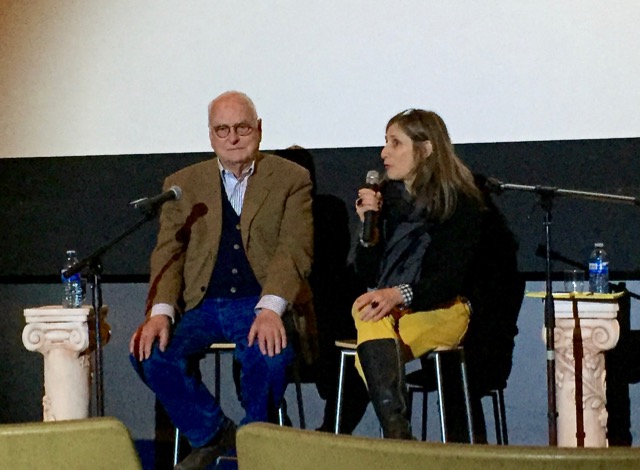
Another 4 Ripple Encounter is attending the Merchant Ivory Retrospective in December. I’d never thought I could actually see director James Ivory in person. And so I did. It was fascinating listening to the 87 year-old, legendary director who’d brought us A Room with a View (1985), Howards End (1992), The Remains of the Day (1993), and many other literary to film adaptations talk about the working dynamics of Ismael Merchant, writer Ruth Prawer Jhabvala and himself in the creative process.

Here’s a photo of the occasion, a Q & A session with film critic Katherine Monk after the screening of Heat and Dust, adaptation of the Man Booker winning novel (1983) by Ruth Prawer Jhabvala:

James Ivory1


And that’s a wrap for 2015.


***

Related posts you might like to read:

Howards End by E. M. Forster

The Merchant Ivory Dialogues 

Ruth Prawer Jhabvala: A Tribute to Rootlessness

Can a Movie Adaptation Ever be as Good as the Book

***


Brooklyn: From Book to Film

Director John Crowley’s movie adaptation of Brooklyn by Colm Tóibín has aptly answered my query (last post): what elements in the book make movie materials? Potentially, a lot. The trick is not to turn them into cliché moments on screen, for this isn’t an unusual story: a young woman leaving home and finding independence and love in a new land. While the film has its flaws, Crowley has crafted a beautiful and stylish transposition.

Author Nick Hornby has done it again following his Oscar nominated screenplay for An Education (2009) adapted from Lynn Barber’s memoir, a film that launched Carey Mulligan’s breakout role and Oscar nod, also a coming-of-age story.

Here in Brooklyn, Hornby tells his story by linking up succinct scenes that just about cover all key episodes in the book. They are short, to the point, and well-paced. The editing too is seamless, driving the film on without delay. After all, they only have about 120 minutes, and they’ve done a smooth job doing that.

Brooklyn Movie Poster

Tóibín’s seemingly simple narration of young Eilis Lacey’s journey of emigration from Ireland to America in the 1950’s is transposed onto film with sensitivity and nuance. The ‘mundaneness’ of daily living – working in a department store, dinner back at the boarding house, night class several days in the week – is transformed into vivid scenes by a lively cast of actors. To their credits, the already animated dinner table banters at Mrs. Kehoe’s (Julie Walters) rooming house as described by Tóibín have now come to life. Indeed, Julie Walters embodies Mrs. Kehoe, and Jim Broadbent as Father Flood is well cast.

Crowley, or is it Hornby, had softened Tóibín’s shrewd descriptions of some of his characters, presenting them in a sympathetic light, making them more likeable. The mood is less serious than the book but evoking empathy just the same. Although two weak spots I find. First is the glamorous and confident older sister Rose (Fiona Glascott) is not depicted as such, lessening the effect that is to come later. Secondly, Jim Farrell (Domhnall Gleeson) is absent at the beginning but appears only in the last part of the film, hence there is not much for character contrast or development.

While most of the supporting characters are well played, the film belongs to Saoirse Ronan, the young Irish actor who first drew notice from Joe Wright’s adaptation of Ian McEwan’s Atonement (2007). Her performance as 13 year-old Briony sent chills up my spine. With that role Ronan became one of the youngest Academy Awards nominees. In the most recent Wes Anderson’s The Grand Budapest Hotel (2014) she sends out very different vibes. As of now for Brooklyn, Ronan has a Golden Globe Best Actress nom. I anticipate she will go all the way to the Oscars.

Cinematographer Yves Bélanger is apt to let the camera linger on Ronan close-up many times, for she acts without speaking. Her facial expressions representing the spectrum of Eilis’s emotions and thoughts are spot on. It is a delight to watch her.

Another animated scene is dinner at Tony’s (Emory Cohen) Italian family home. Here, we see the characters jump out of the book, especially the kid brother, 8 year-old Frankie (James DiGiacomo), whose infamous line is “We don’t like Irish people.” But of course, the whole family welcomes Eilis and supports Tony, who has interpreted his literary version well: respectful, authentic and transparent, as Tóibín writes,”he was as he appeared to her; there was no other side to him.”

Domhnall Gleeson as Jim Farrell has a hard role to play for its very short appearance in the last part. He has not much material to work from but just hangs around with Nancy (Eileen O’Higgins) and George (Peter Campion) who try to set him up with Eilis. Not much to launch a lightning courtship.

Colours play a major role in the film, albeit I feel a pinch of contrivance; watching the colourful 1950’s costumes is like looking into the window of a candy shop with all kinds of macaroons. However, the colours may well set the mood and setting for the film: The overall greenish tone of the first part in Ireland, to the stark green coat Eilis wears as she leaves home on board the ocean liner to the cheery bright yellow cardigan after she has met Tony. Towards the last part, it’s back to the greenish hue of Enniscorthy, only the newly returned Irish/American gal wearing her bright colours. Too explicit a visual translation? Maybe, but I like macaroons, and I won’t hold a Ripple against the colour treatment.

Another visual imagery is at the beginning, right after Eilis has landed in America and gone past the immigration line, she opens the door to head out. We see her step out into an overwhelming brightness of white. Too heavenly? Or maybe just the right sign to boost the confidence of our seasick and insecure heroine?

How do you translate Tóibín’s quiet descriptions on screen? His signature depictions of a calm surface that hides tumultuous billows of emotions? Crowley gives us silence. Indeed, there are cinematic moments that are devoid of sound; the most memorable one is close to the ending when Eilis reveals her secret to her mother (Jane Brennan), sending shock waves and despondence on her face. Yet she restrained her emotions. Mother and daughter embrace in utter silence with tears flowing, saying possibly a last goodbye to each other in their lives and releasing a determined letting go for both.

Brooklyn is a beautiful adaptation worthy of its literary source, among one of the best films I’ve seen in 2015.

~ ~ ~ ~ Ripples 

***

Update Jan. 14, 2016:
3 Oscar Nominations – Best Picture, Best Actress, Best Adapted Screenplay

***

Related Review Posts:

Brooklyn by Colm Tóibín Book Review

Atonement: Book Into Film

The Budapest Hotel: A Grand Escape

Ex Machina (2015)