Best of the decade lists have been sprouting up everywhere now that we’re wrapping up the second ten years of the 21st century. As Ripple Effects has been around for over 12 years now, I too have the privilege to post my own decade favourites, with links to my reviews. A disclaimer is, obviously, I can only rate films that I’ve seen. For 2019, I’ve yet to see 1917 and Bombshell.
But first off, before looking back to the decade, here’s the list of
Top Ripples of 2019:
- Little Women
- A Hidden Life
- Varda by Agnès
- An Elephant Sitting Still
- Pain and Glory
- The Farewell
- Parasite
- Marriage Story
- American Factory
- Rocks
.
Top Ripples of the Decade:
- The Tree of Life (2011) –– Director Terrence Malick’s visual treatise on life, death, and everything in between… and after.
. - Roma (2018) –– Nothing’s too mundane for a filmmaker, especially with childhood memory. Mexican director Alfonso Cuarón’s autobiographical work that won him 3 Oscars, Best Directing, Cinematography, and Best Foreign Language Film.
. - Ida (2013) –– Polish-born director Pawel Pawlikowski’s gripping depiction of a young woman’s choice of the sacred or the secular.
. - An Elephant Sitting Still (2018) –– A last outcry of a young talent, the first and last masterpiece of Chinese writer/director Hu Bo who took his own life after making the film at age 29.
. - Little Women (2019) –– No matter what your previously held memory of the adaptation of Louisa May Alcott’s classic is, Greta Gerwig’s 2019 rendition is worthy to be the definitive version from now on as we head into the third decade of the 21st century. Surely lots have to be left out in a 2 hr. movie; take it as a good prod to go read the book.
. - A Hidden Life (2019) –– Austrian farmer Franz Jägerstätter gave up everything to stand by his conviction, refusing to take the oath of loyalty to Hitler. Terrence Malick’s newest film is a meditation on the meaning of life, and death.
. - Silence (2016) –– Martin Scorsese’s epic adaptation of Japanese author Shusaku Endo’s novel, a harsh and audacious look at the persecution of Christianity during 1600’s Japan. Similar to Malick’s A Hidden Life but depicts a totally different choice and outcome for its protagonist.
. - Clouds of Sils Maria (2014) –– French director Olivier Assayas’s mesmerizing tale of being famous, ageing, becoming obsolete, and the young rising. Juliet Binoche and Kristen Stewart offer interesting interplay, but it’s Stewart who stands out.
. - 12 Years A Slave (2013) –– Two Brits takes over the American story: Director Steve McQueen and actor Chiwetel Ejiofor who plays Solomon Northup. I wrote this in my review: the subject matter may be ugly, but the medium depicting it can be artistically gratifying, thus, conveying the message with even greater potency and inspiration.
. - Certain Women (2016) –– Director Kelly Reichardt has chosen three short stories by Maile Meloy to form a cinematic triptych. The seemingly mundaneness of life is actually the very essence of it. The women are what make this film quietly impressive: Laura Dern, Michelle Williams, Lily Gladstone, Kristin Stewart.
. - Pain and Glory (2019) –– “The child is father of the man”, iconic Spanish filmmaker Pedro Almodóvar’s autobiographical sketch of his childhood, later life and career up to this point. Beautifully shot, a film for artists.
. - The Farewell (2019) –– Chinese American director Lulu Wang has put her family story on screen and captured the hearts of many, making Awkwafina the rising star this awards season. To tell, or not to tell, that is the question… and the answer is obvious depending on where you’re from.
. - Faces Places (2017) –– Agnes Varda at 89 goes on a road trip with photographer/artist JR, adorning dilapidated buildings and unlikely places with human portraits larger than life.
. - The Rider (2017) –– Chinese-American Chloé Zhao tells the rarely told story of a modern day cowboy’s existential crisis after he suffers a debilitating head injury. How she tells it is poetry on screen.
. - Arrival (2016) –– Admirable collaboration: French Canadian director Denis Villeneuve’s adapts Chinese American sci-fi writer Ted Chiang’s short story “Story of Your Life”, rendered with sensitive performance by Amy Adams. A film packed full of ideas, condensed sentiments, yes, like poetry.
. - Frances Ha (2012) –– Noah Baumbach has created a character that’s a perfect fit for partner Greta Gerwig, an aspiring dancer trying to find her place in NYC. The scene of Frances running and dancing through the streets of NYC has become an archetype for freedom and exuberance. (Look for it at the beginning of Little Women)
. - Varda by Agnes (2019) – The only female director of the French New Wave, Agnes Varda had left us with an inspiring legacy. This is her summing up, her last work wherein she went through every film she’d made, commenting with valuable insights and wisdom.
. - Our Little Sister (2015) –– I’ve to say this could well be my favourite Hirokazu Kore-eda movie. Koreeda is a master in filming family relationships, reminiscent of Ozu but with contemporary scenarios. This is a heartwarming film for the unhurried heart to savour.
. - Life of Pi (2012) –– What Canadian author Yann Martel has succeeded in literary form, Ang Lee has realized in this visually stunning cinematic offering, filming what is considered the ‘unfilmable’. Aligned with its magical realism, Lee ventured into flashy 3D.
. - The Past (2013) –– Iranian Director Asghar Farhadi elicited some amazing
performance with this absorbing story. The film came out two years after A Separation, his Oscar winning film. I’d enjoyed The Past more.
.
***
Other Top Ripples not on the above lists can be found on the sidebar. Click on the image to read my review.







 This enticingly thin paperback has been sitting on the shelf quietly for years. I’ve long wanted to read it although I’d no idea what it was about, one of the hand-me-downs from my son’s college reads. Now that I’ve started it, I know this one’s going to be a slow cook. Even though just 217 pages, I know I can’t rush it. Exactly as the title denotes, the book is about one painting,
 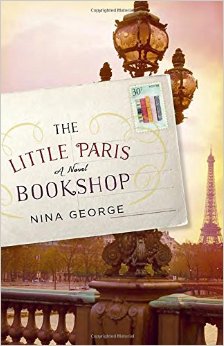 First published in Germany, now an international bestseller, The Little Paris Bookshop is a barge floating on the Seine River in Paris. Monsieur Perdu, the ‘Literary Apothecary’, is the owner. Now this is an interesting concept. M. Perdu prescribes books for any ailment his customers happen to be afflicted with. Bibliotherapy if you will. Not a bad idea. He has a book suggestion for everyone he encounters, so a clever way for German author Nina George to weave in her views on various literary works, her salutation to literature and reading. But of course, George isn’t just leading a book club discussion but telling a story. So she deftly brings us to learn more about M. Perdu’s past. While well-versed in bibliotherapy, M. Perdu has a wound that’s deep and sore, for he’s a victim of a lost love. Can the Apothecary heal himself? All signs point to a heartening, summer read.
 This one beats all my current reads in capturing my attention and interest. The contemporary composer Philip Glass (born 1937) is renowned as a ‘minimalist’ in his musical style, a label he frowns upon. Now about a quarter into Glass’s memoir, so mainly about his early life and the start of a career, I find what’s minimal is only the physical materials of life, the lack of money to pursue his dream. As for passion and talents, Glass is endowed with abundance, and the artistic milieu in which he immersed himself is astoundingly rich and fertile. Above all, the Bohemian living during his early days is idyllic. That’s why I’m mesmerized by his story, the pursuit of a dream driven by pure passion and inner drive.
 I had listened to the audio book a few years back, and wanted to reread it right away, but didn’t. After that, I forgot about it. By chance I saw it in the
 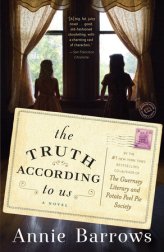 Barrows’ previous book is the wildly popular The Guernsey Literary and Potato Peel Pie Society published eight years ago. I’d enjoyed the lively characters in Guernsey amidst the troublesome setting of WWII, with the island occupied by German soldiers. Just curious to read children’s author Barrows’ first solo publication for adults. The Truth brings Barrows back to the home state of her aunt and primary writer of Guernsey, Mary Ann Shaffer, who died before completing the book. Family saga in small town West Virginia in 1938. If you’ve read this one, how is it compared with Guernsey? Should I even start it?
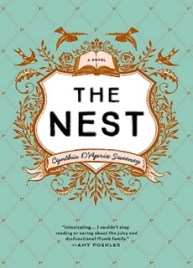 If I want a breezy summer beach read, maybe I should start with this one. But this too can wait. I got it mainly because of the future film adaptation. Sweeney’s debut work reportedly fetched a 7-figure advance from Ecco; not surprisingly, film rights were snatched up soon after. What should be noted is: by whom? Well, as evidence of the booming book/movie enterprise, Amazon Film it is, and Jill Soloway (Transparent) will direct. Note also, just saying, here’s a book with Amy Poehler’s endorsement on the cover. Have you read it? Are you looking forward to its movie adaptation?






 Ripple Effects