The Outsider Visualized

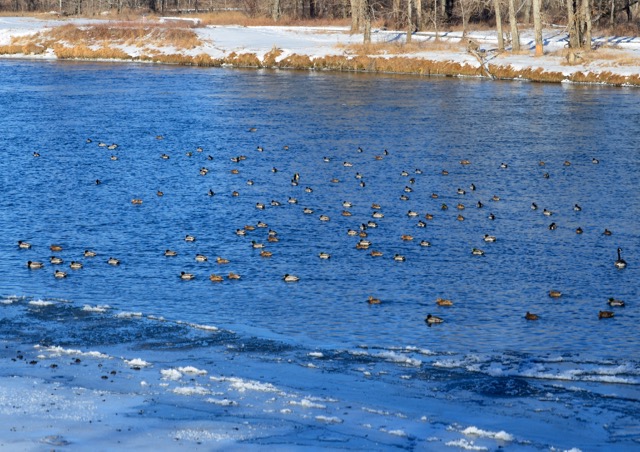
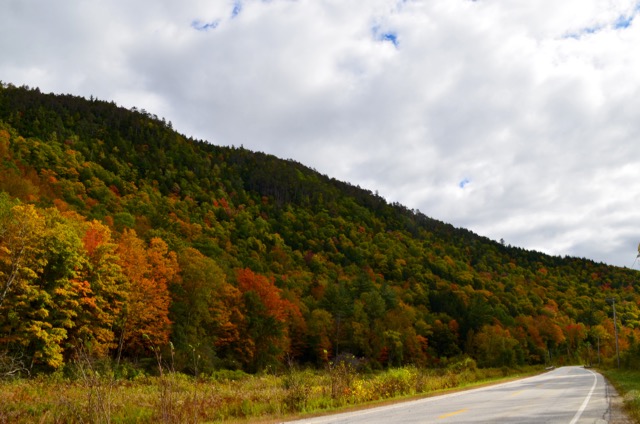
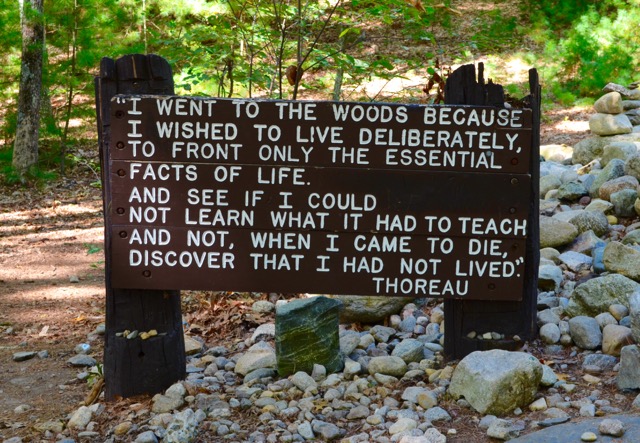
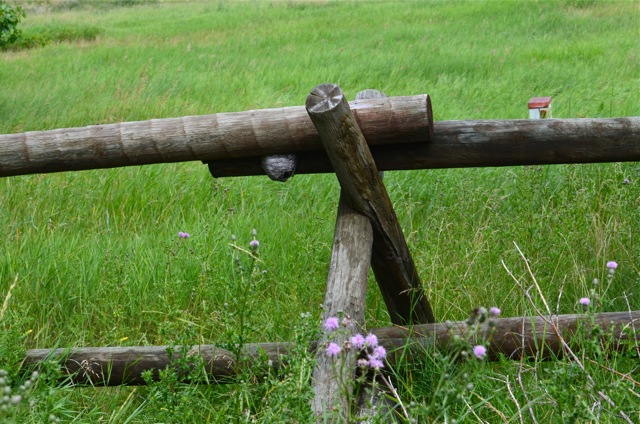
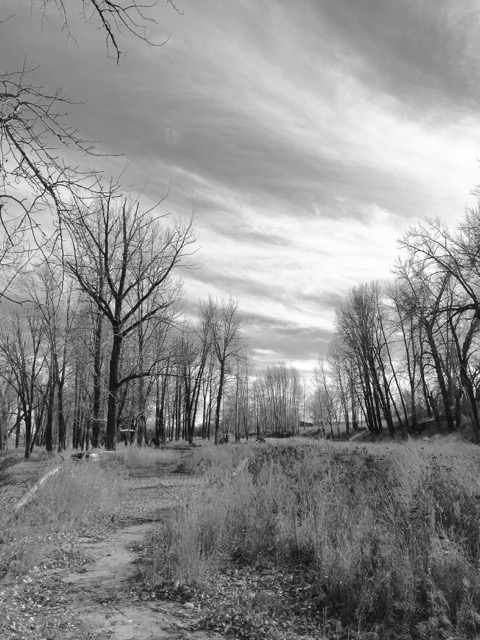
Just finished rereading Albert Camus’s The Outsider (or, The Stranger, L’Étranger). For some reasons, I find these two photos which I took late last fall well represent my thoughts. Words may come later in another post; until then, these visuals will suffice.

The Outsider 2

IMG_3400 (1)

***

Reading the Season: The Book of Ruth

For the past seven years, I’ve a special post at Christmas which I’d named Reading the Season, just to help me dwell on the Reason behind all the festivities. Some past authors I’d read include Marilynne Robinson, C. S. Lewis, Madeleine L’Engle, Luci Shaw. This year I’m going back to the source material, The Bible, for my Christmas read. And no, my selection isn’t from Luke 2, which Linus so eloquently delivers every year in the delightful A Charlie Brown Christmas.

I reread the little love story in The Book of Ruth, one of the earliest parallels pointing to the Christmas story. This time I found it particularly relevant. So here it goes…

moonrise


A long time ago in a land far, far away a man named Elimelech and his wife Naomi, together with their two sons Mahlon and Chilion, had to pack up and leave their hometown of Bethlehem in Judah to escape from a famine in the land. As migrants, they travelled to a foreign country called Moab.

Alas, Elimelech died soon after and left behind Naomi and their two sons. Years passed, the sons married two Moabite gals, Orpah and Ruth. Could it be the food there, for not long after Naomi’s two sons also died. Bitter and despondent, Naomi sent her two daughters-in-law back to their own family and began her lone journey to return to Bethlehem.

But Ruth was adamant to follow Naomi back to where she came from with this moving vow:

Don’t urge me to leave you or to turn back from you. Where you go I will go, and where you stay I will stay. Your people will be my people and your God my God.

Touched by her loyalty, Naomi let Ruth travel with her back to Bethlehem. She was like a migrant all over again. To the people there Naomi, if anyone still recognized her, was now widowed, sonless, bitter and destitute. The two women didn’t even have a refugee camp to take shelter.

To survive, Ruth went out to the fields to glean the grains left by the harvesters. It happened that they were in the fields of a kind landowner Boaz, who after noticing Ruth and hearing of her love for her mother-in-law, told his workers to leave more grains in the fields for her to glean. Yes, it just happened that she’d come to the right field.

When Naomi learned of Boaz, she saw a glimpse of hope. Definitely this was more than the food bank; this generous landowner actually was a relative belonging to her late husband’s clan. Out of desperation, she sent Ruth on a risky mission: to go to Boaz at night and approach him tactfully, letting him know of their ties in kinship.

Lo and behold, Boaz, an honourable and compassionate man, was harbouring a deep and ardent love for Ruth. That night, though surprised to see Ruth, he received her readily and with respect, restraining and keeping his torrid passion well under wraps, umm like… Mr. Darcy.

According to the law of the land, the closest relative had the first right to redeem the lands that Naomi’s late husband Elimelech had sold and to marry Ruth to carry on the family line. But lo, Boaz wasn’t that person; instead, he did the honourable thing, extending the first right of redemption to the closest relative, yes, like umm… Mr. Collins.

And it happened that Mr. Collins was willing to buy back the land but wait a minute, he couldn’t take Ruth as a wife. There could be reverberations, for Ruth was a foreigner, a Moabite. Further, the land was for her to continue with Naomi’s family ownership, and would not be under his name. “I pass,” he said in the sight of ten elder witnesses. Phew!

So only then did Boaz declare not only his willingness to redeem the land once owned by Elimelech, but also his desire to take Ruth as his wife to save her from destitute, poverty, and childlessness. How marvellous it was that Boaz, a legit kinsman redeemer according to the laws, was also truly, madly, and deeply in love with his redeemed.

And we are definitely indebted to the two lovers for producing the line of descendants, for Ruth later became the great grandmother of David, from whose ancestral line generations later came Jesus.

With this beautiful ending I come back to Christmas 2015, and ponder on the lowly birth of Christ at the manger, to become our Kinsman for the ultimate purpose as Redeemer.

“And the Word was made flesh, and dwelt among us… full of grace and truth.”  – John 1:14

DSC_0034

**

The Risk of Birth

This is no time for a child to be born,
With the earth betrayed by war & hate
And a comet slashing the sky to warn
That time runs out & the sun burns late.
That was no time for a child to be born,
In a land in the crushing grip of Rome;
Honour & truth were trampled by scorn–
Yet here did the Saviour make his home.
When is the time for love to be born?
The inn is full on the planet earth,
And by a comet the sky is torn–
Yet Love still takes the risk of birth.

                              – Madeleine L’Engle

***

Previous ‘Reading The Season’ Posts:

2014: Lila by Marilynne Robinson

2013: Poetry by Madeleine L’Engle

2012: Surprised by Joy by C. S. Lewis

2011: Walking on Water by Madeleine L’Engle

2010: A Widening Light, Luci Shaw

2009: The Irrational Season 

2008: The Bible and the New York Times by Fleming Rutledge

2008: A Grief Observed by C. S. Lewis
The hardest part is getting out of the car

In chilly -5C (23F), snow a foot deep in some areas, the hardest thing is to get out of a warm car. I drove around, actually left the natural park and then, a couple of blocks later, thought about turning back, all because of the flocks of dark spots by the river I saw from afar.

Glad I finally mustered the will to make a U-turn, find a spot to park and part with the story I’ve been listening from the audiobook CD.  I layered up, attached the ice grippers on my shoes (discovered this secret only a year ago), put on toque and gloves, and with my camera gear in tow, stepped out of the car.

Here’s my reward.

From afar, just some tiny black dots on the water…

From afar


that turned out to be a party of ducks and geese, basking in the afternoon sun on the icy river:

DSC_0406


Basking

And from behind tall grass, a buck watching me watching the ducks:

Buck behind grass

Suddenly from the corner of my viewfinder, a pheasant flew into frame. Here’s the serendipitous sequence:

Pheasant 1Pheasant 2Pheasant 3

At another spot, more Mallards gathering, over a hundred of them:

More ducks

These pigeons could only watch.

Pigeon A: Don’t you wish you could swim?

Pigeon B: And get all wet in the icy water? I’m thankful that I can’t swim.

Your guess: which is A? and B?

If only we could swim


In the sky Canada Geese flew by:

DSC_0565

On the ground, remnants of fall:

DSC_0549


and some positive human footprints left behind.

DSC_0489


And so I learned: Any worthwhile journey began with a step out of a warm car.

Oh, and one more thing… 

Wisdom from the pigeon: Be thankful for what you can’t do. I’ve got lots to be thankful for.

***

This is my post for Saturday Snapshot: Nov. 28. Thanks to West Metro Mommy Reads for hosting. CLICK HERE to see what others have posted.

ALL PHOTOS IN THIS POST TAKEN BY 

ARTI OF RIPPLE EFFECTS

DO NOT COPY OR REBLOG


Vermont: More than Scenery

Vermont has so much to offer on top of the scenery. But I’ll start with that.

The hills are alive overlooking a breathtaking view of the distant Green Mountains. That was what attracted the von Trapp Family to settle there. Right, that’s the Family von Trapp of The Sound of Music fame. Goerg and Maria moved to Vermont in 1941 and bought a 300 acre farm near Stowe, as that location reminded them of their native Austria. There on the mountain top they started a guest lodge and had since developed into what is now an upscale resorts on 2,500 acres.

The Trapp Family Lodge in Stowe, VT, owned and operated by the eldest son of Maria and Georg von Trapp:

Trapp Family LodgeJust 36 miles west of Stowe was Lake Champlain on the edge of Burlington, a vibrant college town. The Lake is a large body of fresh water, once called the sixth of the Great Lakes. It borders the States of Vermont, New York and stretches up north to Quebec, Canada.

At the pier of Lake Champlain:

Lake ChamplainI totally get how this boat is named:

DSC_0096I took the Vermont scenic drive Rt. 100 and headed south from Stowe. My destination was Bennington in the southwest corner of the State.

Not far from Stowe I arrived at Waterbury, a town with lots of restaurant choices for such a small place. I visited two major tourist sites there.

Just off RT 100 was the Ben & Jerry’s Ice Cream Factory, and they sure were prepared for the hundreds of visitors on the day I was there. A well organized and informative factory tour let me see how two college buddies’ $50 investment on an online ice cream making course had come to fruition. What’s impressive is their commitment to use supplies from local farms and cows that are steroids-free. A fair trade business to ensure global responsibility. (no, I don’t get a buck for writing this.)

Product MissionIn contrast, not far from the madding crowd at Ben & Jerry’s was the serene Waterbury Reservoir. When I got there it was already past sunset. So glad I could still take these photos:

Waterbury Reservoir

W R

Reservoir

Continued on Vermont Rt. 100 south I came by this most interesting site in the fields outside the small town of Waitsfield, population: 1,719 (2010). Here I found The Big Picture Theater, screening The Martian:

DSC_0103Two posters at the door caught my attention:

Kickstarter FFDownton Talk

One was a “Kickstarter Film Festival”. An indie film festival in this area? I was most impressed.

Another poster was about a talk on “The Costumes of Downton Abbey”. Here’s what the poster says if you can’t see it clearly (above right):
“Jule Emerson, former Costume Designer and Theater Professor at Middlebury College will discuss the fashions worn by Lady Mary and her family in the popular PBS series Downton Abbey. Free and Open to the Public”

No place is too remote for films and the Crawleys.

Rt. 100 offered some fall scenery very different from NH. I was attracted by the clumps of trees in distant hills along the road. It was a cloudy day, so instead of seeing bright and cheery foliage, I was captivated by the moody atmosphere. Just as beautiful:

Moody

Before arriving at Bennington, I stopped by South Shaftsbury to visit Robert Frost Stone House Museum. Frost bought the stone house and its 80 acres land in 1920, moving from the White Mountains in NH to warmer Vermont mainly for “a better place to farm and especially grow apples.” Aren’t we glad that he threw in some poems as well in his time-off from apple-picking.

In this fertile soil Frost not only gathered apples but poetic harvests as well. In the Stone House, there’s a “Stopping by Woods” Room where the Poet wrote his most famous “Stopping by Woods on a Snowy Evening.” A facsimile of the handwritten manuscript and many other pertinent materials – parody included – were displayed. Trust my words. I didn’t want to get caught taking pictures in a ‘Photography Forbidden’ premises.

I did take photos outside of Frost’s Stone House:

Frost's Stone Houseand his juicy legacy, the apple tree in front of the house:

DSC_0205From Shaftsbury I drove the few blocks to Bennington, There at the back of the First Congregational Church was the cemetery where Robert Frost was buried.

Yes, the sky was that blue that day:

DSC_0270Frost’s grave gathered no pens or pencils as I saw in Authors Ridge of Sleepy Hollow Cemetery in Concord ; instead, people have left pennies there. If they were meant to be tributes to the Poet, it’s simply mind boggling to see how people could think a penny would suffice. Allow me to offer a little alteration to a common saying, standing in front of Frost’s grave: If you don’t have anything poetic to leave there, don’t leave anything.

DSC_0251Coming up: my last stop, Lenox, MA.

***

Follow my New England series:

Orange is the Primary Colour

Driving from coastal Maine westward to New Hampshire, the foliage colours began to change a bit more. Even though I was totally enjoying myself along the coast, I did look forward to seeing some fall foliage as I moved inland.

I drove from Rockport to Maine’s capital Augusta, then continued on some small country roads towards Bethel and Gilead before crossing the State line to Gorham, New Hampshire. It was a pleasure driving through these more remote parts of the country, for the routes offer some gratifying scenery:

Driving thru MaineCountry road in MaineBut it was the colour orange on the ground that caught my eyes. From afar, they were tiny orange dots in the field:

Tiny orange dots on the groundA bit closer I knew, of course, that was a pumpkin patch. And it was orange that would be the predominant colour everywhere, in towns and in the country.

On flatbeds and wagons:

DSC_0501

DSC_0509

wagonfull

Or laid out neatly in arrays on grass:

DSC_0870

arrays

In various shapes and forms:

DSC_0508At door fronts, entrances, in hanging baskets and shop windows:

EntrancesHanging Basket

DSC_0544 (1)

DSC_0420

DSC_0549

DSC_0555

DSC_0620

Or in the form of pumpkin people:

DSC_0552DSC_0784Or as pumpkin elves like these two sitting outside Elf Academy:

DSC_0617

No wonder there’s a shortage of pumpkins in the U.S. as the demand is so high. With recent crops diminished by record rain, there arose a pumpkin shortage. Help is on the way though. Here’s a recent headline on CBC News Business section:

“Canadian pumpkin patches poised to fix U.S. lack-o’-lanterns problem.”

What are neighbors for?

***

This is my Saturday Snapshot October 17 entry. Saturday Snapshot is hosted by West Metro Mommy Reads. CLICK HERE to see what others have posted.

Follow my New England series:

A New England Fall Foliage Road Trip

Just came back from a ‘Thelma and Louise’ kinda road trip with my cousin to Northeastern United States. Kinda but not exactly, for obvious reason: I’ve come back, bearing photos and a foliage report that says it’s not too late to head out even now.

According to locals, due to the warm, extended summer days, foliage change has delayed by about a week. I started my drive in late September to the first week of October, and I’d say the foliage color change was from 10% to 40%, depending on the locale.

Here’s the itinerary of my travels:

Wayland, MA –> Portland, ME –> Rockport / Camden, ME –> N. Conway, NH –>
Stowe, VT –> Williamstown, MA –> Wayland, MA

I’ll be posting interesting sights I encountered during this trip. Here’s my first entry.

Walden Pond

I started from Wayland, MA, a suburb about 30 mins. drive west of Boston. Walden Pond is just 6.2 miles north of Wayland. In pursuit of solitude, to taste the bare essence and to ‘suck out the marrow of life’, Henry David Thoreau cleared some trees in the woodlands owned by his friend Ralph Waldo Emerson, built a 10′ x 15′ cabin and on July 4, 1845, began to live there by the Pond, an experience that lasted two years, two months and two days.

A stone-throw from the parking lot of the Walden Pond State Reservation is a replica of Thoreau’s cabin. A friendly ranger greeted me:

Thoreau's Cabin

Inside the cabin were the bare necessities, a bed, a table, a desk, three chairs: “one for solitude, two for friendship, three for society.”

Interior

As for the Pond, it was pure serenity. As for fall foliage, I could only see it in my mind’s eye:

Walden Pond

So you could imagine my surprise to see beaches and swimmers. But of course, this is now a National Park, and it’s summer still:

Swimmers at the beach

The day was September 28, the few autumn leaves reminded me that transition of the seasons was indeed happening, however slowly:

Autumn Leaves

As I walked around the lake, a sign pointed me to the actual site of Thoreau’s cabin in the woods:

Actual Site

And beside it, these famous words of his:

To live deliberately

But nowhere could I find a sign posting this other quote which I also admire, on the economy of work:

“For more than five years I maintained myself thus solely by the labor of my hands, and I found that, by working about six weeks in a year, I could meet all the expenses of living.”

Don’t you just love his calculations?

***

Follow my New England series:

Saturday Snapshot August 22: Summer Still

It snowed yesterday. I waited, but it didn’t change, unlike what they say about our weather that if you don’t like it, just wait 5 mins.

But it was only August 21st, summer still. However, I get the message that nature sends so clearly… nothing gold can stay.

Before it fully disappears, here are some photos showing our summer lingering still.

Wooden Fence

Moss

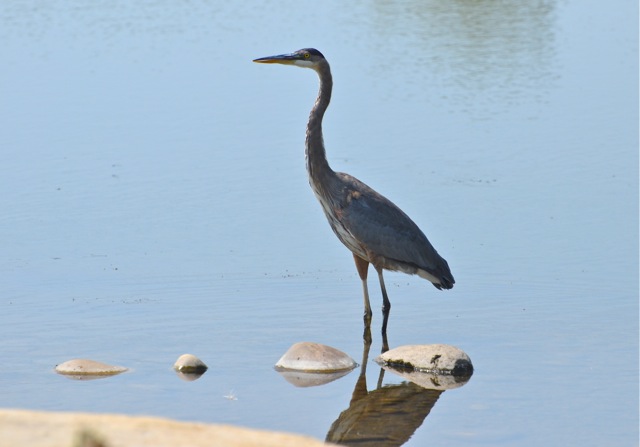
At the pond, the Great Blue Heron and Yellowlegs bask in the summer sun.

Great Blue Heron

Yellowlegs

Glad to see the songbirds are still here. They know best when to fly south. Apparently not yet. Saw this Least Flycatcher a couple of days ago. Mutually curious:

Least Flycatcher

And this young Yellow Warbler… Hang around a bit longer, li’l guy, a much warmer week ahead is in the forecast.

Young Warbler

But of course, I can’t help but see the ripening berries and the seeded dandelions:

Ripening berries


Dandelions


Just a while longer… it’s summer still.


(P.S. It’s gorgeous today. Going out to see my avian friends. More next week.)


***

ALL PHOTOS TAKEN BY ARTI OF RIPPLE EFFECTS

DO NOT COPY OR REBLOG

***

Saturday Snapshot is hosted by West Metro Mommy Reads. CLICK HERE to see what other have posted.


Saturday Snapshot August 1: A Summer Wood

Colours growing wild.

Fields of wildflowers

I can easily imagine a lavender field in Provence.

I can imagine lavendar

Ripening Saskatoon berries, food for everyone.

Ripening Saskatoon Berries

The tiny Yellow Warbler never ceases to fascinate me.

The Yellow Warbler

… here practising her trapeze skill.

Yellow Warbler 2

Or the American Goldfinch… common for the Americans, but always a golden moment for me when I capture one in picture.

American Goldfinch 2

Am Goldfinch 2

A delight even just to see the common Robin basking in the the setting sun, redder than ever.

Robin red breast indeed in the eveing light

The ordinary in a different frame.

Cobweb in Early Evening
Common sight, common light, common grace.


***

Saturday Snapshot is hosted by West Metro Mommy Reads. CLICK HERE to see what others have posted.

***

ALL PHOTOS TAKEN BY ARTI OF RIPPLE EFFECTS

DO NOT COPY OR REBLOG


Clouds of Sils Maria Movie Review

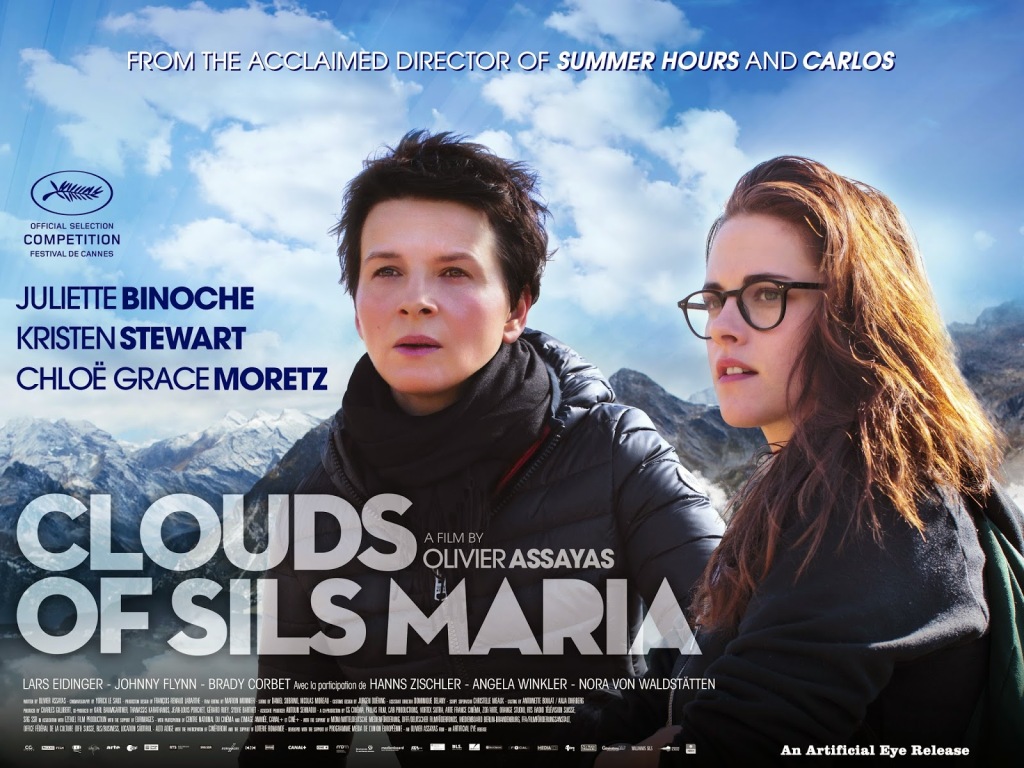
Clouds of Sils Maria is an intricately conceived rumination on the passage of time, ageing, being female, being famous, and for that matter, being gradually becoming obsolete. The newest film from the prominent, Paris born, French director Olivier Assayas, it was nominated for numerous awards at film festivals, including the Palme d’Or at the Cannes Film Festival in 2014. I watched it at TIFF last September, and gladly again at the indie theatre when the film came to our city a few months ago.

Clouds of Sils Maria

A middle-aged celebrated screen and stage actress Maria Enders (Juliette Binoche) is on a train to Zurich with her personal assistant Valentine (Kristen Stewart) to attend a tribute to the playwright Wilhelm Melchior, who had cast her in her breakout role in one of his plays Maloja Snake some twenty years ago. At that time, Maria played a manipulative young office girl Sigrid who had an emotive relationship with her older office boss Helena, driving her to commit suicide.

While on the train to Zurich, Maria gets the news that Melchior has died, an apparent suicide due to a terminal illness. When arriving Switzerland, Melchior’s widow Rosa (Angela Winkler) lets Maria and Valentine stay in her idyllic house in the Swiss Alps, in the Sils Maria locale, while she tries to get away from the sad memories of her late husband. In that serene natural setting, Valentine helps Maria practice her lines for a revival of the play Maloja Snake, re-mounted as a tribute to the late playwright. But this time, Maria is to play the older character Helena, while a wildly popular, scandalous young star Jo-Ann Ellis (Chloë Grace Moretz, the rising star in real life) is to play Sigrid.

If you have the patience to read up to here, you likely can see the parallels: Maria and Valentine – Helena and Sigrid, as well you probably can guess the feelings Maria goes through in this role reversal, for now she is twenty plus years older, and the loss of Melchior could well be the foreshadow of an imminent path everyone has to trod, famous or not. The film is an intricately woven, multi-layered construct, with thought-provoking dialogues and incisive subtexts; the mirroring effect is brilliant especially the scenes when Valentine helps Maria practice her lines and accept the role reversal, from the young to the older.

If you appreciate the characterization and the superb performance of the actresses, you would not only bear with but savour the complexity of the dialogues and scenes. Instead of a litmus test for the viewer’s patience, the complications and layered meaning are a testament of some fine screenwriting and directing. Assayas’ signature realism and naturalistic style works marvellously well; in some scenes towards the end, the honesty is harsh and biting. 

Juliette Binoche always delivers. Here she is an ageing celebrity and star, her outward coolness masks tumultuous insecurities. She is totally natural in her role. Viewers may even feel she’s not acting at all.

But my highest praise has to go to Kristen Stewart. I admit I’m probably one of the few who have not watched, or read, any of the Twilight movies or books. So this is my first Stewart film, and I’m most impressed. She lives and breathes her character Valentine, assistant to Maria Enders. From juggling several smart phones while balancing herself on a moving train, to helping Maria practice her lines adjusting to the older role, Stewart has shown she has mastered the needed nuance, intelligence and sensitivity for her character. She has portrayed convincingly a complex female who, despite her efficiency and strength at her job as assistant to a famous but fast fading star, is herself vulnerable as a female with deep, inner yearnings and conflicts muffled only by her outward sensibility.

With her role as Valentine, Stewart went on to win the 2015 César Award for Best Supporting Actress this February in Paris, the first American actress to win the prestigious French acting award which is equivalent to the Oscar here.

Chloë Grace Moretz aptly plays the youthful, and bratty, rising star Jo-Ann Ellis. She embodies the young and famous, a celeb whom Valentine admires, but whom Maria can never understand as to how the young measures talent or shoots to the peak of popularity despite (or maybe because) of scandals. I’m sure what’s mind boggling to her could well be the thoughts in many a mind of the, alas, fading bunch of old school, superbly trained actors and iconic performers of our days.

The Largo from George Frideric Handel’s opera Serse is poignant, a solemn and grand diction of existential angst as Maria confronts the loss of her beloved and respected artistic mentor, and her own fading glory. Interestingly, the music reminds me of Kon Ichikawa’s The Makioka Sisters (1983), wherein this piece of music also appears, bringing out the poignancy of the passage of time, the erosion of the familiar, the end of an era, of traditions, and of treasured values.

This brings us to the very title of the film. The clouds of the Sils Maria mountain range in the Swiss Alps is famous for their sudden appearance like a snake curling and weaving around the mountains. Many have climbed the peaks only to be disappointed as the clouds may not appear while they are there. In the scene towards the end, just as Maria turns and walks away, the clouds come into view for us audience but not her, indeed, like a snake slithers silently in and in a few seconds, moves out of sight again. Ah… the ephemeral of it all. The ultimate mirroring of nature and life.

Probably the best film I’ve seen so far this year. A film that deserves – and requires – multiple viewings.

~ ~ ~ ~ Ripples

***

This is my last entry to Paris in July 2015 blogging event hosted by Tamara of Thyme for Tea.

Paris in July 2015 Icon***

Other Related Ripple Effects Posts:

Conversation with Juliette Binoche

Summer Hours by Olivier Assayas

My Old Lady 

Suite Française: From Book to Film

Flight of the Red Balloon 

My Old Lady (2014) Movie Review

Among the dozen films I’d watched at the Toronto International Film Festival last September, two are apt selections for the annual Paris In July blogging event hosted by Tamara in Thyme for Tea, now in its sixth year. Recently I have re-watched both, one at an indie theatre, the other on Blu-ray. Here’s my first entry to Paris In July 2015.

Paris in July 2015 Icon

***

My Old Lady (2014)

Just when voices had been raised in recent months from female stars against the sexist domination in Hollywood, and lamenting the lack of significant female leading roles, another issue pops up. Well, the problem has been there all along, but who would speak for those who are…. getting old? The peril of Agism in the movie industry. And, if you’re female and aging, confronting Hollywood is a losing battle.

I’m glad there are filmmakers who consider film as an art form, and in its essence, conveys the meaningful and universal that make us human. Kudos to all who attempt to break the barrier. Here we have a directorial debut from 75 year-old Isaac Horowitz. As he had noted, which first-time film director would talk about his five grandchildren?

Horowitz is an author of more than 50 produced plays. Several of his works have been translated and performed in as many as 30 languages worldwide. This is his first time directing a film, adapting his own play onto the big screen. My Old Lady is a delightful debut. I’ve watched it three times, so far, and liked it more each time.

My Old Lady Poster

In an after screen talk, Horowitz shared that he had heeded one advice from the iconic director Sydney Lumet: “Cast the best actors in the world and then get out of their way.” In his debut movie, his cast is first-rate, and allow me to show their age when they made this movie, just to prove a point: Maggie Smith, 80, Kristin Scott Thomas, 54, and Kevin Kline, 67. How much the director had left them to their own I don’t know, but sure looks easy for these veteran actors to take on this one. Such natural ease comes from decades of experience, expertise honed as innate skills.

That’s the advantage of ageing. Let’s drink to that.

Kevin Kline plays Mathias Gold, a down-and-out, thrice divorced, alcohol dependent, penniless middle-aged American who is relieved to inherit from his late father an apartment in the Marais district of Paris. Going there to claim his rightful ownership and aiming at a quick sale, he learns a French lesson in property transfers instead: En Viager. When his father purchased the apartment 43 years ago – now worth over 10 million Euros – he was under the contracted stipulation of a Viager.

This is the issue Mathias faces: Instead of a lump sum payment made for a clear purchase, his father, the buyer, had contracted to put down a cheap amount and then pay the rest as viager, a monthly fee of 2,400 Euro to the vendor and occupant of the apartment, Mathilde Girard (Maggie Smith), until she dies. Now at 90, Mathilde is in good health, thanks to her daily sustenance of red wine and precise meal times. Not only that, Mathilde has a daughter living with her, headstrong and vocal to defend their property against any potential profit-driven redevelopment plans.

That’s the story. It is not hard to predict the ending, with Kline and Scott Thomas together, albeit fiery and combative to start with. But what is harder to foresee is the story within the story at the outset. Everyone has a past. This is one of the best performance I’ve seen with Kline, for he carries the whole film and delivers with just the right touch of humour and pathos. The first time the two were co-stars was in Life As A House (2001), interestingly, another story based on a domicile. Life as a house indeed.

Scott Thomas as always is a pleasure to watch. No matter what role she takes up, her communication is crisp and clear even without having had to say a word. The last scene is a prime example. But of course, you don’t have to wait till the last. As for Maggie Smith, at 80, she is as strong as ever, even when she is playing one who is ten years older.

When it comes to plays turned into films, one should expect the prolific dialogues. Not a perfect fit all the time, there are moments where I as a movie viewer expect better lines, and more than stage-like scenes. But overall, the three characters are a delight to watch.

The few external Parisian street scenes with their fine matching music score instil longing. Yes, this is the kind of films that work best to lure you to Paris, not to the hot tourist sites, but to the streets where Parisians actually live. Subliminal seduction registering in my mind that next time I must go to those districts which are less trodden by tourists but equally representative of the historic city. Maybe a B&B right there in the Marais instead of a boutique hotel.

My Old Lady is a light comedy with a heart, bringing out an issue that, alas, could not be fully resolved, for what’s done cannot be undone. Offsprings inherit from their parents not only the physical properties but often the emotional baggages and their consequences. As a dramedy, Horowitz has brought us not only the drama but the happy ending, the best case scenario that can come out of human failings. That could well be a reason why we go see movies.

~ ~ ~ Ripples

***

Related Posts on Ripple Effects:

The Second, Best Exotic Marigold Hotel

Tuffing It Out At TIFF14

For a list of Paris in July Posts from previous years, CLICK HERE.

Like Father, Like Son (2013)

In honour of Father’s Day tomorrow, I’m re-posting my review of the acclaimed Japanese film Like Father, Like Son. (Update: Director Hirokazu Koreeda’s most recent work Our Little Sister is a Palme d’Or nominee at Cannes 2015.)

***

I had wanted to see this Japanese film since it came out last year. Missed it at TIFF13 last September, its North American premiere after winning the Cannes Film Festival’s Jury Prize in May. Glad it has finally arrived on Netflix, reaching a much wider audience than just festival goers, deservedly.

Like Father Like Son

Director Hirokazu Koreeda wrote the screenplay based on a disturbing premise: what if after six years of raising your son, the hospital where he was born contacted you and told you that your child was switched at birth, and of course, they sent their apology.

The hospital officials do not take this lightly. DNA tests are done to confirm. They have a lawyer with them, arrange to have you meet the other parents, mediate and ease the proposed switch back, which they recommend with a six-month preparation period, preferably before the boys start grade one in school. They even find out who the nurse is that made the error; due to her own frustrations at the time she knowingly made the switch. Of course, she is deeply sorry for what she had done and duly prosecuted. Monetary compensations are arranged.

But all the above have absolutely nothing to do with easing the shock and alleviating the trauma afflicted upon the families. Formality and legality do not soothe the pain; apologies and money cannot compensate for the abrupt termination of relationships.

Director Kore-eda has treated the subject matter with much tenderness and charm. The cinematography is stylish, the children and adults are all captured in a realistic manner with splashes of endearing humour.

The two families come from very different social strata, and the two boys have been raised in opposite parenting styles. Interestingly, only one of the families seems to take this news much harder. Ryota Nonomiya (Masaharu Fukuyama) is a successful professional who spends most of his time in the glass towers of Tokyo busy at work. His son Keita (Keita Nonomiya), an only child, is raised in a protective environment. Mother Midori (Machiko Ono) is loving but also ambivalent about a husband who puts his career over his family.

The other family is a shop owner in a rural part of the country, their son Ryusei (Shôgen Hwang) is the eldest of three children. Father Yudai Saiki (Rirî Furankî) is every child’s dream. He spends his days playing with his children, fixes their toys, and exerts no rules, albeit Mom Yukari (Yoko Maki) might wish he could have spent more time working.

What makes a father? What makes a son? Fatherhood and bloodline tend to supersede all other factors in a patriarchal society like Japan. But the film reflects the point of view that not all families necessarily embrace such a value. Further, apparently there are different parenting styles even in a homogeneous Japanese society.

If there is ever a Japanese version of the movie Boyhood as we have seen from Richard Linklater, Hirokazu Kore-eda would be the ideal person to direct it. Like Father Like Son follows his previous work I Wish (2011) in its sensitive and incisive depiction of a boy’s heart and yearning. He can tear apart the facade of societal formality – but in a most tender way – and lay bare the hopes and needs, the essence of parents child relationships.

I must give credits to Johann Sebastian Bach, and the late Canadian pianist Glenn Gould. The beginning of Bach’s Goldberg Variations had been used in numerous films, but every time the soulful slow moving piano melody comes on, I am moved, no matter how many times I’ve heard it, and in so many different genres of films. Just from memory, I can think of The English Patient (1996), Hannibal (2001), Shame (2011)… It is so effective in augmenting cinematic moments without becoming clichéd.

Here, the Aria is well placed as director Kore-eda uses it as a motif to spur us into deeper thoughts. What makes a father; what makes a son? What is more important, blood or relationships? What is the role of a wife and mother in a patriarchal society? What is the purpose of giving birth and bringing up a child? What is fulfilling and meaningful to us as human beings? Indeed, a motif that can strike a universal chord of resonance that transcends cultures.

~ ~ ~ 1/2 Ripples

***

Saturday Snapshot May 30: Of Birds and Men

Living adjacent to a Provincial Park, I’m always amazed at how tolerant and adaptable the birds are towards our human intrusions. Birds and men co-exist considerably well in my neck of the woods:

Sign

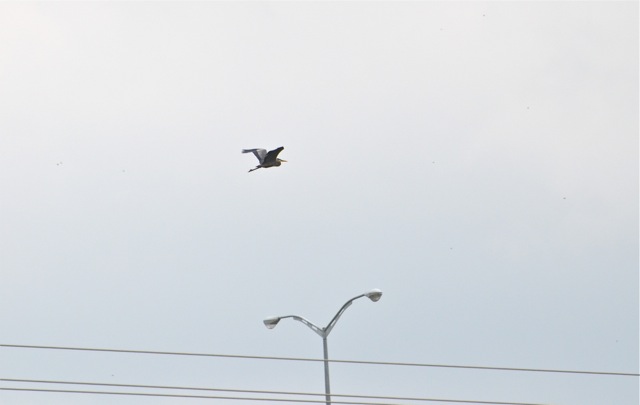
There’s even a vague resemblance between birds and man-made structures like in this photo, The Great Blue Heron and the Light Post:

GBH and the Light Post

And then there are the Canada Geese, who aren’t shy and actually quite imposing, never observe right of way’s, and never keep their voices down in public places. Since some of you in response to my previous Saturday Snapshot post were surprised that Canada Geese nest in tree trunks, here are a couple more photos for you. People just walk or bike by below these trees, as the Geese give birth to their young just above their heads; no, not in the water. How can you build a nest in the water anyway?

From afar, the Goose at her nest:

Canada Goose Nesting

At the doorstep:

Can Goose

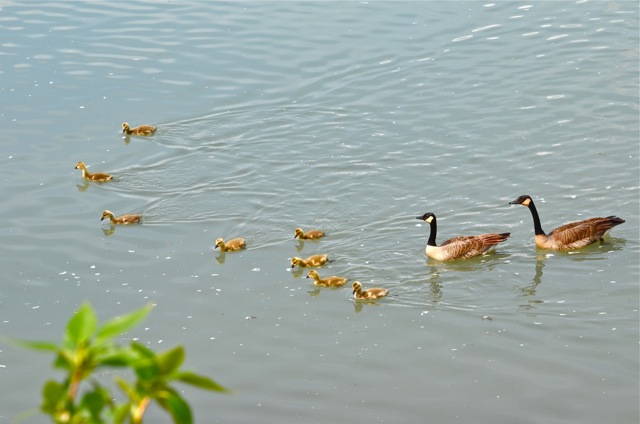
Of course, you’ll see them in the water once the Goslings are big enough. Here is a family outing:

Geese Family

Goslings and mom

Goslings

4 Gosslings

Here’s a picture of co-existence in harmony… the sailboat was in close proximity to the Geese family, yet both parties took a nonchalant attitude, doing their own thing:

Co-existing

Of Men and Geese

***

Saturday Snapshot is hosted by West Metro Mommy Reads. CLICK HERE to see what others have posted.

ALL PHOTOS TAKEN BY ARTI OF RIPPLE EFFECTS

DO NOT COPY OR REBLOG

***