Saturday Snapshot August 9: Small is Beautiful

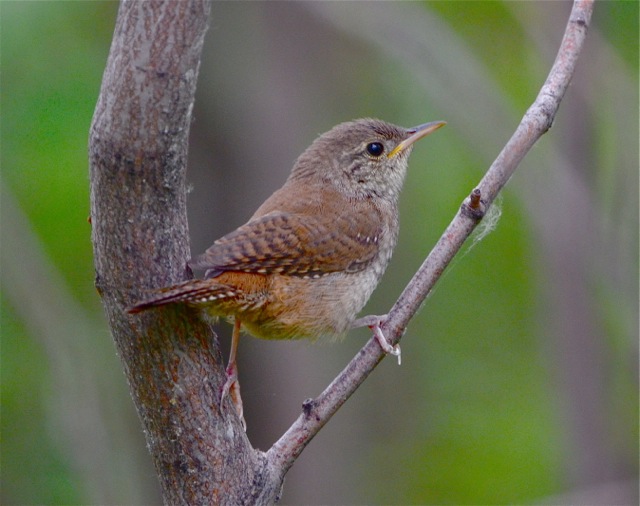
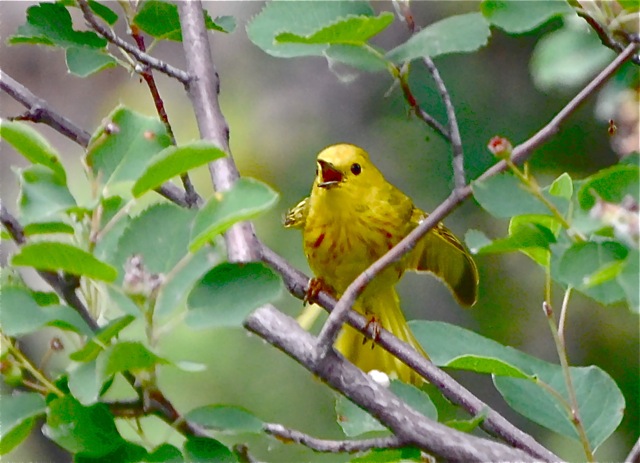
In my last Saturday Snapshot, I posted my serendipitous sighting of a Pelican. One of the largest flying birds, the Pelican has a wingspan of 9 feet, and some weigh close to 30 pounds. The Pelican can fly, amazing at 30 pounds; a butterfly can fly too, equally amazing at 0.5 gram, wingspan averaging 5 cm. I’d love to see the Monarch butterfly. They don’t come by here. Maybe I’ll be able to see some one day when I travel to the east coast. Aren’t they just as mind-boggling? Flying as many as 2,000 miles in migration with such a minuscule body? Where do they put their GPS? Butterfly Something even smaller… What caught my attention are the two seeds like stars. How small and delicate they look compared to the dragonfly: dandelion seeds Here’s another kind of small. Succulent, plump and colourful. Real food for the birds, imaginary treats for me. Don’t they look like round scoops of ice cream? fruits   And the small songbirds in the woods are my favourites. This House Wren is not adorned with bright colours, but a closer look at the different layers of down and feathers you can see the various shades of colours and pattern. And this juvenile looks charming to me:   House Wren Yes, the Pelican is majestic, mesmerizing when it flies. But a tiny Yellow Warbler can make my day too. Looks like the feeling is mutual:

Yellow Warbler

I don’t get to see a Pelican everyday, but these tiny creatures can tide me over till the next serendipity.

***

Saturday Snapshot is hosted by West Metro Mommy Reads. Click Here to see what others have posted.

ALL PHOTOS iN THIS POST TAKEN BY ARTI OF RIPPLE EFFECTS.

DO NOT COPY OR REBLOG

***

How Proust Can Change Your Life by Alain De Botton

Here’s my second instalment for the blogging event Paris in July 2014.

Paris In July 2014

***

You must have heard of this book by a Swiss-born Brit writing about a French novelist called Proust. You probably have read it, and let me guess, were surprised when reading the first chapters? Well, I was. For before reading this book, my knowledge of Alain de Botton, the popular British writer and media personality, mainly came from an art critic’s thoughtful posts on her blog.

How Proust Can Change Your Life

Is Botton joking? This book reads like a parody.

First we are introduced to Dr. Proust, Marcel’s father, who was a renowned physician and prolific writer. His thirty-four books had helped the French people from defences against the plague to the correct postures and exercises for the ladies. Botton being an image-driven person does not hesitate to include some of Dr. Proust’s instructional illustrations for his female readers such as how to jump off walls, or balance on one foot.

Not your definition of parody? How about this chapter on ‘How to Suffer Successfully’. Proust is well known for his physical ailments, having had to lie in bed most of the time when he wrote the longest novel ever written, In Search of Lost Time. Botton exhaustively lists down the various trials Proust had to live with throughout his life:

  • The Problem of a Jewish Mother
  • Awkward Desires
  • Dating Problems
  • A Lack of Career in the Theatre
  • The Incomprehension of Friends
  • At 31, His Own Assessment
  • Asthma
  • Diet
  • Digestion
  • Underpants
  • Sensitive Skin
  • Mice
  • Cold
  • Coughing
  • Noise from Neighbours

… Should I go on? And oh, he does include Death.

I know, that’s what Botton does, bring the extraordinary into the ordinary realm of common readers, and by so doing, explaining Proust to us lowly creatures. And of course, it would help if you have at least read the first two volumes of In Search of Lost Time, for many of his examples are taken from there, so you would feel a resonance, or disagree with Botton’s interpretation, when he talks about Francoise, Swann, Albertine, Combray, or Balbec.

Do I get anything out of it? Plenty. I’ve lots of highlighted passages and my own handwritten notes on the margins. When Botton gets serious between the lines, he leaves me with some useful tips:

So if speaking in clichés is problematic, it is because the world itself contains a far broader range of rainfalls, moons, sunshines, and emotions than stock expressions either capture or teach us to expect. (p.106)

For one thing, express your own feelings and ideas instead of saying ‘nice’, or describing the setting sun as ‘a ball of fire’. I love this little passage Botton quotes from Proust about the novelist’s description of his ‘lunar experience’:

Sometimes in the afternoon sky a white moon would creep up like a little cloud, furtive, stout display, suggesting an actress who does not have to ‘come on’ for a while, and so goes ‘in front’ in her ordinary clothes to watch the rest of the company for a moment, but keeps in the background, not wishing to attract attention to herself. (p.98 of Botton’s, but no mention of where this is from Proust’s)

The key of course is not so much of trying to use a new language to describe a common scene or object, but to be able to look at them from a distinctively new perspective to begin with. How can we invent new lenses to see the world? Towards this end, Botton has failed to go further. So we’re told to avoid clichés, but not how. If you sense my ambivalence, you’re right.

In order to avoid clichés himself, Botton has resorted to hyperboles. The title of the book is a ready example. The 200 page book comprises of nine short chapters, each can be a book in itself. So you can expect the oversimplification of the ideas. Further, with no citing of sources for the Proust quotes, the critical reader could be left unsatisfied; it feels like Botton has jumped to generalizations and found expressions of his own thoughts from one or two excerpts of Proust’s. Makes one feel that Proust could just be a selling point.

However, this is an entertaining read, like a self-help manual with instructional tidbits and amusing images. The book is a mixed bag of common-sense wisdom, with a ‘moral’ at the end of each chapter. Throughout, it is obvious that Botton could well find it not as easy as he tells his readers to do… to be original and not say what others have said before. Here are some of his main points:

  • Live life today
  • Read books to form your own ideas
  • Suffering makes you strong
  • Find art and beauty in the ordinary
  • Avoid clichés like the plague
  • A time to pick up a book, a time to put it down
  • Win friends by your praises
  • but pour your honest criticisms of them into a work of fiction (now that’s a novel idea).

Is there anything new under the sun?

Speaking of the sun, take this to the beach. It would make one breezy read.

Lastly, following Botton’s (actually Proust’s) advice on reading:

We should read other people’s books in order to learn what we feel, it is our own thoughts we should be developing even if it is another writer’s thoughts which help us do so. (P. 195) Reading… is only an incitement…


So I’d say the moral is: read Proust yourself. Don’t let Botton tell you what Proust can do for you.

That’s just the prodding I need to press on to In Search of Lost Time, Vol. III.

***

Paris in July 2014 on Ripple Effects:

Haute Cuisine Movie Review

CLICK HERE, HERE and HERE to see what others have posted.

***

Related (Proust) Posts on Ripple Effects:

Proust Read-Along: Swann’s Way Part 1, Combray

The Swann and Gatsby Foil

Half Way Through a Budding Grove

Out of the Budding Grove

***

AGO Exhibition: Terror And Beauty

The Art Gallery of Ontario, AGO, is a must-see whenever I visit Toronto. Not only because I’m a Frank Gehry fan who never gets tired of looking at the centre spiral staircase in there, but the exhibits are always intriguing and thought-provoking. Spent a few days in Toronto last week and this time, I was much gratified to view the current show at AGO: “Francis Bacon, Henry Moore: Terror and Beauty”.

Terror and Beauty, the motif resonates with the idea of Wabi-sabi. I’ve explored visually the notion of Wabi-sabi before. Two seemingly incompatible states juxtaposed against each other, beauty and sadness.

“You can’t be more horrific than life itself” says a quote from Francis Bacon on the AGO’s Artist page. The exhibits speak to that by extracting from the horrors of WWII and other forms of human sufferings and struggles depicted in the works of these two 20th century Irish/English artists who were contemporaries of each other.

The exhibit is a wealth of surrealist works from Bacon, and sculptures and drawings from Moore. But I was particularly captivated by the WWII items. While Moore is well-known for his abstract sculptures of the human body in larger than life poses, here’s a rare chance to see his more personal, wartime drawings.

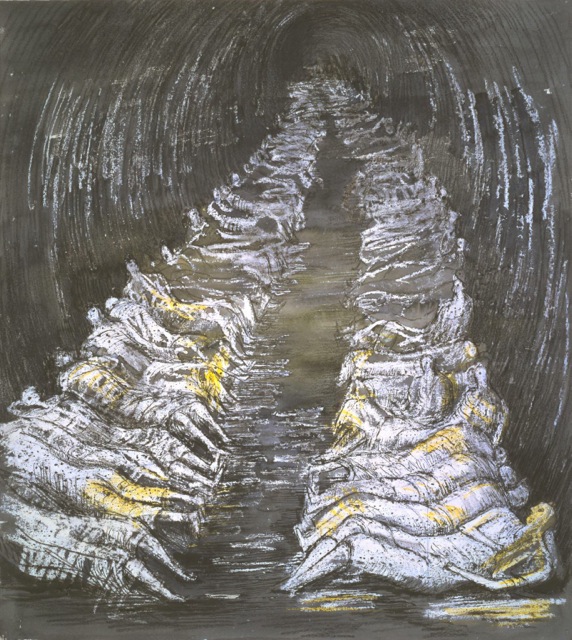
Going home one evening in 1940, as he entered a London subway station, Moore discovered crowds of people sleeping on the platform to take shelter from an impending German air strike, the Blitz. He was taken aback by what he saw and his later drawing was a ghastly interpretation:

Tube Shelter Perspective 1941 by Henry Moore OM, CH 1898-1986

Photo Source: http://www.tate.org.uk/art/artworks/moore-tube-shelter-perspective-n05709

That’s Moore’s view of the underground subway station used as impromptu bomb shelter. But what was it really like in those tube stations? That’s when I was totally captivated by the photos of the renowned photojournalist Bill Brandt displayed alongside Moore’s shelter drawings.

Rather than horrific depictions, I was utterly surprised by the actual photographs by Brandt, who acted as official war photographer. His noir and darkened perspective is haunting and yet, full of mystique and beauty.

What I saw was an opposite interpretation of the subway scene: rather than terror, I saw resilience. Indeed, the London populace came out in droves to seek shelter in the subway, a much safer haven than their own homes. What I saw in many of Brandt’s photographs was the strong sense of ‘life goes on’.

Two photographs in the exhibition will forever remain in my mind.

First is the Liverpool Street Underground Station Shelter during an air raid in November, 1940. The photograph shows a family sleeping soundly, bedding against the grooves in between the steel structures of the tunnel. But look more carefully, there’s even a bunk and blanket for a doll beside the child. They all look peaceful and calm.

For the archive in my mind, let me call this photo: “The Doll in the Subway”

Sleeping in the subway bunk-child & doll

© IWM Non-Commercial License http://www.iwm.org.uk/collections/item/object/205194652?cat=photographs

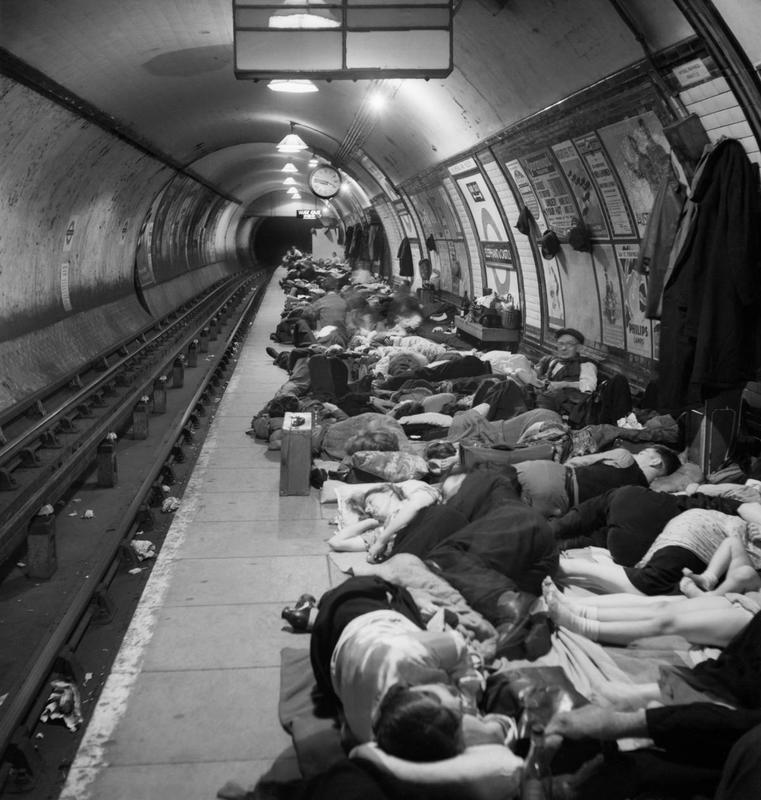
The second picture by Brandt is in the Elephant and Castle London Underground Station Shelter. Here, people sleeping on the crowded platform while taking shelter from German air raids during the Blitz.

But look how they were dressed in. The mid-heel pump the woman in the foreground was wearing caught my attention. Looks like she was dressed for work. Blitz or no Blitz, after she woke in the morning, she had to go to work. Life as usual.

In my mental archive, this photo will now be entitled “The Mid-heel Pump”.


The mid-heel pump

© IWM Non-Commercial License http://www.iwm.org.uk/collections/item/object/205194638

What more, after civilians had crowded into the subway stations against government’s advice, the officials had to respond with helpful measures by installing chemical toilets, first aid facilities, and providing drinks, while the people created their own entertainment. With all due respect to the victims of the Blitz, the resilience and adaptability of the Londoners are most inspiring.

After I stepped out of AGO, I wanted to go back in to take a more careful look at the exhibits again. But that was not feasible so I had to write this post from memory (no photos of the exhibits were allowed) and from some online digging. Glad to have found these two  memorable images from the Imperial War Museum website. Thanks to AGO, these two historic photos will remain in my mental archive for a long, long time.

CLICK HERE to see 9 Incredible photos of the London Underground as Bomb Shelter.

***

Related Posts on Ripple Effects:

The Frank Gehry designed Art Gallery of Ontario

Sketches of Frank Gehry (2005)

Art Gallery of Alberta


Saturday Snapshot May 31: After the Rain

Ever since I first read Annie Dillard, I’d wanted to see Puget Sound. But after all these years, I’ve been firmly rooted in the foothills of the Rocky Mountains in Alberta. My neck of the woods is a boreal forest. So, I’m more at home with spruce trees than sandy beaches. Puget Sound will have to remain on my bucket list.

All through winter, spruce and pines are sustenance, the bulwark and shelter for birds and small creatures that stay behind, and me.

After two days of spring rain, I ventured out just when it broke clear slightly, and was mesmerized by the greens. From among the hardy spruce, the aspens burst out to embrace spring.


Walking into the green Ripple Effects


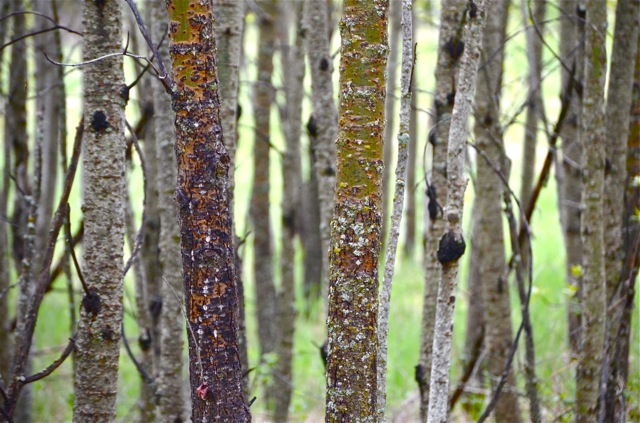
The tall, slender trunks, each a natural canvas


Aspens


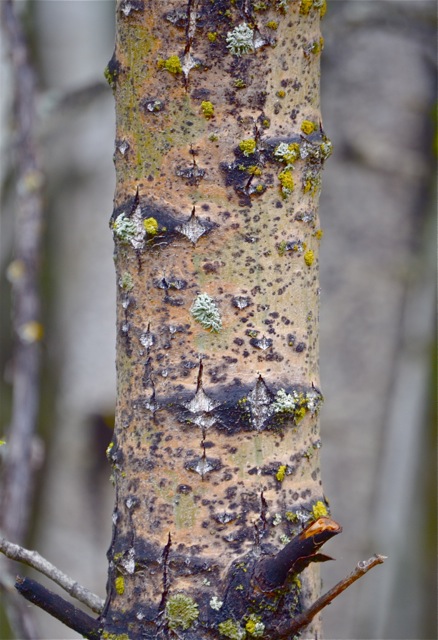
Colours and textures wrapped around


Nature's canvas


and moss as paints.


Moss on branch


Moss on tree stump


Nature’s artwork

Moss on tree trunk


Moss or fungus? No matter. Here’s life

Moss, Fungi, or Ivory?


Monet in Nature

DSC_0296


And I couldn’t resist the capture, even though just a common sparrow, obscure, blocked by a branch:

Sparrow


Nature’s Artist at work in Annie Dillard’s Puget Sound as well as my Boreal Forest. Her descriptions are strikingly close to what I had experienced.

“I see a hundred insects moving across the air, rising and falling. Chipped notes of birdsong descend from the trees, tuneful and broken; the notes pile about me like leaves.”


Despite geographical distances and variance in environs, her words resonate:

“Time and space are in touch with the Absolute at base.”

– Annie Dillard, Holy The Firm

***

Saturday Snapshot is hosted by Melinda of West Metro Mommy Reads. CLCIK HERE to see what others have posted.

 Photos in this post taken by Arti of Ripple Effects

Do Not Copy or Reblog

***


Saturday Snapshot May 24: Yellow Bird

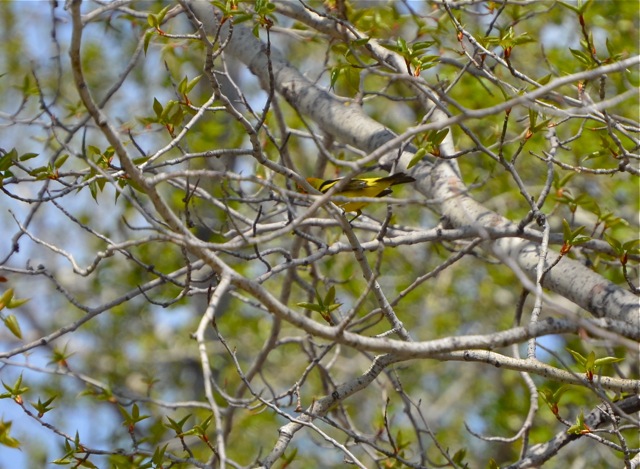
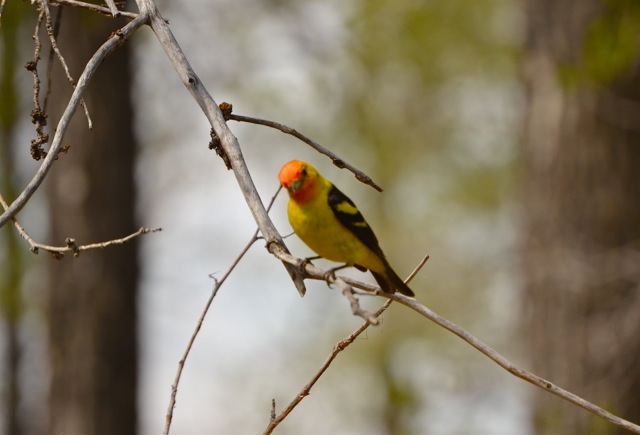
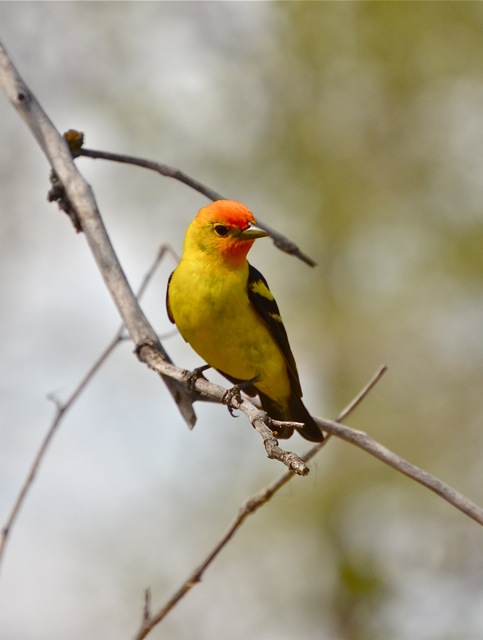
Here’s another encounter of the ‘ordinary’ yet not so ordinary. A yellow bird is very common for those living in warmer climates. But for me, it’s a rare sighting. I was so excited to see something bright yellow moving among the branches. Can you spot it? Something yellow among branches A better view as I quietly got closer: Getting Closer but just for a short few seconds, and then it was gone, fleeing from a lone paparazzo: Fleeing from a lone paparazzo I followed the yellow bird from tree to tree for well over a half hour. I did not know what kind of bird it was; I did not much care. That would come later when I got home. At that moment, I was too preoccupied with fixing my eyes on it, to whatever perils may come. I was stalking high and low among last year’s flood debris of fallen trees along a damaged landscape, trying not to trip without looking down at my feet.

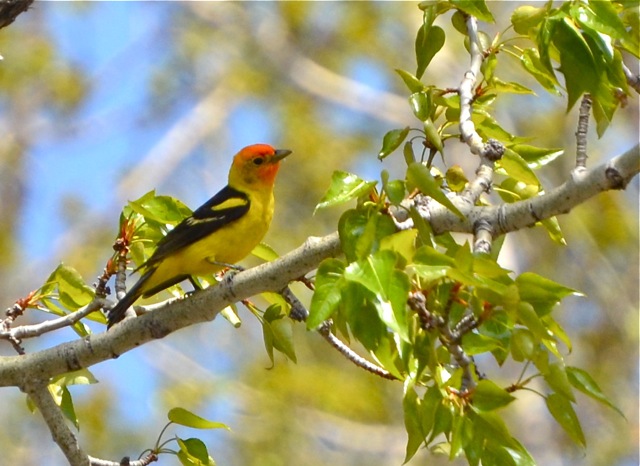
Finally, a clearing: Caught in a clearingYellow, black and red contrasting fresh green leaves and a pale blue sky in the backdrop, a colourful picture.

Eventually, he seemed to appreciate my tenacity, and rewarded me with a couple of poses: Pose 1   Pose 2   Only after I’d uploaded my photos later and checked the features did I identify what bird it was: The Western Tanager. This one is a male in breeding season. “These birds live in open woods all over the West…” so says the Cornell Lab of Ornithology. They may be common, but this one is unique because it’s the only one I’ve seen. That makes it special for me.

***

Saturday Snapshot is hosted by West Metro Mommy Reads. Click Here to see what others have posted.

Photos in this post taken by Arti of Ripple Effects, 2014. Please DO NOT COPY or Reblog.

***

The Lunchbox (2013): A Meal that Binds

The Lunchbox premiered at Cannes last year. Since then, it had appeared in many other international film festivals, nabbing nominations and wins. I missed it at TIFF last September, so am glad I’ve the chance to watch it in the theatre recently. Here’s my review published in the May 18 issue of Asian American Press, a weekly newspaper based in Minneapolis, MN. That’s right, folks, it’s globalization.

***


The Lunchbox Movie Poster

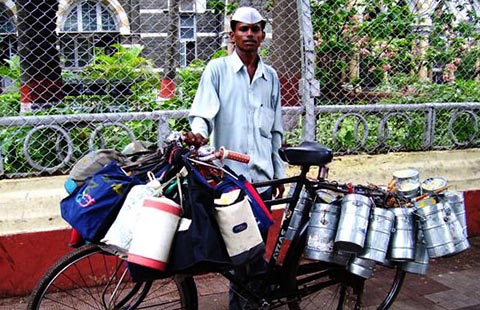
The lunchbox, dabba, is a stackable unit of four or five round metal cans fastened by straps on the side that flip up to attach to a handle on top. Every day in Mumbai, India, five thousand dabbawallahs, or lunchbox deliverymen, would fetch the dabbas from homes after housewives have filled them with hot food and deliver the tiffin to their husbands in their offices. After lunch, they would return the empty dabbas back to each home.

In Mumbai alone, there are five thousands dabbawallahs, many of them illiterate. For one hundred and twenty years, they carry dozens of dabbas on their bicycles, negotiate the mass of humanity and impossible street traffic and railways to bring office workers a hot meal from home, or from dabba preparation outlets. Harvard University had studied their inexplicable coding and delivery system. Their finding: only one in a million of these dabbas would ever get lost.

dabbawallah

If you think the title is too mundane for a movie, then just focus on that one-in-a million lost lunchbox. It is picked up from a young housewife, Ila (Nimrat Kaur), and delivered to the wrong recipient, Saajan Fernandes (Irrfan Khan, Life of Pi, 2012), a retiring office worker who has been on the job for thirty-five years. Thus begins the exchange of short notes then letters placed inside these tiffin cans, two strangers who are socially worlds apart, but joined together by a savory meal.

The veteran actor Irrfan Khan won Best Actor at the 8th Asian Film Awards in March this year for his role in The Lunchbox, adding to his several other wins for the film. His subtle and nuanced performance requires no dialogues. Indeed, both Saajan and Ila have not shared a frame together in the movie. I would not so much call this a romantic comedy as their relationship is purely platonic. The romance could well be the ideals and dreams they stir up in each other’s mind through the exchange of written notes. If there is anything comedic it comes as finding a listening ear, a slight relief from the mundane and inescapable in life.

It is interesting to watch how writer/director Ritesh Batra reveals to us the dabba as a metaphor. Like the stackable cans, the story is multi-layered. It touches on marriage, human connections, memories, and dreams. From the mass of humanity, we focus on two individuals striving to find meaning in their daily existence. Like the fastener that strap tight the cans of the dabba, Ila is caught in a loveless marriage with her husband Rajeev (Nakul Vaid), and the aging Saajan is bound by memories of his late wife.

Ila prepares lunch

The film begins with Ila’s attempt to make a delicious meal for her husband Rajeev to win back his heart through his stomach, an advice from an upstairs neighbor Ila calls Auntie (Bharati Achrekar). Ila communicates with Auntie by talking out of her kitchen window. Herein lies the subtle humor of the movie. We do not see Auntie, except just hear her voice. She is like an invisible adviser to Ila’s love life. Poignantly, Auntie herself has been taking care of her own husband, Uncle, who is bedridden and in a comatose state for fifteen years. If life is a bondage like the dabba, Auntie doesn’t show it a bit from her cheerful voice.

Ila’s delicious meals soon get through to the heart of Saajan, the mistaken recipient. Saajan lives alone, and seems to be heading straight to even more meaningless days in his retirement. The note exchanges gradually break through his isolation. Further, albeit reluctantly, he has to train his replacement at work, the young and enthusiastic Shaikh (Nawazuddin Siddiqui). Now this is one lively character that not only offers a humorous foil to the withdrawn Saajan, but like Auntie, Shaikh is optimistic about life, even though he has grown up an orphan. Soon, Shaikh has broken down the barrier with Saajan and the two establish a kind of father/son relationship.

Saajan & Shaikh

With The Lunchbox, his debut feature, Batra has won several screenplay and directing awards. He is definitely one promising filmmaker to watch. His approach here is naturalistic. Shooting on location in Mumbai, the camera captures realistic, ethnographic street scenes and the mass on public transits, telling this Mumbai story in situ. Through the handwritten notes hidden in the mundane dabba, delivered by a traditional human service, the film vividly shows us that even in our day of emails and instant messaging, the route to connect is still through the human heart.

~ ~ ~ 1/2 Ripples 

***

Related Movie Reviews on Ripple Effects:

Life of Pi (2012): The Magical 3D Experience

English Vinglish (2012)

Slumdog Millionaire (2008)

The Namesake (2006): Movie Review

***

Saturday Snapshot May 17: Franklin’s Gulls

I discovered a flock of Franklin’s Gulls a few weeks ago. Seeing the limited breeding area shown on the map, I consider myself privileged to be living right in this zone to welcome them.

Franklin's Gulls Map 1
Source: South Dakota Birds and Birding


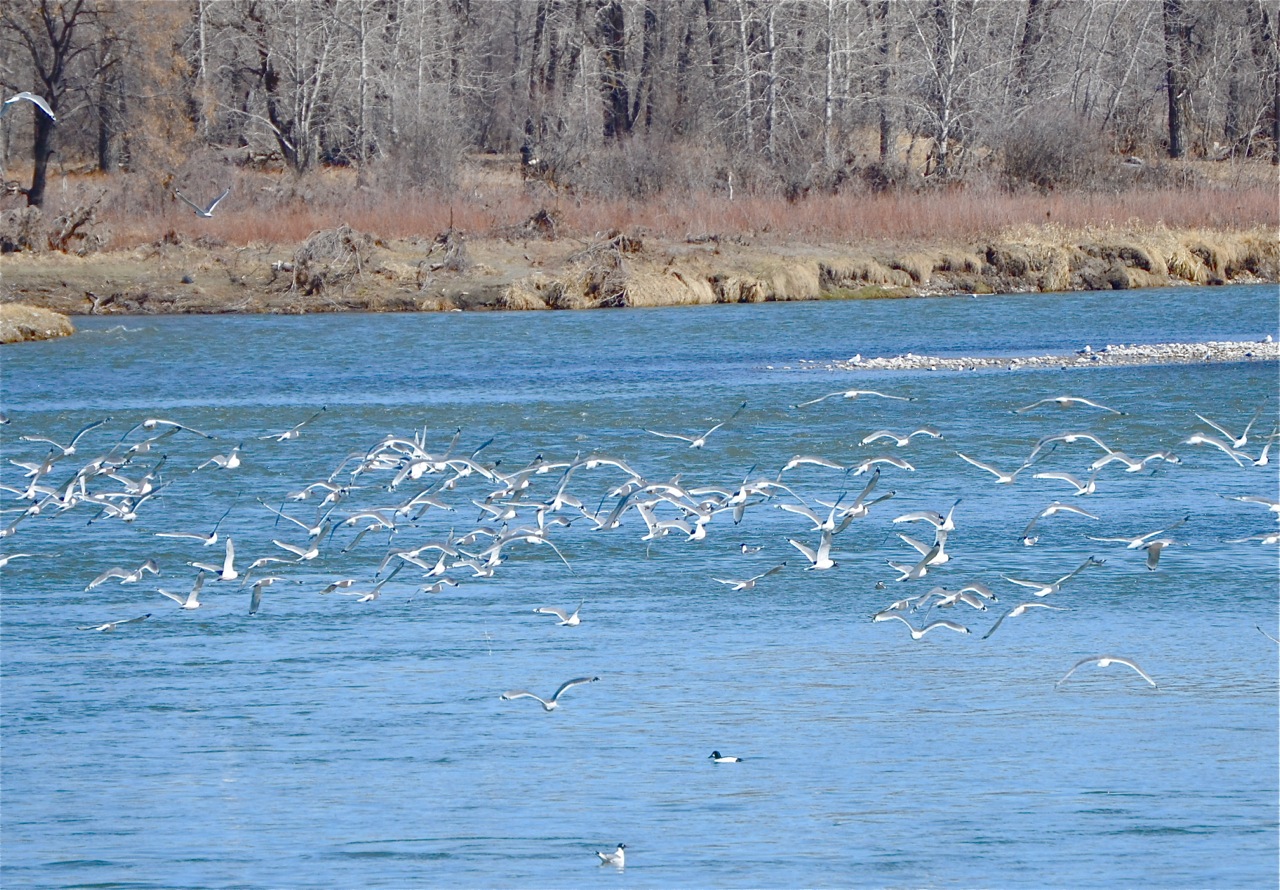
I heard the calls of gulls from afar, even before i saw them. I admit I wasn’t too excited. My initial thought was, ‘just another bunch of ordinary seagulls’. When I got closer, I saw a huge flock, close to a hundred of them.

Flocks of Franklin's Gulls

Only after I’d uploaded my photos to my laptop did I realize these were not ‘ordinary gulls’ (for us I suppose are the more common Ring-billed Gulls). At first, I could not tell what they were. I had to look up the detailed descriptions to identify them.

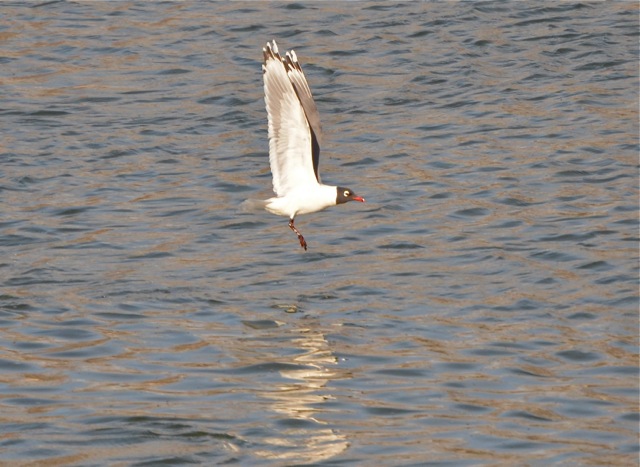
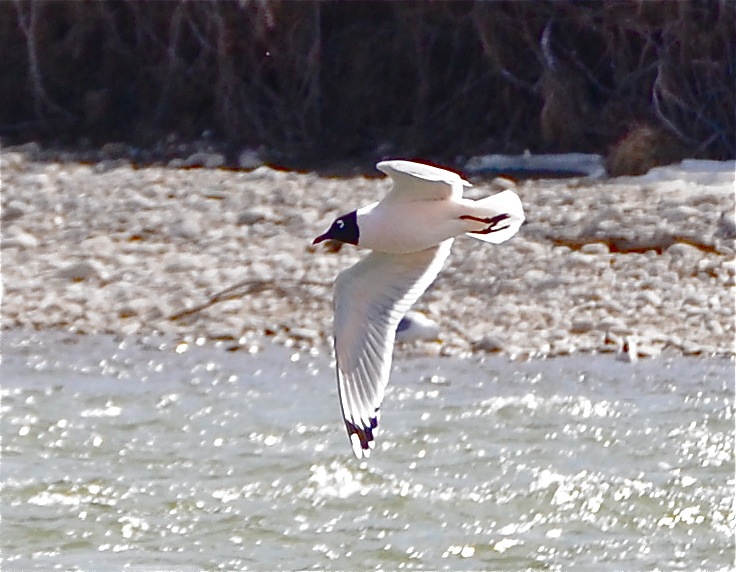
They were Franklin’s Gulls, breeding adults. Their black head and white crescent eyes make them look like they’re hooded. They look almost cartoonish, comical, everyone full of character.


Franklin's Gulls
Below their dark hood is a white neck, their wings dark gray. The trailing edge of the wing is white, wing tip black with white spots. Slender and handsome:

landing


FG


Franklin's GullSee the beak of the gull on the upper left. In the light, it’s translucent orangey-red:

Orange Translucent Beak

Beautiful wings looking from the top:

Beautiful Wings

completely snow-white from underneath:

Snow white underneath


See Jonathan Livingston Seagull soar above the crowd, gliding in solitude:

Jonathan Livingston Seagull


After learning about the Franklin’s Gulls, I found I didn’t know much about the ‘ordinary gulls’ either… maybe nothing is ordinary in Nature.

***

 Saturday Snapshot is hosted by Melinda of West Metro Mommy Reads. CLICK HERE to see what others have posted.

ALL PHOTOS TAKEN BY ARTI OF RIPPLE EFFECTS.

DO NOT COPY OR REBLOG

***

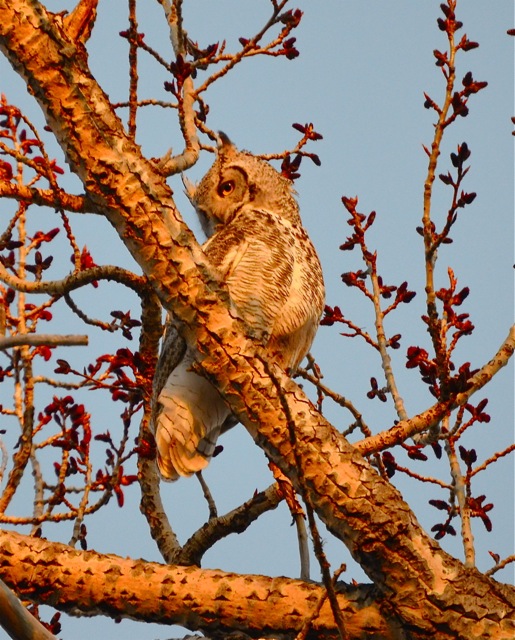
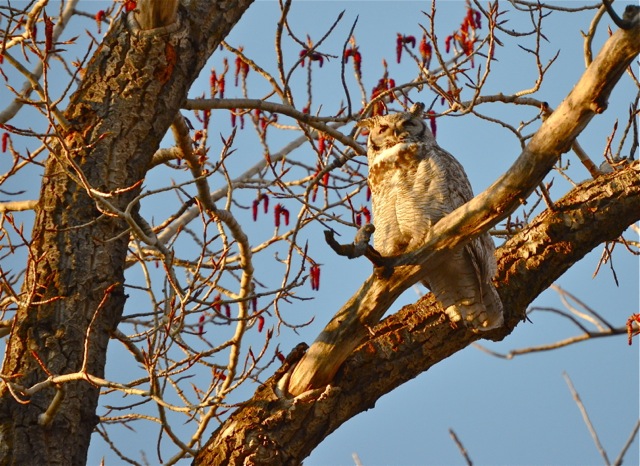
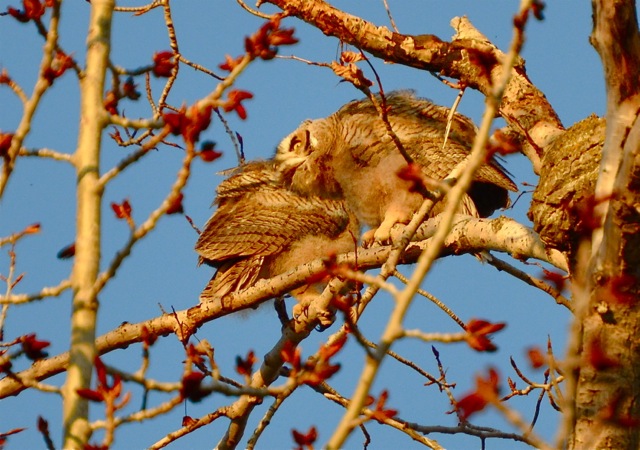
Saturday Snapshot May 10: The Owl Family… Moonrise Haven

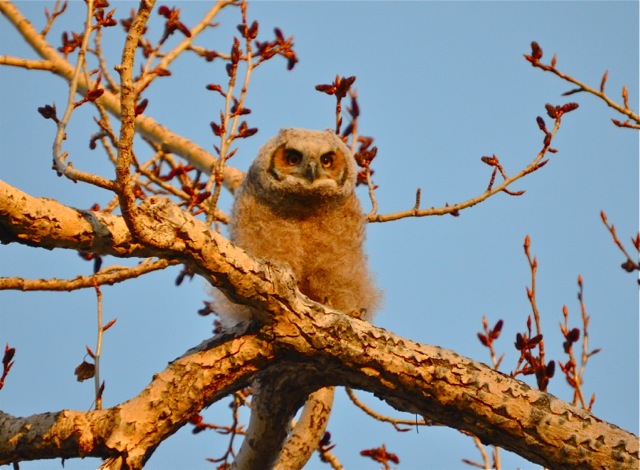
Here they are, all come out to enjoy the evening sun. In just a few weeks, the Owlets have grown so much they are about the size of their parents. How I tell them apart is by their still fluffy down. Here’s Owlie 1:


Owlet 1


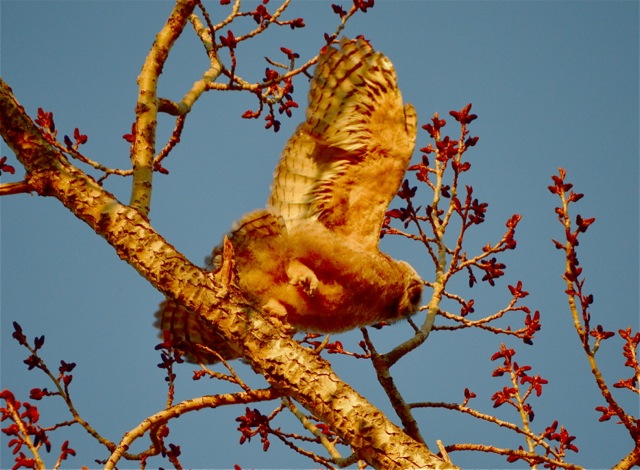
He likes to try out his new wings:

Trying out new wings


Oops, caught in the branches. Flapping and struggling to get untangled:

Caught in the branches


And Mama’s reaction to all the fluttering? Totally unruffled. She’s too busy posing for me:

Mom stays put


Here’s the more quiet Owlie 2:

Owlet 2


And where’s Papa? As always, watching from a distance on another tree, calm and cool. Here he is, hooting away. That’s the first time I actually hear an Owl hoot, rhythmic calls, music for Mama and kids, and me:

Papa


Papa Hooting

Who teaches their young to fly and land safely? Don’t look at Mama or Papa, they don’t lift a finger:

Learning to fly and land


Who teaches them to play nice, and hug each other? That too, is instinct.

Who taught them to hug and play nice


Ok, for Mothers Day, let’s have a photo. I’ll entitle this one “Moonrise Haven”, with thanks to Wes Anderson:

Moonrise Haven

Ah… Natural parenting, so simple, almost effortless.

***

Saturday Snapshot is hosted by Melinda of West Metro Mommy Reads. CLICK HERE to see what others have posted.

ALL PHOTOS TAKEN BY ARTI OF RIPPLE EFFECTS, 2014. 

DO NOT COPY OR REBLOG

***

Previous Posts on the Owl Family (In Chronological Order):

The Great Horned Owl (March 2013)

Sign of Spring: Nesting (April 2013)

Spring Babies and Parenting Styles (May 2013)

The Hustle and Bustle of Spring (April 2014)

Within the Budding Grove (April 2014)

***

Saturday Snapshot April 26: Within a Budding Grove

I just can’t resist. Having seen life bursting out in the spring forest, I’ve an urge to borrow Proust’s title here. But unlike Proust’s magnificent work, within the budding grove where I go birding, everything is stark literal, direct and visceral. No need for metaphors. Alive, chirping, calling, even confronting…

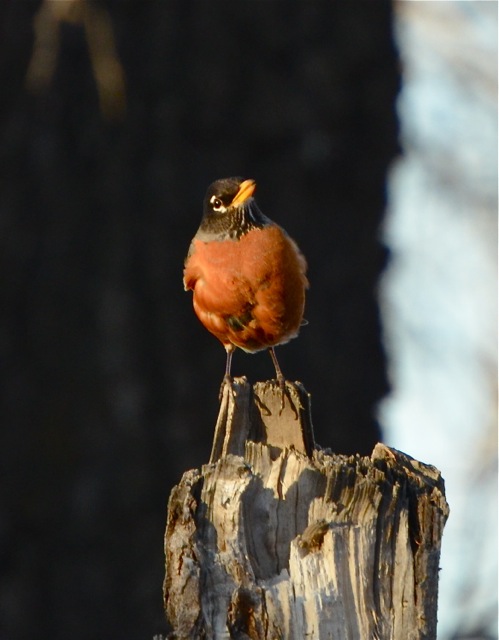
Robins stay here in the winter, but they keep quiet and hidden. Good to see energy recharged:

Robin

Or simply posturing. Here’s one Angry Bird:

Angry Bird

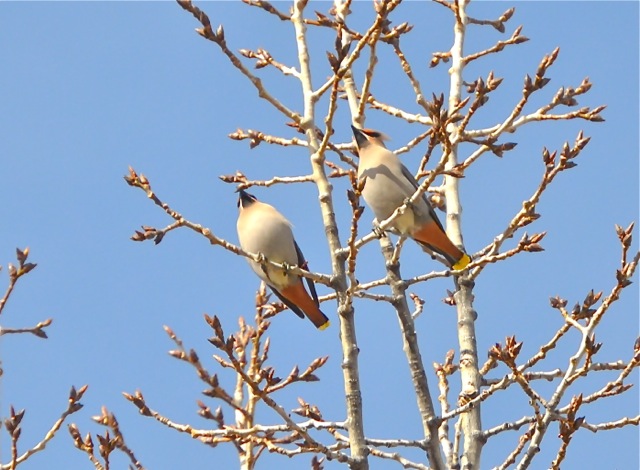
In contrast, the Cedar Waxwings are more elegant, embracing the sun with poise and panache:
Waxwings


Cedar Waxwing 2

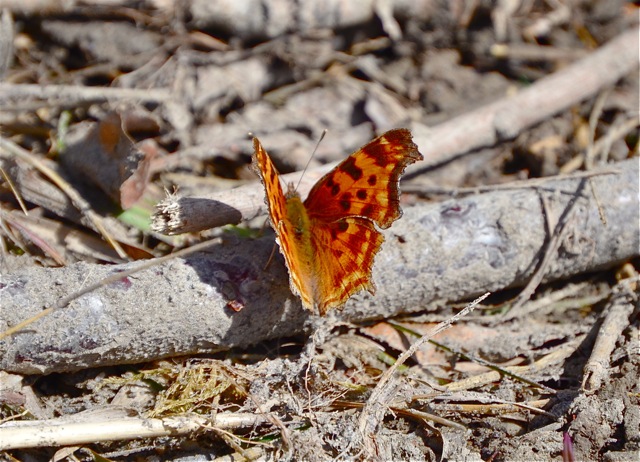
And there are other beautiful creatures with wings, in much simpler form but no less elegant:

Butterfly

The woods are lovely, but the main draw is the Owl Family. Again, another sighting of Papa amidst the budding grove, silently keeping watch…

Papa keeps watch

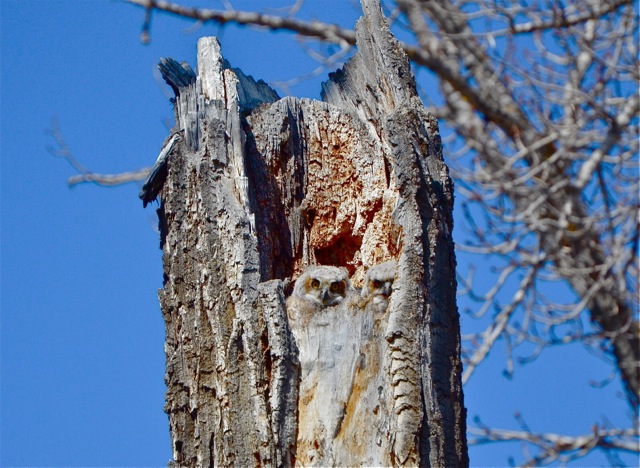
over this trunk from a short distance, so not to draw attention to the nest I suppose:

Owlets in nest inside trunk

Can you see them?

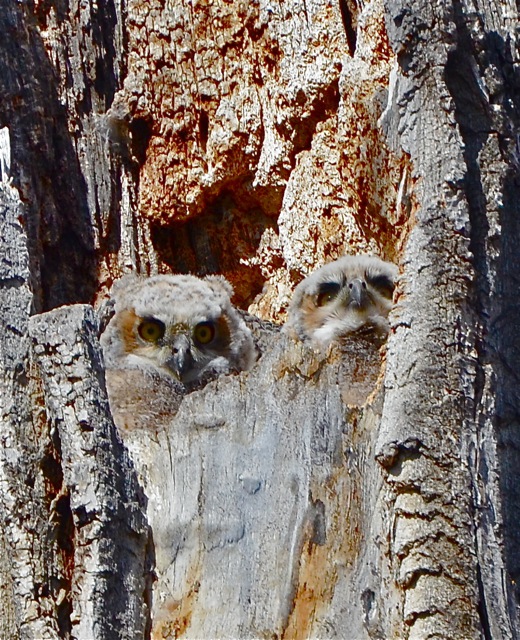
Here they are … a closer look. Two Owlets born shortly before Easter. Mom is in there, probably taking a much needed nap. This is a different pose from the one I posted on Easter Sunday:

Owlets

What does this make you think of? For me… Mt Rushmore.

Within a budding grove, surprises abound.

***

Saturday Snapshot is hosted by Melinda of West Metro Mommy Reads. CLICK HERE to see what others have posted.

ALL PHOTOS TAKEN BY ARTI OF RIPPLE EFFECTS

DO NOT COPY OR REBLOG

***


When Easter is the Spring

Quickening

Dead trees draw life
when the days expand and the sun
fulfills its promise, oft delayed
by the clutch of ice.

Clotted, gnarled, knotted twigs
on the trees sense sap and the death
of death. They stretch, begin
to puff green on the end.

We sing new songs
of a Life laid down for rebirth
when Easter is the Spring
and the branch is Christ.

— Mark A. Noll

**

Every new birth is a miracle. I saw two yesterday:

2 Owlets

***

And To All, A Happy Easter!

***

Saturday Snapshot April 12: The Hustle and Bustle of Spring

After a long and silent winter, I’m pleasantly surprised by the sounds and activities of spring in the woods. Here I’m just showing you the photos, so you can’t actually hear any sound. But from the images, you can imagine the cacophony there.

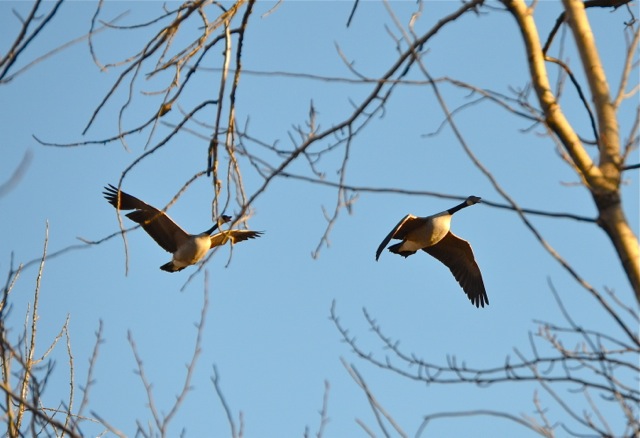
The sky is busy, and the woods, actually noisy. Birds beating one another to nesting sites, usually in old tree trunks. All of them are vigilant guarding their own. Avian and human traffic collide. And it looks like the biggest in size makes the loudest calls. No, not me. Canada Geese own the woods.

They’re ubiquitous, their calls dominating the air. And of course, they have the right of way. I nearly got hit by this one:


Right of way

Another standing tall, scouting for nesting site, or maybe guarding one:

Canada Goose scouting for a nesting site


They are all vigilant when it comes to protecting their nests:

Vigilant

I know how much it means to them… Here, a couple gazing out into the late afternoon sun from their front porch:


Canada Geese nesting 1

More are still flapping their wings to better trunks, or maybe just enjoying an evening dip in the setting sun:

Canada Geese flying in woods

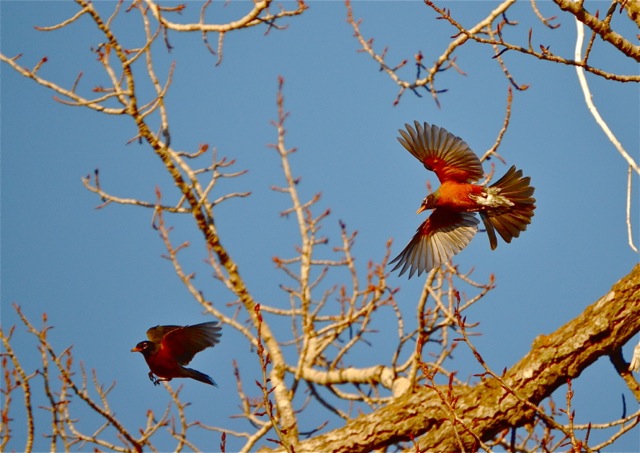
In the meantime, there are others making lesser but more melodious calls, like the Robins, happy that winter’s finally over:

The Robinsor the Northern Flicker, charging with renewed energy:

Northern Flicker

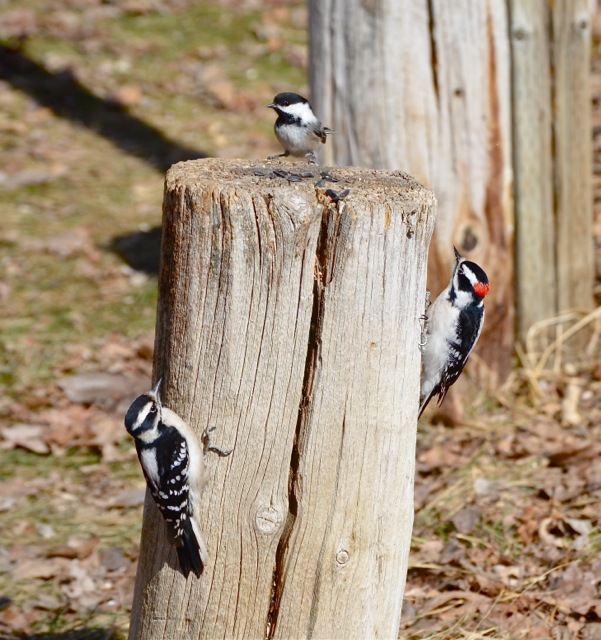
Some quietly sharing:

Woodpeckers & Chickadee

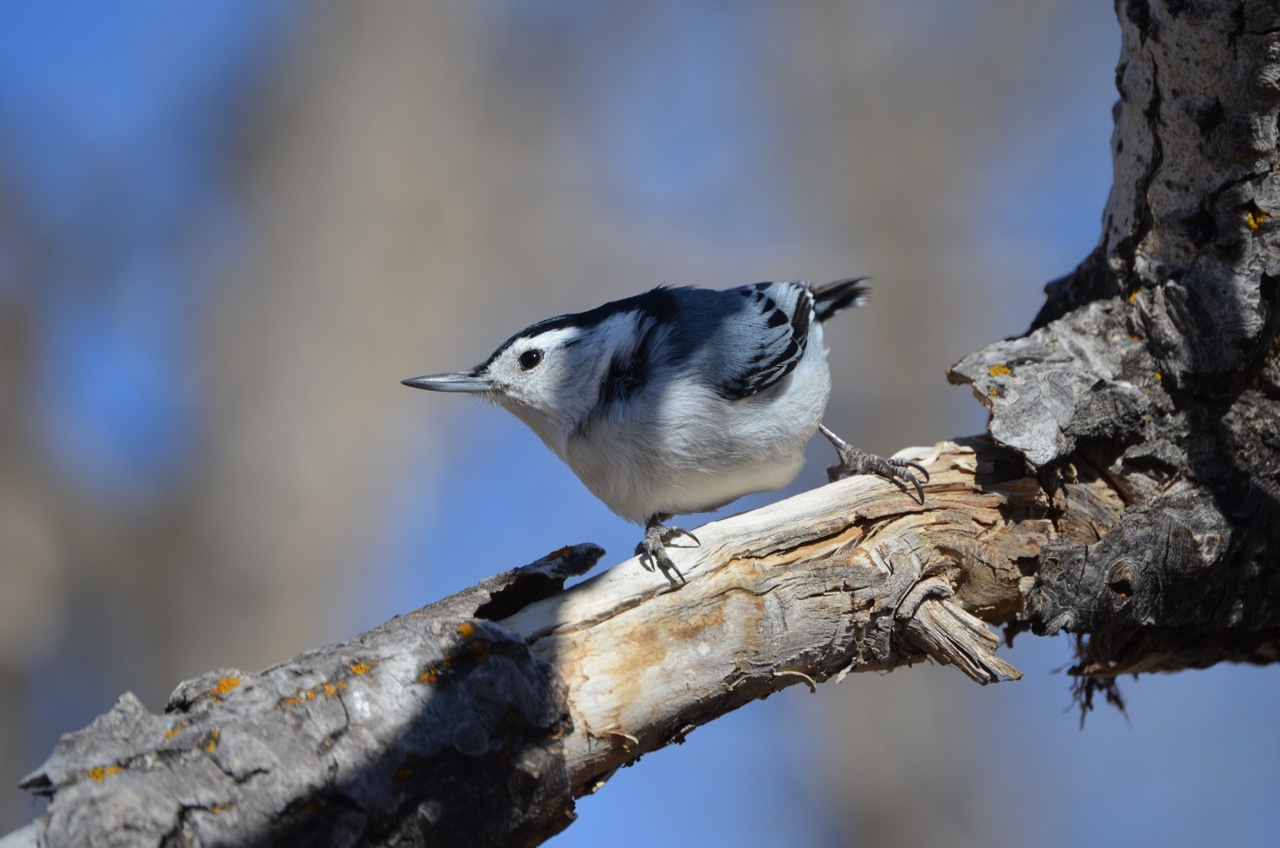
or enjoying the (relatively) warm(er) breeze like this Nuthatch:Nuthatch

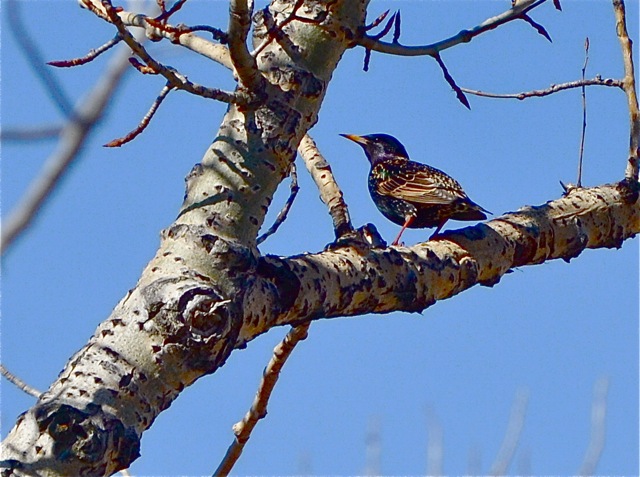
The European Starling is not just another black bird. A closer look you’ll see the shiny plumage, and their calls are much more pleasing than those of the Geese:

ES Not just a black bird


But the major attraction in the woods is, again, the Owl Family. I’m amazed how they would come back to the same trunk for nesting, and that Papa Owl always stands on guard from a distance, his sharp eyes watching over his own.

Papa Owl watching from afar


I’m mesmerized by his calmness and cool attention. If he needs to, Papa can fight off a Canada Goose with his talons. But he knows when to use force, and when to just placidly stand guard.

This is the old tree trunk he is watching quietly from afar:

Old tree trunk

A closer look you’ll see Mama Owl nesting in there. I’m told by fellow birders that two Owlets have been seen poking their downy heads out partially. But after a long while waiting, craning my neck up, I can only see Mama:

Mama Owl nursing young babes

I’ll have a better chance of taking a family photo once the Owlets fledge.

Canada Geese begin to converge near the Owl’s nest, trying to draw our attention with their jealous squawks.

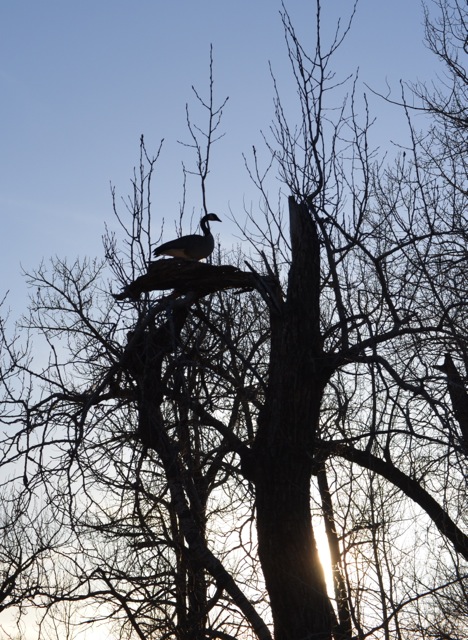
As the evening sun sinks below the horizon, I can see this Goose making its nest not far from the Owl Family. And I know too, Papa will be keeping watch throughout the night, feeding and protecting his very own.

Canada Goose silhouettes against the setting sun


Saturday Snapshot is hosted by Melinda of West Metro Mommy Reads. CLICK HERE to see what others have posted.

***

ALL PHOTOS TAKEN BY ARTI OF RIPPLE EFFECTS, APRIL 2014.
DO NOT COPY OR REBLOG


Finally, Spring!

The last few days have been the warmest, welcome sign that our waiting is finally over. Just a few degrees above zero, but enough for me to venture out to the woods and go on my first birding walk. I had to tread squeaky, slushy paths of melting snow and ice.

Here are some views. These photos were taken just last Friday April 4. Melting icicles dripping into the icy creek. Yes, this is spring for us. No flowers yet, not even green grass. But this is promise enough:

Melting Icicles


Last fall they dominated the sky, but I’d missed the Canada Geese through the long, silent winter. Surprised to find these two here enjoying the cool spot, weren’t bothered a bit by my intrusion:

Canada Geese

Up close and personal… Welcome back!

Up Close and Personal


The Chickadee never flew away. But I’m sure she’s glad with the warming up:

Chickadee


The Bohemian Waxwings stay in the winter and moves north after the cold. But the Cedar Waxwings’s arrival from the south heralds spring:


Cedar Waxwings

Silky fine spring look worthy of any fashion magazine cover:


Cedar Waxwing

More spring birding photos coming up on Saturday Snapshot.

***

All Photos taken by Arti of Ripple Effects, April, 2014.
Do Not Copy or Reblog

 ***