‘Flappers and Philosophers’ by F. Scott Fitzgerald: My entry into the 1920 Club

Learn of the 1920 Club early this week and am instantly sold. I’m to pick a book published in the year 1920, read it and share my thoughts in this one week April 13-19. This past month and likely some more to come will probably be indelible in our collective memory. Joining The 1920 Club is an excellent diversion as I follow the Stay Home and Stay Safe directive during this Covid-19 Pandemic.

1920, exactly one hundred years ago, saw F. Scott Fitzgerald (1896-1940) rise in America’s literary horizon. In March, 1920, he published his debut novel, This Side of Paradise, and later that year, a short story collection Flappers and Philosophers. Upon the end of his short life of 44 years, Fitzgerald had left a prolific oeuvre of four novels and 164 short stories published in magazines, some included in his four short story collections.

F and P.

I found Flappers and Philosophers online from Project Gutenberg. Due to time constraints, I thought a short story collection would be a good choice. Glad I picked this up as it’s a pleasant surprise. Reading Fitzgerald’s stories has altered my previous impression of the Jazz Age author.

I must admit, I was attracted to the title first. What’s a flapper? I’d to look it up for a precise definition. Several online dictionaries offer similar, succinct ones. But I like the Wikipedia’s more detailed descriptions:

“Flappers were a generation of young Western women in the 1920s who wore short skirts (just at the knee was short for that time period), bobbed their hair, listened to jazz, and flaunted their disdain for what was then considered acceptable behaviour.”

But when I delve into the eight stories in this collection, I’m pleasantly surprised and have much enjoyed Fitzgerald’s versatility, humour, descriptive prowess, and his observations of the American life which is so different from the impression I got from The Great Gatsby. Long story short, here’s my synopsis of the tales.

_________
.

The Offshore Pirate

Imaginative and fanciful, a story that takes place out the shore of Florida. A 19 year-old heiress who wants to break out of the mold of the upper echelon cautiously falls prey to Stockholm Syndrome when a pirate storms her yacht, taking her captive in both mind and soul. The opening lines draw me in instantly:

This unlikely story begins on a sea that was a blue dream, as colourful as blue-silk stockings, and beneath a sky as blue as the irises of children’s eyes. From the western half of the sky the sun was shying little golden disks at the sea––if you gazed intently enough you could see them skip from wave tip to wave tip until they joined a broad collar of golden coin that was collecting half a mile out and would eventually be a dazzling sunset.

A word of caution though, Fitzgerald’s language reflects that of his time. When it comes to race references, modern day readers might find it uneasy to come across such descriptions.

.
The Ice Palace

19 year-old (apparently the author’s favourite age for his female protagonists) Sally Carrol, a Southern girl in Georgia, swept by ennui, plans to venture to the great Northeast by marrying his boyfriend Harry from there. She soon finds the North may not be as ideal as she has dreamed of. Fitzgerald’s own life and marriage could have a little influence on the creation of the story. The author’s fictional take on the North South divide.
.

Head and Shoulders

So far we’ve seen two ‘flappers’. But who’s the ‘philosopher’? Here’s an interesting story, again, with Fitzgerald’s humor and irony, tells how a brainy academic prodigy falls for a chorus girl, and how the two manage to invent a new life together. Horace gets into Princeton at 13 and into the Masters program at 17, but life takes a 180 degree turn when he falls in love with show girl Marcia. Under Fitzgerald’s pen, life can be altered into the most ironic and unimaginable.

.
The Cut-Glass Bowl

A cut-glass bowl, a popular wedding gift in the Middle West, is Evylyn Piper’s treasure in her home. It is also, sadly, a metaphor for fate, the misfortunes that will befall her. Fitzgerald’s more serious story here but equally vivid in the description of marriage life, and the journey Evylyn has to travel alone. Here’s what her friend Carleton, the beau who’s lost her to Evylyn’s future husband Harold, says to her: “Evylyn I’m going to give a present that’s as hard as you are and as beautiful and as empty and as easy to see through.” That of course is the cut-glass bowl. I love the suspense Fitzgerald embeds in even a metaphor.

.
Bernice Bobs Her Hair (Book cover above)

F. Scott Fitzgerald’s version of Jane Austen’s Emma. Marjorie’s cousin Bernice comes to stay in her home for a few weeks. At first disinterested with the homely-looking and socially inept girl, Marjorie suddenly sparks excitement as the miserable Bernice looks to her for advice. Marjorie teaches her lines to memorize when speaking to boys at parties, and getting her hair bobbed seems to be the key to attract them all. Well, what follows is an episode that even our dear Jane herself would LOL.

.
Benediction

The most serious story in the collection as Fitzgerald depicts the struggle between the flesh and the spiritual. Lois is at the crossroads, trying to decide if she should continue to see a man who takes her only for sexual pleasures, albeit the desire is mutual. Lois’s internal struggles face a haunting experience as she visits her brother who’s in a Jesuits monastery getting ready for priesthood. Fitzgerald possibly had built the story upon his actual visit to a seminary in Woodstock, Maryland, when he accompanied his cousin to visit her brother there.

.
Dalyrimple Goes Wrong

Could be Fitzgerald’s brief version of Dostoevsky’s Crime and Punishment, with a twist. Coming back from the War, ex-star-soldier Bryan Dalyrimple has no luck in the work world for which he’s ill equipped. He’s stuck in a job with no future and low pay, albeit he thinks highly of himself knowing he deserves better. He then schemes to commit a series of petty crimes. Unlike the doomed Raskolnikov, Bryan is spared Siberia and on track to reaching the American Dream.

.
The Four Fists

Throughout his life, Samuel Meredith has had four punches laid on his face, each time results in an epiphany of some sort, changing him a bit, and even leading him to a totally different life course. A most ingenious story told with much humour. Once again, looks like Fitzgerald is saying, life is full of surprises; what comes as a blow could well elevate one to a path of success. But most importantly, do what is right.


***

.

1920-club

The 1920 Club is hosted by Kaggsy’s Bookish Ramblings and Simon at Stuck in a Book, April 13-19, 2020.


‘Edith’s Diary’: Madness, Escape, or Creativity?

“I’ve had lots of troubles, so I write jolly tales.”    ––– Louisa May Alcott
.

Edith's DiaryMy point of contact with Patricia Highsmith’s work is mainly in the movies: Strangers on a Train, The Talented Mr. Ripley, Two Faces of January, and Carol based on her novel The Price of Salt which I’d read. Edith’s Diary, first published in 1977, is a very different work from all the above.
As the book begins, Edith Howland, 35, her husband Brett, and their ten year-old son Cliffie have just moved into small town Brunswick Corner, Pennsylvania, from New York City. The year is 1955. The reason for the move is for Cliffie to grow up in a country environment with more space to roam. Edith’s diary is a precious possession wherein she records her experiences.

Edith is quick to immerse in the community and makes a few friends. With Gert, she successfully revitalizes the local paper Bugle, and she continues with her freelance writing. It’s Cliffie that’s her main concern. Cliffie isn’t a normal boy. He keeps to himself, is indifferent to his parents, unkind to their cat Mildew, makes no friends and doesn’t do well in school. That’s enough for alarm, but Edith’s attitude is concern mixed with appeasement. 

Not long after they’ve moved into their house, Brett’s elderly uncle George comes to live with them, a decision not from mutual consent between the couple. Edith has to take care of George, cook and bring his meals to his bedside, keep the house in good order, write for Bugle and pitch to magazines, all while keeping an amicable social front.

Ten years gone by, life hasn’t aligned much with Edith’s wishes. Far from it. Cliffie can’t make it into any college, no full-time job and turns to alcohol and drugs to pass his days. Old George still hangs in there needing more of Edith’s time and attention. Most devastating to her psyche is Brett, who has left her and moved back to NYC to a new life of his own by marrying his young secretary. Highsmith is meticulous in detailing the psychological world of Edith’s, her frail personality, appeasing her son and yielding to her husband.

But as life’s burdens become heavier and things get gloomier, Edith’s entries in her diary shift to a more and more uplifting tone. She creates a different life for her son in her diary entries, imagining Cliffie successfully graduates from Princeton and begins a good career, marries a sweet girl who later bears her a grandchild.

Edith’s diary is an imaginary narrative that’s totally different from her real life. Towards the end, madness takes over and Highsmith’s ending is both shocking and dismissing. No spoiler here. However, reading the book makes me think of a quote from Little Women‘s author Louisa May Alcott:

I’ve had lots of troubles, so I write jolly tales.    ––– Louisa May Alcott

What’s the difference between Alcott writing jolly tales and Edith’s detailing an alternative life in her diary? If Edith isn’t writing into a diary, which is supposed to be ‘non-fiction’, isn’t she just creating a work of fiction? Where’s the line between escape and creativity?

Highsmith drops obvious clues for us describing Edith’s sinking deep into the slough of madness as she actually prepares for her imaginary Cliffie’s visit to her home for dinner with wife and son in tow. So, it looks like Highsmith is showing us the demarkation, when the two lives, the imaginary and the real, merge into one, therein lies madness.

But, is Edith’s diary an evidence of madness, or an imaginary work of fiction? Hmm… that would be my question to Highsmith if I were a journalist interviewing her. Now, just let me dwell on that thought some more…

***

Edith’s Diary by Patricia Highsmith, Grove Press, New York, 2018. 393 pages.

Note: Patricia Highsmith’s own diaries will be published in the coming year. Now that would be an interesting read.


Time to attack those TBR piles

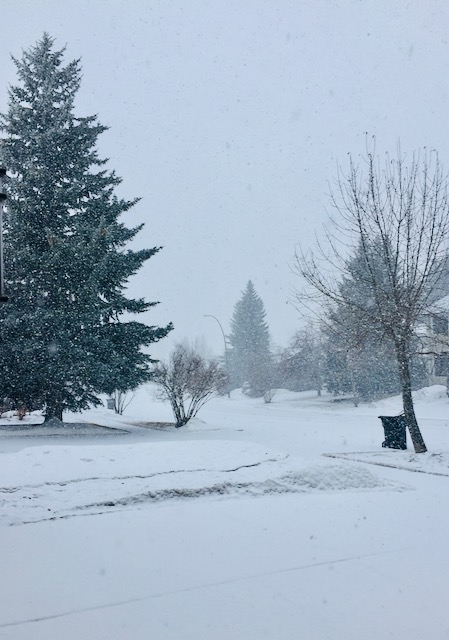
They’re everywhere, on the shelves and in boxes on the floor. Now’s a good time. If you’ve seen my Twitter photo, it’s perfectly alright to stay inside and read when outside looks like this. Look closely, yes, it’s snowing cats and dogs:


Outside

.

Here are some of them, in no particular order. Where do I begin?

***

The Ambassadors by Henry James

The Heart of the Matter by Graham Greene

Brighton Rock by Graham Greene

Amsterdam by Ian McEwan

Saturday by Ian McEwan

Saplings by Noel Streatfeild

The Enchantress of Florence by Salman Rushdie

A Fine Balance by Rohinton Mistry

The Headmaster’s Wager by Vincent Lam

The History of Love by Nicole Krauss

The Nest by Cynthia D’Aprix Sweeney

East of Eden by John Steinbeck

The Magic of Saida by M. G. Vassanji

Tell it to the Trees by Anita Rau Badami

The High Mountain of Portugal by Yann Martel

Self  by Yann Martel

Confessions by St. Augustine

A Secular Age by Charles Taylor

The Matisse Stories by A. S. Byatt

Our Mutual Friend by Charles Dickens

Death in Venice and Other Stories by Thomas Mann

Villette by Charlotte Brontë

The Tenant of Wildfell Hall by Anne Brontë

Lit by Mary Karr

The Plague by Albert Camus (O, not now)

O Pinoeers! by Willa Cather

Reborn by Susan Sontag

Cool Water by Diane Warren

The Marriage Plot by Jeffrey Eugenides

Moby Dick by Herman Melville

The Sunday Philosophy Club by Alexander McCall Smith

The Ministry of Utmost Happiness by Arundhati Roy

Jacob’s Room by Virginia Woolf

The last three volumes of Proust’s In Search of Lost Time

.
***
.

I’ll stop here.

Your 2 pebbles? What are some of your TBR titles?


Staying Home Binge Reading

Extraordinary times call for extraordinary measures, and I’m glad to do my social duty to stay home and binge read.

Since the beginning of the year, I’ve been reading mysteries from various countries. From the UK, Julian Symons’s The Colour of Murder, Agatha Christie’s Death on the Nile, Jacqueline Winspear’s Maisie Dobbs, and Alex Michaelides’s The Silent Patient, to the US, John Grisham’s Camino Island, and my first Mary Higgins Clark All by Myself, Alone, which reads like an American version of Death on the Nile. And now getting through Patricia Highsmith’s Edith’s Diary, which is a sort of psycho-mystery.

But thanks to Japanese Literature Challenge 13 over at Bellezza’s, I’m introduced to Japanese mysteries. I started with Akutagawa Ryūnosuke’s (芥川 龍之介) classic short stories “Rashomon” and “In A Grove”, posted here. After that, I’ve been intrigued by the novels written by the prolific Keigo Higashino (東野圭吾). Beginning with Malice, I’ve since binge read five of his mysteries.

There are ten books in the Detective Kaga series but only two have been translated into English: Malice and Newcomer, which I’ve reviewed in a previous post.

From the Detective Galileo series, there are 8 books from which three have been translated, The Devotion of Suspect X, Salvation of a Saint, and A Midsummer’s Equation. I devoured these in the past few weeks. Not everyone of them is a 4-Ripple rating, but this one definitely deserves it.

The Devotion of Suspect X


The Devotion of Suspect X book cover


(Winner of the 2005 Naoki Prize for Best Novel in Japan, and also winner of both the Edogawa Rampo Prize and the Mystery Writers of Japan Prize for Best Mystery. The English translation was nominated for an Edgar Award in 2012.)

From the start, the reader is eyewitness to a murder. We know who committed the crime, the murder weapon, the motive, and the actual scene. It happens in the home of single mother Yasuko and daughter Misato. The victim is Yasuko’s ex-husband, a menace in her life. A neighbour, Ishigami, is in his adjacent apartment unit at the time. What follows is a cat-and-mouse chase––in Higashino’s leisurely pace––of the police and the suspect and possible accomplice.

Detective Galileo is the nickname the Tokyo Police Department had given Manabu Yukawa, Assistant Professor of Physics at Imperial University. Yukawa is a college friend of Detective Kusanagi and someone whom Kusanagi seeks when he needs to bounce off ideas or just shoot the breeze, an actual phrase from the English translation, curious to know the original Japanese idiom.

Higashino’s novels are like bookish tourism. His story, characters and settings make movie images in my mind of what everyday Japanese life is like. Here in this case, the murder weapon is the electrical cord from a kotatsu. What’s a kotatsu? I wondered, so was happy to divert to some Googling on that. Do go and find out if you’re interested. Lively pictures I did find and a new discovery of a common item in a Japanese home.

Back to the book. The physics professor Yukawa is logical. He analyses and deducts with a clear mind. Funny that the real detective, his friend Kusanagi is often driven by presumptions and impulses. The two make an odd couple in this series. However, it’s in the suspect Ishigami, a high school math teacher, that Yukawa finds his match. From the case, Yukawa reunites with his university classmate Ishigami whom he has not seen since graduation. Yukawa remembers him as a rare genius, someone whom he respects with heartfelt affinity.

When an amateur attempts to conceal something, the more complex he makes his camouflage, the deeper the grave he digs for himself.  But not so a genius.  The genius does something far simpler, yet something no normal person would even dream of, the last thing a normal person would think of doing.  And from this simplicity, immense complexity is created.

It’s Yukawa, the physics professor who finally figures out the mind of the genius, a conjecture he’d wish wasn’t true, for pathos can overwhelm a rational mind. And that’s a parallel to depict Ishigami. For him, something rare had sprouted within: when love and devotion are factored into an equation, it could lead to the most extraordinary scenario.

With an intriguing plot and unexpected development in the final revealing, Higashino captures the emotions and humanity of his characters in a way that’s nothing short of profound. The story idea Higashino has created here is most unique and original, just reflects the ingenuity of the mind of the writer.


~ ~ ~ ~ Ripples


JLC13


The Devotion of Suspect X by Keigo Higashino, Translated by Alexander O. Smith with Elye J. Alexander. Minotaur Books, New York, 2011. 298 pages


***


‘Newcomer’ by Keigo Higashino

Thanks to Bellezza’s Japanese Literature Challenge, now in its 13th year, I’m introduced to the popular Japanese mystery writer and multiple book award winner Keigo Higashino (東野圭吾), and get to meet the amiable character he created, Detective Kyoichiro Kaga.

Higashino has written two main series of mysteries, one with Detective Kaga, the other Detective Galileo. There are also stand-alone novels. Almost twenty of his books have been turned into movies and TV series in Japan.

I’ve read Malice, and now Newcomer, and become a fan of both Higashino and Detective Kaga. Malice deals with the murder of an author and a possible suspect who’s also a writer; I was drawn to the story right away. However, I find Newcomer even more interesting. Higashino is the accidental tour guide leading his readers to the main roads and side streets of Japanese society.

Newcomer

First off, how do I describe Detective Kaga? Who can I compare him with? As clever as Hercule Poirot, but too sloppily dressed, so, no. As relentless as Harry Bosch, but much gentler and friendlier, so, no. Right, he’s more like Columbo, a young Japanese Columbo, casual in manners, friendly to all, but a gadfly to some. And I did catch him saying, “just one more thing…”

Above all, his very humane way of doing his job is admirable. Here’s a detective with heart. Kaga isn’t only concerned with finding the culprit, but in his own words: “my job as a detective should go beyond that. People who’ve been traumatized by a crime are victims, too. Finding ways to comfort them is also part of my job.” For walking that extra mile, he has made friends but also made himself a nuisance to some, especially those who have reasons to evade him.

The Newcomer in this book refers to Kaga himself, who has just been transferred to the Nihonbashi precinct in Tokyo, a demotion from the Tokyo Metropolitan Police Department’s Homicide Division, something to do with his ‘inappropriate emotional involvement’, an issue that only highlights who Kaga is like. Higashino has dropped a hint for me to find out more from his other books of the Kaga series about what that ’emotional involvement’ is all about. Unfortunately, only Malice and Newcomer have been translated into English in this ten-book series.

Here in Newcomer, a woman newly divorced has been murdered. Kaga not only needs to find the perpetrator of the crime but has to familiarize himself with his new precinct of work, the social geography of the community. We see him following clues to a rice cracker shop, a restaurant, a clock shop and its owner’s dog walking routine, a pastry shop, a theatre company, and a traditional Japanese handcrafts shop. All interesting places to which Higashino leads us to observe the livelihood and human interactions within.

One issue I have with this book, however, is that Higashino introduces a new character close to the end and reveals the denouement with totally new information. Having said that, I’m fascinated by how he weaves together the strands and casually revealing the human tapestry of his society.

I use both the hardcopy and the audiobook, whenever is more convenient. They complement each other perfectly.


JLC13


__________________


Newcomer by Keigo Higashino, translated by Giles Murray. Minotaur Books, New York. Translation copyright, 2018, 342 pages. Audiobook by MacMillan Audio, narrated by P. J. Ochlan, 2018.

__________________


Other Japanese Literature Challenge posts:

Rashomon and Other Stories by Ryūnosuke Akutagawa

The Sound of the Mountain by Yasunari Kawabata

Reading Snow Country in Snow Country

Rashomon and other Stories by Ryunosuke Akutagawa

In participation of Japanese Literature Challenge 13 hosted by Bellezza.

Rashomon and Other Stories

Ryūnosuke Akutagawa (芥川龍之介 1892 – 1927) was an acclaimed early 20th Century Japanese author of the modernist style. Prolific in his short life, Akutagawa had written more than a hundred short stories upon his death by suicide at age 35. He is cited as “The Father of Japanese Short Stories”. The prestigious Akutagawa Prize established in 1935 was named after him to reward the best work of fiction by a new author. Japanese Nobel Laureate Kenzaburō Ōe and crime fiction writer Seichō Matsumoto are among the past winners.

Even though written in the early decades of the 20th century, the six stories compiled in this collection are surprisingly modern in their relevance. Further, despite the author’s gloomy outlook, a few of these stories are sprinkled with a touch of lively humour. The collection shows Akutagawa as an incisive depicter of the human condition and an astute observer of the human psyche.

***

Here are the stories:

In A Grove –– This story and the next are adapted into the renown film Rashomon (羅生門 1950) directed by the legendary Akira Kurosawa (黑澤明 1910 – 1998). The body of a murdered samurai is found in the forest by a woodcutter. His wife has been raped. What has truly happened, however, can’t be determined as the witnesses all tell very different stories. They are the woodcutter, a beggar, a priest, the wife, and the dead husband speaking through a spirit. Akutagawa presents the multiplicity of subjective point-of-views retrieved from memory. Can objective truth ever be found?

Rashomon –– “The Rashōmon” is the largest gate in Kyoto, the ancient capital of Japan. It was constructed in the year 789. When this story takes place, the gate is dilapidated and has become the hideout for thieves and robbers, what more, corpses are left there unclaimed. A servant who has just been let go is standing under the gate waiting for a break in the pouring rain. With no employment now, he struggles with the moral dilemma of becoming a thief or face the consequence of poverty, starving to death. What Akutagawa depicts after this is a dark reality of survival. Kudos to Kurosawa, he turns a chilling story into a film with a hopeful ending.

Yam Gruel –– Reads like a cautionary tale about the satiation of desire, but with whimsical touches and acerbic humour. Goi, a plain-looking samurai suffering from low self-esteem is the laughing stock of everyone, but he learns to live with the ridicules he faces everyday. Goi has one longing, the delicious yam gruel which his boss treats the samurais once a year. What follows is like a dream come true. He’s led to a long distance away on horseback by his boss to a place where he can have limitless yam gruel. But the result isn’t as he has expected. Why, when you have unlimited supply of what you desire, they will soon upset your appetite. Be careful what you wish for.

The Martyr ––  Christianity had a substantial influence in Japan during the 16th Century. With The Martyr, Akutagawa spins a tale about a boy named Lorenzo who is adopted by the Jesuits. Time passes and as he emerges into manhood, Lorenzo is wrongly accused of getting a village girl pregnant, resulting in his exile away from society. Later in a moment of crisis, Lorenzo’s real character prompts him to act by offering the ultimate sacrifice.

Kesa and Morito –– An early version of the popular genre we have now, psychological murder mystery as told by different narrators, again, multiplicity of POVs. The substance and motive for the crime is similar to “In A Grove”, adultery, love, hate, and lust, two internal monologues revealing Akutagawa’s grasp of the darkness lodged in the human soul.

The Dragon –– An ingenious take on fake news. Here’s the post the priest Hanazō makes up to play a trick on his colleagues, sticking a message board by the pond, it can well be a tweet today: “On March third a dragon shall ascend from this pond.” Retweets follow. Words soon spread, first local people then out to the whole province and finally to other provinces. So on March third, a humongous crowd gathers by the pond waiting to see the dragon king rise up. Here’s what Hanazō learns afterwards: if you have enough likes and followers, what’s fake will become true. Even when you confess you made it all up to begin with, nobody will believe you.

***

Rashomon and Other Stories by Ryūnosuke Akutagawa, Translated by Takashi Kojima. Tuttle Publishing, Singapore, 1952.


JLC13


________________


My previous Japanese Literature Challenge posts:

The Sound of the Mountain by Yasunari Kawabata

Reading Snow Country in Snow Country

Rouse Up O Young Men of the New Age! by Kenzaburo Oe


Unfilmed Novels

That’s a Jeopardy! category a few days ago in the Double Jeopardy round. Here are the five questions, or answers, rather. Five novels that have not been adapted to screen. For purists, their stance would be Leave Them Unfilmed. But just for interests sake, let’s see which novels Jeopardy! has included:

Catcher in the Rye (1951) by J. D. Salinger

Rumor has it that Salinger didn’t like movies. “If there’s one thing I hate, it’s the movies.” But no, Salinger didn’t say that, it’s Holden Caulfield who said that. In a letter Salinger had written, he denied that stance.

The Amazing Adventures of Kavalier & Clay (2000) by Michael Chabon

Chabon’s novel Wonder Boys was turned into a movie, but his Pulitzer winning The Amazing Adventures has not.

Foucault’s Pendulum (1988) by Umberto Eco

It’s been reported that the Italian philosopher/writer Umberto Eco wasn’t pleased with the movie adaptation of his earlier novel The Name of the Rose, so he said no more even though Stanley Kubrick had shown interest to work on Foucault’s Pendulum.

Blood Meridian (1985) by Cormac McCarthy

Many have attempted but to no avail, including Tommy Lee Jones, James Franco, Ridley Scott, and even Michael Haneke. It’s been noted that BM is more violent than No Country for Old Men. Do we need another one now, in our state of global chaos?

A Confederacy of Dunces (1980) by John Kennedy Toole

Although Hollywood had shown interest, even actors had been attached, the Pulitzer Prize winning novel remains unfilmed. Those of you who have read it, can you suggest some reasons why this is so.

***

A Note to Jeopardy Question Writers: Can’t you think of at least one novel from a woman author, just for the balance of your questions, let alone representation?

To my Ripple Readers: Can you suggest some good titles that have yet been turned into film? Old classic or current? Any books that you’d like to see transported to the big screen, in the helm of a worthy director with a talented cast and crew to bring out a deserving production?

Here are a few I can think of, some may have TV versions, but a full length, cinematic feature on the big screen is yet to be done:

Middlemarch by George Eliot (An old attempt years ago, but nothing realized. Now, let’s have Greta Gerwig write and direct. After Little Women, she just might have a fresh take on this classic.)

Beware of Pity by Stefan Zweig

The Moviegoer by Walker Percy

Lila / Gilead by Marilynne Robinson

Short stories by Jhumpa Lahiri


***

Your two pebbles?


More Movie Adaptations 2020

Previously on Ripple, a list of movie adaptations coming out this year was posted. Here are a few more, not only from books, but Broadway musicals (not as scary as Cats, so give them a try), and a Chinese poem.
.
Emma by Jane Austen

EMMA

While there have been many TV miniseries, and the modern-day spinoff, Clueless (1995), the only full-length movie adaptation of Austen’s Emma is back in 1996 with Gwyneth Paltrow as the heroine, Jeremy Northam as Mr. Knightley, and Toni Collette, Harriet Smith. The 2020 version stars Anya Taylor-Joy, born the year the last Emma adaptation came out. This 24 year-old rising star has already won acting awards in the US, UK, and at Cannes. This updated version sees Johnny Flynn as Mr. Knightley, Bill Nighy, Mr. Woodhouse, and Josh O’Connor (Prince Charles in The Crown, S3) as Mr. Elton. Do you want to see a new full-length movie adaptation of Emma? Or another Austen book?

..

The Turn of the Screw by Henry James
..

THE TURN OF THE SCREW
Movie title is The Turning, perhaps to take in the vibes of the horror classic The Shining. Why this genre is so popular is beyond me. Back in 1898 when Henry James published his horror novella as a serial, he couldn’t have imagined his writing would be turned into a motion picture projected on a huge screen 122 years later. Directed by Canadian photographer/filmmaker Floria Sigismondi, who’d made music videos for Marilyn Manson, David Bowie, and many others. Her disturbing style just might be what James had intended. Cast includes TV Stranger Things’ Finn Wolfhard and Brooklynn Prince (The Florida Project, 2017).


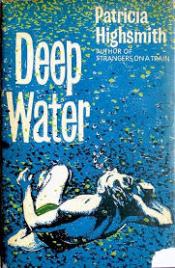
Deep Water
by Patricia Highsmith

Deep Water

Highsmith specialized in psychological thrillers. Several of her novels had been adapted into successful movies: Strangers on a Train (1951), The Talented Mr. Ripley (1999), and Carol (2015). Coming out this year is a marital thriller that Gone Girl author Gillian Flynn had identified as her favorite book and is, in her words, “a thriller about a suburban couple bent on mutual destruction.” Ben Affleck (Gone Girl, 2014) and Ana de Armas (Knives Out, 2019) star. Directed by Adrian Lyne, also a marital thriller specialist, whose works include Fatal Attraction (1987), Indecent Proposal (1993), and Unfaithful (2002), which was the last film he directed until now.
..


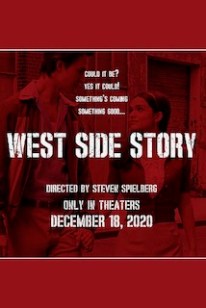
West Side Story by Arthur Laurents, Broadway musical by Leonard Bernstein and Stephen Sondheim.

WEST SIDE STORY POSTER (1).jpegSteven Spielberg directs this remake of the Bernstein/Sondheim musical (1957) and the 1961 Jerome Robin/Robert Wise movie for our time. In Dec. 2020, we’ll witness a new version of Shakespeare’s Romeo and Juliet. A cast of 130+ will join the Spielberg team with screenwriter Tony Kushner (Lincoln, 2012) and cinematographer, 2-time Oscar winner Janusz Kaminski (Saving Private Ryan, 1998 and Schindler’s List, 1993). Additional new music by David Newman. Ansel Elgort plays Tony; Maria is Rachel Zegler, chosen from 30,000 auditioned. Rita Moreno, who played Anita in the 1961 movie, also stars in this remake.


..
In the Heights
by Lin-Manuel Miranda

IN THE HEIGHTS.jpeg

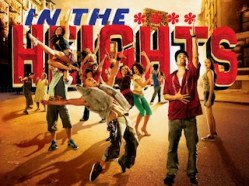
Before Hamilton, there was In the Heights, Miranda’s breakout musical that won 4 Tony Awards in 2008. The musical is based on the book by Quiara Alegria Hudes, who now writes the screenplay transposing it onto the big screen. Miranda stars in this story set in the Hispanic-American neighborhood of Washington Heights in NYC. The movie is shot on location there. Directed by Jon M. Chu, whose Crazy Rich Asians became the summer sensation of 2018, showing Chu could create some spectacles. Would Miranda fans want to see a movie version of his works? In the Heights could well be a pilot project, as Hamilton the movie is currently in development.


..
Mulan
, legendary heroine from “The Ballad of Mulan” (in Chinese: 木蘭辭)

Hua Mulan.jpeg

According to the legend described in the narrative poem “The Ballad of Mulan”, Hua Mulan (Chinese: 花木蘭) is a female warrior in China during the Northern Wei period (386-536). To fulfill the conscription for military service for every family and for love of her ageing father, Mulan disguised as a male to join the army in her father’s place to protect her country from their northern enemies, the Huns. The rhymed verses in “The Ballad” provide vivid descriptions of Mulan’s determination and how she goes to nearby towns to buy a horse, a saddle and a whip, equipping herself for military service. After 10 years of fighting, she comes home to her overjoyed parents a decorated military commander.

Disney had wielded its creative license to introduce imaginary characters and songs in its original 1998 animation. Now 22 years later, a live-action feature film carries the legend further, albeit with no place for an actual pet dragon, so, no Mushu. Helmed by New Zealand director Niki Caro (The Zookeeper’s Wife, 2017), it should be noted that all four screenwriters are non-Chinese. No matter, at least the heroine and her purpose is true to the source material. Top-notch Chinese stars are on board: Gong Li, Donnie Yen, Jet Li, screen veteran Cheng Pei Pei, Tzi Ma from The Farewell, and Rosalind Chao from The Joy Luck Club, to name a few. Playing Mulan is multi-talented Liu Yifei who reportedly was selected after a five-continent search and auditioning a thousand candidates. Braced for a Westernized version of the age-old Chinese legend.


***

Literary Adaptations at TIFF19: The Goldfinch

Two book-to-film adaptations were on my watch list while I was at the Toronto International Film Festival (TIFF) this September: Donna Tartt’s Pulitzer Prize winning The Goldfinch and the Dickens classic The Personal History of David Copperfield, both had their world premiere at TIFF. The two make such interesting contrasts that it would be good to discuss them together in one post, but that would be a long one. As I covet your attention, I’ll split them into two reviews. 

I listened to the audiobook of The Goldfinch in 2014, a year after the novel was published. My impression was: this one’s written for the screen. There are Dickensian characters and storylines transposed into present day. 13-year-old Theo is visiting a NYC art museum with his mother when she is killed in a bombing. In the aftermath, stunned and traumatized, he follows a mysterious track to an antique shop where the owner Hobie takes him in. There he meets Pippa, a girl he finds affiliation as she’s looking at the same painting with him in the museum when the bomb goes off. Later Pippa moves away and Theo goes to live with a wealthy Park Avenue family, the Barbours, only to have his stable life interrupted by the sudden reappearance of his long-gone, alcoholic father claiming full guardianship and taking him to live in Nevada, where he becomes friends with Boris, another boy lost in the sandy void.

Later, fleeing from his abusive father, Theo returns to the antique shop in NYC. Under the mentorship of Hobie he learns the skills of the trade. Years later, by chance and fate, Boris shows up again in his life, pulling him into the underworld of art dealings that eventually leads to a violent end, but that’s where the closure begins. “The Goldfinch” is the painting Theo takes with him after the museum bombing and hides it for himself, for it is a physical reminder of his last memory with his mother. They were looking at it when disaster struck; it was his mother’s favorite painting.

The Goldfinch.jpg
Nicole Kidman and Ansel Elgort in The Goldfinch. Image Credit: Courtesy of TIFF

That’s the main book story in a nutshell, and it appears that screenwriter Peter Straughan is keen to remain as faithful to the source material as possible. When the task at hand is loyalty to the original 784 page novel, the 149 minute screen time can feel like a laborious effort to create a replica, thus losing its flavour as an art form of a different medium, breathing, living cinema. The characters and major plot points are there, but what’s missing are the emotional depth and sparks of life.

Tartt’s novel has its Dickensian characters, and I can’t help but see parallels between The Goldfinch and The Personal History of David Copperfield. Theo and Davy, Boris and Steerforth, Theo’s father Larry and Davy’s stepfather Mr. Murdstone, Pippa and Agnes. The two features, however, represent two ends of possible choices for film adaptations.

Director John Crowley, who helmed Brooklyn (2015), a beautiful adaptation of Colm Tóibín’s novel, has a good cast to work with for The Goldfinch. Oakes Fegley (Wonderstruck, 2017) gives us a mature performance as young Theo. Nicole Kidman plays Mrs. Barbour decades apart, two roles that don’t give her much to say. Luke Wilson as Theo’s volatile father Larry and Sarah Paulson as his girlfriend Xandra are the livelier contrasts to other characters. Maybe Crowley focuses too much on the theme of grief that the overtone is sombre throughout. Ansel Elgort as adult Theo may not be a miscast but is boxed in by the only emotion he can express, gloominess. I can’t remember he has flashed a hearty smile once. That goes for other characters as well. The Goldfinch is a story of grief and Crowley has painted the mood in stark realism.

Thanks to the venerable cinematographer Roger Deakins (2018 Oscar winner Blade Runner 2049), we get to see some sunlight and energy in the Nevada desert days of  friendship between young Theo and Boris (Finn Wolfhard, TV Stranger Things). For most of the film, however, the color is a greyish cyan of dolefulness. While the museum bombing scene is dramatic, watching it over and over again––as Theo is drawn into guilt-ridden memory––could diminish the effect. But then, this would be an editing issue. And like Theo, don’t we all want to see the face of his mother, whose death is the cause of the grief, but that only comes for a short moment towards the end.

In an early scene, antique shop owner Hobie (Jeffrey Wright) shows young Theo how to tell a piece of furniture by touch to feel its authenticity. Too smooth has to be fake. Furniture that has weathered years of usage would be rougher and uneven. The character of adult Theo could have been a wiser man, more seasoned and worldly, but he remains static and stiff. The poignancy of fate with its power over one’s life comes late in the film and exerts little effect on the emotional connection with viewers. Unfortunately, Hobie’s antique lesson for young Theo is a metaphor for the adaptation. Other than a visual representation of the major plot of the novel, the film is a reproduction that lacks authenticity and liveliness.


~ ~ 1/2 Ripples


***

Upcoming Book-to-Movie Adaptations: Good Summer Reading

Previously on Ripple, I’d posted lists of books-to-movies coming out soon here and here. If you’ve gone to the theatre lately, you’ve probably seen trailers for some of them: The GoldfinchWhere’d you go Bernadette? or Cats (like a horror movie for someone who has ailurophobia.)

Here are some updates. The following is a list of movie adaptations in development for the big screen or TV series. They are in various stages of production, just announced or in pre-production, release dates unknown or tentative. If you’re the well-prepped movie goer, here’s your list of summer reading:

Where the Crawdads sing.jpegWhere the Crawdads Sing by Delia Owens

Now 46 weeks on the NYT Bestsellers List and has sold more than 1.5 million copies, Owens’s debut novel about a young girl who has raised herself and survived alone in a coastal North Carolina marsh is a mix of nature writing, murder mystery, and coming-of-age story. Reese Witherspoon will be producing it with Fox 2000. Owens is a wildlife scientist and nature writer who had spent years in Africa.


Little Fires Everywhere (1)

Little Fires Everywhere by Celeste Ng

Another project by Witherspoon’s Hello Sunshine production company. Ng’s novel about families in a Cleveland suburb dealing with diversity, teenager angsts, and generational conflicts had been named Best Book of the Year (2017) by NPR, Amazon, Goodreads, The Guardian… just to name a few. It will be adapted into a TV series with the Hulu platform. 


Ask Again, YesAsk Again, Yes by Mary Beth Keane

The producers of American Beauty (1999) which won 5 Oscars in 2000 have bought the movie and TV rights of the book. Another novel about suburban families is being described in Goodreads as “profoundly moving.” Author Keane was a 2015 Guggenheim Fellow in Fiction; her previous works had been a finalist for the PEN/Hemingway Award and garnered Best Book of the year acclaims.


The Silent PatientThe Silent Patient by Alex Michaelides

Screenwriter Michaelides’s debut novel is described by Entertainment Weekly as “a mix of Hitchcockian suspense, Agatha Christie plotting, and Greek tragedy.” A psychotherapist has to unlock the mystery of his patient who’d killed her husband six years earlier and then remained silent since. (Read an excerpt using the link) Meanwhile, Michaelides will write the screenplay, naturally. Brad Pitt’s Plan B and Annapurna Pictures producing.


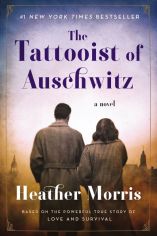
Tattoist of Auschwitz.jpgThe Tattooist of Auschwitz by Heather Morris

Hailed as the true story of Slovakian Jew, Lali Sokolov, who fell in love with a girl he was tattooing at the Auschwitz concentration camp during WWII, a powerful story of love and survival. British producer Synchronicity Films had secured the rights and a drama series is in development. Here’s the rub: the Auschwitz Memorial Research Centre had disputed the authenticity of the book according to The Guardian. A case of negative publicity is still good publicity?
The Underground Railroad

The Underground Railroad by Colson Whitehead

Colson Whitehead’s Pulitzer Prize for Fiction winner (2017) is adapted by director Barry Jenkins. Jenkins’s name had catapulted to stardom since his Oscar win for Moonlight (2016) and the subsequent If Beale Street Could Talk (2018). The story of the harrowing escape of two Southern slaves Cora and Caesar using the Underground Railroad is adapted into 11 episodes for Amazon Studio.


Washington Black (2)

Washington Black by Esi Edugyan

The book is Edugyan’s second consecutive win of Canada’s Scotiabank Giller’s Prize, also shortlisted for the 2018 Booker Prize. The journey of 11-year-old slave boy “Wash” born on a Barbados plantation is a fantastical story of adventure when he became the personal servant of Englishman Christopher Wilde, inventor, naturalist, explorer, and abolitionist. 20th Century Fox TV, after “an intense bidding war” , had secured the rights to the small screen.


***

Ripple Effects Turns a New Page in 2019

Ripple Effects has reached a new milestone. After almost twelve years in the blogosphere, Arti has finally fought off procrastination and taken up an upgraded version. From now on, there will be no ads even if you’re not a WordPress blogger visiting (let me know if you still see them). What more, there’s a new URL address to the Pond, aptly:

rippleeffects.reviews


But if you type in the old, longer one it will redirect you to the right place here at the Pond as well.

While birding is still my passion, I’ll be posting mostly film and book reviews on Ripple Effects. My avian friends will probably fly by during intermission.

Your two pebbles are welcome as before. Throw them in, stir up some ripples. As always, I hope you’ll find here a respite for quiet thoughts and prompting to some interesting viewing and reading. I await your visits.

***

Have you ever seen so many people lining up to go into a public library? It happened right here in my city, Calgary, Alberta, on November 1, 2018, when our New Central Library opened. 50,000 visitors in the first four days. Yes, there will be talks of books and movies here on Ripple Effects.

New Central Public Library, Calgary.jpg

The Calgary Central Library was one of Architectural Digest’s 12 most anticipated buildings opening in 2018. Check it out here.

***


Top Ripples 2018

Here’s the other one of my perennial posts, a wrap for the year. Books I’ve read and film experience that top the year for me. Here are the lists, in no particular order:

MOVIES

I’m appreciating foreign language films more and more, for they offer some of the best examples of what cinematic arts can offer, not CGI sparked spectacles. In my Top 10 list, the first four are from non-English speaking countries. They are also short-listed for the coming Academy Awards Best Foreign Language Film category. Links are to my reviews.

Roma

Shoplifters

Capernaum

Burning

A Star Is Born

Wildlife

The Favourite

Free Solo

Shirkers

The Kominsky Method

I must mention two films that I’d highly anticipated but somehow didn’t connect as I’d wanted to. Maybe if I’ve the chance to watch them again I might change my mind: Cold War and First Reform.

Two movies from 2017 which I hadn’t watched until January this year that should be mentioned here:

Three Billboards Outside Ebbing, Missouri

The Shape of Water


BOOKS

These are not necessarily published in 2018, but the best books that I’ve read this year. I’m not a ‘quantity reader’, nevertheless, a look back at my Goodreads record, I can’t believe I ate all these (links are to my reviews):

The Guermantes Way by Marcel Proust (after 3 years, finally finished)

Middlemarch by George Eliot

The Portrait of a Lady by Henry James

Pachinko by Min Jin Lee

Crime and Punishment by Fyodor Dostoevsky

Of Human Bondage by Somerset Maugham

Not Quite, Note White: Losing and Finding Race in America by Sharmila Sen

David Copperfield by Charles Dickens

The World of Yesterday by Stefan Zweig

Hillbilly Elegy: A Memoir of a Family and Culture in Crisis by J. D. Vance

***

Selective Top Ripples from past years are listed on the side bar. Click on the pictures to my reviews.

Again, thanks for visiting the Pond and throwing in your two pebbles. I’ve enjoyed every single ripple. Hope you’d found a quiet respite here for thoughts and renewal.

And to all, may 2019 bring you more great books and movies to cherish.

HAPPY NEW YEAR!

***

Update: This post should be written on the last day of the year. Since I’d posted it, I saw another film today which I feel should be included here on the Top Ripples 2018 list, and that’s The Favourite (Just opens today in our City). I’m taking The Rider out to keep the list of 10. The Rider I found I’d already included it in my Top Ripples list last year.