Don’t just drive past Three Billboards

Three Billboards outside Ebbing, Missouri is a ‘Coen-esque’ feature with Fargo (1996) star Frances McDormand. This might well be one of the better Brit-U.S. collaborations in recent, tumultuous years. And McDormand just might head to another Best Actress Oscar win after Fargo.

Caution: The following discussion involves a minor spoiler. Not so much a spoiler in plot but in idea. I can’t be more obscure in reviewing the film if I’m to delve into meaning.

***

In British writer/director Martin McDonagh’s debut feature In Bruges (2008), the main character, a hitman, Ken (Brendan Gleeson), explains to his angry crime boss Harry (Ralph Fiennes) why he didn’t kill his young protégé Ray (Colin Farrell) as Harry had ordered, saying: “He has the capacity to change. We all have the capacity to change.”

Three Billboards outside Ebbing, Missouri is McDonagh’s damatization of this pivotal idea in full force: We all have the capacity to change. Viewers may not like the characters or their speech, but the dark comedy leads us to the point where we’ll find it worthwhile to hold our judgment, no matter how despicable they behave or speak. And that is the main reason for the gratifying ending of Three Billboards: Change. A change from distraught to calmness, from tension to release.

three-billboards-poster-2

Indeed, language is the spoken expression, the tip of the iceberg. What lies beneath and beyond language is the essence of a character. McDonagh’s script is starkly effective in presenting the different sides of his characters. Not that we should make excuses for their wrongs, but that everyone has a backstory and a present reality to deal with.

Mildred Hayes (Frances McDormand) has lost her teenage daughter Angela (Kathryn Newton) to a most violent, horrific crime, ‘raped while dying’. She is frustrated by the inability of the police to bring in any arrests. The three billboards she pays for outside Ebbing, Missouri advertise to the world her rage, targeting police chief Willoughby (Woody Harrelson). It’s her intention that the publicity they draw could lead to some effective police actions.

McDonagh is apt to instil humour into the sombre subject matter. The dialogues are sharp and the actors deliver. Call it a dramedy if you will, but the spontaneous laughters generated in the theatre are bittersweet, for they are acerbic depiction of racism, injustice, and the grieving rage of the unconsoled.

The three billboards pit Mildred against the town except for her co-worker Denise (Amanda Warren) in the gift shop and an admirer James (Peter Dinklage) in the bar. Her action has put her otherwise devoted son Robbie (Lucas Hedges) in an awkward position in school and inflamed her ex Charlie (John Hawkes), whose 19 year-old girlfriend Penelope (Samara Weaving) is totally oblivious to what’s going on in town. Dixon (Sam Rockwell) from the police station shows his utter disgust with unchecked impulses.

While the ensemble cast deserves kudos, the pivotal acts fall on three characters. Their superb performance augments the incisive and thoughtful script.

McDonagh wrote the role of Mildred Hayes with Frances McDormand in mind, and she delivers with a punch. Her actions as an angry and helpless mother is stark and brutish, but McDonagh also shows us her vulnerable side, a mother who is regretful of the argument she’d had with her daughter on that fateful day, mournful for a daughter who’d never come home, and embittered by the ineptness on the part of the police. McDormand indwells her role so effectively that she makes me see only the angry Mildred, and totally forget the pregnant, innocent police woman in Fargo.

Sam Rockwell’s dimwitted, racist Dixon stirs up non-stop laughs in the theatre. His ultimate change is the powerful force that makes the latter half of the story so gratifying.  Rockwell’s performance is spot-on. McDonagh wants us to have a last laugh on him too: Dixon’s heart may have melted by some kind, motivating words from chief Willoughby, but his intellect remains intact.

Woody Harrelson plays Chief Willoughby with a heart. He is a tough police chief and yet underneath is a kind man, a loving husband to his wife Anne (Abbie Cornish) and a devoted father to his two young girls. Furthermore, Mildred is not the only one bearing life’s harsh blows. While Mildred reacts with rage, Willoughby deals with repressed fears.

A few kind words can cause immense change. And when one person changes, the ripple effects are contagious. The latter part of the film with its twists and turns slowly reveal how positive changes ripple on. For often underneath the hard surface lies a moldable heart. I particularly appreciate the audacity of McDonagh’s writing. Among the tough and macho, love is noted as the key to hold up oneself as love leads to calmness, and calmness to thoughtful actions.

Tying up the emotional bond is the music, in particular, the Irish folk song “The Last Rose of Summer”. Thomas Moore’s lyrics and the soft yearning of Renée Fleming’s voice sings out the sad tune in Mildred’s heart, a cry for justice and the dispelling of emptiness and loss. In the opening scene, the song introduces us to the three billboards as Mildred drives by and contemplates her vengeful scheme, the song reprises as vengeance engulfs a distraught heart and leads to a violent act. Ironically, that scene becomes a pivotal turnaround for Dixon in the police station.

‘Tis the last rose of summer left blooming alone
All her lovely companions are faded and gone
No flower of her kindred, no rosebud is nigh
To reflect back her blushes and give sigh for sigh

The juxtaposition of a quiet Irish folk tune with a fictional, small American town dealing with the fallouts of a horrific, unsolved crime may sound incompatible, but it’s poignant and effective here.

Old loves are irreplaceable, yet regrets cannot heal deep wounds. Lovely companions may have faded, but new ones can be forged, albeit not the same nature, but there’s  hope for new bonds. The last rose of summer dissolves to the first red leaf of fall. It could still be a beautiful season.

~ ~ ~ ~ Ripples

The Shape of Water is all Enfolding

In his review of Guillermo del Toro’s Pan’s Labyrinth (2006), Roger Ebert described it as a fairy tale for adults. Well Roger, the director of fantastical cinematic imagery has given us another one. Compared to Pan’s Labyrinth, this is a simpler and less horrifying tale. The Shape of Water is a delightful love story with a gratifying, requiting end.

The Shape of Water is set during the Cold War, in 1962 U.S., inside a high security, science research centre. Richard Strickland (Michael Shannon) oversees a new arrival from the Amazon (South America that is), a monstrous beast, and if he cares to really examine the creature with an appreciative eye, a beautiful Amphibian Man (clandestinely played by Doug Jones). Yes, the reverse of Hans Christian Andersen’s The Little Mermaid.

In the research centre is Dr. Holffstetler (Michael Stuhlbarg), who has to tend to his covert mission, it is the Cold War after all, but from a scientific point of view, does have an appreciative eye for the creature.

The Shape of Water (1)

At the bottom of the rung are the janitorial staff, Elisa and Zelda, and with them the story comes alive. Sally Hawkins and Octavia Spencer’s duo performance is worth your movie ticket. They are the heart and soul of the story, something which the villain lacks. As a fairy tale, we can identify who that is right away, and the irony of who the monster is quickly becomes apparent.

Elisa is mute, she cannot speak but can hear what you say, so be careful. She knows a language that you’ll need a translator to understand, so be careful about that too. Thanks to Zelda, her official interpreter, she knows what not to translate as Elisa speaks her mind to ruthless Strickland.

Elisa’s neighbour is Giles (Richard Jenkins), an artist who does appreciate the Amphibian Man. He is of immense help to Elisa, a faithful friend to her despite endangering his own life. As a fairy tale, we see the good among the characters in sharp contrast to the villain.

As she cleans the facility, Elisa soon comes to appreciate the Amphibian Man, and the creature soon relates to her as she is, not as a handicapped, low-ranking cleaner. The two forge a bond stronger than any dangerous obstacle. The film moves into the second half as a thriller and leads us to see how love overcomes such obstacles. Love not just between the two obvious characters, but from those built upon friendship and mutual respect. As for the Amphibian Man, he is more powerful than just brute force as the story reaches its climax.

As the Awards Season is well underway, all leading to the finale, the Oscars, we see The Shape of Water gaining tremendous momentum. Among other accolades, it won the AFI Award for Movie of the Year, two Golden Globes: del Toro for Best Director and Alexandre Desplat for Best Original Score, and just received 12 BAFTA nominations. While Sally Hawkins and Octavia Spencer both get acting noms, they face strong contenders such as Frances McDormand (Three Billboards Outside Ebbing, Missouri) and Saoirse Ronan (Lady Bird).

The Shape of Water is a simple depiction of human longings and our universal need for connection. It’s a fairy tale love story and not a treatise on controversial subjects for debates. It offers some interesing cinematic visualization, like the beginning scene of Elisa’s apartment under water. The underwater romantic rendition towards the end of the movie, coincidentally, elicits another indelible cinematic moment from my memory, an underwater love scene also involving a woman who cannot speak, a film with which Marlee Matlin won her Best Actress Oscar with her heart-wrenching performance, and that’s Children of a Lesser God (1986).

Surely, water, the shape of it, all enfolding, is the main idea, for that’s what love is like.

~ ~ ~ 1/2 Ripples


Metropolitan (1990): Whit Stillman’s Homage to Jane Austen

Thanks to New York born and raised director Whit Stillman, one of Jane Austen’s characters in her juvenilia, Lady Susan Vernon, had a field day last year. For those wondering how that came about, do seek out Stillman’s film Love & Friendship (2016), or his movie-tie-in book Love & Friendship: In Which Jane Austen’s Lady Susan Vernon Is Entirely Vindicated. 

But Janeites may not have noticed, back in 1990, five years before the pivotal year of wet shirt Darcy’s mortifying encounter with Lizzy Bennet, another Austen character was vindicated, Fanny Price of Mansfield Park. And they have Stillman to thank.

What does Jane Austen’s Mansfield Park, published in 1814 England, have in common with a bunch of upper class college freshmen/women in 1990 New York City, calling themselves UHB (Urban haute bourgeoisie), worrying about an ‘escort’ shortage for their debutante parties during their Christmas break?

Wait a minute, UHB? ‘Urban Haute Bourgeoisie‘? Isn’t that the kind of targets that would have interested Jane? Our astute Jane who loved to wield her pen, piercing through the façade of the rich and privileged, shaking the underlying status quo of society of her time? Jane would have loved Stillman’s film. She would be amused by the characters in this comedy of manners and their social commentaries. Debutante parties? Jane would be surprised to hear they still exist in the 20th century. If she were to write the screenplay, Jane would probably be less subtle.

Screen Shot 2017-07-17 at 10.03.38 PM

Stillman’s Metropolitan is not so much an acerbic satire but a gentle poke and  descriptive vignettes of the young UHB’s lifestyle and thinking. From his treatment of his characters, he is gentle and forbearing, albeit incisive, just enough to elicit some knowing chuckles.

In Mansfield Park, Jane presented a heroine that is a contrarian. Fanny Price is unadorned, impoverished, athletically challenged, a misfit and outsider when she enters the upper class home of Sir Thomas Bertram. But it’s her being principled and virtuous that make her stick out like a sore thumb. As Jane ends the book, Fanny gets the final praise, and an oblivious, but decent, Edmund as her ultimate reward.

Stillman’s Metropolitan is set in 1990 NYC. It has two characters that are a type of Fanny Price. First is Tom. He stands for everything that’s the opposite of the UHB. A self-professed socialist, Tom comes from the other side of the track. He wears a raincoat (albeit with a warm lining as he explains) in midwinter, and a ‘snob’ for public transit. Taxi? No, he’d rather walk.

Sure, his new found friends of the UHB know why. How many can afford to take the taxi as their usual means of transport and wears tux to parties? So, to their credit, despite knowing Tom might be from the opposite side of town, they receive him into their midst, especially as the girl Audrey likes him very much and wants him to help solve their, or her, ‘escort shortage’ to the debutante parties.

Audrey is a lover of books. She’s unpretentious, modest, and above all, a sensitive soul not unlike Fanny. In one scene, Audrey serves as a moral compass as the group gathers in the after party to a game that she disapproves of. That’s a Fanny incognito there. She insists on her stance despite everyone, Tom included, feels there’s nothing wrong with the game.

So there are the Austenesque parallels and types. You might be able to identify the Crawfords there too. The youthful characters are all serious in their viewpoints. One must give them credits. In their tux and gowns they discuss social theories. Therein lies Stillman’s gentle satire. While the sarcasm and humour is subtle, there are a few lines that are overt, lines I think Jane would have approved.

In this scene (above photo), Audrey and Tom discuss books. Audrey says Persuasion and Mansfield Park are her favorite Austen books, Tom is incredulous.

Tom:  Mansfield Park! You got to be kidding.

Audrey:  No.

Tom:  But it’s a notoriously bad book. Even Lionel Trilling – one of her
greatest admirers – thought that.

Audrey:  If Lionel Trilling thought that, he’s an idiot.

Jane probably would have thought, “Oh I wish I had written those lines.”

But wait, there’s more. Later in the party, Tom and Audrey continue to discuss Mansfield Park.

Audrey: You find Fanny Price unlikeable?

Tom: She sounds pretty unbearable, but I haven’t read the book.

Audrey: What?

Tom: You don’t have to have read a book to have an opinion on it. I
haven’t read the Bible either.

Audrey: What Jane Austen novels have you read?

Tom:  None. I don’t read novels. I prefer good literary criticism. That way
you get the novelist’s idea as well as the critic’s thinking. With
fiction I can never forget none of that has really happened. It’s all
made up by the author.

Oh I can see Jane ROFL.


~ ~ ~ 1/2 Ripples


***

Related Posts on Ripple Effects:

Stillman’s Love & Friendship: More than Book Illustration

Love & Friendship and Other Prospects

Mansfield Park: Jane Austen the Contrarian 


Upcoming Books to Movies 2017

Half a year’s gone already. How’s your reading and watching coming along? Here are some movie adaptations I anticipate for the latter half of the year.

The Glass Castle by Jeannette Walls

the-glass-castle-bookFinally, the movie adaptation is completed. More than seven years on the NYT Bestseller list, Jeannette Walls’ 2005 memoir of resilience and delight – yes, the two can co-exist – is high on my TBW list. After receiving her Academy Best Actress Award in another book-to-screen adaptation, Room (2015), Larson is back with her Short Term 12 director Destin Cretton. Interesting cast for the parents, Woody Harrelson as dreamer dad Rex Walls and Naomi Watts as uncouth artist mom Rose Mary. Coming out in August. Should be a good summer movie.


Tulip Fever by Deborah Moggach

Tulip FeverMoggach’s best known book is probably The Best Exotic Marigold Hotel, among her many titles. Tulip Fever is the author’s first historical fiction set in 17th century Holland, evoking the paintings of Vermeer’s. The story begins with a rich merchant in Amsterdam commissioning a painter to paint his young bride. The rest is up to the further imagining of Moggach’s creative mind. From book to screen adaptation written by Tom Stoppard, directed by Justin Chadwick, who helmed the adaptation of Philippa Gregory’s The Other Boleyn Girl (2008) and the excellent TV mini series of Dickens’ Bleak House. Cast includes Alicia Vikander, Judi Dench, Christoph Waltz. Coming out in August. Should be another good summer pick.


Wonder by R.J. Palacio

Wonder Book CoverAnother one high on my TBW list. This is one YA novel that appeals to both young and old, for the theme of acceptance and empathy is so much needed in our time. A look at the trailer shows the film is well cast. Room’s breakout young star Jacob Tremblay as disfigured fifth grader, entering school for the first time in his life; Julia Roberts plays mom and Owen Wilson is dad. Stephen Chbosky (The Perks of Being a Wallflower, 2012) directs. To be released November, 2017.
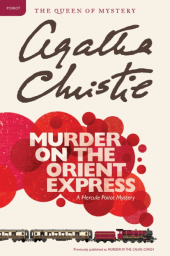


Murder on the Orient Express by Agatha Christie

Murder on the Orient Express.pngDame Agatha Christie’s famous work has gone through many renditions on the big screen, small screen and even a video game. But the classic has to be the Sidney Lumet directed 1974 production with Albert Finney, Lauren Bacall, Ingrid Bergman, John Gielgud, and a young Sean Connery, just to name a few. This 2017 version is directed by Kenneth Branagh who will, of course, takes up the role of Hercule Poirot. Cast include Johnny Depp, Michelle Pfeiffer, Daisy Ridley, Penélope Cruz, Judi Dench, Derek Jacobi, Willem Dafoe, a modern classic in the making? Coming out November, 2017.
 

EXTRA, EXTRA: Ordeal by Innocence by Agatha Christie

Ordeal by Innocence

Talking about Dame Agatha, the latest, yes just hours ago, it has been announced that the prolific writer – whose books have sold only less than The Bible and Shakespeare according to The Hollywood Reporter – will ring in yet another adaptation by BBC in time for the Christmas season. BBC touts a mighty cast with Bill Nighy, Catherine Keener, Matthew Goode, Eleanor Tomlinson among many talents. A jolly good Christmas for the Brits indeed. We’ll have to wait for Masterpiece to act.


***

Related Ripple Effects Posts:

The Glass Castle Book Review

Wonder by R. J. Palacio: Required Reading for All

The Best Exotic Marigold Hotel 

The Second, Best Exotic Marigold Hotel


A Movie to Celebrate Canada Day

Happy Canada Day to all my Canadian readers!

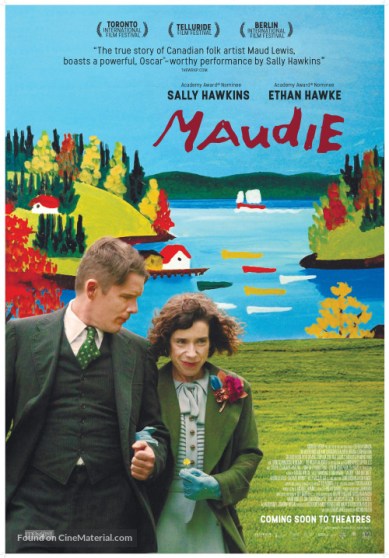
To celebrate Canada’s 150th birthday, and pay tribute to the Canadian spirit, I’d like to recommend the movie Maudie, about the folk art painter Maud Lewis (1903-1970). Born in Yarmouth, Nova Scotia, Maud lived with her brother Charles in their family house until he sold it. In the movie, Maud overhears Charles telling their Aunt Ida he will pay her to accommodate and look after Maud in her home.

Maudie

Born with a small frame, disfigured facial features and deformed fingers, Maud suffers from severe rheumatoid arthritis as an adult. Such handicaps however do not cripple Maud’s sanguine spirit and fierce independence. While staying at her Aunt’s place, she answers an ad for a housekeeper posted on the bulletin board of the local store. She jumps at the opportunity as she sees it as a way to move out of her Aunt’s and strive for her own independence.

The house that needs a housekeeper is home to Everett Lewis, a fish peddler in the village of Marshalltown, on Nova Scotia’s northwestern shore. Everett’s abode is a cramped, one-room hut with no running water or electricity. With her arthritic hands Maud cleans the floorboards and tends to Everett’s daily needs, cooking on the wood stove and bearing with Everett’s demeaning outbursts. The rule of the house is, he first, then his dogs, his chickens, and lastly, Maud.

Does Maud feel defeated? Well sure, but just temporarily. Her resilient and cheerful spirit can move even a mountain of a misanthrope. Not long after, she and Everett got married. “A pair of odd socks,” she says of their seemingly incompatible personalities. We hear it often nowadays, “diversity is strength”. The Lewis’s household is evidence to that.

And of course, there’s the economic factor.

Maud turns Everett’s dingy house into a pleasant abode. She begins to paint on every surface: the walls, windows, door, stove, washbasin with lively flowers, birds, and whatever she sees in nature. She also picks up small, discarded wood boards to paint scenery and snowscapes. Not long after, a sign “Paintings for Sale” is placed outside their tiny house to diversify the household economy.

Deer painting

Maud is one successful entrepreneur. Her folksy paintings soon draw the attention of passers by; the cheerfully decorated little house on the wayside soon becomes a stop for designated shopping and repeat customers, a point of interest for visitors. Later, it becomes a converging site for news crews and journalists. Each piece of board painting is sold for about five to six dollars, a card, 10 cent. Everett is the finance minister and holds the purse strings.

The movie presents Maud’s story with beautiful and absorbing cinematography. The pace is slow, allowing viewers to immerse in the outwardly harsh life of Maud’s, in contrast to her vibrant spirit and life-affirming talents. A tiny window is a frame of the world outside. The last part of the film comes to a sad note as Maud succumbs to illness of the lungs.

Now, to the making of the movie. The subject is Canadian, Maud Lewis is very much a Canadian folk art icon, her works are in the collection of the Art Gallery of Nova Scotia. The filming location is Newfoundland and Labrador. But note this: the movie is helmed by Irish director Aisling Walsh (BAFTA nom Fingersmith, 2005), Maud is played by the English actor Sally Hawkins (Oscar nom Blue Jasmine, 2013), Everett is played by American actor Ethan Hawke (Oscar nom Boyhood, 2014). If I were a protectionist ruler, I wouldn’t have let them come in to make it.

But then again, this is Canada, eh?


~ ~ ~ 1/2 RIPPLES

***

RELATED POST ON RIPPLE EFFECTS:

Séraphine and the wrought-iron chair 


10 Years

WordPress tells me I’ve been blogging for 10 years now. It’s been a life-changing decade. From a film lover writing reviews just for personal journalling, I’ve developed into writing to share. Hundreds of movies later, I’m now an Arts and Film Writer for Asian American Press. In recent years, I started covering Film Festivals; my appreciation for cinema art and independent films from all over the world had grown deeper.

Books, I’ve read a few, but then again, too few to mention. My TBR piles is expanding much faster than I can tackle. To manage them, I use the simplest method: deleting them from my memory. Many I’ve bought from the annual Book Sale (several posts), but I’ve since donated them back. There’s one on my Goodreads ‘currently reading’ shelf for years now which I don’t want to give up just yet, and that’s Proust’s In Search of Lost Time Vol. 3, The Guermantes Way.  Some day.

Other than books, movies, and my special interest in the transposition of one into the other, I’ve also become an avid birder. Arti of Ripple Effects has turned into a nature paparazzo. I’d thought of starting another blog just for nature photography but thought, hey, everyone needs a respite even from books and films. The Pond is open to all to throw in their two pebbles, make some ripples while enjoying a piece of natural beauty.

WordPress tells me in the side bar that I have 6,843 followers. Simply amazing, considering the number of comments I receive in each post. No matter, commenting isn’t a requirement when you visit the Pond. I’m just glad to know you’ve enjoyed your stay, even if it’s a short minute or two. And to all visitors and followers, a hearty thank-you. You’ve made my presence in the blogosphere meaningful.

To celebrate 10 years, to say goodbye to Spring (already) and welcome Summer, I’ll leave you with a few photos I’ve taken in the past few days.

The forest by the Pond:

DSC_0497 (2)

They may be the most common bird, but every Robin is a welcome sight against the blue sky:

DSC_0211

The well-groomed and handsome Cedar Waxwing, always camera ready:

DSC_0428 (1)

True to their name, the Yellow-headed Blackbird on a cattail:

DSC_0344


DSC_0182.jpg

The female Red-Winged Blackbird. Nature endows with different features:

DSC_0060

Up in the sky, an Osprey is busy transporting his building materials:

DSC_0289

And a touring group of Pelicans, looking for my Air BnB?

DSC_0479 (1)


More to come.


***


Voicing out for ‘Silence’ and other adaptations

It’s a bit sad to see Martin Scorsese having had to defend the cinema. He wrote the piece in the May 31 issue of The Times Literary Supplement in response to the review of his film Silence by the novelist and literary critic Adam Mars-Jones. It is telling that the director didn’t write a defence of his film, but cinema itself.

Here’s the contentious viewpoints of Mars-Jones’s review, entitled “Subtle absolutisms”:

The transposition of a novel like Endo’s Silence into film, however “faithful”, can only amount to a distortion, an exaggeration overall however many elements of the book are represented.

and this:

In a book, too, reader and writer collaborate to produce images, while a film director hands them down.

Really? Is a movie, and in this case, Scorsese’s adaptation of Japanese writer Shūsaku Endō’s novel Silence, a piece of “subtle absolutisms” as Mars-Jones’s title suggests? Do viewers in the theatre have no say but to receive from whatever mood or themes the director hands down to them, devoid of ‘collaboration’? Has the director presented to us – subversively as the title implies – his interpretations and we remain as the silent, passive, unthinking targets?

We’ve heard it before, haven’t we, that a movie leaves no room for the imagination. We can see it all, so explicitly displayed, in actions, colour, and mood, while readers reading a book interact with the book author to create a mental picture as they read, exercising their imagination.

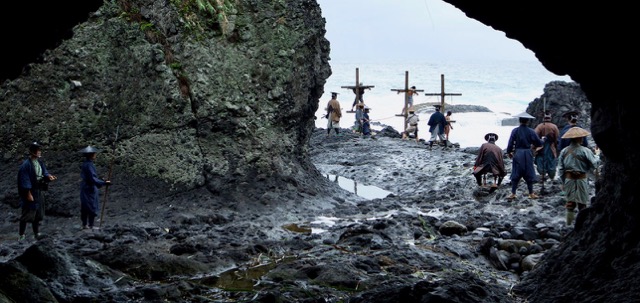
Silence (1)

Any regular visitor to the Pond knows Arti disagrees with such criticisms. Even a two-dimensional painting can evoke in viewers a myriad of responses, let alone moving pictures. And how we interpret and interact with such sequential, moving images can be as diverse and subjective as our personalities and life experiences.

If as Mars-Jones says “those images [have] their predetermined progress in a darkened space imposes mood insistently” and if Scorsese embeds his ‘subtle absolutisms’ so ingeniously, the film should bring out very similar responses, predominantly one, as Mars-Jones has concluded: “desolation.”

But as one who dwells in a liminal, in-between space of two cultures, I’ve come across very different reactions to the film Silence. Such could well be said are the results of internal collaborations viewers have had while experiencing Scorsese’s visual storytelling. Indeed, the film has aroused different responses across cultures.

Among Western critics, it’s usually the aesthetics, acting, cinematography, and mood that are the key features noted, as with Mars-Jones’s review. Many point out they’d like to see the roles reversed with the two actors Andrew Garfield and Adam Driver. Many have noted that the film is being ‘faithful’ to the book, however, falling short of discussing the significance of such ‘faithfulness’.

This is an important point when reviewing the film. I usually do not seek how faithful a film is to its original literary work, for the two are totally different art forms, each expresses in its own terms and the appreciation of such should not be measured using the same criteria. When it comes to Scorsese being ‘faithful’ to Endo’s descriptions and narratives, unlike Mars-Jones’s critique of ‘exaggeration’, I find the director is unusually restrained here. He follows closely with Endo’s narratives, his treatment of the persecutions of Japanese Christians poignant and heart-stirring, inferring meaning rather than exposing gratuitous images. All such restraints point to Scorsese’s admiration and respect for the author and his work. At times, I feel Endo’s writing even more graphic.

On the other hand, among Asian viewers, especially among Chinese Christians (overseas and in Hong Kong), the film stirs up deep, theological resonance. Many have shared their heartfelt responses in the print and social media, heated debates ensue among believers, and even from the Sunday pulpit. The film’s characterization emerge as the prime subject for debates: Is Father Rodrigues a true Christian? Can apostasy be pardoned in the face of coercion? What does the last scene tell us about Rodrigues? Can one lead a two-faced, dichotomized life of faith like the hidden Japanese Christians? Or with some, the film has prodded the reflexive to see oneself in the Judas character Kichijiro. A call for empathy for those under authoritarian pressures to give up their faith appear to be an unexpected result, albeit the other side would push for perseverance no matter what.

Rather than the overhanging cloud of near desolation as Mars-Jones points out, the film had stirred up ripples of vibrant discussions around the issues of salvation, suffering, apostasy, betrayal, denial, and redemption. Many of the views I’ve read reflect a pleasurable gratitude as having indulged in a thought-provoking film well made, their faith energized as they ponder on soul-stirring applications to their life.

Perhaps there’s a Roland Barthes parallel here. The death of the author comes after a piece of work is written, for it has reached its destination. Now it’s the reader’s turn to interact and give it meaning. Maybe it is so with film as well. As the director completes his production, it is given a new state of being when it is screened. As viewers interact with it, interpreting and extracting personal meaning, appreciating those elements that strike a chord with their own life experiences, they’re giving life to it in the cinema of their minds.

***

RELATED POSTS ON RIPPLE EFFECTS:

Reading the Season: Silence by Shusaku Endo

Silence the movie arrives in the most unwelcome time

Can a movie adaptation ever be as good as the book?


Two Films for Thoughts at Easter

I’ve tried different words for the title: Two films for the uninterested, indifferent…

So you think Easter is too maudlin an occasion for you. You’re not fond of bunnies, nor church services, and this talk about death and new life has become too clichéd. That’s ok. How about watching a couple of films? No, not Mel’s Passion, you know how the story goes. Something different.

First is a rather tame one. Previously on Ripple, I’d written about the book by Georges Bernanos’s The Diary of A Country Priest (1936), here’s the film adaptation (1951). Watch it for its artistic values and for the appreciation of a French film legend, Robert Bresson.

Robert Bresson is one of the most influential figures in French cinema. The acclaimed New Wave director Jean-Luc Godard once noted: “Robert Bresson is French cinema, as Dostoevsky is the Russian novel and Mozart is German music.”

I know, Austrians would say Mozart was Austrian, but this just shows his influence has crossed borders. Same with Bresson, who is acclaimed as one of the forefathers of the French New Wave, even though his style is not experimental. Swedish iconic director Ingmar Bergman had specifically cited Diary of a Country Priest as influence for his Winter Light.

Do note this: Bresson was a professed agnostic. His adapting a work by the Catholic writer Bernanos shows the moving power and the universal appeal of the book. The parish of Ambricourt in the story is a microcosm of the human world. The seemingly placid village hides a spiritually barren landscape and a cocoon of malice. The young priest, an unwelcome alien, is barred from entry into the inner world of its residents.

the-gate-of-le-chateau

Watch for its cinematography. Watch for its symbolism. I won’t go into details again. CLICK HERE to read my full review after you’ve finished this post.

***

A 1951, black and white film may not pique your interest. Here’s a modern version, and a word of warning: Definitely not for the faint of heart.

Calvary.jpeg

Calvary, the acclaimed 2014 Irish film written and directed by John Michael McDonagh (The Guard, 2011). It won the Prize of the Ecumenical Jury at the Berlin International Film Festival that year among other accolades, and Brendan Gleeson garnered several Best Actor awards in the festival circuit.

Unlike the young priest in Diary, Father James (Brendan Gleeson) chooses to enter the priesthood in his middle age. He was married before, now a widower, has an adult daughter Fiona (Kelly Reilly). He has his past, but has made a clean start, to serve with integrity in an Irish rural town. Like the young priest in the French town of Ambricourt, Father James’ sincerity and total commitment is met with ridicule and hostility, albeit on the surface, the town folks seem to be relatively friendly to him.

How has the world changed since Bernanos’s time? Plenty, not just for the way people conduct their lives, but the Catholic Church has left a tarnished image of sexual abuse.

The opening scene sets an ominous overtone of what’s to come. It is Sunday, Father James sits in the confessional. On the other side a man tells his story explicitly of being raped by a priest when he was seven years old. That horrifying experience lasted for five years almost every other day, rendering him irreparably damaged. He utters a death threat to Father James: one week later he will meet him on the beach and he will kill him.

Why kill Father James? He’s an innocent priest, a good one as a matter of fact. The man says: “There’s no point killing a bad priest. But killing a good one? That’d be a shock. They wouldn’t know what to make of that. I’m going to kill you cos you’ve done nothing wrong.”

Retribution for the crimes of the Catholic Church? Resolving personal bitterness? Administering justice?

A startling opening that turns into suspense as the film progresses. Father James recognizes the voice. He knows who he is, but we as audience don’t. The director leads us to look into the lives of several characters, allowing us to ponder who it is that wants to kill the priest. Sounds familiar? “Lord, who is it?” But Father James knows, and he still treats the man with a pastoral heart.

“I’m going to kill you cos you’re innocent.” Every day of the week, Father James lives with that threat. Each passing day sends him closer to the hill called Calvary. But Father James goes on with his work, caring, being a friend, ministering, including to his own daughter who has recently attempted suicide. He is heartbroken; she feels she can go on now knowing he cares.

Not saying that he’s a saint. How can you live with such a threat from a man who seems to mean business. Father James is all too human… and that’s the side that appeals. To say it’s been an eventful week is an outright understatement. Things just get too personal, and Father James copes with all the wits he can muster. He needs not turn water into wine, there’s plenty around. He waits. We wait.

Then Sunday comes. He prepares himself and heads to the beach.

The very last scene is one of the most heart-wrenching endings I’ve seen, and it’s not at the beach, not with Father James.

It’s about the ripple effects of Calvary: one man bearing the sins of all.


~ ~ ~ ~ Ripples
for both films

***

Related Posts on Ripple:

Robert Bresson’s Au Hasard Balthazar (1966): A Timeless Parable

Ida’s Choice: Thoughts on Pawlikowski’s Ida (2013)

Homage to Flannery O’Connor: Looking for Intrusions of Grace in Films

The Sense of an Ending the Movie

When I first knew that The Sense of an Ending was being adapted into a movie, I thought whoever that took up the project had a tall order. That it’s a Booker Prize winner automatically adds pressure and expectations, but the more important consideration is the nature of the book, introspection saturated with internal dialogues.

The novel is powerful and intense in that, in merely 150 pages, Barnes has dismantled the scaffold of self-knowledge in his protagonist by challenging the accuracy of his memories. The eerie effect is, that can happen to us too. How accurate are our memories of ourselves, of others, of events in our life? It’s crucial because what we remember about them build up the person who we think we are today.

So, who had taken up this difficult task to helm the movie? It’s Ritesh Batra, the Mumbai born, Indian director who brought us the interesting film The Lunchbox (2013). Batra has an excellent cast to work with, that should have made his job a bit easier. But one can see he follow the script pretty closely and that’s what made me wish there could be more stylistic touch. Similarly, the screenplay by Nick Payne could have been spiced up a bit. However, its being overall loyal to Barnes’s novel, except a few addons, may have cleared up some ambiguity for the reader.

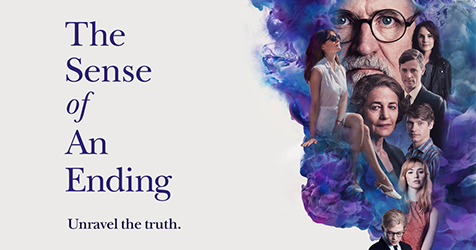
The Sense of an Ending

In his old age, Tony Webster (Jim Broadbent) received a registered letter notifying him of a small inheritance from someone he had known way back in his university days. The money isn’t the important thing, it’s the diary that is supposed to go with it that opens up a door to his past. And so begins the story. Tony has to rethink everything about himself (younger played by Billy Howle), his first love Veronica Ford (younger played by Freya Mavor), Veronica’s family, in particular his mother Sarah (Emily Mortimer), and his school friends Adrian Finn (Joe Alwyn, who plays Billy Lyn in Ang Lee’s 2016 movie).

There are hits and misses in this adaptation. Broadbent delivers a solid performance as the clueless Tony Webster, a man who has lived all his life lacking the lucidity of seeing himself and others in the proper light, or is it selective memory? The little bit of addon is good, letting Tony set up an old camera shop to get him out of bed everyday. It’s also a good link because when he first met Veronica, she was toying with one, and he had received one from her as a gift as well. Herein lies the linkage of the object with the distant past.

Tony has his ex-wife Margaret (Harriet Walters) to thank, for she humours him by meeting him time and again just to listen. She may be doubting what Tony is telling her, but she is patient and wait for him to slowly rediscover himself. That’s what a good listener does, isn’t it, she helps you question yourself.

Adding the plotline of Tony’s daughter Susie (Michelle Dockery) giving birth to a baby is effective. Those who miss Downton Abbey would be glad to see Mary Crawley again, in a new role. But the real effect here is that her giving birth to a newborn son leads me to appreciate the title of the book, something that I did not quite get when I was reading. I wondered about the relevance of the book title when I was reading it. The movie’s last scene clears this up for me. After all these years of misinformed self-knowledge, Tony finally comes to the end of a chapter in his old age, still not too late. With the renewed relationship with his ex Margaret, and a new grandchild, Tony is ready to call an end to a clueless life and start anew. Once more, with feeling.

The weakest link I feel is with the elderly Veronica character played by Charlotte Rampling. It’s a missed opportunity for the director to draw out more from this veteran actor. Unlike in the book, which depicts an absolutely frustated Veronica, possibly traumatized by what had happened to her in life, finding Tony not understanding a bit about the past. “You just don’t get it, do you?” Exasperated, she has said this several times in the book, if my memory serves me correctly.

So here in the movie, the most crucial scenes ought to be Tony’s meeting with the older Veronica for the first time after all those decades and Veronica seeing Tony still oblivious to what had happened. But no, we see an utterly aloof Veronica, too calm for those tense cinematic moments. “You just don’t get it, do you?” has not been said even once, if my memory serves me correctly.

And the most crucial line in the pub when Tony finds out the truth, it ought to be the climax but the scene is so understated that any built up has been eroded. Now he gets it, and what reaction does he show at the moment and afterwards? I feel it’s the director’s job to augment the moment, and let it ripple into the next sequences. I’m sure the cast can easily oblige. Just for the sake of eliciting more emotional engagement from the viewers. I remember how sensational it felt when I came to that part in the book.

Overall, it’s a pleasure watching these veteran actors in the same production. Together with the above-mentioned cast members, there are also Matthew Goode, the history teacher, but not in a scene with Michelle Docerty, and Merchant Ivory star James Wilby playing the small role of Veronica’s father.

That it is shot on location in London, especially watching Tony meet Veronica again on “the wobbly bridge” leading to Tate Modern is particularly poignant in light of recent events. Overall, a watchable adaptation to go with the book.

~ ~ ~ Ripples

***

Related Posts on Ripple Effects:

The Sense of an Ending Book Review

The Lunchbox Movie Review

New Announcements of Books to Screen

Some exciting announcements of upcoming adaptations:

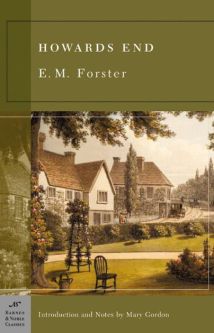
howards-end-by-e-m-forsterHowards End by E. M. Forster

E. M. Forster’s 1910 novel Howards End is to be adapted into a four-part TV miniseries produced by BBC and Starz, to be helmed by the Oscar nominated Manchester by the Sea director Kenneth Lonergan. Hayley Atwell plays Margaret Schlegel, Matthew Macfayden takes the role of Henry Wilcox, and Tracey Ullman is Aunt Juley Mund. I just can’t help but compare this new cast to that of the, shall I say, definitive 1992 Merchant Ivory production with Emma Thompson, Helena Bonham Carter, Anthony Hopkins and Vanessa Redgrave. Inimitable. Yet, I’m glad to hear of a rebirth of this brilliant E. M. Forster novel.

.

guernsey-literary-and-potato-peel-pie-societyThe Guernsey Literary and Potato Peel Pie Society by Anne Barrows and Maryanne Shaffer
At long last, the best-selling novel (2009) is finally adapted for the big screen, renamed Guernsey. Phew! While its popularity has subsided by now, I hope the movie will revive it, for it’s a delightful read and the characters are resilient residents on German occupied Guernsey Island during WWII. Written as a series of letters between a London writer Juliet Ashton and her friend and publisher Sydney Stark and later, with the charming Guernsey folks, the book exalts the power of reading, not potato peeling. How do you turn epistles into a movie? We’ll have to see. Downton Abbey‘s Lily James will play Juliet, after first Kate Winslet then Rosamund Pike dropped out. Hope this will go to completion. The director is Mike Newell, known for Great Expectations (2012), Mona Lisa Smile (2003), and perhaps the most memorable, Four Weddings and a Funeral (1994).

.

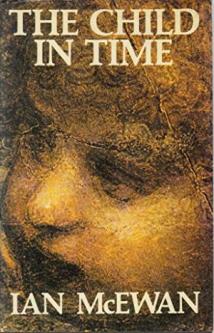
the-child-in-timeThe Child in Time by Ian McEwan

At last something to look forward to after Downton. Ian McEwan’s Whitbread winning novel (1987) about the perpetual trauma of a lost child will be adapted into a 90 min. TV drama co-produced by BBC and Masterpiece. Benedict Cumberbatch to star. With the Sherlock series going down an erratic rather than rational path, I hope this one is a more grounded outlet for Benedict’s superb acting skills, like his Parade’s End (2013). This is his second time in a McEwan novel. Back in 2007, he played a supporting role in the Oscar nominated Atonement, relatively unknown, stressing on the ‘relatively’. And hats off to actors who can navigate freely between the big and small screen platforms.


.

51p921wTKtL._SX308_BO1,204,203,200_ (1).jpg

The Sea Change by Elizabeth Jane Howard

Glad to learn that Kristin Scott Thomas (I’ve Loved You So Long, The English Patient) is stepping out from her long acting career into the director’s chair, and acting too in this adaptation of English author Elizabeth Jane Howard’s novel. While I haven’t read any of Howard’s works, I’d seen the screenwriter Rebecca Lenkiewicz’s, and that’s her screenplay for the Oscar winning Polish film Ida (2013). I highly anticipate Lenkiewicz’s new work. Glad she’s collaborating with Scott Thomas in her directorial debut. Mark Strong is said to be in talks to join the project. Of course, my dream cast would be Colin Firth with Kristin Scott Thomas.


.

crazy-rich-asians

Crazy Rich Asians by Kevin Kwan

According to director Jon Chu (Now You See Me 2), this will be “the first all-Asian cast feature from a Hollywood studio in a long, long time.” Umm… since Joy Luck Club (1993) that is. A risk or a good opportunity? Constance Wu (TV’s “Fresh Off the Boat”) is on board to play a major role. If you’ve not read the book, rest assure that with a title like this, it has got to be a satire, and not a get-rich-quick manual. Not that I’m crazy, nor rich, but reading Kwan’s imaginary yet true-to-life characters is an extravagantly wild ride. His astute and bold satire of modern day’s opulent Singaporean families (his own cultural background) is what Jane Austen would have loved to poke fun of if she found herself in a 21st century rich Asian home. But of course, just like the writing of our dear Jane of yesteryears, the heroine (Rachel in Kwan’s book) is your everyday middle class, highly educated yet modest gal growing up in (immigrant) America, finding (surprise!) that her boyfriend actually is Mr. Darcy incognito when she travels back with him to his family home in Singapore for the wedding of his best friend. I highly anticipate this one, but with great trepidations. They better make this work, or it could easily be a disaster of ethnic proportions.

***

Related Post on Ripple Effects:

Howard’s End by E. M. Forster
Ida’s Choice: Thoughts on Pawlikowski’s Ida
I’ve Loved You So Long movie review
The Guernsey Literary and Potato Peel Pie Society Book Review

Memorable Movie Love Quotes

The following is my Valentine post back in 2008 and an update after Downton. Re-posting here today for reminiscence. For several years, this post held the highest view records on my blog. I’d received 60+ comments suggesting more quotes. I regret I don’t have the plugin to copy them all here. But I’m sure we can start anew and update with fresh ones.  You’re welcome to add your fave movie love quote in a comment.
 
                                                                                    
                                                       ****   
 
 
To celebrate Valentine’s Day, I’ve compiled a list of memorable quotes from movies, all on the theme of love. All come from movies I’ve seen, some I’ve reviewed on this Blog (click on title to my review). They represent dialogues that have stirred some ripples in one small heart. And love…being a many splendid thing, embraces all kinds of human relationships, and transcends cultures and boundaries.
.

Here’s Arti’s Collection of Memorable Movie Love Quotes:

  • Medicine, law, business, engineering, these are noble pursuits and necessary to sustain life. But poetry, beauty, romance, love, these are what we stay alive for. — Dead Poets Society
  • The greatest thing you’ll ever learn, is just to love and be loved in return. — Moulin Rouge
  • The things that people in love do to each other they remember, and if they stay together it’s not because they forget, it’s because they forgive. — Indecent Proposal
  • I like you very much. Just as you are. — Bridget Jones’s Diary
Bridget Jones' Diary
.
  • When the planes hit the twin towers, as far as I know none of the phone calls from the people on board were messages of hate or revenge — they were all messages of love. — Love Actually
  • Maybe it is our imperfections which make us so perfect for one another. — Emma
  • And now, I’m back…and I’ve lost her all over again. I’m so sad that I don’t have Kelly. But I’m so grateful that she was with me on that island. And I know what I have to do now. I gotta keep breathing. Because tomorrow the sun will rise. Who knows what the tide could bring? —Castaway
  • I don’t believe in quantum physics when it comes to matter of the heart. — Bull Durham
.
.
  • Shoot me. There’s no greater glory than to die for love. — Love in the Time of Cholera
  • I need to feel strongly, to love and to admire, just as desperately as I need to breathe. — The Diving Bell and the Butterfly
  • For you, a thousand times over. — The Kite Runner
  • Come back…Come back to me. — Atonement
  • Natalie:  Do you believe in love at first sight?
    John:  Yes I do. Saves a lot of time. — The Stickup

While a few are lucky enough to save time and escape the torments of love by creating a lasting flame from the first spark, some have to go through tumultuous pining, even the arduous and humbling experience of transforming oneself to gain requited love. And who, other than the following, epitomizes such kind of yearning:

Love Quotes From Downton Abbey:

“I love you Mr. Bates. I know it’s not ladylike to say it, but I’m not a lady and I don’t pretend to be.”  — Anna, S1E5

“I’m not a romantic… But even I concede that the heart does not exist solely for the purpose of pumping blood.” Violet Crawley, S2E2

“I’d rather have the right man, than the right wedding.” — Anna, S2E5

***

You all are welcome to contribute to this list. Just submit your favorite movie love quotes in the comment box below…and have a memorable Valentine’s Day!

 ***

Here’s the link to my original post where you can read all the comments.

The Salesman: A Timely Film

It’s time we get used to reading subtitles.

The Salesman is one of five nominees for Best Foreign Language Film in the upcoming 89th Academy Awards on February 26. Due to the executive order banning travellers from seven Muslim countries, Iranian director Asghar Farhadi will not be attending. The director has indicated he will not accept any exception made for his case. Co-star Taraneh Alidoosti has stated she will boycott the ceremony as a protest.

Whose loss is it that Asghar Farhadi is banned from coming to the Academy Awards?

After the untimely passing last year of Iranian auteur Abbas Kiarostami (Certified Copy, 2010), Farhadi continues to carry the legacy of fine Iranian filmmaking with international accolades. Starting with About Elly, which he won Best Director at Berlinale in 2009, Farhadi went on to capture both the Oscar and the César Award in France for Best Foreign Language Film with A Separation (2011). The Past (2013) brought him two Cannes prizes. His newest work The Salesman won a Best Screenplay for the writer/director and a Best Actor award for his star Shahab Hosseini at Cannes last year. Now North American viewers have a chance to see this engaging family drama.

thesalesman_poster_2764x4096-copy

The story starts off with an evacuation of an apartment building on the verge of collapsing. A couple, Emad (Shahab Hosseini, A Separation, About Elly) and Rana (Taraneh Alidoosti, About Elly) are among the anxious residents fleeing the building. We can see large cracks on the wall in their bedroom. Responding to the shout for help, Emad diverts to his neighbor’s unit to carry his adult, mentally ill son on his own back to go down the stairs. A seemingly spontaneous move in the rush of evacuation, Farhadi lets us see an act of kindness from his main character.

A friend offers Emad and Rana a recently vacated apartment unit to stay. Its previous tenant still has her belongings stored in one room. She has left in haste, a shady figure who has frequent male clients coming to her unit. Emad only learns of this after a violent incident that happens to his wife. Rana is alone in the unit one night. She leaves her apartment door ajar for Emad, thinking he will come home soon while she steps into the shower.

Emad returns home to see traces of blood on the stairs and soon learns that his wife has been taken to the hospital emergency by neighbors. We as viewers do not know exactly what has happened but can conjecture by the circumstance. We see a traumatized Rana with stiches on her forehead. She is released to recover at home, but refuses to let Emad call the police. Later, as Emad discovers a cell phone and a set of keys left by the intruder, he decides to investigate on his own and takes matters into his own hands.

Since the incident, husband and wife begin to drift slowly apart, Rana being reticent and Emad vigilant. Here we see Farhadi’s signature cinematic handling: incisive depiction of domestic tensions shrouded in Hitchcokian suspense. We soon forget we are watching an Iranian couple living in Tehran. As with his previous works, Farhadi is effective here in engaging his viewers and to elicit empathy for both the husband and the wife despite their very opposite response to the attack.

Emad and Rana belong to a local theatre group. They are presently rehearsing for a run of Arthur Miller’s Death of a Salesman, playing Willy and Linda Loman. Farhadi deftly intertwines the on-stage and the real-life couple with intricate parallels. In the play, we see the demise of Willy Loman and the end of a relationship; in their real life, we see Emad and Rana’s marriage deteriorate, and a demise of a different kind for Emad. The cracks on the wall above their bed at the opening scene is now an apt metaphor, their once close bond slowly crumbles.

Actually, there are two plays involved in the film. The obvious one is Miller’s. The other is easy to miss. During the day, Emad is a teacher. In one scene, we see him teaching a play called The Cow, a work written by the prolific Iranian writer Gholām-Hossein Sā’edi. Reminiscent of Kafka’s The Metamorphosis, The Cow evokes much enthusiasm in his class of teenage boys. The play is an allegory about a man who owns the only cow in a village; his daily life is closely tied to the animal, his identity defined by his ownership of this unique possession. When one day he loses his cow in an accident, he ends up turning into one.

Here are two prominent lines. A student asks: “How can you turn into a cow?” Emad answers: “Gradually.” Sounds like a joke, but no student laughs. Farhadi subtly leads us to see how.

The last part of the film is the most crucial. Emad’s good detective work leads him to come face to face with the attacker. He has him locked in a room in their previous, vacated apartment. Playing to the attacker’s fear of revealing to his wife and family what he had done, Emad calls them to come over. Farhadi is brilliant in leading us to a situation where we as viewers are challenged to empathize all his characters despite their opposing sides, and to weigh in on what we would have done. He puts his viewers in the position not as a judge, but witness.

Slowly we are led to see how a man can lose the veneer of civility and change into something else as he allows revenge dominates his emotions. The kind and helpful man we see in the opening scene is now shrouded in a different sentiment. In the most nuanced and quiet manner, Farhadi lets us visualize Emad’s earlier reply to his student, how a man can gradually change into a different being. Or, is it a latent potency we all have that different circumstances would elicit a different aspect of our self?

At this juncture, Farhadi reveals to us a multi-faceted man. A helpful neighbour, loving husband, well-liked teacher, and a cultured stage actor. When put in a situation where vigilante justice takes over, and revenge molds the mind, or even when the social expectation of being a protective male head in a marriage prevails, is Emad free to act? If the accused pleads for his own release, and the victim herself is willing to forgive, should the husband carry out his reprimand? On the other hand, should the attacker just go free?

In the final shot, we see Emad and Rana sit beside each other as make-up is applied to get them ready for their parts as Willy and Linda. Their expressions in the mirrors make one haunting image to end the film.

Banned from entering the United States, what Farhadi will lose are the glitz and glam of the Oscars. By his absence at the ceremony, the Academy will lose the chance to honor an internationally acclaimed director who is a master in revealing human frailties and eliciting from viewers the very empathy we so need in this testing time.

Fortunately we can still watch his film.

~ ~ ~ ~ Ripples

***