Spring Baby

They’ve come back, the Great Horned Owl couple.  Their perennial arrival to nest is as predictable as the grass turning green and the leaves bursting out from the bare branches. They even check into the same abode.

After a long wait since April, I finally got to see the new addition last week. This time, an only child.

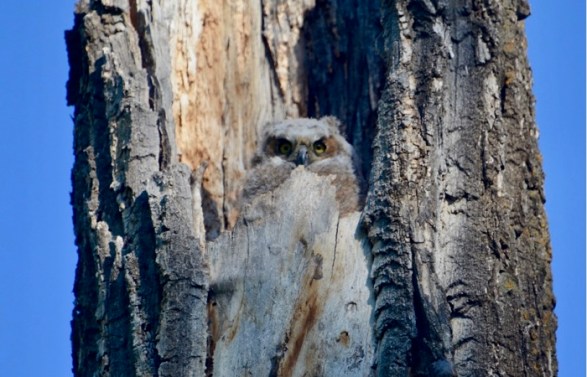
Here’s baby peeking out to feast on the sights and sounds of spring:

Baby in nest

A close-up of this spring baby:

Baby close-up.jpg

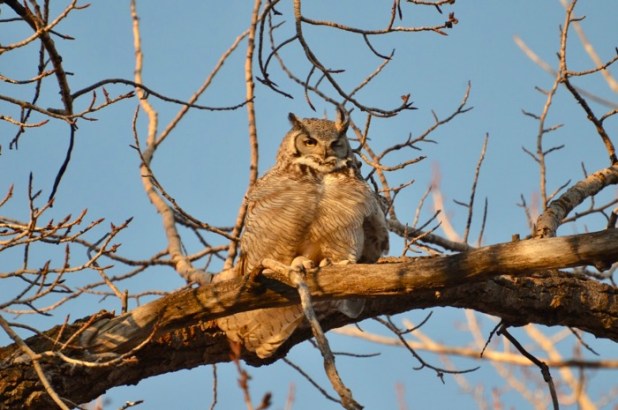
Mom or Dad is always watching close by, here basking in the evening sun:

At dusk

Yesterday, it’s baby’s day out. Where’s Waldo?

Where's Waldo?.jpg

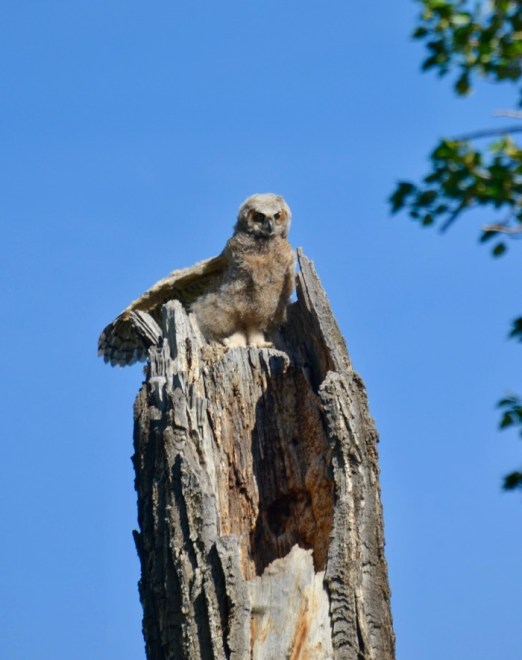
Look up, there he is, at the top of the tree trunk:

Camouflage.jpg

Trying out wings:

Wing.jpg

and showing off a downy coat:

Downy.jpg

As always, Mom is nearby, ever watchful:

Keeping watch.jpg

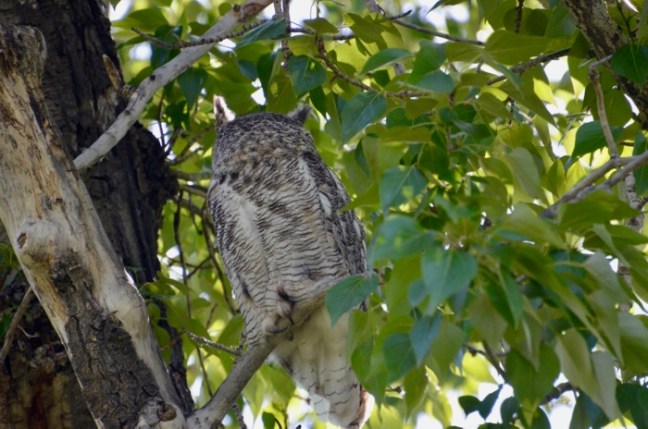
Posing for all the nature paparazzi below, here it is, the feat of turning your head 180º:

head turned.jpg

Enjoy while you can, soon you’ll be an empty nester, too soon.


***

Middlemarch Book I: What are siblings for?

Dorothea and Celia Brooke remind me of the Dashwood sisters Elinor and MariAnne. Like MaryAnne, Celia, being the younger, holds much respect and love for her older sister. Unlike the sisters in Austen’s novel however, here in Middlemarch so far, I just wonder who is Sense and who is Sensibility.

What are siblings for if not to act as a sounding board to test one’s opinion? This is a scene fit for a prime time TV comedy. Celia, just learned that Mr. Casaubon is the only guest coming to dinner––the setup to that special dinner she is totally oblivious––thus allowing her to speak her mind freely to Dorothea:

_______

“I hope there is some one else. Then I shall not hear him eat his soup so.”
“What is there remarkable about his soup-eating?”
“Really, Dodo, can’t you hear how he scrapes his spoon? And he always blinks before he speaks. I don’t know whether Locke blinked, but I’m sure I am sorry for those who sat opposite to him if he did.”
“Celia,” said Dorothea, with emphatic gravity, “pray don’t make any more observations of that kind.”
“Why not? They are quite true,” returned Celia, who had her reasons for persevering, though she was beginning to be a little afraid.
“Many things are true which only the commonest minds observe.”
“Then I think the commonest minds must be rather useful. I think it is a pity Mr. Casaubon’s mother had not a commoner mind: she might have taught him better.” Celia was inwardly frightened, and ready to run away, now she had hurled this light javelin.

_______

What follows of course is the bombshell that shatters the sounding board for any sense or sensibility.

Sibling Waxwings
I’ll just throw in this pair of Waxwings, they look like they’re siblings.


Another pair of siblings that makes a lively scene is Fred Vincy and his sister Rosamund. Talking about using the word “superior” to denote certain young men, Fred says:

_______

“Oh, there are so many superior teas and sugars now. Superior is getting to be shopkeepers’ slang.”
“Are you beginning to dislike slang, then?” said Rosamond, with mild gravity.
“Only the wrong sort. All choice of words is slang. It marks a class.”
“There is correct English: that is not slang.”
“I beg your pardon: correct English is the slang of prigs who write history and essays. And the strongest slang of all is the slang of poets.”
“You will say anything, Fred, to gain your point.”
“Well, tell me whether it is slang or poetry to call an ox a leg-plaiter.”
“Of course you can call it poetry if you like.”
“Aha, Miss Rosy, you don’t know Homer from slang. I shall invent a new game; I shall write bits of slang and poetry on slips, and give them to you to separate.”
“Dear me, how amusing it is to hear young people talk!” said Mrs. Vincy, with cheerful admiration.

_______

What are siblings for if not to act as target of javelin or indulgence for a doting mother.

How’s your reading coming along?

________

Some Middlemarch posts from our Read-Along participants:

Dolce Bellezza

Gladsome Lights 


Middlemarch in May: Let the Fun Begin!

A few quotes to set the stage for our Read-Along of Middlemarch by George Eliot.

BBC History Website:

“She used a male pen name to ensure her works were taken seriously in an era when female authors were usually associated with romantic novels.”

**

From “George Eliot: A Celebration” by A. S. Byatt, as introduction to Modern Library’s edition of Middlemarch:

“She had no real heir as “novelist of ideas” in England… Her heirs are abroad—Proust in France, Mann in Germany. Which brings me to another reason for loving her: she was European, not little-English, her roots were Dante, Shakespeare, Goethe, Balzac, not just, as Leavis’s “Great Tradition” implies, Jane Austen. She opened gates which are still open.”

**

From “Why Read George Eliot”, by Paula Marantz Cohen in American Scholar, Spring 2006:

“Eliot’s voice, in its assumption of a wiser, juster, more all-encompassing perspective, is the ligament of her novels. It elevates them from ingenious storytelling to divine comedy…

As Virginia Woolf observed, Eliot wrote novels for grown-up people. Our society and our relationships would be saner and better if more grownups read her.”

**

Last but not least, let’s kick off Middlemarch in May with Henry James’s lively reflections on George Eliot, as quoted in Colm Tóibín’s article “Creating The Portrait of a Lady in The New York Review of Books, July 19, 2007 Issue:

“A specter haunted Henry James: it was the specter of George Eliot. He visited her first in 1869, when he was twenty-six, and wrote to his father:

‘I was immensely impressed, interested and pleased. To begin with, she is magnificently ugly—deliciously hideous…. Now in this vast ugliness resides a most powerful beauty which, in a few minutes, steals forth and charms the mind, so that you end up as I ended, in falling in love with her. Yes behold me literally in love with this great horse-faced blue-stocking.’

Three years later, when Middlemarch appeared, James wrote from Rome to his friend Grace Norton:

A marvellous mind throbs in every page of Middlemarch. It raises the standard of what is to be expected of women—(by your leave!) We know all about the female heart; but apparently there is a female brain, too…. To produce some little exemplary works of art is my narrow and lowly dream. They are to have less “brain” than Middlemarch; but (I boldly proclaim it) they are to have more form.”

**

Let the fun begin!


____________________


Other posts from Read-Along participants:

Middlemarch Has Me Laughing So Soon by Gretchen at Gladsome Lights


My invite post:

Middlemarch in May Read-Along

My Middlemarch Review Posts:

Middlemarch Book I: What are siblings for?

Middlemarch Book II to IV: Inkblot Test

Middlemarch Wrap: You be the screenwriter


First Spring Visitors to the Pond

They brought me out of hibernation.

It’s been a long winter, not record temperatures, but record snow, all the way into March and April. The Pond started to melt just last week. Then they all came, so fast. I’m amazed at the varieties, some I haven’t seen before.

One evening last week:

Evening.jpg

American White Pelicans in the evening light, welcome back!

American White Pelicans.jpg

And then from a distance, some I wasn’t familiar with:

New visitors.jpg

A white hood, not a Bufflehead. The sun was setting quickly, and I must say goodbye, not for long though.

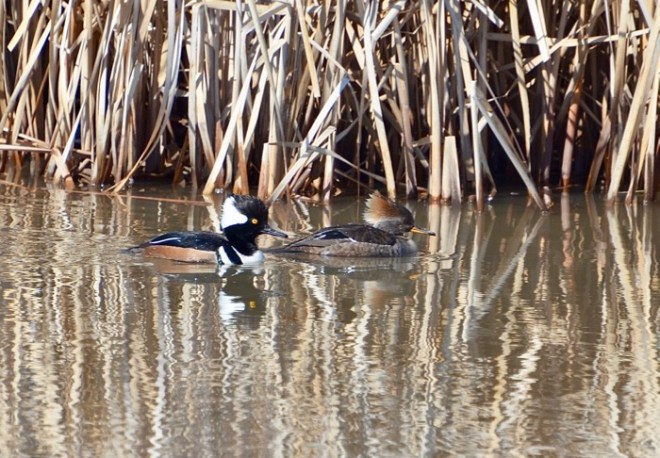
Went back next morning and saw them. I wouldn’t have known if not for another photographer who told me they were Hooded Mergansers, rare visitors to the Pond. Only the male is white-hooded. The female looks like the Common Merganser female which always reminds me of Lucille Ball for some reasons:

Rare Visitors.jpg

Hooded male.jpg

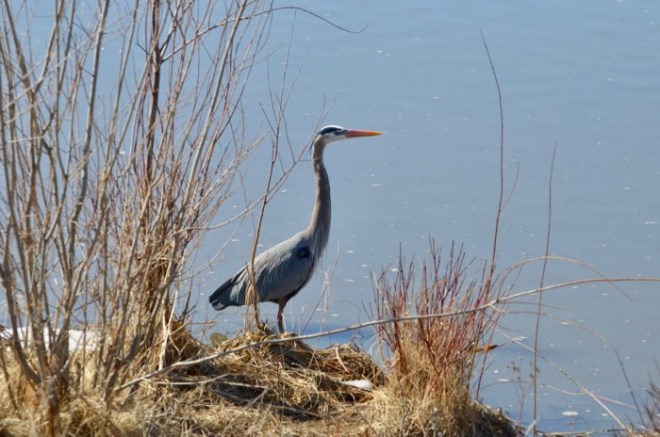
The Great Blue Heron, frequent visitor to the Pond, a bit shy as I approached:

Great Blue Heron.jpg

Takes off.jpg

The Lesser Scaup:

Lesser Scaup.jpg

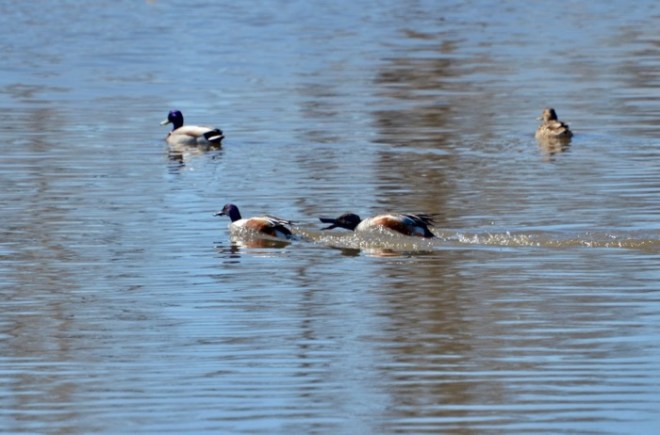
Northern Shovelers playing catch:

Shovelers.jpg

Just as I was leaving, I was stunned to see these beautiful creatures flying above. I wasn’t ready but still able to snap a couple of photos. Not until I went back home and did some search did I realize I’d just seen a ballet of Trumpeter Swans in the sky:

Trumpeter Swans.jpg

Swans 1

Don’t fly away, stop by the Pond next time!


***


‘Middlemarch in May’ Read-Along

In 2015, BBC Culture contributor Jane Ciabattari surveyed 82 book critics around the world outside UK, “from Australia to Zimbabwe”, and asked them to rate the greatest English novels of all time. Guess which book came up on top of the list? Guess right. Middlemarch by George Eliot. Why outside the UK?  To find out “What does the rest of the world see as the greatest British novels… for a collective critical assessment… a global perspective”.

For her 19th C. classic to appeal to critics today, George Eliot must have done something right. I must discover the mystery. Interesting that I’d read Rebecca Mead’s My Life in Middlemarch a few years ago and enjoyed it even without reading the eponymous work. But I’ve been saying to myself, I need to put an end to this cultural deprivation. You’ll never know, there just might be a new movie adaptation brewing somewhere with a postmodern streak. I have to read the original first.

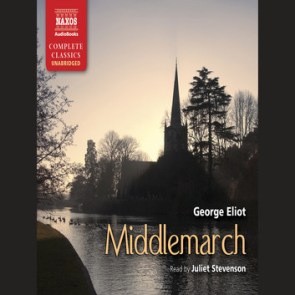
My personal plan is to read the hard copy and listen to the audiobook narrated by Juliet Stevenson whichever and whenever I like during the process. Read at home, listen while driving or doing something else. That usually works best for me. Feel free to use whatever reading format you prefer.

MiddlemarchMiddlemarch Audiobook

As the lovely month of May is approaching, you’re welcome to join me and Bellezza and others here and here to read Middlemarch. We will take it leisurely. While we start in May, I’ll leave the ending date tentatively at the end of June. But if by ‘leisurely’ it means July or even further, I’m totally fine with it. (Bellezza would know how flexible I am with our previous read-along) I always find reading with a deadline more a pressure than pleasure.

You might have read it before, so here’s a chance to dust off your copy from the shelf, as we read or reread together and connect online, no matter where you are, from Australia to Zimbabwe. You may like to share via a blog post, leave a comment, or send a tweet. How’s this for a hashtag: #MiddlemarchinMay on Twitter.


***

‘The Rider’ is Poetry on Screen

“The Rider” opens this weekend in selective cities. If it’s screening in your area, don’t miss it.

The Rider

What is a cowboy to do if he cannot live the cowboy life again? Too remote? Substitute ‘cowboy’ with any other activities you love to do, or a role that defines you. Take that away, and what do you have left?

The film focuses on the struggles of a rodeo star and expert horse trainer Brady Blackburn as he rebuilds his life and identity after a severe head injury. Upon the prognosis of his doctor, Brady should never go back to riding and rodeo again, for another injury would be fatal.

“The Rider” is an American feature, unique in its subject matter while its director is an unlikely candidate to share the insight. Chloé Zhao was born in Beijing, had studied in London, then Massachusetts and New York. “The Rider” is her second feature. In her short directorial career, she has gone to Cannes twice, nominated in 2015 for the Caméra d’Or (“Golden Camera”), Cannes’ award for the best first feature film, and winning The CICAE Art Cinema Award in 2017 with “The Rider”. That is, among other international accolades. Zhao is an exemplar of a global citizen in filmmaking.

Chloé Zhao

The actors for “The Rider” exude authenticity, for they are actual cowboys and their family, all playing themselves. Brady Jandreau takes the role of Brady Blackburn, reflecting his real-life persona, a cowboy who is much admired and respected in the rodeo community. His father Tim and sister Lily form the Blackburn family in the film. Zhao’s directorial skills shine forth as she leads the non-actors in front of the camera, capturing them in their natural speech and actions, in particular, offering viewers realistically the dexterity involved in the wrangling work. But the film goes much deeper than the actions.

Recovering from the near-fatal injury pits Brady into a precarious existence and conflicting relationship with his father Wayne (Tim Jandreau). As a tough cowboy himself, Wayne had all along brought Brady up to be resilient and competitive, but now father had to dissuade son from the risky pursuit of bronco riding and rodeo activities. Nursing a wounded body and a tormented mind, Brady has to deal with the painful task of redefining himself. Temporarily working in a supermarket and wearing a store uniform makes Brady a displaced person, a persona out of meaningful context, both to himself and to those who recognize him as they come into the store.

While there are tense undercurrents with his dad, Brady cherishes the intimate bond with his sister Lily (Lily Jandreau), who expresses herself from her own peculiar, internal world. Kudos to Zhao for casting the real-life brother and sister in the film, they need not be experienced actors to conjure up some genuine, moving scenes.

Much of the film’s effectiveness goes to the inspiring cinematography, exposing quietly Brady’s tormented soul. The opening sequence sets the stage right away with riveting close-ups of a horse and its breathing. As the camera turns from beast to man, we see the extent of the injury Brady sustains as he gets out of bed and follows the routine needed to care for his own body, striving to return to a past life and regain some sense of normalcy.

In other sections of the film, the camera pans the vast landscape of the South Dakotan plains with a tiny figure that is Brady walking or riding through. “The Rider” is visual poetry on a subject that is seldom explored, and cinematographer Joshua James Richards is most effective in transposing Brady’s internal quest lyrically on screen: “A horse’s purpose is to run in the prairies; a cowboy’s is to ride.”

Brady’s good friend Lane Scott (Lane Scott) is a painful reminder of the risks a cowboy takes. Paralyzed and brain damaged after a fall in a rodeo event, Scott now communicates barely by spelling out words one letter at a time signing with his fingers. Poignantly, Zhao depicts Brady’s every visit with Lane in the hospital as an encounter of love and hope without sentimentality.

Zhao is nuanced and eloquent in creating impressionistic scenes. And when horse and man are juxtaposed in such intimacy, the parallel is striking. As Brady puts it, when a horse is badly hurt it has to be put down, that is the humane thing to do; when a cowboy is badly hurt, he has to continue to live, for that is what humans are supposed to do. As we come to the turning point of the film towards the end, the presence of family love and support appear to be the key to moving on.

A rare gem of a film. Watch it with a quiet heart.

~ ~ ~ ~ Ripples


***

An Easter Sunday Poem

Warbler on tree

The Whole Story

Behind that stone before
it was rolled away
a corpse lay.
There lay all I deplore:
fear, truculence – much more
that to any other I need not say.
But behind that stone I must be sure
of deadness, to allay
self-doubt i.e. so nearly to ignore
the love and sacrifice for our
release; to nearly stray
back into the old
pursuit of virtue.

Once it is clear
it was a corpse that day,
then, then, we know the glory
of the clean place, the floor
of rock, those linens, know the hour
of His inexplicable “Peace;” the pour
— after He went away —
of wonder, readiness, simplicity,
given.

                             –– Margaret Avison


***


A Good Friday Trial

DSC_0280

“Then went the jury out, whose names were Mr. Blindman, Mr. Nogood, Mr. Malice, Mr. Love-lust, Mr. Live-loose, Mr. Heady, Mr. Highmind, Mr. Enmity, Mr. Liar, Mr. Cruelty, Mr. Hate-light, Mr. Implacable, who everyone gave in his private verdict against him among themselves, and afterwards unanimously concluded to bring him in guilty before the judge. And first among themselves, Mr. Blindman, the foreman, said, I see clearly that this man is a heretic. Then said Mr. Nogood. way with such a fellow from the earth! Ay, said Mr. Malice, for I hate the very look of him. Then said Mr. Love-lust, I could never endure him. Nor I, said Mr. Live-loose; for he would be always condemning my way. Hang him, hang him, said Mr. Heady. A sorry scrub, said Mr. High-mind. My heart riseth against him, said Mr. Enmity. He is a rogue, said Mr. Liar. Hanging is too good for him, said Mr. Cruelty. Let us despatch him out of the way, said Mr. Hate-light. Then said Mr. Implacable, Might I have all the world given me, I could not be reconciled to him; let us forthwith bring him in guilty of death. And so they did; therefore he was presently condemned to be had from the place where he was, to the place from whence he came, and there to be put to the most cruel death that could be invented.”

–– John Bunyan
Pilgrim’s Progress


***

Canada Reads 2018: Book Review of ‘Forgiveness’ by Mark Sakamoto

Mark Sakamoto’s family memoir was first published in 2014. The book reemerges now due to the Canada Reads 2018 event. The annual battle of the books is CBC’s reading campaign. Five Canadian media and entertainment celebs will defend one of the five shortlisted books in a national broadcast March 26-29. The panelists will vote down one book each day to arrive at the winner. Audience can tune in on the debates via radio, TV and live stream online.

Mark Sakamoto is a lawyer by training and has enjoyed a varied career. In Forgiveness, he writes about his grandparents’ real-life experiences, two contrasting, traumatic WWII accounts. The subtitle of the book is telling, Forgiveness: A Gift from my Grandparents.
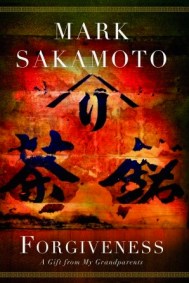
Forgiveness (1)Mark Sakamoto’s maternal grandfather Ralph MacLean is from the Magdalen Islands in the east  coast of Canada. In 1940, he enlisted with the army voluntarily together with his friend. After a few months’ training they were sent overseas to Hong Kong, oblivious to the perils into which they were driven. With the British already retreating a hopeless post, MacLean’s garrison didn’t have a chance to defend the then British Colony. In a few short weeks after their arrival, all two thousand or so Canadian soldiers were either dead or turned POWs forced to live in sub-human, horrific conditions under their Japanese captors.

… the fate of 819 men was sealed. They would never return home. The remaining 1,155 survivors would be forgiven if they sometimes felt they were the unlucky ones.

Later, MacLean was shipped to Japan to work for the Japanese war effort, from POW to slave laborer. That he survived at all was a miracle.

Cut to the other side of the world in Canada. Mark’s paternal grandparents Mitsue and Hideo Sakamoto were born in British Columbia and lived in a fishing community. Grandma Mitsue’s father, together with thousands of other Japanese Canadians, had their own boats and were doing well as fishermen in a closed-knit community.

During the time Ralph MacLean was barely surviving as a POW in Japan, the Sakamotos, being Japanese Canadians, went through their own battle in a land they called home. Their families were interned and sent to rural Alberta as forced farm laborers. The family fishing boat, and all their possessions were confiscated. Together with thousands of Japanese Canadians–many Canadian born–Mitsue, Hideo and everyone in their extended families, young and old, were put on a train barely suited for human passengers, under the watchful eyes of policemen with rifles, and transported to Lethbridge, Alberta. There Mitsue and Hideo were separated with their parents as they were sent to different farms to work as laborers, living in shacks of wood planks and dirt floor.

After the war, Ralph MacLean came back from Japan and settled in Calgary, Alberta. Mitsue’s families knew they had no home to return to in B.C. after receiving a compensation cheque of $25.65 from the Canadian government for the loss of all their properties. They decided to remain in Medicine Hat, Alberta. Fate has it that Ralph’s daughter Diane and Mitsue’s son Stan met in a high school dance. When Ralph eventually met his future son-in-law, who looked like one of his wartime tormentors, he knew he needed to leave the past behind. The two families first met at a dinner in Mitsue’s home:

Mitsue and Ralph became instant friends. There was an unspoken understanding between them… they had both discarded the past, keeping only what they needed. They did not compare hardships or measures injustices. They knew there was no merits to that.

Two families who had suffered torments of varying degrees during the war and for very different reasons came together as their children joined in marriage. What a wonderful story. Yet the above short few lines are all that readers can find relating to how the two families came together. Despite the extraordinary personal experiences, the book fell short of delivering a satisfying read.

With the bold, one-word title, “Forgiveness”, it is surprising that the author leaves us with little internal reflections or insights. For Ralph, having gone through so much trauma and physical torments, we are told in only a few lines how he came to the state of forgiveness, that is when he read his Bible during the last days in the Japanese war camp, turning to Mark 25:11, “And when you stand praying, if you hold anything against anyone, forgive him, so that your Father in heaven may forgive you your sins.” That is all being mentioned, just the quote. It seems a lot of the forgiveness is left to the reader’s own assumption and speculation.

It matters little that it lacks literary style, or that the writing is conversational. The short sentences make it a fast read and descriptions are vivid, especially the war years. While the thematic materials are worth telling, the book lacks editorial work to make it a cohesive whole. There are sections that are disjointed, the chapters uneven. There are moments where readers have to join the gaps on their own. The photos are helpful for readers to visualize, but there are no captions right underneath except all stated in a list at the back of the book, not too drastic a fault but an inconvenience still.

Structurally, the first two-thirds of the book about the war years are stark personal experiences many North Americans are not familiar with. These painful, eyewitness accounts told to the author by his grandparents are informative and necessary for us to know. But after that, the last part of the book about Mark and his parents, especially at the end how he had to care for his mother’s debilitating addictions after his parents’ divorce reads like another story unrelated to the earlier part, and Ralph and Mitsue seem to have disappeared.

Nevertheless, for the personal torments of Ralph’s as a POW under Japanese hands during WWII, and the maltreatment of Japanese Canadians had undergone at the same time right here in Canada, Sakamoto’s book is of value as eyewitness accounts to history and a cautionary real-life tale of how we ought to go forward as a civilized society. The last section of the book could well lead to another personal memoir dealing with the urgent social issue of addictions.

***

Forgiveness: A Gift from my Grandparents by Mark Sakamoto, HarperCollins Publisher, Toronto, 2014.

My review copy provided by the Publisher.

***

RELATED POSTS:

The Railway Man by Eric Lomax Book Review

The Railway Man (2013) Movie Review


Books to read in pairs

Often I find some books are better read together, back to back. They have similar settings or subject matter, and it’s always interesting to see the different perspectives and connections, intentional or not. A testimony to the six degree of separation.

Here are a few. Can you name some more from your reading experience?

Pachinko by Min Jin Lee and Forgiveness by Mark Sakamoto

Pachinko is a family saga set in a period of history that’s seldom told in North America, the first part of the 20th century in Korea and Japan. Annexation of Korea is to put it mildly, prelude to the Pacific War later when the Japanese army invaded her neighbouring countries during WWII. The sufferings of those in the frontline and those at home are vividly depicted in Sakamoto’s family memoir: his maternal grandfather as a prisoner of war in Hong Kong and later shipped to Japan as slave laborer, while his paternal grandmother and her family mistreated in internment right in their homeland of Canada. (detailed reviews coming up)

**

Do not say we have nothing by Madeleine Thien and The Noise of Time by Julian Barnes

Barne’s biographical vignettes of Russian composer Dimitri Shostakovich during Stalin’s reign is like a compendium to Madeleine Thien’s Do Not Say We Have Nothing which depicts the three choices one can make when confronting a ruthless, totalitarian Ruler. Thien’s fictional characters struggled to survive during Mao’s cultural revolution and the subsequent years. Speak truth to power, unfortunately, is not a viable alternative. Death and oblivion will be the certain and swift consequences.

**

Nutshell by Ian McEwan and Hamlet by William Shakespeare

McEwan’s modern day, in utero version of the Bard’s incestuous mayhem. Very perceptive, considering its from the voice of a baby in the womb.

**

Circling the Sun by Paula McLain, West With the Night by Beryl Markham, and Out of Africa by Karen Blixen

Don’t think of the accented Meryl Streep in the movie Out of Africa, just imagine the ‘real’ Karen Blixen, on her farm in Africa, a tough woman on her own most of the time, and then there’s an acquaintance (can’t say friend) Beryl Markham, a female aviator, equally pioneering, a Brit expat in Africa, doing more than the discovery of the land but also of the man in Karen’s life, no, not Robert Redford.

**

Mrs. Dalloway by Virginia Woolf and The Hours by Michael Cunningham

One day in the life of Mrs. Dalloway can have so much meaning under the pen of Virginia Woolf. The Hours are equally perceptive, internal depiction of three women in different periods of time. And throw in The Hours the movie after, an excellent adaptation and hauntingly worthy of Woolf’s literary style.

**

The Portrait of a Lady by Henry James, Mrs. Osmond by John Banville, and Middlemarch by George Eliot. 

Mrs. Osmond is Banville’s imaginary sequel to Henry James’s The Portrait of a Lady. Seems it all point to bad choices when the protagonist naive and a little too idealistic. I’m exploring how George Eliot’s Middlemarch may be a precursor to these novels of the young and restless and marital mismatch.

And here’s an invite, Middlemarch in May (makes a nice hashtag) is a read-along I’ll be joining with Bellezza and other readers. It starts in May, and it’s our intention to finish before summer, hopefully. Feel free to join us and explore the Dorothea Brooke connection to Isabel Archer, and I’m sure other delights as well along the way.

***


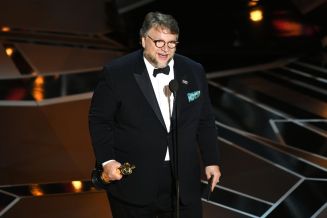
“I am an immigrant” Oscar winning director Guillermo del Toro speaks for millions

Who isn’t from a lineage of immigrants in this relatively new continent of ours ‘discovered’ just a few hundred years ago. Even the indigenous of our land are thought to have had migrated from elsewhere. In his acceptance speech for Best Director at Sunday’s 90th Academy Awards, Mexican film director, writer, and producer of The Shape of Water Guillermo del Toro conveys multiple truths. Indeed, multiplicity looks to be the trend forward.

del Toro

“I am an immigrant,” del Toro declares, these four words bold and clear, albeit humbly and thankfully.

The director continues:

“In the last 25 years I’ve been living in a country all of our own. Part of it is here, part of it in Europe, part of it everywhere.”

del Toro highlighted another truth by saying that being a part of a diaspora, home can be anywhere. While some may oppose to it, one cannot deny the effects of globalization is a breaking down of barriers, the fusing of cultures, and the forming of the world citizen.

del Toro is the third Mexican director to win the Best Picture Oscar. He follows two of his countrymen–‘The Three Amigos’ as they’re called– basking in the Oscar limelight in recent years, Alfonso Cuarón for Gravity in 2013 and Alejandro González Iñárritu in the subsequent two years for Birdman and The Revenant.

“… I think that the greatest thing that our art does and our industry does is to erase the lines in the sand. We should continue doing that when the world tells us to make them deeper.”

The making of the Oscar winning feature The Shape of Water is a testimony of border crossing. Written and helmed by a Mexican director, the film stars a London, England, born Sally Hawkins, supported by a cast of American actors. Original music written by a French film composer, Alexandre Desplat, who won his second Oscar with his water music (his first was The Grand Budapest Hotel in 2015). Director of photography is Danish cinematographer Dan Laustsen. The movie nominated for thirteen Academy Awards and winning four is shot and produced in Toronto and Hamilton, Ontario, Canada. Toronto production designer Paul D. Austerberry and his team garners an Oscar for their creative work, bringing del Toro’s fantastic imagination to life.

del Toro sure knows what it means to erase lines in the sand.

Kazuo Ishiguro

A parallel figure can be found in the world of another art form. The 2017 Nobel Laureate in Literature Kazuo Ishiguro was born in Nagasaki, Japan, in 1954. When he was five, he followed his family to England. At first his parents thought their sojourn would be a short couple of years, but the family ended up staying there ever since. Immigrants as well. Ishiguro had not returned to visit the country of his birth until thirty years later.

His earliest novels are set in Japan confronting Japanese issues; his later works expand out to other locales and even crossing literary genres. His most well-known novel is perhaps The Remains of the Day which was adapted into film starring Anthony Hopkins and Emma Thompson. It is bona fide a British novel.

Is he a Japanese writer or an English writer? Ishiguro was asked this boundary-setting question after his Nobel win. In his own words on the British Council Literature webpage: “I am a writer who wishes to write international novels. What is an ‘international’ novel? I believe it to be one, quite simply, that contains a vision of life that is of importance to people of varied backgrounds around the world. It may concern characters who jet across continents, but may just as easily be set firmly in one small locality.” Only by eliminating borders can one reach the universal.

del Toro had it right when he used the metaphor of lines in the sand. Often borders are not carved in stone but fluid and arbitrary. Surely you can make them deeper. But sand being sand, the lines can be readily washed away as the tides of change come rolling in.

***

I thank Asian American Press for allowing me to repost my article in full.

Related Posts:

The Shape of Water is All Enfolding

Don’t Just Drive Past The Three Billboards

Mudbound: From Book to Screen


How Many Weeks Till Spring?

Who’s counting?

We’re having fun and really, enjoying ourselves.

DSC_0506


DSC_0839

DSC_0684.jpg

DSC_0810 (1).jpg

Indeed, considering the flooding problems some of you face south of the 49th, I’ve come to appreciate our snow, and the never-ending winter.

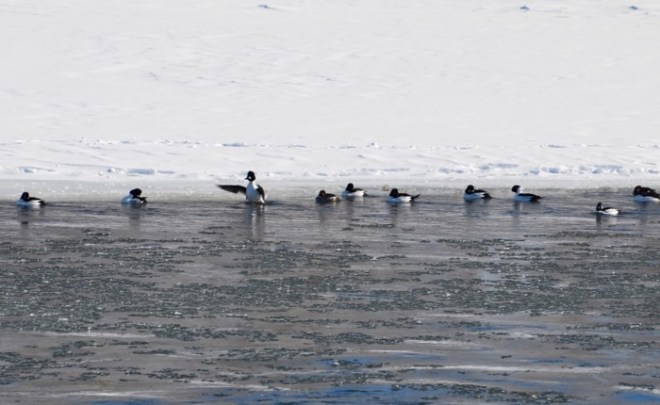
Here, makes me think of a Bruegel painting of winter scene, except replace the people with ducks and geese:

DSC_0824 (1).jpg


DSC_0828 (1).jpg


DSC_0670.jpg

Until then, we persevere.

***