Out of Hibernation

You may have roses in your garden but we still have the remnant of winter. And in Lake Louise, about 58 km (36 mi) from Banff National Park, it is still winter in full swing. This photo was taken just a few days ago:

Lake Louise

People were walking out into the frozen lake, with the glacier in the backdrop.

A snowy but cheery welcome:

Snow Hat

40 mins. drive south to Banff, it’s much warmer, and spring has arrived. The best sign is when you see a grizzly bear coming out of hibernation. See her?

Out of Hibernation

When I first spotted the bear, I was going to quietly walk away until I was told a group of people were already there, well protected and with a park ranger interpreting her every move. So I gladly joined them:

Well Protected

The ranger told us that was a five year-old she bear, officially known as Bear #148, just out of hibernation a week ago. Later I found she had been in the news for trailing a woman walking her dog a bit too close for comfort.

Here she is, still in good shape after a long hibernation:

She Bear 1

Closer

Closer1

Closer2

I slipped away quietly when she got just a bit too close. What’s the first thing you’d wish for after a long, deep sleep? A hearty breakfast of course.

What an exciting herald of spring.

***

Two Films for Thoughts at Easter

I’ve tried different words for the title: Two films for the uninterested, indifferent…

So you think Easter is too maudlin an occasion for you. You’re not fond of bunnies, nor church services, and this talk about death and new life has become too clichéd. That’s ok. How about watching a couple of films? No, not Mel’s Passion, you know how the story goes. Something different.

First is a rather tame one. Previously on Ripple, I’d written about the book by Georges Bernanos’s The Diary of A Country Priest (1936), here’s the film adaptation (1951). Watch it for its artistic values and for the appreciation of a French film legend, Robert Bresson.

Robert Bresson is one of the most influential figures in French cinema. The acclaimed New Wave director Jean-Luc Godard once noted: “Robert Bresson is French cinema, as Dostoevsky is the Russian novel and Mozart is German music.”

I know, Austrians would say Mozart was Austrian, but this just shows his influence has crossed borders. Same with Bresson, who is acclaimed as one of the forefathers of the French New Wave, even though his style is not experimental. Swedish iconic director Ingmar Bergman had specifically cited Diary of a Country Priest as influence for his Winter Light.

Do note this: Bresson was a professed agnostic. His adapting a work by the Catholic writer Bernanos shows the moving power and the universal appeal of the book. The parish of Ambricourt in the story is a microcosm of the human world. The seemingly placid village hides a spiritually barren landscape and a cocoon of malice. The young priest, an unwelcome alien, is barred from entry into the inner world of its residents.

the-gate-of-le-chateau

Watch for its cinematography. Watch for its symbolism. I won’t go into details again. CLICK HERE to read my full review after you’ve finished this post.

***

A 1951, black and white film may not pique your interest. Here’s a modern version, and a word of warning: Definitely not for the faint of heart.

Calvary.jpeg

Calvary, the acclaimed 2014 Irish film written and directed by John Michael McDonagh (The Guard, 2011). It won the Prize of the Ecumenical Jury at the Berlin International Film Festival that year among other accolades, and Brendan Gleeson garnered several Best Actor awards in the festival circuit.

Unlike the young priest in Diary, Father James (Brendan Gleeson) chooses to enter the priesthood in his middle age. He was married before, now a widower, has an adult daughter Fiona (Kelly Reilly). He has his past, but has made a clean start, to serve with integrity in an Irish rural town. Like the young priest in the French town of Ambricourt, Father James’ sincerity and total commitment is met with ridicule and hostility, albeit on the surface, the town folks seem to be relatively friendly to him.

How has the world changed since Bernanos’s time? Plenty, not just for the way people conduct their lives, but the Catholic Church has left a tarnished image of sexual abuse.

The opening scene sets an ominous overtone of what’s to come. It is Sunday, Father James sits in the confessional. On the other side a man tells his story explicitly of being raped by a priest when he was seven years old. That horrifying experience lasted for five years almost every other day, rendering him irreparably damaged. He utters a death threat to Father James: one week later he will meet him on the beach and he will kill him.

Why kill Father James? He’s an innocent priest, a good one as a matter of fact. The man says: “There’s no point killing a bad priest. But killing a good one? That’d be a shock. They wouldn’t know what to make of that. I’m going to kill you cos you’ve done nothing wrong.”

Retribution for the crimes of the Catholic Church? Resolving personal bitterness? Administering justice?

A startling opening that turns into suspense as the film progresses. Father James recognizes the voice. He knows who he is, but we as audience don’t. The director leads us to look into the lives of several characters, allowing us to ponder who it is that wants to kill the priest. Sounds familiar? “Lord, who is it?” But Father James knows, and he still treats the man with a pastoral heart.

“I’m going to kill you cos you’re innocent.” Every day of the week, Father James lives with that threat. Each passing day sends him closer to the hill called Calvary. But Father James goes on with his work, caring, being a friend, ministering, including to his own daughter who has recently attempted suicide. He is heartbroken; she feels she can go on now knowing he cares.

Not saying that he’s a saint. How can you live with such a threat from a man who seems to mean business. Father James is all too human… and that’s the side that appeals. To say it’s been an eventful week is an outright understatement. Things just get too personal, and Father James copes with all the wits he can muster. He needs not turn water into wine, there’s plenty around. He waits. We wait.

Then Sunday comes. He prepares himself and heads to the beach.

The very last scene is one of the most heart-wrenching endings I’ve seen, and it’s not at the beach, not with Father James.

It’s about the ripple effects of Calvary: one man bearing the sins of all.


~ ~ ~ ~ Ripples
for both films

***

Related Posts on Ripple:

Robert Bresson’s Au Hasard Balthazar (1966): A Timeless Parable

Ida’s Choice: Thoughts on Pawlikowski’s Ida (2013)

Homage to Flannery O’Connor: Looking for Intrusions of Grace in Films

Diary of a Country Priest by Georges Bernanos

I return to The Diary of A Country Priest by French author Georges Bernanos, (Journal d’un curé de campagne, 1936) perennially at Easter time. Like Endo’s Silence, it reveals candidly a priest’s suffering and struggles in the midst of a harsh and unwelcome world. Unlike Silence though, light shines through the cracks more warmly. Power through weakness, life conquering death, the essence of Easter.

***

The Diary of a Country Priest Book Cover

A young priest comes to his first parish, the rural town of Ambricourt, filled with humble hopes. All he wants is to serve the people, to give of himself, to bring God’s love. But as soon as he sets foot in the village, he is engulfed by hatred and rejection. There are dark secrets too sinister to be exposed. The young priest is an unwelcome alien. In a town afflicted by hypocrisy, pride, anger and bitterness, he is despised, taunted and ridiculed. His own inexperience is no match even for the children in his catechism class, especially the precocious Seraphitas, a girl ‘with a hardness far beyond her years.’

Ambricourt is a world afflicted by the ‘leprosy of boredom’, a microcosm of the human condition. Bernanos uses diseases to illustrate his point well. The young priest himself is being slowly consumed by terminal illness. The pain in his stomach ultimately defeats his body, cancer. His diet consists mainly of bread dipped in wine which he makes for himself, and some potato soup. Poverty in materials parallels the frailty of his body to take in solid food. None of these though can compare to the sufferings in his spirit. Many a times we see him in the Garden of Gethsemane, pleading for strength in anguish. But he faithfully presses on, using his diary to confide his deepest thoughts, a means to commune with his God.

On the outskirt of Ambricourt is the Château of the powerful M. le Comte. The Count needs no priest to know about his adulterous affairs, this time, with the governess Mlle Louise. His wife Mme la Comtesse is totally absorbed by her long-held bitterness and grief from the loss of her young son. And his daughter Mlle Chantal is a deeply disturbed girl eaten up by anger and jealousy. Soon, she will be sent away to England, a most convenient plan devised by her father.

It is with this deep mess of a family that the young priest finds himself entangled. The most intense scene of the whole book, the climatic moment, comes when the priest goes to the Château to meet with Mme la Comtesse. She lost her beloved son when he was only eighteen months old, a child hated by his jealous older sister Chantal.

On his last day they went out for a walk together. When they came back my boy was dead.

Mme la Comtesse is fully engulfed by hatred for her daughter, grief for her lost son, and bitterness towards God.

Hearing her speak, a tear flows down the face of the young priest. “Hell is not to love any more, madame.” The young priest responds. And with miraculous strength, he delivers the following words.

… But you know that our God came to be among us. Shake your fist at Him, spit in His face, scourge Him, and finally crucify Him: what does it matter? It’s already been done to Him.

Towards the end of some soul piercing exchanges, Mme la Comtesse kneels down, releases her pain, and receives blessings from the young priest. Afterwards, she writes to him in a letter:

… I have lived in the most horrible solitude, alone with the desperate memory of a child. And it seems to me that another child has brought me to life again…

And this young child, a priest, consumed by illness, wreaked by frailty of spirit, can only marvel at the power through weakness:

Oh miracle — thus to be able to give what we ourselves do not possess, sweet miracle of our empty hands!

Not long after this, he succumbs to his illness. A life too short, a mission seems unaccomplished. But his last words faintly uttered on his deathbed are as powerful as the God who sends him:

Does it matter? Grace is everywhere…

And in the film, these three words leave me with one of the most poignant endings of all the films that I’ve seen:

“All is grace.”

 ***

~ ~ ~ ~ Ripples

English Edition of The Diary of a Country Priest by Georges Bernanos, translated by Pamela Morris, Perseus Books Group, Philadelphia, PA, 1965, 298 pages.

Journal d’un curé de campagne, 1936, was winner of the Grand prix du roman de l’Académie française.

Upcoming Post:

The Film Review of Robert Bresson’s Diary of a Country Priest (1951).

Related Post:

Silence the Movie Arrives in the Most Unwelcome Time

Silence by Shusaku Endo


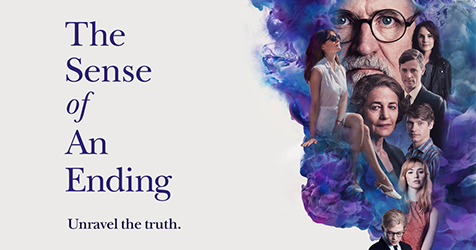
The Sense of an Ending the Movie

When I first knew that The Sense of an Ending was being adapted into a movie, I thought whoever that took up the project had a tall order. That it’s a Booker Prize winner automatically adds pressure and expectations, but the more important consideration is the nature of the book, introspection saturated with internal dialogues.

The novel is powerful and intense in that, in merely 150 pages, Barnes has dismantled the scaffold of self-knowledge in his protagonist by challenging the accuracy of his memories. The eerie effect is, that can happen to us too. How accurate are our memories of ourselves, of others, of events in our life? It’s crucial because what we remember about them build up the person who we think we are today.

So, who had taken up this difficult task to helm the movie? It’s Ritesh Batra, the Mumbai born, Indian director who brought us the interesting film The Lunchbox (2013). Batra has an excellent cast to work with, that should have made his job a bit easier. But one can see he follow the script pretty closely and that’s what made me wish there could be more stylistic touch. Similarly, the screenplay by Nick Payne could have been spiced up a bit. However, its being overall loyal to Barnes’s novel, except a few addons, may have cleared up some ambiguity for the reader.

The Sense of an Ending

In his old age, Tony Webster (Jim Broadbent) received a registered letter notifying him of a small inheritance from someone he had known way back in his university days. The money isn’t the important thing, it’s the diary that is supposed to go with it that opens up a door to his past. And so begins the story. Tony has to rethink everything about himself (younger played by Billy Howle), his first love Veronica Ford (younger played by Freya Mavor), Veronica’s family, in particular his mother Sarah (Emily Mortimer), and his school friends Adrian Finn (Joe Alwyn, who plays Billy Lyn in Ang Lee’s 2016 movie).

There are hits and misses in this adaptation. Broadbent delivers a solid performance as the clueless Tony Webster, a man who has lived all his life lacking the lucidity of seeing himself and others in the proper light, or is it selective memory? The little bit of addon is good, letting Tony set up an old camera shop to get him out of bed everyday. It’s also a good link because when he first met Veronica, she was toying with one, and he had received one from her as a gift as well. Herein lies the linkage of the object with the distant past.

Tony has his ex-wife Margaret (Harriet Walters) to thank, for she humours him by meeting him time and again just to listen. She may be doubting what Tony is telling her, but she is patient and wait for him to slowly rediscover himself. That’s what a good listener does, isn’t it, she helps you question yourself.

Adding the plotline of Tony’s daughter Susie (Michelle Dockery) giving birth to a baby is effective. Those who miss Downton Abbey would be glad to see Mary Crawley again, in a new role. But the real effect here is that her giving birth to a newborn son leads me to appreciate the title of the book, something that I did not quite get when I was reading. I wondered about the relevance of the book title when I was reading it. The movie’s last scene clears this up for me. After all these years of misinformed self-knowledge, Tony finally comes to the end of a chapter in his old age, still not too late. With the renewed relationship with his ex Margaret, and a new grandchild, Tony is ready to call an end to a clueless life and start anew. Once more, with feeling.

The weakest link I feel is with the elderly Veronica character played by Charlotte Rampling. It’s a missed opportunity for the director to draw out more from this veteran actor. Unlike in the book, which depicts an absolutely frustated Veronica, possibly traumatized by what had happened to her in life, finding Tony not understanding a bit about the past. “You just don’t get it, do you?” Exasperated, she has said this several times in the book, if my memory serves me correctly.

So here in the movie, the most crucial scenes ought to be Tony’s meeting with the older Veronica for the first time after all those decades and Veronica seeing Tony still oblivious to what had happened. But no, we see an utterly aloof Veronica, too calm for those tense cinematic moments. “You just don’t get it, do you?” has not been said even once, if my memory serves me correctly.

And the most crucial line in the pub when Tony finds out the truth, it ought to be the climax but the scene is so understated that any built up has been eroded. Now he gets it, and what reaction does he show at the moment and afterwards? I feel it’s the director’s job to augment the moment, and let it ripple into the next sequences. I’m sure the cast can easily oblige. Just for the sake of eliciting more emotional engagement from the viewers. I remember how sensational it felt when I came to that part in the book.

Overall, it’s a pleasure watching these veteran actors in the same production. Together with the above-mentioned cast members, there are also Matthew Goode, the history teacher, but not in a scene with Michelle Docerty, and Merchant Ivory star James Wilby playing the small role of Veronica’s father.

That it is shot on location in London, especially watching Tony meet Veronica again on “the wobbly bridge” leading to Tate Modern is particularly poignant in light of recent events. Overall, a watchable adaptation to go with the book.

~ ~ ~ Ripples

***

Related Posts on Ripple Effects:

The Sense of an Ending Book Review

The Lunchbox Movie Review

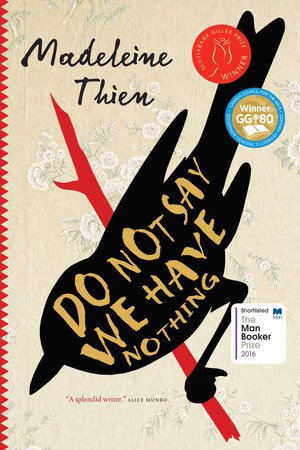
Do Not Say We Have Nothing Book Review

April 3rd UPDATE: Do Not Say We Have Nothing shortlisted for the Baileys Prize.

***

First the Booker, then the Giller and the GG, and now longlisted for Baileys Women’s Prize for Fiction, this voice must be heard. I thank Asian American Press for allowing me to post my review here in full, and Penguin Random House Canada for my reviewer’s copy.

***

Just a few months after it was published in May, 2016, Madeleine Thien’s Do Not Say We Have Nothing was shortlisted for a Booker Prize and had won the top two Canadian literary awards, the prestigious Scotiabank Giller Prize and the Governor General’s Award for fiction. That is extraordinary achievements for the Vancouver born, Montreal based writer.

Thien creates her third novel on a large canvas, spanning from the decades leading to Mao’s Cultural Revolution in 1960’s China and onward to the Tiananmen Square protests and government crackdown in 1989. Even though her novel does not stem directly from a personal experience like others’ such as Dai Sijie’s semi-autobiographical Balzac and the Little Chinese Seamstress, or the eye-witness account of journalist Jan Wong’s Red China Blues, Thien’s outsider’s stance is far compensated by her extensive and detailed research, not just 20th Century history of China but down to the streets and local teahouses. Further, the absence of a first-person experience is replaced by an exuberance of imaginary characters and storytelling, all intricately woven with actual accounts of historical figures and events.

While not being an eye-witness, Thien’s cultural lineage could have brought her into a kind of insider’s realm. Born to Malaysian-Chinese immigrant parents in Canada, Thien’s previous writing had depicted the unique perspective framed by her upbringing. The stories in her collection Simple Recipes (2001) have revealed poignantly the cultural and generational conflicts that could exist in a North American Asian family. Further, Thien’s previous novel Dogs at the Perimeter (2011) had prepared her well to venture into the abyss of human atrocity, with the backdrop of Khmer Rouge’s infamous killing fields in Cambodia. Do Not Say We Have Nothing presents a larger landscape and a more ambitious undertaking than her previous works.

Madeleine Thien

This is how the book opens, simple yet powerful:

“In a single year, my father left us twice. The first time, to end his marriage, and the second, when he took his own life.”

Here we hear a voice, seemingly nonchalant, but still lucid and sad. This is the voice of the protagonist, Marie. She was ten years-old and living with her mother in Vancouver when she learned of her father’s suicide in Hong Kong. The year was 1989. Not long after this news, Marie’s mother took in nineteen-year-old Ai-ming from China, alien and undocumented, escaped out of the country during the Tiananmen crackdown.

Ai-ming’s short refuge in Marie’s home bonded the two like sisters. As well, she opened the eyes of young Marie to life inside a totalitarian regime. The radio played only eighteen pieces of approved music. Her father, Sparrow, would listen to illegal music secretly and hum the melody of his own composition when he thought no one was around. Ai-ming’s interactions with Marie have prodded her—now twenty years later and a professor of mathematics at Simon Fraser University—to search for the truth about her father Kai and his mentor, Ai-ming’s father Sparrow, as well the tragic personal and national history that had consumed their lives.

With Ai-ming’s help, Marie and her mother began to decipher a secret hand-copied manuscript Kai had kept, “The Book of Records”, passed on to him from Sparrow, an allegorical account of their life in China, outward journey and clandestine dreams, “things we never say aloud”. As a young child, Marie was overwhelmed. Now as an adult, she is driven all the more to pursue the truth of her own family history.

It is not easy to follow Thien’s story in the first few chapters as there are many characters introduced with their own backstory. Time frame switches back and forth, spanning two continents. As I entered Chapter 4, I had to draw up a character chart, as I was looking into a kaleidoscope of three generations and other colourful figures against tumultuous events. If the book had included such a chart at the beginning, it would be most helpful for readers.

We follow Marie’s discovery as she comes to learn that her father Kai used to be a gifted piano student at the Shanghai Conservatory of Music, and Sparrow, a prominent composer, was his teacher there. Together with Sparrow’s young cousin Zhuli, a prodigious violin student, the three forged an unspeakable bond. They cherished each other’s dreams with youthful fervors, which all were altered if not extinguished when Mao ignited his Cultural Revolution.

When she was small, Zhuli discovered by accident her parents’ secret storage where they hid their treasures of western classical music records and books. This led to her parents, Swirl and Wren the Dreamer, to be charged as counter-revolutionary. They were publically criticised and humiliated, then sent to separate labour camps in the remote northwest of China in the name of ‘re-education’. Zhuli was taken secretly to her aunt, Big Mother’s Knife, Sparrow’s mother, and there she grew up. The woman who brought her there had met her aunt only once while on the train. As she ate a lot of the White Rabbit brand candies, we know her by that name. The White Rabbit told Zhuli about her parents’ situation matter-of-factly:

“They’ve been sent for re-education, that’s all… Since you’ve never been educated at all, it seemed pointless to send you along with them.”

This is just one incident where Thien deftly dispenses humour amidst somber events. This is what makes the book enjoyable to read. The subtle humour often is the wrapping of the resilience of human spirit hidden among tragic happenings.

Thien’s story is embedded in historical facts. The prestigious Shanghai Conservatory of Music was shut down in 1966 during the Cultural Revolution, its five hundred pianos destroyed, denouncement and physical battering of the professors and students had resulted in deaths and suicides. Bearing the brunt of the persecution was the unyielding Conservatory President He Luting, beaten but not bent.

Due to their political affiliation, Sparrow’s parents Big Mother Knife and Ba Lute are spared, but what remains in Sparrow is a compromising existence, being sent to work as a factory work for twenty years after the shutdown of the Conservatory. Kai the pragmatist chooses to follow the mainstream and becomes a Red Guard. Young Zhuli sets foot on a tragic path.

With such a setting, it is only natural that Thien would use classical music as the leitmotif of her composition. Shostakovich, Beethoven and Bach are like witnesses to the unfolding of human atrocity, their melodies the fuel that sustains whatever internal fervour that remains. Shostakovich, himself a composer treading a precarious line between authenticity and self-preservation under Stalin’s rule, is an apt metaphor of the situation the trio have to face. The different choices made by Sparrow, Kai and Zhuli well represent the paths that are opened to an artist facing political persecutions.

On another note, and true to her Canadian root, Thein lets pianist Glenn Gould and his two recordings of Bach’s Goldberg Variations be a recurring motif in her story. Bach’s ethereal and invigorating theme and variations belong to Sparrow, the sustenance for his inner life despite deadening circumstances outside.

As the canvas is huge, Thien’s subject matters are numerous. The details and complexity may be a hindrance to readers’ enjoyment. Yet Thien’s voice is close and personal. Do Not Say We Have Nothing, the title taken from the workers anthem the ‘Internationale’, deserves our listening ears. As an instructor of the then newly established MFA Program in Creative Writing at City University of Hong Kong from 2010, Thien experienced first-hand the abrupt cancellation of the program in 2015 “as a result of internal and external politics” as stated in her Acknowledgement at the back of the book. In her article in The Guardian (May 18, 2015), she notes that students from the Program had published essays in support of the Occupy Central student-led democracy movement, the ‘Umbrella Revolution’, that brought Hong Kong to a standstill. That personal experience could well have informed and given her the potent, insider’s voice in her novel writing.

***

~ ~ ~ ~ Ripples


New Announcements of Books to Screen

Some exciting announcements of upcoming adaptations:

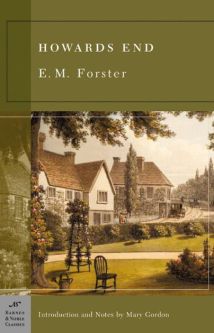
howards-end-by-e-m-forsterHowards End by E. M. Forster

E. M. Forster’s 1910 novel Howards End is to be adapted into a four-part TV miniseries produced by BBC and Starz, to be helmed by the Oscar nominated Manchester by the Sea director Kenneth Lonergan. Hayley Atwell plays Margaret Schlegel, Matthew Macfayden takes the role of Henry Wilcox, and Tracey Ullman is Aunt Juley Mund. I just can’t help but compare this new cast to that of the, shall I say, definitive 1992 Merchant Ivory production with Emma Thompson, Helena Bonham Carter, Anthony Hopkins and Vanessa Redgrave. Inimitable. Yet, I’m glad to hear of a rebirth of this brilliant E. M. Forster novel.

.

guernsey-literary-and-potato-peel-pie-societyThe Guernsey Literary and Potato Peel Pie Society by Anne Barrows and Maryanne Shaffer

At long last, the best-selling novel (2009) is finally adapted for the big screen, renamed Guernsey. Phew! While its popularity has subsided by now, I hope the movie will revive it, for it’s a delightful read and the characters are resilient residents on German occupied Guernsey Island during WWII. Written as a series of letters between a London writer Juliet Ashton and her friend and publisher Sydney Stark and later, with the charming Guernsey folks, the book exalts the power of reading, not potato peeling. How do you turn epistles into a movie? We’ll have to see. Downton Abbey‘s Lily James will play Juliet, after first Kate Winslet then Rosamund Pike dropped out. Hope this will go to completion. The director is Mike Newell, known for Great Expectations (2012), Mona Lisa Smile (2003), and perhaps the most memorable, Four Weddings and a Funeral (1994).

.

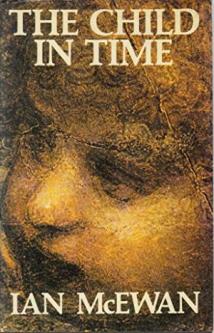
the-child-in-timeThe Child in Time by Ian McEwan

At last something to look forward to after Downton. Ian McEwan’s Whitbread winning novel (1987) about the perpetual trauma of a lost child will be adapted into a 90 min. TV drama co-produced by BBC and Masterpiece. Benedict Cumberbatch to star. With the Sherlock series going down an erratic rather than rational path, I hope this one is a more grounded outlet for Benedict’s superb acting skills, like his Parade’s End (2013). This is his second time in a McEwan novel. Back in 2007, he played a supporting role in the Oscar nominated Atonement, relatively unknown, stressing on the ‘relatively’. And hats off to actors who can navigate freely between the big and small screen platforms.


.

51p921wTKtL._SX308_BO1,204,203,200_ (1).jpg

The Sea Change by Elizabeth Jane Howard

Glad to learn that Kristin Scott Thomas (I’ve Loved You So Long, The English Patient) is stepping out from her long acting career into the director’s chair, and acting too in this adaptation of English author Elizabeth Jane Howard’s novel. While I haven’t read any of Howard’s works, I’d seen the screenwriter Rebecca Lenkiewicz’s, and that’s her screenplay for the Oscar winning Polish film Ida (2013). I highly anticipate Lenkiewicz’s new work. Glad she’s collaborating with Scott Thomas in her directorial debut. Mark Strong is said to be in talks to join the project. Of course, my dream cast would be Colin Firth with Kristin Scott Thomas.


.

crazy-rich-asians

Crazy Rich Asians by Kevin Kwan

According to director Jon Chu (Now You See Me 2), this will be “the first all-Asian cast feature from a Hollywood studio in a long, long time.” Umm… since Joy Luck Club (1993) that is. A risk or a good opportunity? Constance Wu (TV’s “Fresh Off the Boat”) is on board to play a major role. If you’ve not read the book, rest assure that with a title like this, it has got to be a satire, and not a get-rich-quick manual. Not that I’m crazy, nor rich, but reading Kwan’s imaginary yet true-to-life characters is an extravagantly wild ride. His astute and bold satire of modern day’s opulent Singaporean families (his own cultural background) is what Jane Austen would have loved to poke fun of if she found herself in a 21st century rich Asian home. But of course, just like the writing of our dear Jane of yesteryears, the heroine (Rachel in Kwan’s book) is your everyday middle class, highly educated yet modest gal growing up in (immigrant) America, finding (surprise!) that her boyfriend actually is Mr. Darcy incognito when she travels back with him to his family home in Singapore for the wedding of his best friend. I highly anticipate this one, but with great trepidations. They better make this work, or it could easily be a disaster of ethnic proportions.

***

Related Post on Ripple Effects:

Howard’s End by E. M. Forster
Ida’s Choice: Thoughts on Pawlikowski’s Ida
I’ve Loved You So Long movie review
The Guernsey Literary and Potato Peel Pie Society Book Review

Memorable Movie Love Quotes

The following is my Valentine post back in 2008 and an update after Downton. Re-posting here today for reminiscence. For several years, this post held the highest view records on my blog. I’d received 60+ comments suggesting more quotes. I regret I don’t have the plugin to copy them all here. But I’m sure we can start anew and update with fresh ones.  You’re welcome to add your fave movie love quote in a comment.
 
                                                                                    
                                                       ****   
 
 
To celebrate Valentine’s Day, I’ve compiled a list of memorable quotes from movies, all on the theme of love. All come from movies I’ve seen, some I’ve reviewed on this Blog (click on title to my review). They represent dialogues that have stirred some ripples in one small heart. And love…being a many splendid thing, embraces all kinds of human relationships, and transcends cultures and boundaries.
.

Here’s Arti’s Collection of Memorable Movie Love Quotes:

  • Medicine, law, business, engineering, these are noble pursuits and necessary to sustain life. But poetry, beauty, romance, love, these are what we stay alive for. — Dead Poets Society
  • The greatest thing you’ll ever learn, is just to love and be loved in return. — Moulin Rouge
  • The things that people in love do to each other they remember, and if they stay together it’s not because they forget, it’s because they forgive. — Indecent Proposal
  • I like you very much. Just as you are. — Bridget Jones’s Diary
Bridget Jones' Diary
.
  • When the planes hit the twin towers, as far as I know none of the phone calls from the people on board were messages of hate or revenge — they were all messages of love. — Love Actually
  • Maybe it is our imperfections which make us so perfect for one another. — Emma
  • And now, I’m back…and I’ve lost her all over again. I’m so sad that I don’t have Kelly. But I’m so grateful that she was with me on that island. And I know what I have to do now. I gotta keep breathing. Because tomorrow the sun will rise. Who knows what the tide could bring? —Castaway
  • I don’t believe in quantum physics when it comes to matter of the heart. — Bull Durham
.
.
  • Shoot me. There’s no greater glory than to die for love. — Love in the Time of Cholera
  • I need to feel strongly, to love and to admire, just as desperately as I need to breathe. — The Diving Bell and the Butterfly
  • For you, a thousand times over. — The Kite Runner
  • Come back…Come back to me. — Atonement
  • Natalie:  Do you believe in love at first sight?
    John:  Yes I do. Saves a lot of time. — The Stickup

While a few are lucky enough to save time and escape the torments of love by creating a lasting flame from the first spark, some have to go through tumultuous pining, even the arduous and humbling experience of transforming oneself to gain requited love. And who, other than the following, epitomizes such kind of yearning:

Love Quotes From Downton Abbey:

“I love you Mr. Bates. I know it’s not ladylike to say it, but I’m not a lady and I don’t pretend to be.”  — Anna, S1E5

“I’m not a romantic… But even I concede that the heart does not exist solely for the purpose of pumping blood.” Violet Crawley, S2E2

“I’d rather have the right man, than the right wedding.” — Anna, S2E5

***

You all are welcome to contribute to this list. Just submit your favorite movie love quotes in the comment box below…and have a memorable Valentine’s Day!

 ***

Here’s the link to my original post where you can read all the comments.

The Salesman: A Timely Film

It’s time we get used to reading subtitles.

The Salesman is one of five nominees for Best Foreign Language Film in the upcoming 89th Academy Awards on February 26. Due to the executive order banning travellers from seven Muslim countries, Iranian director Asghar Farhadi will not be attending. The director has indicated he will not accept any exception made for his case. Co-star Taraneh Alidoosti has stated she will boycott the ceremony as a protest.

Whose loss is it that Asghar Farhadi is banned from coming to the Academy Awards?

After the untimely passing last year of Iranian auteur Abbas Kiarostami (Certified Copy, 2010), Farhadi continues to carry the legacy of fine Iranian filmmaking with international accolades. Starting with About Elly, which he won Best Director at Berlinale in 2009, Farhadi went on to capture both the Oscar and the César Award in France for Best Foreign Language Film with A Separation (2011). The Past (2013) brought him two Cannes prizes. His newest work The Salesman won a Best Screenplay for the writer/director and a Best Actor award for his star Shahab Hosseini at Cannes last year. Now North American viewers have a chance to see this engaging family drama.

thesalesman_poster_2764x4096-copy

The story starts off with an evacuation of an apartment building on the verge of collapsing. A couple, Emad (Shahab Hosseini, A Separation, About Elly) and Rana (Taraneh Alidoosti, About Elly) are among the anxious residents fleeing the building. We can see large cracks on the wall in their bedroom. Responding to the shout for help, Emad diverts to his neighbor’s unit to carry his adult, mentally ill son on his own back to go down the stairs. A seemingly spontaneous move in the rush of evacuation, Farhadi lets us see an act of kindness from his main character.

A friend offers Emad and Rana a recently vacated apartment unit to stay. Its previous tenant still has her belongings stored in one room. She has left in haste, a shady figure who has frequent male clients coming to her unit. Emad only learns of this after a violent incident that happens to his wife. Rana is alone in the unit one night. She leaves her apartment door ajar for Emad, thinking he will come home soon while she steps into the shower.

Emad returns home to see traces of blood on the stairs and soon learns that his wife has been taken to the hospital emergency by neighbors. We as viewers do not know exactly what has happened but can conjecture by the circumstance. We see a traumatized Rana with stiches on her forehead. She is released to recover at home, but refuses to let Emad call the police. Later, as Emad discovers a cell phone and a set of keys left by the intruder, he decides to investigate on his own and takes matters into his own hands.

Since the incident, husband and wife begin to drift slowly apart, Rana being reticent and Emad vigilant. Here we see Farhadi’s signature cinematic handling: incisive depiction of domestic tensions shrouded in Hitchcokian suspense. We soon forget we are watching an Iranian couple living in Tehran. As with his previous works, Farhadi is effective here in engaging his viewers and to elicit empathy for both the husband and the wife despite their very opposite response to the attack.

Emad and Rana belong to a local theatre group. They are presently rehearsing for a run of Arthur Miller’s Death of a Salesman, playing Willy and Linda Loman. Farhadi deftly intertwines the on-stage and the real-life couple with intricate parallels. In the play, we see the demise of Willy Loman and the end of a relationship; in their real life, we see Emad and Rana’s marriage deteriorate, and a demise of a different kind for Emad. The cracks on the wall above their bed at the opening scene is now an apt metaphor, their once close bond slowly crumbles.

Actually, there are two plays involved in the film. The obvious one is Miller’s. The other is easy to miss. During the day, Emad is a teacher. In one scene, we see him teaching a play called The Cow, a work written by the prolific Iranian writer Gholām-Hossein Sā’edi. Reminiscent of Kafka’s The Metamorphosis, The Cow evokes much enthusiasm in his class of teenage boys. The play is an allegory about a man who owns the only cow in a village; his daily life is closely tied to the animal, his identity defined by his ownership of this unique possession. When one day he loses his cow in an accident, he ends up turning into one.

Here are two prominent lines. A student asks: “How can you turn into a cow?” Emad answers: “Gradually.” Sounds like a joke, but no student laughs. Farhadi subtly leads us to see how.

The last part of the film is the most crucial. Emad’s good detective work leads him to come face to face with the attacker. He has him locked in a room in their previous, vacated apartment. Playing to the attacker’s fear of revealing to his wife and family what he had done, Emad calls them to come over. Farhadi is brilliant in leading us to a situation where we as viewers are challenged to empathize all his characters despite their opposing sides, and to weigh in on what we would have done. He puts his viewers in the position not as a judge, but witness.

Slowly we are led to see how a man can lose the veneer of civility and change into something else as he allows revenge dominates his emotions. The kind and helpful man we see in the opening scene is now shrouded in a different sentiment. In the most nuanced and quiet manner, Farhadi lets us visualize Emad’s earlier reply to his student, how a man can gradually change into a different being. Or, is it a latent potency we all have that different circumstances would elicit a different aspect of our self?

At this juncture, Farhadi reveals to us a multi-faceted man. A helpful neighbour, loving husband, well-liked teacher, and a cultured stage actor. When put in a situation where vigilante justice takes over, and revenge molds the mind, or even when the social expectation of being a protective male head in a marriage prevails, is Emad free to act? If the accused pleads for his own release, and the victim herself is willing to forgive, should the husband carry out his reprimand? On the other hand, should the attacker just go free?

In the final shot, we see Emad and Rana sit beside each other as make-up is applied to get them ready for their parts as Willy and Linda. Their expressions in the mirrors make one haunting image to end the film.

Banned from entering the United States, what Farhadi will lose are the glitz and glam of the Oscars. By his absence at the ceremony, the Academy will lose the chance to honor an internationally acclaimed director who is a master in revealing human frailties and eliciting from viewers the very empathy we so need in this testing time.

Fortunately we can still watch his film.

~ ~ ~ ~ Ripples

***

Silence the Movie Arrives in the Most Unwelcome Time


Why is La La Land being embraced so readily and Silence shunned? Evidence from box office sales and nominations during this Awards Season clearly show the difference between the two. Just now, the Oscar Nominations are in. La La Land: 14  Silence: 1

Allow me to speculate.

One in glamorous primary colours, the other shrouded in misty shades of gloom. One a fantasy, romance in song and dance, the other realism of suffering, persecution, death. One is layback, relaxing entertainment, the other is 2.5 hours of intense engagement. One charms, the other disturbs. When offered at the end of a tumultuous year, and as we step into a new one when hopes and fears are renewed, the choice is easy. La La Land is an amiable feature (although I won’t get into the overrated debate here), but Silence sure doesn’t deserve the disregard it’s getting.

It’s just that Silence arrives in the most unwelcome time. But then again, there’s no suitable time for a feature like it. Isn’t it revelatory and even prophetic that this film, probably director Martin Scorsese’s most important in his oeuvre, seems to be a total outcast, a lost cause? Exactly, that’s just as it would have ended up.

It would be ironic, wouldn’t it, for a film about spirituality, other-worldly and intangible values, and challenges of faith in the face of persecution to be celebrated by this power and fame-obsessed, material world? For it to receive praise and honor would be the ultimate irony indeed.

In a society which aims at being great, where ratings, numbers, wealth and social media status define success, where loudness rules and silence shunned, it is only expected that a film entitled “Silence” will not be cheered on. It runs against the grains of popularism, for it’s a film about failure.

I have posted a book review of Silence back in December, 2016. In it is a historical note. To summarize, Christianity was introduced to Japan by Francis Xavier in 1549. It was well received then, and by 1600, there were 300,000 Christians in Japan. But the Edo Period beginning in 1603 changed everything. Ruler Tokugawa Ieyasu ordered expulsion of foreign influences and Christianity had to survive underground. Torture was used to drive Christians to disavow their faith. Stepping on the fumie, a brass plague engraved with a Christ figure, is the convenient way to show one’s apostasy, leading to instant release. During this time, the Catholic Church received the news that the stalwart leader of the Jesuits mission in Japan, Father Christovao Ferreira had disavowed his faith and became an apostate. He had since lost contact with the Church.

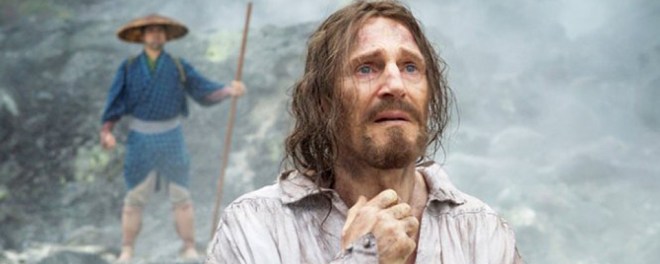
The film doesn’t need many words to explain these historical events, for its visuals are self-explanatory. It starts off with father Ferreira’s apostasy, apparently under duress as he sees his flock being tortured to death. Liam Neeson’s gaunt and horrified expressions speak all. That’s the power of cinema.
ln-in-silence

Back in Portugal, two young priests, Father Sebastian Rodrigues (Andrew Garfield) and Father Garupe (Adam Driver) appeal to their superior Father Valignano (Ciarán Hinds) to allow them to go to Japan to look for Ferreira and to seek the truth of the situation. Thus begins the story.

I’ve long learned not to judge a movie adaptation according to how loyal it is to the book, for the two are different art forms and a direct transposition may not be possible. But here is one exception. I’m glad that Scorsese’s Silence, co-written with screenwriter Jay Cock (Gangs of New York, 2002), is surprisingly faithful to Shusaku Endo’s historical novel, and that ‘faithfulness’ is both desirable and most admirable here.

By following Endo’s storyline to the dot, extracting pertinent text from the book as dialogues and voiceover, and spending time to cover the all important Epilogue, the director shows his desire to honour the author’s work, a wish that had long hidden in his heart. Indeed, it has been twenty-five years since Scorsese first read Endo’s masterpiece and was so deeply moved that he knew he needed to film it one day.

Another way we see Scorsese’s regard for Endo is his restraint when portraying the tortures of Japanese Christians. What we have, surely, is visual, graphic scenes which, while reading the book are left to the author’s descriptions and our imagination, but on screen are left to the director’s discretion. Kudos to Scorsese, those scenes are done with much restraints. This was a welcome surprise to me. I went into the theatre braced for his treatment like the ending scene of Taxi Driver (1976), or the bloody mayhem in Gangs of New York (2002). I need not have worried. But what I was hit with I had not expected.

Scorsese can definitely unleash more gore in Silence. But he chose not to. The scenes in the film are done with the utmost respect and dignity for the persecuted. Here’s a confession, I’m not one who easily succumbs to emotions, never need a Kleenex while watching a movie in the theatre. Here in Silence, as I watched the three Japanese Christians hanging on the makeshift crosses at the seashore swallowed up by the rising waves, tears slowly streamed down my face. What more, the guy sitting behind me was sniffing away, uncontrollably.


The main actors are powerful in taking hold of our emotions. Liam Neeson’s painful expressions both at the beginning and the end are very moving. Adam Driver lost 50 pounds for his role. His skeletal form is almost painful to watch. The Japanese actor Yôsuke Kubozuka is effective as Kichijiro, the ‘Judas character’.

The emotion of the whole film, however, is driven by two actors: Andrew Garfield as young father Rodrigues and the calculated, ruthless inquisitor Inoue played by Issei Ogata. The two form a stark foil: the hot-blooded idealist slaughtered slowly by the cold, harsh ruler. A tidbit for those who had watched Taiwanese director Edward Yang’s Yi Yi (2000), Ogata is Mr. Ota in there.

Garfield is effective in leading us to feel for Father Rodrigues’ sad and tragic journey. Martyrdom is the path to glory, and an easy way out. But no, Rodrigues isn’t given that luxury. Rather, he is faced with a most precarious test, tearing his soul and conscience, that is to apostatize or see his flock die by torture. It is unfortunate that the film has not been well received. Garfield deserves a nomination for Silence.

While it may be about the hidden church that runs underground to avoid annihilation, Silence is more about one man’s struggle with faith and doubt, and ultimately, making his choice and living with it for the rest of his life.

Here’s the rub. In this ‘either or’ society we live in, Rodrigues’s predicament is particularly distressing for us. It is often convenient and tempting to oversimplify issues and splitting them into clean-cut opposing sides, either B or W, L or R, D or R. In Silence, we’re confronted with yet another dichotomy: Devout or Apostate. What Scorsese reveals to us with his last scene is that, the line separating the two is blurry and permeable.
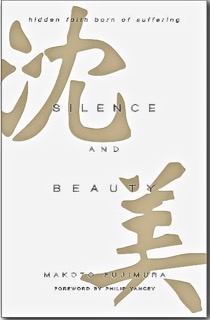
silence-and-beauty-free-chapter-mako-fujimura-1

In his compendium book to the movie, Silence and Beauty: Hidden Faith Born of Suffering, Japanese-American artist Makoto Fujimura, who is special adviser to the film, discusses the necessary existence of a ‘hidden’ identity to those practising Christianity in that historical era in Japan. For 250 years during the anti-foreign, ironclad Shogunate rule of the Edo Period (1603-1868), the only way to survive as Christians was to become hidden, Kakure Kirishitans as they were called in Japan. Stepping on the fumie, as the officials say, could well be only a formality, for it likely did not represent the heart. It is unfortunate that the persecuted Kakure Kirishitans had to succumb to this double life. As outsiders looking in, should we be so easy to judge them? Silence challenged us with that question. Unlike the bold declaration of Western Christianity, the Kakure Kirishitans held on to an inner faith that on the outside was wrapped with weakness and failure, total submission to the ruling authority. A painful, paradoxical existence.

The crucial, final scene in the film, which is the Epilogue of Endo’s book, holds the key to the question. I appreciate Scorsese’s closure. That is also how Fujimura explains Endo’s viewpoint. No spoiler here. Cinematically, the production is an artistic and powerful work worthy of Endo’s masterpiece. Scorsese’s quarter-century quest had not been in vain. Being recognized or not in the Awards Ceremonies just may not be as important an issue.

Of course, there’s always the bottom line. After investing so much resources, time and talents in the production, it is only natural to wish for a positive return. Could the voice that speaks to Rodrigues at that most crucial fumie moment speaks also to Scorsese as well regarding his film Silence?

“Trample! Trample! It was to be trampled on by men that I was born into this world…”


~ ~ ~ ~ Ripples


***

CLICK HERE to read my review of the book Silence by Shusaku Endo

Lion: From Personal Memoir to the Big Screen

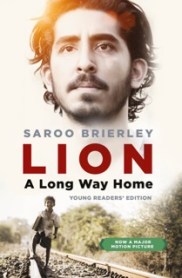
The memoir A Long Way Home by Saroo Brierley, first published in 2014, has officially changed its name to Lion. This may well be a metaphor for its author. Only a change in the name, but everything inside remains intact. From a child lost on the streets in Calcutta, India, to a man grown up in Hobart, Tasmania, Saroo remains who he is. He writes in his memoir: “I now have two families, not two identities. I am Saroo Brierley.”

lion-movie-tie-in-edition

Lion (previously titled A Long Way Home) the memoir by Saroo Brierley

5 year-old Saroo was lost in a Calcutta (now Kolkata) train station, almost a thousand miles away from his home in a small village, Ganesh Talai. With no language (a different dialect), not clear of the name of the place he calls home (mispronounced by him as “Ginestlay”) or even his own last name, Saroo is utterly alone and helpless. Living dangerously on the streets of Calcutta for some weeks, he was picked up and sent to a youth detention centre, which was only a tiny bit safer from the streets. Subsequently Saroo was sent to an orphanage, Nava Jeevan (“new life”), run by the benevolent Mrs. Sood. There she arranged for his adoption by a loving Australian couple, John and Sue Brierley.

That could have been the happy ending of a tumultuous experience for Saroo, as he grew up in calm and beautiful Hobart, Tasmania, well adjusted and dearly loved by his adoptive parents. But for twenty-five years, Saroo has not forgotten his first home. As he grew, he was all the more tormented by the memory of his birth mother, and the brothers and sisters who had shared the first five years of his life. An important message he has always wanted to convey to them is that he’s ok, and that they need not worry about him. For years he has been haunted by the thoughts that his mother and older brother Guddu must have been devastated with losing him without a trace, as it was Guddu who had left him alone on a bench at the train station near his home, telling him to stay put as Saroo was too sleepy to tag along on that fateful night.

With the help of Google Earth twenty years later, and vague memories of the physical features of his home surrounding, Saroo finally located his village and flew back to India to search for his mother. They reunited a few doors down from his old home, as his mother had persisted all these years to not move away but stay there to wait for him, hoping against hope that her son would come back to her. The photo inserts in the book add even more poignancy as we see the Brierleys meet Saroo’s birth mother Kamla in India.

Utterly moving, authentic, genuine and real. While Slumdog Millionaire may be entertaining and eye-opening for those of us who are not familiar with Indian’s millions of children living on the streets, Lion is a true portrayal of one lost child, determined to find his way back home twenty-five years later across the oceans.

**

Lion the Movie

Is the movie any good? For those who think it’s always the book that’s better, here’s my answer: Yes, very good. Premiered at TIFF16 last September, Lion has since garnered awards and nominations, including young Sunny Pawar, his debut performance as an actor. Kudos to all those involved in transporting this story from a personal memoir onto the big screen for international viewers. If not for the movie, even though it has been reported in India and Australia, I for one in North America would not have known about this real life miracle.

So, hats off to Australian director Garth Davis, screenwriter, the acclaimed Australian  poet/writer Luke Davies, and the cast, Sunny Pawar as young Saroo, Dev Patel (Slumdog Millionaire, 2008) as the adult, Nicole Kidman and David Wenham the adoptive parents, Rooney Mara the girlfriend, and the cast of Saroo’s Indian family. They have delivered an authentic and moving real-life story.

Basically structured into three parts, the first focuses on five year-old Saroo, living in poverty but is loved by his mother and siblings. One night he pleads with his older brother Guddu to go with him to his night work, salvaging garbage left on trains. After reaching the closest station from his home village, Saroo is too tired, so he stays behind sleeping on a bench to wait for Guddu. He wakes up in the middle of the night to find himself all alone. He gets on one of the parked train to look for Guddu but falls asleep again in there. He wakes to his horror as he finds he is being transported in the speeding train further and further away from his home.

Cinematographer Greig Fraser (Zero Dark Thirty, 2012; Bright Star, 2009) uses his camera effectively showing some haunting images, a horrified 5 year-old, alone on a train speeding to the unknown. Throughout the film as well, he tells the story poignantly with his camera. Scores composed by Volker Bertelmann and Dustin O’Halloran add power in eliciting emotions, taking us closely with Saroo on his incredulous life journey.

Second part we see Saroo grown up in Australia, having a good relationship with his adopting parents but troubled nonetheless by his past. The frustration of having only vague memories of the physical features of the train station near his home makes it an impossible task to search for an unknown town in the vast land of India. Thanks to Google Earth and his unyielding perseverance, the adult Saroo was rewarded with a dream come true.

While the physical locales might be distant and vague, memories of his childhood experiences are lucid and close. In the second part, the director and screenwriter have deftly inserted Saroo’s memories of his childhood days in India, enriching the screen story of his intimate relationships with his family. These inclusions add to the texture and are placed aptly to enhance the continuity of the child and the man. Very effective.

I welcome the quiet and slower pace in Part Two, and appreciate Patel’s portrayal of inner turmoils. Kidman has done an amiable job as the adoptive mother trying to hold the family together, with two Indian boys, now grown men, both deeply troubled by their past in different ways. If Part One is about the outward dangers of a lost child, Part Two illustrates the internal turmoils one still wages into adulthood.

Part three is that triumphant and exhilarating reunion. How we want to see a happy ending by then. Although we know that is forthcoming, it is still exciting and gratifying to embrace the uplifting end. Lion is a story well told cinematically, and worth every minute of a viewer’s attention. Do wait till the very end before you leave the theatre, the photos at the closing credits make a beautiful wrap. And why the title Lion? That’s for you to find out.

~ ~ ~ ~ Ripples 

for both Book and Movie

***

Related Reviews on Ripple Effects:

Slumdog Millionaire

The Best Exotic Marigold Hotel

The Second Best Exotic Marigold Hotel

The Lunchbox

Books before Films 2017

The first movie I watched in 2017 is Alfred Hitchcock’s Vertigo. This time around, I noticed that it was based on a book (1954 French crime novel by Boileau & Narcejac). Just reinforced a fact that’s so interesting, and mind-bloggling for me, that a major portion of movies are adapted from books and printed sources. Not that I mind at all.

Here are some more for 2017 and beyond, on big and small screens. Some have set dates of release, some still in development. No harm reading ahead (as if you need more to stack higher that TBR pile), or rereading.

***

a-man-called-oveA Man Called Ove by Fredrik Backman

Grumpy old man, Swedish style. Through Ove, writer Backman shows us not so much about getting old but becoming human. Never too late to change. A thoughtful and poignant story as we follow grumpy Ove, the strict enforcer of by-laws for his condo association. Backman is clever in leading us to discover slowly why Ove behaves as he does. For me as a reader, it’s a lesson on empathy and understanding. The film adaptation is Sweden’s official entry to the coming Oscars, now one of nine remaining in the Best Foreign Language Film category. Nominations announcement on Jan. 24, 2017. (Update: A Man Called Ove is now an Oscar nominee for Best Foreign Language Film.)


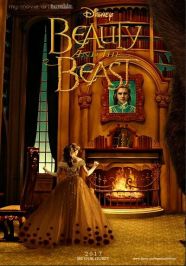
b-bBeauty and the Beast

Yes, from a book. La Belle et la Bête is the fairy tale written by French novelist Gabrielle-Suzanne Barbot de Villeneuve, published in 1740. Classics, by definition, appeal despite the passage of time, in this case, a few centuries. This newest adaptation, which I highly anticipate, has a cast that I’m eager to see in a musical: Dan Stevens (Beast), Emma Watson (Belle), Ewan McGregor (Lumiere), Emma Thompson (Mrs. Potts), Ian McKellen (Cogsworth), Kevin Klein (Maurice)… Can they sing?To be released in March, 2017.


the-children-act

The Children Act by Ian McEwan

Richard Eyre (Notes on a Scandal, 2006) to direct Emma Thompson playing the role of Judge Fiona Maye who has to rule on a case in which a 17 year-old leukaemia patient refuses potentially life-saving blood transfusion as it’s against his religious belief. And as life would have it, Maye has her own marital issues to deal with at this trying point of her life. McEwan’s 2014 novel is on my TBR pile, and I look forward to Thompson’s major role in years. Film now in development.


handmaids-taleThe Handmaid’s Tale by Margaret Atwood

Atwood’s renowned story of a dystopia ruled by theocratic dictatorship will be adapted into a 10 episodes TV series. Interesting concept from book to longer TV programming, which would definitely be quite different from its previous adaptation in 1990, a 109 min. movie with screenplay by Harold Pinter and cast of Natasha Richardson, Faye Dunaway, Elizabeth McGovern, Robert Duvall. This time, a new generation of actors and a very different socio-political milieu. Will it be even more relevant?


lion-1Lion by Saroo Brierley  (Memoir originally titled A Long Way Home)

Now showing in theatres. Never mind Slumdog Millionaire, this is for real and utterly moving, with the same Dev Patel. At age 5, Saroo was lost in a Calcutter train station almost a thousand miles from his home village. Alone and drifting on the streets, he was picked up and sent to an orphanage where an Australian couple later adopted him. Twenty-five years in Tasmania had not diminished his desire to see his mother’s face again. Thanks to Google Earth, he finally found his way home. I’ve just seen the film and is now reading the book. A must-see.


nightingaleThe Nightingale by Kristin Hannah

Goodreads Choice Awards Best Historical Fiction 2015, Hannah’s WWII novel lends itself to ready cinematic rendition. Game of Thrones director Michelle MacLaren to helm the project. MacLaren has been noted to be able to tell stories that are ‘epic and intimate’. So this may just fit her really well. Two sisters’ coming of age experience during the Nazi occupation in France, with Ann Peacock (Narnia, 2005, Nights in Rodanthe, 2008) writing the screenplay. The book has sold more than 2 million copies in the U.S. and been published in 39 languages. The cast still to be determined. Your choice?


zookeepers-wifeThe Zookeeper’s Wife by Diane Ackerman

This is a worthy, true story to be made into film. Jan and Antonina Zabinski were keepers of the reputable Warsaw Zoo. During the Holocaust, their premises is the hiding place for hundreds of Jews. Antonina did the day-to-day chores of protecting them in the cages, feeding them and keeping their spirits up. The parallel and irony of human and beasts are obvious. Acclaimed nature writer Diane Ackerman drew from Antonina’s diary to write her account of a heroic rescue mission. Acclaimed New Zealand director Niki Caro (McFarland, 2015, North Country, 2005) helms. Screenplay by Angela Workerman, a scribe to note. Jessica Chastain and Daniel Brühl play the Zabinski couple. Trailer is out and looks good. To be released in March, 2017.


***


Top Ripples 2016

Here’s a wrap of my experience for the year, not that the books or movies are necessarily new, some are, some aren’t, and some are rereads. All top ripples:


Movies

Arrival (A different kind of Sci-fi)

Things To Come (Isabelle Huppert)

Paterson (Celebration of Everyday by Everyman)

The Salesman (I won’t miss any film by Asghar Farhadi)

Our Little Sister (Koreeda’s quiet and moving work)

Love and Friendship (Binge watched Whit Stillman after this)

Happy Hour (Worth every of its 317 mins. )

A Better Summer Day (Edward Yang, a late discovery)

45 Years (From short story to film: Upcoming post)

National Theatre Live: The Deep Blue Sea (Impressive)


Books

Do Not Say We Have Nothing by Madeleine Thien

A Man Called Ove by Fredrik Backman

Silence by Shusaku Endo

Culture Making by Andy Crouch

Both Ways is the Only Way I Want It by Maile Meloy

In Other Words by Jhumpa Lahiri 

Words Without Music: A Memoir by Philip Glass

Short stories by Ted Chiang


Experience

Five Days in London

TIFF 2016: The Zhang Ziyi Encounter