Got this from WordPress a couple days ago. How time flies!
RIPPLE EFFECTS Coming of Age
Ripple Effects has been tracking my life for the past 18 years! The movies I’ve seen, books I’ve read, birds I’ve captured with my camera, places I’ve travelled, film festivals I’ve attended, and through the years with special thoughts every Easter and at Christmas, Reading the Season inspirational book sharing.
Through the years I’ve been featured on WordPress’ Freshly Pressed, and Rotten Tomatoes had reached out inviting me to be their Tomatometer Approved Critic. I’ve gained over 7,600 followers, treasured the friendship made with some of you both virtually via the blogosphere and personally. For this I’m truly grateful.
If I ever write a memoir, this is my manuscript. To browse through these posts is to know me. Thank you all for the pebbles you’ve thrown into the Pond to create your own ripples. Many of you are recent followers, but there are some who have been with me from early on. And I’m sure you’d find it revealing to read your own thoughts way back then.
Who knows what the future holds. As far as I’m given the opportunity, I’ll continue to document my pondering and wandering here at Ripple Effects. Hope this site can be your restful retreat in your journey through life as well.
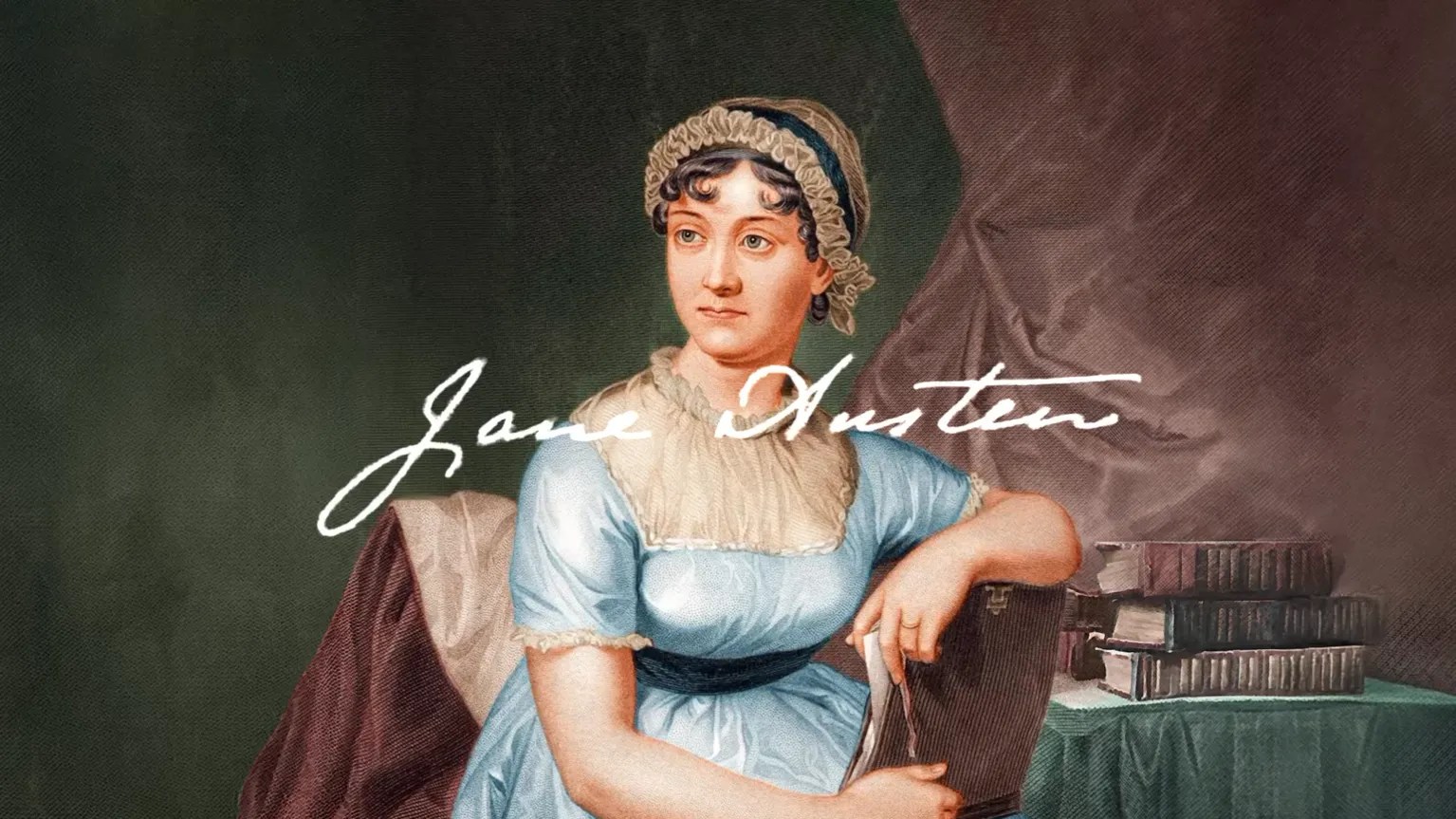
250th Birth Anniversary of Jane Austen (December 16)
It’s a great loss that Jane died so young, at 41, from a painful illness. The legacy of her six completed novels continue to thrive today. Movie adaptations are still being made, most notable is the upcoming new version of Pride and Prejudice with Emma Corrin as Lizzy, Jack Lowden as Mr. Darcy, and Olivia Colman as Mrs. Bennet. But we will never forget that iconic wet shirt scene of Colin Firth diving into the pond way back in 1995, thirty years ago.
30th Anniversary* of Jane Austen Screen Adaptations:
Pride and Prejudice Austenmania was ignited with this six-part BBC TV series. Andrew Davis’ screenplay brings Colin Firth and Jennifer Ehle together as the pivotal pair. To many, myself included, the definitive version of all the adaptations; yes, my prejudice here.
Sense and Sensibility That same year, 1995, we saw the breakout work of Taiwanese American director Ang Lee, proving his versatility, with Emma Thompson basking in the limelight receiving her Best Adapted Screenplay Oscar.
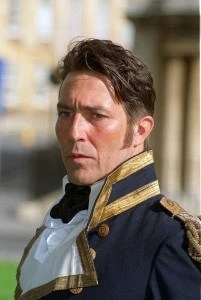
Persuasion While not as popular as Pride and Prejudice, a novel that shows a more mature writer showing her own sense of wisdom in handling love and life. Ciaran Hinds is an impressive Captain Wentworth.
Clueless One of the first modern renditions of Austen novels. Here’s an American teenager playing Emma in her high school. What follows are numerous contemporary parallels of Austen’s works, like Bridget Jones’s Diary, and across cultures, Bride and Prejudice, From Prada to Nada.
*Jane Austen’s House in Chawton is celebrating the 30th Anniversary of these adaptations with their own special AUSTENMANIA! events.
***
100th Anniversary of the publication of some modern classics, books and poems* Listing a few here:
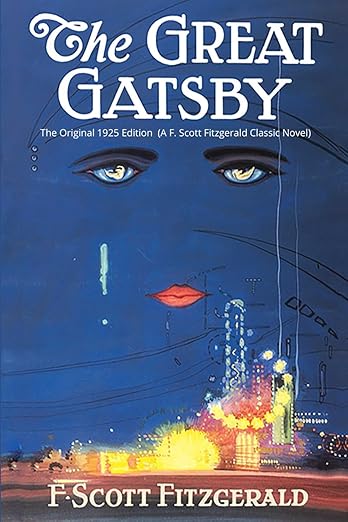
The Great Gatsby by F. Scott Fitzgerald
One of my all-time favourite books. Filmmaker Baz Luhrmann highlights all the zeitgeist of the jazz age, the wild parties, and the gaudy excess but fails to bring out the deep character of the man behind those façade, a romantic hanging on hope and seeing every obstacle as a green light. My Ripple Review here.
Mrs. Dalloway by Virginia Woolf
This is one example that the movie adaptation is as good as or even surpasses the book, for it shows more than words can tell. While I admire Woolf’s stream of consciousness, both in expression and withholding, director Steven Daldry’s multi-faceted depiction of Clarissa’s internal world projected into the psyche of two other women is exceptional. David Hare’s screenplay adapting Michael Cunningham’s The Hours is an exemplary transposition of literature onto the screen. And watching Meryl Streep, Nicole Kidman and Julianne Moore in one film is sure worth one’s ticket, or time.
The Painted Veil by W. Somerset Maugham
Somerset Maugham is one of those writers who take you to places but still remain intact with his characters, the backdrop of foreign lands are merely that, backdrop, while the characters lead the story. I’ve seen the movie adaptation, and in my Ripple review I had written this: “Transforming great lines from a book into equally inspiring visual story-telling is an arduous task, and it’s something that mere beautiful cinematography cannot suffice.”
Carry On, Jeeves by P. G. Wodehouse
The third of Wodehouse’s 20 Jeeves and Wooster books. Jeeves is a marvellous invention, a character that reminds me of Mr. Carson of Downton Abbey. There are lots of LOL moments. He’s like a Swiss army knife, a tool of multiple usages. Wodehouse makes him more than utilitarian though. In the interactions between employer and butler, the joke always falls on the former. And that’s the fun of it.
No More Parades by Ford Madox Ford
No More Parades is the second book in the Parade’s End tetralogy by Ford Madox Ford (1873-1939) Set in the time of WWI, where poetry was written in the trenches. In its core a love story movingly depicted in the BBC five-episode TV series (2012), one of the most understated and neglected productions. A young Benedict Cumberbatch and Rebecca Hall are the mismatched couple, but it’s the pristine Adelaide Clemens that shines as idealistic suffragette Valentine.
The Hollow Men by T. S. Eliot
‘The Hollow Men’ is the title poem of this collection of poetry by Eliot, astute critic of his times. “We are the hollow men/we are the stuffed men/Leaning together/Headpiece filled with straw.” Alas, a look at our world today one would find how after one hundred years, Eliot’s critique of his society still stands.
*The popular ‘Year Reading Club’ on Kaggsy’s and Simon’s book blogs are featuring the 1925 Club reading event this October, where we read books published in 1925 and share our thoughts in our blogs.
***
50th Anniversary of some iconic movies:
Where were you in 1975? Watched any of these movies in the theatre?
Jaws dir. by Stephen Spielberg
One Flew Over the Cuckoo’s Nest dir. by Miles Forman
The Man Who Would be King dir. by John Houston
Monty Python and the Holy Grail dir. by Terry Gilliam and Terry Jones
Dog Day Afternoon dir. by Sidney Lumet
Barry Lyndon dir. by Stanley Kubrick
The Return of the Pink Panther dir. by Blake Edwards
Three Days of the Condor by Sydney Pollack
Farewell, My Lovely dir. by Dick Richards
Funny Lady dir. by Herbert Ross
***
Not born yet? How about 1985?
40th Anniversary of:
The Breakfast Club dir. by John Hughes
Back to the Future dir. by Robert Zemeckis
The Color Purple dir. by Stephen Spielberg
A Room with a View dir. by James Ivory
Out of Africa dir. by Sydney Pollack
The Purple Rose of Cairo dir. by Woody Allen
Vagabond dir. by Agnès Varda
Witness dir. by Peter Weir
***
Numerous posts on Jane Austen, as well as movies and books mentioned in the above lists are posted here at Ripple Effects. Seek them out using the Search feature on the top of the left sidebar.
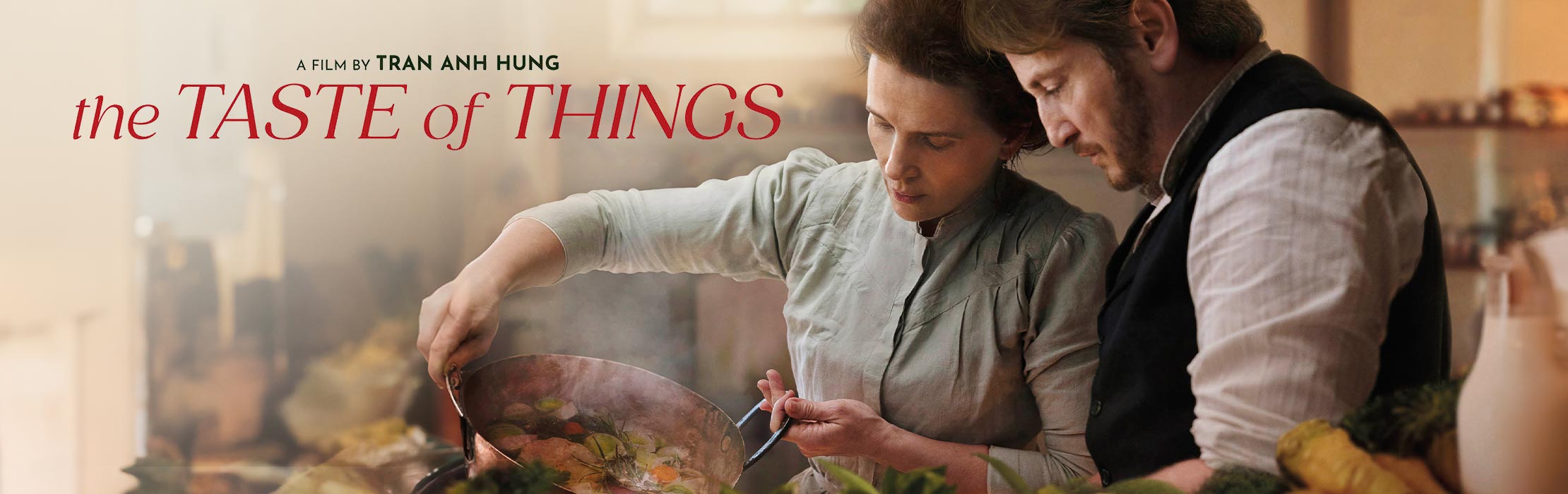
At last year’s Oscar time, I was a little surprised that the buzzy Anatomy of a Fall wasn’t selected as the official entry by France to enter the race for Best International Feature Film. Instead, it was The Taste of Things. Now that I have the chance to watch it, I can understand why it was the choice and I totally agree with it. That it did not win seems immaterial, for its aesthetic value and the honour of being chosen to represent France make it a worthy accolade.
The Taste of Things is a delectable feature, a celebration of French gastronomy and its historic, culinary traditions, an exquisite and aesthetically riveting period film set in a country house. Vol-au-vent, pot-au-feu, roast rack of veal with braised vegetables… To say it’s a delicious food movie is just lowering the level of enjoyment, like eating an ice cream cone compared to being served baked alaska prepared by a gourmet. The film is not just about the taste of food, but of love, beauty, sensuality, and human connection, offering a deeply gratifying viewing experience.
Directed by the Vietnamese-French filmmaker Anh Hung Tran––whose first film The Scent of Papaya won a César Award in 1994 as well as accolades at Cannes––The Taste of Things sent Tran to Cannes again in 2023 and this time a Palme d’Or nominee and winning Best Director.
Tran reunited Juliette Binoche with her ex Benoît Magimel for the film. The two were divorced twenty years ago. Maybe a past relationship had some bearings on stirring up fond memories, for the pair exudes admirable chemistry on screen. Magimel plays the fictional gourmet Dodin Bouffant, nickname ‘Napoleon of gastronomy’, who resides in a country house during the late 19th century. His cook for twenty years has been Eugénie, superbly portrayed by Binoche, ethereal even in a rustic kitchen.
While Babette’s Feast (1988 Oscar’s Best Foreign Language Film) comes to mind readily, it’s the visual memory of Girl with a Pearl Earring (2004) that enhances my appreciation of The Taste of Things. Indeed, Dodin’s kitchen is like Vermeer’s studio, large window allowing natural light to pour in, the colour scheme of period costume and set design (Tran’s wife Nu Yên-Khê Tran), the naturalistic capturing of characters and their movement make it an exquisite, artistic production.
Inspired by Marcel Rouff’s novel La vie et la passion de Dodin-Bouffant, Gourmet (The Life and Passion of Dodin-Bouffant, Gourmet), writer director Tran wrote the screenplay of The Taste of Things as a prequel to Rouff’s novel, imagining the bond of love between Dodin and his longtime cook Eugénie. Dodin has proposed marriage to Eugénie time and again but is turned down every time. The twist comes when Eugénie falls ill and the reversal of roles emerges. Dodin begins to cook for her––love expressed through the ingenuity of new dishes meticulously prepared and the enjoyment of watching her savour his handiwork.
It’s interesting to note that there’s no music in the whole film. Massenet’s Méditation in piano version comes on only when the end credits roll. With no soundtrack, the essence is in the ambient sounds of nature, bird songs outside the country kitchen, and inside, the sounds of cooking, the crackling of the fire, and the gentle conversations among the characters as they prepare meals. In an interview, Tran mentions that: “The sound is the flavour of the picture. The picture has the beauty; the flavour of it comes from the sound.”
Another crucial ingredient is the camerawork. Cinematography (Jonathan Ricquebourg) is the key in capturing the overall aesthetics and mood of the film. The camera is like a quiet observer, moving gently, often in long takes, following the characters in the kitchen, their movement like a choreographed sequence, smooth, seamless, serene and subtle. While the food preparation may seem complicated and time-pressed, the overall mood in the kitchen is always harmonious. The would-be apprentice, fourteen-year-old Pauline (Bonnie Chagneau-Ravoire) is particularly impressive. A tidbit: The French chef Pierre Gagnaire, owner and head chef of his eponymous restaurant, is the consultant for the movie. He himself has a role in there as well.
Overall, an artistic achievement to savour. Vermeer’s kitchen or Dodin’s studio? A fitting fusion of imaginary connections.
Twice a year, Simon at Stuck in a Book and Karen at Kaggsy’s Bookish Ramblings host an interesting reading event, the year club. We read books published in that year indicated by the number and write our reviews. This time, from April 15-21, we are doing the year 1937.
Many fine titles were published in 1937, but for me, it’s an easy choice: Out of Africa, the memoir of Danish author and baroness Karen Blixen (1985-1962). Interesting to note that she had several pen names. In the English speaking countries, she was Isak Dinesen.
Ever since watching the 1985 movie Out of Africa, I’ve always wanted to read the source material, Blixen’s autobiography about her seventeen years (1914-1931) living in Kenya operating a coffee farm. In a way, I want to cast aside the image from the movie, however romantic, of Meryl Streep and Robert Redford sitting in green pastures picnicking, with Mozart’s Clarinet Concerto coming out from a gramophone, the music sweeping serenely across the pristine African landscape.
Blixen’s life in Kenya was no small venture: a pioneer woman operating a coffee farm situated in the six thousand acres of her land at the foothills of the Ngong Mountains. She rode horses, went on safaris, shot lions to defend her oxen, herself and others. When in the capital, Nairobi, she was a business woman; when on her farm, she was doctor to those lined up to see her with their sickness and ailments. She sent those that she couldn’t handle to the hospital and visited them, seeing to their recovery.
Blixen’s chronicles of her life in Africa intertwine objective observations and intimate thoughts. When describing the different ethnic groups in the land, the Natives Kikuyu, or her neighbours the Masai, or the immigrants the Somali… her writing is like an astute anthropologist, always with admiration. When referring to the Somali women, she writes:
There was no ignorance in their innocence. They had all assisted at childbirths and death-beds… Sometimes to entertain me, they would relate fairy tales in the style of the Arabian Nights, mostly in the comical genre, which treated love with much frankness. It was a trait common to all these tales that the heroine, chaste or not, would get the better of the male characters and come out of the tale triumphant… I felt the presence of a great ideal… the idea of a Millennium when women were to reign supreme in the world. (131)
Considering the above was noted earlier than 1931 (the year she left) in Africa, was Blixen a visionary ahead of her times, or… was it the Somali women?
When describing those close to her, like her invaluable assistant Farah, she presents a character study with free flowing, deep feelings of love and respect. In the essay collection at the back of this book, Shadow on the Grass, she has a whole chapter on Farah, of whom she describes a special relationship of Unity, that of Master and Servant, in no subordinate sense but an indispensable bond of loyalty and mutual respect. Blixen gives a few examples of such Unity, like Don Quixote and Sancho Panza. For contemporary readers like us, maybe the Downton relationship between Robert Crawley and John Bates would be a more visible example.
[Spoiler Warning here] Unlike the movie, Blixen mentions her friend Denys Finch-Hatton (Robert Redford in the movie) only sporadically in the first half of the book. Towards the end she devotes a few chapters on him upon his tragic plane crash. The two chapter titles are indicative of his character: ‘The Noble Pioneer’ and ‘Wings.’ Denys had almost become a Native himself, knowing the people of the land thoroughly, having had spent decades there, his love for them is reciprocal. His bi-plane is an apt metaphor for his courage and unbound spirit of exploration. His gramophone is an object of desire as the music it plays is a shared joy between him and Blixen, as well as a novel attraction mesmerizing all those on the farm. Of Denys, Blixen writes:
What they really remembered in him was his absolute lack of self-consciousness, or self-interest, and unconditional truthfulness which outside of him I had only met in idiots. (247)
Kudos to film director Sydney Pollack, the movie shows what’s unsaid between the lines. Blixen had deep feelings for Denys, but from the text, she’s restrained and devoid of sentimentality. That’s what makes the final chapters so poignant. Unlike the movie, there’s no romance depicted, just friendship and mutual admiration. There are letters and other writings of Blixen’s which I’m sure the filmmakers had researched on, and thus the more intimate dramatization of them as lovers in the movie. Furthermore, the aerial shots of Deny’s bi-plane over the African landscape, hills and valleys, plains and waters, spurring flocks of shore birds to soar to the sky, our reading imagination visualized; John Barry’s heart-stirring, expansive score complements the mesmerizing cinematography. And yet, I’ve fully enjoyed Blixen’s writing as well, intimate and poignant.
The farm eventually failed financially and Blixen had to move back to Denmark. Selling it out and bidding farewell is like leaving her soul there. She describes her last safari at dusk:
The plains with the thorn-trees on them were already quite dark, but the air was filled with clarity – and over our heads, to the west, a single star which was to grow big and radiant in the course of the night was now just visible, like a silver point in the sky of citrine topaz. The air was cold to the lungs, the long grass dripping wet, and the herbs on it gave out their spiced astringent scent. In a little while on all sides the cicadas would begin to sing. The grass was me, and the air, the distant invisible mountains were me, the tired oxen were me. I breathed with the slight night-wind in the thorn-trees. (191)
This is one of those books that will linger in my heart long after I finish and to which I know I will return.
The passing of Gordon Lightfoot yesterday at the age of 84 evokes a stream of nostalgic consciousness. The following is an old post dating back to more than ten years ago. I wrote it after visiting Unionville in Ontario; the profusion of cattails by the pond stirred up memories of listening to Lightfoot’s song. As a tribute to the Canadian music legend, I’m reposting it here.
____________
Took a short trip to Ontario last week and came home overwhelmed with nostalgia. It all started when I visited the town of Unionville and saw these, crowds and crowds of cattails growing profusely at the pond, the fields, and by the footbridge:
.
For some inexplicable reasons, I’m much fond of cattails. The first time I learned about them was from listening to the song by Gordon Lightfoot… before I’d actually seen one.
Some time in the 70’s, for many afternoons I sat in the art room of a high school somewhere in Alberta, working on some art project, but mostly doing nothing at all while listening to Gordon Lightfoot. Mr. Hannington held a laissez faire art class… we could do just about anything, or nothing. Usually, there would only be three or four of us in the room. We would just sit around, chat, daydream, and immerse in the voice of Gordon Lightfoot on the radio.
I didn’t turn out to be an artist, while one of us did. But I’ve remained partial to cattails, mesmerized by the song and the singer. Those Lightfoot afternoons in the art room emerged from the depth of hazy memories, the lyrics were the soft winds caressing naked limbs as I walked in this natural reserve in Unionville.
Pussywillows, cattails, soft winds and roses Rainpools in the woodland, water to my knees Shivering, quivering, the warm breath of spring Pussywillows, cat-tails, soft winds and roses
Catbirds and cornfields, daydreams together Riding on the roadside the dust gets in your eyes Reveling, disheveling the summer nights can bring Pussywillows, cattails, soft winds and roses
Slanted rays and colored days, stark blue horizons Naked limbs and wheat bins, hazy afternoons Voicing, rejoicing the wine cups do bring Pussywillows, cattails, soft winds and roses
Harsh nights and candlelights, woodfires a blazin’ Soft lips and fingertips resting in my soul Treasuring, remembering, the promise of spring Pussywillows, cattails, soft winds and roses
(To my artist friend CD: Keep the fire burning.)
***
Some of you had left comments in that old post. If you’re interested to know what you had said, click on the link to find out.
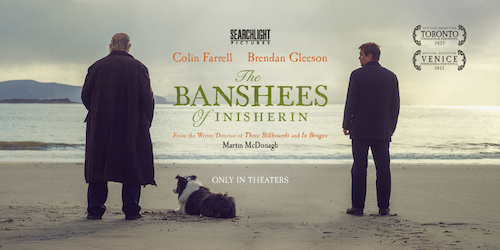
Like his previous movie Three Billboards Outside Ebbing, Missouri (2017), writer director Martin McDonagh opens The Banshees of Inisherin with a quiet and peaceful song. The lush green landscape of the island of Inisherin merging with the calm and harmonious chorus pulls us into this cinematic fable right away. McDonagh loses no time to bring out the heart of the matter, the sudden fallout of a lifelong friendship between Pádraic (Colin Farrell) and Colm (Brendan Gleeson). In parallel, across the island on the mainland, the Irish civil war rages. The year is 1923.
The juxtaposition of mellow, ponderous music with outward conflicts always makes interesting contrasts, just like mixing comedy with drama, humour and sadness, which McDonagh is so apt in doing. An acclaimed British-Irish playwright whose plays have been performed in the West End and on Broadway, McDonagh is astute in his dialogues, embedding them with humour and poignancy to reveal the nature of the characters:
Pádraic’s sister Siobhán (Kerry Condon) likes to read and is the most sensible character in the movie. In one scene, Siobhán is reading.
Pádraic: How’s the book? Siobhán: Sad. Pádraic: Sad? You should read a not sad one, Siobhán, else you might get sad. Siobhán: Mm. (pause) Siobhán: Do you never get lonely, Pádraic? Pádraic: Never get wha? Siobhán: Lonely. Pádraic: (mutter in annoyance) No. “Do I never get lonely?” What’s the matter with everybody?
That could give a hint why Colm stops being friends with Pádraic because “he’s dull”. Colm is older and he now thinks more about how he will be remembered when he’s gone. A fiddle player, Colm spends his time playing and composing music. “I just don’t have a place for dullness in my life anymore,” he tells Siobhán. So, when Pádraic, baffled and hurt, confronts his old friend, “you used to be nice,” Colm engages with him about the value of being nice versus being remembered. Mozart, though living in the 17th century, he says, is still being remembered today for his musical legacy. Paintings last; poetry lasts. Who’s going to remember your niceness?
Even though happy go lucky, Pádraic is now saddened by the sudden termination of friendship. He doesn’t care about Mozart, or whatsisname Borvoven, but he remembers his Mammy and Daddy, they were nice, and his sister, “she’s nice. I’ll remember her, forever.” But Colm counters, no one else would remember them other than you. Colm may be facing an existential crisis, seeking for something more permanent or trying to leave a legacy, but McDonagh’s humour seeps through simple dialogues and not let the high ideals of his character be taken too seriously by movie viewers. In this scene, Siobhán has the last word. She corrects Colm, “it was the 18th century, anyway. Mozart. Not the 17th.” Then turns and walks away. This is a dark comedy, after all.
The superb cast brings out McDonagh’s writing perfectly. Farrell and Gleeson reunite after In Bruges (2008, Oscar nom for McDonagh’s original screenplay). It’s fun watching the pair engage, a simple, usually happy Pádraic stonewalled by his best friend’s sudden withdrawal of friendship, not only that, but shocked by his drastic action to cut off one of his own fiddler finger every time Pádraic talks to him.
Condon as Siobhán is most apt in representing the rational mind amidst this absurd development. Her later decision to seek a saner and more meaningful existence is poignant. The yellow coat she wears is a bright symbol of hope. The fourth character that makes up this outstanding ensemble of actors is Barry Keoghan as Dominic, the jester who is probably the saddest of them all and one who sees more clearly than he appears.
One more crucial character must be credited, and that’s Jenny the miniature donkey (Jenny), which plays a pivotal role in the final act, inciting a drastic action from Pádraic. Friendship between man and animal just might be more steadfast than between humans. And that last vengeful resort by Pádraic brings back a similar scene in Three Billboards.
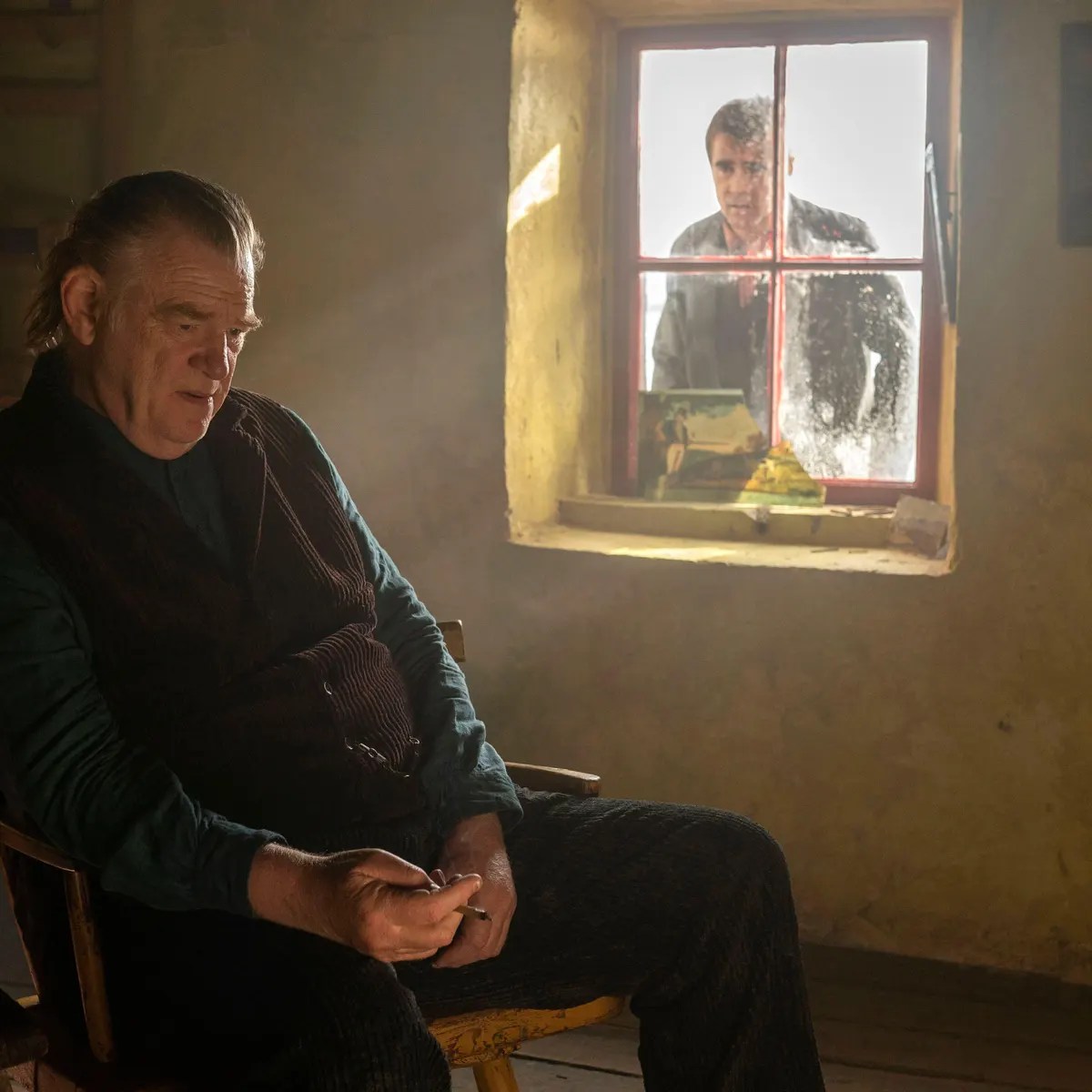
Director of photography Ben Davis’s camera is crucial in revealing the deeper meaning of McDonagh’s fable. Often we see Pádraic on the outside peering through the window into Colm’s home, or into the pub looking for Colm. Poor Pádraic now is an unwanted outsider, rejected and isolated, reminiscence of similar shots in Bresson’s Diary of a Country Priest. Or, the metaphor of the Banshee, the omen of death, represented by Mrs. McCormick (Sheila Flitton), her creepy appearance exemplifies the ever-present threat of mortality, just like the Grim Reaper in Ingmar Bergman’s The Seventh Seal (1957). They don similar costume too. And the ubiquitous religious symbols and activities––the statue of the Virgin Mary on the island, the cross, the Latin mass––just make one question how their faith is relevant in the actions of these islanders.
The Banshees of Inisherin is nominated for nine Oscars in the coming awards night to be held on March 12: Best Picture, Martin McDonagh for Directing and Original Screenplay, Colin Farrell for Best Actor, Kerry Condon Supporting Actress, Brendan Gleeson and Barry Keoghan both for Supporting Actors, Film Editing, and Music (Original Score).
Take this as a preview rather than a review. Why, this book has not been translated into English yet. The prominent Japanese mystery writer Keigo Higashino has written more than sixty novels but only eleven had been translated and published in English so far.
The latest, A Death in Tokyo, was published in Dec. 2022 by Minotaur Books. Its original Japanese title 麒麟の翼 (The Wing of the Kirin) was actually published in Japan more than ten years ago in 2011. I’ve read eight of Higashino’s translated mystery, including A Death in Tokyo. So, after finishing it, I thought I would have to wait a few years before I have the chance to devour another.
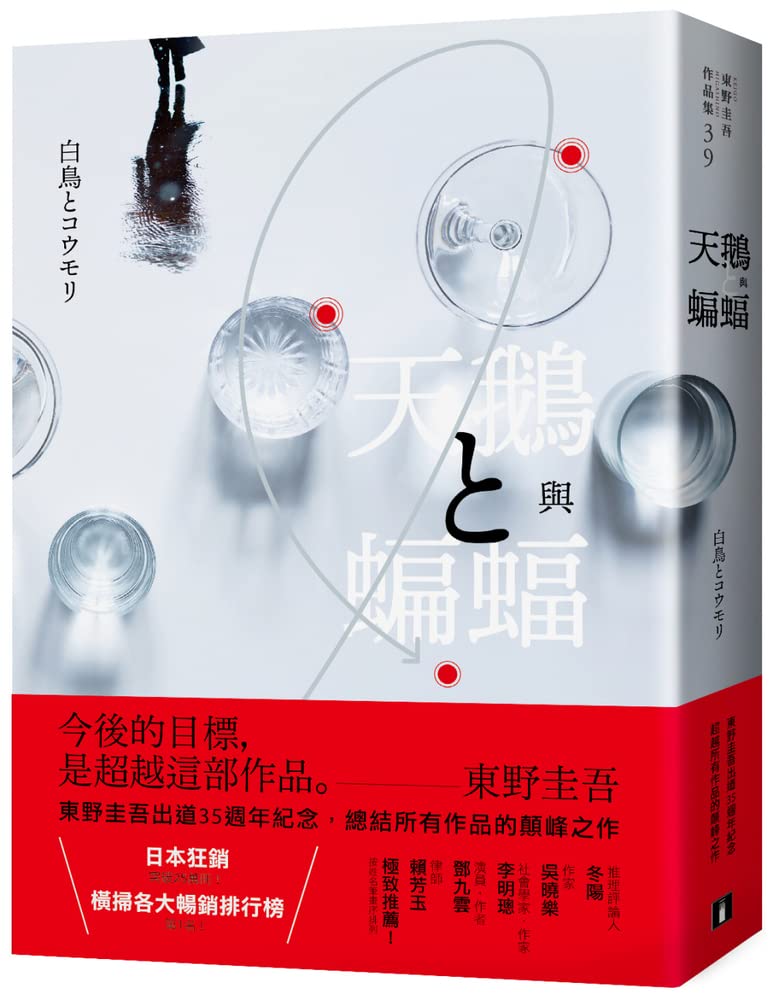
That’s why I couldn’t believe what I found when I came across The Swan and the Bat in our local library. Not sure if it’s Higashino’s latest but it was published in Japan in 2021, and translated into Traditional Chinese language published in Taiwan in 2022. And it’s brand new, beautiful and untouched in its transparent plastic wrap.
Here’s the synopsis of the story. A respected lawyer in Tokyo is murdered. Not long after that, a man goes to the police and gives himself up, confessing that he’s the murderer and not only that, revealing that he had committed a previous unsolved murder thirty years ago. The novel touches on issues such as the propriety of the statute of limitations, and the impact of crime on the victim’s family as well as the culprit’s. The puzzling thing is, why does this man take the initiative to go to the police and offer his confession on both crimes?
Not sure what the future English translation will be like but reading the Chinese version, there are words and concepts we seldom find in mystery novels written in English: sin and redemption, guilt and forgiveness, and the readiness to offer apology. Characters are bound more by their conscience than the law. In Dostoevsky’s Crime and Punishment, Raskalnikov gets away with murder for a while, trying to rationalize his way out of psychological torments. Higashino’s character does not rationalize but sacrifice.
A thoroughly intriguing read. Different from previous Higashino’s novels in that The Swan and the Bat has a more contemporary setting where social media plays a major role in the court of public opinion, radiating added pain in the victim’s and the perpetrator’s family. Rather than depending on the police to solve the crimes, two people from families on opposing sides of the adversarial legal system play Sherlock on their own, making the novel more complex and captivating.
If this will be translated into English in the future, I would not hesitate to read it again. The Swan and the Bat (title might be changed in the English version) has become my best Keigo Higashino book replacing The Devotion of Suspect X which sits securely in second place.
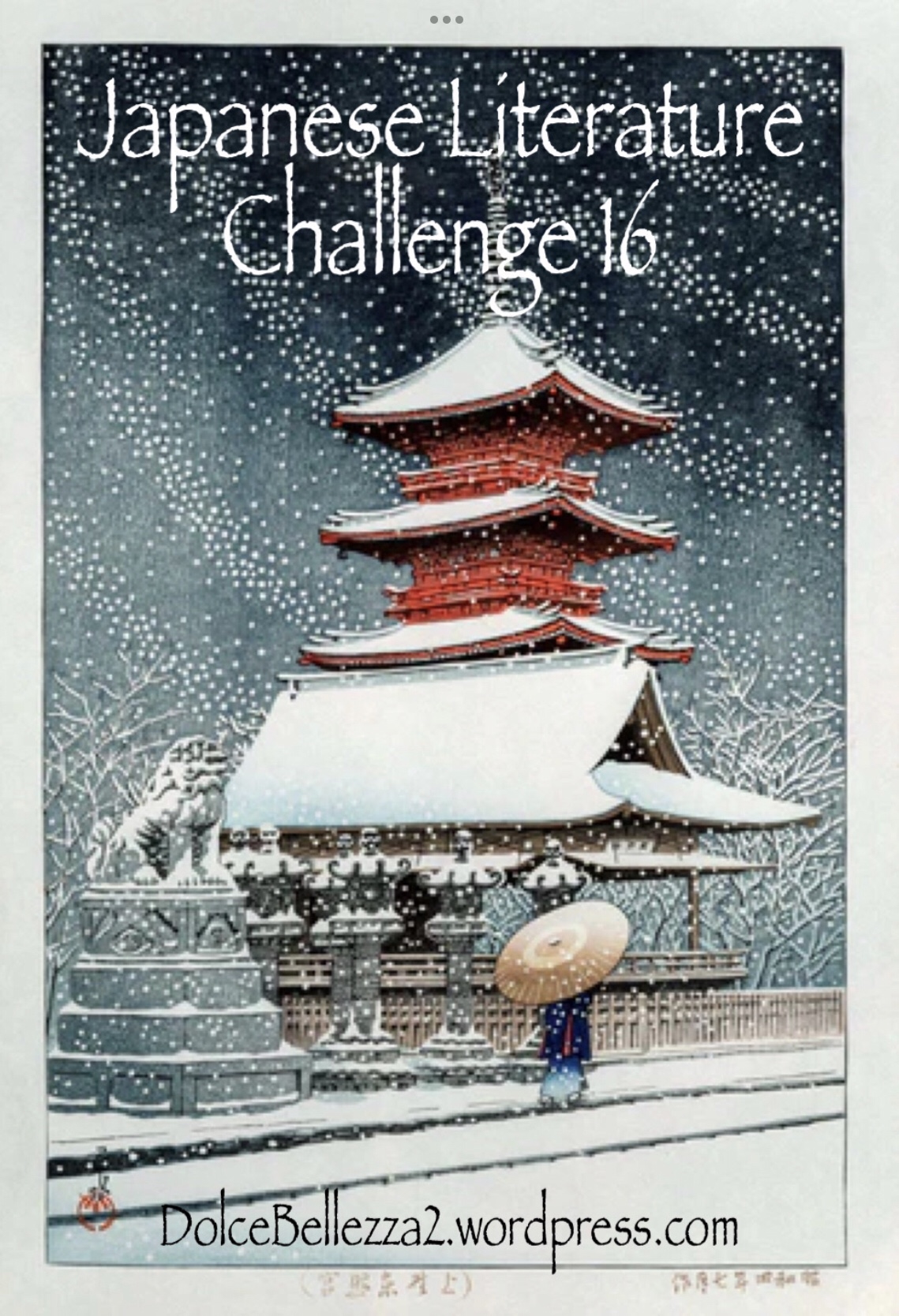
Thank you to Dolce Bellezza for hosting Japanese Literature Challenge for the sixteenth year.
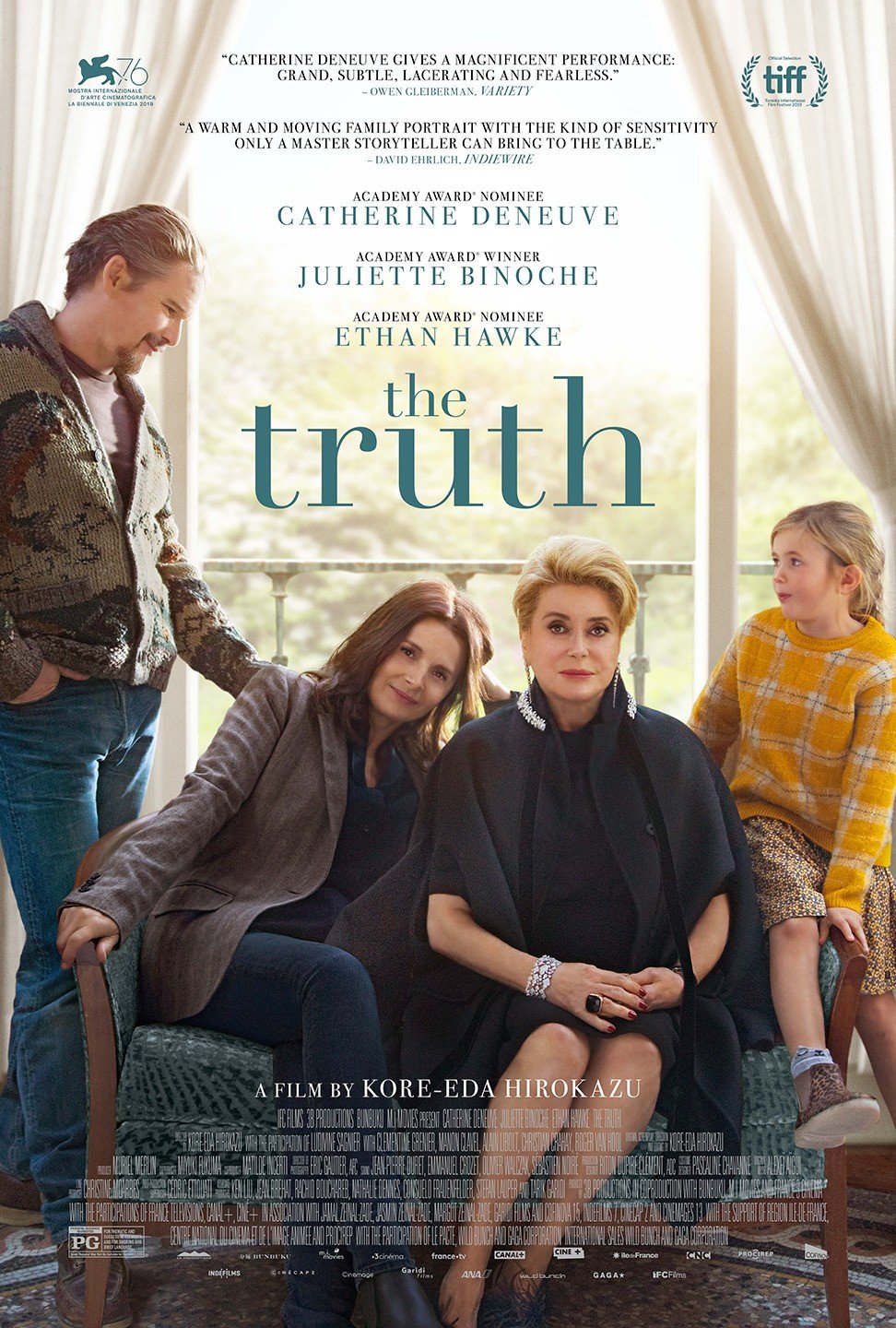
When you have a cast consisting of French actresses Catherine Deneuve and Juliette Binoche together with American actor Ethan Hawke, that’s attraction enough. Further, a film written and helmed by the Cannes winning Japanese director Hirokazu Koreeda (Shoplifters, 2018) adds an intriguing element, as this is his first non-Japanese film shot outside of his home country.
Deneuve plays an aging French film actress, Fabienne Dangeville, who has just written a memoir. Already 50,000 sold––and boasting to her daughter twice that number––the success in book sales, however, cannot rescue her from the dimming of her career as a film star.
Reminiscent of French director Olivier Assayas’ Clouds of Sils Maria (2014) where Binoche herself plays a French actress sinking into oblivion as prime acting roles go to the younger and much more popular personalities. But The Truth is lighter in mood and sprinkled with comedic effects and subtle humour.
Fabienne’s daughter Lumir (Juliette Binoche), a screenwriter living in New York, comes all the way to Paris on the occasion of her mother’s book publishing, her husband Hank (Ethan Hawke), an actor, and daughter Charlotte (Clémentine Grenier) in tow. To Lumir, it’s a homecoming after a long while. Cracks between her and her overbearing mother surface as soon as she enters the house.
First off, she’s upset that Fabienne didn’t let her read the manuscript before publication as she had promised. Now reading it for the first time that night, anger replaces disappointment. She confronts her mother the next morning:
“Who are you kidding? I can’t find any truth in here.”
Fabienne, of course, doesn’t care what her daughter thinks. It’s her memoir, her take. In the book, she presents herself as a loving mother, like finding joy in picking her daughter up from school. Lumir says it’s untrue, for her mother had never picked her up from school, always her dad Pierre (Roger Van Hool) or the family’s faithful servant Luc (Alain Libolt). Her memory of Fabienne is an absent mother who basks in the limelight of her own stardom. In reply, Fabienne says:
“I’m an actress. I won’t tell the naked truth. It’s far from interesting.”
As for Hank, effectively played by Hawke, his duty seems to be there only to support his wife. Not knowing French, Hank is a complete outsider. And in the eyes of his celebrity mother-in-law, he can hardly be called an actor. Daughter Charlotte has a few delightful scenes on the subject of truth and fantasy.
The next day, they all follow Fabienne to the studio for the rehearsal of a film she’s in, but playing a minor role with the major star being a younger, reputed actress Manon Lenoir (Manon Clavel). Now the conflict shifts from mother daughter to that of the fading star and rising talent.
The studio setting is another layer Koreeda has created to bring out cinematic ‘truth’. The green screen itself by its very function works as a fake background, ‘deceiving’ in its purpose. Further, special touch up can alter even the eye colour of the actor. And most hilarious of all, but all wrapped in a serious tone, what we see is an intense scene between two characters alone on screen is actually hovered over in a short distance by a horde of people who are not in costume doing their real-life job. Sarcasm and humour are the subtle effects from scenes like that. Koreeda’s insight is astute in revealing what filmmaking is: fiction pretending to be real.
The middle part of The Truth about the studio shooting is a little weighed down as a play-within-a-play based on a short story by the acclaimed science fiction writer Ken Liu. This section of the movie is complex and multi-layered. While intriguing, it requires more than one viewing for clarity. This too, could well be Koreeda’s intension as he directs a French film, inserting a story within a story, which is a French artistic device, the mise en abyme. Like standing between two mirrors, one can see multiple images.
Overall, The Truth is a light-hearted feature, leisurely paced with embedded humour. Koreeda’s intention might be more cerebral than comical. The cast in itself is appealing enough, presenting a piece of cinema verité showing that truth is elusive even among the closest of family or the most sincere of artistic expressions.
~ ~ ~ Ripples
The Truth is now on Netflix.
_______________________
In participation of Paris in July hosted by Tamara at Thyme for Tea
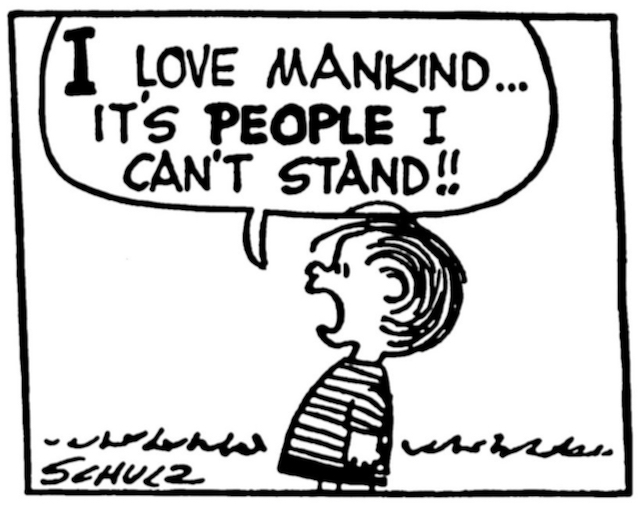
Nov. 12, 1959 Peanuts comic strip by Charles Schulz
And I thought Linus was so ingenious with such self-knowledge and view of mankind! But then again, it could be an example of great minds think alike… Charles Schultz and Fyodor Dostoevsky. Reading this first Part of The Brothers Karamazov (TBK) offers me surprising delights, for I find some well known, thought-provoking quotes in here.
The panel above is the last of the comic sequence where a frustrated Linus replies Lucy when she says he can never be a doctor because he doesn’t love mankind. In TBK, this line is, interestingly, spoken by a doctor, in an anecdote told by the Elder to ‘a lady of little faith’:
“the more I love mankind in general, the less I love people in particular, that is, individually, as separate persons.” (57)
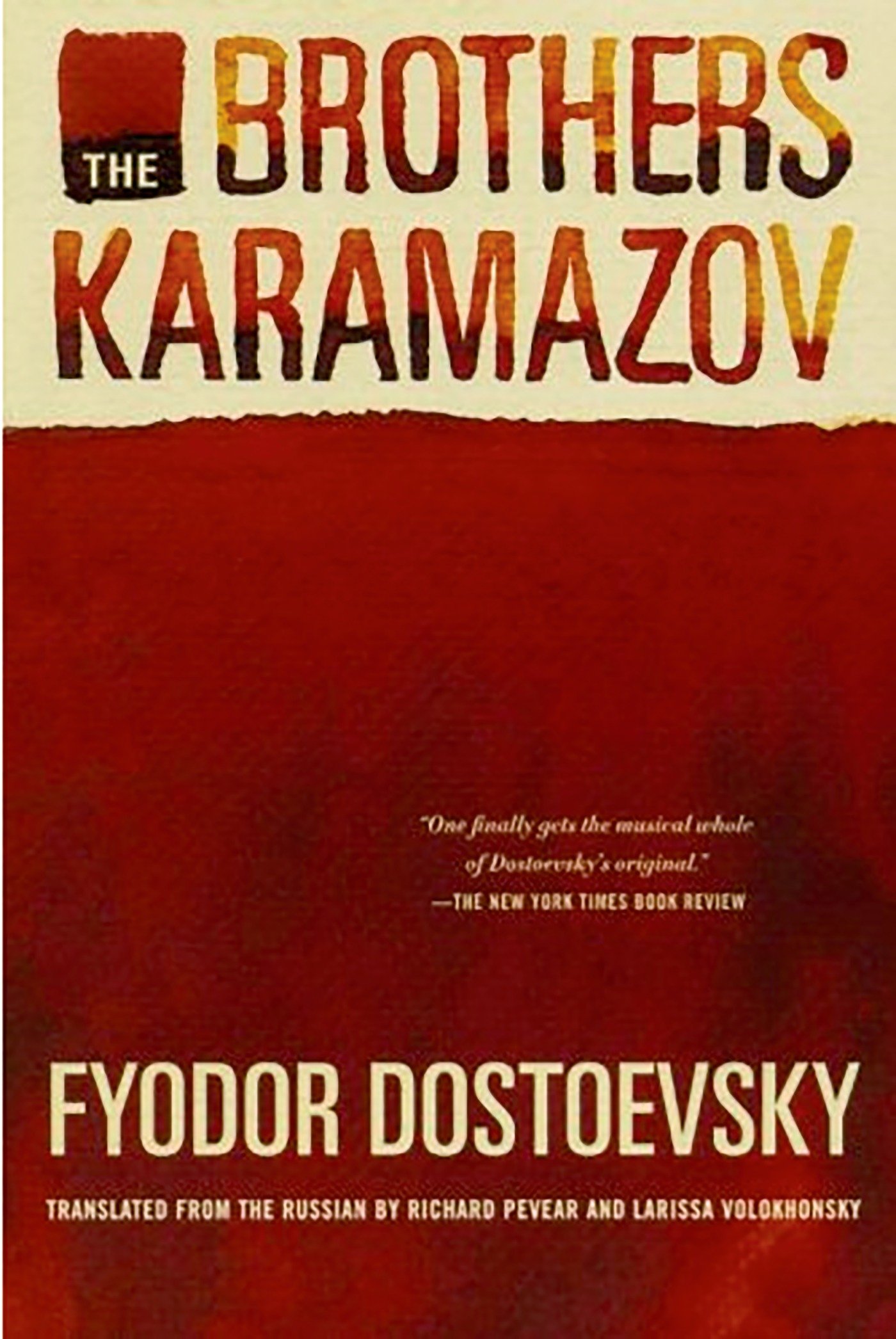
Here’s the edition I use, references to page numbers in brackets are from this Pevear and Volokhonsky translation.
As I learn about the characterization in Part I, focusing on the father Karamazov and his sons, I can see why Dostoevsky created such a famous line.
Fyodor Pavlovich Karamazov – a man described as ‘worthless’, ‘depraved’, ‘muddleheaded’, ‘a buffoon’, and I’d just add womanizer and child abandoner, ‘for the child would have gotten in the way of his debaucheries.’ (p. 10) His eldest is Dmitri from first wife Adelaida Ivanovna, who deserted him and her own son. His second wife Sofia Ivanovna gave birth to Ivan and Alexi, and died when Alexi was four years old. All the brothers grew up away from their father.
Dmitri – Eldest, recently retired from the military. Abandoned by both his parents from birth, was raised by their servant Grigory and his wife for a while then a distant relative took over and some others. What could such a child turn out to be? The military has suited him well, so, at least his physique is well sculpted. However, the animosity towards his father runs deep, with conflicts over inheritance money and, alas, rivalry over the same woman Grushenka.
Ivan – The first son of Fyodor’s second wife. A rational man, argumentative, and an atheist. Expressed his view forthrightly in writing and in speech. While arguing against the existence of an overarching natural law of morality, he presents the scenario that if there’s no God, no immortality, then “nothing would be immoral any longer, everything would be permitted, even anthropophagy.” (p. 69) The Garnett translation uses the word ‘cannibalism’, which is much clearer. Without a universal measurement of good and evil, one cannot say what’s moral or not.
“If there is no immortality of the soul, then there is no virtue, and therefore everything is permitted.” (82)
I find it stimulating and gratifying to see Dostoevsky’s characters discuss issues such as this one openly, which reflects what were the important issues of the time. TBK is a novel of ideas, and Dostoevsky brings them out via lively dialogues and sometimes, surprisingly, in light-hearted strokes.
Alexei – or Alyosha, Dostoevesky’s hero as he states in his Author’s Note before the story begins. A youth who has quit his last year of schooling to return to his father’s town, and enters the monastery to follow the Elder Zosima. A ‘holy fool’ like the main character in Dostoevsky’s earlier book The Idiot. Called ‘an angel’ by his father, for this youngest son “pierced his heart… because he saw everything, and condemned nothing.” (94)
The Elder Zosima – Alyosha’s mentor, a spiritual leader in the monastery who gives advice to seekers. The ailing Elder urges Alyosha to ‘go into the world’ and not stay in the monastery after his death, something his youthful follower is perplexed about at this point in the book.
In a chapter entitled ‘A Lady of Little Faith’ (Bk 2, Ch.4), the Elder offers this advice to a woman who is distressed that she can’t find proof to confirm her faith, and the Elder replies,
“… One cannot prove anything here, but it is possible to be convinced.”
“How? By what?”
“By the experience of active love. Try to love your neighbors actively and tirelessly. The more you succeed in loving, the more you’ll be convinced of the existence of God and the immortality of your soul.” (56)
A crucial chapter is Book 2, Ch. 6, where the three brothers and their father meet at the Elder’s cell in the presence of other monks to seek the Elder’s judgement on the dispute between Fyodor and his son Dimitri. Here’s a prime example of how Dostoevsky lets his characters discuss serious issues embedded with comical effects.
During the meeting, the brothers engage with the monks and discuss serious subjects such as European Liberalism, Russian Liberalism, the role of the Church in the State, and most importantly, the existence of God, while an impatient Fyodor can’t wait to air out the family’s dirty laundry. I find the juxtaposition of these conversations deadpan farcical.
“Dmitri Fyodorovich!” Fyodor Pavlovich suddenly screamed in a voice not his own, “if only you weren’t my son, I would challenge you to a duel this very moment … with pistols, at three paces … across a handkerchief! Across a handkerchief!’ he ended, stamping with both feet.
Dmitri Fyodorovich frowned horribly and looked at his father with inexpressible contempt.
“I thought… I thought,” he said somehow softly and restrainedly, “that I would come to my birthplace with the angel of my soul, my fiancée, to cherish him in his old age, and all I find is a depraved sensualist and despicable comedian!”
“To a duel!” the old fool screamed again, breathless and spraying saliva with each word. (73-74)
The most important scene that takes place in this meeting is an action by the Elder Zosima. As if to end the Karamazov father and son confrontation, Zosima gets up, goes to Dmitri, kneels before him and bow, touching the floor with his forehead, astonishes everyone there. (74)
Another character, Rakitin, later interprets the Elder’s action as a foreshadowing, Zosima delivering a prophesy of a crime that will take place which has something to do with Dimitri and his father. I will have to read on to find out.
What a family!
Is it a coincidence that the unlovable head of the family Karamazov has the same first name as our author, Fyodor? I think here is a prime example of Dostoevsky’s humour and acerbic self-sarcasm. I gather that it’s the author’s intention to identify with humanity in all their foibles and failures––the fallen man.
As Dmitri tells Alyosha: “Don’t think I’m just a brute of an officer who drinks cognac and goes whoring. No, brother, I hardly think of anything else, of anything but that fallen man… I think about that man, because I myself am such a man.” (107)
Two other quotes that had sent ripples as I read:
“Here the devil is struggling with God, and the battlefield is the human heart.” (108)
“Faith is not born from miracles, but miracles from faith.” (26)
May has arrived! The Brothers Karamazov Read Along thus begins.
Your part of the world might be all green and colourful, more conducive to outings and nature wandering than reading. But then again, you can read outdoor too. Just bring the book along and sit under a tree … in a lawn chair, and enjoy the warm breeze.
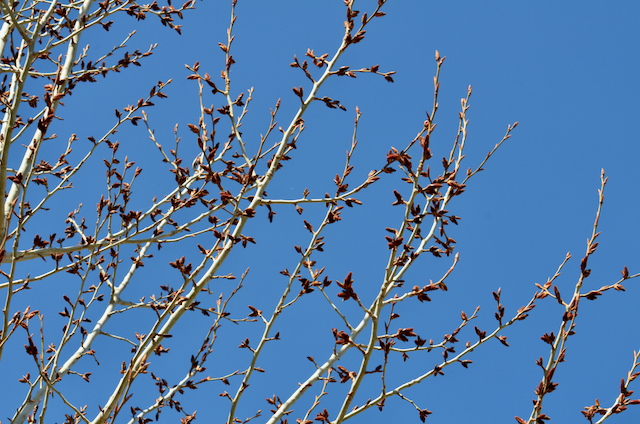
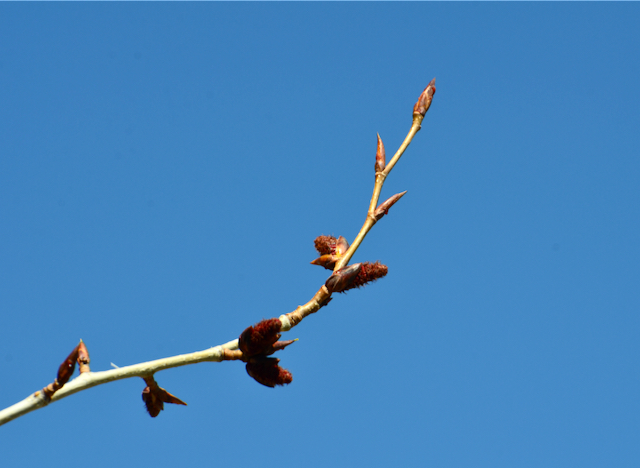
As for me at the Pond, things aren’t that rosy yet. But I have blue sky, white clouds, and buds bursting out on trees.
All are welcome as we start our slow and leisurely reading of the classic which critics hail as Dostoevsky’s culminating, greatest work (pub. 1880, his last novel). Here’s a schedule of our posting dates, according to the four sections of the book:
PART I – May 22
PART II – June 12
PART III – July 3
PART IV & Epilogue – July 24
If you’re not a blogger, you can still read together with us. On the posting date, stop by and leave your thoughts as a comment. Or, you might have read it before, several times, I welcome your insights!
Here we go again. Every few years on Ripple, I’d entertain an urge to have people gather at the Pond to read a book together, virtually of course. As we’re (here above the 49th) riding through a third wave of COVID right now with stay-home measures for many, how we need that camaraderie even more.
And why The Brothers Karamazov by Fyodor Dostoevsky? Just because I’ve always wanted to read it but haven’t. I know some of you may have read this literary classic already. Maybe now’s a good time to re-read?
I recently bought a Farrar, Straus and Giroux (NY, 1990) edition pictured above, translated by Richard Pevear and Larissa Volokhonsky. Opening it, the first line in the Introduction surprises me. But as I read on, the whole paragraph is motivation itself:
The Brother Karamazov is a joyful book. Readers who know what it is “about” may find this an intolerably whimsical statement. It does have moments of joy, but they are only moments; the rest is greed, lust, squalor, unredeemed suffering, and a sometimes terrifying darkness. But the book is joyful in another sense: in its energy and curiousity, in its formal inventiveness, in the mastery of its writing. And therefore, finally, in its vision.
And thanks to Bellezza, I checked on Goodreads and found this quote by Madeleine L’Engle:
“The truly great books are flawed: The Brothers Karamazov is unwieldy in structure; a present-day editor would probably want to cut the Grand Inquisitor scene because it isn’t necessary to the plot. For me The Brothers Karamazov is one of the greatest novels ever written, and this is perhaps because of, rather than in spite of, its human faults.”
–– Madeleine L’Engle, A Circle of Quiet
Those familiar with my previous Read Alongs know I’m all for slow reading. I allow ample time to finish a book, mind you, these are usually longer titles. Read Along at the Pond is a leisurely enjoyment. Here are some previous titles:
Here’s a tentative schedule for The Brothers Karamazov Read Along. Read within the three-week time frame for each of the four Parts, then post your thoughts at the end of each. Non-bloggers are welcome to join as well. Instead of posting, just go to any participant and leave your thoughts as a comment in their post.
Extraordinary times call for extraordinary measures, and I’m glad to do my social duty to stay home and binge read.
Since the beginning of the year, I’ve been reading mysteries from various countries. From the UK, Julian Symons’s The Colour of Murder, Agatha Christie’s Death on the Nile, Jacqueline Winspear’s Maisie Dobbs, and Alex Michaelides’s The Silent Patient, to the US, John Grisham’s Camino Island, and my first Mary Higgins Clark All by Myself, Alone, which reads like an American version of Death on the Nile. And now getting through Patricia Highsmith’s Edith’s Diary, which is a sort of psycho-mystery.
But thanks to Japanese Literature Challenge 13 over at Bellezza’s, I’m introduced to Japanese mysteries. I started with Akutagawa Ryūnosuke’s (芥川 龍之介) classic short stories “Rashomon” and “In A Grove”, posted here. After that, I’ve been intrigued by the novels written by the prolific Keigo Higashino (東野圭吾). Beginning with Malice, I’ve since binge read five of his mysteries.
There are ten books in the Detective Kaga series but only two have been translated into English: Malice and Newcomer, which I’ve reviewed in a previous post.
From the Detective Galileo series, there are 8 books from which three have been translated, The Devotion of Suspect X, Salvation of a Saint, and A Midsummer’s Equation. I devoured these in the past few weeks. Not everyone of them is a 4-Ripple rating, but this one definitely deserves it.
The Devotion of Suspect X
(Winner of the 2005 Naoki Prize for Best Novel in Japan, and also winner of both the Edogawa Rampo Prize and the Mystery Writers of Japan Prize for Best Mystery. The English translation was nominated for an Edgar Award in 2012.)
From the start, the reader is eyewitness to a murder. We know who committed the crime, the murder weapon, the motive, and the actual scene. It happens in the home of single mother Yasuko and daughter Misato. The victim is Yasuko’s ex-husband, a menace in her life. A neighbour, Ishigami, is in his adjacent apartment unit at the time. What follows is a cat-and-mouse chase––in Higashino’s leisurely pace––of the police and the suspect and possible accomplice.
Detective Galileo is the nickname the Tokyo Police Department had given Manabu Yukawa, Assistant Professor of Physics at Imperial University. Yukawa is a college friend of Detective Kusanagi and someone whom Kusanagi seeks when he needs to bounce off ideas or just shoot the breeze, an actual phrase from the English translation, curious to know the original Japanese idiom.
Higashino’s novels are like bookish tourism. His story, characters and settings make movie images in my mind of what everyday Japanese life is like. Here in this case, the murder weapon is the electrical cord from a kotatsu. What’s a kotatsu? I wondered, so was happy to divert to some Googling on that. Do go and find out if you’re interested. Lively pictures I did find and a new discovery of a common item in a Japanese home.
Back to the book. The physics professor Yukawa is logical. He analyses and deducts with a clear mind. Funny that the real detective, his friend Kusanagi is often driven by presumptions and impulses. The two make an odd couple in this series. However, it’s in the suspect Ishigami, a high school math teacher, that Yukawa finds his match. From the case, Yukawa reunites with his university classmate Ishigami whom he has not seen since graduation. Yukawa remembers him as a rare genius, someone whom he respects with heartfelt affinity.
When an amateur attempts to conceal something, the more complex he makes his camouflage, the deeper the grave he digs for himself. But not so a genius. The genius does something far simpler, yet something no normal person would even dream of, the last thing a normal person would think of doing. And from this simplicity, immense complexity is created.
It’s Yukawa, the physics professor who finally figures out the mind of the genius, a conjecture he’d wish wasn’t true, for pathos can overwhelm a rational mind. And that’s a parallel to depict Ishigami. For him, something rare had sprouted within: when love and devotion are factored into an equation, it could lead to the most extraordinary scenario.
With an intriguing plot and unexpected development in the final revealing, Higashino captures the emotions and humanity of his characters in a way that’s nothing short of profound. The story idea Higashino has created here is most unique and original, just reflects the ingenuity of the mind of the writer.
~ ~ ~ ~ Ripples
The Devotion of Suspect X by Keigo Higashino, Translated by Alexander O. Smith with Elye J. Alexander. Minotaur Books, New York, 2011. 298 pages
















 Ripple Effects