Summer Reading for Future Viewing

NOTE: Just added Far From The Madding Crowd by Thomas Hardy

Some updates on books into films or TV adaptations. Some I’ve read, some TBR.

Under The Dome copyUnder The Dome by Stephen King — Now a new TV series (CBS) produced by Steven Spielberg’s Amblin Entertainment, joining the trend of bypassing the big screen to opt for TV production. The future is now as the series has already started airing. First episode with 13.5 million viewers. Could this be a foretaste of the ‘implosion’ phenom Spielberg predicted, TV screen replacing the big screen?

.

outlanderOutlander by Diana Gabaldon — This wildly popular, NYT bestselling cross-genre series of novels (Sci-Fi/Romance/Historical/Adventure) will be adapted into a TV series. Again, TV is the emerging medium for literary adaptations. Versatile Gabaldon has multiple degrees in science and was a university professor before creating the Outlander book series. She’s also a comic script writer. Here’s her bio.

.

Winters-Tale-CoverWinter’s Tale by Mark Helprin — Sci-Fi is trending. This one will be on the big screen with some big names such as Will Smith, Russell Crowe, Colin Farrell. But if you are a fan of Downton Abbey, you’d be interested to know this is one of the reasons Lady Sybil met her tragic end. No hard feeling. I wish Jessica Brown Findlay all the best in her pursuit of big screen presence. Take a look at these photos.

.

The Ocean at the End of the LaneThe Ocean at the End of the Lane by Neil Gaiman — Book published June 18, 2013, film rights of Gaiman’s new novel (this one for adults) about childhood memories had already been snatched up by Tom Hanks’ production company Playtone and director found. That’s Joe Wright who brought us the screen adaptation of Ian McEwan’s Atonement (2007) and the most recent version of Anna Karenina (2012). Have put a hold on the audiobook from the library.

.

In The Garden of BeastsIn the Garden of Beasts by Erik Larson — Again, Tom Hanks had picked up the film rights and he will star in it. Before you say ‘Ha! Self-gratification’, I’d say he’s an apt choice to play William E. Dodd, America’s first ambassador to Hitler’s Nazi Germany. Natalie Portman is on board as Dodd’s flirtatious zealous daughter Martha. Michel Hazanavicius, the Oscar-winning director of The Artist (2011), will helm. The book focuses on dry facts and livens up with Martha’s escapades. I can expect how the movie would use them as leverage. But I certainly hope not.

.

The Monuments MenThe Monuments Men by Robert M. Edsel — A different perspective into Nazi atrocities. This time the victims are the art works in Europe. A special force of American and British museum directors, curators, art historians, and others, called the Monuments Men, risked their lives to prevent the destruction of thousands of years of culture under Hitler’s order and for his private gains. George Clooney, Matt Damon, Cate Blanchett star. Downton fans, Hugh Bonneville is also in. I’ve seen a doc based on Edsel’s other book The Rape of Europa, which is excellent. I eagerly await The Monuments Men.

Death Comes to PemberleyDeath Comes to Pemberley by P. D. James — BBC will produce this Austen’s Pride and Prejudice spin-off. Will it shift our devotion for Darcy from Colin Firth to Matthew Rhys? Not a chance. So why do it, especially when the book is overwhelmingly lackluster (there’s a new oxymoron for you). Lots of alterations will be needed for it to be put on screen. Here’s my take on the book.

.

AustenlandAustenland by Shannon Hale — Jane Austen spinoffs have to work extra hard to capture a wider audience, considering there are multitudes in the male population who avoid reading even the brilliant, original author Jane herself. Further, these imaginary sequels to P & P even have to woo female Austen purists. Kerri Russell stars, Stephenie Meyer produces. Maybe Meyer is ok with just reaching her own fans. If you’re not an Austen purist, here’s a beach read for you.

.

RebeccaRebecca by Daphne Du Maurier — Currently in development by Steven Spielberg’s Dreamworks. Do you think the 1940 Hitchcock film needs a makeover? Who should replace Laurence Olivier and Joan Fontaine? A new adaptation means drawing attention once again to Du Maurier’s novel, attracting first time readers. Good choice for book group, especially when you can read, discuss and watch movie together after.

.

Far from the Madding CrowdFar From The Madding Crowd by Thomas Hardy — Carey Mulligan’s next literary adaptation after The Great Gatsby. I’m glad she’s got this role, but, can she beat Julie Christie’s 1967 rendition of Bathsheba? The new version will be helmed by rising star director Thomas Vinterberg (The Hunt). Belgium actor Matthias Schoenaerts (Rust and Bone) and Juno Temple (in talks) also on board. I can see that all these remakes of classic films of literary adaptations are geared at a new generation of viewers. And I say, it’s alright. Another movie version just may draw more attention to reading literature.

the-grapes-of-wrathThe Grapes of Wrath by John Steinbeck — Just as we speak, Steven Spielberg’s Dreamworks is in talks with John Steinbeck’s estate to acquire the film rights, again, to remake another 1940 classic, this one with John Ford directing Henry Fonda. If the talk is successful, which I don’t doubt, who do you think should be in this new version? The book is on my TBR list with East of Eden, which also had plan for a new adaptation a few years back but since no more news had come out.

***

RELATED POSTS:

Upcoming Book to Movie Adaptations

Summer Viewing List

Can a movie adaptation ever be as good as the book?

My Review of:

The Artist

Atonement: Book Into Film

Anna Karenina: Book

Anna Karenina: Movie

Death Comes to Pemberley

***

The Great Gatsby (2013): Movie Review

In just 172 pages, F. Scott Fitzgerald has captured the zeitgeist of the Jazz Age, and told the stirring story of love and loss. In this new adaptation of the book, director Baz Luhrmann has used an estimated $127 million, glamorizing with 3D and over the top cinematic effects.

Here is a prime example of ‘the medium is the message.’ Instead of depicting extravagance and excess, the production has become that.

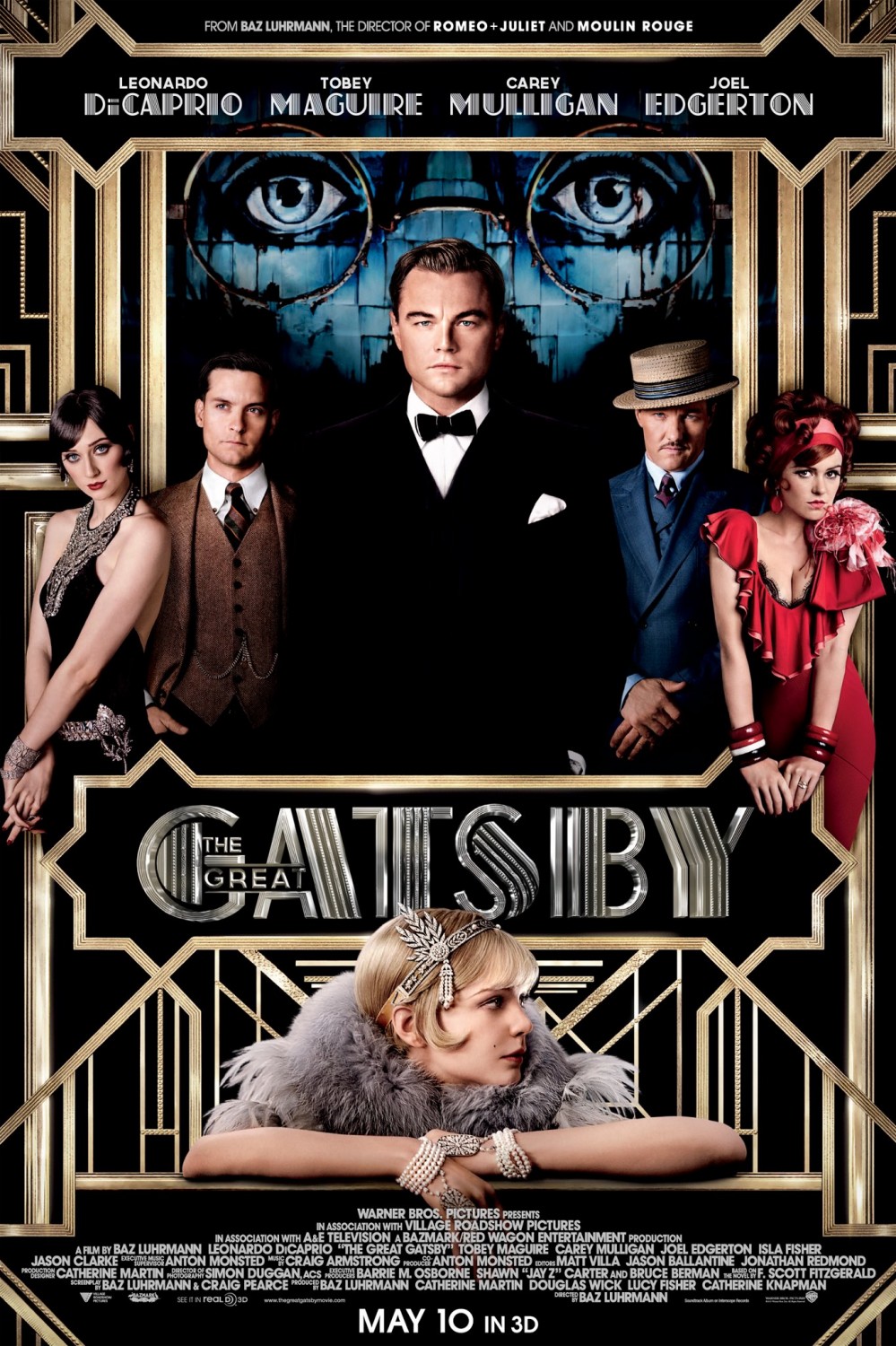
the-great-gatsby-poster1

I went in with an open mind. After all, I had expected a mashed-up, postmodern fusion Luhrmann style. So, even the Jay-Z curated hip hop selections a la Gershwin cacophony was fine with me. After all, it was the unruly Jazz Age, so be it. Gatsby’s creamy yellow roadster speeding towards Manhattan, zigzagging its way through busy streets, Fast and Furious 1920’s version is still acceptable. By the way, the movie was shot in Australia. So, all the Manhattan scenes are visual remixes.

But the main issue for me is the 3D. Not much to be gained there but hindrances. The effects make me feel like I’m looking into a View-Master, artificial and gratuitous. For Gatsby, the extravaganzas in his mansion are only means to an end, to attract his love, Daisy; in Luhrmann’s hands, they are an end in themselves. The flamboyant and ostentatious parties, like their uninvited guests, overstay their welcome in the first part of the almost 2.5 hour production.

If Luhrmann had only used more of his wealth of resources: the rich and talented cast, to explore the story more and go deeper into characterization, and less partying, the movie would have been a wonder.

After all the glitz and glam in the first act, my enjoyment begins when Gatsby meets Daisy in Nick’s humble abode, a set up masterminded by Gatsby. It has taken him five years to this very moment. It is this scene that draws me in from being just an aloof onlooker. From without to within, it is the story and the characters that engage me more than the visual spectaculars.

Leonardo DiCaprio is a fine Gatsby, convincing and comical at times. Carey Mulligan may not be the Daisy I had conjured up from reading the book, but she has mastered her role well on her own terms. She’s a much sweeter, less careless Daisy than I had in mind. Elizabeth Debicki is an apt Jordan Baker. Joel Edgerton as sneaky and snobbish Tom Buchanan needs to smile more, and Tobey Maguire as Nick Carraway less. The veteran actor Amitabh Bachchan is a good choice for Meyer Wolfsheim. Isla Fisher as Myrtle Wilson, what a change from a shopaholic, and Jason Clarke too much a hunk to be wimpy Wilson.

One major alteration that I’ve appreciated is Nick writing out the story as a therapy recommended by his doctor, apparently a psychiatrist. The story of Jay Gatsby is also Nick’s own story as a writer. By articulating his experience in words he pays tribute to an unforgettable character, a dreamer who always sees the green light. Without giving out a spoiler, let me just say, the little twist at the end is a nice touch to this new adaptation of The Great Gatsby.

Does it worth a watch? I’d say yes, even in the 3D version. Curiosity is insatiable. And hopefully, the visual spectaculars can draw the viewer back once again to the literary offering Fitzgerald had first created. That’s one positive effect a movie adaptation can generate.

~ ~ 1/2 Ripples

***

A related Post I wrote 3 years ago at the announcement of this new adaptation. My open letter to Baz Luhrmann:

The Great Gatsby: A New Version

***

Ruth Prawer Jhabvala: A Tribute to Rootlessness

On April 3, one day before Roger Ebert died, Ruth Prawer Jhabvala passed away from illness at the age of 85. Her death seemed to have been overshadowed in the next few days by Ebert’s. I feel here’s a life that ought to be noted as well, but maybe for a special reason.

ruth-prawer-jhabvala

Ruth Prawer Jhabvala was best known for her Oscar winning adaptations of E. M. Forster’s A Room With A View and Howards End. Her other screenplays include Kazuo Ishiguro’s The Remains of the Day, Henry James’s The Golden Bowl and The Bostonians, among a total of twenty-six.

But for Ruth (to discard formality and to focus on the person, allow me to call her Ruth), adapting screenplays was only a hobby. Her main calling was to be a writer of her own stories. She had heeded that call with fervour since childhood. Guardian’s obituary mentions Ruth once said about her writing time as “the only three hours in the day I’m really alive.”

There are thirty titles by Ruth Prawer Jhabvala on Goodreads, including novels, short story collections, and her works in anthologies. Among her accolades, most well known is the 1975 Booker Prize for her novel Heat and Dust, about the meeting of East and West in India. Her short stories had been published in The New Yorker since 1957, thirty-nine of them. Her latest appeared just one month before her death. She is the only person who had ever won both the Booker and the Oscar. Two Oscars, to be exact.

Reading her obituaries from several sources, I’m more intrigued by this matter of laying down roots, or rather, of rootlessness in the landscape of our life.

**

Ruth was born in Cologne in 1927 to a Polish father and a German mother. Her family was assimilated Jews in Nazi Germany. Her grandfather was the cantor in Cologne’s biggest synagogue. Her father Marcus was a lawyer. Assimilated or not, Ruth and her brother had to flee with her parents in the nick of time in 1939 to England. She was 12.

For the next twelve years, she grew up in London, learned a new language, adopted a new identity, and later graduated in English literature from Queen Mary College, London University. In 1948, upon finding out all members of his family were killed in the Holocaust, more than forty of them, Ruth’s father took his own life.

In 1951, when she was 24, Ruth married the architect Cyrus Jhabvala in London and followed him back to his native country India. Another uproot and transplant, this time, to a whole new continent. They settled in Delhi. For the next 25 years, Ruth immersed herself in her adopted country as a wife, mother, and writer. Colonial and post-colonial Indian life, East-West relationship and caste conflicts became her subject. Despite her effort in total immersion, she had not taken roots in India.

Finally, In 1976, a third continent, as Ruth and her husband moved to New York City. There, she found a place closest to a notion of home, paradoxically, because of “many people like herself: refugees, outsiders, interesting American discontents,” wrote the remaining Merchant-Ivory-Jhabvala collaborators, director James Ivory, in Time magazine’s tribute.

**

While still in India, Ruth had already collaborated with Merchant and Ivory on several movies. Now in New York, she lived in an apartment on the same block as they. The proximity of actual geographical location fostered a prolific period of their lives. Together, they had joined hands in more than twenty productions. Their forty years of collaboration remains the longest in movie history.

Ivory Jhabvala Merchant
Ivory, Jhabvala, Merchant

How did rootlessness affect her perspective? In Guardian’s obituary, I found this inspiring excerpt:

I stand before you as a writer without any ground of being out of which to write: really blown about from country to country, culture to culture, till I feel—till I am—nothing.” And yet, she said, this was one of her strengths. Many of her stories are about a kind of inner travel: feeling rootless, her protagonists find new ways to feel at home in the worlds they happen to inhabit.

Perhaps, in the vast landscape of literature, such rootlessness is essential for the imagination to take flight. Rootlessness allows flexibility and fluidity of navigation, the freedom to roam. Rootlessness can more readily unlock the wayfaring spirit within, and embrace change.

One result of being rootless could well be the hybrid identity. Amusingly the Merchant-Ivory-Jhabvala team itself is a good example. Producer Ishmael Merchant was a Muslim from Bombay who had settled in America; director James Ivory is the son of a French-Irish American; Ruth Prawer Jhabvala was a Polish-German-Jew from Cologne, Delhi, London, and New York City.

Perhaps as Nick Carraways, the narrator in The Great Gatsby, observes, only by being “within and without” can we see “the inexhaustible variety of life.”

***

Related posts and links:

Obituaries and tributes from The Guardian, The Telegraph, The Paris Review, Time Magazine, The New York Times.

Since 1957, The New Yorker had been publishing Ruth Prawer Jhabvala’s short stories, a total of 39, her last appeared only one month before her death. Thanks to The New Yorker, we can now read Ruth Prawer Jhabvala’s short stories online.

My book review of Howards End, my post on the Merchant Ivory production of Howards End, my review of A Room With A View (TV, 2007)

***

Photo Sources:

First photo from The Paris Review; Second photo from The Telegraph

Before I Go To Sleep by S. J. Watson

Before I Go to Sleep47 year-old Christine has lost her memory for twenty some years due to trauma. She wakes up every morning to a forgotten past. She spends her day piecing together a life, who and where she is, her personal history, and, who her husband Ben is. Upon the advice of Dr. Nash, she writes it all down in a journal before she goes to sleep at night, for she’ll wake up the next morning wiped clean of her day old memory once again.

The book deals with some interesting issues. If the past is horrible to recall, would it be better if one does not remember, or, would one be better off knowing the truth despite pain? Is one made more vulnerable by knowing or not knowing? Further, if mental images conjure up, how can one be sure they are memories of actual happenings and not one’s imagination?

Author S. J. Watson leads the reader into a maze of intrigues, teasing us with an unreliable narrator Christine, casting shadows of imminent dangers, and trying to capture us with her vulnerability. So memory loss is an effective plot device, keeping us in the dark guessing, creating suspense, and revealing ever so slowly what really had taken place that caused the amnesia to set in, and how she could ever escape.

The book starts off with a most interesting scenario as Christine wakes up to an unknown world, but towards the middle it seems like it has forgotten that it is just the protagonist who has amnesia, not the readers, as it repeats the facts and descriptions with Christine’s journal entries. The last part is a page-turning thriller, albeit with a relatively improbable ending. The last pages explaining everything with a neatly wrapped up ‘here you go, see how logical it is’ kind of finish.

Memories… such a thematic element can be exceptionally gratifying to explore with deeper characterization. Surely the author has brought up the idea that memory defines us, a reader seeking for a more contemplative rendering of such a concept would be disappointed however, for Watson has chosen to use this interesting thematic material to craft a suspense thriller and not an idea-driven literary work. So what we have with notions relating to memories, to the nature of our identity and personality… etc. are merely used to build up a suspenseful plot. As a thriller, the book aims to lead on and not delve in.

Am I being a bit harsh here? Why, I just caught myself. I could well have been more lenient if I were not reading it along with Proust’s In Search of Lost Time (Remembrance of Things Past). Am I being fair to make comparison? It’s like comparing apples with oranges. Yet the coincident is too fascinating… both deal with remembering and sleeping, albeit one trying to fall asleep while the other trying not to. Just thinking… even the book covers that I have are similar.

Lots of ‘I love you’s’ are uttered, but none that can stir up any emotions in me the reader. Several films kept conjuring up in my mind as I read… Memento, Eternal Sunshine of the Spotless Mind, The Vow, and I must say the latter two managed to stir some affective resonance in me while exploring the topic of amnesia and a love relationship. But with this book, I just wanted to race to the end. For some, this might well be proof of an entertaining read.

And that is why I have high hopes for its film adaptation. Yes, I must applaud Watson for his strong debut. This novel published in 2011 has gained awards and accolades, on the bestseller lists in several countries, and translated into 30 plus languages. Its film rights has been snatched up by Ridley Scott. Filming now, it features the impressive cast of Nicole Kidman as Christine, Colin Firth (The King’s Speech) as Ben, and Mark Strong (Zero Dark Thirty) as Dr. Nash; Anne-Marie Duff (Nowhere Boy) is also on board. This is definitely a film I want to watch, not just because of the actors, but the screenwriter Rowan Joffe, who will direct as well. Joffe has shown us, with his script for The American (George Clooney stars) that yes, sometimes the film can be better than the book. Let’s hope this is also the case.

In the end page Watson notes that his novel, though totally fictitious, is inspired by actual medical cases, particularly that of Clive Wearing‘s, the British musicologist, conductor and BBC music producer, who has the same condition as Christine’s, albeit his is an even shorter memory span, just a short minute or so. His real life accounts have been recorded by his loving wife Deborah Wearing in her book Forever Today: A Memoir of Love and Amnesia. While he lives in the constantly present, he does not forget music or his love for his wife. Now that would be one inspiring book to read.

***

Click here to watch a short clip on Clive and Deborah Wearing on YouTube. Does he not remind you of another real life character, a pianist, whose life had also been made into a movie?

Diary of a Country Priest: An Easter Meditation

Last year around this time, I wrote about the book The Diary of A Country Priest by French author Georges Bernanos, (Journal d’un curé de campagne, 1936). I’d like to repost my review this week, for every time I read it, I find the essence of Easter.

***

The Diary of a Country Priest Book Cover

A young priest comes to his first parish, the rural town of Ambricourt, filled with humble hopes. All he wants is to serve the people, to give of himself, to bring God’s love. But as soon as he sets foot in the village, he is engulfed by hatred and rejection. There are dark secrets too sinister to be exposed. The young priest is an unwelcome alien. In a town afflicted by hypocrisy, pride, anger and bitterness, he is despised, taunted and ridiculed. His own innocence is no match even for the children in his catechism class, especially the precocious Seraphitas, a girl ‘with a hardness far beyond her years.’

Ambricourt is a world afflicted by the ‘leprosy of boredom’, a microcosm of the human condition. Bernanos uses diseases to illustrate his point well. The young priest himself is being slowly consumed by terminal illness. The pain in his stomach ultimately defeats his body, cancer. His diet consists mainly of bread dipped in wine which he makes for himself, and some potato soup. Poverty of means, but also frailty of body to take in solid food. Many a times we see him in the Garden of Gethsemane, pleading for strength in anguish. But he faithfully presses on, using his diary to confide his deepest thoughts, a means to commune with his God.

On the outskirt of Ambricourt is the Château of the powerful M. le Comte. The Count needs no priest to know about his adulterous affairs, this time, with the governess Mlle Louise. His wife Mme la Comtesse is totally absorbed by her long-held bitterness and grief from the loss of her young son. And his daughter Mlle Chantal is a deeply disturbed girl eaten up by anger and jealousy. Soon, she will be sent away to England, a most convenient plan devised by her father.

It is with this deep mess of a family that the young priest finds himself entangled. The most intense scene of the whole book, the climatic moment, comes when the priest goes to the Château to meet with Mme la Comtesse. She lost her beloved son when he was only eighteen months old, a child hated by his jealous older sister Chantal.

On his last day they went out for a walk together. When they came back my boy was dead.

Mme la Comtesse is fully engulfed by hatred for her daughter, grief for her lost son, and bitterness towards God.

Hearing her speak, a tear flows down the face of the young priest. “Hell is not to love any more, madame.” The young priest responds. And with miraculous strength, he delivers the following words.

… But you know that our God came to be among us. Shake your fist at Him, spit in His face, scourge Him, and finally crucify Him: what does it matter? It’s already been done to Him.

Towards the end of some soul piercing exchanges, Mme la Comtesse kneels down, releases her pain, and receives blessings from the young priest. Afterwards, she writes to him in a letter:

… I have lived in the most horrible solitude, alone with the desperate memory of a child. And it seems to me that another child has brought me to life again…

And this young child, a priest, consumed by illness, wreaked by frailty of spirit, can only marvel at the power through weakness:

Oh miracle — thus to be able to give what we ourselves do not possess, sweet miracle of our empty hands!

Not long after this, he succumbs to his illness. A life too short, a mission seems unaccomplished. But his last words faintly uttered on his deathbed are as powerful as the God who sends him:

Does it matter? Grace is everywhere…

And in the film, these three words leave me with one of the most impressive endings of all the films that I’ve seen:

“All is grace.”

 ***

~ ~ ~ ~ Ripples

CLICK HERE to read my film review of The Diary of a Country Priest.

The Diary of a Country Priest by Georges Bernanos, translated by Pamela Morris, Perseus Books Group, Philadelphia, PA, 1965, 298 pages.

Journal d’un curé de campagne, 1936, was winner of the Grand prix du roman de l’Académie française.

Upcoming Book to Movie Adaptations

2012 has been a great year for movie adaptations based on or loosely tied to books. Argo, Beast of the Southern Wild, Les Misérables, Anna Karenina, Life of Pi, Lincoln, Silver Linings Playbook are all from adapted screenplays.

Now that the Award Season is behind us, time to move forward to see what some of the upcoming movie adaptations are in the works. The following is a list of films in various stages of development, with some scheduled to be released in 2013. Time to read or reread the books before your see the movies.

**

A Most Wanted Man 

A Most Wated Man

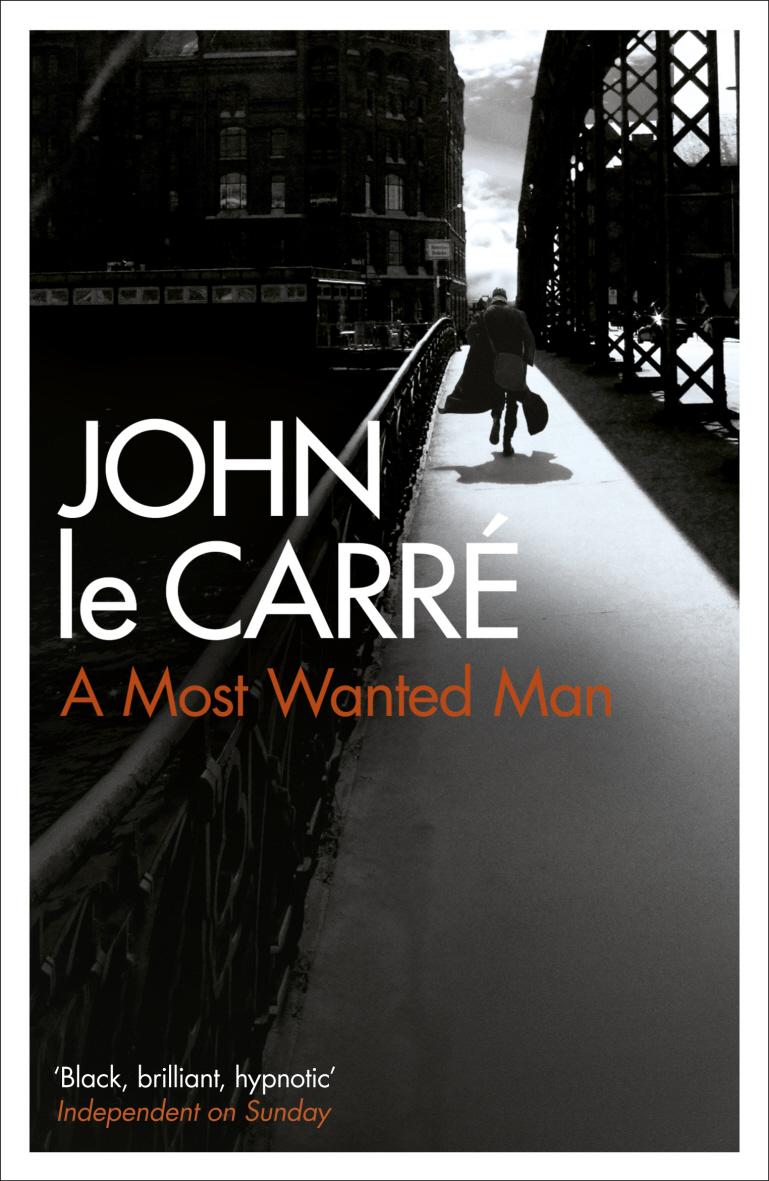
Philip Seymour Hoffman stars in John le Carré’s thriller (2008) with a contemporary theme of international war on terror. Hopefully it will reprise the depth of the star-studded Tinker Tailor Soldier Spy. Robert Wright, Rachel McAdams, and Willem Dafoe are in.

A Wrinkle In Time

A Wrinkle in Time

After the success of LOTRNarnia, The Hobbit, some think it’s time to remake Madeleine L’Engle’s YA Sci-Fi classic A Wrinkle In Time. Disney it is, together with Bedrock with Jeff Stockwell (A Bridge to Terabithia, 2007) writing the script. Let’s hope it’s a production worthy of its literary source.

Before I Go To Sleep 

Before I Go to Sleep

Adapted from S. J. Watson’s popular and intriguing novel about a woman having bouts of amnesia every morning she wakes up. If your memory or enthusiasm needs a little prodding, here’s this cast: Nicole Kidman, Colin Firth, and Mark Strong. Nobody can forget Colin Firth as Mr. Darcy (TV 1995), but do you remember Mark Strong as Mr. Knightley in Emma (TV 1996)? Both were in Tinker Tailor Soldier Spy (2011) and Mark Strong in the recent Zero Dark Thirty (2012). I can’t wait for this one. Will have to read the book first.

The Book Thief

The Book Thief

The popular and acclaimed YA book by Markus Zusak with setting in WWII Nazi Germany. YA or not, it’s been on the NYT Bestseller List for over 4 years. Interesting fact is, Downton Abbey director Brian Percival will helm the production, which will star Geoffrey Rush (The King’s Speech, 2010) and Emily Watson (Anna Karenina, 2012). The young Canadian actress Sophie Nélisse who’s brilliant in the Oscar nominated Monsieur Lazhar (Canadian entry for Best Foreign Language Film, 2011) will play young Liesel.

Devil’s Knot

Devil's Knot

Based on Mara Leveritt’s book Devil’s Knot: The True Story of the West Memphis Threethe true case of the wrongful conviction and imprisonment of three teenaged boys for eighteen years for the murder of three children in West Memphis, Arkansas. Colin Firth and Reese Witherspoon star. Acclaimed Canadian director Atom Egoyan helms, with music score by the recent Oscar winning Canadian composer for Life of Pi Mychael Danna. Yes, sounds like an international joint effort. The film has a 2013 release date in the U.S.

The Great Gatsby

The Great Gatsby

Completed in 2012, but delayed its release until May 2013. Just as well, considering all the mighty rivals of last year’s movies. The trailer looks unsettling, and in 3D, I’m afraid the Baz Luhrmann version may focus on the loud and glitzy but ignore the true colours of Jay Gatsby. Of course, innocent until proven guilty. My eyes are peeled. Leo DiCaprio is Jay, Carey Mulligan Daisy, Isla Fisher Myrtle, Tobey Maguire Nick. Quite a cast.

The Invisible Woman

The Invisible Woman

Claire Tomalin’s account of Charles Dickens’ affair with the young writer Nelly Ternan will be brought to screen with script from Abi Morgan (Shame, The Iron Lady) to be directed by Ralph Fiennes, who will play Dickens himself. To add to the rave, Kristin Scott Thomas is also on board. Felicity Jones will be playing Nelly Ternan. Fiennes never ceases to amaze us with his versatility, after directing Shakespeare’s Coriolanus in postmodern style, now comes Dickens.

The Piano Tuner

The Piano Tuner

It has been reported that the iconic German director Werner Herzog (Cave of Forgotten Dreams, 2010) is directing the movie adaptation of this 2002 book by Daniel Mason. Set in 1890’s Burma where the British Empire was having its glorious era, the chords of harmony and dissonance ring. Not a lot of info on it, but as I read a few book reviews, which are all careful not to reveal any spoilers, I can see this can be a colourful and thought-provoking cinematic offering in the hands of an auteur whose career has spanned half a century.

Romeo and Juliet

Romeo and Juliet

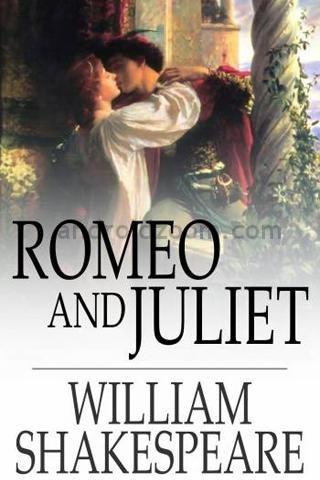
Don’t rant about Jane Austen’s novels being turned into just too many movies. Shakespeare probably holds the record. This time, a 21st C. version of Romeo and Juliet will be written by none other than Julian Fellowes, who has brought us the wildly and globally popular Downton Abbey, something Shakespeare just might approve. The new pair of star-crossed lovers? Douglas Booth (Great Expectations, TV 2011) and Hailee Steinfeld (True Grit, 2010), with a cast of prominent US and British actors.

The Sea

The Sea

Irish writer John Banville adapts his own Booker-winning novel (2005) of the same title. Ciaran Hind (Persuasion, 1995) stars. Banville has also written the screenplay of the Oscar nominated movie Albert Kobbs with Glenn Close. I was planning to read The Sea last year for the Ireland Reading Challenge but later made another choice. Now knowing there will be a movie, I should get back to it.

Suite Française

Suite Française

The heart-wrenching novel by Irène Némirovsky with setting in German occupied WWII Paris. Kristin Scott Thomas (I’ve Loved You So Long, 2008) and Michelle Williams star with Rust and Bone actor Matthias Schoenaerts. Glad to know screen adaptation is written by the Oscar winning screenwriter Ronald Harwood, who has given us such memorable films like The Browning Version (1994), The Pianist (Oscar win 2002), Being Julia (2004), The Diving Bell and the Butterfly (Oscar nom, 2007), and the recent Dustin Hoffman directorial debut Quartet (2012). I’m reading this book together with the Bonhoeffer bio. Can’t wait to see the film.

The Taming of the Shrew

Taming of the Shrew

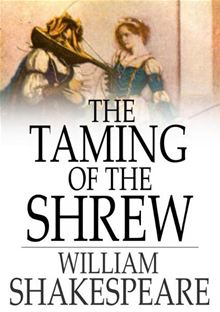
Yes, another Shakespeare’s play in the works. This one will be adapted by the screenwriter who has brought us The Iron Lady (2011), the movie Meryle Streep won an Oscar for playing Magaret Thatcher. Coincident? This time, the iron lady is Katharina, and she’ll be played by recent Oscar winner Anne Hathaway. From Fantine to the Shrew? She’ll need a lot of method acting and we’ll need a lot of forgetting to see her in that new role. As for Petruchio? Let me know who you think should be the one. No, I’m not the casting director, but I’ll put in a good word for you.

***

Do you know of any other literary titles to be adapted into films in the coming year? Let me know in a comment.

Thanks for your input, here are the titles some of you have added to my list:

Serena

Broken

Mr. Morgan’s Last Love

August: Osage County

Much Ado About Nothing

***

Top Ripples of 2012

The Ripple Rating System began when I started the blog Ripple Effects five years ago. I’ve been asked why I give three ripples so often, and how come there aren’t any one ripple. A look at how the rating works you’ll see why:

~ Ripple: Stay away, I did

~~ Ripples: Manage your time better

~~ 1/2 Ripples: Average, so-so

~~~ Ripples: Good, worth seeing

~~~1/2 Ripples: Superior, make time for it

~~~~ Ripples: Almost Perfect, must-see

You see, I’ve done the screening for you, just to save your time. But of course, the disclaimer here is, like Roger Ebert says, all reviews are subjective. But then too, here at the pond, ripples are the result of much thought.

**

In 2012, there are several movies I have given 3.5 or 4 Ripples. Two of them I have yet written a review. Here they are:

Life of Pi Book and Movie

Lincoln

Les Misérables

Birders: The Central Park Effect

Argo

Moonrise Kingdom

I’m still eagerly waiting for some to screen here, so I’ve yet to see them, like Zero Dark Thirty, Quartet.

**

There are reading experiences that I would give 4 Ripples, they are Read-Alongs:

Midnight’s Children by Salman Rushdie

Anna Karenina by Leo Tolstoy

A first for me, reading with others in a virtual reading group. Two brilliant books, some delightful camaraderie.

**

And then there are real life experiences that I’d gladly give 4 Ripples in my heart.

Bird Watching: See my photos on Saturday Snapshot Posts

Also my visit to:

The Salk Institute

The Grand Canyon

Rating with 4 Ripples is an understatement or maybe even an insult to the Creator of the Grand Canyon. But just an expression, I think He understands.

**

Thanks to WordPress, I receive a concise annual report on my blog. Top posts for 2012 are:

Memorable Movie Love Quotes (My Valentine post for 2008, Over 73,000 views since then). 2012 views: 15,237

The Glass Castle: Book Review (Since Aug. 2008, over 47,000 views). 2012: 8,334 views.

Quotable Quotes from Downton Abbey: Over 7,400 views since March, 2012

The Best Exotic Marigold Hotel: Now this is a surprise. Since I posted it in May this year, there have been over 6,200 views.

**

And now, my favorite, the Search Engine Terms, words people type in to come to Ripple Effects. These are some that not only bring a smile, but boost the spirit as well (I’ll leave them in their lower case as found in WordPress Stats):

heaven

grace in nature

oldest human frozen

colin firth chocolate

canada lost in austen

keep calm and act like kate middleton

e.m. forster can’t tell a good story

alien captured alive

studebaker truck girl

did red dog go to japan

the blogger arti  [Arti here: just love to know people actually Google about me!]

arti film life of pi

arti never let me go

the best exotic marigold hotel post modernism

nowhere

paleolithic hunting

does meryl streep have affairs

how many languages does colin firth have

yann martel lonely

joshua bell modest

why was ulysses poem chosen for skyfall

most memorable tv seduction quotes

anna karenina psychoanalysis

**

To everyone who has stopped by the pond and thrown in a pebble or two, thanks for the ripples. There are some new regular visitors and followers this year, I’m so glad to know you all. You’ve made me feel we’ve known each other for much longer. I’ve enjoyed our mutual visits. Thanks for the enrichment.

And to All

A Happy New Year!

***

Les Miserables (2012)

These last months of 2012 see a bumper crop of film adaptations from literary sources. We have an eclectic array from the minimalist rendition of Yann Martel’s Life of Pi, to this long awaited maximalist Les Misérables, adapted from Alain Boublil and Claude-Michel Schönberg’s 1980 stage musical based on Victor Hugo’s 1862 novel. From Ang Lee to Tom Hooper, we are gratified on both ends of the spectrum.

It is a shift too for Hooper, fresh from his much smaller scale, Oscar winning The King’s Speech (2010), to turn and adapt a successful stage musical into a huge cinematic production. Yes, maximalist could well be the word to describe Tom Hooper’s Les Misérables.

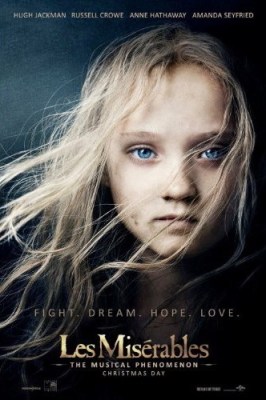
Les Miserables Movie Poster

I sat in a Cineplex theatre that offered Ultra AVX, Audio Visual Experience: wall to wall screen, big sound, huge images. Now of course, I would have seen it on a regular screen and with smaller head shots. For me, the AVX extravagance might even be a distraction. For as I watched the movie, it was in the small moments of torn sentiments, the minute scale of personal transformation, and the internal moral dilemmas so well acted out that I found Hugo a brilliant writer of the human soul. I don’t need big boom sound and maximized frames to sensitize me.

The epic scale is effective, and the cast is admirable in delivering a heartfelt performance. I can fully imagine the difficulty of casting, finding good film actors who can sing well. But overall, they are well chosen.

Hugh Jackman as Jean Valjean is impressive. No stranger to musicals, Jackman is a Tony Award winner himself, and here he is perfect for the role in every aspects, physiques, singing and acting. I’m glad to see he get a Golden Globe nomination for Best Actor (Comedy or Musical) in the coming Award Season.

Colm Wilkenson, a Broadway star dating back to Jesus Christ, Superstar and as Jean Valjean in the original musical of Les Miserables has a brief appearance as the Bishop, whose forgiveness of Valjean’s theft when he put him up for the night transforms the bitter soul of the hardened ex-con. His singing of course is impeccable.

Also glad to find out Eddie Redmayne can sing so well too. Like Jackman, he is a Tony Award winner, more recent and a much younger one. He plays Marius, among a group of young revolutionaries who set up the Barricade to defy the French militia. He is the young man who falls in love with Cosette (Amanda Seyfried) at first sight. Compared to his A Week With Marilyn, his performance here could well catapult him into more prominent roles in the future.

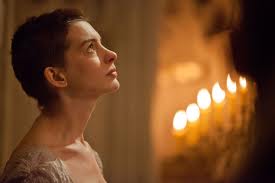
While many of the other main cast are not Broadway singers, their skills are laudable. Anne Hathaway singing ‘I Dreamed A Dream’ is probably one of the most successful trailers made. And here in the film, her affective appearance as Fantine only makes me wish she can stay a while longer. Good to see she gets a Golden Globe nomination for Best Supporting Actress (Comedy or Musical).

Anne Hathaway

Russell Crowe’s singing experience could have come mainly from his rock band, but his voice is fine here as Javert, the prison guard and later policeman on the trail looking for Valjean through the years. Yet it is not the singing, but the acting that I expected more. I know he is supposed to be cold and harsh, yet it is the internal fervor and depth that I find lacking. I think Geoffrey Rush is a more convincing Javert in the 1998 film adaptation… and I suppose he can sing too.

A marvellous duo that serve as a much needed comic relief is Sacha Baron Cohen’s Thénardier, ‘Master of the House’ and his Madame played by and Helena Bonham Carter. What a contrast with her role as Queen Elizabeth in The King’s Speech. The Thénardiers make one apt comic duo with their lively screen presence, great comic timing, and wonderful singing from both.

I must mention the two young actors. Daniel Huttlestone shines in his role as Gavroche, the boy at the Barricade. He has delivered a mature and poignant performance. I hope to see him appear in more films in the future.

The other is in the movie poster, an icon taken from the Musical. It is the image of little Cosette, here in the film movingly played by Isabelle Allen. The look-alike of the two images leads me to this thought:

I’m surprised to find the film adaptation follow the musical to the dot in terms of the song sequence. I think every one of them is performed, plus one more, ‘Suddenly’, written by Schönberg for the film. I was expecting a bit more creative cinematic treatment on screen. Further, the whole movie is connected by one song after another with almost no dialogues. For the film medium, editing could be better used here for pacing and avoiding redundancy. I feel the 157 minute production could be much tighter. With Schönberg directly involved in the adaptation, I’m sure he must have wanted every song preserved. Cutting the length must have been a delicate matter.

Overall, Hooper’s bold attempt to have the actors sing live instead of record the songs in a studio pays off. A first in recent decades, singing while they are acting creates and captures the emotions of the moment. With the title Les Misérables, we see a lot of heartfelt tears, and pathos of the human condition laid bare and raw. But Hugo’s universal theme also flows out as ready as the tears, that the power of forgiveness surpasses all wrongs, and grace triumphs over law. An apt offering for the Christmas season.

~ ~ ~ 1/2 Ripples

***

Life of Pi (2012): The Magical 3D Experience

Movies this fall is a bumper crop of film adaptations from literary sources. Two belong to the same genre of magic realism. While Midnight’s Children is more akin to realism, Life of Pi is pure magic.

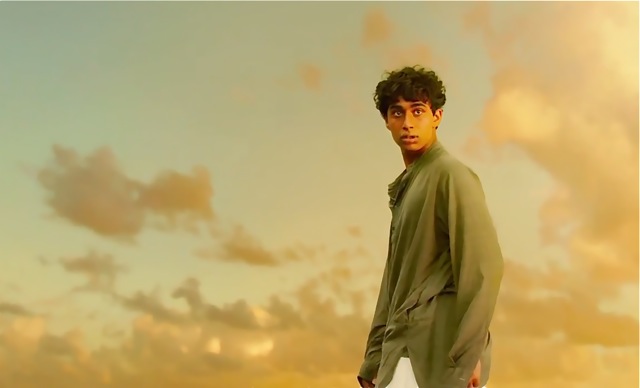
Ang Lee has done it, filming what is considered the ‘unfilmable’. Canadian author Yann Martel’s Booker Prize winning novel Life of Pi is an existential fantasy, a story that challenges the limitations of human reasoning and opens the door to the imaginary and the quest for the Transcendent. What Martel has succeeded in literary form, Lee has realized in this visually stunning cinematic offering. While I know book and film are two very different art forms, I am glad that screenwriter David Magee has stayed true to the spirit of the novel, which I think is crucial in this case. Cinematographer Claudio Miranda’s creative camera work is also essential in turning Martel’s imaginary world into mesmerizing visuals on screen.

The difficulties are not just transposing the philosophical ruminations from book to screen, but to keep the audience’s attention and interest for two hours when the bulk of the story is about a 16 year-old boy adrift at sea for 227 days in a lifeboat with a Bengal tiger. Kudos to Lee for taking up this daunting task, a project of which several other directors had bowed out, including Jean-Pierre Jeunet (Amélie), M. Night Shyamalan (The Sixth Sense), and Alfonso Cuaron (Harry Potter and the Prisoner of Azkaban).

The production has taken Lee years to complete. He had to build the world’s largest self-generating water tank of its kind in Taiwan to shoot his film, utilize 3D technology and CGI to overcome many obstacles, do extensive research, and above all, find an actor who is capable to be Pi.

Ultimately Lee found 17 year-old Suraj Sharma in Delhi, India, from 3,000 candidates. Fate has it that Sharma was just accompanying his younger brother to the audition. The next set of challenges for Lee soon follows: directing Sharma who has never acted before, and, coaching him to imagine there is a fierce tiger present at the scenes, for Richard Parker is a virtual reality.

As I watched the film, I could see Lee’s own tenacity reflected in the character of Pi. In fact, the whole process of the production parallels the thematic significance of the story: the essence of reality, the nature of storytelling, the role of the imagination and faith in survival and in life.

**

The film begins with Pi as a boy (Gautam Belur at 5, Ayush Tandom at 12) growing up in Pondicherry, India. His father (Adil Hussain, English Vinglish) owns the Pondicherry Zoo. The most impressionable lesson he learns from his father is, the tiger is not his friend.

Pi has a loving mother (Tabu, The Namesake), and an older brother Ravi (Ayan Khan 7, Mohd Abbas Khaleeli 14, Vibish Sivakumar 19), a typical older sibling who teases and dares. This first act of family life is a delight, and the 3D effect in the opening sequence is wonderful to watch. The original score composed by Mychael Danna matches well with the exotic context.

We soon realize the story we are watching actually is the adult Pi (Irrfan Khan, Slumdog Millionaire) telling what had happened to him as a boy to a Canadian writer (Rafe Spall, A Room With A View), a story, Pi claims, that will make him believe in God.

Pi is short for Piscine. After the boy is constantly teased by his schoolmates with the pun of the name, he begins to introduce himself as Pi. He just might not have known how prophetic his name is. Precocious and earnest by nature, Pi embraces Hinduism, Christianity and Islam in his search for the divine. The value of Pi, the mathematical symbol, is 3.14, a number that goes on to infinity, which aptly reflects the boy’s heart for the Eternal.

**

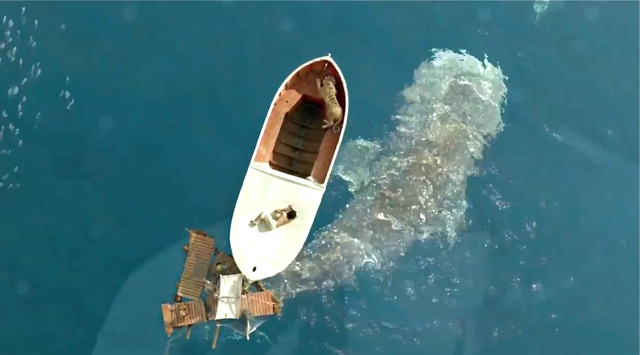
When he is 16 (Suraj Sharma), Pi’s family emigrates to Canada. They set sail on the Japanese cargo ship Tsimtsum, bringing on board the zoo animals. One stormy night, tragedy strikes. A shipwreck sends Tsimtsum to the bottom of the Pacific Ocean. Pi alone is saved as some sailors throw him overboard onto a lifeboat. Thus begins the magical journey of life in an open boat. Pi soon finds out he is not alone, for there in the boat is a hyena, a zebra, an orangutan called Orange Juice, and Richard Parker, a Bengal tiger. Soon there remain only two survivors, a 16 year-old Indian boy and a hungry tiger.

Lee demonstrates his technical and directorial prowess in this major second act of the film. He has aptly chosen to use the 3D camera. I’m not a fan of 3D, nor animal movies, but Lee’s usage of it makes what could have been an uneventful drifting at sea into an extraordinary movie experience.

What I read in the book jump out alive in magnificent visuals: the squall of flying fish, the gigantic whale shooting up from the ocean deep, the cosmic showcase of thunder and lightning, and the island overrun by meerkats. Magical realism in 3D, pure cinematic fantasy.

Lee’s style is minimalist: a life boat, a makeshift raft, a boy, a tiger, the open sea. Its simplicity exudes immense beauty; its stillness evokes quiet ruminations. This is not just a castaway, survival story. It depicts a close encounter of a soul experiencing nature and its maker. It also portrays an unlikely companionship between a boy and a tiger. Despite the loss of his family and the perils thrown at him, Pi clings to life with bare faith and the companionship he finds in Richard Parker.

The last part comes as a twist. Two employees of the ship’s insurance company interview the sole survivor of the shipwreck after Pi is rescued. Upon hearing Pi tell his ordeal, their rationale overrides any acceptance of the improbable. Here we see the thematic elements of fantasy versus reality, faith versus plausibility cleverly laid out. Like Martel’s novel, it poses a question that is open-ended, more for the viewer to resolve than for Pi to prove. A most thought-provoking end to a magical journey.

~ ~ ~ ~ Ripples

This review has been published in the Asian American Press print version, Nov. 30, 2012 issue. Online edition here. (Hint: There you’ll find Arti morphing from virtual reality into real life… take whatever is real for you.)

**

CLICK HERE to read my Book Review of Life of Pi by Yann Martel.

**

Photos posted here are stills from movie trailer.

A NOTE ABOUT MOVIE PHOTOS: These images are used according to the Fair Use guidelines for criticism, comment and educational purposes. CLICK HERE for more information. CLICK HERE to read the Report of the Ad Hoc Committee of the Society For Cinema Studies, “Fair Usage Publication of Film Stills” by Kristin Thompson.

***

Anna Karenina (2012)

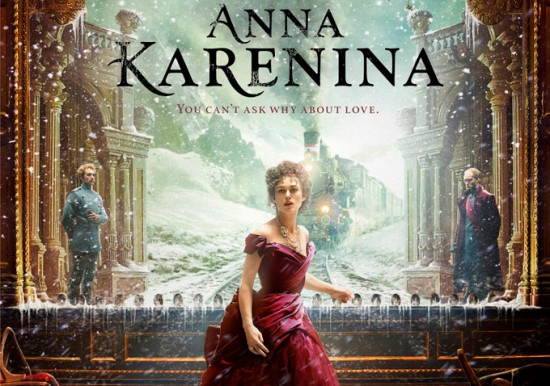
It is a good sequence, Anna Karenina read-along then the movie after. Screenwriter Tom Stoppard wrote as if his viewers already knew the story well, or have seen other film versions, for here, we are watching a highly stylized adaptation of Tolstoy’s epic novel, and it seems that it is a case of style over story.

Anna Karenina Poster

Joe Wright’s (Atonement, Pride and Prejudice) version is a bold and therefore risky direction. Instead of a realistic rendering of Tolstoy’s epic, Wright offers us a new portal into the story of Anna Karenina. All the world’s a stage, and if anything, the highly reverberated gossip of Petersburg, the adulterous affair of Anna, wife of the respected government official Alexei Karenin with Count Vronsky is aptly rendered a spectacle. Wright’s innovative concept is an interesting take, weaving his characters between the front and the backstage and into the ‘real’ set.

The idea is brilliant, the permeability of actors in and out of limelight, mingling between their own realities, and the idea that all the world’s a stage, one is both an actor and a spectator.

However, the major premise of the cinema is make-believe. It is the ‘realness’, the believability of the characters and their predicaments that arouse our empathy. That happens when we emotionally immerse into the film. As a result, we care for the characters, even though we may not identify with them.

But here while watching this film, I experience a kind of cognitive dissonance. With its setting in the theatre, at the front and backstage, it is like a kind of deconstruction if you will, for we see that these are merely actors acting, and not ‘real’. So as a viewer, I’m just like a fly on the wall, observing how a theatrical production is done. As a result, I find myself detached and aloof.

A consequence of the highly stylized gestures and movements is that they lead to overacting. And with that, believability is compromised. Now, by genre this is not a musical, so, when seeing characters walk like they’re dancing or their actions performed in unison, like the public servants rubber-stamping paper works, the effect is comical. Well, it might be the intended effect, but one that sticks out in a contrived way. The harvesting scene with the workers swinging their scythe at the same time (do they actually do that in real life, for morale?) is another example, makes me think of how natural the harvesting scenes are in Terrence Malick’s Days of Heaven.

For some reasons, far from Anna Karenina, I have Stanley Kubrick’s A Clockwork Orange in my mind as an example of a successful stylized and yet captivating film.

Nevertheless, there are many admirable elements in the film. First the sumptuous set design and costumes. The continuous camera work from scene to scene is interesting to watch. But after a while, I feel like I need a breather. Thanks to the external shots, albeit few and far between, I can get a gulp of fresh air.

And I must mention a couple of impressive scenes. First is at the beginning, the opening ball where Kitty sees Anna dancing with Vronsky. That scene is well done in its dramatic effects. I can see the actors’ inner turmoils exposed believably, and for a rare moment, Anna’s conscience at work.

Another one is the horse race. It is interesting to see a horse race in a theatrical setting, like an indoor corral. Putting the horse race in a theatre does not seem to work for me at first, but Wright has handled it effectively… Vronsky’s falling, Anna’s outburst, the shooting of the back-broken horse is one of the few captivating moments in the film.

Aaron Taylor-Johnson

As for the casting, I’m afraid it looks like there is a bit of a miscast for one. Aaron Taylor-Johnson is believable as a young John Lennon in Nowhere Boy, but here in his blond curls and starched white uniform, he looks more like a truant school boy than the military rising star Vronsky.

Keira Knightly’s poise and costume give an apt portrayal of Anna. But sometimes her facial expressions make her look like a rebellious teenager, fighting house rules and ennui.

The one role I enjoy most is Matthew MacFadyen’s Oblonsky. My opinion might differ with many. I think he is a much more convincing Oblonsky here than Mr. Darcy in Pride and Prejudice (2005), another Wright’s production. Jude Law’s character is also well-portrayed as Anna’s restrained husband Karenin the government bureaucrat.

Good to see two of Downton Abbey’s actors in the film, Michelle Dockery (Mary Crawley) as Princess Myagkaya and for a brief minute Thomas Howes (Footman William) as Yashvin.

While the love affair between Anna and Vronsky leaves me quite detached, I do see love in others. I see it in Levin’s (Domhnall Gleeson) quiet yearning for Kitty (Alicia Vikander). I see it too in Kitty’s selfless caring for Levin’s ailing brother Nikolai (David Wilmot), and at the end I see it in Anna’s son Serhoza’s (Oskar McNamara) endearing concern for his toddler half-sister, and I see it in his father Karenin’s slight contented smile looking at his son care for Anna’s child with Vronsky.

And with that scene the film ends. All in all, the production is a brave new look at an old story. It can well lead to more readers trying to discover all the left-out conversations and story lines. And so be it, a worthy attempt to turn viewers back to the book.

~ ~ ~ Ripples

***

CLICK HERE to read my posts of Anna Karenina read-along.

Anna Karenina Read-Along Parts 5 – 8… And The Curtain Falls

Funny, writing a post on this last part to wrap up our Read-Along is much harder than I first thought. Where do I begin?

Here are just some thoughts.

Tolstoy the Psychoanalyst… and More

First, this is not just one story but several, and not just appreciating a 19th C. writer in distant Russia, but this is Tolstoy the master storyteller. I’m amazed at his craft. What a sharp observer of human nature, the incisive psychoanalyst decades before Freud, not only piercing into the minds of women and of men, but our canine pals as well. Tolstoy the dog whisperer. Why, the hunting scene in Part Six is a unique exploration into the cognitive dissonance of Levin’s four-legged hunting partner Laska. And Tolstoy has amusingly shown us why dogs are man’s best friend. They know their master’s shortcomings, yet still remain faithful.

Tolstoy the Late-Night Show Host

And then there’s the humor. I was surprised from the start that Tolstoy’s style is so light and sometimes even deadpan. The best quotes comes from the minor characters. Here’s one from Yashvin, Vronsky’s friend from the military, condensing the 800 plus pages in a nutshell:

 ‘A  wife’s a worry, a non-wife’s even worse,’ thought Yashvin… (p. 544)

Tolstoy can make one superb late-night show host. Listen to this:

A man can spend several hours sitting cross-legged in the same position if he knows that nothing prevents him from changing it; but if he knows that he has to sit with his legs crossed like that, he will get cramps… (p. 528)

That was what Vronsky feels with regard to society. And we know Vronsky gets more than just leg cramps.

Tolstoy the humorist? Or realist? Even the most casual remarks could bring me a smile of agreement. Like here, responding to Vronsky’s urge to go out for a walk, Oblonsky has aptly voiced out my sentiment:

 ‘If only it was possible to stay lying down and still go,’ Oblonsky answered, stretching. ‘It’s wonderful to be lying down.’ (p. 589)

All the World’s a Stage

Mariinsky Theatre, preeminent venue for music and ballet in 19th C. Russia

And then there are the spectacles. Society’s a stage where people are actors and spectators all at the same time. Tolstoy throws in many scenes reminding us that. When Anna and Vronsky come back to Petersburg, they appear separately in public at the theatre, something that Vronsky insists and Anna is indignant about. Vronsky seems to favour the spectator role, searching out people through his opera-glasses. In contrast, Anna would rather be the actor, bravely ignoring reverberations, be on centre stage. From his glasses, Vronsky saw Anna’s head, “proud, strikingly beautiful, and smiling in its frame of lace.” But now that he has her the mystery vanishes. Her beauty, though still entices, begins to ‘offend’ (p. 546).

Anna, oh Anna…

If Anna could have detached more and emoted less… Of course, she has never expected how fickle love can be, or that passion is so short-lived or changeable due to varying circumstances, or that too much of it could smother and delude. Ironically, she does look before she leaps. If only she has used her rationale for better judgement rather than calculating when the middle between two train cars will come, all for satisfying her own delusional revenge on Vronksy.

Further, which should have been no surprise to her, that marriage has ties that linger even after intimacy ends. Anna does not choose Vronsky over her husband, but Vronsky over her son, the two loves of her life. She has chosen romance over motherhood. If I’m being a tad bit unsympathetic, maybe that’s Tolstoy’s doing.

What’s surprising to me is that Tolstoy is quite matter-of-fact about Anna’s predicament. His description of Anna’s tragic demise is just one paragraph, and after that, no more mention of her. Following that comes Part 8, wrapping up the whole book with the limelight on Levin. Quite puzzling really since the book is her namesake.

Levin … Tolstoy?

At the end, is Tolstoy offering a contrast to Anna’s tragic end by detailing Levin’s spiritual awakening? The master storyteller certainly doesn’t shy away from issues which would be considered sensitive subjects and even taboos today, like God, religion, spirituality and morality. So in the book entitled Anna Karenina, Levin has the last word. Umm… which leads to a speculation that Tolstoy might have ‘an agenda’ behind his writing. Is he proselytizing?

More and more these days, I’m seeing people getting edgy about others presenting the case for faith, especially taking offence when it comes to Christianity. Nobody would squirm a bit if suddenly one day you declare you’ve become a Zoroastrian. Mind you, Tolstoy’s handling of Levin’s conversion is reasonably and philosophically grounded, albeit that sudden spark of epiphany is too overwhelming and spontaneous to be rationalized.

And all is within context of the story. Levin, having exceedingly gratified by marital bliss, by the pure love of an angelic woman in Kitty, and witnessed the miracle of life in seeing the birth of his son, has opened unreservedly his heart and soul towards God. We can read it as it is, a convincing turn for a character who has consistently been authentic and genuine in his search for meaning.

If we take offence to this ending, suspecting a hidden agenda from Tolstoy, then we could well shed similar sentiments towards other writers whose faith, convictions, or philosophical viewpoints are presented overtly or seeped through silently in their works. Would we be equally alarmed or offended when we read, for example, Thomas Hardy with his naturalism, Camus and Sartre their existentialism, Graham Greene his Catholicism, Isaac Bashevis Singer his Judaism, Somerset Maugham his Buddhism, and for that matter, Salman Rushdie his atheism? There’s no neutral writing, is there? Every writer breathes into his writing that which stems from his or her own personal world view and hopefully authentic self.

Funny too how Tolstoy in his time could so freely describe Levin’s spiritual awakening and explicitly write about the argumentations for the Christian faith in a literary work. Just makes me think that there might be more freedom of expression in days past than in today’s society.

***

So here we are, at the end of another Read-Along. Thanks to those who has participated in reading these 800 plus pages with me. To all who have stopped by the pond and thrown in a pebble or two, I’ve appreciated the ripples. To those who are just curious onlookers, your visits mean no less. It’s been a fun ride. Hopefully we’ll do another one in 2013. Will you join us then?

And now, to the movie…

***

Do go and visit these other Read-Along participants and join in the discussion there:

Janell of An Everyday Life

Bellezza of Dolce Belleza 

Care’s Online Book Club

Stefanie of So Many Books

***

CLICK HERE to read my first post on Anna Karenina Read-Along: Parts 1 – 4

Photo of Mariinsky Theatre from russiantourguide.com

Midnight’s Children Film Adaptation

Midnight’s Children is Calgary International Film Festival’s Red Carpet Opening Gala presentation. Directed by Indo-Canadian, Oscar nominated Deepa Mehta (Water, 2005) in close collaboration with author Salman Rushdie, the film’s screening on September 20 marked its Western Canadian premiere.

Midnight’s Children won the Booker Prize in 1981, and the Best of the Booker in 2008. While the novel is magic realism in genre, the film adaptation is a realistic, almost exact transposition of the novel into screen. Author Salman Rushdie asserts his authority in condensing 533 pages into 148 minutes of screen time, offering us a concise rendition of an epic story spanning four generations. “It was an exercise in discovering the essence of the book,” Rushdie said in an interview on CBC radio.

The audience has much to gain not only from Rushdie adapting his own work, but also from his voiceover narration. This is especially beneficial for those who have not read the novel. Here, the narrator is speaking directly to the viewers, and not like the book narrator Saleem telling his story to Padma as the reader eavesdrops. Rushdie’s narration strings together time, places, events, emotions and nuances into coherence.

Not only is the condensing of an epic a daunting task, the actual production faced numerous hurdles in the process. Director Deepa Mehta had to shoot the film in Sri Lanka under another title to avoid protests, but even there still had to deal with obstacles including Iran’s pressure to stop the filming.

Mehta has proficiently brought the story to screen with relatively fast pacing, engaging us with a kaleidoscope of sights and sounds as we zip past sixty years of India’s history. From Kashmir in 1917 to Bombay 1977, it brings us through the ending of British rule, the birth of a nation, the Partition of India and Pakistan, later the war of independence of Bangladesh, and finally, the Emergency under the government of Indira Gandhi.

Amidst the torrents of history emerges the main character Saleem Sinai. The film begins with his grandfather Dr. Aziz (Rajat Kapoor) in Kashmir, examining his patient and future wife Naseem (Shabana Azmi) through a perforated sheet. Humour adds to the enjoyment of seeing the scene visualized.

Then comes the next generation of Saleem’s parents Amina (Shahana Goshwami) and her husband Ahmed Sinai (Ronit Roy), moving to Bombay, giving birth to a baby boy at the stroke of midnight, the dawn of India’s independence on August 14, 1947. But baby Saleem is a changeling with another baby born the same time, Shiva, by the hands of Mary (Seema Biswas) the nurse.

Young Saleem is played by the charming Darsheel Safary. He has an appealing and affable screen presence, brightening up the film instantly when his story comes into focus. Saleem discovers that he has the special power to summon all midnight children to appear in his mind, children born at the stroke of India’s birth.

It is interesting to see how these Midnight’s Children Conferences convene, and watch the confrontations intensify between Saleem and his rival changeling, Shiva. If there’s any line that sticks out from the movie, it is this: Wars are often fought between friends. These Conferences only mirror the adult world of governments and nations, as we see conflicts and wars unfold chronologically with Saleem being tossed in the torrents of it all.

Music adds an interesting touch to the film. British colonial culture is reflected by Wee Willie Winkie’s (Samrat Chakrabarti) busking tunes in Methwold’s Estate as well as the hymn singing in Saleem’s boys school. We also see the change of political climate with Saleem’s sister Jamina (Soha Ali Khan) humming Indian melodies with her sweet young voice at home. After the family moves to Pakistan, she later grows up to be a popular singer supported by the Pakistani leader, as Saleem warns her, something doesn’t smell right. Throughout, music in the film enriches the storytelling, adding more colours to the cultural canvas.

After a forced surgery to correct his snotnose, the now adult Saleem (Satya Bhabha) gains a special power of smell, and is glad to welcome the smell of love. And love it is that leads him later to marry Parvati, another midnight’s child, abandoned by Shiva and carrying his son. It is love that prompts Saleem to raise Shiva’s child as his own. He knows it full well as he himself is not his parents’ son by birth. In turn, his reunion with his nanny Mary in a pickle factory later in Bombay ends with the moving moment when he acknowledges her role in raising him, addressing her as mother.

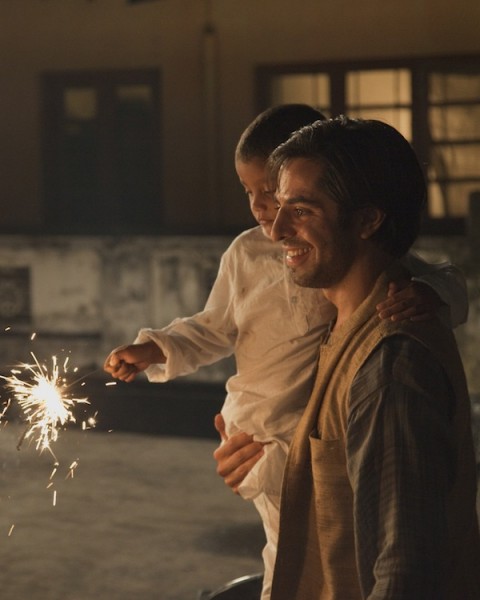
The character of Saleem carries the story affectively throughout, culminating in the final moment of love, for a son who is not his own, for a nation that has brought him pain and hardship. The last scene is another birthday of Saleem’s, thus India’s. Against the celebrative fireworks in the night sky, Saleem holds his son, a second generation of magical children, and looks out towards a brighter future, with the love that is essential to fuel the furnace of hope.

Indeed, the tone of the film is less acerbic and irreverent than the book, the two spanning a gap of 30 years. The milder cinematic version nevertheless is no less engrossing. With the realization of characters and emotions plainly in sight, it is effective in its conveyance of pathos and sentiments.

The shortfalls of a 148 minute cinematic adaptation from a long written work could be expected. The mega canvas of countless lives, deaths, and historical events in the book may appear cursory in the film and sometimes quickly wrapped up by the narration instead of being dealt with in greater depth. Nevertheless, all in all, the cinematic offering is entertaining and engaging, its characterization authentic, making it an enjoyable rendition of Rushdie’s literary work.

~ ~ ~ Ripples

***

CLICK HERE to read Midnight’s Children’s book review posts on Ripple Effects.

A NOTE ABOUT MOVIE PHOTOS: These images are used according to the Fair Use guidelines for criticism, comment and educational purposes. CLICK HERE for more information.

***