The Colours of Fall

About this time last year, I had a post entitled “Golden Fall”. Yes, the title says it all. We don’t have much reds in our fall, no maples, but we have foliage like gold.

Here are some photos I took after returning from Toronto a few days ago, just in time to witness the changing of the seasons and catch the last remaining songbirds before they fly south. This is ‘my Pond’, home at the foothills of the Rocky Mountains.

DSC_0563.jpg

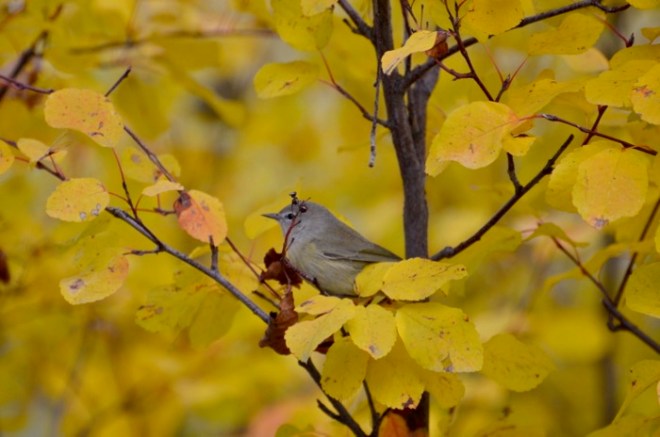
An Orange-crowned Warbler in the golden foliage. It’s goodbye until next Spring, my avian friend:

DSC_0665.jpg

Here’s another one. Olive against red.

DSC_0690.jpg

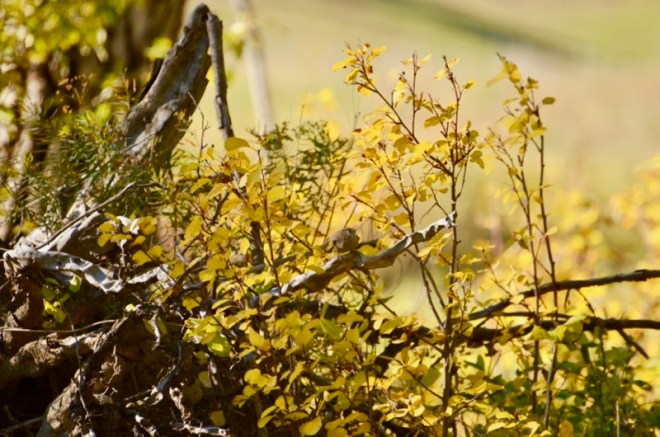
A ‘Where’s Waldo’ puzzle for you:

DSC_0686.jpg

The White-breasted Nuthatch against a watercolour backdrop:

DSC_0647 (1).jpg

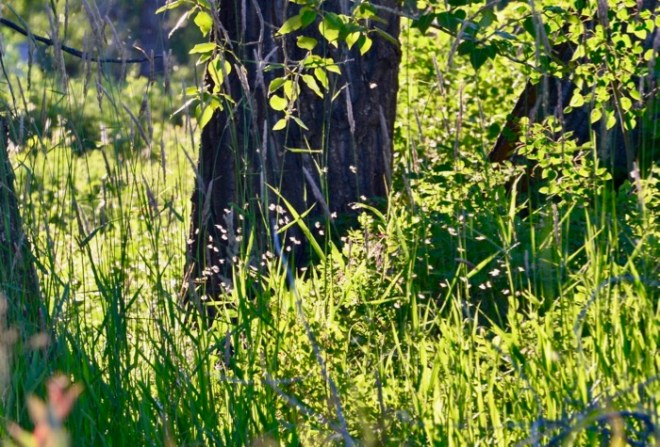
Two-frame capture of a shy subject. See it in both?

DSC_0545 (1).jpg

DSC_0546 (1).jpg

Home is where you know every path and turn, where to shoot with the sun at your back for the best light, and where to look for your friends whatever the season, to wave goodbye as they leave, and then welcome them back for another new lease.

***

Let ‘Things to Come’ be a Cooling Respite

July’s gone, but we’ll always have Paris.

There are many words I can use to describe the Paris born, veteran (here’s one of them) French actress Isabelle Huppert. Prolific, versatile, and age-defying. In 2016, two of her works came to prominence in the awards circuit, two features that show her in distinctly different roles that won her acclaims across the Atlantic. Playing a vigilant woman who schemingly fight back a rapist in her neighborhood in Elle, Huppert garnered a Best Actress Golden Globe and an Oscar nomination.

Things to Come

The other feature is Things to Come. Huppert is Nathalie Chazeaux, a philosophy professor, a published academic writer and editor, a mother of two almost grown children, a wife, a daughter, and a woman at the crossroads in her life.

On the career and academic front, Nathalie’s just been told by her publisher that her textbook would no longer be needed. On the home front, her husband of 25 years, Heinz (André Macron), has just confessed to her that he’s seeing another woman and will be leaving Nathalie to live with his younger love. Even though on good terms with their parents, her two children have grown enough to move away from home. As a daughter, Nathalie has to deal with a dementia-afflicted mother (Edith Scob) who calls her cell phone even while she’s teaching, delusional and threatening suicide. What is Nathalie to do?

Here, I must mention another crucial figure in the production, and that’s director Mia Hansen-Løve, who won Best Director with this feature at the Berlin International Film Festival in 2016. At eighteen, Hansen-Løve was cast by French director Olivier Assayas and later starred in another of his works. Partnered with him for a while, she’d chosen her own path, studying philosophy, writing for the prestigious French film magazine Cahiers Du Cinema, and later, directing.

Daughter of two philosophy professors, Hansen-Løve’s preoccupation with intellectual discourse is apparent in Things to ComeIn an interview, she’d said, “… for me, cinema is nothing but another way to practice philosophy… cinema is a search for wisdom, a search for good and for beauty, like philosophy could have been a search for my parents.” The intellectual exploration of what’s good and Utopian predominates in Things to Come. The film is worth a second, or third viewing just to capture the dialogues.

While she may be tossed like a floating weed in the torrents of life, Nathalie enjoys the fruit of her labor in her former star pupil Fabien (Roman Kolinka), now a writer and activist. However, as she’d influenced Fabien in his pursuit of philosophy and writing, he’d also chosen his own path by living with a few anarchists in a remote cabin in the French countryside. His outlook diverges from hers and which she can’t agree, ironically, that’s the reward of her teaching: training one to think for oneself and to choose one’s own path independently.

Upon his invitation, Nathalie had spent a few days there, an idyllic ,rural setting for her to recuperate from a life unhinged. She’s got her mother’s cat with her, Pandora, a cat that’s not used to the wild but takes off the instant Nathalie takes her out of the cabin. Lost for hours but Pandora finally finds her way back to the country abode in the middle of the night. ‘Instinct’, Fabien says. And that just might be what Nathalie needs to hang on to at this moment of her life.

Surely, Things to Come is a ‘thinking’ film, but viewers will also enjoy the nuanced performance of the cast, and what the camera reveals in the form of natural beauty and serenity for one to search things out. What more, Hansen-Løve lets us see both the larger scale of a flaw-ridden society and the trivial foibles in the interactions between Nathalie and Heinz.

Female viewers would likely find affiliation with Huppert’s role of an urban, professional woman who has to juggle many hats to fulfill her duties. Nathalie’s search for direction at the crossroads may not necessarily lead to obvious answers, but she manages to find comfort and joy in the birth of her grandchild, an endearing scene to end the film.

More importantly, Nathalie seems to have carved out a quiet solitude. an independence to mull on the unfathomable in life. Still searching, but in the meantime, she seems to have found a respite, a new solace to face what things may come.


~ ~ ~ ~ Ripples 


***

‘Cleo from 5 to 7’: A Film for Paris in July

Summertime… and the viewing is nostalgic. On a lazy, hazy summer afternoon, what better way to spend your time than to catch up on classic films that you’d missed through the years, or, rewatch them. Sure, a glass of pink lemonade and some chocolate-dipped madeleines would add to the enjoyment.

Here’s a wonderful film by the venerable Belgium born French director Agnès Varda, who turned 90 on May 30 this year. Just exactly what she was doing a few weeks before her 90th birthday?

On May 12, Varda joined Cate Blanchett in leading 82 female industry figures to walk up the stairs on the red carpet at the Cannes Film Festival, a silent protest symbolizing the challenges women face in climbing the industry ladder. Blanchett gave a speech in English, Varda in French.

Cleo from 5 to 7 (Cléo de 5 à 7) is a 1962 film by Varda, a Cannes Palme d’Or nominee the next year. The story takes place on one single day in the life of a popular recording singer Cleo (as in Cleopatra) who loves everything beautiful looking. But early in the day she receives all sorts of bad omens about her health. Her zest for life fizzles through the day as she would be calling her doctor to find out the result of the medical test she’d taken a couple days ago.

Cleo from 5 to 7.jpg

We follow Cleo on the longest day in 1962, yes, that’s the first day of summer, which could have brought her vitality and joy. How does the fear of illness and mortality affect the beauty-seeking and fun-loving Cleo? It totally changes her outlook. Instead of being cooped up in her apartment with musicians rehearsing her songs, she steps out into the streets of Paris to escape the gloomy sense of despair.

Don’t worry, this is not Sarte or Camus. Cleo is just a gal seeking to be loved, and for the first time in her life, fearing for her own mortality. Varda takes us along the streets of 1962 Paris, and offers us naturalistic scenes of cafes and roadside buskers, and leads us into an art studio as Cleo looks for her friend who works as a model for sculptors.

Finally, she’s alone in a park, the serene, meditative milieu is the ideal setting for her to meet Antoine. The encounter is the magic she needs. The rest you ought to see it for yourself. Varda’s pace is leisurely, her viewpoint insightful, and the ending is satisfying. Maybe by now, Cleo learns the difference between beautiful-looking and beauty.

The original music is soothing and cooling for a summer day, composed by Michel Legrand (who is the piano player in the movie). Legrand is a three times Oscar winning French film composer. Which three times? Yentl (1983), Summer of ’42 (1971), The Thomas Crown Affair (1968).

As I said, summer is the best time for nostalgic viewing.


~ ~ ~ ~ Ripples

***

Paris in July is hosted by Tamara of Thyme for Tea, an annual summer blogging event.

Paris in July 18

***


Summertime… and the feeding is easy

No matter where you stand in the food chain, in the summer woods, everywhere you turn is a ready picnic, nature’s smorgasbord. Just look at all these flies:

Appetizers.jpg

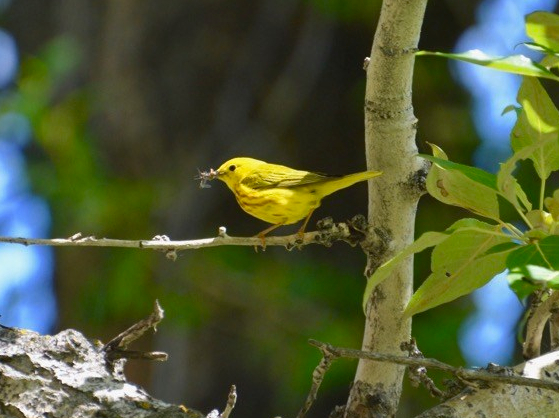
Yummy appetizers for the Yellow Warbler:

The Hungry Warbler

Or this succulent fruit. I’m sure the bee knows he’s an item on the smorgasbord too.

to eat or not to eat.jpg

But for the moment, indulge:

bee.jpg

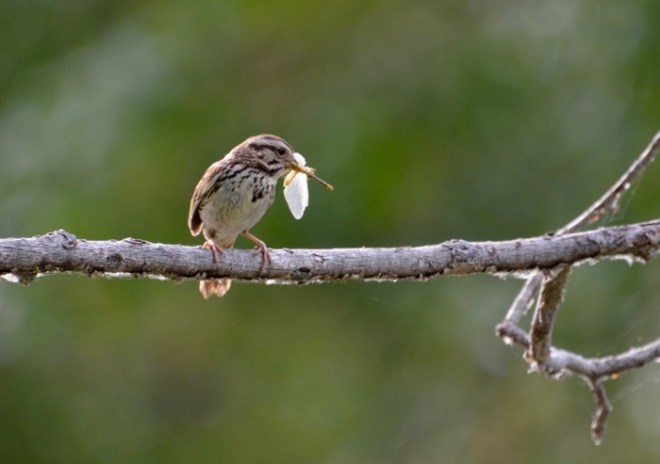
Not so lucky for this dragonfly, securely locked in the beaks of a Song Sparrow:

Song Sparrow lunch.jpg

Robins are clean eaters, they swallow berries whole:

Robin

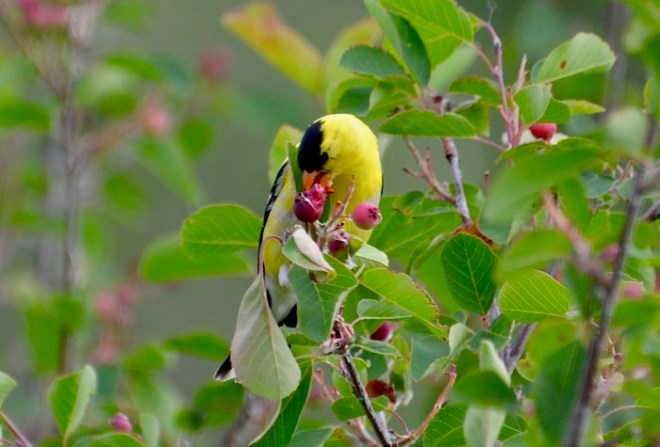
But not the Goldfinch:

American Goldfinch messy eater.jpg

Eat to your heart’s content, no need for etiquette here:

Messy eater.jpg

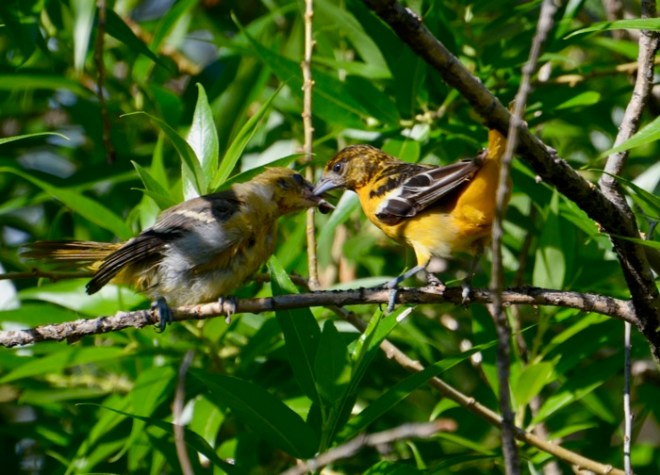
This baby Oriole in its high chair waiting for lunch. Be patient, junior, mommy’s coming:

Feeding 1.jpg

Feeding 2

Feeding 3.jpg

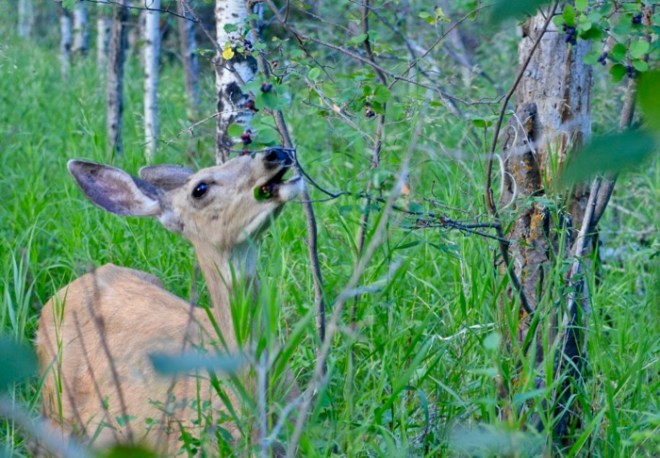
Take it easy, my Deer friend. I wouldn’t want to do the Heimlich Maneuver on you:

Deer friend.jpg

***

What’s your summer smorgasbord like?

Middlemarch: You be the Screenwriter

It’s a wrap. Here’s my finale for our Middlemarch in May Read-Along.

You may be a print purist, don’t want to see a movie made. Just take this as an imaginary writing exercise then:

You’re offered the job of writing a screenplay, the tall order of turning Eliot’s 800-page novel into a movie. The task at hand is to choose from the numerous storylines and just focus on a few that your feature will cover.

The following are some of the main storylines and thematic matters in Eliot’s Middlemarch. This list is just off the top of my head, feel free to add in. Which ones would you select and elaborate?

**

Sisterhood between Dorothea and Celia

Dorothea’s marriage to Casaubon

Celia and Sir James Chettam

Mr. Brooke’s political involvement

Politics, power and influence in Middlemarch

The mysterious cousin of Casaubon: Will Ladislaw’s backstory

Relationship between Casaubon and Ladislaw

Newcomer Lydgate: the young, aspiring doctor

Old vs. New: The introduction of new ideas and methods and their reception or rejection in Middlemarch

Lydgate’s character: idealism vs. practice

The Vincy family: Mr & Mrs., Fred and Rosamund

The Caleb Garth family: Mr. & Mrs., Mary Garth

Fred Vincy and Mary Garth

Fred’s lifestyle, his love and dreams, and his change

Rosamund’s lifestyle, her love and dreams, and her change (or, has she?)

Featherstone: The subjective construction of will and estate

Mary Garth’s moral dilemma in dealing with Featherstone’s order regarding his will

Farebrother and family: Farebrother’s role in joining Fred and Mary despite his secret love for her.

Raffles the disruptor of Bulstrode’s life: the wages of sins, or, the consequences of actions that last beyond the statute of limitations

Ladislaw’s true identity and Bulstrode’s dark history

Raffles’ falling ill and Bulstrode taking him in for fear of reverberation, hence leading to the suspected ‘wrongful death’ incident and the presumed guilty of bribery between Bulstrode and Lydgate.

Will Ladislaw being victim of class discrimination and racial prejudice in the provincial town of Middlemarch

Family finance, debts and gambling endangering a fragile marriage between Fred and Rosamund

How to choose a mate, keys to a happy marriage

Difference between romance and love, looking at three pairs of relationships: Lydgate and Rosamund, Fred and Mary, Dorothea and Will

And for that matter, how about intellectualism vs. passion, the marriage of Dorothea and Casaubon

Choices of actions of the characters based on values (or lack of), principles, and plain gut

Poverty, welfare, and social actions, responsibilities of the rich

Male/Female relationships in marriage and society, and how Dorothea both fulfills prescribed duties and overrides expectations.

Finally, probably the most important element in a movie, the emotional impact it elicits in your viewers: Which of the above storylines will you focus on to bring out such effects?

We all love the Finale of the book. But why does Eliot spend so few pages in describing the love relations between Dorothea and Will? They are seldom seen together, and in the rare occasions that we do see them, they’re caught in awkward and embarrassing situations. Would you give them more screen time together in a positive light?

I think one reason Eliot doesn’t elaborate on their courtship could be because she doesn’t want to mislead her readers that this is a ‘romance novel’. Rather, she brings out a kind of sublime love between the two, particularly on the part of Dorothea, a noble love that motivates her to give up her wealth, position and the familiarity of Middlemarch. These in Dorothea’s views are but shackles restraining her to do what she wants and to love freely.

Finally, any casting suggestions?

**

A huge thank-you to all participants and spectators for your input, comments and posts. It’s been a pleasurable ride, even though the length and numerous storylines and characters may have bogged us down occasionally. I appreciate the pebbles thrown into the Pond to make all those ripples.

Enjoy your summer!


Spring Baby

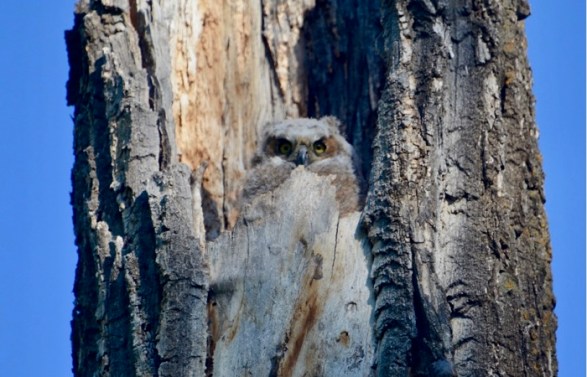
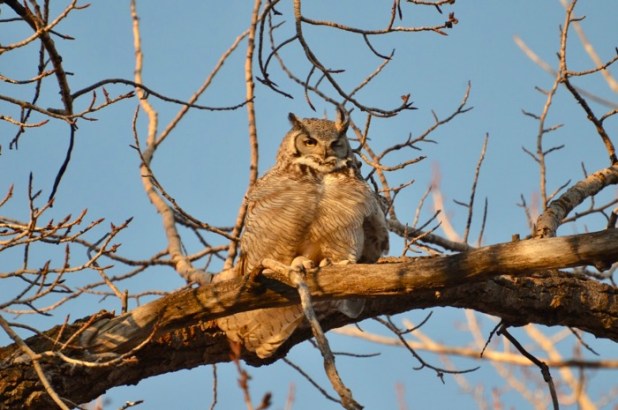
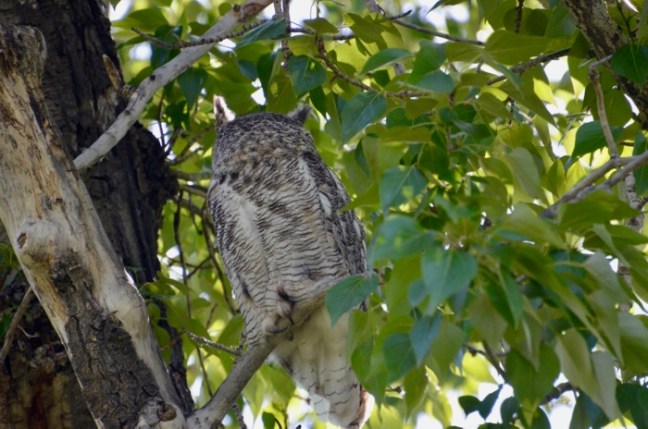
They’ve come back, the Great Horned Owl couple.  Their perennial arrival to nest is as predictable as the grass turning green and the leaves bursting out from the bare branches. They even check into the same abode.

After a long wait since April, I finally got to see the new addition last week. This time, an only child.

Here’s baby peeking out to feast on the sights and sounds of spring:

Baby in nest

A close-up of this spring baby:

Baby close-up.jpg

Mom or Dad is always watching close by, here basking in the evening sun:

At dusk

Yesterday, it’s baby’s day out. Where’s Waldo?

Where's Waldo?.jpg

Look up, there he is, at the top of the tree trunk:

Camouflage.jpg

Trying out wings:

Wing.jpg

and showing off a downy coat:

Downy.jpg

As always, Mom is nearby, ever watchful:

Keeping watch.jpg

Posing for all the nature paparazzi below, here it is, the feat of turning your head 180º:

head turned.jpg

Enjoy while you can, soon you’ll be an empty nester, too soon.


***

Middlemarch Book I: What are siblings for?

Dorothea and Celia Brooke remind me of the Dashwood sisters Elinor and MariAnne. Like MaryAnne, Celia, being the younger, holds much respect and love for her older sister. Unlike the sisters in Austen’s novel however, here in Middlemarch so far, I just wonder who is Sense and who is Sensibility.

What are siblings for if not to act as a sounding board to test one’s opinion? This is a scene fit for a prime time TV comedy. Celia, just learned that Mr. Casaubon is the only guest coming to dinner––the setup to that special dinner she is totally oblivious––thus allowing her to speak her mind freely to Dorothea:

_______

“I hope there is some one else. Then I shall not hear him eat his soup so.”
“What is there remarkable about his soup-eating?”
“Really, Dodo, can’t you hear how he scrapes his spoon? And he always blinks before he speaks. I don’t know whether Locke blinked, but I’m sure I am sorry for those who sat opposite to him if he did.”
“Celia,” said Dorothea, with emphatic gravity, “pray don’t make any more observations of that kind.”
“Why not? They are quite true,” returned Celia, who had her reasons for persevering, though she was beginning to be a little afraid.
“Many things are true which only the commonest minds observe.”
“Then I think the commonest minds must be rather useful. I think it is a pity Mr. Casaubon’s mother had not a commoner mind: she might have taught him better.” Celia was inwardly frightened, and ready to run away, now she had hurled this light javelin.

_______

What follows of course is the bombshell that shatters the sounding board for any sense or sensibility.

Sibling Waxwings
I’ll just throw in this pair of Waxwings, they look like they’re siblings.


Another pair of siblings that makes a lively scene is Fred Vincy and his sister Rosamund. Talking about using the word “superior” to denote certain young men, Fred says:

_______

“Oh, there are so many superior teas and sugars now. Superior is getting to be shopkeepers’ slang.”
“Are you beginning to dislike slang, then?” said Rosamond, with mild gravity.
“Only the wrong sort. All choice of words is slang. It marks a class.”
“There is correct English: that is not slang.”
“I beg your pardon: correct English is the slang of prigs who write history and essays. And the strongest slang of all is the slang of poets.”
“You will say anything, Fred, to gain your point.”
“Well, tell me whether it is slang or poetry to call an ox a leg-plaiter.”
“Of course you can call it poetry if you like.”
“Aha, Miss Rosy, you don’t know Homer from slang. I shall invent a new game; I shall write bits of slang and poetry on slips, and give them to you to separate.”
“Dear me, how amusing it is to hear young people talk!” said Mrs. Vincy, with cheerful admiration.

_______

What are siblings for if not to act as target of javelin or indulgence for a doting mother.

How’s your reading coming along?

________

Some Middlemarch posts from our Read-Along participants:

Dolce Bellezza

Gladsome Lights 


‘The Rider’ is Poetry on Screen

“The Rider” opens this weekend in selective cities. If it’s screening in your area, don’t miss it.

The Rider

What is a cowboy to do if he cannot live the cowboy life again? Too remote? Substitute ‘cowboy’ with any other activities you love to do, or a role that defines you. Take that away, and what do you have left?

The film focuses on the struggles of a rodeo star and expert horse trainer Brady Blackburn as he rebuilds his life and identity after a severe head injury. Upon the prognosis of his doctor, Brady should never go back to riding and rodeo again, for another injury would be fatal.

“The Rider” is an American feature, unique in its subject matter while its director is an unlikely candidate to share the insight. Chloé Zhao was born in Beijing, had studied in London, then Massachusetts and New York. “The Rider” is her second feature. In her short directorial career, she has gone to Cannes twice, nominated in 2015 for the Caméra d’Or (“Golden Camera”), Cannes’ award for the best first feature film, and winning The CICAE Art Cinema Award in 2017 with “The Rider”. That is, among other international accolades. Zhao is an exemplar of a global citizen in filmmaking.

Chloé Zhao

The actors for “The Rider” exude authenticity, for they are actual cowboys and their family, all playing themselves. Brady Jandreau takes the role of Brady Blackburn, reflecting his real-life persona, a cowboy who is much admired and respected in the rodeo community. His father Tim and sister Lily form the Blackburn family in the film. Zhao’s directorial skills shine forth as she leads the non-actors in front of the camera, capturing them in their natural speech and actions, in particular, offering viewers realistically the dexterity involved in the wrangling work. But the film goes much deeper than the actions.

Recovering from the near-fatal injury pits Brady into a precarious existence and conflicting relationship with his father Wayne (Tim Jandreau). As a tough cowboy himself, Wayne had all along brought Brady up to be resilient and competitive, but now father had to dissuade son from the risky pursuit of bronco riding and rodeo activities. Nursing a wounded body and a tormented mind, Brady has to deal with the painful task of redefining himself. Temporarily working in a supermarket and wearing a store uniform makes Brady a displaced person, a persona out of meaningful context, both to himself and to those who recognize him as they come into the store.

While there are tense undercurrents with his dad, Brady cherishes the intimate bond with his sister Lily (Lily Jandreau), who expresses herself from her own peculiar, internal world. Kudos to Zhao for casting the real-life brother and sister in the film, they need not be experienced actors to conjure up some genuine, moving scenes.

Much of the film’s effectiveness goes to the inspiring cinematography, exposing quietly Brady’s tormented soul. The opening sequence sets the stage right away with riveting close-ups of a horse and its breathing. As the camera turns from beast to man, we see the extent of the injury Brady sustains as he gets out of bed and follows the routine needed to care for his own body, striving to return to a past life and regain some sense of normalcy.

In other sections of the film, the camera pans the vast landscape of the South Dakotan plains with a tiny figure that is Brady walking or riding through. “The Rider” is visual poetry on a subject that is seldom explored, and cinematographer Joshua James Richards is most effective in transposing Brady’s internal quest lyrically on screen: “A horse’s purpose is to run in the prairies; a cowboy’s is to ride.”

Brady’s good friend Lane Scott (Lane Scott) is a painful reminder of the risks a cowboy takes. Paralyzed and brain damaged after a fall in a rodeo event, Scott now communicates barely by spelling out words one letter at a time signing with his fingers. Poignantly, Zhao depicts Brady’s every visit with Lane in the hospital as an encounter of love and hope without sentimentality.

Zhao is nuanced and eloquent in creating impressionistic scenes. And when horse and man are juxtaposed in such intimacy, the parallel is striking. As Brady puts it, when a horse is badly hurt it has to be put down, that is the humane thing to do; when a cowboy is badly hurt, he has to continue to live, for that is what humans are supposed to do. As we come to the turning point of the film towards the end, the presence of family love and support appear to be the key to moving on.

A rare gem of a film. Watch it with a quiet heart.

~ ~ ~ ~ Ripples


***

An Easter Sunday Poem

Warbler on tree

The Whole Story

Behind that stone before
it was rolled away
a corpse lay.
There lay all I deplore:
fear, truculence – much more
that to any other I need not say.
But behind that stone I must be sure
of deadness, to allay
self-doubt i.e. so nearly to ignore
the love and sacrifice for our
release; to nearly stray
back into the old
pursuit of virtue.

Once it is clear
it was a corpse that day,
then, then, we know the glory
of the clean place, the floor
of rock, those linens, know the hour
of His inexplicable “Peace;” the pour
— after He went away —
of wonder, readiness, simplicity,
given.

                             –– Margaret Avison


***


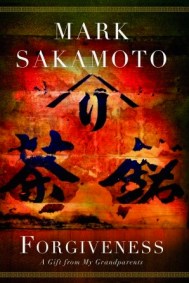
Canada Reads 2018: Book Review of ‘Forgiveness’ by Mark Sakamoto

Mark Sakamoto’s family memoir was first published in 2014. The book reemerges now due to the Canada Reads 2018 event. The annual battle of the books is CBC’s reading campaign. Five Canadian media and entertainment celebs will defend one of the five shortlisted books in a national broadcast March 26-29. The panelists will vote down one book each day to arrive at the winner. Audience can tune in on the debates via radio, TV and live stream online.

Mark Sakamoto is a lawyer by training and has enjoyed a varied career. In Forgiveness, he writes about his grandparents’ real-life experiences, two contrasting, traumatic WWII accounts. The subtitle of the book is telling, Forgiveness: A Gift from my Grandparents.

Forgiveness (1)Mark Sakamoto’s maternal grandfather Ralph MacLean is from the Magdalen Islands in the east  coast of Canada. In 1940, he enlisted with the army voluntarily together with his friend. After a few months’ training they were sent overseas to Hong Kong, oblivious to the perils into which they were driven. With the British already retreating a hopeless post, MacLean’s garrison didn’t have a chance to defend the then British Colony. In a few short weeks after their arrival, all two thousand or so Canadian soldiers were either dead or turned POWs forced to live in sub-human, horrific conditions under their Japanese captors.

… the fate of 819 men was sealed. They would never return home. The remaining 1,155 survivors would be forgiven if they sometimes felt they were the unlucky ones.

Later, MacLean was shipped to Japan to work for the Japanese war effort, from POW to slave laborer. That he survived at all was a miracle.

Cut to the other side of the world in Canada. Mark’s paternal grandparents Mitsue and Hideo Sakamoto were born in British Columbia and lived in a fishing community. Grandma Mitsue’s father, together with thousands of other Japanese Canadians, had their own boats and were doing well as fishermen in a closed-knit community.

During the time Ralph MacLean was barely surviving as a POW in Japan, the Sakamotos, being Japanese Canadians, went through their own battle in a land they called home. Their families were interned and sent to rural Alberta as forced farm laborers. The family fishing boat, and all their possessions were confiscated. Together with thousands of Japanese Canadians–many Canadian born–Mitsue, Hideo and everyone in their extended families, young and old, were put on a train barely suited for human passengers, under the watchful eyes of policemen with rifles, and transported to Lethbridge, Alberta. There Mitsue and Hideo were separated with their parents as they were sent to different farms to work as laborers, living in shacks of wood planks and dirt floor.

After the war, Ralph MacLean came back from Japan and settled in Calgary, Alberta. Mitsue’s families knew they had no home to return to in B.C. after receiving a compensation cheque of $25.65 from the Canadian government for the loss of all their properties. They decided to remain in Medicine Hat, Alberta. Fate has it that Ralph’s daughter Diane and Mitsue’s son Stan met in a high school dance. When Ralph eventually met his future son-in-law, who looked like one of his wartime tormentors, he knew he needed to leave the past behind. The two families first met at a dinner in Mitsue’s home:

Mitsue and Ralph became instant friends. There was an unspoken understanding between them… they had both discarded the past, keeping only what they needed. They did not compare hardships or measures injustices. They knew there was no merits to that.

Two families who had suffered torments of varying degrees during the war and for very different reasons came together as their children joined in marriage. What a wonderful story. Yet the above short few lines are all that readers can find relating to how the two families came together. Despite the extraordinary personal experiences, the book fell short of delivering a satisfying read.

With the bold, one-word title, “Forgiveness”, it is surprising that the author leaves us with little internal reflections or insights. For Ralph, having gone through so much trauma and physical torments, we are told in only a few lines how he came to the state of forgiveness, that is when he read his Bible during the last days in the Japanese war camp, turning to Mark 25:11, “And when you stand praying, if you hold anything against anyone, forgive him, so that your Father in heaven may forgive you your sins.” That is all being mentioned, just the quote. It seems a lot of the forgiveness is left to the reader’s own assumption and speculation.

It matters little that it lacks literary style, or that the writing is conversational. The short sentences make it a fast read and descriptions are vivid, especially the war years. While the thematic materials are worth telling, the book lacks editorial work to make it a cohesive whole. There are sections that are disjointed, the chapters uneven. There are moments where readers have to join the gaps on their own. The photos are helpful for readers to visualize, but there are no captions right underneath except all stated in a list at the back of the book, not too drastic a fault but an inconvenience still.

Structurally, the first two-thirds of the book about the war years are stark personal experiences many North Americans are not familiar with. These painful, eyewitness accounts told to the author by his grandparents are informative and necessary for us to know. But after that, the last part of the book about Mark and his parents, especially at the end how he had to care for his mother’s debilitating addictions after his parents’ divorce reads like another story unrelated to the earlier part, and Ralph and Mitsue seem to have disappeared.

Nevertheless, for the personal torments of Ralph’s as a POW under Japanese hands during WWII, and the maltreatment of Japanese Canadians had undergone at the same time right here in Canada, Sakamoto’s book is of value as eyewitness accounts to history and a cautionary real-life tale of how we ought to go forward as a civilized society. The last section of the book could well lead to another personal memoir dealing with the urgent social issue of addictions.

***

Forgiveness: A Gift from my Grandparents by Mark Sakamoto, HarperCollins Publisher, Toronto, 2014.

My review copy provided by the Publisher.

***

RELATED POSTS:

The Railway Man by Eric Lomax Book Review

The Railway Man (2013) Movie Review


How Many Weeks Till Spring?

Who’s counting?

We’re having fun and really, enjoying ourselves.

DSC_0506


DSC_0839

DSC_0684.jpg

DSC_0810 (1).jpg

Indeed, considering the flooding problems some of you face south of the 49th, I’ve come to appreciate our snow, and the never-ending winter.

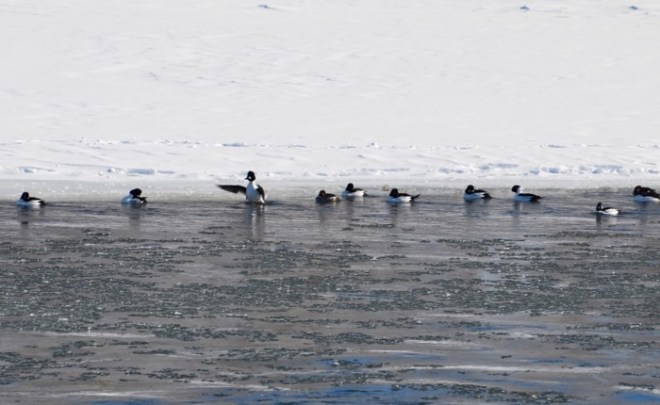
Here, makes me think of a Bruegel painting of winter scene, except replace the people with ducks and geese:

DSC_0824 (1).jpg


DSC_0828 (1).jpg


DSC_0670.jpg

Until then, we persevere.

***


Little Fires Everywhere by Celeste Ng: A Book Review

NOTE: I thank Penguin Random House Canada for the reviewer’s copy of the book, and Asian American Press for allowing me to post my review here.

Little Fires Everywhere

Chinese American writer Celeste Ng (伍綺詩) had garnered numerous accolades for her debut novel “Everything I Never Told You”, including a New York Times Notable Book of 2014, Amazon’s #1 Best Book of 2014, winner of the Massachusetts Book Award, and the Asian/Pacific American Award for Literature, just to name a few.

Like the stunning opening in her debut work, Ng in her second novel “Little Fires Everywhere”, begins with a dramatic scene: Mrs. Richardson, after being awaken by the smoke detectors, stands on her front lawn in her pale blue robe and watches firemen saving her house from total burnt down. The prime suspect of the fire is her youngest daughter Izzy. With that, Ng leads us into the story of the Richardsons’, an upper-middle class family living in the quiet suburb of Shaker Heights, Ohio, which was Ng’s hometown during the 90’s.

Ng grew up in Pittsburgh, Pennsylvania, and Shaker Heights, Ohio, her scientist parents having immigrated from Hong Kong. Ng graduated from Harvard University and earned an MFA from the University of Michigan (now the Helen Zell Writers’ Program at the University of Michigan), where she won the Hopwood Award.

The thematic elements of race, parenthood, and family secrets leading to devastating consequences as in her debut novel are carried over. Covering a larger scope, “Little Fires Everywhere” expands to other issues as well, offering us views into a myriad of realistic characters and the interplay of two families, specifically, two mothers holding opposite values. Ng’s riveting storytelling skills carry us through the various plot lines breezily, while taking the time to breathe life into her characters, and deftly locks us into mental debates on contentious issues. Although set in the 90’s, the issues raised are as relevant today.

The Richardson family, one could say, is the epitome of the American Dream. They live in a six- bedroom home in a desirable part of town. The matriarch Elena and her husband Bill are well connected and respectable in the community, she a journalist with the local paper the Sun Press and he a defence lawyer. They have four teenaged children, the eldest Lexie heading to Yale. Second son Trip is popular in school, especially among girls. Third child Moody is wrapped up in his own cocoon. Youngest Izzy is the black sheep of the family. She is not happy despite her family’s affluence, or maybe, if Mrs. Richardson is willing to look deeper into her daughter’s mind, Izzy’s discontent could be exactly due to her family’s secure standing in the rule-constraining suburb. Mrs. Richardson would not trade any of her privileges, for she is living “a perfect life in a perfect place.” Her main task now is to smother any sparks that can disrupt the status quo and surface calmness in her family and community.

Celeste Ng.jpg

As the title suggests, metaphors of fire are everywhere. There are flames of passion, fury, dissatisfactions, and the fuse of suburban ennui, as apparent in the lives of the teenagers, potential fire hazards. These are all inherent threats to the idyllic, quiet town, where high school graduates are expected to head to Ivy league colleges, and where parents are oblivious to the secret lives of their teenagers, and vice versa.

The story begins not with the aftermath of the house fire, but the reason leading to it. Mrs. Richardson has just rented the upper floor of her revenue property, a duplex on the other side of town, to new tenants, single mother Mia Warren and her teenage daughter Pearl. Mia is an artist, her medium, photography. She works at menial jobs to sustain her art, and brings up Pearl moving about the country in their VW Rabbit, forty-six different towns since Pearl’s birth.

As they settle in Shaker Heights, Pearl comes to know the Richardson children and is attracted to their lifestyle. Conversely, Izzy Richardson is mesmerized by Mia’s artist life and hangs around in the duplex to help and learn from her art-making. This time, Mia and Pearl may just be settling down.

It is obvious from the start that Mrs. Richardson and Mia comes from opposing sides of ideals. While suggesting Mia take portraits for people in town to earn more money, thinking about her rents no doubt, Mrs. Richardson is confronted with the notion of the artist as a photographer, as Mia replies, “the thing about portraits is, you need to show people the way they want to be seen. And I prefer to show people as I see them.”

Mia works at the Chinese restaurant Lucky Palace to sustain a living. Mrs. Richardson offers her to work in the Richardsons’ home, cleaning and cooking a few days a week to earn some extra money. Although reluctant about the proposal but to not jeopardize their relationship, Mia agrees. Hence, Mia delves further into the Richardson family life.

As she so deftly deals with in her first novel, Ng weaves into her storylines and characters the subjects of culture and identity. The intermingling of lives between the Richardson family and Mia soon pits them into taking two contentious sides in a prominent court case in town. The Richardsons’ best friends, the McCulloughs, have just adopted a Chinese baby found abandoned at the fire hall, Mirabelle, or May Ling Chow, her birth name. The birth mother Bebe now regrets her decision which she had made in a most dire financial situation at the time. Bebe comes from China, and happens to be Mia’s co-worker at Lucky Palace. Mia is openly supportive of Bebe, while Mr. Richardson represents the McCulloughs. The case has divided the town, and now Mrs. Richardson knows she needs to dig into Mia’s past to discredit Mia and to get back at her for drawing her dear friends the McCulloughs into tormenting legal entanglements.

It is when Ng reveals Mia’s backstory that the narrative is most riveting. We are led to a moving account, a page turner even, on a subject that is complex and crucial: what makes a mother? In her novel, Ng intertwines three possible scenarios of pregnancy, wanted, unwanted, surrogate. And with these contrasting lines, she delves into the issues of adoption and identity. Are babies best brought up by their own biological mothers, especially when culture comes into play? What makes a baby Chinese? American? Or more complex still, Chinese American? The McCulloughs have well intentions to bring Mirabelle up by regular dine-outs in a Chinese restaurant, and finding her ‘Oriental Barbies’ to play with. Are these enough? If not, what is?

Cultural appropriation is a trendy topic nowadays, not only in the adoption circle, but in other realms. These are issues that require deeper pondering and research work, no doubt, ones that should be confronted deeper than Ng can deal with in her novel. Nonetheless, a fictional setting is an interesting place to spark off the debate. Just another one of her little fires in the book.

While “Everything I Never Told You” is a microscopic look at a mixed-race family during the 70’s, dense and intense, not unlike a Bergman chamber work, “Little Fires Everywhere” is looser and more expansive in thematic matters, with sprinkles of laughs here and there, not unlike a John Hughes’ movie in the 80’s. One can feel Ng is freer to roam with the larger, open space. Just as with her debut work, Ng does not shy away from the issues of race and identity, while challenging the notion of ‘success’. One should not be surprised that this is still the fundamental term we are struggling to define in our society today.


~ ~ ~ 1/2 Ripples


***


Here’s a short review of Ng’s debut novel “Everything I Never Told You” (audiobook) I’d posted on Goodreads.