Click for ‘Silence’ movie review and thoughts.
For this year’s Reading the Season, I’ve chosen Shusaku Endo’s masterpiece Silence. Unlike previous years, it’s not as pleasing and exulting a read at Christmas time. Rather, it’s unsettling and disturbing. It will interfere with your festive mood. It presents an excruciating dilemma that we hope we may never need to confront, and a question that more likely for us to face: Where is God during our suffering?

Why so unpleasant a read at this time? We’re all busy with our festivities. Who would want to think about such a somber question? Director Martin Scorsese thinks it’s seasonal; Dec. 23 is the day his adaptation of Silence will be released in North America. Mind you, before showing here, it will first premiere at the Vatican. What a diversion of Christmas over there.
Thanks to Scorsese, I dug out Endo’s book and reread it. This time around, it’s even more disturbing for me. However, I also see the light seeping through the cracks of a broken human scene. I sure hope Scorsese’s film — twenty-five years brewing in the director’s heart — can lead to some quiet meditation amidst the cacophony bombarding us these days.
Historical Note
First off, very crucial before reading Silence is to establish a frame of reference; this is furnished by the Historical Note at the beginning of the book. Christianity was introduced to Japan by Francis Xavier in 1549. It was very well received at that point, despite an expulsion order later in 1587 by the Shogun Hideyoshi and the subsequent crucifixion of twenty-six Japanese Christians and European missionaries. By 1600, there were an estimated 300,000 Christian converts living in Japan.
By the time the second expulsion order was issued in 1614, however, the Christian Church in Japan was driven underground. Warlord Tokugawa Ieyasu was resolute in wiping out all traces of Christianity that from 1614 to 1640, an estimated five to six thousand Christians were killed. He later found out martyrdom wasn’t as effective an eradication measure as forced apostasy, especially with leaders of the faith, so torture was widely used towards that end.

In 1632, the Catholic world was shocked to learn that the stalwart leader of the Jesuits mission in Japan, Father Christovao Ferreira, had disavowed his faith and become an apostate after being tortured at ‘the pit’ in Nagasaki. No news of him came after that.
Upon this setting Endo begins his story. The historical novel describes the journey of one fervent young priest from Portugal, Father Sebastian Rodrigues, who has had the privilege to be taught and mentored by Father Ferreira years before. Upon hearing Ferreira’s apostasy, and with the reluctant approval of the Jesuit Superior, Rodrigues and fellow priest Father Francisco Garrpe board a ship and sail all the way to Japan to look for their beloved teacher and to investigate the situation. They have been forewarned, the magistrate Inoue is ruthless.
While still on the ship, the priests encounter Kichijiro, a sly, cowardly, and ambiguous figure who later will wade on shore ahead to guide them to some hidden Christians. For a while, the two Fathers have to hide themselves in a hut on a mountain during the day, and minister to the needs of Japanese believers who, despite the danger, come to seek them out for spiritual matters at night.
Later Kichijiro leads them to a nearby island to meet with more hidden believers. To the welcoming relief of the villagers, the fathers secretly conduct mass and baptism despite the risks. The evasive Kichijiro hangs around like a phantom nemesis.
The people suffer greatly under the rule of magistrate Inoue, yes, that Inoue who Rodrigues was forewarned. He extracts from the poor peasants harsh revenues and infuse the utmost fear into those of the Christian faith with his deathly measures. Rodrigues observes that “The persecutions of Christians make their faces expressionless. They cannot register on their faces any sorrow —nor even joy. The long years of secrecy have made the faces of these Christians like masks. This is indeed bitter and sad.”
Never before has Rodrigues felt so deeply about the meaningfulness of his mission:
“… like water flowing into dry earth … For the first time they have met men who treated them like human beings. It was the human kindness and charity of the fathers that touched their hearts.”
But such a firm conviction begins to shatter when Rodrigues comes closer and closer to the reality of persecution. No, not just of his own, but those of the Japanese peasants, his flock. Many are faithful to the end. When discovered, they would be tied on trees in the shape of a cross at the seashore, the rising tide slowly consumed their bodies after two or three days.
The ultimate punishment is ‘the pit’. Believers are tied up and suspended upside down above a pit. Blood would flow out of their eyes, ears, nose and the slits on the neck. They would be literally drip dry into a slow death through several days.
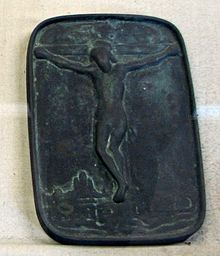 A way out of such torture is to trample on the fumie. The fumie is a wooden plaque with a copper plate on which the image of Christ was artfully engraved. A person’s willingness to trample on the fumie is Inoue’s way of testing if one belongs to the outlawed Christian religion. It is also a convenient way to turn a believer into an apostate upon the threat of torture and death. One only needs to put one’s foot on the fumie, trample or even just step on it, then one can be released immediately, a most easy and convenient ‘formality’ to show one’s denunciation of faith. This was what happened to Father Ferriera.
The officials would say: “I’m not telling you to trample with sincerity and conviction. This is only a formality. Just putting your foot on the thing won’t hurt your convictions.”
To a believer, this may sound like a temptation, or self-deception. Or, is it a necessary choice to survive?
In this historically based novel, Shusaku Endo (1923 – 1996), a Japanese Catholic, paints a vivid picture of the crisis of faith in the face of extreme suffering, the doubts that often lie hidden even in the most devout. In the midst of persecutions, where is God? Why is He silent? Endo is not depicting so much about the hubris of foreign missionaries coming with the hope and optimism to preach and convert, but just the opposite, he has exposed the lowest state a believer, let alone a priest, can possibly experience, the utter humiliation of being the one to denounce and betray his God, albeit under duress.
The duress is horrific indeed. The priest sees no glorious martyrdom but is witness to unbearable torture of these peasants. For several nights, the screams and moans of five Christian villagers accompany him in his sleepless nights. Father Rodrigues is thus being dragged into the ultimate dilemma: He only needs to place his foot on the fumie and all five of these suffering peasants will be released right away.
In a court of law, a statement or action made under duress cannot stand as evidence to lay blame, as the subject is under threat and coercion like Father Rodrigues is here. But in the court of the priest’s conscience, it is an ironclad verdict: Apostasy!
As he is struggling with this painful dilemma, trample on it and denounce his faith or five peasants will be suspended in the pit till death, Father Rodrigues seems to encounter an epiphany. Seeing the well-trodden, blacken face of the Christ image on the fumie, the priest hears a voice breaking through the silence:
“‘Trample! Trample! I more than anyone know of the pain in your foot. Trample! It was to be trampled on by men that I was born into this world. It was to share men’s pain that I carried my cross.’
The priest placed his foot on the fumie. Dawn broke. And far in the distance the cock crew.”
Indeed, the allusion to Peter’s denial of Christ three times before the cock crows points to Christ’s forgiveness, the light that sheds through the cracks of human failure. After his denial, Peter later served his Lord with transformed fervency and love. Yes, even the Rock, upon whom the Church was to be built, had once denied Christ.
When I first read Silence a few years ago I could not accept Rodrigues’s action. This time around, I’ve come to see that Endo is not discussing theology here, but depicting an imaginary scenario. In the darkest hour of a believer’s journey—likely Endo’s own as well—when a devout is entrapped in an excruciating dilemma like being suspended in the deep pit of spiritual conflicts, Endo draws our attention to the response of a compassionate Christ.
As to the seeming silence of God, Endo lets us hear these internal dialogues:
‘Lord, I resented your silence.’
‘I was not silent. I suffered beside you.’
At the humble manger some two thousand years ago, God had spoken, with a birth that pierced the darkness of that silent night.
***
Reading the Season of Christmas Past:
2014: Lila by Marilynne Robinson
2013: Poetry by Madeleine L’Engle
2012: Surprised by Joy by C. S. Lewis
2011: Walking on Water by Madeleine L’Engle
2010: A Widening Light, Luci Shaw
2008: The Bible and the New York Times by Fleming Rutledge
2008: A Grief Observed by C. S. Lewis
***

 Amy Adams is on a roll. She has been in recent years. With five Oscar noms and yet to win, will this coming Awards Season end the drought? A movie based on a novel of a novel. Right, and that real novel is Austin Wright’s Tony and Susan. Exactly, probably that’s why director Tom Ford changed it to this current title for his movie. Amy Adams plays an art gallery director troubled by her ex-husband’s novel, which she thinks is a revenge tale on her. Intriguing storyline. Jake Gyllenhaal plays her ex. Director Tom Ford won the Grand Jury Prize at Venice Film Festival this year. Not bad considering this is only his second feature in directing. His first? He led Colin Firth to the actor’s first Oscar nom in A Single Man (2009).
 I’ve just reread this novel by Japanese writer Shûsaku Endô (1923-1996). This time it’s even more disturbing. In 17th C. Japan, a sadistic governor was determined to eradicate Christianity by turning devout Jesuits missionaries into apostates. His methods were ruthless and unimaginable, making waterboarding look like squirting with a water gun. Endô, a Catholic, had written a thought-provoking masterpiece, bringing out the unanswerable Question: Why is God silent in the midst of insufferable torments of his own? And now, the film adaptation by none other than Martin Scorsese, also a Catholic. I’ve a feeling that I need to gird myself for some tormenting scenes. But I just can’t resist that cast: Liam Neeson, Andrew Garfield, Adam Driver. Also, screenplay adaptation by Jay Cocks, two times Oscar nominee for his writing, The Age of Innocence (1993) adapted from Edith Wharton’s novel, and original script Gangs of New York (2002).
 Film is inspired by Nancy Milford’s bio of Zelda Fitzgerald, a finalist for the Pulitzer and National Book Award when it first came out in 1970. Please note it’s not Z by Therese Anne Fowler as I first thought. So I read the wrong book and now I need to find Milford’s Zelda. I want to, for I trust an acclaimed biographer to tell me the ‘true’ story. Zelda and F. Scott’s situation is such an intriguing scenario: Can a couple with the same professional pursuit still be a loving pair and not rivals? Especially in the Jazz Age, where men dominated all scenes and women were but ornate “flappers” in parties, and yes, even as muses. Jennifer Lawrence is Zelda, Ron Howard directing. Sounds like a promising production.
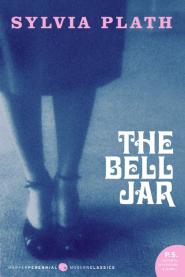


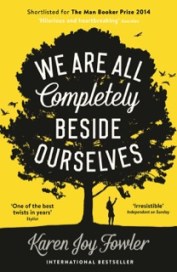


 This enticingly thin paperback has been sitting on the shelf quietly for years. I’ve long wanted to read it although I’d no idea what it was about, one of the hand-me-downs from my son’s college reads. Now that I’ve started it, I know this one’s going to be a slow cook. Even though just 217 pages, I know I can’t rush it. Exactly as the title denotes, the book is about one painting,
 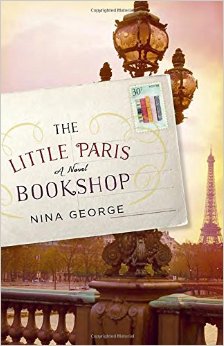 First published in Germany, now an international bestseller, The Little Paris Bookshop is a barge floating on the Seine River in Paris. Monsieur Perdu, the ‘Literary Apothecary’, is the owner. Now this is an interesting concept. M. Perdu prescribes books for any ailment his customers happen to be afflicted with. Bibliotherapy if you will. Not a bad idea. He has a book suggestion for everyone he encounters, so a clever way for German author Nina George to weave in her views on various literary works, her salutation to literature and reading. But of course, George isn’t just leading a book club discussion but telling a story. So she deftly brings us to learn more about M. Perdu’s past. While well-versed in bibliotherapy, M. Perdu has a wound that’s deep and sore, for he’s a victim of a lost love. Can the Apothecary heal himself? All signs point to a heartening, summer read.
 This one beats all my current reads in capturing my attention and interest. The contemporary composer Philip Glass (born 1937) is renowned as a ‘minimalist’ in his musical style, a label he frowns upon. Now about a quarter into Glass’s memoir, so mainly about his early life and the start of a career, I find what’s minimal is only the physical materials of life, the lack of money to pursue his dream. As for passion and talents, Glass is endowed with abundance, and the artistic milieu in which he immersed himself is astoundingly rich and fertile. Above all, the Bohemian living during his early days is idyllic. That’s why I’m mesmerized by his story, the pursuit of a dream driven by pure passion and inner drive.
 I had listened to the audio book a few years back, and wanted to reread it right away, but didn’t. After that, I forgot about it. By chance I saw it in the
 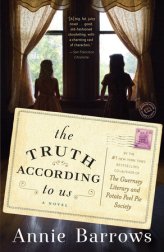 Barrows’ previous book is the wildly popular The Guernsey Literary and Potato Peel Pie Society published eight years ago. I’d enjoyed the lively characters in Guernsey amidst the troublesome setting of WWII, with the island occupied by German soldiers. Just curious to read children’s author Barrows’ first solo publication for adults. The Truth brings Barrows back to the home state of her aunt and primary writer of Guernsey, Mary Ann Shaffer, who died before completing the book. Family saga in small town West Virginia in 1938. If you’ve read this one, how is it compared with Guernsey? Should I even start it?
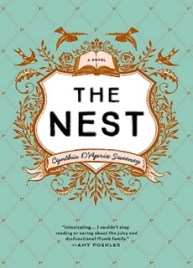 If I want a breezy summer beach read, maybe I should start with this one. But this too can wait. I got it mainly because of the future film adaptation. Sweeney’s debut work reportedly fetched a 7-figure advance from Ecco; not surprisingly, film rights were snatched up soon after. What should be noted is: by whom? Well, as evidence of the booming book/movie enterprise, Amazon Film it is, and Jill Soloway (Transparent) will direct. Note also, just saying, here’s a book with Amy Poehler’s endorsement on the cover. Have you read it? Are you looking forward to its movie adaptation?


 Often it’s the cast of an upcoming movie that prods me to read a book. This one has been on the New York Times Bestseller List for years since its publication. No matter how popular it is, I’m motivated only now mainly because of the first rate cast: Alicia Vikander, Michael Fassbender, Rachel Weisz, directed by Derek Cianfrance. Instead of a place beyond the pines (his last work) we have an island off the Australian coast, with the story about a lighthouse keeper and his wife bringing up a baby they found in a boat washed up onshore.
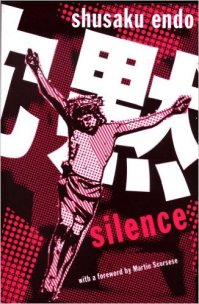 This one is just the opposite. I want to read it regardless of whether it will be made into a film or not. But what a bonus it is to know the adaptation is a Martin Scorsese’s work with Liam Neeson, Adam Driver, Andrew Garfield, and Ciarán Hinds. I highly anticipate this film, albeit I expect the viewing experience won’t be pleasant. I’ve read it before but want to reread it before watching. The book is heart-wrenching as Endô describes the persecutions and tortures Christians and Jesuit missionaries suffered in 17th century Japan. How Scorsese, a Catholic himself, handles the subject matter – the choice between apostasy vs. martyrdom – and have these character actors interpret the internal and physical torments will be intriguing to see. Scorsese wrote the forward of this edition of the book (image here).
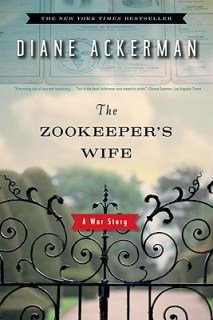 This is a worthy, true story to be made into film. Jan and Antonina Zabinski were keepers of the reputable Warsaw Zoo. During the Holocaust, Jan smuggled Jews out of the Warsaw Ghetto into their facility, saving hundreds. Antonina did the day-to-day chores of protecting them, hiding them in the cages, feeding them and keeping their spirits up. The parallel and irony of men and beasts are obvious. Acclaimed nature writer Diane Ackerman drew from Antonina’s diary to write her non-fiction work, a historical account of a heroic rescue mission. Screenplay by Angela Workerman, a scribe to note. Jessica Chastain and Daniel Brühl play the altruistic Zabinski couple.
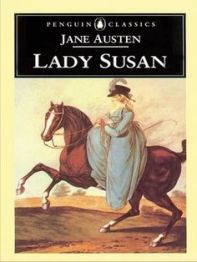 This has been in my iBooks for a long while, so long that I’d deleted it and now reloaded it again as the film adaptation is coming out. Entitled Love and Friendship, screenplay is based on Austen’s early novella Lady Susan, with Kate Beckinsale as Lady Susan Vernon. It will be interesting to see how the epistle form is translated onto screen. It will premiere at the Sundance Film Festival Jan. 23. Whether we will actually see it in our movie theatres is another matter. I hope it will be screened in the not too distant future.
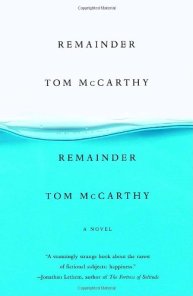 I bought this book at Harvard Book Store – the independent book store in Harvard Square since 1932 – during my New England Road Trip last fall. I’d read McCarthy’s 2015 Booker shortlisted Satin Island and knew Remainder had been adapted into film before I went on the trip. So it was a title I’d intended to get at that bookstore. Remainder is McCarthy’s debut work (2006). An unnamed Londoner is struck by a falling object and lapse into a coma. As he awakes, he has lost all memory and needs to re-enact his past to find his identity and authenticity of being. The Telegraph had called McCarthy “a Kafka for the Google Age”. Interesting to see how that translates onto screen. The film premiered at the BFI London Film Festival last October. Will screen at Berlin International Film Festival in February, 2016.
 The film adaptation of Booker short-listed and multiple award winning novel by Irish writer Sebastian Barry has already been completed, but has yet come up with a release date. So, I’ve plenty of time to read the book. The narrator is a 100 year-old mental hospital patient recalling her life. The old and the young are played by Vanessa Redgrave and Rooney Mara respectively. Directed by Jim Sheridan, the Oscar nominated director who introduced us to Daniel Day-Lewis in the excellent productions first in My Left Foot: The Story of Christy Brown and later In the Name of the Father.

 Ripple Effects