Where’d You Go, Bernadette: From Book to Screen

When I first learned that Maria Semple’s quirky and clever 2012 novel would be turned into a movie, I had that umm… feeling. When I found out Richard Linklater would be directing it, it turned into a whaaat? Sure it’s not a Wes Anderson project?

On the surface a mother-daughter relational story, Semple’s book is deceivingly simple. Underneath the humour is her take on contemporary American society, the tyranny of technology, vulnerability of the non-conforming, sarcasm on the upwardly aspiring middle class, the rat race and its effect on parenting, the outsourcing economy, and even taking a jab on America’s quiet and polite neighbour to the north. As a target, I must give you the following excerpt from the book as evidence of Semple’s spikiness (or is it spunkiness):

You probably think, U.S./Canada, they’re interchangeable because they’re both filled with English-speaking, morbidly obese white people. Well, Manjula (virtual personal assistant from India), you couldn’t be more mistaken.

Americans are pushy, obnoxious, neurotic, crass… Canadians are none of that. The way you might fear a cow sitting down in the middle of the street during rush hour, that’s how I fear Canadians. To Canadians, everyone is equal. Joni Mitchell is interchangeable with a secretary at open-mic night. Frank Gehry is no greater than a hack pumping out McMansions on AutoCAD. John Candy is no funnier than Uncle Lou when he gets a couple of beers in him. No wonder the only Canadians anyone’s ever heard of are the ones who have gotten the hell out. Anyone with talent who stayed would be flattened under an avalanche of equality. The thing Canadians don’t understand is that some people are extraordinary and should be treated as such.

But that’s not in the movie. Why, the movie is a total stripped-down version without the incendiary, sarcastic swipes, or the laugh-out-loud funny, and ah… thanks, Maria Semple, for the words, “it’s flattened under an avalanche of” smoothened edges in characterization and plot.

By the way, if one reads deeper into the Canadian jab quoted above, it wouldn’t be hard to see the layered meaning. Aha, the joke is on which side of the 49th?
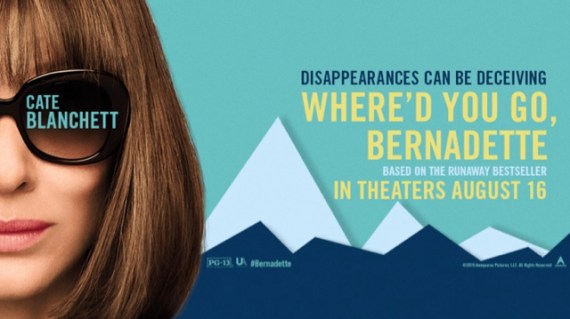
Bernadette (1).jpg


Bernadette Fox (Cate Blanchett) has had her glorious days as an acclaimed architect, pioneer of the green building movement, a MacArthur grant recipient at 32, and a young woman succeeding in a male-dominated profession. Due to an unfortunate incident, her award-winning project was demolished without her knowledge, destroyed by a vengeful neighbour who bought it under an agent’s name. Devastated, Bernadette crashed out of her career, moved to Seattle with her Microsoft, TED Talking husband Elgie (Billy Crudup, a miscast). They bought a huge, dilapidated mansion. For twenty years she had ignored the maintenance of her home and self. The traumatic health issue of her daughter Bee’s (Emma Nelson) early years drives her further into the hole living as a reclusive agoraphobic.

Bernadette and Bee are the best of friends though. Mother/daughter relationship is well portrayed in the movie, a particular gripping scene is their singing the song ‘Time after time’ together in the car ending with a Bernadette meltdown. “You don’t know how hard it is for me.” Bee doesn’t know, viewers need to guess, but readers do, for they are supplied with ample back story. The movie, however, has trouble connecting the past with the present, or presenting sufficient motivation for the actions and behaviour of the characters.

As loving parents, Bernadette and Elgie have to fulfill a promise to Bee, that is she can have anything she asks for if she gets straight A’s; now they’re stuck with making a family trip to Antarctica. For two-third of the movie we see mostly interior shots of home and work building up a case to Bernadette’s disappearance. The momentum picks up only in the last third, the Antarctica episode.

The storytelling in the book is a lively collection of emails, notes, letters, hospital billing, and police report plus personal narrative to present the different voices from various characters. On screen, the Rashomon-like shifting of perspectives are converted into mainly two characters sitting and talking to each other. Surely Linklater is an expert in dialogues with his Before trilogy, where the camera follows two characters Jesse (Ethan Hawke) and Céline (Julie Delpy) talking throughout the movie and yet still captivating viewers as we watch them wander the streets and listening to them chat. But here, that magic is missing. Where’d you go, Linklater?

For the casting of Bernadette, Cate Blanchett is a good choice, her Academy Award winning role in Blue Jasmine comes to mind. Unfortunately, here she is not in her Jasmine form. The major issue is a weak script, hence the directing of it. The screenplay follows the book faithfully but in a minimal, abridged version. It begs the question: does a movie adaptation need to follow the source material to the dot? Here in this very different medium, dialogues are picked right out of the novel while the camera has not been fully utilized, nor any imaginative ingredients been added to the visual adaptation of this quirky and zesty book. Well, yes, it might have been faithful to the letter, but not the spirit.

The title question obviously doesn’t just mean the physical whereabouts of Bernadette but where her talent, creativity, and vitality for life have gone. There’s a scene with Bernadette meeting her previous mentor Paul Jellinek (Laurence Fishburne) who says it explicitly: “People like you must create. If you don’t, you become a menace to society.” Such is a thematic element that needs to be calved out more clearly, a talent caged in by her own disillusionment and her ultimate breakthrough. Don’t blame motherhood, and Bernadette doesn’t, for she sees a beautiful offspring flourishing in Bee. But is parenting a zero-sum game? The context and question should be handled with more depth and inner exploration. With not much contextual support, the case of a self-imposed, locked-up genius is left to the actor Blanchett to portray, and at times it seems forced.

Missing story elements cause lapses in the storytelling. Why does Audrey (Kristen Wiig), Bernadette’s neighbour and archenemy, suddenly becomes friend with her at the most critical moment? Or, during the mudslide, the camera hasn’t shown (without obstruction) what’s written on the sign, which has triggered much of the resentment between Audrey and Bernadette. Readers know, but not viewers if they have not read the source material.

At the end of the book there’s an “About the Author” page. Before writing fiction, Semple had written for the television shows Arrested Development, Mad About You, and Ellen. If one hadn’t known this tidbit already, a natural response would have been “no wonder!” It just points plainly to the ideal person who should have written the screenplay.


~ ~ Ripples

***


Related Reviews on Ripple:

Blue Jasmine: Homage and Reimagining

Boyhood: The Moment Seizes Us 

Before Midnight: Reality Check

The Budapest Hotel: A Grand Escape


Upcoming Book-to-Movie Adaptations: Good Summer Reading

Previously on Ripple, I’d posted lists of books-to-movies coming out soon here and here. If you’ve gone to the theatre lately, you’ve probably seen trailers for some of them: The GoldfinchWhere’d you go Bernadette? or Cats (like a horror movie for someone who has ailurophobia.)

Here are some updates. The following is a list of movie adaptations in development for the big screen or TV series. They are in various stages of production, just announced or in pre-production, release dates unknown or tentative. If you’re the well-prepped movie goer, here’s your list of summer reading:

Where the Crawdads sing.jpegWhere the Crawdads Sing by Delia Owens

Now 46 weeks on the NYT Bestsellers List and has sold more than 1.5 million copies, Owens’s debut novel about a young girl who has raised herself and survived alone in a coastal North Carolina marsh is a mix of nature writing, murder mystery, and coming-of-age story. Reese Witherspoon will be producing it with Fox 2000. Owens is a wildlife scientist and nature writer who had spent years in Africa.


Little Fires Everywhere (1)

Little Fires Everywhere by Celeste Ng

Another project by Witherspoon’s Hello Sunshine production company. Ng’s novel about families in a Cleveland suburb dealing with diversity, teenager angsts, and generational conflicts had been named Best Book of the Year (2017) by NPR, Amazon, Goodreads, The Guardian… just to name a few. It will be adapted into a TV series with the Hulu platform. 


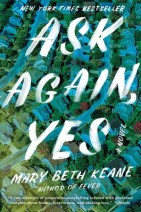
Ask Again, YesAsk Again, Yes by Mary Beth Keane

The producers of American Beauty (1999) which won 5 Oscars in 2000 have bought the movie and TV rights of the book. Another novel about suburban families is being described in Goodreads as “profoundly moving.” Author Keane was a 2015 Guggenheim Fellow in Fiction; her previous works had been a finalist for the PEN/Hemingway Award and garnered Best Book of the year acclaims.


The Silent PatientThe Silent Patient by Alex Michaelides

Screenwriter Michaelides’s debut novel is described by Entertainment Weekly as “a mix of Hitchcockian suspense, Agatha Christie plotting, and Greek tragedy.” A psychotherapist has to unlock the mystery of his patient who’d killed her husband six years earlier and then remained silent since. (Read an excerpt using the link) Meanwhile, Michaelides will write the screenplay, naturally. Brad Pitt’s Plan B and Annapurna Pictures producing.


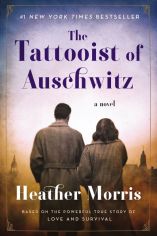
Tattoist of Auschwitz.jpgThe Tattooist of Auschwitz by Heather Morris

Hailed as the true story of Slovakian Jew, Lali Sokolov, who fell in love with a girl he was tattooing at the Auschwitz concentration camp during WWII, a powerful story of love and survival. British producer Synchronicity Films had secured the rights and a drama series is in development. Here’s the rub: the Auschwitz Memorial Research Centre had disputed the authenticity of the book according to The Guardian. A case of negative publicity is still good publicity?
The Underground Railroad

The Underground Railroad by Colson Whitehead

Colson Whitehead’s Pulitzer Prize for Fiction winner (2017) is adapted by director Barry Jenkins. Jenkins’s name had catapulted to stardom since his Oscar win for Moonlight (2016) and the subsequent If Beale Street Could Talk (2018). The story of the harrowing escape of two Southern slaves Cora and Caesar using the Underground Railroad is adapted into 11 episodes for Amazon Studio.


Washington Black (2)

Washington Black by Esi Edugyan

The book is Edugyan’s second consecutive win of Canada’s Scotiabank Giller’s Prize, also shortlisted for the 2018 Booker Prize. The journey of 11-year-old slave boy “Wash” born on a Barbados plantation is a fantastical story of adventure when he became the personal servant of Englishman Christopher Wilde, inventor, naturalist, explorer, and abolitionist. 20th Century Fox TV, after “an intense bidding war” , had secured the rights to the small screen.


***

‘The Aftermath’ has all the right ingredients except…

From the beginning, all the ingredients seem to be in place for a satisfying period movie. Sumptuous set design, beautiful costume and makeup, even the rubbles and chaos are realistic. What more, three seasoned, popular actors under a helmer who had proven he could do war movies with his Testament of Youth (2014).

Director James Kent is all set to pull us into great expectations from the start. British military wife Rachel Morgan (Keira Knightley) arrives by train in Hamburg, Germany,  in the year 1946.  She is greeted warmly by her husband Lewis (Jason Clarke), a British Colonel stationed there to enforce order in the aftermath of the War.

The Morgans are staying in a mansion requisitioned from the Nazi’s. But due to Lewis’s benevolence, the former owner, handsome German widower Stephen Lubert (Alexander Skarsgård) and his troubled teenaged daughter Freda (Flora Thiemann) are allowed to stay until they are sent to the camp. Why the delay is not explained, an arrangement definitely isn’t going to be too comfortable. Just look here, Rachel, who has lost her young son in the war, refuses to even shake hands with the enemy, now cohabitant of the mansion.

The Aftermath movie still
Alexander Skarsgård, Jason Clarke and Keira Knightley in an early scene of ‘The Aftermath’. Photo: Fox Searchlight.

No sooner had they settled than Lewis needed to go away on military duties, leaving his wife behind. What ensues is predictable, but unfathomable: How a woman who still mourns her lost young son and holds animosity against the enemy, and a German widower who’d lost his wife during the war and with her memory still vivid in the house, can come together so quickly just days of living under the same roof. From refusing to shake hands to sleeping with the enemy in just a few scene changes, the unconvincing storyline abruptly stops any appreciation I’ve had of other cinematic elements up to that point. 

Adapted from the novel by Rhidian Brook, the screenwriters, Joe Shrapnel and Anna Waterhouse, must have thought celebrity actors have the power and charisma to jazz up a weak script. Fact is, even talented actors are bound by the writing, or, hampered by it. Just look at some other works by Knightley, for example, Atonement (2007) or her latest Colette (2018), comparing her performance in those films with her role here in The Aftermath seems like we’re watching the living in contrast to a pedestal decorative that can tear up on demand.

Alexander Skarsgård can release much intensity if the script allows, case in point is his role in Big Little Lies (2017), for which he won a Best Supporting Actor Golden Globe. Instead, his character as Stephen in The Aftermath is bland, driven by inexplicable motive, except maybe an act of violation to avenge. But no, he and Rachel, who are practically strangers, seriously mean love here. Whatever happened to his late wife’s memory at the piano? With Rachel playing her music still placed on the Steinway, even Debussy’s Clair de Lune can’t shine a light on the blurry motive.

Jason Clarke is repeating his demeanour as in Mudbound (2017), a husband oblivious of what’s going on with the affair of his wife. Here in The Aftermath, the underlying motivations of each character and backstory is just slightly touched on without much elaboration. Are the visuals in bed more important than the rational for modern viewers? I sure hope not.

Movies set during the World Wars work only if there are more to mull on rather than just the actions and the aesthetics. Complexity of characters and conflicts are what pull viewers in, eliciting empathy. Some thought-provoking or a bit challenging ideas and dialogues could help too. Several recent examples are Their Finest (2016) and Darkest Hour (2017), or director Kent’s own Testament of Youth (2014); the other end would be the emotionless The Monuments Men (2014).

I can’t help but think of a WWII classic. Why Casablanca (1942) works, among many factors, are the intelligent dialogues and a surprise ending, surprising to the character involved, but gratifying for the viewers, leaving them with much to mull on, values, priorities, and a lingering feeling for two star-crossed lovers. Unfortunately, that kind of  emotions, thoughts and admiration for the characters were not the aftermath as I left the theatre.

~ ~ 1/2 Ripples

***

Books into Movies: 2019 and Beyond

Feeling the post-Oscar blues? How about turning to books, before they in turn are morphed into a movie? The following are some upcoming books being adapted into movies in various stages of development. Some are coming out soon, some just announced.

The Aftermath by Rhidian Brook

The movie adaptation starring Keira Knightley, Alexander Skarsgärd and Jason Clarke is coming out March 19, directed by Testament of Youth (2014) helmer James Kent. In recent years, WWII historical fiction has enjoyed a sensational growth in popularity, The Aftermath is another one of this highly sought after genre. The transfer to movies, while not always as effective, lacks no enthused followers. The Aftermath is set in 1946 Hamburg, a British family and a German widower and his daughter had to live under the same roof during a de-Nazification operation.

Cats: The Musical 

Based on T. S. Eliot’s collection of poems Old Possum’s Book of Practical Cats, Andrew Lloyd Webber’s musical Cats is hailed as one of the biggest hits in theatrical history on their website. Director Tom Hooper has another musical-turned-movie under his belt: Les Misérables (2012) which won 3 Oscars. Attractive cast in Cats the movie: Rebel Wilson, Idris Elba, Jennifer Hudson, Judi Dench, Ian McKellen, James Corden, Taylor Swift.

Death on the Nile & Witness for the Prosecution by Agatha Christie

Kenneth Branagh will direct Wonder Woman Gal Gadot and Armie Hammer in Death on the Nile. Branagh will reprise his role of Hercule Poirot, after starring in and directing Murder on the Orient Express in 2017. Now over forty years after her death, Christie’s influence has not waned. A movie adaptation of Witness for the Prosecution has also been announced with Ben Affleck directing.

The Goldfinch by Donna Tartt

John Crowley is no stranger to literary adaptations; his previous feature, Colm Tóibín’s Brooklyn, was nominated for 3 Oscars. This time, Donna Tartt’s Pulitzer Prize winning The Goldfinch reads like it’s written readily for the camera, considering the eclectic characters and the explosive storylines. Sarah Paulson and Nicole Kidman star. Screenplay adapted by Peter Straughan, who was nominated for a Best Adapted Screenplay Oscar for co-writing the 2012 script for John Le Carré’s Tinker Tailor Soldier Spy (2012).

In the Garden of Beasts by Erik Larson

Larson’s 2011 non-fiction is a captivating look into the power and social structure of Berlin during the emergent years of Hitler’s rule. Focus is on the the true story of William Dodd, a mild-mannered Chicago professor who becomes America’s first ambassador to Hitler’s Germany. And this is relatively hot-off-the-press: English film director Joe Wright will helm the production (See also the last entry of this post). Tom Hanks was originally linked with the role of Dodd (and a good choice I think); whether he will carry it through or just remain as producer is to be seen. This is one movie I’ll definitely watch out for. Before then, the book is a great read to prep for it.

Little Women by Louisa May Alcott

Geared for a Christmas release, this new version of Alcott’s classic is written and directed by Greta Gerwig. Gerwig is acclaimed for her take on the contemporary young woman, her psyche and struggles in films like Frances Ha (2012) and Lady Bird (2017). How will she approach Alcott’s novel of a bygone era? And if you still have Susan Sarandon, Winona Ryder, Kursten Dunst and Christian Bale from the 1994 cast stamped in your mind, now try to imagine Florence Pugh, Saoirse Ronan, Timothée Chalamet, Emma Watson, Meryl Streep and Laura Dern taking their places. Actually, not a bad replacement.

The Personal History of David Copperfield by Charles Dickens

First off, I must say this is one of my all time favourite novels, but I’m no purist. While I welcome new representations and interpretation, I still hope the upcoming movie will be Dickens-approved. A most interesting (postmodern) cast: we have Dev Patel as Davie, Tilda Swinton as Betsey Trotwood, Hugh Laurie as Mr. Dick, Ben Whishaw as the ultimate villain Uriah Heep, Benedict Wong as Mr. Wickfield. Directed by Armando Iannucci (The Death of Stalin, 2017).

Rebecca by Daphne Du Maurier 

In this remake of Rebecca, Armie Hammer will play Maxim de Winter. And who will be Mrs.? None other than Lily James, ubiquitous after Downton Abbey (Lady Rose). Do you think she will make one successful Mrs. de Winter? What I’m most interested in, however, is the production design, headed by 6-time Oscar nominee Sarah Greenwood, whose filmography includes Darkest Hour (2017), Anna Karenina (2012), and Atonement (2007) among many other titles. I think Manderley is in good hands. But will the whole production beat the classic Alfred Hitchcock noir with Laurence Olivier and Joan Fontaine? And who can be more chilling than Judith Anderson as Mrs. Danvers?

The Woman in the Window by A. J. Finn

Another wildly popular genre in recent years along the line of Gone Girl and Woman on the Train etc. is the modern day thriller-cum-unreliable-narrator (and alas, they’re mostly women!) mystery novels. Finn’s (Now what’s with the writer whose real name is Daniel Mallory using a pseudonym close to Flynn, the Gone Girl author?) NYT bestseller is turned into a movie with a top-notch cast. (Aside: do writers nowadays write in preparation for a movie?) Directed by the much sought-after Joe Wright, who’d helmed Darkest Hour (2017), Anna Karenina (2012), Atonement (2007), and Pride and Prejudice (2005). Wright has a dream cast in his hands: Amy Adams, Gary Oldman, Juliane Moore. The movie adaptation is written by Pulitzer winner, playwright/screenwriter Tracy Letts, who gave us August: Osage County.

________________

Which one(s) of the above do you anticipate most? Others not on this list?


***

Dano’s ‘Wildlife’ elicits showcase performance from Carey Mulligan

Wildlife is a detailed capture of the dissolution of a marriage, from the point of view of the couple’s only child. It is also a coming-of-age story as 14 year-old Joe comes to realize the elusiveness of permanence in his parents Jerry and Jeanette’s once loving relationship. If all these names sound too common, that just might be one implication of the film – a specific look into a general human condition.

Wildlife
Carey Mulligan and Jake Gyllenhaal as Jeanette and Jerry in ‘Wildlife’. Photo courtesy of TIFF.

The film adaptation of Richard Ford’s novel is a selection in the Special Presentations program at the 2018 Toronto International Film Festival, screened as a Canadian premiere. It is the directorial debut of actor Paul Dano, co-writing the screenplay with Zoe Kazan (The Big Sick, 2017).

To those unfamiliar with Dano, maybe these titles will help you locate where he’s coming from and appreciate the variety of works he’s been in. Remember Little Miss Sunshine (2006)? He’s Olive’s older brother Dwayne who reluctantly gets into the yellow VW Beetle van and takes a vow of silence, or the dubious preacher confronting Daniel Day-Lewis in There Will Be Blood (2007)as the harsh slave driver in 12 Years a Slave (2013), or in the 2016 TV mini-series War & Peace as Pierre. Not the handsome leading man but always the character actor.

The small family in Wildlife consists of Jerry Brinson (Jake Gyllenhaal), a golf pro who has just moved into the town of Great Falls, Montana, with his wife Jeanette (Carey Mulligan) and son Joe (Ed Oxenbould). Just as they thought they’re settling in Jerry is fired from his job as a golf instructor in a country club. After waiting for a while for her husband to absorb the loss of job and pride but with no solution in sight to the household finance, Jeannette decides to come out of the home to look for work, ultimately finding a position as a swimming instructor at the Y.

That just may not be the cause of the conflict. What begins the total meltdown is when Jerry, out of the blue, packs up and follows a group of men heading to the forests to fight a wild fire fiercely raging near Great Falls, not knowing when he will return or if he can get out of it unscathed. Feeling utterly alone and abandoned, Jeanette begins to react to her precarious situation by venting with some out-of-character behavior. The successful businessman Warren Miller (Bill Camp), Jeannette’s swim student at the Y, just happens to be a convenient escape route. All these familial changes and development are observed uncensored by their sensitive teenaged son Joe.

From this his first attempt at directing, viewers would be gratified to find Dano to be an actor’s director; especially with the excellent cast he has under his helm, this is doubly rewarding. Dano lets the camera rest on the close-up faces of his characters to elicit superb performance, taking his time to capture the nuances in restraints, outburst, or just about any sort of inner feelings to surface.

Carey Mulligan.jpg
Carey Mulligan in ‘Wildlife’. Photo courtesy of TIFF.

This is one of the best, if not the best, performance I’ve seen Carey Mulligan in, changing from the loving wife and devoted mother to the angry and desperate single mom with a son to raise, to totally losing it, testing the boundaries of norms and behavior, and finally to the determined woman striking out on her own yet still bound by unseverable, familial ties. Mulligan deserves an Oscar nom for her role as Jeannette.

Watching his mother get close to Miller, Joe is torn between devotion and incredulity.  Although a successful businessman, Miller is a limping, older man. Joe is utterly perturbed by his mother’s capricious turn. Dano creates some poignant scenes depicting the interactions between mother and son during dad’s absence from home. Often the passive observer, Joe is restrained with countless questions he cannot express in words.

Mulligan gets all the juicy lines. After Jerry is gone to fight the wild fire, Jeanette brings Joe along to Miller’s house for dinner, putting on heavy make-up and dressing in a seductive night gown. She dances with the man intimately in front of her son. In another occasion, she dons cowgirl attire and admires herself in front of the mirror, reminiscing her younger days. Jeanette answers her son’s dazed expression with this line:

“It’s good to know your parents were once not your parents.”

There is a former life in every parent that even the closest child would not have known or understood. There are many thought-provoking lines in the film, but this one is particularly poignant.

Dano takes the liberty to follow the spirit of the text and creates a cinematic ending. His visual wrapping up is clear and spot-on, especially the scene at the studio where Joe works part-time. The final frame of the three sitting down together for a studio shot with Joe between his parents speaks volumes. A wild fire may have been put out, but the smouldering lingers; and the one keeping it under control may well have been a teenaged firefighter.


***


Update Nov. 16:

3 Nominations for “Wildlife” at the Film Independent Spirit Awards – Best First Feature, Best Female Lead, and Best Cinematography.


Arti at TIFF and Ripple on Rotten Tomatoes

DSC_0718

Two major news. Yes, the above title says it all.

I’m in Toronto now, all geared up to watch the screenings of a dozen films I’ve selected at the Toronto International Film Festival Sept. 6 – 16. Will keep you posted on the sights and sounds here.

There are 342 films in TIFF’s various Programs, submitted by filmmakers from 84 countries. Among the selections, 254 are full feature films, 88 shorts. These are selected from 7,926 submissions from all over the world.

Following a Ripple tradition, presenting titles from book to screen, here are some of TIFF’s feature productions that are adaptations from published, written sources:

First Man, dir. by Damien Chazelle, Ryan Gosling as Neil Armstrong, based on the book First Man: The Life of Neil Armstrong by James R. Hansen

Beautiful Boy dir. by Felix Van Groeningen based on two memoirs, Beautiful Boy by father David Sheff and Tweak by son Nic. Steve Carell and Timothée Chalamet play father and son.

Burning dir. by Chang-dong Lee, based on the short story “Barn Burning” by Haruki Murakami, which (in my opinion) is in turn based on the short story of the same name by William Faulkner.

The Hate U Give dir. by George Tillman Jr., based on the book of the same name by Angie Thomas (2017 National Book Award longlist, Young People’s Literature)

If Beale Street Could Talk dir. by Barry Jenkins (2017 Oscar winner ‘Moonlight’), based on the book of the same name by James Baldwin.

The Front Runner dir. by Jason Reitman, based on the book All the Truth Is Out by Matt Bai. Hugh Jackman as the 1987 presidential candidate Gary Hart.

The Sisters Brothers dir. by Jacques Audiard, based on the book of the same name by Patrick Dewitt (shortlisted for the Booker Prize 2011)

Wildlife dir. by Paul Dano, based on the book of the same name by Richard Ford. Carey Mulligan and Jake Gyllenhaal star.

A Million Little Pieces dir. by Sam Taylor-Johnson, based on the (controversial) memoir by James Frey

**

The second piece of news actually is equally exciting. My movie reviews on Ripple Effects are now approved to be included in the Rotten Tomatoes® review aggregation website. That means, yes, my two pebbles will be counted in the Tomatometer® score for a movie which I’ve reviewed on Ripple and submitted to them. (This actually is a spin-off as they first approved me for my reviews on Asian American Press.)

Nothing’s changed. Just feeling good that the Ripples from the Pond can have far-reaching Effects.

***


Finally, Guernsey from Book to Screen

It was nine years ago that I posted a book review of The Guernsey Literary and the Potato Peel Pie Society, the post-WWII set, epistolary novel by Mary Ann Shaffer and Annie Barrows. It’s a book of letters between the writer Juliet Ashton and her publisher, and later the members of the Guernsey Literary and Potato Peel Pie Society, which is an impromptu excuse made up by quick-thinking Elizabeth to avoid arrest by German soldiers as she and her friends are caught walking home after curfew.

To prepare for German advances, residents on Guernsey evacuated their children and sent their young men to war. Later as the Channel Islands were under enemy occupation, the people were stripped of their freedom and had to endure hunger, casualties and disappearances of loved ones.

Here are some thoughts in my book review post:

“Despite the subject matters, readers will find the book witty and delightful. Authors Shaffer and Barrows have depicted a myriad of lively characters, charmingly joined in their humanity by their strengths and weaknesses.  Yes, we can also visualize the madness of war. But we’re relieved to see too that people can weather hardship much better when they have a common bond, here, in the reading and sharing of fine literary works.”

A few years ago I read that the NYT Bestseller would be turned into a movie and that Kate Winslet would play Juliet Ashton, and later, Rosamund Pike. And so we wait. Now we have Lily James, and I’m glad. She’s a younger Juliet, but her screen presence is always appealing, albeit the adaptation doesn’t give her much of a chance to shine as in Mamma Mia! Here We Go Again. She belongs in the singing and dancing limelight, maybe not unlike her character Lady Rose in Downton Abbey.

Lily James as Juliet Ashton (1).jpg

Matthew Goode (Henry Talbot from Downton) as Sydney, Juliet’s publisher, is a solid supportive figure. Surely what he wants is more books from her, but Sydney knows she can’t be forced to do anything she doesn’t want to. Nice play between the two, and some effective scenes as he tries to help Juliet dispel haunting war memories.

How do you turn letters into a movie? Director Mike Newell focused on storytelling and it worked. The helmer of Mona Lisa Smile (2003) and perhaps the more memorable, Four Weddings and a Funeral (1994), had chosen to depict the dramatic narratives in the letters rather than the actual reading and writing of them; the writing part can be done by another character, the typewriter.

There are fewer literary mentions in the movie, and the book club scenes are kept to a minimum but interesting. Don’t miss the one at the end when the credits roll. We hear the sound of the typewriter, remember Atonement? With just two hours for the movie, naturally a lot of the details are skimmed out. What’s left are the essentials, loss and love.

Kudos to Penelope Wilton (Isobel Crawley of Downton, of course, and many more), she leads all the way by holding the suspense, the reason for her pain. We see her expressive face conveys tensions and deep sadness. Viewers who have not read the book would find the movie a mystery slowly being revealed as Juliet investigates the Society’s history. I appreciate Wilton’s face, from which I can clearly see how the loss of loved ones can drag one down to mere existence and nothing more, if not for Kit (Florence Keen).

Joining the roles as Society members are veteran actor Tom Courtenay as Eben, Katherine Parkinson as Isola, and Kit Connor as Eli. The fine cast let us visualize the events of the book as experiences of real persons. This may well be the very reason why some hesitate to embrace movie adaptations of the literary. To the purists, the imageries and characters conjured up in their mind while reading reign supreme and they’d guard them with much possessiveness. In this case, however, I find the adaptation offers something that’s not in the book. I can see the restraints of the characters, the burden as keepers of secrets, their faces telling stories and then withholding some.

Jessica Brown Findlay (Lady Sybil from Downton) as Elizabeth is well cast, albeit not much time is spent on exploring her love story with the German soldier Christian (Nicolo Pasetti, limited appearance). The resolution to such a dilemma and its fallout will never be easy to find.

As for the love interests, or disinterest, Glen Powell aptly plays the rich American Mark Reynolds. Recognize him from Hidden Figure? He’s John Glenn there. Here, he’s the high flying socialite publisher. After Guernsey, Juliet has to be frank with him, and with much apology, returns his engagement ring. After just a short exchange, he gets up from the table, says goodbye and walks away, only to return quickly to pluck the champaign bottle from the ice bucket before he leaves for good. Just spot-on. Is that in the book?

True love belongs to Dawsey Adams (Michiel Huisman, Game of Thrones) who begins it all with his letter to a name and address written on a book he happens to stumble upon. The moment he encounters Juliet as she sets foot on Guernsey, his fate is sealed. Dawsey is good at restraints, until he can’t hold it anymore at the end. The setting may be different but who gets to pop the question remains true to the book.

A movie as well can offer the scenery which the book can’t. But then again, imagination may still be needed as the shooting location is not actually Guernsey Island but North Devon. Click on the link to check it out.

What doesn’t need imagination is also my favourite scene: Dawsey’s carving of the juicy roasted pig.


~ ~ ~ Ripples

***

Guernsey Literary and Potato Peel Pie Society is on Netflix.


Summer Reads before the Coming Movies

What to read next? I’m sure that’s not a question in many readers’ mind as their TBR pile is high. But if you love to read the books before watching the movie adaptations, or looking for summer reads, here are some titles that might pique your interest.

Where’d You Go Bernadette? by Maria Semple

Fun to listen to, love that voice in the audiobook. But if you’re a print aficionado, this  would make one breezy summer read and a movie to look forward to this fall. Cate Blanchett is Bernadett Fox, with Kristen Wiig and Judy Greer. Directed by Richard Linklater, who gave us the ‘Before…’ trilogy, Boyhood, and many other wonderful films.

Bel Canto by Ann Patchett 

Ann Patchett’s 2001 novel won the Orange Prize for Fiction and the Pen/Faulker Award. A world-renown opera singer is trapped in a hostage crisis and the subsequent events. Based on a true incident in the Japanese embassy in Lima, Peru in 1996-1997. A movie adaptation has been brewing for some years and finally it’s made. Julianne Moore plays the lead role. Directed by Paul Weitz (About A Boy)

Crazy Rich Asians by Kevin Kwan

Kevin Kwan’s Crazy trilogy is highly readable. Don’t get turned off by the titles like I was at first. They’re no-holds-barred satires that are bound to be eye-openers to many readers. A modern day, Asian version of Lizzy meeting Mr. Darcy. Movie adaptation coming out later this summer and will be a testing ground for audience world-wide with its all Asian cast and director. “Fresh Off the Boat” TV series star Constance Wu plays NYU prof Rachel Chu, Michelle Yeoh (Crouching Tiger), Ken Jeong (Dr. Ken) are in. Jon M. Chu (Now You See Me 2) directs.

The Sisters Brothers by Patrick DeWitt

Among the multiple awards Canadian writer Patrick DeWitt won with his 2012 novel was the Stephen Leacock Medal, which means it’s very humorous. A story about the brothers who share the last name Sisters. If you’re into dark but comedic Westerns, here’s your pick. A-listers Jake Gyllenhaal, Joaquin Phoenix, John C. Reily star. Acclaimed French director Jacques Audiard (Rust and Bone) helms. Story takes place in Oregon and California during the 1850’s. Shot in Romania and Spain. That’s movie making today.

**

Other interesting titles just announced or in development:

David Copperfield by Charles Dickens

Entitled The Personal History of David Copperfield which I believe was the original Dickens title, is now being adapted once again into a contemporary version. Exciting to see old classics not only survive but getting creative remakes for modern-day appeal. This may not sit well with purists, but hey, our world is changing and spinning crazily every minute, so might as well enjoy the ride. This one stars Dev Patel as David Copperfield. You remember that’s the promising young man from Slumdog Millionaire, and after that, some worthy titles. He’s come a long way. An apt choice, I’d say. Tilda Swinton, Ben Whishaw, Hugh Laurie all in.

How to Stop Time by Matt Haig

Benedict Cumberbatch acquired the film rights of Haig’s newest novel even before it’s published. So must be good. Cumberbatch will star as the 41 year-old man who actually has been living for centuries. Must contain some secrets of staying young, or maybe just a condition that you wouldn’t want. British novelist and journalist Haig’s books have been translated into 30 languages world-wide.

“The Judge’s Will” by Ruth Prawer Jhabvala

Ruth Prawer Jhabvala’s last short story will be adapted into film to be directed by Alexander Payne. The ideal screenwriter for this one? James Ivory of course. Ismail Merchant, James Ivory, Ruth Prawer Jhabvala, the literary-to-film triangle, my all time faves. You can read the story right here at The New Yorker online.

**

And here are some literary titles remade for TV series or movie on the small screen now or coming up:

King Lear by William Shakespeare

Vanity Fair by William Makepeace Thackeray

Little Women by Louisa May Alcott

Howards End by E. M. Forster 

The Miniaturist by Jessie Burton


***


The Portrait of a Lady, Sequel, Remake(?)

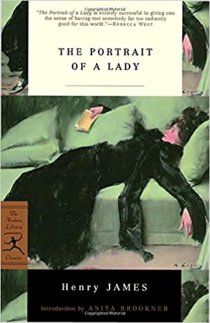
The Portrait of a Lady by Henry James

First, thanks to Bellezza’s open invite to a read-along, posting the photo of John Banville’s newest book Mrs. Osmond, a sequel to The Portrait of a Lady by Henry James. I’d seen the 1996 movie adaptation directed by Jane Campion (The Piano, 1993), but had never read James’s novel. What better time to read both books than now.

The Portrait of a Lady

I got hold of The Portrait of a Lady (Modern Library, just love the cover) read part of it then turned to a sound recording (unfortunately couldn’t find the Juliet Stevenson narrated version). Prompted by JoAnn, I interspersed reading with listening and gleaned much pleasure doing that. Here’s my very short, 5-Star Goodreads review:

“Actually I was listening to the Blackstone Audio version of the book as well as reading  parts of the book to ascertain facts in the story or just savour the passages again. James’s portrait of Isabel Archer is one of the saddest fictional heroines I’ve come across. A reminiscence of Anna Karenina emerged as I read the latter part, but Isabel is a character much more likeable for me. Should she be destined to a ruined life due to a naive misjudgement, ok, maybe even foolishness, by marrying Gilbert Osmond? Osmond is evil personified, and I just can’t shake off the face of John Malkovich (from the movie) whenever I read about his cold, domineering hand over Isabel. Isabel definitely needs redemption and saving grace. So I do hope John Banville’s Mrs. Osmond will grant her that.”

The Portrait of a Lady by Jane Campion

Since the image of John Malkovich kept creeping up my mind as I read the book, I quickly turned to the movie adaptation right after I finished the book. I remember I was most disturbed by Osmond’s callous treatment of Isabel when I first watched it years ago; he appeared as a chilling, silent villain, bullying his innocent victim mercilessly. His stepping on Isabel’s floor-length dress to stop her from walking away was still vivid in my mind.

Nicole Kidman

Now as I saw the movie again, I find the feature more style than content. The tilted camera shots? A bit contrived. Malkovich is still evil, and Kidman still the innocent victim, but there isn’t much complexity in the characterization. The editing and much abridged dialogues leave a vacuum. Considering the rich descriptive prowess of Henry James, much is left to be desired in the film. Yes, I’m one who advocates for the appreciation of books and films as two different art forms, and should not be doing a literal comparison when judging the adaptation. Well, I’m not. I’m weighing the film on its own merits. Yes, set design is rich and some artistic shots, but overall pales despite the sumptuous colours. And, what happened to Nicole Kidman’s hair? As much as I’d appreciated Campion’s works, especially her Oscar winning (Best Original Screenplay) film The Piano, I do feel maybe it’s a good time to do a remake of The Portrait of a Lady.

Mrs. Osmond by John Banville

After the movie I turned right away to Banville’s book. Here’s my review on Goodreads:

Mrs. Osmond

“I jumped to this book right after reading Henry James’s The Portrait of a Lady. As I understand this new work of Banville’s to be a ‘sequel’ to James’s book, I had high expectations of the Booker winning author carrying Isabel Archer’s (Mrs. Osmond’s) story forward, taking her through twists and turns and eventually letting her find redemption and a new life. However this was not to be exactly as I’d envisioned.

Mrs. Osmond is divided into two Parts. Maybe for the benefit of those who haven’t read or reread The Portrait of a Lady in preparation for his book, Banville retells James’s story in Part I. While he’s very detailed in his descriptive style, and to his credit, creeping inside the minds of his characters, he repeats himself frequently in reminding his readers how Isabel Archer got deceived by Madame Merle and fell into the marriage trap of Gilbert Osmond’s. So basically the story remains static throughout Part I.

(Spoiler Alert in the following)

Part II leads us to Isabel’s own scheme of turning the tables on Osmond and Merle, and let them have a taste of their own medicine by just transferring the ownership of her residence the palazzo in Rome over to Madame M. and let the culprits be trapped with each other. That’s all there is to her plan, and it’s an expensive vengeance. As for her own dear life and its purpose for the remains of her days, the path is as obscure as before, albeit Banville has dropped a hint of the suffrage movement being a meaningful direction.

While Mrs. Osmond may not be as gratifying as I’d expected, this is an interesting concept, taking literary classics and imagining a sequel. Now that could lead to a brave new genre of fiction writing.”

A Movie Remake, anyone?

If there’s one, who’d you like to see playing the role of Isabel Archer? Gilbert Osmond? Madame Merle? Director?


***


Related Post:

Can a movie adaptation ever be as good as the book?


Top Ripples 2017

The following is a list of books, movies, and events that stirred up the most ripples for me in 2017. Note that the books and movies are not necessarily releases from 2017 but just what I’ve had the privilege to encounter this year. If you don’t see your book here, it could be that it’s on my TBR list for the coming year. If you don’t see your fave movie here, it could be that I haven’t watched it or that I have but, indeed, it’s not here. Click on the links to read my reviews.


MOVIES

Three Billboards Outside Ebbing, Missouri directed by Martin McDonagh

Mudbound directed by Dee Rees

Certain Women directed by Kelly Reichardt

The Big Sick directed by Michael Showalter

Stefan Zweig: Farewell to Europe directed by Maria Schrader

Wind River directed by Taylor Sheridan

Things to Come directed by Mia Hansen-Løve

Silence directed by Martin Scorsese

The Rider directed by Chloé Zhao (55th NYFF)

The Road to Mandalay directed by Midi Z (NYAFF)

Calvary directed by John Michael McDonagh


BOOKS

At the Existential Cafe: Freedom, Being, and Apricot Cocktails by Sarah Bakewell

Little Fires Everywhere by Celeste Ng

Mudbound by Hillary Jordan

Nutshell by Ian McEwan

Wildlife by Richard Ford

The Noise of Time by Julian Barnes

The God of Small Things by Arundhati Roy


EVENTS

Visit to MoMA Click on the link to my post.

NYFF at Film Society of Lincoln Center: In September I had the chance to attend press screenings of the 55th New York Film Festival. CLICK HERE for all my reviews on AAPress.

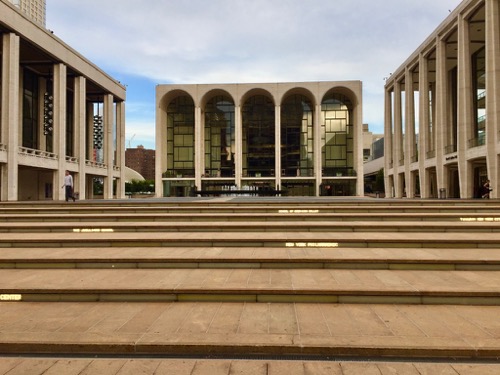
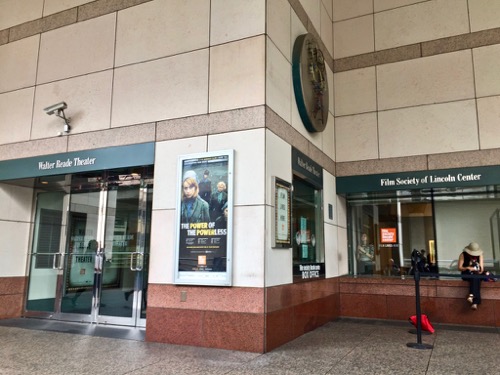
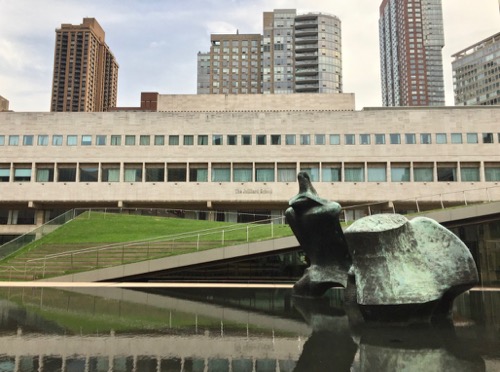
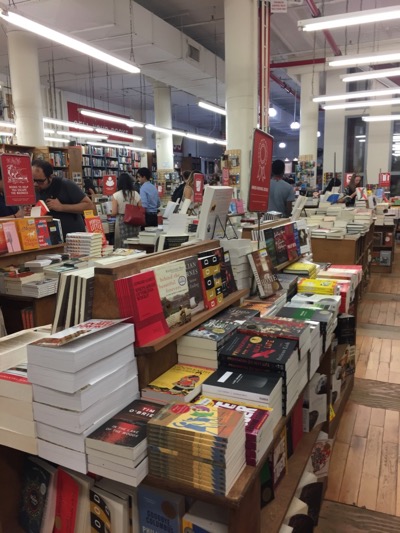
Other than hanging out at the Film Society of Lincoln Centre for the screenings, I’d experienced NYC on the bus, in the subway, and simply on foot, some days close to 20,000 steps, making my NYC trip extra rewarding. Here are some pics of the memorable experience.

Lincoln Center:

IMG_5673.jpg

Film Society of Lincoln Center where the screenings took place:

IMG_5676

The Juilliard School:

IMG_5670 (1)

Central Park:


Reflection in Central Park


One World Trade Center:

IMG_5907.jpg

IMG_5860

IMG_5852 (1).jpg

Strand Bookstore:

IMG_5691

IMG_5688

Brooklyn Bridge:

IMG_5784.jpg


IMG_5828

Where I found the best lobster roll I’d ever tasted, at the foot of the Brooklyn Bridge:

IMG_5837


And that’s a wrap.


***

And to all, a wonderful 2018 for books, films, and rewarding encounters! 

Reading the Season: A Wrinkle in Time by Madeleine L’Engle

For the tenth year, I’m sharing a Christmas read here at the Pond. For the first time, it’s a book written for young readers but is ever so relevant for us grown-ups. Herein lies the ingenuity of writer Madeleine L’Engle. Time to dig out that copy that you might have read when you were a youngster. If you haven’t read it, now’s a good time.


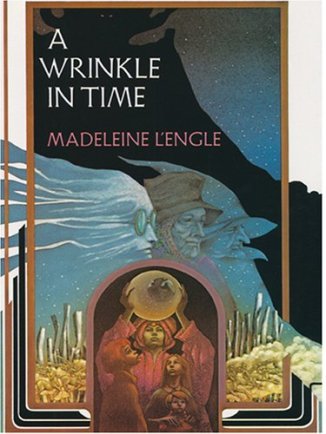
A Wrinkle in Time


Newbery Medal winner A Wrinkle in Time is the first book in the Time Quintet series of fantasy YA fiction about the Murray family, scientist parents and four children Meg, twins Dennys and Sandy, five year-old genius Charles Wallace, and that special friend of Meg’s, Calvin O’Keefe. The deceptively simple odyssey in time and space is packed with wonder and wisdom.

The book not only exudes insights but shows L’Engle’s remarkable foresights. Take this for an example, dematerializing and materializing  for easy transport. Published in 1962, the book came out four years before Scotty beamed Kirk up using the same method in the first season of Star Trek.

Or this fancy idea, ‘tesseracting’, that is, travelling through space and time via a wrinkle in time. The shortest distance between two points is not a straight line, but through a wrinkle when two points are folded. That’s fifty years before Christopher Nolan sends Matthew McConaughey interstellar travelling.

All concepts held in a simple plot. Meg, Charles Wallace, together with friend Calvin, go on an interstellar quest to look for Meg and Charles’ physicist father who had gone missing for almost a year while doing some classified scientific work for the government. This little, unequipped search party is initiated and aided by three celestial beings: Mrs. Whatsit, who’s much wiser than she appears, Mrs. Which, who doesn’t bother materializing but remains as a shimmering beam, and Mrs. Who, who speaks in quotes.

The more a man knows, the less he talks.

Their odyssey brings them finally to the planet Camazotz, where they find Mr. Murray confined by the evil Dark Thing, or IT (Surprise! 24 years before Stephen King’s book and now movie) The smart alecky Charles Wallace is easy prey and quickly influenced by IT. (And for Luddites, what better parallel to address our technology now, the evil IT) Ultimately, it’s Meg, our reluctant and timid heroine, who has to be the one to go fight IT to rescue her little brother.

The foolishness of God is wiser than men; and the weakness of God is stronger than men… God hath chosen the foolish things of the world to confound the wise; and God hath chosen the weak things of the world to confound the things which are mighty.

Meg knows Charles Wallace is not himself but trapped and deceived, and must be snatched from the evil force IT. She has just one weapon as her ammunition, given to her by Mrs. Whatsit, that one thing IT doesn’t have: LOVE. With her single act of bravery, she brings the family together again.

When I was a child, I read like a child, I thought like a child. When I became an adult, I can read like a child and like an adult too. That’s the joy of reading A Wrinkle in Time. One can find pleasure in the adventure and feel the vulnerability of the children, as well delve deeper into its symbolism and parallels, and ponder its layers of meaning.

L’Engle writes to the child and the adult in us. She can convey scientific and spiritual concepts at the same time and in a way that both young and old (and those in between) can enjoy. There’s no conflict between the cerebral and the spiritual; they co-exist comfortably in L’Engle’s work. Not only that, they fuse together and from that alchemy rises a whole new, inexplicable entity: Faith.

That first Christmas day when a baby was born in a lowly manger, the war against IT had started to win. Although the last, painful battle on the hill of Calvary had not been waged, the outcome was cast, just because LOVE came.

And the light shineth in darkness; and the darkness comprehended it not.


The Movie

‘Tis the Season to read or reread A Wrinkle In Time before the movie adaptation comes out in 2018. Helmed by Selma (2014) director Ava DuVernay, screenplay by Frozen (2013) scriptwriter Jennifer Lee, with some stellar beings including Rees Witherspoon, Oprah Winfrey, Mindy Kaling, Chris Pine et al.

***

Past Reading the Season Selections:

2016:  Silence by Shusaku Endo

2015: The Book of Ruth

2014: Lila by Marilynne Robinson

2013: Poetry by Madeleine L’Engle

2012: Surprised by Joy by C. S. Lewis

2011: Walking on Water by Madeleine L’Engle

2010: A Widening Light, Luci Shaw

2009: The Irrational Season 

2008: The Bible and the New York Times by Fleming Rutledge

2008: A Grief Observed by C. S. Lewis

Mudbound: From Book to Screen

The Book

Mudbound is Hillary Jordan’s debut novel, published in 2008. It won the Bellwether Prize for fiction, an award founded by author Barbara Kingsolver to promote literature of social justice and responsibility.

Mudbound Book Cover

The setting is WWII and its ending, as two American soldiers return from Europe to their families in Mississippi. One of them is Jamie, white, a flying ace whose co-pilot was shot dead right beside him in a fierce dogfight. The other, Ronsel, black, a decorated war hero who had fought in the tank battalion under General Patton. Both had experienced the war, seen the atrocity, now back home having to deal with the demons of the aftermath: for Jamie, traumatic shocks and survivor’s guilt; for Ronsel, another barbaric battlefront, racism in the Deep South.

Jamie comes back to a cotton farm owned by his older brother Henry McAllan and stays in the lean-to adjacent to the main house, itself but a shack with no running water or electricity. “Mudbound” is the proper name for it. When the rain pours and the wind blows, the mud drowns and pulls everything down, dirtying all from head to toe. A gloomy place to start anew as a farmer.

They weren’t all like that to start with. Henry has an engineering degree. Laura, Henry’s wife from Memphis, is also college educated. She learns of Henry’s intention to move to rural Mississippi and be a cotton farmer only weeks after her marriage. What’s worse, Henry’s obnoxious father, Pappy, will be coming to live with them.

Ronsel’s father Hap Jackson is the sharecropper working in the cotton fields owned by Henry. Fate brought the two families together. Hap and his wife Florence and all his children have been praying for Ronsel’s safe return from the war. Now their prayers are answered, but only pit Ronsel into another battlefront when he meets Jamie and the two strike up friendship, a despicable taboo.

Written in chapters that reveal the point of view of the various characters, the book is a sort of a literary ‘Rashomon’, how different people see the same event in their own light, or the lack of it. Such a writing structure evokes empathy as Jordan leads the reader to delve into the mind of the characters. And as the final climatic chapters come, we as readers get to know a crucial fact, an essential plot point we are privy to but which even other characters are not aware. We have Jordan to thank for such an insightful way to present the omniscient viewpoint in her storytelling.

The trajectory of the friendship between Jamie and Ronsel is tragically predictable. But what’s not predictable is Jordan’s incisive writing. Sometimes adding a short little phrase at the end of a sentence could make it speak much more. It’s writing like this that makes the book enjoyable despite its subject matter. Take this as an example, simple and subtle, but revealing effectively Laura’s inner turmoil after a tumultuous night:

“… I got up and checked on the children. They were sleeping, with an untroubled abandon I envied.”

Or this line to wrap up a climactic chapter. Such descriptions are perfect cues for nuanced  performance on screen:

“What we can’t speak, we say in silence.”

No spoiler here. But this is the kind of writing that conveys powerfully the emotions and events that sweep the reader up while allowing space to mull things over.

***

The Movie

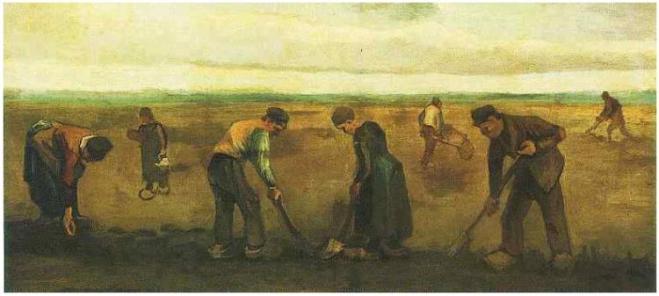
The cinematography (Rachel Morrison) is the most distinguished feature from the beginning. As the title suggests, the colour palette is a spectrum of browns, reminiscence of the paintings of Jean Francois Millet’s farmers toiling in the fields, or this Van Gogh’s Potatoes Farmers:

VVG Farmers-Planting-Potatoes

But before the mud swallows up life, there is the colourful, urbane, Memphis party scene, or the courtship under golden leaves. The contrast is heartbreaking. Laura (Carey Mulligan), who seems to have no say about her life and fate, has to follow her husband Henry McAllan (Jason Clarke) from the city to move to a shack with no running water or electricity on a cotton field in rural Mississippi. Being a landowner is the sole ambition for him.

But of course, not just Laura, but everyone is drawn into the muddy swamp. Hap Jackson (Rob Morgan) is the sharecropper on the McAllan fields. His wife Florence–absorbing performance from “the Queen of Hip-Hop Soul” Mary J. Blige–is soon asked to help Laura with caring for her two girls and household chores. The return of their son Ronsel (Jason Mitchell) and Henry’s younger brother Jamie (Garrett Hedlund) from Europe after the war will eventually link the two families down an inescapable path.

Turning the chapters of internal worlds into visuals on screen is a tall order. Director Dee Rees, who co-wrote the screenplay with Virgil Williams, had done an effective job by voiceovers, which is sometimes frowned upon as they could mean an easy-way out. But here, the voiceovers are intimate and personal. The few simple lines in the voice of the characters draw the viewers closer in. With Carey Mulligan, I admit I’m totally partial. Her alto voice is moving and poignant.

mudbound-movie-stills-4 (3)

Picking the right events from the book is crucial. Director Rees has followed closely to the plot lines using many of Jordan’s words, but also taken the liberty to switch around and combine them in the movie adaptation. Juxtaposing Ronsel and Jamie’s traumatic battle scenes with accidents and illness at home are effective and emotionally engaging; all have to fight their battles, big and small, at home or the frontline.

The most moving juxtaposition comes at the intense, climactic scene where the singing of a hymn replaces dialogues. It’s a juxtaposition of the visual with sound and silence. Jordan’s impressive line from the book is aptly adapted onto screen:

“What we can’t speak, we say in silence.”  Or here, in song.

The ending of the movie is altered, and I’m glad, for they who have suffered so much, so long, deserve a cathartic ending. This is a good example of a fine adaptation. It’s not a page by page transposition from book to screen, ‘faithful’ to the dot. But Rees has taken the liberty to unleash the dramatic, or maybe, melodramatic. It’s always cathartic to see love triumph after all. Mary J. Blige’s “Mighty River” is an appropriate wrap as the end credits roll.

***

~ ~ ~ ~ Ripples
Book and Movie