‘Little Women’ is not just about heart, but mind, aesthetics, and other enjoyment

Greta Gerwig’s adaptation of Little Women is a joyous celebration of family and life. It’s an innovative feature, and a worthy rendition keeping Louisa May Alcott’s story intact and her spirit alive. The storytelling is shifted from linear to juxtaposing the timelines of seven years apart, from the March sisters’ teenage years to adulthood. A break from traditional adaptations of the novel, and a structure modern movie goers are familiar with.

LITTLE WOMEN (1)

So, instead of waiting for two hours to see what have become of the girls, viewers get to see how they’ve turned out from the start and throughout the film as the timelines switches back and forth. One effect is the intermingling of memory and present reality, adding texture to just linear storytelling. The editing is smooth as music and sound often overlap the changes of scenes like a visual dissolve.

The Oscar nominated director (Lady Bird, 2017) has surpassed herself in crafting an exquisite piece of artful creation. Unlike most other movies nowadays, Little Women is shot using 35mm film rather than digital technology. Cinematographer Yorick Le Saux offers viewers the inherent aesthetics of the medium, a grainy, more subtle visuals that augment picturesque New England in the exterior shots, and the depth and mood in the low-light interior. The picnic scene at the beach is pure delight. Mixed with Alexandre Desplat’s original music, the film is a beauty to behold.

Alcott’s 19th century American classic (1868-9) has been transposed to the big and small screen many times. No matter what your previously held memory is, Katherine Hepburn as Jo back in the 1933 first adaptation, or Elizabeth Taylor as Amy in 1949, or the 1994 adaptation with Susan Sarandon as Mrs. March and Wynona Ryder as Jo and a few up-and-coming youngsters such as Kristen Dunst, Claire Danes, and Christian Bale (as Laurie), Gerwig’s 2019 rendition is worthy to be the definitive version from now on as we head into the third decade of the 21st century.

The story is told from the point of view of Jo (Saoirse Ronan), an aspiring writer in New York at present. She reflects upon her path so far and reminisces on her family life, the cacophony of sisterhood in a busy household in Concord, MA, during the Civil War. A single woman author pitching to publishers, Jo’s struggles parallel Alcott’s, a woman writer in a man’s world. As well, it would be apt to refer to Gerwig’s own challenges as a female writer/director in the present day movie industry.

The film is an alchemy of authentic, period backdrop and set design, stylish yet down-to-earth costumes, fused with a fresh and contemporary synergy. Credits go to the four young actors bringing to life the March sisters Meg (Emma Watson), Jo (Saoirse Ronan), Beth (Eliza Scanlen) and Amy (Florence Pugh) as they live through hard times while their father has gone with the Union Army as a volunteer chaplain. Their neighbour and friend Laurie (Timothée Chalamet) remains a perpetual presence in their lives. Their altruistic mother, Marmee (Laura Dern), holds the family together and extends her care to those in need outside their home. She is the example of love and heart for her daughters to emulate. Her screen presence is comparatively small though as Gerwig lets her girls shine, especially Jo and Amy.

A touch of surprise for me is that Gerwig has kept the historic period and setting authentic without adding any postmodern quirks to shock or provoke. Her script allows Alcott’s points to flow out through the dialogues and characters within context. This is not fiery feminism, but an intelligent depiction of the status of women in the historic period. It’s an updated version doing justice to Alcott’s astuteness in her social critique which is, alas, still relevant today.

Kudos to Gerwig in bringing out the youngest sister Amy, not so much as a foil to Jo, but a worthy rival. Amy proves that even though bratty and capricious as a child, she has grown up to grasp a clarity in seeing the worth of a woman in her society, which is, not much. The realistic and rich Aunt March (Meryl Streep) has a firm view of this: it’s a lost cause with Jo who says she will not marry, or Meg who falls for a poor teacher and has to curb her material desires, and Beth’s ill health, she has put her hope on Amy to marry rich to dig the family out of poverty. Amy who has lived with her Aunt for a while when Beth is sick with scarlet fever understands her own situation with a cool head as she articulates it to Laurie. Knowing that she doesn’t have what it takes to be a truly great artist––she whose stance is to be great or nothing––Amy sees her predicament clearly. It all comes down to economics:

And as a woman, there’s no way for me to make my own money. Not enough to earn a living or to support my family, and if I had my own money, which I don’t, that money would belong to my husband the moment we got married. And if we had children, they would be his, not mine. They would be his property, so don’t sit there and tell me that marriage isn’t an economic proposition, because it is. It may not be for you, but it most certainly is for me.

Virginia Woolf’s A Room of One’s Own comes to mind as she argues that economic disparity between men and women systemically disadvantages talented women to become successful.

In her research, Gerwig delves into Alcott’s other books as well as letters, thereby knowing her from a deeper perspective and not just from the novel Little Women. This understanding and appreciation is translated into the screenplay, capturing Alcott’s sharpness of mind and the sensitivity of her soul. Here’s a poignant scene as Jo pours out her heart to Marmee after rejecting Laurie’s marriage proposal. Has she made the right decision? In an interview, Gerwig says the words are all Alcott’s, from her book Rose in Bloom, except the last sentence added by Gerwig herself, equally brilliant, piercingly clear, and very Dickinson:

Women have minds, as well as just heart; ambition and talent, as well as just beauty. And I’m so sick of people saying love is all a woman is fit for. But I’m so lonely.

The March family has had their share of misfortune. But life can be beautiful for those who behold it as such and deem it meaningful to pursue one’s own dream or simply to enjoy one’s passion, no matter how short the allotment of time. Despite challenging personal and social reality, it’s a bliss to be alive, and yes, even better when one succeeds. Gerwig has effectively brought out this theme with both sensitivity and heart. The ending scene speaks to this truth. 


~ ~ ~ ~ Ripples


***


Related Posts:

In Praise of Austen: Virginia Woolf’s A Room of One’s Own

Can a movie adaptation ever be as good as the book?

‘The Farewell’ transcends cultural borders to bring out the universal

When an elderly, beloved family member is diagnosed with stage four lung cancer and has only three months to live, will you let her know the prognosis or hide it and spare her of fear and burden? Chinese-American director Lulu Wang has turned her real-life family experience into first, a radio program on “This American Life” (aptly entitled ‘In Defense of Ignorance’), and subsequently adapted it into a movie, The Farewell. The Chinese title is more direct: 別告訴她, “Don’t tell her.”

The-Farewell-movie-poster

In the film, the family decides not to tell their beloved matriarch grandmother, Nai Nai, (Shuzhen Zhao), about her health status. She’s living contentedly, doing her morning exercise with gusto, relatively independent, with her younger sister Little Nai Nai (Lu Hong) keeping a watchful eye on her.

To arrange for everyone to say farewell and see Grandma Nai Nai one last time, older son Haibin (Yongbo Jiang) and his family will return from Japan, staging a hasty wedding of their son Hao Hao (Han Chen) to his Japanese girlfriend of just three months, Aiko (Aoi Mizuhara). Their plan is to have the celebration in the city where Nai Nai lives, Changchun.

Nai Nai’s younger son Haiyan (Tzi Ma) and his wife Jian (Diana Lin) will go back from New York for the wedding. Such a ruse is not received well by their daughter Billi (Awkwafina), born in China but raised in America, who upholds the values of individual rights and transparency.

Easy, her parents tell her she doesn’t need to go as they are afraid her Americanized expressiveness will give it away the moment Nai Nai sees her face. Billi won’t stand for that either, for she loves her grandma, with whom she’d had a close bond as a child until she left for the U.S. at the age of six. She still keeps in touch with Nai Nai by phone with her passable Mandarin. So Billi goes to China on her own, a surprise for the whole family––a pleasant one for Nai Nai, but a precarious risk for everyone else.

Since its debut at Sundance early this year, The Farewell has been winning audience’s hearts. Wang’s film is greeted as another strong voice in the diversity movement within the movie industry, following the flagship crowd-pleaser Crazy Rich Asians last summer. With a mostly Chinese main cast, shot in Changchun and New York City, Wang’s feature aptly depicts the cultural clashes immigrants face when leaving their home and settling in the West, or the older, first generation with their America born or raised children.

The wide reception the movie has been garnering is a reflection that this kind of dilemmas or conflicts are not limited to one cultural group. The issues families face, illness and death, parenting our own elderly parents, resolving disagreements and maintaining relationships are but some universal experiences joining us all.

The Farewell is Wang’s second directorial work after her 2014 debut feature Posthumous. In this her sophomore film, looks like she has established a personal style of her own. The slow pacing depicts effectively the internal world of the characters. While the middle section feels a little bogged down, the ensemble performance of the whole cast soon lifts us up and lands us on a higher plane.

Awkwafina’s (a.k.a. Nora Lum) performance is spot-on in depicting the conflicting emotions Billi is riding through. It’s obvious she has found her niche and developed into a full-fledged actor who can carry a story soundly on her own. She has morphed from rapper to actor, from being just a sidekick in Ocean’s Eight and Crazy Rich Asians to a dramatic lead. Thanks to Wang’s script, Awkwafina has several cathartic, moving moments showcasing her skills. For this role, she won a Golden Globe for Best Actress, Motion Picture – Musical or Comedy, and became the first actor of Asian descent to capture that top prize.

Humor is the key to the heartstrings of the audience, and Wang has splashed it throughout readily, however deadpan it may come in. While the subject matter is somber, the comedic elements are ubiquitous. Some may require discernment from the audience to laugh where it’s meant to laugh, and refrain from it when it’s meant to be serious; that’s an interesting observation I got as I sat in the theatre. Dramedy? Dark comedy? Light drama? Genre fusing no doubt.

The music of the film particularly stands out. The selections could well be influenced by Wang’s own classical music training before her filmmaking career. During the pivotal scene of the wedding banquet, the operatic aria “Caro Mio Ben” is performed (soundtrack sung by South Korean soprano Hyesang Park with piano accompaniment by Wang herself.) The longing tune alone captivates, but knowing the lyrics will add credit to the mindfulness of Wang’s selection: “Dearest, my beloved, believe me at least this much, without you, my heart languishes.”

Composer Alex Weston’s original score augments the emotional power of the story by weaving a soulful voice motif across the scenes, stirring up a reflective and poignant tone throughout. Indeed, the fusion of Western music in an Eastern culture is all realistic in our contemporary world, its purpose could well be drawing out the universal, uniting us all in our humanity.

Overall, the ingenuity of Wang’s feature has effectively bridged two seemingly dichotomized cultural views, the East and the West, regarding the serious issue of to tell, or not to tell when a beloved, elderly family member is diagnosed with terminal illness. In just 100 minutes of screen time, Wang has brought a contentious, ethical issue to a human level and wrapped it with heart. The Farewell is a worthy addition to a hopefully sustaining trend of diversity and representation in the film industry.


~ ~ ~ 1/2 Ripples

***

TIFF19 Review: Military Wives delivers a soothing tune

If being called a ‘feel good movie’ would right away make you think of a thoughtless and syrupy offering aiming just to please, Military Wives would shatter that myth. The reason for the ‘feel good’ effect in this case is largely because it is based on inspiring, real-life events. The spouses and partners of a British military base band together for mutual support and socializing when their loved ones are deployed to Afghanistan on a 6-month tour. At first just for coffee and a sip of wine, later they discover the joy of singing together as a choir. The subsequent events lead them to the Festival of Remembrance at Royal Albert Hall, deep friendship, and healing beyond their expectations.

Military Wives
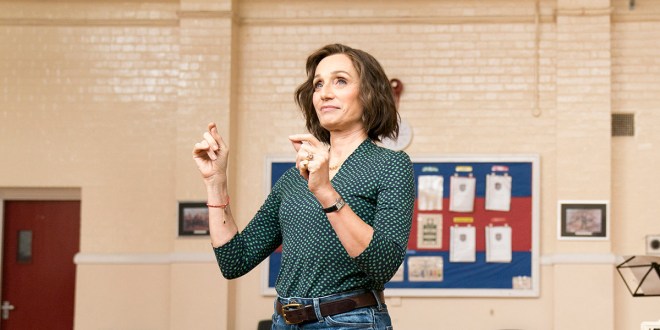
Kristin Scott Thomas in Military Wives. Image Credit: Courtesy of TIFF.

The Military Wives Choir phenomenon had inspired the development of the BBC TV series The Choir. And now its movie version Military Wives has just world premiered at the 44th Toronto International Film Festival. According to their website: There are over 2,000 women with a military connection in 74 choirs based across the UK and in British military bases abroad, including Cyprus, Belgium, Germany and the Netherlands. As well, other countries’ military wives have followed suit, organizing their own choirs. Those with no prior knowledge of this global movement would find this a fresh and interesting subject to put on screen.

Directed by Peter Cattaneo (The Full Monty, 1997) and written by Rosanne Flynn and Rachel Tunnard, Military Wives touts an effective cast to augment their singing. Kristin Scott Thomas is perfect as Kate, the Chair of the social committee on the fictional Flitcroft military base. As the wife of a Colonel, she comes with certain prescribed authority but her bossy personality denies her genuine friendship. Kate has to work together with the leader of the women’s social group, the casual and congenial Lisa (Sharon Horgan). During a brainstorming session, the idea of a choir comes up, something which neither of them has the expertise, or that the group is particularly well-tuned for the task. But living in an isolated military base, the two leaders have to take up the challenge on their own.

Scott Thomas and Horgan are lively foils playing off each other with spot-on comedic timing, both trying to lead the choir in their own way at the same time. Kate is formal and traditional; Lisa is spontaneous and contemporary. While hymns are Kate’s choice for their repertoire, Lisa has no trouble getting the group to belt out pop songs and spark up camaraderie.

Their story however, is deeper than just the catchy tunes. Kate’s son was killed in a previous deployment. Despite her gung-ho and cheery surface, deep down she is still grappling with her loss, and now her husband has gone off to a war zone yet again. Scott Thomas has no trouble bringing out the complexity of her character.

While Kate has to deal with personal loss, Lisa has to raise a rebellious teenaged daughter at the brink of endangering herself. Clashes between Kate and Lisa are inevitable. But instead of telling a mundane, formulaic story, Military Wives succeeds in eliciting genuine emotions and poignancy. These words from a young wife well express their precarious daily life: “every time the phone rings and the doorbell goes, I feel sick.” So, when one of them does meet such a tragic fate, the story gets especially real and poignant.

The ‘feel good’ element is how the women deal with their own personal issue and accept each others’ foibles to work together in harmony, reaping mutual support and deep friendship. The motto of the Military Wives Choir is ‘Stronger Together’. The movie brings out this credo movingly.


~ ~ ~ Ripples


***


Read my other TIFF19 Reviews:

Coming Home Again directed by Wayne Wang

Interview with director Wayne Wang

Parasite directed by Bong Joon-ho

A Girl Missing directed by Kôji Fukada


With Bernadette missing, time to revisit Linklater’s ‘Before’ trilogy

Watching Where’d you go, Bernadette has prompted me to reminisce on Linklater’s dialogue-filled trilogy. Re-posting my review of Before Midnight in the following.

**

We are gleaners of memories. An interesting parallel applies to the two characters Celine and Jesse as well as ourselves as audience. But if you haven’t seen Before Sunrise and Before Sunset, it would enhance your viewing pleasure to watch them first.

Flashback: Before Sunrise (1995)

Before SunriseTwo young people, Parisian Celine (Julie Delpy) and American Jesse (Ethan Hawkes) meet on a train passing through Europe. They strike up a conversation and become so in-tuned with each other that when the train arrives Jesse’s stop in Vienna, he convinces Celine to get off with him even though her destination is Paris. There for just one night until sunrise, they walk around the city and talk about life, death, love, religion, relationships, and being transients… for they know this may well be their only encounter with each other in both of their lives. The next morning Jesse has to fly back to the U.S. As they part, they promise to meet again in six month at the same hour, on the same train platform. Throughout the film, we feel fate, or whatever you call it, has a strong presence in their short few hours together. We feel their sincerity in capturing those precious  moments, as we hear Celine’s words ring true:

“If there’s any kind of magic in this world… it must be in the attempt of understanding someone sharing something.”

Flashback: Before Sunset (2004)

Before SunsetNine years after that chance meeting, Jesse is in Paris on the last leg of a book tour. He has written a book based on that memorable encounter nine years ago. At the Shakespeare and Company bookstore, Celine shows up. They now meet for a second time, again for a short few hours before Jesse has to leave on a plane to fly back to the U.S. Their conversation reveals that, alas, their well intended reunion six months after their first chance meeting has turned into a star-crossed, missed opportunity. After that, fate has led them down separate paths. Jesse is now married and has a son. Celine, still on her own, yearns for that first romance to develop but now seems even more elusive.

To the present: Before Midnight (2013)

Before Midnight

So we have been following Jesse and Celine like a longitudinal study, albeit meeting them just twice within this eighteen year period. In the first two films, director Richard Linklater has us follow Jesse and Celine in real time through long takes, walking along with them in Vienna and Paris, listening in on their conversations and see them pour their hearts out, just to be heard, to be known. Those were romantic moments. This time is summer in Greece; this time is reality check.

We see Jesse and Celine now married. What happens in between those nine years is that Jesse has divorced his wife in Chicago, come over to Paris, married Celine and together they have two lovely twin daughters. But things aren’t so idyllic, for Jesse is troubled by not being around for his now young teenaged son Hank from his previous marriage and whom he can only see in the summer. The film begins with Jesse seeing his son off at the airport.

For the next 15 minutes and in one stationary take through the front windshield of the car, we see a happy couple Jesse and Celine driving from the airport to a Greek country house, with their twin daughters sleeping in the backseat. We hear them talk, yes, they love to talk to each other, just as we’ve seen in the past.

In the setting of an idyllic seaside residence, Jesse and Celine join a small gathering of writers. we see them prepare and eat healthy Greek salads and discuss equally idyllic topics such as writing, love, knowing each other, virtual reality (yes, for the contemporary effect), and being transients in life. Again, that first train encounter comes to mind. In conclusion they drink to ‘passing through’.

The next act is reminiscence of previous Before films… Jesse and Celine walk to a hotel paid for by their writer friends, who have also taken up the duty of babysitting their twins so the two of them can fully enjoy each other for the night. For twenty minutes the camera follows them in real time strolling through some scenic rural town toward their country hotel, exchanging thoughts like before. But no, not totally like before, for now they are eighteen years older, 41, and each with emotional undercurrents running deep.

Five minutes in the hotel room, discordant riptides begin to surface. Talk turns into quarrel. Why, this is just too real. In the past, we see them only in romantic mode. Now as they expose their underlying thoughts and suspicions, tempers flare, words turn callous. We would silently say ‘ouch!’ occasionally.

The beginning scene of the first film, Before Sunrise, has become a stark foreshadowing… sitting near Jesse and Celine on that train, two middle-aged couple argue fiercely in German. Seeing their temper flare but not understanding what they were arguing about, Jesse and Celine ponder on the question of how two people can grow old together in harmony.

Now here in what is supposed to be an ideal get-away, for twenty minutes we are the invisible witnesses of a marital conflict, and we would want to stay in there to see what happens next, not because of the schadenfreude effect, but because this is just too real.

Romance is holiday, marriage is work.

Hawke and Delpy own these scenes depicting realistically what marriage could entail. Other films readily come to mind… Ingmar Bergman’s Scenes From A Marriage (1973) and Woody Allen’s Husbands and Wives (1992). Before Midnight is a contemporary version, with a highly watchable backdrop and natural performance. Unlike Bergman and Allen, Linklater is commendable in crafting a more positive ending. It’s refreshing to see a glimmer of hope at the end of nasty quarrels.

In the final act, Jesse attempts to woo his wife back. How he does it is most endearing. Every moment in the present is an opportunity to create a fond memory to look back to in the future. This complicated package called love is a piece of work. Director Linklater and his two stars, who co-wrote the screenplay with him, might well have passed to us the secret of marital success… Before too late, glean fond memories from the past to sustain the relationship at present; before too late, create more loving memories to carry it into the future.

One line from Celine in Before Sunset is most apt here: “Memory is a wonderful thing if we don’t have to deal with the past.” Jesse might have known this too well, not to leave the present a mess for future to deal with, but leave it as a pleasant memory to cherish in the days ahead.

With a trilogy of films beginning with the word ‘Before’ in the title, we should know that time is of the essence. Time to make the present a memorable past for the future, before too late.

That line still lingers as the film ends… ‘To passing through.’

~ ~ ~ 1/2 Ripples for all three films

***

Related Posts on Ripple:

Where’d You Go Bernadette: from book to screen

Boyhood: The Moment Seizes Us

‘Faces Places’ with Agnès Varda and JR

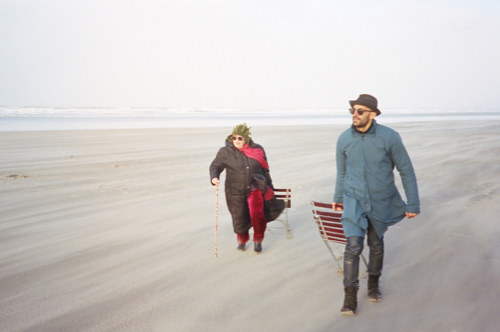
From high art in the gallery (my last post) to street art, here catching the last chance for a Paris in July entry, I’m presenting the fascinating documentary, a road movie of making art in the open milieu of villages and among the working populace. Faces Places (2017) is an account of the venerable auteur of the Nouvelle Vague (The French New Wave: Goddard, Truffaut…) Agnès Varda (1928-2019), then at 89, going on a road trip with photographer and artist JR to scout for ordinary people to photograph in various obscure locales in France.

the world's longest baguette .jpg

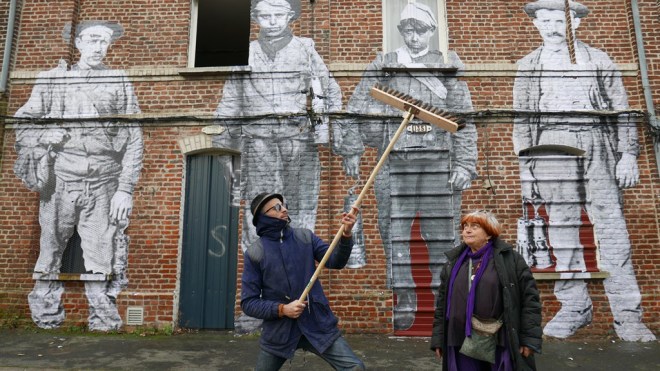
Their larger than life photo prints are then pasted onto buildings or open places for everyone to view, evoking the shared joy of living, working, and the collective memory of a meaningful past. Like this one with photos of pioneer miners pasted on a row of dilapidated homes slated for demolition in a miners’ community. The one remaining homeowner who refused to vacate her house was moved to tears upon seeing the completion of the project.

Miners from days past.jpg

Art undefined and unconfined, once pasted onto these surfaces, JR’s black-and-white photographic images convert the whole building or structure into an art form. The world is his canvas. Unlike Banksy, JR is transparent with his creative process, and lets the public view his work in progress. A TED Prize winner (2011), his large-scale, participatory art projects are installed all over the world, albeit sometimes illegally according to local laws, but the people welcomed him.

At age 89, Agnès Varda became the oldest nominee in Oscar history when Faces Places was nominated for Best Documentary for the 2018 Academy Awards. It’s now on DVD and Blu-ray. Her numerous older works may not be accessible for us so readily. Check your streaming or on demand services. I was able to watch two of her excellent films Vagabond (1985) and Cleo from 5 to 7 (1962, click on link to my review). Don’t miss this short clip on IMDb “Agnès Varda in Memoriam”.

The soul-stirring original music by Matthieu Chedid complement the meaningful duo collaboration. At the beginning, JR talks with Varda to organize the making of their joint project. We see them exchange the following dialogues:

AV:  What I like was meeting amazing people by chance.

JR:  So you want to carry on that way, with no plan or itinerary?

AV:  Yes. Chance has always been my best assistant.

JR:  Do you think chance will work for both of us?

AV:  Maybe.

From the film, we can see chance had worked for both of them marvellously.


AVJR-Chairs-on-the-beach-Normandy (2).jpg


~ ~ ~ ~ Ripples


***


Paris in July is hosted by Tamara at Thyme for Tea

PIJ2019 Tamara

Other Paris in July 2019 Posts on Ripples:

Pictures at an Exhibition 

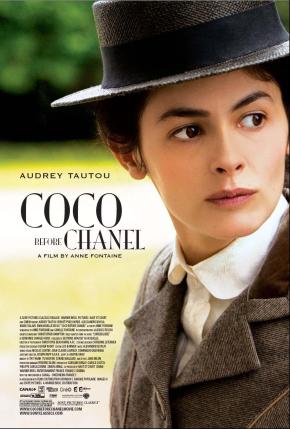
‘Coco Before Chanel’ directed by Anne Fontaine

‘Gemma Bovery’ to cool your summer day

‘A Sunday in the Country’ is an Impressionist Cinematic Painting

‘Coco Before Chanel’ directed by Anne Fontaine

According to the French Ministry of Culture department that produces and promotes French cinema, 27 percent of French movies were directed or co-directed by women in 2017 compared to 20.8 percent in 2008. (source article here) An improvement, but they are still not pleased with the disparity and working towards a more equal representation.

For comparison, in Hollywood, according to the annual USC Annenberg Inclusion Initiative study (Jan. 2018), the figure is 4%, after examining 1,100 popular films. Now this result is found in the midst of the #MeToo and #TimesUp movements. For those interested to find out more, here’s a comprehensive report from Annenberg (July, 2018) comparing many more aspects of the film industry.

I just find these stats alarming. This is not a post to present an analysis of the issue, that warrants a thesis, but these figures just need to be shared. For Paris in July this week, I’ve chosen a film that showcases a woman succeeding in a man’s world, overcoming what looked to be insurmountable odds. Among its many accolades, I find this one notable: Best Movie About Women, given by the Women Film Critics Circle Awards (2009).

Another film from French director Anne Fontaine. Unlike Gemma Bovery in last week’s movie, this is a real-life heroine.

Coco Before Chanel (2009)

I’ve appreciated filmmaker Fontaine not doing a whole life biopic on the fashion icon, but focuses on her early years. What was her background? How did she overcome life’s obstacles to create a path for herself?  The intermingling of fate and choice is one important theme Fontaine had touched on in this cinematic account.


Coco Before Chanel


Gabrielle Chanel’s life is an extraordinary story, and Fontaine respects that. Before she became the world famous icon Coco Chanel, she was Gabrielle Chanel born on August 19, 1883, in Saumur, France.

The film opens with the camera following two young girls being driven to an orphanage. We soon find out they are sisters Gabrielle and Adrienne. What makes the scene sadder is that the driver of the horse-drawn cart in which the sisters are transported is their father. We never see his face. He doesn’t turn to say goodbye. He never visits.

That’s a short beginning. The next scene Fontaine shows us is fifteen years later in a cabaret where the sisters sing and dance. In there, Gabrielle (Audrey Tautou) meets Étienne Balsan (Benoît Poelvoorde), an older military man, paying passing interest in Coco, a name he’s created for her. Fontaine is effective to show us what Coco is like within just a few minutes of the cabaret scene. She’s a calm, self-assured woman, won’t sell herself to appease the guests; as a consequence, she and her sisters are fired. Looks like they’re happy to leave the place too.

They keep their day job as seamstresses but soon part as Adrienne is leaving with a man to live in Paris. Coco decides to go to Compiègne to look for Balsan. Balsan agrees to let her stay there in his country mansion temporarily but Coco has her resourcefulness to change Balsan’s mind. She learns to ride a horse on her own in a day, and soon breaks into the social circle of Balsan’s by distinguishing herself as a woman with style, talent and skills.

A raiser of race horses, Balsan’s social milieu and the horse races where members of the fashionable class exhibit their haute attires inspire the ingenuity of Coco. She begins to design hats for the ladies, and establishes herself as a unique contrarian. She wears a simple straw hat, alters a vest, a white shirt and a tie from Balsan’s closet to suit herself. Her style is “dresses without corsets, shoes with no heels, and hats with no feathers.”

Among Balsan’s business acquaintances is Boy Capel (Alessandro Nivola), a young Englishman. Coco’s short, intimate relationship with him soon changes her outlook in love and life. After a sad incidence, Coco becomes more independent, confident with herself and her skills, and determined to move to Paris to open a hat boutique. With the financial help from Balsan, she begins that first step, and the rest is history.

Tautou has come a long way from her role as Amelie. She is suitably cast as Coco, reflecting the character of the self-made persona. The signature suits she tailors for herself exude elegance devoid of adornments; the simple hats she designs for herself well-match her cool subtlety. Fontaine captures Coco with meticulous care, from nuanced expressions to her confident posture. Of course, kudos goes to costume designer Catherine Leterrier who won, deservedly, a César Award for Best Costume Design and garnered an Oscar nom.

Composer Alexandre Desplat’s score adds to the enjoyment. Not an epic of extraordinary stature, but like the hat Coco wears, the film is stylish without overstating, composed and effective.

~ ~ ~ Ripples 

Coco Before Chanel is on Netflix.

***

This is a review for Paris In July hosted by Tamara at Thyme for Tea.

PIJ2019 Tamara

Some Other Related Ripple Reviews of French Films:

Cleo from 5 to 7

Things to Come

I’ve Loved You So Long


Urban Progress, The Wasteland and An Easter Thought

Many contemporary films from China showcased at Film Festivals in recent years tend to use the country’s fast-paced urban development as backdrop. This new wave of filmmakers situate their characters and tell their stories amidst dilapidated buildings marked for demolition, sometimes the whole community torn down to make way for new projects. In the name of progress, many are uprooted and displaced.

In Life After Life (2017), we see a village abandoned as its former residents have all moved to the city. In Dead Pigs (2018) we see the feisty owner of the last house in an urban community standing alone, refusing to sell to the developer. The acclaimed auteur Jia Zhangke’s Cannes winning A Touch of Sin (2013) follows desperate individuals wrestled down by the strong arms of economic progress and capitalistic greed. His latest “Ash is Purest White” (2018) may be of a crime genre but we see the protagonist being swept along the tumultuous torrents of technological change and urban development, seeking whatever humanness that remains.

The most haunting has to be the 2018 film by the talented, young director Hu Bo, An Elephant Sitting Still. Hu parallels the desolation of the urban environs with the inner world of his characters: Despondent youths in a school bound for demolition, not that they have bright futures even if the school remains; aimless adults desperately seeking connection but ending in betrayal and loss; a grandfather facing gloomy days ahead as he’s cut off from his son’s family… Hu’s accusation of his society was astute and unsparing.

At one point in the film, The Wasteland is alluded to, certainly not only referring to the physical environs. That it is mentioned as a deadpan jest to make fun only exposes the indifference of the speaker to its meaning. Tragically life imitates art, Hu took his own life during the film’s post-production. He was 29.

Eliot wrote The Wasteland in the aftermath of WWI, lamenting the desolation and that dry, cracked piece of soil deep in the human soul, derelict and barren in the midst of post-war development and the loss of spirituality.

“What are the roots that clutch, what branches grow
Out of this stony rubbish? Son of man,
You cannot say, or guess, for you know only
A heap of broken images, where the sun beats,
And the dead tree gives no shelter, the cricket no relief,
And the dry stone no sound of water. Only
There is shadow under this red rock,
(Come in under the shadow of this red rock),
And I will show you something different from either
Your shadow at morning striding behind you
Or your shadow at evening rising to meet you;
I will show you fear in a handful of dust.”

….

Cut to Easter. I’ve been pondering these seemingly unrelated ripples from films during this Easter weekend, at a place thousands of miles from home. Then came this Easter thought. When that stone was rolled away at the grave, the Son of God reversed the trajectory of the human race. With that ultimate miracle of the resurrection, He’d blown life into the dry stone that is the human heart, turned wasteland into fertile soil, opening up the way to save us from ourselves.

Herein lies hope.

***

Reading the Season: A Verse from Madeleine L’Engle’s The Irrational Season

‘Reading the Season’ is my Christmas post every year. It’s always a pleasure to spend some quiet time amidst the hustle and bustle of the festivities to meditate on the essence and meaning of the Season. Yes, something like the perennial “A Charlie Brown Christmas”.

In recent weeks, one of my previous ‘Reading the Season’ posts has seen particularly high traffic, and that’s where I selected a few of Madeleine L’Engle’s poems. Indeed, the brilliant L’Engle had given us more than just A Wrinkle in Time. The versatile writer had 63 publications to her credits.

My favourite of her works is The Crosswicks Journal series. In there is the alchemy of wisdom, experience, and faith. Rereading Book 3 The Irrational Season this time, I came upon this verse which I didn’t notice much before. But this year’s different, for there’s a newborn in the family.

DSC_0453.jpg

Here’s L’Engle’s short intro before the poem:

“When I wrote the following lines I thought of them as being in Mary’s voice, but they might just as well be in mine––or any parent’s.” (p. 115, The Irrational Season)

Now we may love the child.
Now he is ours,
this tiny thing,
utterly vulnerable and dependent
on the circle of our love.
Now we may hold him,
feeling with gentle hands
the perfection of his tender skin
from the soft crown of his head
to the sweet soles of his merrily kicking feet.
His fingers softly curl
around one finger of the grownup hand.
Now we may hold.
Now may I feel his hungry sucking at my breast
as I give him my own life.
Now may my husband toss him in the air
and catch him in his sure and steady hands
laughing with laughter as quick and pure
as the baby’s own.
Now may I rock him softly to his sleep,
rock and sing,
sing and hold.
This moment of time is here,
has happened, is:
rejoice!

Child,
give me the courage for the time
when I must open my arms
and let you go.

**

And oh what letting go it was for Mary that day at the foot of a cross, that ultimate letting go, and with it, the awakening which must have brought her back to that first night when she gave birth in the manger.

***

Above Photo Credit: Diana Cheng. An evening view from Ontario’s Point Pelee National Park, September, 2018.

Past Reading the Season Posts:

2020: Jack by Marilynne Robinson

2019: A Hidden Life, a film by Terrence Malick

2018: A Verse from Madeleine L’Engle

2017: A Wrinkle In Time by Madeleine L’Engle

2016:  Silence by Shusaku Endo

2015: The Book of Ruth

2014: Lila by Marilynne Robinson

2013: Poetry by Madeleine L’Engle

2012: Surprised by Joy by C. S. Lewis

2011: Walking on Water by Madeleine L’Engle

2010: A Widening Light, Luci Shaw

2009: The Irrational Season by Madeleine L’Engle 

2008: The Bible and the New York Times by Fleming Rutledge

2008: A Grief Observed by C. S. Lewis

‘Roma’ and the Power of Childhood Memories

This awards season, a black-and-white film stands out. Many have noted its cinematography and director Alfonso Cuarón’s versatility, from his multiple Oscar-winning space drifting Gravity (2013) and adaptation of P. D. James’s dystopian thriller Children of Men (2006) to the current Roma, a semi-autobiographical work. Surely I agree to all these, but it’s the personal resonance that the film evokes that makes it so memorable for me.

ROMA.jpg
Yalitza Aparicio as Cleo in Alfonso Cuarón’s Roma. Photo courtesy of TIFF.

I first saw Roma at the 2018 Toronto International Film Festival in September. The large screen effects are enfolding. Cinematography is thoughtful and the state-of-the-art Dolby Atmos sound mixing–especially the climatic ocean scene towards the end of the film–was totally engulfing, as if I was alone in the raging sea, despite sitting in a fully packed theatre.

Watching it again this time on my laptop streaming from Netflix is another experience. The intimacy and allowance for repeat viewing and listening to specific dialogues (re-reading the subtitles) are the obvious benefits. Especially with our local theatres not screening the film, the streaming service has a definite role to play in bringing the worthy feature to more viewers. Certainly if Roma plays in your local theatre, do watch it on the big screen as the production was meant to be seen.

What’s most moving is the director’s gentle rendering of his maid and nanny Cleo (first-time performance by Yalitza Aparicio) in his childhood home in Roma, an upper-middle class neighbourhood in Mexico during the years 1970-71. Cuarón juxtaposes Cleo’s personal ordeal with the political backdrop of the time, and weaving an unassuming life of a maid with episodes of an earthquake, a fire and a threatening ocean climatic scene. Other than these, the everyday work of a maid are deceptively mundane, for underlying are the emotive elements of human relationships.

Cleo is an essential member of the household, cleaning, cooking, serving, and taking care of the four children and their parents. She’s the one who puts the younger ones to bed and wakes them up in the morning. From the nuanced, naturalistic framing and some deeply affective moments, Roma is an ode to those who care for children not just out of duty but genuine love.

The reciprocal sentiments from the children, mom Sofia (Marina de Tavira) and grandma Teresa (Verónica García) make the glue that hold the family together at a critical time when the father (Fernando Grediaga) disappears, supposedly on an academic trip to Quebec but coincidentally is seen on the street with another woman. Here the role played by Cleo, a maid, is delicate and precarious. “No matter what they tell you, we women are always alone,” wife Sofia says to Cleo one night returning home by herself half drunk. Cleo shares her pain.

The film belongs to Yalitza Aparicio who plays Cleo with unadorned naturalness. Before this first time acting, she was a preschool teacher. This could well explain her instinctive fondness for the children under her care in the film. Cleo has her personal sad experience with a young man with a different agenda, and it is the family and the children that rekindle her zeal after a personal tragedy, a remarkable exchange of mutual support and kindness.

As the cinematographer himself, Cuarón’s planning of shots is meticulous and masterful. The camera captivates from the opening credits. We see the close-up frame of what looks like clay tiles of the ground, yes, they are, as water is splashed on them and sounds of sweeping and cleaning are heard. As the story unfolds we learn that it is Cleo cleaning dog wastes in the family porch. But don’t lose sight of this seemingly mundane scene. Once water is splashed on the flat, dirty tiles they reflect an open sky above with an airplane flying across from afar. That is the exact ending shot of the film. From waste-filled clay tiles on the ground to the open sky, water is the agent of reflection, a cleansing element, and towards the end, water marks a confirming love and new zest for life.

Last week, I made a long distance phone call to the maid and nanny of my family when I was growing up in Hong Kong. She is 97 years old now and living on her own, still goes to the market to buy fresh ingredients to cook for herself. I was able to chat with her and send well wishes. Childhood memories are powerful markers of identity and experiences; thanks to Roma for evoking such while one is unaware, as it works magic in creating new imagery to sustain them.


~ ~ ~ ~ Ripples


***

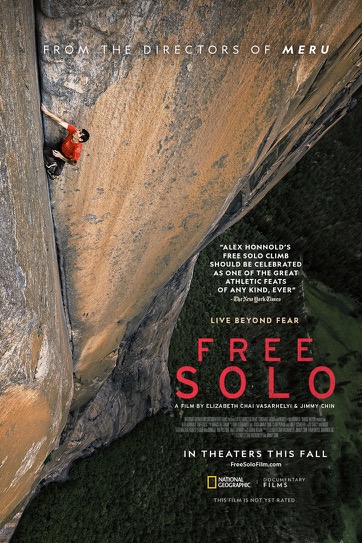
‘Free Solo’ Documents More than a Historic Climb up El Capitan

NG-FreeSolo-KeyArt-Postcard.98c47f91 (2)
Credit: National Geographic

Free Solo was showcased in the 2018 Toronto International Film Festival in September and won TIFF’s People’s Choice Awards in Documentary. It is currently showing in selective cities.

In the movie listing of our local theatres, Free Solo appears right after First Man, a Gala feature at TIFF18 that is now released widely. Other than the alphabetical coincidence, their being listed together is most apt, for the parallels are significant. Both involved the audacity of single-minded, death-defying courage, and yes, maybe a self-driven obsession.

The scale of the two endeavours massively differ. While First Man dramatizes astronaut Neil Armstrong’s (played by Ryan Gosling) attempt to place human’s first step on the moon, a mission propelled by the leading edge of science and technology of the time, Free Solo documents professional rock climber Alex Honnold scaling the 3,000 feet vertical wall of El Capitan in California’s Yosemite National Park using the lowest tech available: his bare hands and feet, solo and free from ropes and safety gears.

Both Armstrong and Honnolds knew clearly the risks involved. Director Damien Chazelle of First Man spends substantial screen time on the human cost of the space missions and the lives lost, while Honnolds was well aware of professional climbers before him falling to their death. Both men however had to focus on the task at hand and cast the risk factors aside. Worrying and negative thinking would only impede the mission in front of them. Such matters are better left to their significant others, Armstrong’s wife and sons, and Honnold’s girlfriend.

For one man to rise to a death-defying challenge, his loved ones boldly bear the emotional costs. The equation looks to be a zero-sum game.

Free Solo 1 (1)
Alex Honnold pondering El Capitan. Credit: National Geographic

Kudos to the filmmakers of both features then, for bringing the issue to the forefront. The overarching parallel of First Man and Free Solo looks to be the emotional toll on a hero’s  significant others. One conflicting sentiment that is so intensely displayed by actor Claire Foy as Armstrong’s wife Janet is realizing that, to her husband, the mission appears to be more important than the family. In Free Solo, Honnold’s girlfriend Sanni had shed silent tears and borne the reality that she had to step aside and not be an obstacle blocking Honnold’s ambition. Getting her boyfriend to move from living in a van to a house, and gently warming him up to a meaningful relationship could be her mountain to scale.

Husband-and-wife directors Jimmy Chin and Elizabeth Chai Vasarhelyi captivate audience with their stunning cinematography in chronicling star rock climber Honnolds’ career and his rise to the peak (so far). What’s thought-provoking is their focus not just on the physical but the psyche of those involved, and especially girlfriend Sanni’s emotional toll and those of close friends in the climbing community such as Tommy Caldwell, who has given up free solos now that he’s put his wife and children into the equation.

Free Solo 8 (3)
Free solo, the climb. Credit: National Geographic

But this is after all a documentary of bravery. Casting aside sentiments, doubts and softening vibes, it’s pure determination, courage, athleticism and obsession that drove Honnold to a free solo climb up El Capitan. Tim McGraw’s new song “Gravity” written with Lori McKenna for the film points out the other side of the equation, one must conquer fear to reach one’s goal when it’s so close; to Honnold, it’s worth the risks. “Gravity is a fragile thing / All of the work that you left in your roads / All of the dreams and that all / Now you can finally see them / They meet you at your destination / Now that you have made it so far.” (listen to the song)

Director Jimmy Chin‘s camera team consisted of all professional rock climbers/photographers. They situated themselves on the vertical granite wall in strategic locations to capture Honnold’s ascent. Remote cameras were also set up to minimize distractions. They knew dead silence and the least commotion were crucial for their work; a single pebble falling off could break Honnold’s concentration. For the free solo climber, one small misstep would bring certain death. So this was no spectacle for millions to watch on live TV like the lunar landing. That would only add more pressure. This is just one man’s audacious will to fulfill a lifelong dream.

Chin knows exactly the risks and what it takes to look fear in the face and not flinch, being an acclaimed mountaineer and photographer/filmmaker himself. When only 23, he had organized and led an expedition to Pakistan’s Karakoram mountains, and the rest is climbing history. Chin had since conquered numerous mountain tops as well as captured dangerous shots published in National Geographic and lauded worldwide. His award winning film Meru (2015) co-directed with wife Elizabeth Chai Vasarhelyi documented his three-men expedition to Meru Peak in the Himalayas, a peak more difficult than Everest which he’d reached several times. In 2016, he climbed Everest again and skied down its vertical surface.

Free Solo Director Duo
Directors Elizabeth Chai Vasarhelyi and Jimmy Chin. Credit: National Geographic

Chin had known Honnold for about a decade and had gone on climbing expeditions together. Both knew each other well before committing to a documentary of the free solo up El Capitan, a National Geographic production.

The story doesn’t end here, at least I hope. Cut to  director/mountaineer/photographer/filmmaker Jimmy Chin.

Born in Minnesota and grew up in a Chinese immigrant family, Chin learned hard work and humility from his librarian parents. To shatter the stereotype of a Chinese boy growing up in America, Chin’s story is exemplary. Surely he excelled in academics, read voraciously, and yes, played the violin and practiced martial arts, but Chin distinguished himself by wearing courage on his sleeve and manifested great strength and athleticism through his climbing expeditions. When as a young college grad, he shifted his devotion to mountaineering and adventure, a passion his parents did not embrace, all of them would not have imagined what a second generation Chinese immigrant boy born in Minnesota could have grown up to be.

Now, a documentary on Jimmy Chin, anyone?

~ ~ ~ 1/2 Ripples

***

All photos in this post courtesy of National Geographic
https://www.nationalgeographic.com/films/free-solo/

Source articles:

How Jimmy Chin Filmed Alex Honnold’s Death-Defying Free Solo

Photographer Jimmy Chin on Mastering the Art of Chill

Jimmy Chin: Why climbing Meru Peak is tougher than Everest


‘Shirkers’ Could Well Kick Off Another #Movement

Writer-director Sandi Tan’s bio reads like an anime heroine. Born in Singapore, where chewing gum is outlawed and family expectations confining, teenager Sandi led a subversive life immersed in the rad, forbidden culture of Singapore. At the prodigious age of 14, she wrote for “Big O”, a magazine of Singapore’s underground rock scene. At 16, she started her own zine “The Exploding Cat” with best friend Jasmine Ng. It attracted a cult following; they received fan letters from New York, London, Paris, Jerusalem, even from prisons. But that’s not the exciting part. At the ripe old age of 19, Sandi made the first indie road movie of Singapore, with a few devoted cinephiles and curious onlookers.

Sandi Tan in Shirkers

It all began when an enigmatic American expat called Georges Cardona arriving in Singapore and started a film class attended by mostly 18 and 19 year-old girls. Sandi started Georges’ class with great aspirations. He took her and a few other gals under his wings, went on night drives after class and introduced them to the French New Wave.

In the summer of 1992, energized by youthful zeal, Sandi made a movie called “Shirkers” with people from her filmmaking class, a remarkable feat. She wrote the script and played the main role, a 16 years-old assassin called “S”. Her best friend Jasmine was editor; another friend Sophie Siddique was producer, and Georges, the director. Sophie as executive producer wrote a letter to Kodak and received all film supplies free. How they rounded up supporting actors and extras, location scouts, sound and techs was an endeavour only youthful verve would attempt.

After the completion of the filming, Sandi and her friends left Singapore for University; she went to England, Jasmine to New York, and Sophie to L.A. Georges remained in Singapore. And that was when the girls lost contact with him. None of them had seen any of the footage, and Jasmine had all the intention to return after school term to do editing work. Georges had disappeared without a trace and taken with him all the 16mm reels of their “Shirkers” film. A large chunk of the girls’ life had gone missing, especially Sandi’s, who had put her heart and soul into the venture, and who, on her own, had gone on a road trip in America with Georges, by then her best friend, a man twice her age with a wife and kid.

With Georges’s mysterious exit, the filmmaking dream of the clan had all but vanished into thin air. After finishing university in England, Sandi went back to Singapore and wrote for Singapore’s Straits Times as a film critic, apparently a dream detoured. Yet life went on. A few years later she proceeded to NYC for film school at Columbia University and later settled in the U.S. She had since made a couple of short films and written a novel, The Black Isle (Hachette USA), which was well received. But at the back of her mind, she could not forget “Shirkers”. Then, twenty-five years later, that fateful day arrived.

Without giving out spoilers, somehow events led to the recovery of the complete “Shirkers” in its original condition in 70 canisters of 16mm film, together with storyboards, scripts, mementos and props used in the production. An amazing turn.

The present documentary is not only about the creative process in filmmaking by a group of young enthusiasts, but also a chronicle of a period in Singapore’s social and cinematic history. What’s more, Sandi Tan’s feature could well kick off something like the #MeToo Movement, not about sexual advantage taken by the powerful, but about adults in mentoring positions toying with the hopes and dreams of their protégé, about the betrayal of trust and the robbing of rightful ownership of creative endeavours. But of course, Georges could well be just a deeply disturbed soul shirking from real life challenges and responsibilities.

Shirkers the documentary is a cinematic collage of 16mm film, digital, Super 8, slides, animations, hand-drawn illustrations and writing, a visual cacophony of creative expressions. Cinematographer Iris Ng (The Apology, Stories We Tell) has done a realistic capture of old friends reuniting with the Jasmine and Sophie interviews plus those of other personnel associated with the original production. Jasmine is now a filmmaker and Sophie faculty of Film at Vassar.

The editing in bridging the 25-year-gap is seamless, the mood personal and quirky. Notable also are the sound mixing and the original score. Shirkers is more than just a chronicle of a mysterious lost-and-found, but a narrative that transcends grievances to situate personal experience in a larger social and cultural context.

Shirkers premiered at the 2018 Sundance Film Festival in January where Sandi Tan won the World Cinema Documentary Directing Award. The film was later acquired by Netflix and released October 26 via the streaming service.

Latest news is that Shirkers is among the 166 entries for Best Documentary Feature in the coming Oscars. Nominations for the short-list will be announced on Tuesday, January 22, 2019. The 91st Academy Awards show will be broadcast live on Sunday, February 24, 2019.


~ ~ ~ Ripples


***

Update Nov. 16: Shirkers has just been nominated for Best Documentary Independent Spirit Award.

WWII Comfort Women Speak Out in ‘The Apology’

In Min Jin Lee’s acclaimed novel Pachinko, there’s this episode in an early chapter. Sunja is harassed by three Japanese high school boys while heading home after shopping at the market. Hansu appears just in time to rescue her. After that, he kindly warns her:

 “Listen, you have to be careful not to travel alone or ever be out at night. If you go to the market by yourself, you must stay on the main paths. Always in public view. They are looking for girls now.”

       She didn’t understand.

       “The colonial government. To take to China for the soldiers. Don’t follow anyone. It will likely be some Korean person, a woman or a man, who’ll tell you there’s a good job in China or Japan. It may be someone you know. Be careful, …” (p. 32, Pachinko)

Korean-American author Lee is subtle here and does not dwell further on the issue. But this episode offers a realistic backdrop to her story set during the Japanese occupation of a large part of Asia. Sadly, the two sisters who work in Sunja’s mother’s boarding house are lured to work in China, with no news after that.

What was Lee referring to?

United Nations researchers report that between 1931 and 1945, the Japanese military forced an estimated 200,000 to 400,000 women and girls into institutionalized sexual slavery. They are called comfort women, a term used by the Imperial Japanese Army, euphemism for sexual slaves. Girls and young women were kidnapped, tricked, or taken away from their homes in Korea, China, Philippines, and Indonesia to comfort stations, another euphemism, for military brothels. To say they were victims of sexual assault was a description put mildly, because many of these women were literally raped on a daily basis.

THE APOLOGY 05_Director Tiffany Hsiung_Image courtesy Icarus Films
Writer-director Tiffany Hsiung

Chinese-Canadian filmmaker Tiffany Hsiung’s documentary The Apology follows three surviving comfort women. To honor them with dignity, Hsiung calls them ‘Grandmas’: Grandma Gil in Korea, Grandma Adela in the Philippines, and Grandma Cao in China.

Since 2009, the Toronto-based writer/director began documenting survivors of this silent atrocity, silent due to the long-held shame and fear of rejections of sexual violence victims. The six years of making The Apology had turned Hsiung into an advocate for WWII comfort women, seeking justice and sharing their stories in communities and universities in North America.

What had been a silent issue was first exposed by Korean survivor Kim Hak-sun, who spoke out in 1991, nearly five decades after World War II. Her brave act of putting away the shame and openly testifying to the horrible ordeals she had suffered prompted many other survivors to follow her lead. Such war-time atrocities began to draw international attention. The voices of these comfort women soon became a poignant outcry, a pioneer of social activism way before the present-day #MeToo Movement.

Grandma Gil of Korea was only 13 when she was forcibly taken away by Japanese soldiers from her home in Pyongyang to be a comfort woman in Harbin, China. She was seriously damaged physically, had gone through four operations during which she was made sterile. Today in her late 80’s, she is still separated from her family as Pyongyang now is in North Korea. She dreams of unification one day so she can see her family again.

Grandma Adela in the Philippines was 14 when she was taken away. Hsiung’s documentary shows us an actual comfort station in the Dona Baray Garrison, now desolate. Adela had not told her late husband about her past fearing rejection, but now felt she needed to let her son know. Hsiung’s camera captured the quiet understanding from her son as he learned of his mother’s painful experience during the war, a shameful secret no more. Sadly, Grandma Adela passed away after that before the production was completed.

Grandma Cao in a village in rural China had never told her adopted daughter. Again, Hsiung’s filming opened up the channel of release for her. There were three comfort women in her village. They were actually already documented by a local writer and a book had been published.

Grandma Gil in Korea is the most outspoken among these three survivors. She continues the protests that Kim Hak-sun had started. She bravely goes to Japan personally to speak to young women of a new generation, students who have not heard of such atrocities. She sits in street protests, over a thousand of such gatherings had taken place so far, yet all but fallen on deaf ears. Not only that, these woman protesters were often met with counter accusations and derogatory insults shouted at them.

A recent comment by a Japanese politician could well have represented the official view. Mayor Hashimoto had said that ‘sex slavery was necessary.’ His political party stated there was no need to apologize.

So, the protesters pressed on. Eventually 1.5 million signatures were gathered from across Asia and as far as Canada. Grandma Gil and several supporters personally delivered the boxes of petitions pressuring Japan to own up to their war crime and offer an apology. The documentary follows Grandma Gil all the way to the office of the United Nations Human Rights Council in Geneva, Switzerland, where the group delivered the boxes of signatures and met with the UN Human Rights Commission.

As of today, no apology has been given by the Japanese government.

The Apology is produced by the National Film Board of Canada. It will premiere on PBS’s POV Monday, October 22, 2018. Check your local station showtime, filmmaker info, trailer and other resources including reading list and lesson plan here:

http://www.pbs.org/pov/theapology/

POV streaming: http://www.pbs.org/pov/theapology/

***

~ ~ ~ 1/2 Ripples