August at the Pond

Our summer is short. After a few weeks of record high temperatures, as August arrives, I can feel the cooler air creeping in.

DSC_0126.jpg

At the Pond, August brings a harvest of berries and edible delights for the birds:

DSC_0158


DSC_0147

Here are some of the guests relishing Nature’s feast.

Forget about worms, these succulent fruits are tastier. The young Robin learns fast:

The Robin

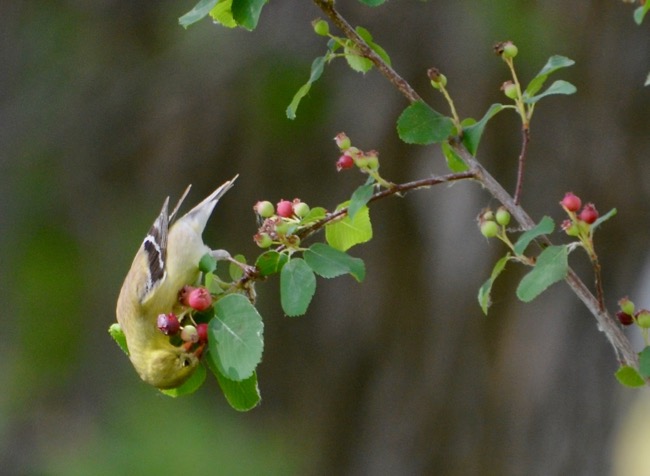
The American Goldfinch, bending over forward:

Bend over forward

The Cedar Waxwing knows her etiquettes, always graceful and poised:


Wax Wing


Among them all, I must say my favourite is the Yellow Warbler. They are not fond of berries, but there are lots to eat around here. I’m most grateful for their taste. Here’s why: Mosquitoes eat me; warblers eat mosquitoes. Simple as that.

Warbler

Warbler 1

Warbler 3.jpg

What more, it’s no simple feat to sing with a mosquito in your mouth:

Still sing.jpg

In a few weeks, the Warblers will be gone, and I’ll be capturing scenes of Autumn. Yes, that soon. But for now, I’ll feast on summer sights. So, eat to your heart’s content, my Warbler friend.

***


A Movie to Celebrate Canada Day

Happy Canada Day to all my Canadian readers!

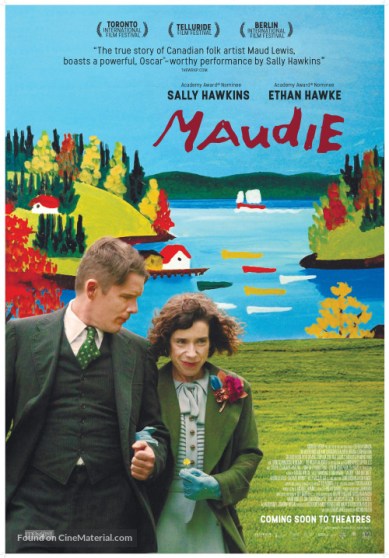
To celebrate Canada’s 150th birthday, and pay tribute to the Canadian spirit, I’d like to recommend the movie Maudie, about the folk art painter Maud Lewis (1903-1970). Born in Yarmouth, Nova Scotia, Maud lived with her brother Charles in their family house until he sold it. In the movie, Maud overhears Charles telling their Aunt Ida he will pay her to accommodate and look after Maud in her home.

Maudie

Born with a small frame, disfigured facial features and deformed fingers, Maud suffers from severe rheumatoid arthritis as an adult. Such handicaps however do not cripple Maud’s sanguine spirit and fierce independence. While staying at her Aunt’s place, she answers an ad for a housekeeper posted on the bulletin board of the local store. She jumps at the opportunity as she sees it as a way to move out of her Aunt’s and strive for her own independence.

The house that needs a housekeeper is home to Everett Lewis, a fish peddler in the village of Marshalltown, on Nova Scotia’s northwestern shore. Everett’s abode is a cramped, one-room hut with no running water or electricity. With her arthritic hands Maud cleans the floorboards and tends to Everett’s daily needs, cooking on the wood stove and bearing with Everett’s demeaning outbursts. The rule of the house is, he first, then his dogs, his chickens, and lastly, Maud.

Does Maud feel defeated? Well sure, but just temporarily. Her resilient and cheerful spirit can move even a mountain of a misanthrope. Not long after, she and Everett got married. “A pair of odd socks,” she says of their seemingly incompatible personalities. We hear it often nowadays, “diversity is strength”. The Lewis’s household is evidence to that.

And of course, there’s the economic factor.

Maud turns Everett’s dingy house into a pleasant abode. She begins to paint on every surface: the walls, windows, door, stove, washbasin with lively flowers, birds, and whatever she sees in nature. She also picks up small, discarded wood boards to paint scenery and snowscapes. Not long after, a sign “Paintings for Sale” is placed outside their tiny house to diversify the household economy.

Deer painting

Maud is one successful entrepreneur. Her folksy paintings soon draw the attention of passers by; the cheerfully decorated little house on the wayside soon becomes a stop for designated shopping and repeat customers, a point of interest for visitors. Later, it becomes a converging site for news crews and journalists. Each piece of board painting is sold for about five to six dollars, a card, 10 cent. Everett is the finance minister and holds the purse strings.

The movie presents Maud’s story with beautiful and absorbing cinematography. The pace is slow, allowing viewers to immerse in the outwardly harsh life of Maud’s, in contrast to her vibrant spirit and life-affirming talents. A tiny window is a frame of the world outside. The last part of the film comes to a sad note as Maud succumbs to illness of the lungs.

Now, to the making of the movie. The subject is Canadian, Maud Lewis is very much a Canadian folk art icon, her works are in the collection of the Art Gallery of Nova Scotia. The filming location is Newfoundland and Labrador. But note this: the movie is helmed by Irish director Aisling Walsh (BAFTA nom Fingersmith, 2005), Maud is played by the English actor Sally Hawkins (Oscar nom Blue Jasmine, 2013), Everett is played by American actor Ethan Hawke (Oscar nom Boyhood, 2014). If I were a protectionist ruler, I wouldn’t have let them come in to make it.

But then again, this is Canada, eh?


~ ~ ~ 1/2 RIPPLES

***

RELATED POST ON RIPPLE EFFECTS:

Séraphine and the wrought-iron chair 


10 Years

WordPress tells me I’ve been blogging for 10 years now. It’s been a life-changing decade. From a film lover writing reviews just for personal journalling, I’ve developed into writing to share. Hundreds of movies later, I’m now an Arts and Film Writer for Asian American Press. In recent years, I started covering Film Festivals; my appreciation for cinema art and independent films from all over the world had grown deeper.

Books, I’ve read a few, but then again, too few to mention. My TBR piles is expanding much faster than I can tackle. To manage them, I use the simplest method: deleting them from my memory. Many I’ve bought from the annual Book Sale (several posts), but I’ve since donated them back. There’s one on my Goodreads ‘currently reading’ shelf for years now which I don’t want to give up just yet, and that’s Proust’s In Search of Lost Time Vol. 3, The Guermantes Way.  Some day.

Other than books, movies, and my special interest in the transposition of one into the other, I’ve also become an avid birder. Arti of Ripple Effects has turned into a nature paparazzo. I’d thought of starting another blog just for nature photography but thought, hey, everyone needs a respite even from books and films. The Pond is open to all to throw in their two pebbles, make some ripples while enjoying a piece of natural beauty.

WordPress tells me in the side bar that I have 6,843 followers. Simply amazing, considering the number of comments I receive in each post. No matter, commenting isn’t a requirement when you visit the Pond. I’m just glad to know you’ve enjoyed your stay, even if it’s a short minute or two. And to all visitors and followers, a hearty thank-you. You’ve made my presence in the blogosphere meaningful.

To celebrate 10 years, to say goodbye to Spring (already) and welcome Summer, I’ll leave you with a few photos I’ve taken in the past few days.

The forest by the Pond:

DSC_0497 (2)

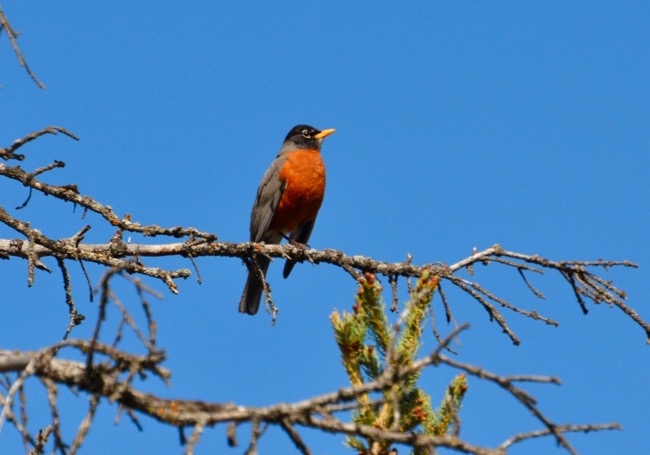
They may be the most common bird, but every Robin is a welcome sight against the blue sky:

DSC_0211

The well-groomed and handsome Cedar Waxwing, always camera ready:

DSC_0428 (1)

True to their name, the Yellow-headed Blackbird on a cattail:

DSC_0344


DSC_0182.jpg

The female Red-Winged Blackbird. Nature endows with different features:

DSC_0060

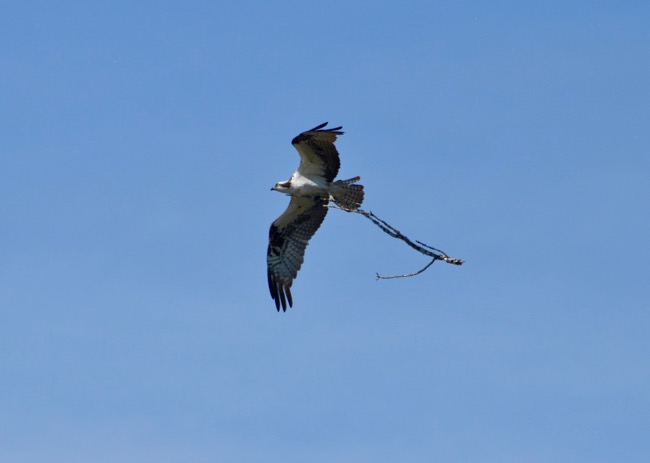
Up in the sky, an Osprey is busy transporting his building materials:

DSC_0289

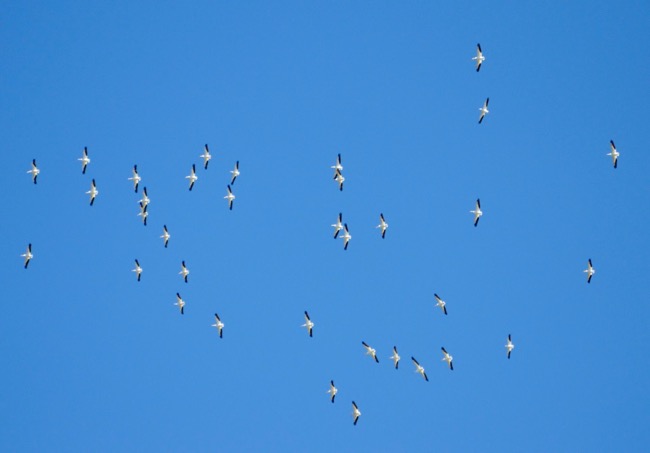
And a touring group of Pelicans, looking for my Air BnB?

DSC_0479 (1)


More to come.


***


Owl Babies’ Day Out

It has been three weeks since I last posted about a first sign of spring: Grizzly bear coming out of hibernation. Now, spring is in full force. Another sure sign in my neck of the woods is Great Horned Owlets out to enjoy the sunshine.

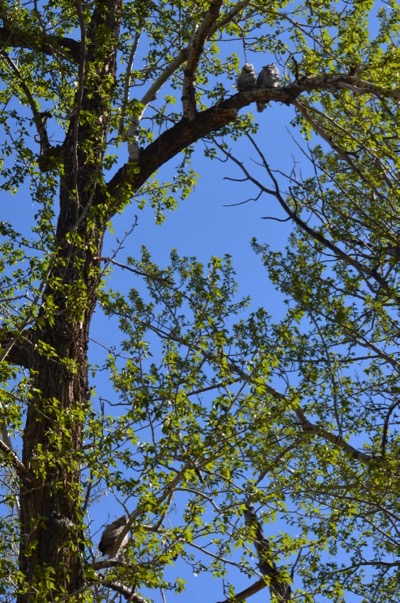
First, let me play a little ‘Where’s Waldo’ with you. Can you find the owls in this photo? How many do you see?

DSC_0613

The obvious ones are on the top branch, mom on the right with her baby, and in the lower, closer to the trunk, another owlet.

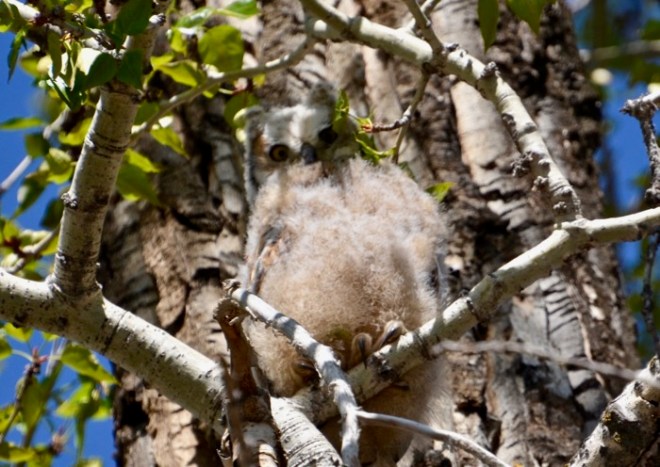
Some are just born to be more independent. Take a closer look at this cool, furry owl baby perching on her own branch. Seeing me eagerly snapping her photo, she sits still for me, giving me a big smile even:

Doll


She reminds me of those Ukrainian dolls.

Furry

But don’t think she’s all innocent and vulnerable, look at her claws:

Claws

And to the mother and the other baby in the upper branch, again, they know how to please us nature paparazzi, just by being themselves:

DSC_0607

Babe & Mom.jpg

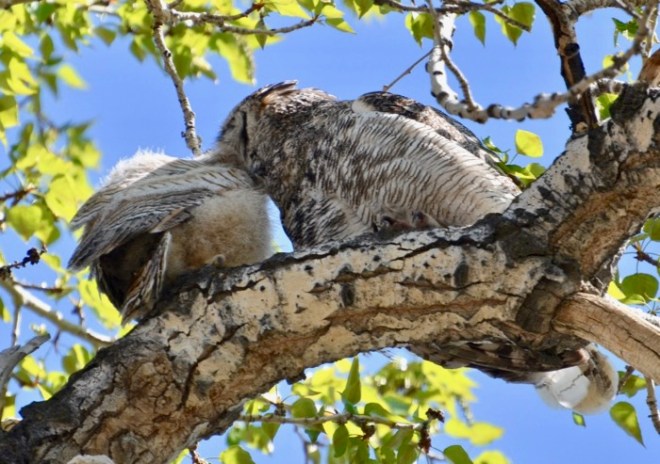
And here, a little action for us, Mom preening her baby. The term of endearment is instinct:

Mom preening baby

Preening babe.jpg

I can hear the baby say: “Thanks Mom. Happy Mother’s Day!”

***


Diary of a Country Priest by Georges Bernanos

I return to The Diary of A Country Priest by French author Georges Bernanos, (Journal d’un curé de campagne, 1936) perennially at Easter time. Like Endo’s Silence, it reveals candidly a priest’s suffering and struggles in the midst of a harsh and unwelcome world. Unlike Silence though, light shines through the cracks more warmly. Power through weakness, life conquering death, the essence of Easter.

***

The Diary of a Country Priest Book Cover

A young priest comes to his first parish, the rural town of Ambricourt, filled with humble hopes. All he wants is to serve the people, to give of himself, to bring God’s love. But as soon as he sets foot in the village, he is engulfed by hatred and rejection. There are dark secrets too sinister to be exposed. The young priest is an unwelcome alien. In a town afflicted by hypocrisy, pride, anger and bitterness, he is despised, taunted and ridiculed. His own inexperience is no match even for the children in his catechism class, especially the precocious Seraphitas, a girl ‘with a hardness far beyond her years.’

Ambricourt is a world afflicted by the ‘leprosy of boredom’, a microcosm of the human condition. Bernanos uses diseases to illustrate his point well. The young priest himself is being slowly consumed by terminal illness. The pain in his stomach ultimately defeats his body, cancer. His diet consists mainly of bread dipped in wine which he makes for himself, and some potato soup. Poverty in materials parallels the frailty of his body to take in solid food. None of these though can compare to the sufferings in his spirit. Many a times we see him in the Garden of Gethsemane, pleading for strength in anguish. But he faithfully presses on, using his diary to confide his deepest thoughts, a means to commune with his God.

On the outskirt of Ambricourt is the Château of the powerful M. le Comte. The Count needs no priest to know about his adulterous affairs, this time, with the governess Mlle Louise. His wife Mme la Comtesse is totally absorbed by her long-held bitterness and grief from the loss of her young son. And his daughter Mlle Chantal is a deeply disturbed girl eaten up by anger and jealousy. Soon, she will be sent away to England, a most convenient plan devised by her father.

It is with this deep mess of a family that the young priest finds himself entangled. The most intense scene of the whole book, the climatic moment, comes when the priest goes to the Château to meet with Mme la Comtesse. She lost her beloved son when he was only eighteen months old, a child hated by his jealous older sister Chantal.

On his last day they went out for a walk together. When they came back my boy was dead.

Mme la Comtesse is fully engulfed by hatred for her daughter, grief for her lost son, and bitterness towards God.

Hearing her speak, a tear flows down the face of the young priest. “Hell is not to love any more, madame.” The young priest responds. And with miraculous strength, he delivers the following words.

… But you know that our God came to be among us. Shake your fist at Him, spit in His face, scourge Him, and finally crucify Him: what does it matter? It’s already been done to Him.

Towards the end of some soul piercing exchanges, Mme la Comtesse kneels down, releases her pain, and receives blessings from the young priest. Afterwards, she writes to him in a letter:

… I have lived in the most horrible solitude, alone with the desperate memory of a child. And it seems to me that another child has brought me to life again…

And this young child, a priest, consumed by illness, wreaked by frailty of spirit, can only marvel at the power through weakness:

Oh miracle — thus to be able to give what we ourselves do not possess, sweet miracle of our empty hands!

Not long after this, he succumbs to his illness. A life too short, a mission seems unaccomplished. But his last words faintly uttered on his deathbed are as powerful as the God who sends him:

Does it matter? Grace is everywhere…

And in the film, these three words leave me with one of the most poignant endings of all the films that I’ve seen:

“All is grace.”

 ***

~ ~ ~ ~ Ripples

English Edition of The Diary of a Country Priest by Georges Bernanos, translated by Pamela Morris, Perseus Books Group, Philadelphia, PA, 1965, 298 pages.

Journal d’un curé de campagne, 1936, was winner of the Grand prix du roman de l’Académie française.

Upcoming Post:

The Film Review of Robert Bresson’s Diary of a Country Priest (1951).

Related Post:

Silence the Movie Arrives in the Most Unwelcome Time

Silence by Shusaku Endo


Memorable Movie Love Quotes

The following is my Valentine post back in 2008 and an update after Downton. Re-posting here today for reminiscence. For several years, this post held the highest view records on my blog. I’d received 60+ comments suggesting more quotes. I regret I don’t have the plugin to copy them all here. But I’m sure we can start anew and update with fresh ones.  You’re welcome to add your fave movie love quote in a comment.
 
                                                                                    
                                                       ****   
 
 
To celebrate Valentine’s Day, I’ve compiled a list of memorable quotes from movies, all on the theme of love. All come from movies I’ve seen, some I’ve reviewed on this Blog (click on title to my review). They represent dialogues that have stirred some ripples in one small heart. And love…being a many splendid thing, embraces all kinds of human relationships, and transcends cultures and boundaries.
.

Here’s Arti’s Collection of Memorable Movie Love Quotes:

  • Medicine, law, business, engineering, these are noble pursuits and necessary to sustain life. But poetry, beauty, romance, love, these are what we stay alive for. — Dead Poets Society
  • The greatest thing you’ll ever learn, is just to love and be loved in return. — Moulin Rouge
  • The things that people in love do to each other they remember, and if they stay together it’s not because they forget, it’s because they forgive. — Indecent Proposal
  • I like you very much. Just as you are. — Bridget Jones’s Diary
Bridget Jones' Diary
.
  • When the planes hit the twin towers, as far as I know none of the phone calls from the people on board were messages of hate or revenge — they were all messages of love. — Love Actually
  • Maybe it is our imperfections which make us so perfect for one another. — Emma
  • And now, I’m back…and I’ve lost her all over again. I’m so sad that I don’t have Kelly. But I’m so grateful that she was with me on that island. And I know what I have to do now. I gotta keep breathing. Because tomorrow the sun will rise. Who knows what the tide could bring? —Castaway
  • I don’t believe in quantum physics when it comes to matter of the heart. — Bull Durham
.
.
  • Shoot me. There’s no greater glory than to die for love. — Love in the Time of Cholera
  • I need to feel strongly, to love and to admire, just as desperately as I need to breathe. — The Diving Bell and the Butterfly
  • For you, a thousand times over. — The Kite Runner
  • Come back…Come back to me. — Atonement
  • Natalie:  Do you believe in love at first sight?
    John:  Yes I do. Saves a lot of time. — The Stickup

While a few are lucky enough to save time and escape the torments of love by creating a lasting flame from the first spark, some have to go through tumultuous pining, even the arduous and humbling experience of transforming oneself to gain requited love. And who, other than the following, epitomizes such kind of yearning:

Love Quotes From Downton Abbey:

“I love you Mr. Bates. I know it’s not ladylike to say it, but I’m not a lady and I don’t pretend to be.”  — Anna, S1E5

“I’m not a romantic… But even I concede that the heart does not exist solely for the purpose of pumping blood.” Violet Crawley, S2E2

“I’d rather have the right man, than the right wedding.” — Anna, S2E5

***

You all are welcome to contribute to this list. Just submit your favorite movie love quotes in the comment box below…and have a memorable Valentine’s Day!

 ***

Here’s the link to my original post where you can read all the comments.

The Salesman: A Timely Film

It’s time we get used to reading subtitles.

The Salesman is one of five nominees for Best Foreign Language Film in the upcoming 89th Academy Awards on February 26. Due to the executive order banning travellers from seven Muslim countries, Iranian director Asghar Farhadi will not be attending. The director has indicated he will not accept any exception made for his case. Co-star Taraneh Alidoosti has stated she will boycott the ceremony as a protest.

Whose loss is it that Asghar Farhadi is banned from coming to the Academy Awards?

After the untimely passing last year of Iranian auteur Abbas Kiarostami (Certified Copy, 2010), Farhadi continues to carry the legacy of fine Iranian filmmaking with international accolades. Starting with About Elly, which he won Best Director at Berlinale in 2009, Farhadi went on to capture both the Oscar and the César Award in France for Best Foreign Language Film with A Separation (2011). The Past (2013) brought him two Cannes prizes. His newest work The Salesman won a Best Screenplay for the writer/director and a Best Actor award for his star Shahab Hosseini at Cannes last year. Now North American viewers have a chance to see this engaging family drama.

thesalesman_poster_2764x4096-copy

The story starts off with an evacuation of an apartment building on the verge of collapsing. A couple, Emad (Shahab Hosseini, A Separation, About Elly) and Rana (Taraneh Alidoosti, About Elly) are among the anxious residents fleeing the building. We can see large cracks on the wall in their bedroom. Responding to the shout for help, Emad diverts to his neighbor’s unit to carry his adult, mentally ill son on his own back to go down the stairs. A seemingly spontaneous move in the rush of evacuation, Farhadi lets us see an act of kindness from his main character.

A friend offers Emad and Rana a recently vacated apartment unit to stay. Its previous tenant still has her belongings stored in one room. She has left in haste, a shady figure who has frequent male clients coming to her unit. Emad only learns of this after a violent incident that happens to his wife. Rana is alone in the unit one night. She leaves her apartment door ajar for Emad, thinking he will come home soon while she steps into the shower.

Emad returns home to see traces of blood on the stairs and soon learns that his wife has been taken to the hospital emergency by neighbors. We as viewers do not know exactly what has happened but can conjecture by the circumstance. We see a traumatized Rana with stiches on her forehead. She is released to recover at home, but refuses to let Emad call the police. Later, as Emad discovers a cell phone and a set of keys left by the intruder, he decides to investigate on his own and takes matters into his own hands.

Since the incident, husband and wife begin to drift slowly apart, Rana being reticent and Emad vigilant. Here we see Farhadi’s signature cinematic handling: incisive depiction of domestic tensions shrouded in Hitchcokian suspense. We soon forget we are watching an Iranian couple living in Tehran. As with his previous works, Farhadi is effective here in engaging his viewers and to elicit empathy for both the husband and the wife despite their very opposite response to the attack.

Emad and Rana belong to a local theatre group. They are presently rehearsing for a run of Arthur Miller’s Death of a Salesman, playing Willy and Linda Loman. Farhadi deftly intertwines the on-stage and the real-life couple with intricate parallels. In the play, we see the demise of Willy Loman and the end of a relationship; in their real life, we see Emad and Rana’s marriage deteriorate, and a demise of a different kind for Emad. The cracks on the wall above their bed at the opening scene is now an apt metaphor, their once close bond slowly crumbles.

Actually, there are two plays involved in the film. The obvious one is Miller’s. The other is easy to miss. During the day, Emad is a teacher. In one scene, we see him teaching a play called The Cow, a work written by the prolific Iranian writer Gholām-Hossein Sā’edi. Reminiscent of Kafka’s The Metamorphosis, The Cow evokes much enthusiasm in his class of teenage boys. The play is an allegory about a man who owns the only cow in a village; his daily life is closely tied to the animal, his identity defined by his ownership of this unique possession. When one day he loses his cow in an accident, he ends up turning into one.

Here are two prominent lines. A student asks: “How can you turn into a cow?” Emad answers: “Gradually.” Sounds like a joke, but no student laughs. Farhadi subtly leads us to see how.

The last part of the film is the most crucial. Emad’s good detective work leads him to come face to face with the attacker. He has him locked in a room in their previous, vacated apartment. Playing to the attacker’s fear of revealing to his wife and family what he had done, Emad calls them to come over. Farhadi is brilliant in leading us to a situation where we as viewers are challenged to empathize all his characters despite their opposing sides, and to weigh in on what we would have done. He puts his viewers in the position not as a judge, but witness.

Slowly we are led to see how a man can lose the veneer of civility and change into something else as he allows revenge dominates his emotions. The kind and helpful man we see in the opening scene is now shrouded in a different sentiment. In the most nuanced and quiet manner, Farhadi lets us visualize Emad’s earlier reply to his student, how a man can gradually change into a different being. Or, is it a latent potency we all have that different circumstances would elicit a different aspect of our self?

At this juncture, Farhadi reveals to us a multi-faceted man. A helpful neighbour, loving husband, well-liked teacher, and a cultured stage actor. When put in a situation where vigilante justice takes over, and revenge molds the mind, or even when the social expectation of being a protective male head in a marriage prevails, is Emad free to act? If the accused pleads for his own release, and the victim herself is willing to forgive, should the husband carry out his reprimand? On the other hand, should the attacker just go free?

In the final shot, we see Emad and Rana sit beside each other as make-up is applied to get them ready for their parts as Willy and Linda. Their expressions in the mirrors make one haunting image to end the film.

Banned from entering the United States, what Farhadi will lose are the glitz and glam of the Oscars. By his absence at the ceremony, the Academy will lose the chance to honor an internationally acclaimed director who is a master in revealing human frailties and eliciting from viewers the very empathy we so need in this testing time.

Fortunately we can still watch his film.

~ ~ ~ ~ Ripples

***

Lion: From Personal Memoir to the Big Screen

The memoir A Long Way Home by Saroo Brierley, first published in 2014, has officially changed its name to Lion. This may well be a metaphor for its author. Only a change in the name, but everything inside remains intact. From a child lost on the streets in Calcutta, India, to a man grown up in Hobart, Tasmania, Saroo remains who he is. He writes in his memoir: “I now have two families, not two identities. I am Saroo Brierley.”

lion-movie-tie-in-edition

Lion (previously titled A Long Way Home) the memoir by Saroo Brierley

5 year-old Saroo was lost in a Calcutta (now Kolkata) train station, almost a thousand miles away from his home in a small village, Ganesh Talai. With no language (a different dialect), not clear of the name of the place he calls home (mispronounced by him as “Ginestlay”) or even his own last name, Saroo is utterly alone and helpless. Living dangerously on the streets of Calcutta for some weeks, he was picked up and sent to a youth detention centre, which was only a tiny bit safer from the streets. Subsequently Saroo was sent to an orphanage, Nava Jeevan (“new life”), run by the benevolent Mrs. Sood. There she arranged for his adoption by a loving Australian couple, John and Sue Brierley.

That could have been the happy ending of a tumultuous experience for Saroo, as he grew up in calm and beautiful Hobart, Tasmania, well adjusted and dearly loved by his adoptive parents. But for twenty-five years, Saroo has not forgotten his first home. As he grew, he was all the more tormented by the memory of his birth mother, and the brothers and sisters who had shared the first five years of his life. An important message he has always wanted to convey to them is that he’s ok, and that they need not worry about him. For years he has been haunted by the thoughts that his mother and older brother Guddu must have been devastated with losing him without a trace, as it was Guddu who had left him alone on a bench at the train station near his home, telling him to stay put as Saroo was too sleepy to tag along on that fateful night.

With the help of Google Earth twenty years later, and vague memories of the physical features of his home surrounding, Saroo finally located his village and flew back to India to search for his mother. They reunited a few doors down from his old home, as his mother had persisted all these years to not move away but stay there to wait for him, hoping against hope that her son would come back to her. The photo inserts in the book add even more poignancy as we see the Brierleys meet Saroo’s birth mother Kamla in India.

Utterly moving, authentic, genuine and real. While Slumdog Millionaire may be entertaining and eye-opening for those of us who are not familiar with Indian’s millions of children living on the streets, Lion is a true portrayal of one lost child, determined to find his way back home twenty-five years later across the oceans.

**

Lion the Movie

Is the movie any good? For those who think it’s always the book that’s better, here’s my answer: Yes, very good. Premiered at TIFF16 last September, Lion has since garnered awards and nominations, including young Sunny Pawar, his debut performance as an actor. Kudos to all those involved in transporting this story from a personal memoir onto the big screen for international viewers. If not for the movie, even though it has been reported in India and Australia, I for one in North America would not have known about this real life miracle.

So, hats off to Australian director Garth Davis, screenwriter, the acclaimed Australian  poet/writer Luke Davies, and the cast, Sunny Pawar as young Saroo, Dev Patel (Slumdog Millionaire, 2008) as the adult, Nicole Kidman and David Wenham the adoptive parents, Rooney Mara the girlfriend, and the cast of Saroo’s Indian family. They have delivered an authentic and moving real-life story.

Basically structured into three parts, the first focuses on five year-old Saroo, living in poverty but is loved by his mother and siblings. One night he pleads with his older brother Guddu to go with him to his night work, salvaging garbage left on trains. After reaching the closest station from his home village, Saroo is too tired, so he stays behind sleeping on a bench to wait for Guddu. He wakes up in the middle of the night to find himself all alone. He gets on one of the parked train to look for Guddu but falls asleep again in there. He wakes to his horror as he finds he is being transported in the speeding train further and further away from his home.

Cinematographer Greig Fraser (Zero Dark Thirty, 2012; Bright Star, 2009) uses his camera effectively showing some haunting images, a horrified 5 year-old, alone on a train speeding to the unknown. Throughout the film as well, he tells the story poignantly with his camera. Scores composed by Volker Bertelmann and Dustin O’Halloran add power in eliciting emotions, taking us closely with Saroo on his incredulous life journey.

Second part we see Saroo grown up in Australia, having a good relationship with his adopting parents but troubled nonetheless by his past. The frustration of having only vague memories of the physical features of the train station near his home makes it an impossible task to search for an unknown town in the vast land of India. Thanks to Google Earth and his unyielding perseverance, the adult Saroo was rewarded with a dream come true.

While the physical locales might be distant and vague, memories of his childhood experiences are lucid and close. In the second part, the director and screenwriter have deftly inserted Saroo’s memories of his childhood days in India, enriching the screen story of his intimate relationships with his family. These inclusions add to the texture and are placed aptly to enhance the continuity of the child and the man. Very effective.

I welcome the quiet and slower pace in Part Two, and appreciate Patel’s portrayal of inner turmoils. Kidman has done an amiable job as the adoptive mother trying to hold the family together, with two Indian boys, now grown men, both deeply troubled by their past in different ways. If Part One is about the outward dangers of a lost child, Part Two illustrates the internal turmoils one still wages into adulthood.

Part three is that triumphant and exhilarating reunion. How we want to see a happy ending by then. Although we know that is forthcoming, it is still exciting and gratifying to embrace the uplifting end. Lion is a story well told cinematically, and worth every minute of a viewer’s attention. Do wait till the very end before you leave the theatre, the photos at the closing credits make a beautiful wrap. And why the title Lion? That’s for you to find out.

~ ~ ~ ~ Ripples 

for both Book and Movie

***

Related Reviews on Ripple Effects:

Slumdog Millionaire

The Best Exotic Marigold Hotel

The Second Best Exotic Marigold Hotel

The Lunchbox

Top Ripples 2016

Here’s a wrap of my experience for the year, not that the books or movies are necessarily new, some are, some aren’t, and some are rereads. All top ripples:


Movies

Arrival (A different kind of Sci-fi)

Things To Come (Isabelle Huppert)

Paterson (Celebration of Everyday by Everyman)

The Salesman (I won’t miss any film by Asghar Farhadi)

Our Little Sister (Koreeda’s quiet and moving work)

Love and Friendship (Binge watched Whit Stillman after this)

Happy Hour (Worth every of its 317 mins. )

A Better Summer Day (Edward Yang, a late discovery)

45 Years (From short story to film: Upcoming post)

National Theatre Live: The Deep Blue Sea (Impressive)


Books

Do Not Say We Have Nothing by Madeleine Thien

A Man Called Ove by Fredrik Backman

Silence by Shusaku Endo

Culture Making by Andy Crouch

Both Ways is the Only Way I Want It by Maile Meloy

In Other Words by Jhumpa Lahiri 

Words Without Music: A Memoir by Philip Glass

Short stories by Ted Chiang


Experience

Five Days in London

TIFF 2016: The Zhang Ziyi Encounter

The Ultimate Arrival

Spoiler Alert: This post contains a major spoiler of a current movie with a similar name.

***

If you’d known the future, would you change anything?

In the movie Arrival, what’s most moving for me is at the end, when we realize, ah-ha! Dr. Louise Banks has seen it beforehand—knowing full well that years later, her husband Ian will leave her, and her dear daughter Hannah will die of illness at a young age—she still chooses to embark on this journey of love and motherhood, a small idea to illustrate a bit of the Ultimate Arrival.

In the words of the story writer Ted Chiang:

“From the beginning I knew my destination, and I chose my route accordingly.”

arrival-1

And here’s another life…

If you’d known that you’d be born in a smelly horse stable, had to flee from a death threat on your life while still an infant, and later, you’d be misunderstood, criticized, rejected, plotted against, deserted and denied by your intimate friends, betrayed, beaten, spat upon, taunted, and finally hung on the cross with just three nails holding you up until death of asphyxiation, and that’s after living a short life of only 33 years, would you rather not be born?

Yet, He chose to arrive.

***

The Risk of Birth, Christmas, 1973

This is no time for a child to be born,
With the earth betrayed by war & hate
And a comet slashing the sky to warn
That time runs out & the sun burns late.
That was no time for a child to be born,
In a land in the crushing grip of Rome;
Honour & truth were trampled by scorn–
Yet here did the Saviour make his home.
When is the time for love to be born?
The inn is full on the planet earth,
And by a comet the sky is torn–
Yet Love still takes the risk of birth.

— Madeleine L’Engle

***

Other Related Posts:

Arrival: From Short Story to Film (a spoiler-free review)

Poetry by Madeleine L’Engle

Reading the Season: Arti’s Annual Christmas Reads 

Saturday Snapshot Oct. 15: Five Days in London

About this time last year I’d just finished a Thelma-and-Louise kind of road trip (exclude the ending, of course) to New England with my cousin to see fall foliage. The series of travel posts begins here.  This year, it’s London, England.

Here are the highlights of our short, five-day escape to London on the week of Oct. 3-7. Detailed blog posts to come.

MondayThe Go-Between at the historic Apollo Theatre (since 1901) on Shaftesbury Avenue. Leading star is Michael Crawford, the original Phantom.


Apollo Theatre.jpg

gb

Tuesday — Tate Modern, Georgia O’Keeffe Exhibit. No photos allowed for that exhibit, but I was free to take artworks from other areas in brilliant Tate Modern. Here’s one I love the best. View from its 10th floor observation level:

img_4373


Wednesday — Day trip to Cambridge:

Cambridge.jpg

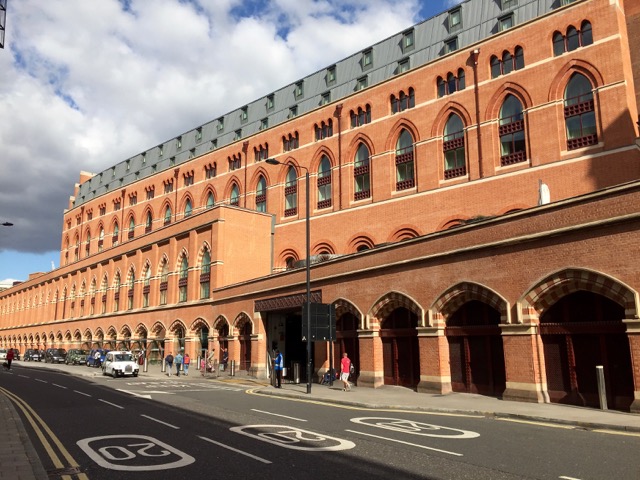
Thursday — The British Library, King’s Cross and the St. Pancras Stations. Why a train and tube station could be the highlights of the day? Wait and see. Here’s St. Pancras Station:

St. Pancras Station.jpg

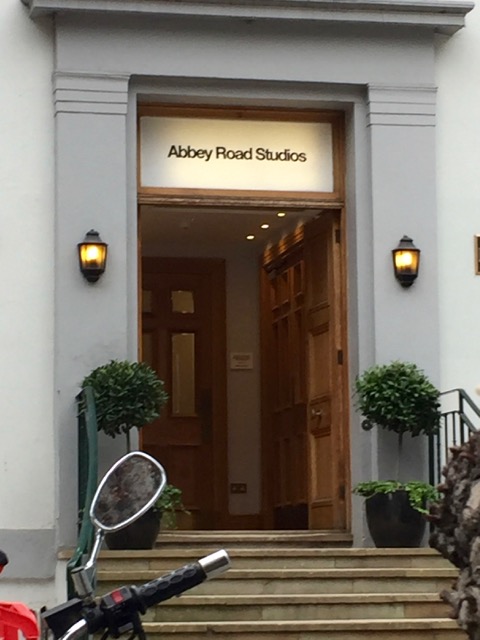
Friday — Which zebra crossing (those in N. America, no zebra, just pedestrian) is a point of interest for world visitors?

Abbey Road Studios.jpg

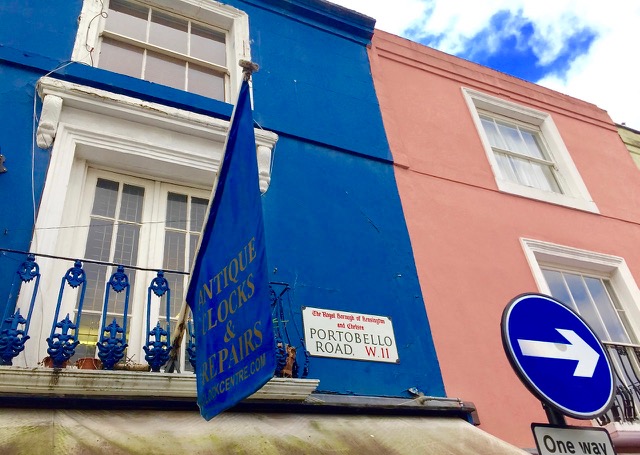
And which movie puts a community and street market on the to-see list of visiting cinephiles and antique hunters?

Portobello Rd (1).jpg


Detailed London posts coming up.

***

Saturday Snapshots is hosted by West Metro Mommy Reads. CLICK HERE to see what others have posted.

Paterson: Of Pug and Poetry

Some movies are like the roaring ocean, waves mounting upon waves rousing up excitement, eliciting continuous, sensational reactions. Some are like a bubbling brook, smaller but still boisterous, teeming with life and sounds. The film Paterson is a quiet stream, water gently flows along, seemingly uneventful, and yet, you can sit there by its side and just watch its quiet swirling.

Paterson has been screened at many film festivals this year. I missed it at TIFF, glad I could catch it when I came home to CIFF. For a film about poetry and a loving couple (not dysfunctional, for a change) with a British bulldog named Marvin, a character in his own right, and helmed by a Palm d’Or winning director, it’s got to be a unique experience.

Director Jim Jarmusch has been garnering accolades at the Cannes Film Festival since 1984, with his early feature Stranger Than Paradise. His most commercially known work probably is Broken Flowers (Cannes Grand Prize of the Jury, 2005) with Bill Murray and Julie Delpy. This year, Paterson has once again brought the director to Cannes as a nominee for the prestigious Palme d’Or. 

Jarmusch ought to be applauded for making a film on poetry, for who in this day of mega explosive, blockbuster productions would think of turning Williams Carlos Williams’ poetic notion into a movie. Yes, WCW himself was a resident of Paterson, New Jersey, and his 5-volume epic poem Paterson must have been the source inspiration for Jarmusch.

paterson

The movie Paterson is about an admirer of WCW and an aspiring poet whose occupation may be furthest from the creative process. But that’s exactly the point. Where do we get inspirations and ideas? What kickstarts our creative process? Do we need to climb to the top of the mountain, soak up a magnificent sunrise to unleash our creativity? Apparently not.

We see in the film that the most mundane of everyday objects, like, a box of matches, can spark off a new poem. Jarmusch has his own style of cinematic poetry making: the deadpan, casual expressions of his main character, thus, embedding humour in the serious. Adam Driver (While We Were Young, 2014) is probably the best person to star in this film, not only in name, but in his demeanour. He is Paterson, a bus driver with a daily route of driving bus route no.23 around the small town of Paterson, New Jersey.
We follow Paterson for a week. He gets up at the same time, around 6:20 am, plus or minus 5 minutes, eats his breakfast cereal, carries his lunch box and goes to work. He drives his no. 23 route around town, overhearing passengers’ small talks, brewing in his mind thoughts and ideas, writing down lines in a note book when he has a chance, has his lunch sitting on a bench overlooking the Great Falls of the Passaic River, then back to work. After work he goes home, has dinner with his loving wife Laura (Golshifteh Farahani), walks the pug Marvin, ties him outside the bar, goes in and have his beer, chats with bartender Doc (Barry Shabaka Henley), meets the regulars Everett (William Jackson Harper) and Marie (Chasten Harmon) and listens to their stories, then walks Marvin back home and sleep.

As viewers we see this seven times over. Reminds me of Groundhog Day (1993). But Jarmusch is clever in sprinkling subtle humour and surprises, quite like life. Paterson is a contented soul, driving a bus may be as fulfilling as writing poetry. Wife Laura is more experimental, and takes charge of her creative expressions more explicitly, like learning the guitar to reach her dream of being a country singer, like interior decorating her home according to her obsession with black and white, or baking cupcakes in her own signature style as a step to opening her own cupcake store. Whatever, the two are a loving, contented couple. Creativity manifests in various ways.

Marvin.jpg

And then there’s Marvin, who may be the best pug in pictures. He has a role to play too in this mundane plot. His story line is, again, life as well.

That’s about all I’ll reveal about the movie without giving out the spoiler, yes, even for this seemingly uneventful film. But as I write, I’m thinking of another matter. This film is probably screened only at very limited cities, at arthouse, independent cinemas. So, why am I writing about a film that not many of you will actually be able to see? What exactly is the relevance of writing something that few may relate to? Or… is the review a piece of writing that readers can respond to despite not experiencing the film itself?

If you have some thoughts on this, I’d appreciate your input. Throw your two pebbles into the Pond and create some ripples so I’d have an idea.

Having poured out this puzzling thought that has been troubling me for some time, I’m reminded of Paterson’s poetry writing in the basement of his home, his notebook filled with his private thoughts and lines, which nobody has ever or will ever read. What’s his purpose then?

~ ~ ~ 1/2 Ripples

***

Other Related Reviews on Ripple Effects:

Silence the Movie Arrives in the Most Unwelcome Time

While We Were Young: Wearing the Hat of Authenticity 

A Quiet Passion (2016) at TIFF16