‘The Rider’ is Poetry on Screen

“The Rider” opens this weekend in selective cities. If it’s screening in your area, don’t miss it.

The Rider

What is a cowboy to do if he cannot live the cowboy life again? Too remote? Substitute ‘cowboy’ with any other activities you love to do, or a role that defines you. Take that away, and what do you have left?

The film focuses on the struggles of a rodeo star and expert horse trainer Brady Blackburn as he rebuilds his life and identity after a severe head injury. Upon the prognosis of his doctor, Brady should never go back to riding and rodeo again, for another injury would be fatal.

“The Rider” is an American feature, unique in its subject matter while its director is an unlikely candidate to share the insight. Chloé Zhao was born in Beijing, had studied in London, then Massachusetts and New York. “The Rider” is her second feature. In her short directorial career, she has gone to Cannes twice, nominated in 2015 for the Caméra d’Or (“Golden Camera”), Cannes’ award for the best first feature film, and winning The CICAE Art Cinema Award in 2017 with “The Rider”. That is, among other international accolades. Zhao is an exemplar of a global citizen in filmmaking.

Chloé Zhao

The actors for “The Rider” exude authenticity, for they are actual cowboys and their family, all playing themselves. Brady Jandreau takes the role of Brady Blackburn, reflecting his real-life persona, a cowboy who is much admired and respected in the rodeo community. His father Tim and sister Lily form the Blackburn family in the film. Zhao’s directorial skills shine forth as she leads the non-actors in front of the camera, capturing them in their natural speech and actions, in particular, offering viewers realistically the dexterity involved in the wrangling work. But the film goes much deeper than the actions.

Recovering from the near-fatal injury pits Brady into a precarious existence and conflicting relationship with his father Wayne (Tim Jandreau). As a tough cowboy himself, Wayne had all along brought Brady up to be resilient and competitive, but now father had to dissuade son from the risky pursuit of bronco riding and rodeo activities. Nursing a wounded body and a tormented mind, Brady has to deal with the painful task of redefining himself. Temporarily working in a supermarket and wearing a store uniform makes Brady a displaced person, a persona out of meaningful context, both to himself and to those who recognize him as they come into the store.

While there are tense undercurrents with his dad, Brady cherishes the intimate bond with his sister Lily (Lily Jandreau), who expresses herself from her own peculiar, internal world. Kudos to Zhao for casting the real-life brother and sister in the film, they need not be experienced actors to conjure up some genuine, moving scenes.

Much of the film’s effectiveness goes to the inspiring cinematography, exposing quietly Brady’s tormented soul. The opening sequence sets the stage right away with riveting close-ups of a horse and its breathing. As the camera turns from beast to man, we see the extent of the injury Brady sustains as he gets out of bed and follows the routine needed to care for his own body, striving to return to a past life and regain some sense of normalcy.

In other sections of the film, the camera pans the vast landscape of the South Dakotan plains with a tiny figure that is Brady walking or riding through. “The Rider” is visual poetry on a subject that is seldom explored, and cinematographer Joshua James Richards is most effective in transposing Brady’s internal quest lyrically on screen: “A horse’s purpose is to run in the prairies; a cowboy’s is to ride.”

Brady’s good friend Lane Scott (Lane Scott) is a painful reminder of the risks a cowboy takes. Paralyzed and brain damaged after a fall in a rodeo event, Scott now communicates barely by spelling out words one letter at a time signing with his fingers. Poignantly, Zhao depicts Brady’s every visit with Lane in the hospital as an encounter of love and hope without sentimentality.

Zhao is nuanced and eloquent in creating impressionistic scenes. And when horse and man are juxtaposed in such intimacy, the parallel is striking. As Brady puts it, when a horse is badly hurt it has to be put down, that is the humane thing to do; when a cowboy is badly hurt, he has to continue to live, for that is what humans are supposed to do. As we come to the turning point of the film towards the end, the presence of family love and support appear to be the key to moving on.

A rare gem of a film. Watch it with a quiet heart.

~ ~ ~ ~ Ripples


***
The Portrait of a Lady, Sequel, Remake(?)

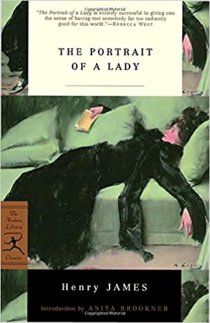
The Portrait of a Lady by Henry James

First, thanks to Bellezza’s open invite to a read-along, posting the photo of John Banville’s newest book Mrs. Osmond, a sequel to The Portrait of a Lady by Henry James. I’d seen the 1996 movie adaptation directed by Jane Campion (The Piano, 1993), but had never read James’s novel. What better time to read both books than now.

The Portrait of a Lady

I got hold of The Portrait of a Lady (Modern Library, just love the cover) read part of it then turned to a sound recording (unfortunately couldn’t find the Juliet Stevenson narrated version). Prompted by JoAnn, I interspersed reading with listening and gleaned much pleasure doing that. Here’s my very short, 5-Star Goodreads review:

“Actually I was listening to the Blackstone Audio version of the book as well as reading  parts of the book to ascertain facts in the story or just savour the passages again. James’s portrait of Isabel Archer is one of the saddest fictional heroines I’ve come across. A reminiscence of Anna Karenina emerged as I read the latter part, but Isabel is a character much more likeable for me. Should she be destined to a ruined life due to a naive misjudgement, ok, maybe even foolishness, by marrying Gilbert Osmond? Osmond is evil personified, and I just can’t shake off the face of John Malkovich (from the movie) whenever I read about his cold, domineering hand over Isabel. Isabel definitely needs redemption and saving grace. So I do hope John Banville’s Mrs. Osmond will grant her that.”

The Portrait of a Lady by Jane Campion

Since the image of John Malkovich kept creeping up my mind as I read the book, I quickly turned to the movie adaptation right after I finished the book. I remember I was most disturbed by Osmond’s callous treatment of Isabel when I first watched it years ago; he appeared as a chilling, silent villain, bullying his innocent victim mercilessly. His stepping on Isabel’s floor-length dress to stop her from walking away was still vivid in my mind.

Nicole Kidman

Now as I saw the movie again, I find the feature more style than content. The tilted camera shots? A bit contrived. Malkovich is still evil, and Kidman still the innocent victim, but there isn’t much complexity in the characterization. The editing and much abridged dialogues leave a vacuum. Considering the rich descriptive prowess of Henry James, much is left to be desired in the film. Yes, I’m one who advocates for the appreciation of books and films as two different art forms, and should not be doing a literal comparison when judging the adaptation. Well, I’m not. I’m weighing the film on its own merits. Yes, set design is rich and some artistic shots, but overall pales despite the sumptuous colours. And, what happened to Nicole Kidman’s hair? As much as I’d appreciated Campion’s works, especially her Oscar winning (Best Original Screenplay) film The Piano, I do feel maybe it’s a good time to do a remake of The Portrait of a Lady.

Mrs. Osmond by John Banville

After the movie I turned right away to Banville’s book. Here’s my review on Goodreads:

Mrs. Osmond

“I jumped to this book right after reading Henry James’s The Portrait of a Lady. As I understand this new work of Banville’s to be a ‘sequel’ to James’s book, I had high expectations of the Booker winning author carrying Isabel Archer’s (Mrs. Osmond’s) story forward, taking her through twists and turns and eventually letting her find redemption and a new life. However this was not to be exactly as I’d envisioned.

Mrs. Osmond is divided into two Parts. Maybe for the benefit of those who haven’t read or reread The Portrait of a Lady in preparation for his book, Banville retells James’s story in Part I. While he’s very detailed in his descriptive style, and to his credit, creeping inside the minds of his characters, he repeats himself frequently in reminding his readers how Isabel Archer got deceived by Madame Merle and fell into the marriage trap of Gilbert Osmond’s. So basically the story remains static throughout Part I.

(Spoiler Alert in the following)

Part II leads us to Isabel’s own scheme of turning the tables on Osmond and Merle, and let them have a taste of their own medicine by just transferring the ownership of her residence the palazzo in Rome over to Madame M. and let the culprits be trapped with each other. That’s all there is to her plan, and it’s an expensive vengeance. As for her own dear life and its purpose for the remains of her days, the path is as obscure as before, albeit Banville has dropped a hint of the suffrage movement being a meaningful direction.

While Mrs. Osmond may not be as gratifying as I’d expected, this is an interesting concept, taking literary classics and imagining a sequel. Now that could lead to a brave new genre of fiction writing.”

A Movie Remake, anyone?

If there’s one, who’d you like to see playing the role of Isabel Archer? Gilbert Osmond? Madame Merle? Director?


***


Related Post:

Can a movie adaptation ever be as good as the book?


Don’t just drive past Three Billboards

Three Billboards outside Ebbing, Missouri is a ‘Coen-esque’ feature with Fargo (1996) star Frances McDormand. This might well be one of the better Brit-U.S. collaborations in recent, tumultuous years. And McDormand just might head to another Best Actress Oscar win after Fargo.

Caution: The following discussion involves a minor spoiler. Not so much a spoiler in plot but in idea. I can’t be more obscure in reviewing the film if I’m to delve into meaning.

***

In British writer/director Martin McDonagh’s debut feature In Bruges (2008), the main character, a hitman, Ken (Brendan Gleeson), explains to his angry crime boss Harry (Ralph Fiennes) why he didn’t kill his young protégé Ray (Colin Farrell) as Harry had ordered, saying: “He has the capacity to change. We all have the capacity to change.”

Three Billboards outside Ebbing, Missouri is McDonagh’s damatization of this pivotal idea in full force: We all have the capacity to change. Viewers may not like the characters or their speech, but the dark comedy leads us to the point where we’ll find it worthwhile to hold our judgment, no matter how despicable they behave or speak. And that is the main reason for the gratifying ending of Three Billboards: Change. A change from distraught to calmness, from tension to release.

three-billboards-poster-2

Indeed, language is the spoken expression, the tip of the iceberg. What lies beneath and beyond language is the essence of a character. McDonagh’s script is starkly effective in presenting the different sides of his characters. Not that we should make excuses for their wrongs, but that everyone has a backstory and a present reality to deal with.

Mildred Hayes (Frances McDormand) has lost her teenage daughter Angela (Kathryn Newton) to a most violent, horrific crime, ‘raped while dying’. She is frustrated by the inability of the police to bring in any arrests. The three billboards she pays for outside Ebbing, Missouri advertise to the world her rage, targeting police chief Willoughby (Woody Harrelson). It’s her intention that the publicity they draw could lead to some effective police actions.

McDonagh is apt to instil humour into the sombre subject matter. The dialogues are sharp and the actors deliver. Call it a dramedy if you will, but the spontaneous laughters generated in the theatre are bittersweet, for they are acerbic depiction of racism, injustice, and the grieving rage of the unconsoled.

The three billboards pit Mildred against the town except for her co-worker Denise (Amanda Warren) in the gift shop and an admirer James (Peter Dinklage) in the bar. Her action has put her otherwise devoted son Robbie (Lucas Hedges) in an awkward position in school and inflamed her ex Charlie (John Hawkes), whose 19 year-old girlfriend Penelope (Samara Weaving) is totally oblivious to what’s going on in town. Dixon (Sam Rockwell) from the police station shows his utter disgust with unchecked impulses.

While the ensemble cast deserves kudos, the pivotal acts fall on three characters. Their superb performance augments the incisive and thoughtful script.

McDonagh wrote the role of Mildred Hayes with Frances McDormand in mind, and she delivers with a punch. Her actions as an angry and helpless mother is stark and brutish, but McDonagh also shows us her vulnerable side, a mother who is regretful of the argument she’d had with her daughter on that fateful day, mournful for a daughter who’d never come home, and embittered by the ineptness on the part of the police. McDormand indwells her role so effectively that she makes me see only the angry Mildred, and totally forget the pregnant, innocent police woman in Fargo.

Sam Rockwell’s dimwitted, racist Dixon stirs up non-stop laughs in the theatre. His ultimate change is the powerful force that makes the latter half of the story so gratifying.  Rockwell’s performance is spot-on. McDonagh wants us to have a last laugh on him too: Dixon’s heart may have melted by some kind, motivating words from chief Willoughby, but his intellect remains intact.

Woody Harrelson plays Chief Willoughby with a heart. He is a tough police chief and yet underneath is a kind man, a loving husband to his wife Anne (Abbie Cornish) and a devoted father to his two young girls. Furthermore, Mildred is not the only one bearing life’s harsh blows. While Mildred reacts with rage, Willoughby deals with repressed fears.

A few kind words can cause immense change. And when one person changes, the ripple effects are contagious. The latter part of the film with its twists and turns slowly reveal how positive changes ripple on. For often underneath the hard surface lies a moldable heart. I particularly appreciate the audacity of McDonagh’s writing. Among the tough and macho, love is noted as the key to hold up oneself as love leads to calmness, and calmness to thoughtful actions.

Tying up the emotional bond is the music, in particular, the Irish folk song “The Last Rose of Summer”. Thomas Moore’s lyrics and the soft yearning of Renée Fleming’s voice sings out the sad tune in Mildred’s heart, a cry for justice and the dispelling of emptiness and loss. In the opening scene, the song introduces us to the three billboards as Mildred drives by and contemplates her vengeful scheme, the song reprises as vengeance engulfs a distraught heart and leads to a violent act. Ironically, that scene becomes a pivotal turnaround for Dixon in the police station.

‘Tis the last rose of summer left blooming alone
All her lovely companions are faded and gone
No flower of her kindred, no rosebud is nigh
To reflect back her blushes and give sigh for sigh

The juxtaposition of a quiet Irish folk tune with a fictional, small American town dealing with the fallouts of a horrific, unsolved crime may sound incompatible, but it’s poignant and effective here.

Old loves are irreplaceable, yet regrets cannot heal deep wounds. Lovely companions may have faded, but new ones can be forged, albeit not the same nature, but there’s  hope for new bonds. The last rose of summer dissolves to the first red leaf of fall. It could still be a beautiful season.

~ ~ ~ ~ Ripples

The Shape of Water is all Enfolding

In his review of Guillermo del Toro’s Pan’s Labyrinth (2006), Roger Ebert described it as a fairy tale for adults. Well Roger, the director of fantastical cinematic imagery has given us another one. Compared to Pan’s Labyrinth, this is a simpler and less horrifying tale. The Shape of Water is a delightful love story with a gratifying, requiting end.

The Shape of Water is set during the Cold War, in 1962 U.S., inside a high security, science research centre. Richard Strickland (Michael Shannon) oversees a new arrival from the Amazon (South America that is), a monstrous beast, and if he cares to really examine the creature with an appreciative eye, a beautiful Amphibian Man (clandestinely played by Doug Jones). Yes, the reverse of Hans Christian Andersen’s The Little Mermaid.

In the research centre is Dr. Holffstetler (Michael Stuhlbarg), who has to tend to his covert mission, it is the Cold War after all, but from a scientific point of view, does have an appreciative eye for the creature.

The Shape of Water (1)

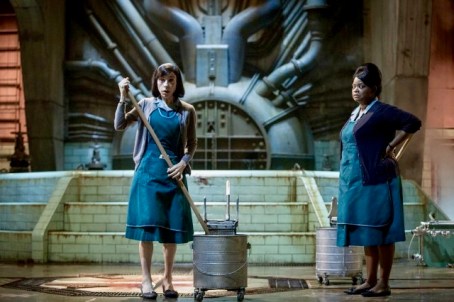
At the bottom of the rung are the janitorial staff, Elisa and Zelda, and with them the story comes alive. Sally Hawkins and Octavia Spencer’s duo performance is worth your movie ticket. They are the heart and soul of the story, something which the villain lacks. As a fairy tale, we can identify who that is right away, and the irony of who the monster is quickly becomes apparent.

Elisa is mute, she cannot speak but can hear what you say, so be careful. She knows a language that you’ll need a translator to understand, so be careful about that too. Thanks to Zelda, her official interpreter, she knows what not to translate as Elisa speaks her mind to ruthless Strickland.

Elisa’s neighbour is Giles (Richard Jenkins), an artist who does appreciate the Amphibian Man. He is of immense help to Elisa, a faithful friend to her despite endangering his own life. As a fairy tale, we see the good among the characters in sharp contrast to the villain.

As she cleans the facility, Elisa soon comes to appreciate the Amphibian Man, and the creature soon relates to her as she is, not as a handicapped, low-ranking cleaner. The two forge a bond stronger than any dangerous obstacle. The film moves into the second half as a thriller and leads us to see how love overcomes such obstacles. Love not just between the two obvious characters, but from those built upon friendship and mutual respect. As for the Amphibian Man, he is more powerful than just brute force as the story reaches its climax.

As the Awards Season is well underway, all leading to the finale, the Oscars, we see The Shape of Water gaining tremendous momentum. Among other accolades, it won the AFI Award for Movie of the Year, two Golden Globes: del Toro for Best Director and Alexandre Desplat for Best Original Score, and just received 12 BAFTA nominations. While Sally Hawkins and Octavia Spencer both get acting noms, they face strong contenders such as Frances McDormand (Three Billboards Outside Ebbing, Missouri) and Saoirse Ronan (Lady Bird).

The Shape of Water is a simple depiction of human longings and our universal need for connection. It’s a fairy tale love story and not a treatise on controversial subjects for debates. It offers some interesing cinematic visualization, like the beginning scene of Elisa’s apartment under water. The underwater romantic rendition towards the end of the movie, coincidentally, elicits another indelible cinematic moment from my memory, an underwater love scene also involving a woman who cannot speak, a film with which Marlee Matlin won her Best Actress Oscar with her heart-wrenching performance, and that’s Children of a Lesser God (1986).

Surely, water, the shape of it, all enfolding, is the main idea, for that’s what love is like.

~ ~ ~ 1/2 Ripples


Top Ripples 2017

The following is a list of books, movies, and events that stirred up the most ripples for me in 2017. Note that the books and movies are not necessarily releases from 2017 but just what I’ve had the privilege to encounter this year. If you don’t see your book here, it could be that it’s on my TBR list for the coming year. If you don’t see your fave movie here, it could be that I haven’t watched it or that I have but, indeed, it’s not here. Click on the links to read my reviews.


MOVIES

Three Billboards Outside Ebbing, Missouri directed by Martin McDonagh

Mudbound directed by Dee Rees

Certain Women directed by Kelly Reichardt

The Big Sick directed by Michael Showalter

Stefan Zweig: Farewell to Europe directed by Maria Schrader

Wind River directed by Taylor Sheridan

Things to Come directed by Mia Hansen-Løve

Silence directed by Martin Scorsese

The Rider directed by Chloé Zhao (55th NYFF)

The Road to Mandalay directed by Midi Z (NYAFF)

Calvary directed by John Michael McDonagh


BOOKS

At the Existential Cafe: Freedom, Being, and Apricot Cocktails by Sarah Bakewell

Little Fires Everywhere by Celeste Ng

Mudbound by Hillary Jordan

Nutshell by Ian McEwan

Wildlife by Richard Ford

The Noise of Time by Julian Barnes

The God of Small Things by Arundhati Roy


EVENTS

Visit to MoMA Click on the link to my post.

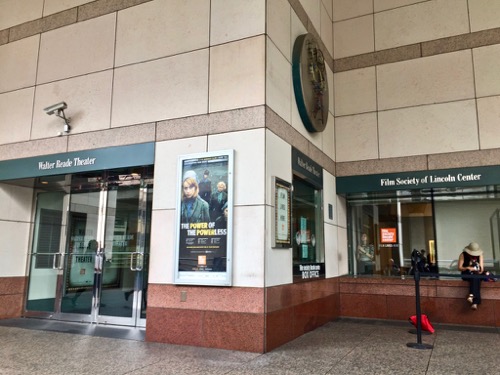
NYFF at Film Society of Lincoln Center: In September I had the chance to attend press screenings of the 55th New York Film Festival. CLICK HERE for all my reviews on AAPress.

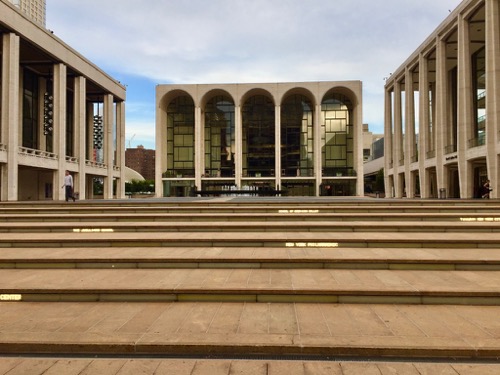
Other than hanging out at the Film Society of Lincoln Centre for the screenings, I’d experienced NYC on the bus, in the subway, and simply on foot, some days close to 20,000 steps, making my NYC trip extra rewarding. Here are some pics of the memorable experience.

Lincoln Center:

IMG_5673.jpg

Film Society of Lincoln Center where the screenings took place:

IMG_5676

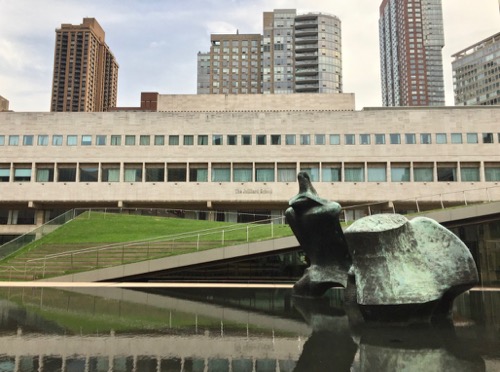
The Juilliard School:

IMG_5670 (1)

Central Park:


Reflection in Central Park


One World Trade Center:

IMG_5907.jpg

IMG_5860

IMG_5852 (1).jpg

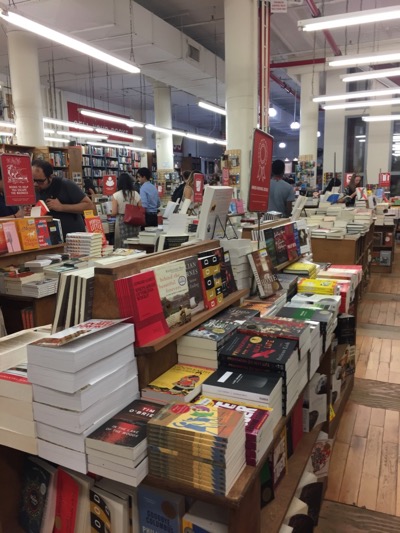
Strand Bookstore:

IMG_5691

IMG_5688

Brooklyn Bridge:

IMG_5784.jpg


IMG_5828

Where I found the best lobster roll I’d ever tasted, at the foot of the Brooklyn Bridge:

IMG_5837


And that’s a wrap.


***

And to all, a wonderful 2018 for books, films, and rewarding encounters! 

Mudbound: From Book to Screen

The Book

Mudbound is Hillary Jordan’s debut novel, published in 2008. It won the Bellwether Prize for fiction, an award founded by author Barbara Kingsolver to promote literature of social justice and responsibility.

Mudbound Book Cover

The setting is WWII and its ending, as two American soldiers return from Europe to their families in Mississippi. One of them is Jamie, white, a flying ace whose co-pilot was shot dead right beside him in a fierce dogfight. The other, Ronsel, black, a decorated war hero who had fought in the tank battalion under General Patton. Both had experienced the war, seen the atrocity, now back home having to deal with the demons of the aftermath: for Jamie, traumatic shocks and survivor’s guilt; for Ronsel, another barbaric battlefront, racism in the Deep South.

Jamie comes back to a cotton farm owned by his older brother Henry McAllan and stays in the lean-to adjacent to the main house, itself but a shack with no running water or electricity. “Mudbound” is the proper name for it. When the rain pours and the wind blows, the mud drowns and pulls everything down, dirtying all from head to toe. A gloomy place to start anew as a farmer.

They weren’t all like that to start with. Henry has an engineering degree. Laura, Henry’s wife from Memphis, is also college educated. She learns of Henry’s intention to move to rural Mississippi and be a cotton farmer only weeks after her marriage. What’s worse, Henry’s obnoxious father, Pappy, will be coming to live with them.

Ronsel’s father Hap Jackson is the sharecropper working in the cotton fields owned by Henry. Fate brought the two families together. Hap and his wife Florence and all his children have been praying for Ronsel’s safe return from the war. Now their prayers are answered, but only pit Ronsel into another battlefront when he meets Jamie and the two strike up friendship, a despicable taboo.

Written in chapters that reveal the point of view of the various characters, the book is a sort of a literary ‘Rashomon’, how different people see the same event in their own light, or the lack of it. Such a writing structure evokes empathy as Jordan leads the reader to delve into the mind of the characters. And as the final climatic chapters come, we as readers get to know a crucial fact, an essential plot point we are privy to but which even other characters are not aware. We have Jordan to thank for such an insightful way to present the omniscient viewpoint in her storytelling.

The trajectory of the friendship between Jamie and Ronsel is tragically predictable. But what’s not predictable is Jordan’s incisive writing. Sometimes adding a short little phrase at the end of a sentence could make it speak much more. It’s writing like this that makes the book enjoyable despite its subject matter. Take this as an example, simple and subtle, but revealing effectively Laura’s inner turmoil after a tumultuous night:

“… I got up and checked on the children. They were sleeping, with an untroubled abandon I envied.”

Or this line to wrap up a climactic chapter. Such descriptions are perfect cues for nuanced  performance on screen:

“What we can’t speak, we say in silence.”

No spoiler here. But this is the kind of writing that conveys powerfully the emotions and events that sweep the reader up while allowing space to mull things over.

***

The Movie

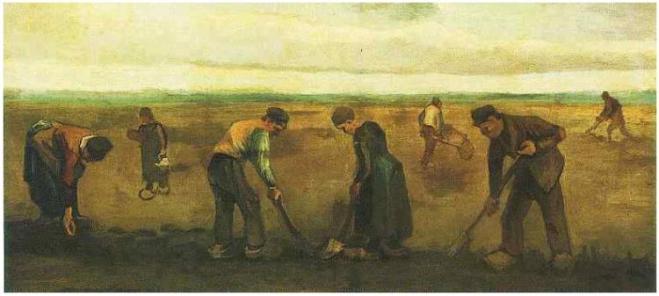
The cinematography (Rachel Morrison) is the most distinguished feature from the beginning. As the title suggests, the colour palette is a spectrum of browns, reminiscence of the paintings of Jean Francois Millet’s farmers toiling in the fields, or this Van Gogh’s Potatoes Farmers:

VVG Farmers-Planting-Potatoes

But before the mud swallows up life, there is the colourful, urbane, Memphis party scene, or the courtship under golden leaves. The contrast is heartbreaking. Laura (Carey Mulligan), who seems to have no say about her life and fate, has to follow her husband Henry McAllan (Jason Clarke) from the city to move to a shack with no running water or electricity on a cotton field in rural Mississippi. Being a landowner is the sole ambition for him.

But of course, not just Laura, but everyone is drawn into the muddy swamp. Hap Jackson (Rob Morgan) is the sharecropper on the McAllan fields. His wife Florence–absorbing performance from “the Queen of Hip-Hop Soul” Mary J. Blige–is soon asked to help Laura with caring for her two girls and household chores. The return of their son Ronsel (Jason Mitchell) and Henry’s younger brother Jamie (Garrett Hedlund) from Europe after the war will eventually link the two families down an inescapable path.

Turning the chapters of internal worlds into visuals on screen is a tall order. Director Dee Rees, who co-wrote the screenplay with Virgil Williams, had done an effective job by voiceovers, which is sometimes frowned upon as they could mean an easy-way out. But here, the voiceovers are intimate and personal. The few simple lines in the voice of the characters draw the viewers closer in. With Carey Mulligan, I admit I’m totally partial. Her alto voice is moving and poignant.

mudbound-movie-stills-4 (3)

Picking the right events from the book is crucial. Director Rees has followed closely to the plot lines using many of Jordan’s words, but also taken the liberty to switch around and combine them in the movie adaptation. Juxtaposing Ronsel and Jamie’s traumatic battle scenes with accidents and illness at home are effective and emotionally engaging; all have to fight their battles, big and small, at home or the frontline.

The most moving juxtaposition comes at the intense, climactic scene where the singing of a hymn replaces dialogues. It’s a juxtaposition of the visual with sound and silence. Jordan’s impressive line from the book is aptly adapted onto screen:

“What we can’t speak, we say in silence.”  Or here, in song.

The ending of the movie is altered, and I’m glad, for they who have suffered so much, so long, deserve a cathartic ending. This is a good example of a fine adaptation. It’s not a page by page transposition from book to screen, ‘faithful’ to the dot. But Rees has taken the liberty to unleash the dramatic, or maybe, melodramatic. It’s always cathartic to see love triumph after all. Mary J. Blige’s “Mighty River” is an appropriate wrap as the end credits roll.

***

~ ~ ~ ~ Ripples
Book and Movie

The Glass Castle: From Book to Screen

Jeannette Walls’ memoir had a “seven-year run on the New York Times best-seller list” after it was published in 2005, according to a NYT article . Now, 12 years later, a movie adaptation. So, the long wait is over. The wait, of course, belongs to those who don’t mind seeing a book turned into a movie.

As I’m a proponent of judging book and film as two different art forms on their own merits, I welcome movie adaptations. With this memoir, a non-fiction, I do feel the movie lacks the emotional punch as the first person narrative Jeannette Walls has so masterfully presented in her book. Walls’s memoir is a much livelier, engaging, and poignant piece of account depicting an extraordinary growing-up experience, a nomadic life of poverty until she and her siblings escaped from it.

As I’d mentioned in my review of the book, I was browsing in a bookstore when I picked up The Glass Castle randomly. The opening line captured my attention right away:

I was sitting in a taxi, wondering if I had overdressed for the evening, when I looked out the window and saw Mom rooting through a Dumpster.

That instantly drew me in. And for the rest of the book, Walls has not stopped captivating me with her growing up experience. She candidly shares how alcohol had ruined the potentials of her dreamer dad Rex, who had always dreamed of building them a glass castle. She tells us how her artistic mom Rose Mary had coped (or not), and the effects of their unconventional ‘parenting style’ had on the four children. Eventually, starting with the eldest, Lori, the children one by one escaped from their parents to NYC to start anew. As Jeanette saw her Mom digging through a Dumpster in NYC, she was a journalist at that time and living on Park Avenue. No judgement here, for the book explains all. The Glass Castle is a detailed account of Jeanette’s incredulous journey.

TGC_D40-4817.raf

Now, having said all that, I must state that the movie is still a watchable production. Unlike his previous realistic drama Short Term 12 (2013), writer director Deston Daniel Cretton has a tall order here: from the massive field of information in the memoir, to glean and pick just a few episodes to include in the film and string them up as a whole, while making them as interesting and captivating as the book. I know, Cretton must eliminate and condense, the difficult task of a movie adaptation.

Cretton chose to focus on the love hate relationships between father and daughter, and the actors have delivered, thanks to the performance of Woody Harrelson as Rex and the actors who play Jeannette as a youngster, Ella Anderson, and as adult, played by Academy Award Best Actress Brie Larson (Room, 2015). Harrelson is spot-on and dominates the screen.

Mom Rose Mary is played by Naomi Watts. And with this character, I feel there may be a miscast here. For one thing, since the film is heavily weighed on Rex, mom has a much minor role, which is a shortfall, for she does contribute to the children’s development, and taught them to appreciate reading, art, and the value of resilience, using the Joshua Tree as an object lesson, bent but alive. In my mind, Laura Dern could be a more suitable cast.

While the book is chronological, the movie juxtaposes the past with the present. It is done quite well, no confusion or disjointed feeling here. The editing is smooth and moves both storylines forward effectively. The scene of the accident when Jeanette has to cook as a young child and is burned badly is placed aptly at the beginning of the movie. Scars that can be seen visually is a good reminder of one’s past where memories could fade.

One of the main differences between The Glass Castle the book and the movie adaptation is distance. The book is intimate and close. Walls is such a straight forward writer that it feels like she’s right there sharing, opening up herself candidly to the reader. With the movie here, we are just like that, sitting afar as a spectator. It took me a while to engage.

The major issue is the mood. The book depicts a nomadic existence as Jeanette was growing up. The children were herded from place to place across States, often as dad Rex escaped from debtors. They had slept open in the Mohave desert, so, they could pick their own star as a present. Surely these may all be a disguise for their plight, euphemism offered by irresponsible parents. But none can deny the thrills and exhilaration of escapades and adventures. The togetherness of the siblings, the wonder of life are apparent in Walls’ descriptions. The word ‘dysfunctional’ had never appeared in my mind as I read the book.

The film however, focuses on the darker side. The abusive and volatile Rex dominates the screen. Poverty and gloom take over. The tipping point comes as the eldest Lori graduates from high school, and she makes an exit plan. We breathe an air of relief as the children one by one escapes to NYC. A few years later though, Rex and Rose Mary move out to be with them, so they can all be together again as one family.

Is a family being together always the best? As we see, togetherness may not be an ultimate good to pursue when harmony is impossible to reach. What’s more important is keeping oneself intact, one’s past reconciling with one’s present, the integrity of self. In the film, that is the turning point for Jeannette in the scene at the restaurant with an important client of her husband’s. Jeannette comes out from hiding about her family, albeit at the most inopportune moment.

The final scene is a beautiful wrap. The Walls gather together to have a family meal after Rex has died from illness. The siblings chat about their formative years in laughter. Resilience and loyalty to each other have kept them intact. A rewarding closure and a beginning towards a better future.

Do stay behind to watch the video of the real life Jeannette with her mom Rose Mary as the ending credits roll. And do sit through the credits until the very last line, wherein lies the emotional punch of the whole film:

“To all families, despite the scars, still find a way to love.”

~ ~ ~ Ripples


***


Related Post on Ripple Effects:

The Glass Castle Book Review

Metropolitan (1990): Whit Stillman’s Homage to Jane Austen

Thanks to New York born and raised director Whit Stillman, one of Jane Austen’s characters in her juvenilia, Lady Susan Vernon, had a field day last year. For those wondering how that came about, do seek out Stillman’s film Love & Friendship (2016), or his movie-tie-in book Love & Friendship: In Which Jane Austen’s Lady Susan Vernon Is Entirely Vindicated. 

But Janeites may not have noticed, back in 1990, five years before the pivotal year of wet shirt Darcy’s mortifying encounter with Lizzy Bennet, another Austen character was vindicated, Fanny Price of Mansfield Park. And they have Stillman to thank.

What does Jane Austen’s Mansfield Park, published in 1814 England, have in common with a bunch of upper class college freshmen/women in 1990 New York City, calling themselves UHB (Urban haute bourgeoisie), worrying about an ‘escort’ shortage for their debutante parties during their Christmas break?

Wait a minute, UHB? ‘Urban Haute Bourgeoisie‘? Isn’t that the kind of targets that would have interested Jane? Our astute Jane who loved to wield her pen, piercing through the façade of the rich and privileged, shaking the underlying status quo of society of her time? Jane would have loved Stillman’s film. She would be amused by the characters in this comedy of manners and their social commentaries. Debutante parties? Jane would be surprised to hear they still exist in the 20th century. If she were to write the screenplay, Jane would probably be less subtle.

Screen Shot 2017-07-17 at 10.03.38 PM

Stillman’s Metropolitan is not so much an acerbic satire but a gentle poke and  descriptive vignettes of the young UHB’s lifestyle and thinking. From his treatment of his characters, he is gentle and forbearing, albeit incisive, just enough to elicit some knowing chuckles.

In Mansfield Park, Jane presented a heroine that is a contrarian. Fanny Price is unadorned, impoverished, athletically challenged, a misfit and outsider when she enters the upper class home of Sir Thomas Bertram. But it’s her being principled and virtuous that make her stick out like a sore thumb. As Jane ends the book, Fanny gets the final praise, and an oblivious, but decent, Edmund as her ultimate reward.

Stillman’s Metropolitan is set in 1990 NYC. It has two characters that are a type of Fanny Price. First is Tom. He stands for everything that’s the opposite of the UHB. A self-professed socialist, Tom comes from the other side of the track. He wears a raincoat (albeit with a warm lining as he explains) in midwinter, and a ‘snob’ for public transit. Taxi? No, he’d rather walk.

Sure, his new found friends of the UHB know why. How many can afford to take the taxi as their usual means of transport and wears tux to parties? So, to their credit, despite knowing Tom might be from the opposite side of town, they receive him into their midst, especially as the girl Audrey likes him very much and wants him to help solve their, or her, ‘escort shortage’ to the debutante parties.

Audrey is a lover of books. She’s unpretentious, modest, and above all, a sensitive soul not unlike Fanny. In one scene, Audrey serves as a moral compass as the group gathers in the after party to a game that she disapproves of. That’s a Fanny incognito there. She insists on her stance despite everyone, Tom included, feels there’s nothing wrong with the game.

So there are the Austenesque parallels and types. You might be able to identify the Crawfords there too. The youthful characters are all serious in their viewpoints. One must give them credits. In their tux and gowns they discuss social theories. Therein lies Stillman’s gentle satire. While the sarcasm and humour is subtle, there are a few lines that are overt, lines I think Jane would have approved.

In this scene (above photo), Audrey and Tom discuss books. Audrey says Persuasion and Mansfield Park are her favorite Austen books, Tom is incredulous.

Tom:  Mansfield Park! You got to be kidding.

Audrey:  No.

Tom:  But it’s a notoriously bad book. Even Lionel Trilling – one of her
greatest admirers – thought that.

Audrey:  If Lionel Trilling thought that, he’s an idiot.

Jane probably would have thought, “Oh I wish I had written those lines.”

But wait, there’s more. Later in the party, Tom and Audrey continue to discuss Mansfield Park.

Audrey: You find Fanny Price unlikeable?

Tom: She sounds pretty unbearable, but I haven’t read the book.

Audrey: What?

Tom: You don’t have to have read a book to have an opinion on it. I
haven’t read the Bible either.

Audrey: What Jane Austen novels have you read?

Tom:  None. I don’t read novels. I prefer good literary criticism. That way
you get the novelist’s idea as well as the critic’s thinking. With
fiction I can never forget none of that has really happened. It’s all
made up by the author.

Oh I can see Jane ROFL.


~ ~ ~ 1/2 Ripples


***

Related Posts on Ripple Effects:

Stillman’s Love & Friendship: More than Book Illustration

Love & Friendship and Other Prospects

Mansfield Park: Jane Austen the Contrarian 


Upcoming Books to Movies 2017

Half a year’s gone already. How’s your reading and watching coming along? Here are some movie adaptations I anticipate for the latter half of the year.

The Glass Castle by Jeannette Walls

the-glass-castle-bookFinally, the movie adaptation is completed. More than seven years on the NYT Bestseller list, Jeannette Walls’ 2005 memoir of resilience and delight – yes, the two can co-exist – is high on my TBW list. After receiving her Academy Best Actress Award in another book-to-screen adaptation, Room (2015), Larson is back with her Short Term 12 director Destin Cretton. Interesting cast for the parents, Woody Harrelson as dreamer dad Rex Walls and Naomi Watts as uncouth artist mom Rose Mary. Coming out in August. Should be a good summer movie.


Tulip Fever by Deborah Moggach

Tulip FeverMoggach’s best known book is probably The Best Exotic Marigold Hotel, among her many titles. Tulip Fever is the author’s first historical fiction set in 17th century Holland, evoking the paintings of Vermeer’s. The story begins with a rich merchant in Amsterdam commissioning a painter to paint his young bride. The rest is up to the further imagining of Moggach’s creative mind. From book to screen adaptation written by Tom Stoppard, directed by Justin Chadwick, who helmed the adaptation of Philippa Gregory’s The Other Boleyn Girl (2008) and the excellent TV mini series of Dickens’ Bleak House. Cast includes Alicia Vikander, Judi Dench, Christoph Waltz. Coming out in August. Should be another good summer pick.


Wonder by R.J. Palacio

Wonder Book CoverAnother one high on my TBW list. This is one YA novel that appeals to both young and old, for the theme of acceptance and empathy is so much needed in our time. A look at the trailer shows the film is well cast. Room’s breakout young star Jacob Tremblay as disfigured fifth grader, entering school for the first time in his life; Julia Roberts plays mom and Owen Wilson is dad. Stephen Chbosky (The Perks of Being a Wallflower, 2012) directs. To be released November, 2017.


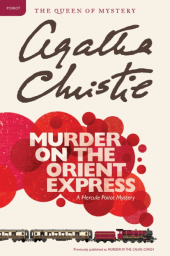
Murder on the Orient Express by Agatha Christie

Murder on the Orient Express.pngDame Agatha Christie’s famous work has gone through many renditions on the big screen, small screen and even a video game. But the classic has to be the Sidney Lumet directed 1974 production with Albert Finney, Lauren Bacall, Ingrid Bergman, John Gielgud, and a young Sean Connery, just to name a few. This 2017 version is directed by Kenneth Branagh who will, of course, takes up the role of Hercule Poirot. Cast include Johnny Depp, Michelle Pfeiffer, Daisy Ridley, Penélope Cruz, Judi Dench, Derek Jacobi, Willem Dafoe, a modern classic in the making? Coming out November, 2017.


EXTRA, EXTRA: Ordeal by Innocence by Agatha Christie

Ordeal by Innocence

Talking about Dame Agatha, the latest, yes just hours ago, it has been announced that the prolific writer – whose books have sold only less than The Bible and Shakespeare according to The Hollywood Reporter – will ring in yet another adaptation by BBC in time for the Christmas season. BBC touts a mighty cast with Bill Nighy, Catherine Keener, Matthew Goode, Eleanor Tomlinson among many talents. A jolly good Christmas for the Brits indeed. We’ll have to wait for Masterpiece to act.


***

Related Ripple Effects Posts:

The Glass Castle Book Review

Wonder by R. J. Palacio: Required Reading for All

The Best Exotic Marigold Hotel 

The Second, Best Exotic Marigold Hotel


Voicing out for ‘Silence’ and other adaptations

It’s a bit sad to see Martin Scorsese having had to defend the cinema. He wrote the piece in the May 31 issue of The Times Literary Supplement in response to the review of his film Silence by the novelist and literary critic Adam Mars-Jones. It is telling that the director didn’t write a defence of his film, but cinema itself.

Here’s the contentious viewpoints of Mars-Jones’s review, entitled “Subtle absolutisms”:

The transposition of a novel like Endo’s Silence into film, however “faithful”, can only amount to a distortion, an exaggeration overall however many elements of the book are represented.

and this:

In a book, too, reader and writer collaborate to produce images, while a film director hands them down.

Really? Is a movie, and in this case, Scorsese’s adaptation of Japanese writer Shūsaku Endō’s novel Silence, a piece of “subtle absolutisms” as Mars-Jones’s title suggests? Do viewers in the theatre have no say but to receive from whatever mood or themes the director hands down to them, devoid of ‘collaboration’? Has the director presented to us – subversively as the title implies – his interpretations and we remain as the silent, passive, unthinking targets?

We’ve heard it before, haven’t we, that a movie leaves no room for the imagination. We can see it all, so explicitly displayed, in actions, colour, and mood, while readers reading a book interact with the book author to create a mental picture as they read, exercising their imagination.

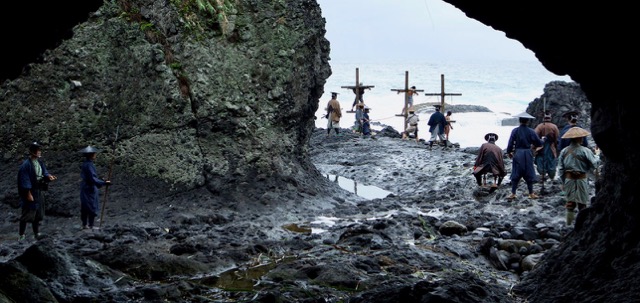
Silence (1)

Any regular visitor to the Pond knows Arti disagrees with such criticisms. Even a two-dimensional painting can evoke in viewers a myriad of responses, let alone moving pictures. And how we interpret and interact with such sequential, moving images can be as diverse and subjective as our personalities and life experiences.

If as Mars-Jones says “those images [have] their predetermined progress in a darkened space imposes mood insistently” and if Scorsese embeds his ‘subtle absolutisms’ so ingeniously, the film should bring out very similar responses, predominantly one, as Mars-Jones has concluded: “desolation.”

But as one who dwells in a liminal, in-between space of two cultures, I’ve come across very different reactions to the film Silence. Such could well be said are the results of internal collaborations viewers have had while experiencing Scorsese’s visual storytelling. Indeed, the film has aroused different responses across cultures.

Among Western critics, it’s usually the aesthetics, acting, cinematography, and mood that are the key features noted, as with Mars-Jones’s review. Many point out they’d like to see the roles reversed with the two actors Andrew Garfield and Adam Driver. Many have noted that the film is being ‘faithful’ to the book, however, falling short of discussing the significance of such ‘faithfulness’.

This is an important point when reviewing the film. I usually do not seek how faithful a film is to its original literary work, for the two are totally different art forms, each expresses in its own terms and the appreciation of such should not be measured using the same criteria. When it comes to Scorsese being ‘faithful’ to Endo’s descriptions and narratives, unlike Mars-Jones’s critique of ‘exaggeration’, I find the director is unusually restrained here. He follows closely with Endo’s narratives, his treatment of the persecutions of Japanese Christians poignant and heart-stirring, inferring meaning rather than exposing gratuitous images. All such restraints point to Scorsese’s admiration and respect for the author and his work. At times, I feel Endo’s writing even more graphic.

On the other hand, among Asian viewers, especially among Chinese Christians (overseas and in Hong Kong), the film stirs up deep, theological resonance. Many have shared their heartfelt responses in the print and social media, heated debates ensue among believers, and even from the Sunday pulpit. The film’s characterization emerge as the prime subject for debates: Is Father Rodrigues a true Christian? Can apostasy be pardoned in the face of coercion? What does the last scene tell us about Rodrigues? Can one lead a two-faced, dichotomized life of faith like the hidden Japanese Christians? Or with some, the film has prodded the reflexive to see oneself in the Judas character Kichijiro. A call for empathy for those under authoritarian pressures to give up their faith appear to be an unexpected result, albeit the other side would push for perseverance no matter what.

Rather than the overhanging cloud of near desolation as Mars-Jones points out, the film had stirred up ripples of vibrant discussions around the issues of salvation, suffering, apostasy, betrayal, denial, and redemption. Many of the views I’ve read reflect a pleasurable gratitude as having indulged in a thought-provoking film well made, their faith energized as they ponder on soul-stirring applications to their life.

Perhaps there’s a Roland Barthes parallel here. The death of the author comes after a piece of work is written, for it has reached its destination. Now it’s the reader’s turn to interact and give it meaning. Maybe it is so with film as well. As the director completes his production, it is given a new state of being when it is screened. As viewers interact with it, interpreting and extracting personal meaning, appreciating those elements that strike a chord with their own life experiences, they’re giving life to it in the cinema of their minds.

***

RELATED POSTS ON RIPPLE EFFECTS:

Reading the Season: Silence by Shusaku Endo

Silence the movie arrives in the most unwelcome time

Can a movie adaptation ever be as good as the book?


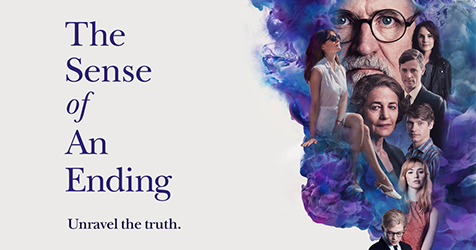
The Sense of an Ending the Movie

When I first knew that The Sense of an Ending was being adapted into a movie, I thought whoever that took up the project had a tall order. That it’s a Booker Prize winner automatically adds pressure and expectations, but the more important consideration is the nature of the book, introspection saturated with internal dialogues.

The novel is powerful and intense in that, in merely 150 pages, Barnes has dismantled the scaffold of self-knowledge in his protagonist by challenging the accuracy of his memories. The eerie effect is, that can happen to us too. How accurate are our memories of ourselves, of others, of events in our life? It’s crucial because what we remember about them build up the person who we think we are today.

So, who had taken up this difficult task to helm the movie? It’s Ritesh Batra, the Mumbai born, Indian director who brought us the interesting film The Lunchbox (2013). Batra has an excellent cast to work with, that should have made his job a bit easier. But one can see he follow the script pretty closely and that’s what made me wish there could be more stylistic touch. Similarly, the screenplay by Nick Payne could have been spiced up a bit. However, its being overall loyal to Barnes’s novel, except a few addons, may have cleared up some ambiguity for the reader.

The Sense of an Ending

In his old age, Tony Webster (Jim Broadbent) received a registered letter notifying him of a small inheritance from someone he had known way back in his university days. The money isn’t the important thing, it’s the diary that is supposed to go with it that opens up a door to his past. And so begins the story. Tony has to rethink everything about himself (younger played by Billy Howle), his first love Veronica Ford (younger played by Freya Mavor), Veronica’s family, in particular his mother Sarah (Emily Mortimer), and his school friends Adrian Finn (Joe Alwyn, who plays Billy Lyn in Ang Lee’s 2016 movie).

There are hits and misses in this adaptation. Broadbent delivers a solid performance as the clueless Tony Webster, a man who has lived all his life lacking the lucidity of seeing himself and others in the proper light, or is it selective memory? The little bit of addon is good, letting Tony set up an old camera shop to get him out of bed everyday. It’s also a good link because when he first met Veronica, she was toying with one, and he had received one from her as a gift as well. Herein lies the linkage of the object with the distant past.

Tony has his ex-wife Margaret (Harriet Walters) to thank, for she humours him by meeting him time and again just to listen. She may be doubting what Tony is telling her, but she is patient and wait for him to slowly rediscover himself. That’s what a good listener does, isn’t it, she helps you question yourself.

Adding the plotline of Tony’s daughter Susie (Michelle Dockery) giving birth to a baby is effective. Those who miss Downton Abbey would be glad to see Mary Crawley again, in a new role. But the real effect here is that her giving birth to a newborn son leads me to appreciate the title of the book, something that I did not quite get when I was reading. I wondered about the relevance of the book title when I was reading it. The movie’s last scene clears this up for me. After all these years of misinformed self-knowledge, Tony finally comes to the end of a chapter in his old age, still not too late. With the renewed relationship with his ex Margaret, and a new grandchild, Tony is ready to call an end to a clueless life and start anew. Once more, with feeling.

The weakest link I feel is with the elderly Veronica character played by Charlotte Rampling. It’s a missed opportunity for the director to draw out more from this veteran actor. Unlike in the book, which depicts an absolutely frustated Veronica, possibly traumatized by what had happened to her in life, finding Tony not understanding a bit about the past. “You just don’t get it, do you?” Exasperated, she has said this several times in the book, if my memory serves me correctly.

So here in the movie, the most crucial scenes ought to be Tony’s meeting with the older Veronica for the first time after all those decades and Veronica seeing Tony still oblivious to what had happened. But no, we see an utterly aloof Veronica, too calm for those tense cinematic moments. “You just don’t get it, do you?” has not been said even once, if my memory serves me correctly.

And the most crucial line in the pub when Tony finds out the truth, it ought to be the climax but the scene is so understated that any built up has been eroded. Now he gets it, and what reaction does he show at the moment and afterwards? I feel it’s the director’s job to augment the moment, and let it ripple into the next sequences. I’m sure the cast can easily oblige. Just for the sake of eliciting more emotional engagement from the viewers. I remember how sensational it felt when I came to that part in the book.

Overall, it’s a pleasure watching these veteran actors in the same production. Together with the above-mentioned cast members, there are also Matthew Goode, the history teacher, but not in a scene with Michelle Docerty, and Merchant Ivory star James Wilby playing the small role of Veronica’s father.

That it is shot on location in London, especially watching Tony meet Veronica again on “the wobbly bridge” leading to Tate Modern is particularly poignant in light of recent events. Overall, a watchable adaptation to go with the book.

~ ~ ~ Ripples

***
Related Posts on Ripple Effects:

The Sense of an Ending Book Review

The Lunchbox Movie Review

The Salesman: A Timely Film

It’s time we get used to reading subtitles.

The Salesman is one of five nominees for Best Foreign Language Film in the upcoming 89th Academy Awards on February 26. Due to the executive order banning travellers from seven Muslim countries, Iranian director Asghar Farhadi will not be attending. The director has indicated he will not accept any exception made for his case. Co-star Taraneh Alidoosti has stated she will boycott the ceremony as a protest.

Whose loss is it that Asghar Farhadi is banned from coming to the Academy Awards?

After the untimely passing last year of Iranian auteur Abbas Kiarostami (Certified Copy, 2010), Farhadi continues to carry the legacy of fine Iranian filmmaking with international accolades. Starting with About Elly, which he won Best Director at Berlinale in 2009, Farhadi went on to capture both the Oscar and the César Award in France for Best Foreign Language Film with A Separation (2011). The Past (2013) brought him two Cannes prizes. His newest work The Salesman won a Best Screenplay for the writer/director and a Best Actor award for his star Shahab Hosseini at Cannes last year. Now North American viewers have a chance to see this engaging family drama.

thesalesman_poster_2764x4096-copy

The story starts off with an evacuation of an apartment building on the verge of collapsing. A couple, Emad (Shahab Hosseini, A Separation, About Elly) and Rana (Taraneh Alidoosti, About Elly) are among the anxious residents fleeing the building. We can see large cracks on the wall in their bedroom. Responding to the shout for help, Emad diverts to his neighbor’s unit to carry his adult, mentally ill son on his own back to go down the stairs. A seemingly spontaneous move in the rush of evacuation, Farhadi lets us see an act of kindness from his main character.

A friend offers Emad and Rana a recently vacated apartment unit to stay. Its previous tenant still has her belongings stored in one room. She has left in haste, a shady figure who has frequent male clients coming to her unit. Emad only learns of this after a violent incident that happens to his wife. Rana is alone in the unit one night. She leaves her apartment door ajar for Emad, thinking he will come home soon while she steps into the shower.

Emad returns home to see traces of blood on the stairs and soon learns that his wife has been taken to the hospital emergency by neighbors. We as viewers do not know exactly what has happened but can conjecture by the circumstance. We see a traumatized Rana with stiches on her forehead. She is released to recover at home, but refuses to let Emad call the police. Later, as Emad discovers a cell phone and a set of keys left by the intruder, he decides to investigate on his own and takes matters into his own hands.

Since the incident, husband and wife begin to drift slowly apart, Rana being reticent and Emad vigilant. Here we see Farhadi’s signature cinematic handling: incisive depiction of domestic tensions shrouded in Hitchcokian suspense. We soon forget we are watching an Iranian couple living in Tehran. As with his previous works, Farhadi is effective here in engaging his viewers and to elicit empathy for both the husband and the wife despite their very opposite response to the attack.

Emad and Rana belong to a local theatre group. They are presently rehearsing for a run of Arthur Miller’s Death of a Salesman, playing Willy and Linda Loman. Farhadi deftly intertwines the on-stage and the real-life couple with intricate parallels. In the play, we see the demise of Willy Loman and the end of a relationship; in their real life, we see Emad and Rana’s marriage deteriorate, and a demise of a different kind for Emad. The cracks on the wall above their bed at the opening scene is now an apt metaphor, their once close bond slowly crumbles.

Actually, there are two plays involved in the film. The obvious one is Miller’s. The other is easy to miss. During the day, Emad is a teacher. In one scene, we see him teaching a play called The Cow, a work written by the prolific Iranian writer Gholām-Hossein Sā’edi. Reminiscent of Kafka’s The Metamorphosis, The Cow evokes much enthusiasm in his class of teenage boys. The play is an allegory about a man who owns the only cow in a village; his daily life is closely tied to the animal, his identity defined by his ownership of this unique possession. When one day he loses his cow in an accident, he ends up turning into one.

Here are two prominent lines. A student asks: “How can you turn into a cow?” Emad answers: “Gradually.” Sounds like a joke, but no student laughs. Farhadi subtly leads us to see how.

The last part of the film is the most crucial. Emad’s good detective work leads him to come face to face with the attacker. He has him locked in a room in their previous, vacated apartment. Playing to the attacker’s fear of revealing to his wife and family what he had done, Emad calls them to come over. Farhadi is brilliant in leading us to a situation where we as viewers are challenged to empathize all his characters despite their opposing sides, and to weigh in on what we would have done. He puts his viewers in the position not as a judge, but witness.

Slowly we are led to see how a man can lose the veneer of civility and change into something else as he allows revenge dominates his emotions. The kind and helpful man we see in the opening scene is now shrouded in a different sentiment. In the most nuanced and quiet manner, Farhadi lets us visualize Emad’s earlier reply to his student, how a man can gradually change into a different being. Or, is it a latent potency we all have that different circumstances would elicit a different aspect of our self?

At this juncture, Farhadi reveals to us a multi-faceted man. A helpful neighbour, loving husband, well-liked teacher, and a cultured stage actor. When put in a situation where vigilante justice takes over, and revenge molds the mind, or even when the social expectation of being a protective male head in a marriage prevails, is Emad free to act? If the accused pleads for his own release, and the victim herself is willing to forgive, should the husband carry out his reprimand? On the other hand, should the attacker just go free?

In the final shot, we see Emad and Rana sit beside each other as make-up is applied to get them ready for their parts as Willy and Linda. Their expressions in the mirrors make one haunting image to end the film.

Banned from entering the United States, what Farhadi will lose are the glitz and glam of the Oscars. By his absence at the ceremony, the Academy will lose the chance to honor an internationally acclaimed director who is a master in revealing human frailties and eliciting from viewers the very empathy we so need in this testing time.

Fortunately we can still watch his film.

~ ~ ~ ~ Ripples

***