Looking for “Intrusions of Grace” in Films: Pickpocket and Drive

“Our age not only does not have a very sharp eye for the almost imperceptible intrusions of grace, it no longer has much feeling for the nature of the violence which precede and follow them.”     — Flannery O’Connor (as quoted in my previous post)

Flannery O’Connor made this remark back in 1963. It was not only a sharp social commentary and prophetic, but to me, it also stands as one of the signs of a good film. Amidst the violence and ugliness a film may depict, the presence of grace, however small, or a mere spot of purity, could bring out a powerful contrast. Usually that is what’s needed to emit a redemptive spark, offering a glimpse of light pointing to the transcendent.

With this frame of grace among violence, I go back to the films I’ve watched and try to find some good examples. My task proves to be more difficult than I first thought. But after some deep searching through my mental archive, several films came to mind. I’ll just mention two for this post.

**

Pickpocket (1959)
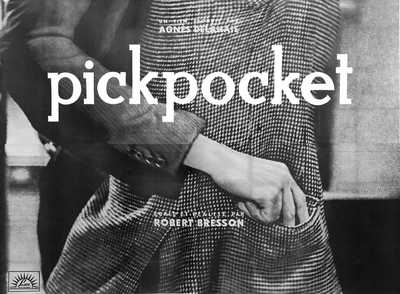
Robert Bresson’s modern version of Dostoevsky’s Crime and Punishment. Caught in his own desensitized internal world, our protagonist Michel commits acts of theft as a desperate measure to fill the void in his existence. He goes through his days in a haunting vacuum devoid of meaning and emotions. He is unfeeling even towards his own dying mother, reminds me of Meursault in Camus’s The Stranger. Although not an axe murderer, like Raskolnikov in Crime and Punishment, Michel theorizes that those with superior talents and intelligence, the supermen in society, should be free to disobey laws in certain cases. He is numbed by his own hubris, and stifled by his cold and absurd worldview. Outright violence is not visible here, but we see the battle of wits he engages with the police inspector behind his trails, and we see him struggle in an amoral and meaningless existence.

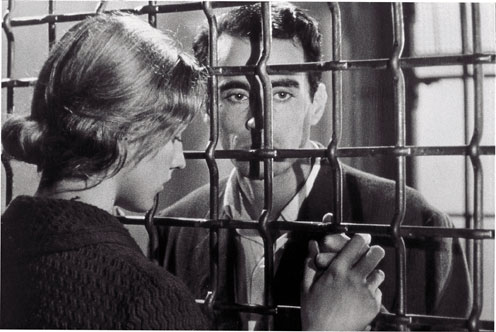
Grace comes as Jeanne, a neighbor and carer of Michel’s ailing mother. Jeanne lives on her own looking after her younger brother. Her father is a drunk and her mother has deserted them. But she continues to live and care. She accepts her circumstances calmly, and extends kindness to those unrelated to her, caring for Michel’s mother, a neighbor on another floor. She stands as a stark contrast to Michel’s aloofness. At the end of the film, Jeanne came to visit Michel in prison after he was arrested, the two separated by the cold iron bars. For the first time, Michel feels love and wants to reciprocate it. And thus the cathartic ending as he totally melts in the presence of pure love and grace, wrapping up the film with this last line:

“Oh, Jeanne, to reach you at last, what a strange path I had to take.”
.

Drive (2011)

A current release that comes with high acclaims. The film was nominated for the Palme d’Or and Nicolas Winding Refn won Best Director at the Cannes Film Festival this year. With slick and dashing camera work, the violence in “Drive” is visceral and graphic, a big contrast to the black and white, internal “Pickpocket”. However, I see some parallels between these two films made 50 years apart.

Ryan Gosling is “the Driver”. He does not even have a name. He is an expert stunt driver for movies and works at an autobody shop by day, drives a get-away car in the underworld of crimes by night. Like Michel in “Pickpocket”, he drifts in existence, numb and desensitized to the world around him. That is, until he meets Irene (Carey Mulligan), his neighbor.

Mulligan’s almost angelic presence in the film is most effective as a stark contrast to those around her. She lives alone looking after a child and works as a waitress in a diner. She appeals to the Driver by being herself, innocent, taking life as it is, responsible, caring for a child alone while her husband is locked up in prison. Irene is a spot of purity in a rough environment. Her mere presence has transformed the Driver. From being aloof the Driver has become engaged emotionally, friendly and protective of both mother and son.

The plot thickens as Irene’s husband is released from prison and rejoins his family. The Driver is caught in an awkward situation. But he soon realizes that the husband’s resolve for a new start is genuine. The power of transformation is so thorough that the Driver is willing to go out on a limb to help the husband with one last heist in order to break the hold a gang has on the man and his wife and kid. While things go awry terribly and the ending is not as clean-cut as “Pickpocket”, we learn that the Driver remains a changed man from the ephemeral friendship he once had with Irene and her child.

I’ve heard a critic say Mulligan is a miscast, that she’s not “damaged enough”, and would prefer a ‘stronger’ character. I disagree. I feel that Mulligan has portrayed Irene’s innocent persona aptly, and yes, those ethereal dimples can just melt any heart. Hers is the perfect role for exactly the right reason. In the dark underworld of gangs, violence and crimes, she stands out as a tiny source of purity, a spark of grace. It all shows that what may look weak and vulnerable can have transformative power over the strong. A thought that may well be unpopular today.

***

Other related posts from Ripple Effects:

A Good Man Is Hard To Find and Other Stories by Flannery O’Connor

Bernini’s Corpus and Modern Movies

Notes on the Synthesis of Film, Art… Life?

The Tree of Life by Terrence Malick

(It is impossible to review The Tree of Life without writing about what it is about, hence: Spoiler Alert for this post.)

“The Tree of Life” is the fifth feature film in the forty-year career of the reclusive director Terrence Malick. It received mixed reactions at the Cannes Film Festival in May this year. There were boos and applause. That it finally won the top prize at the festival, the prestigious Palme d’Or, indicates which side was gratified. But, it is a film that needs to be experienced personally before one takes side, and maybe seeing it more than once.

Watching the film is an experience in itself. It starts off with this quote from Job 38: 4 and 7:

Where were you when I laid the foundation of the earth? When the morning stars sang together
 and all the sons of God shouted for joy?

With this premise, the film pours forth mysterious yet majestic visual sequences depicting the cosmos, our molten earth, prehistoric era where dinosaurs roam, early life forms, the roaring ocean, blood streams, fetal heartbeats. The first part.

Upon such visuals we hear a voice over:

There are two ways through life — the way of nature and the way of grace. You have to choose which one you’ll follow. Grace doesn’t try to please itself. Accepts being slighted, forgotten, disliked. Accepts insults and injuries. Nature only wants to please itself. Get others to please it too. Likes to lord it over them. To have its own way…

From the macro scale of the universe we now focus on the micro, something with which we can identify, a family. We see it from the point of view of Jack O’Brien (Sean Penn). An architect now, Jack is haunted by memories of his past, in particular, the death of his younger brother at age 19. We see scenes of his parents receiving the bad news. We hear his yearning for the people he loves through his whisper in voice over: ”Brother, mother.” We are then privy to Jack’s childhood days in 1950’s Texas.

From the O’Brien family we see how grace and human nature play out. Jack’s childhood in Waco, Texas, begins in innocence. With a capable father (Brad Pitt) and an almost angelic mother (Jessica Chastain) who is loving, nurturing, grace manifest, young Jack’s (Hunter McCracken) early days are blissful. Two younger brothers later, the siblings form a close bond. But as the boys grow older, the father becomes stern and strict, callous with his sons, demanding total obedience, expecting love where the seeds of fear are sown. From this character, we see human nature manifest in its destructive, self-seeking mode.

Other incidents further shatter the once blissful young life. Jack goes to town with his mother and brothers, he sees a crippled man make his way awkwardly across the street. He also witnesses the unlawful being arrested. While at the swimming pool, he watches a boy drowned despite frantic rescue. We hear young Jack’s whisper in voice over: “Was he bad? Where were you? You let a boy die.” The problem of pain, suffering, and evil begin to churn in his mind. Direct questions to God, not unlike Job.

Watching his father’s harsh handling of his sons, young Jack slowly discovers that he himself too has the latent capacity to not just think, but to commit wrongs, “I do what I hate.” In a moving scene, after he has hurt his little brother, Jack becomes remorseful and asks for forgiveness. We see the power of love at work. We also see his innocence slowly taken over by conflicts in his heart, love and hate, good and evil… grace and nature.  The second part.

Jack’s father loses his job and the family has to leave town. The uprooting is the most painful the boys have experienced. Everything is lost, it seems, friends, the house, the neighborhood, memories, … But among the loss, we hear the graceful voice of Jack’s mother: “The only way to be happy is to love. Unless you love, your life will flash by… Do good, wonder, hope.” Yet poignantly, she experiences the most devastating blow later, the death of her own son. We hear her heartbreaking whisper in voice over: “Where were you? Did you know?” Again, reiterating the questions that were on Job’s mind.

But ultimately light takes over darkness. We are assured that all is not lost. We hear Jack’s yearning whisper, like a prayer: “Keep us, guide us, to the end of time.” In the eternal scheme of things, shown by the display of the magnificent cosmic visuals, we see all members of the O’Brien family reunite and bathed in a warm bright light. Jack once again embraces the ones he loves, his mother and his brothers. He also stands shoulder to shoulder with the one who has inflicted in him the mixed emotions of pain, anger and love, his father, now reconciled under the brilliant light.  The third part.

Yes, we have the big names. Sean Penn as adult Jack appears only sporadically. Brad Pitt nails his role as the stern and difficult father. The relatively new film actor Jessica Chastain is grace embodied. In an interview she recalls that director Terrence Malick had asked her to watch a lot of Lauren Bacall movies to prepare for her role. But the most impressive of all is Hunter McCracken playing young Jack. The casting is brilliant here. His mesmerizing portrayal of a conflicting boy incubating the later character of a tormented adult Penn is deeply moving, a reflection too of Malick’s sensitive direction. As with his other films, cinematography is superb. You’ll have plenty of time to savour the long sections of cosmic and natural wonders.

“The Tree of Life” is for the patient viewer. It is a slow movie, and rightly so. You have to take the two hours and eighteen minutes as a respite from your busy schedule, and experience the film as a quiet meditation on life, family, God, and relationship with Him. It is also a portrait of love, faith, doubts, and promise. It poses questions in whispers, and answers with majestic visuals in silence, and at times, in engulfing themes of torrential music. Smetana’s “The Moldau” still flows through my mind at 4:30 a.m.

Boos or applause, what does it matter? To quote Bresson: “All is grace.”

~ ~ ~ ~ Ripples

***


CLICK HERE to read my post on another Malick film, Days of Heaven (1978), which won an Oscar for Best Cinematography.

The Letters of Vincent van Gogh

While reading van Gogh’s letters is a fascinating journey into the mind of the artist, it is also poignantly heartbreaking. This is an abridged version of van Gogh’s letters, almost all written to his brother Theo from the various places he had stayed from 1872-1890, Holland, Belgium, England and France.

A few decades separate his life from Hemingway’s, but I think he too had his “moveable feast”.  To the painter, it’s not Paris, but the open country of southern France, in particular, Arles and St. Remy’s, Provence.

(A corner store in Arles, named after the famous ‘Yellow House’ Van Gogh once lived in)

Unlike Hemingway, van Gogh felt Paris only ‘distracts’. He wrote to his brother Theo after moving to Arles from Paris in February, 1888:

It seems to me almost impossible to be able to work in Paris, unless you have a refuge in which to recover and regain your peace of mind and self-composure. Without that, you’d be bound to get utterly numbed.

While Hemingway sought to “write one true sentence”, van Gogh yearned to reflect what was true through his paintings:

… giving a true impression of what I see. Not always literally exact, rather never exact, for one sees nature through one’s own temperament.

And colours were his tools. Van Gogh began to use a new palette that he did not see in his native Holland. Under the bright Provence sun, the artist excitedly indulged in a myriads of brilliant colours he had not experienced before…”There is that sulphur yellow everywhere the sun lights on.” He eagerly ushered in a new style.

Instead of trying to reproduce exactly what I have before my eyes, I use colour more arbitrarily so as to express myself forcibly… — To Theo from Arles, August 1888

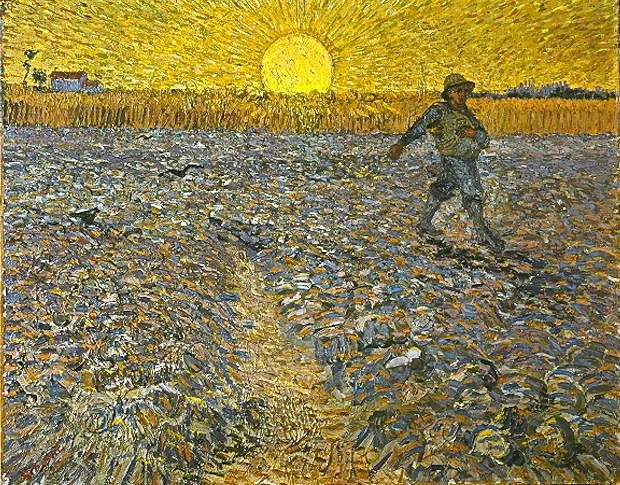
(The Sower)

I believe in the absolute necessity for a new art of colour, of design, and — of the artistic life.”

“But the painter of the future will be such a colourist as has never yet been [emphasis his].

Through the artist’s colourful lens, the view that van Gogh saw was one that I could never imagine. Here he described to his brother Theo a painting he’d finished, in a letter dated September, 1888:

 … the starry sky painted actually at night under a gas jet. The sky is greenish blue, the water royal blue, the ground mauve. The town is blue and violet, the gas is yellow and the reflections are russet gold down to greenish bronze. On the blue-green field of the sky the Great Bear sparkles green and rose, its discreet pallor contrasts with the brutal gold of the gas.

(Starry Night)

Many of the letters are descriptions like this to Theo in Paris. Reading them, I can sense the artist’s excitement and joy in capturing everything he saw in Arles:

At the moment I am working on some plum trees, yellowish white, with thousands of black branches. I am using a tremendous lot of colours and canvases…

… it will be to our advantage to make the most we can of the orchards in bloom. I am well started now, and I think I must have ten more, the same subject. You know, I am changeable in my work, and this craze for painting orchards will not last for ever. After this may be the arenas…

His letters alas are also pleas for funds, as he was “literally starving”. With the last fr.5 he had, he’d spend it on canvases. He lived in dire poverty most of his career, damaging his physical and mental health.

I can’t do without colours, and colours are expensive… I cannot get more on credit. And yet I love painting so…

Worse still, his letters are also accounts of anguish, depression, and “unbearable hallucinations.” He desperately sought cures, admitting himself into the asylum in St. Remy’s. Ironically, it was there that he experienced the most prolific period of his life.

                    (St. Paul’s Hospital at St. Remy’s)

Throughout van Gogh’s numerous letters, there are many beautiful lines, insight into love, art, books, and life. Here are a few:

  • “Since I really love there is more reality in my drawings.” — Autumn 1881
  • “I would not give a farthing for life, if there were not something infinite, something deep, something real.” — December 1881
  • “It is the painter’s duty to be entirely absorbed by nature and to use all his intelligence to express sentiment in his work so that it becomes intelligible to other people. To work for the market is in my opinion not exactly the right way…” — July 1882
  • “I assure you that some days at the hospital were very interesting, and perhaps it is from the sick that one learns how to live.”  — January 1889
  • “I took advantage of my outing to buy a  book… I have devoured two chapters of it… This is the first time for several months that I have had a book in my hand. That means a lot to me and does a good deal towards my cure.” — March 1889
  • “What I should very much like to have to read here now and then, would be a Shakespeare… What touches me, as in some novelists of our day, is that the voices of these people, which in Shakespeare’s case reach us from a distance of several centuries, do not seem unfamiliar to us. — From St. Remy’s Hospital, June 1889.

But tragically, van Gogh succumbed to his mental illness. In July, 1890 two months after moving back to Auvers, north of Paris, he went out to the open fields and shot himself. Two days later he died from his gunshot wound. He was 37.

The Letters of Vincent van Gogh to his Brother and Others. Introduction by his sister-in-law Johanna van Gogh-Bonger, abridged by Elfreda Powell, Published by Constable & Robinson Ltd., 2003, 324 pages.

***

The is my last post for the blogging event Paris in July hosted by Karen of BookBath, and Tamara of Thyme for Tea. My other post is “A Moveable Feast (Restored Edition) by Ernest Hemingway.”

To read my travel post from last August “Arles: In The Steps of Van Gogh” CLICK HERE.

Photos: Van Gogh’s paintings, from Wikimedia Commons, Public Domain. Arles and St. Remy’s by Arti of Ripple Effects, August, 2010.

To read all the 900 letters of van Gogh online, go to this excellent site of the Van Gogh Museum, Amsterdam.

The Golden Globe Speeches

While I was all eager to watch the 68th Annual Golden Globes last night, I was feeling bored from the beginning, after the first award of Best Supporting Actor was handed out. With Geoffrey Rush (The King’s speech therapist) losing the award, I will always miss the acceptance speech from him. I’m sure he had prepared something brilliant and witty to say. That would be the speech I had hoped for, but now, will never get to hear.

Most of the speeches last night were banal and uninspiring, exceptions were few. Even Robert De Niro’s for winning the Cecil B. DeMille Lifetime Achievement Award was lacklustre.  What sounded like self-deprecating humor could well have de-mythicized the acting profession and brought it down to the level of just another job to feed the kids.

Annette Bening had a sweet ending to her acceptance speech for Best Actress, comedy or musical, for The Kids Are All Right. After thanking the cast, she acknowledged “the 1962 winner of the Golden Globes for Most Promising Actor, my husband Warren Beatty.” They looked wonderful together, after all these years.

Canadian viewers must be delighted to hear Paul Giamatti, Best Actor, comedy or musical for Barney’s Version, as he acknowledged Canadian author Mordecai Richler and his family, and the film’s shooting location “up in an incredible, beautiful city, Montreal, which I dream about, an incredible place in a great nation, Canada. I salute the great nation of Canada.”

The audience stood and cheered as Michael Douglas came on stage at the end, making his first public appearance in Hollywood after receiving treatments for throat cancer: “That’s got to be an easier way to get a standing ovation,”  he quipped.  He presented the Best Movie Award to The Social Network, which won four Golden Globes last night.

.

.

The best speech of the night came from Colin Firth. Just like his role in The King’s Speech, reflecting his persona and style, his speech was an exemplar of finesse and character.

Here is Colin Firth’s acceptance speech for Best Actor, Drama, for The King’s Speech:

“Getting through the mid stage of your life with your dignity and judgement in tact can be somewhat precarious and sometimes all you need is a bit of gentle reassurance to keep on track. I don’t know if this qualifies as gentle reassurance, but right now this is all that stands between me and a Harley Davidson. I owe a very great debt to my supernaturally talented fellow cast members, my exquisite no-nonsense Queen, Helena and my wayward Royal older brother Guy [Pierce]. Geoffrey Rush and Tom Hooper, my two other sides of a surprisingly robust triangle of man love, somehow moved forward in perfect formation for the last year and a half or so… Tom with his scorching intelligence and Geoffrey who has now become my true friend and geisha girl. David Seidler, I know something of what you went through to create this…. at a time in my life when I truly appreciate the value of longevity in my relationships, Harvey Weinstein has made an improbably number of good films. We have had 20 years together, which is not bad going for a showbiz marriage. Thank you, Harvey. But the very best thing of all has been Livia [his wife] and all the beautiful things she’s given me and I think I can cope with just about any age as long as I can still see her.”

Who can be more deserving to win?

***

For a full list of Golden Globes nominees and winners, CLICK HERE to the official Golden Globe Site of the Hollywood Foreign Press Association.

To read my review of The King’s Speech, CLICK HERE.

Colin Firth’s Speech quoted from The Telegraph.

Photo source: The Telegraph http://www.telegraph.co.uk/culture/film/film-news/8260914/Golden-Globes-2011-Colin-Firth-wins-Best-Actor-as-The-Social-Network-takes-four-awards.html


Reading Snow Country in Snow Country

The first ‘Snow Country’ in the title refers to the 1968 Japanese Nobel Laureate Yasunari Kawabata’s (川端 康成 1899-1972) seminal novel Snow Country (雪鄉); the second refers to Arti’s neck of the woods here north of the 49th parallel in mid December.

Written in the 1930’s through to the 1940’s, Snow Country was later translated into English and published in 1956.  It is probably Kawabata’s most well-known work.  Translator Edward G. Seidensticker had been credited for leading Kawabata’s work to the ultimate accolade, the Nobel Prize of Literature in 1968, a first for a Japanese writer.

The haiku-like simplicity so pervasive in the book is most apt for the Season. Firstly, its meditative descriptions and imagery offer a respite in the midst of our frantic pace.  And secondly, it points to certain relevance during this Christmas time, which I find surprising.

Translator Seidensticker writes in the introduction that the haiku is a juxtaposition of incongruous terms, such as motion and stillness. Within such contradictions sparks “a sudden awareness of beauty.”  Relax in the following poetic imageries:

They came out of the cedar grove, where the quiet seemed to fall in chilly drops.

or this:

[Her voice] seemed to come back like an echo of distilled love.

or this:

The field of white flowers on red stems was quietness itself.

Or savor the interplay of light and shadow, which evokes the poignancy of decayed beauty. This could well be the summing up of the human condition in Kawabata’s novel.

The sky was clouding over.  Mountains still in the sunlight stood out against shadowed mountains.  The play of light and shade changed from moment to moment, sketching a chilly landscape.  Presently the ski grounds too were in shadow.  Below the window Shimamura could see little needles of frost like ising-glass among the withered chrysanthemums, though water was still dripping from the snow on the roof.

The protagonist Shimamura, ‘who lived a life of idleness’ from inherited wealth, would leave his wife and children in Tokyo and go alone to the snow country every year, the mountain region of central Japan, to meet Komako, a young geisha at a hot spring village.  The love affair between the two is starkly off-balanced.  Despite her work in the pleasure quarters, entertaining parties of men, Komako is deeply devoted to Shimamura. Like her meager dwelling in the shabbiness of all, her room is spotlessly clean: “I want to be as clean and neat as the place will let me…”

Sadly, Komako realizes it is but a doomed unrequited love that she has invested in.  Shimamura too is aware of his own coldness.  Even though he is drawn back to Komako by making these trips to the snow country, he feels no obligation at all:

All of Komako came to him, but it seemed that nothing went out from him to her.

Of course, it could well be guilt and a sense of moral ground, albeit his loyalty to his wife and children rarely comes to mind.

Shimamura does not understand the purity Komako seeks in her love for him, and her desire not to be treated as a geisha.  And that is why his nonchalant statement hits Komako so hard. In the climatic scene of the story, he utters, though not without affection: “You are a good woman.”

Instead of taking his words as an endearment, Komako is deeply hurt. Despite having to work as a geisha due to her circumstance, thus selling herself as an outcast, she longs to be removed from her predicament and be transported to a new life. Shimamura’s repeated words “You are a good woman” fall upon her like the gavel of final judgement laden with biting sarcasm.

Kawabata’s characters cry out for redemption, to be delivered from their precarious state. Komako is seeking saving grace in Shimamura, and desperately hoping for a way out of the “indefinable air of loneliness” shrouding her.  But her search is in vain for the man is incapable of love:

He was conscious of an emptiness that made him see Komako’s life as beautiful but wasted, even though he himself was the object of her love; and yet the woman’s existence, her straining to live, came touching him like naked skin.  He pitied her, and he pitied himself.

Shimamura knows deep down that he needs cleansing as much as or even more than Komako.

The snow country of Japan is also the land of the Chijimi.  It is an old folk art of weaving where a certain kind of long grass is cut and treated, finally transformed into pure white thread.  The whole process of spinning, weaving, washing and bleaching is done in the snow.  As the saying goes, “There is Chijimi linen because there is snow.”  After the linen is made into kimonos, people still send them back to the mountain regions to have the maidens who made them rebleach them each year.  And this is where the universal appeal of snow as a metaphor for purity and cleansing so powerfully depicted by Kawabata, as Shimamura ponders:

The thought of the white linen, spread out on the deep snow, the cloth and the snow glowing scarlet in the rising sun, was enough to make him feel that the dirt of the summer had been washed away, even that he himself had been bleached clean.

When I came to this description towards the end of the book, a starkly similar image conjured up in my mind:

Though your sins are like scarlet, they shall be as white as snow; though they are red as crimson, they shall be like wool.”              —- Isaiah 1:18

And like the doomed ending of their love affair, death comes as a certainty to all, insects or humans alike.  Shimamura has observed how a moth “fell like a leaf from a tree… dragonflies bobbing about in countless swarms, like dandelion floss in the wind.”  The poetic descriptions do not make death any more appealing.  Kawabata uses insects as a metaphor for the frailty of life and the chilling finality awaiting:

Each day, as the autumn grew colder, insects died on the floor of his room.  Stiff-winged insects fell on their backs and were unable to get to their feet again.  A bee walked a little and collapsed, walked a little and collapsed.  It was a quiet death that came with the change of seasons.  Looking closely, however, Shimamura could see that the legs and feelers were trembling in the struggle to live.

It is pure serendipity that I picked up this book to read at this time of the year.  The Christmas story too has also cast a vivid interplay between darkness and light.  I was reminded of this reference:

The people walking in darkness have seen a great light; on those living in the land of the shadow of death a light has dawned.”            — Isaiah 9:2

There is reason to rejoice, for the Able Deliverer had come… He too had lived a life of paradoxes and contradictions: born to die, life through death, strength through weakness.  And beneath the surface of jollity of the Season and the superficial exchanges of good will, there lies deep and quiet, the source of joy and inner fulfillment, and Life’s ultimate triumph over death.

I heard a small voice echo as I treaded on the snowy path alone in my snow country.

It said: “For this reason I came.”

***

Snow Country by Yasunari Kawabata, translated by Edward G. Seidensticker. Published by Vintage International, 1996. 175 pages.

This concludes my final entry to meet Dolce Bellezza’s Japanese Literature Challenge 4 before the end of 2010.

My other JLC posts:

Never Let Me Go by Kazuo Ishiguro

Rouse Up O Young Men of the New Age! by Kenzaburo Oe

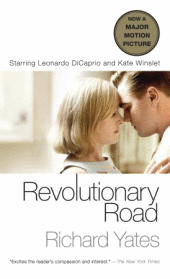
Revolutionary Road: Book and Movie

There’s a story that goes like this.  The Times once asked its readers to send in their answer to this question: “What is wrong with the world?”  The writer, scholar, and theologian G. K. Chesterton sent them this reply:

Dear Editors,

I am.

Sincerely,

G. K. Chesterton

**

Here’s a lighter version from Groucho Marx:

“I don’t want to belong to any club that would accept me as a member.”


**


Revolutionary Road by Richard Yates (1961)

If only the Wheelers had had a conversation with Groucho Marx, maybe invited him to tea in their little white suburban house on Revolutionary Road, probably they could have avoided a tragedy.

In her mind, April Wheeler has dreamed of a club like this:

“I still had this idea that there was a whole world of marvelous golden people somewhere… people who knew everything instinctively, who made their lives work out the way they wanted without even trying, who never had to make the best of a bad job becasue it never occurred to them to do anything less than perfectly the first time.  Sort of heroic super-people, all of them beautiful and witty and calm and kind, and I always imagined that when I did find them I’d suddenly know that I belonged among them, that I was one of them, that I’d been meant to be one of them all along…”

The problem with the self.  What had taken G. K. Chesterton two words to identify, Richard Yates has shown with 463 pages (my pocket paperback).  No, I’m not complaining.  What has driven me to go on and finish the book, despite the ominous cloud hanging over its pages, is Yate’s marvellous prose leading me every step of the way, through every fight of the Wheelers’, every sardonic description of Frank’s New York office, their suburban social circle, and their self-delusion.  And even amidst the dark and grey overtone, the undercurrents of humor could sometimes make me laugh out loud (Having read the book, I’ll have to ask myself: am I being a snob for not using the acronym?)

Humor and irony are only ways of delivery, the message is still poignant.  I’ve enjoyed every visit John Givings goes to the Wheelers’ home during his half-day out of the insane asylum.  John’s mother Helen, the realtor who sells the Wheelers their house, only means good, bringing her son to meet some normal people to help improve his condition.  Yates is superb there in these scenes. As expected, the fool often comes out as the wise, the insane pointing out the truth. But you still want to go over the lines.

Knowing that Frank doesn’t like his job, John responds:

“Whaddya do it for then?   Okay; I know; it’s none of my business.  This is what old Helen calls Being Tactless, Dear. That’s my trouble, you see; always has been.  Forget I said it. You want to play house, you got to have a job.  You want to play very nice house, very sweet house, then you got to have a job you don’t like. Great… Anybody comes along and says ‘Whaddya do it for?’ you can be pretty sure he’s on a four-hour pass from the State funny-farm; all agreed.  Are we all agreed there, Helen?”

“Oh look, there is a rainbow,” Mrs. Givings said…

But of course the problem is complex.  While we are all free agents of our own actions, we are also products of our circumstances and our past. The setting of the 50’s is a time of suburbanization, post-war peace and affluence. But the story could take place anywhere, anytime. When offered a promotion at work, Frank chooses to stay rather than opting for a loftier dream.  Substitute now for the 50’s, who would notice?

Frank and April Wheelers and their two children are the perfect example of the young and wholesome family enjoying the good life, in appearance that is.  What’s troubling them is legitimate, of course. What’s the point of being a nut screw in the machine of Big Business and a willing hostage of conformity and suburban ennui?  April might be fulfilling a self-serving and snobbish desire to move the whole family to Paris, but she could be right that Frank needs to be given the chance to ‘find himself’.  What she fails to see though is that she’s the one who could benefit from such self-reflection even more.

John Givings has more pointed words for the Wheelers in his next visit, which ultimately leads to the collapse of everything.  Yates’ writing has taken me captive.  The last hundred pages of the book have me glued to the seat.  It was already dark outside, I was sitting on a couch reading, alone in the house.  The feeling I had while going through those last chapters was no different from my experience of watching The Silence of the Lambs some years earlier, also sitting alone one night in the same spot… although there’s no similarity between the content of the two.  Haunting, eerie, disturbing…. now this is with me having watched the movie before reading the book.

Revolutionary Road is my first Yates book.  While I’ve admired his writing, I’m not so sure I’ll seek out his other works…  You see, I’ve always thought The Silence of the Lambs is a first-rate movie, but I would not want to see it again and again.

Revolutionary Road by Richard Yates, First Vintage Contemporaries Mass Market Edition, January 2009, 463 pages.

***

Revolutionary Road: The Movie (2008, DVD)

Leonardo DiCaprio and Kate Winslet reunited since Titanic (1997) to play the Wheelers in Revolutionary Road.  On the outset, they are perfect for the roles: Frank the charmer, April the golden girl.  And to top it off, the movie is directed by Sam Mendes, who has brought us the Oscar Best Picture for 1999, American Beauty, another brilliant suburban commentary.

Supporting roles are well performed by Kathy Bates as the talkative realtor Mrs. Helen Givings.  And Michael Shannon deservedly got an Oscar nom for his portrayal of Mrs. Givings’ son John, the lucid lunatic on a day-pass out from the insane asylum.

But somehow I feel there’s a significant discrepancy in the characterization that has shifted the dynamics between Frank and April.  As a result, the movie offers an altered view.  April here is a victim of circumstance.  She is portrayed as the courageous one who sticks to her goal, even heroic as Mendes says in the Special Features.  No suggestion of smugness or self-delusion, but rather, she is clear as crystal about her situation. Winslet has such cinematic appeal that her April is a much more amiable character than the controlling and self-serving dreamer and schemer I see in the novel.  And here, Frank is the conforming realist, the bully that needs anger management, the one who lacks the guts to embrace change.

While the storyline and scenes are faithful to the source material, the altered characterization of April Wheeler has subtly changed the premise of the novel.  What we have here is simply a love relation gone wrong.  A tragic drama of incompatible expectations, the conflicts between the progressive, idealistic and unfulfilled suburban wife, and the temperamental, gutless husband who has given in too easily to ordinary life.  The complexities which Yates has so marvellously detailed are absent here:  Was there any love to begin with?  Are dreamers necessarily superior than realists?  And, on what do we base our choices and actions?

What initially sparks off the romance between Frank and April and which sustains their façade can be summed up in this sentence from the book, and which, of course, is absent in the film in any nuanced form:

“Sometimes there was a glint of humor in these embraces of the eye:  I’m showing off, they seem to say, but so are you, and I love you.”

All the more reason to read the source material after watching a movie.

DVD Special Features include commentary by director Sam Mendes and screenwriter Justin Haythe, and Lives of Quiet Desperation: The Making of Revolutionary Road.

****


Notes on the Synthesis of Film, Art… Life?

Recently I’ve just finished reading Paul Schrader’s Transcendental Style in Film: Ozu, Bresson, Dreyer (1972).  Yes, that’s before Schrader rose to prominence as a screenwriter and filmmaker. Is such a book a bit dated?  Considering the techno-reigning world we’re living in now, where speed is measured by nanoseconds, and where 3D and CGI have become the necessary features for movies to generate sales, I think we need to read this all the more.

The three directors in the book had produced some of the best movies of all time. Since I have not seen all the films Schrader discusses, I might not have grasped as fully his arguments and illustrations as they deserve. And I admit I do not embrace unquestionably all those that I do get. Nevertheless, there are many, many parts that I want to record down. I’d consider them crucial elements to mull over during the creative process in just about anything. I’ve listed some of these fine quotes in the following.

They all point to the axiom of ‘less is more’, the value of stillness and simplicity, the speechless sketch that speaks volumes, the importance of being over doing, the quality of sparseness over abundance, the bare essence of life.

Notes to myself: when watching, writing, reading, doing, or just plain walking down the mundane path of everyday, keep these points in mind.

  • Ozu’s camera is always at the level of a person seated in traditional fashion on the tatami, about three feet above the ground. “This traditional view is the view in repose, commanding a very limited field of vision. It is the attitude for watching, for listening, it is the position from which one sees the Noh… It is the aesthetic attitude; it is the passive attitude.”[1]
  • Ozu chose his actors not for their “star” quality or acting skill, but for their “essential” quality. “In casting it is not a matter of skilfulness or lack of skill an actor has. It is what he is…”
  • “Pictures with obvious plots bore me now,” Ozu told Richie. “Naturally, a film must have some kind of structure or else it is not a film, but I feel that a picture isn’t good if it has too much drama or action… I want to portray a man’s character by eliminating all the dramatic devices. I want to make people feel what life is like without delineating all the dramatic up’s and downs.”
    .
  • His films are characterized by “an abstentious rigor, a concern for brevity and economy, an aspiring to the ultimate in limitation.”
  • Given a selection of inflections, the choice is monotone; a choice of sounds, the choice is silence; a selection of actions, the choice is stillness–there is no question of “reality”. It is obvious why a transcendental artist in cinema (the “realistic” medium) would choose such a representation of life: it prepares reality for the intrusion of the Transcendent…
  • “The opening five shots of An Autumn Afternoon: The everyday celebrates the bare threshold of existence; it meticulously sets up the straw man of day-to-day reality.”
  • In films of transcendental style, irony is the temporary solution to living in a schizoid world. The principal characters take an attitude of detached awareness, find humor in the bad as well as the good, passing judgment on nothing.

***

.

  • Like Ozu, Bresson has an antipathy toward plot: “I try more and more in my films to suppress what people call plot. Plot is a novelist’s trick.”
  • As far as I can I eliminate anything which may distract from the interior drama. For me, the cinema is an exploration within. Within the mind, the cinema can do anything.”
  • On the surface there would seem little to link Ozu and Bresson… But their common desire to express the Transcendent on film made that link crucial… Transcendental style can express the endemic metaphors of each culture: it is like the mountain which is a mountain, doesn’t seem to be a mountain, then is a mountain again.
    .
  • The abundant means sustain the viewer’s (or reader’s or listener’s) physical existence, that is, they maintain his interest; the sparse means, meanwhile, elevate his soul.  The abundant means are sensual, emotional, humanistic, individualistic. They are characterized by realistic portraiture, three-dimensionality…
    .
  • The “religious” film, either of the “spectacular” or “inspirational” variety, provides the most common example of the overuse of the abundant artistic means… the abundant means are indeed tempting to a filmmaker, especially if he is bent on proselytizing. (Now… why am I thinking of Avatar?)
  • The transcendental style in films is unified with the transcendental style in any art, mosaics, painting, flower-arranging, tea ceremony, liturgy.  At this point the function of religious art is complete; it may now fade back into experience. The wind blows where it will;  it doesn’t matter once all is grace.

***

Transcendental Style In Film: Ozu, Bresson, Dreyer, published by University of California Press, 1972. 194 pages.

[1] Schrader quoting Donald Richie, “The Later Films of Yasujiro Ozu,” Film Quarterly, 13 (Fall 1959), p. 21.
The following three quotes are from the same source.

.

Some informative links:

Paul Schrader http://www.paulschrader.org/, http://www.imdb.com/name/nm0001707/

Donald Richie http://www.movingimagesource.us/dialogues/view/274

Yasujiru Ozu http://www.guardian.co.uk/film/2010/jan/09/yasujiro-ozu-ian-buruma, http://www.a2pcinema.com/ozu-san/home.htm

Robert Bresson http://www.mastersofcinema.org/bresson/, http://www.imdb.com/name/nm0000975/

Carl Theodor Dreyer http://archive.sensesofcinema.com/contents/directors/02/dreyer.html

David Bordwell http://www.davidbordwell.net/

***

Alone Again… Unnaturally

A year ago around this time, I wrote the post ‘No Texting for Lent and The End of Solitude’. It was in response to the news about some Roman Catholic bishops urging the faithful to restrain from texting as a penance during Lent.  And around the same time, I came across the article by William Deresiewicz ‘The End of Solitude’, pointing out the difficulty of remaining alone in our over-connected society.

Now a year after Deresiewicz published his essay, the number of tweets had grown by 1,400%.  Now there are 50 million tweets per day, an average of 600 tweets per second.  So, if you’re calling for ‘No texting’ at Lent, you might as well tell people not to use the phone, the computer, the iPhone, all the smart gadgets, in other words, get off the human race for the time being.

Hey, that may not be such a bad idea.  The current issue of The American Scholar has another article by Deresiewicz, yes, on solitude again.  I’m glad to read articles on ‘Solitude’, why?  There just aren’t too many written on this topic.  And thanks to Deresiewicz, seems like his is the only voice crying in the digital wilderness.  The article is a lecture he delivered to the plebe class at the United States Military Academy at West Point in October of last year, entitled ‘Solitude And Leadership’.

If you want others to follow, learn to be alone with your thoughts.

This quote at the beginning of the article just about sums it all up.

Speaking to this class of freshman, all eager and gung-ho to fall in line with the rank and file of this prestigious Military Academy, Deresiewicz has the audacity (ok, guts) to tell his audience to shun conformity, break away from regimentation, to ask questions, to seek their own reality, to form their own opinion, and to exercise moral courage.  And his main crux: it is only through solitude can they do this.

Facebook and Twitter, and yes, even The New York Times, only expose you to other people’s thinking. Whenever you check your tweets, or get on to your social network, or read the newspaper for that matter, you are only hearing other people’s voices:

That’s what Emerson meant when he said that “he who should inspire and lead his race must be defended from travelling with the souls of other men, from living, breathing, reading, and writing in the daily, time-worn yoke of their opinions.” Notice that he uses the word lead. Leadership means finding a new direction, not simply putting yourself at the front of the herd that’s heading toward the cliff.

He urged them to read books instead.  Well aren’t books other people’s opinion too?  True, sometimes you need to put them down too to visualize you own reality and formulate your own stance.  But, books, especially the time-tested ones, have weathered social scrutinies and oppositions, and yet still stand today offering us wisdom of perspectives in finding our own path.

Further, the major difference between a well-written book and a tweet, or a Comedy Central episode, or even a newspaper article, is basically, time.

The best writers write much more slowly than everyone else, and the better they are, the slower they write. James Joyce wrote Ulysses, the greatest novel of the 20th century, at the rate of about a hundred words a day… for seven years. T. S. Eliot, one of the greatest poets our country has ever produced, wrote about 150 pages of poetry over the course of his entire 25-year career. That’s half a page a month. So it is with any other form of thought. You do your best thinking by slowing down and concentrating.

Of course, this may sound reductionist.  But, I like the idea of slowing down in this rapidly shifting world. Deresiewics urged the freshmen of West Point to practice concentrating and focusing on one thing rather than multi-tasking. He charged them to take the time to slowly read, think, and write, in solitude, an axiom that’s so rad that his audience probably had never heard before.

In this über connected world we’re in, it’s unnatural to be alone.  A solitary moment has to be strived for with extra effort, and much self-discipline.  That means unplugging the phone, turning off the computer and anything smart, yes, including friends, real or virtual.   For Lent or not for Lent, it could well be the only way to find out who we are and where we are heading.  Even if we’re not aspiring to lead, at least we know whom we should follow.  And, you’ll never know, others may be attracted to our slowness and surety that they just might step right behind us.  So it’s best not to steer them too close to the cliff.

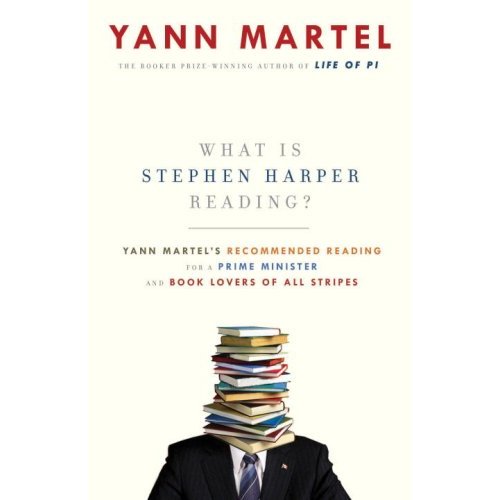
What Is Stephen Harper Reading?

.
Now that the Winter Olympics have come to a close, maybe more of the world would have heard of Stephen Harper.  No, no, he isn’t a medal winner.  Just a hockey fan, and, he happens to be Canada’s Prime Minister.
.

And it’s good time to read this book.  It all started one March day in 2007.  Fifty Canadian artists of all sorts were invited to a Parliamentary session to celebrate the fiftieth anniversary of the Canada Council for the Arts, each of them representing a particular year.

There they were sitting in the Visitors’ Gallery of the House of Commons, waiting for their item to come up on the long agenda of the day.  At 3:00 pm, the business came to the celebration.  All fifty of them were asked to stand up. The Minister for Canadian Heritage, Bev Oda at the time, rose up, acknowledged their presence, and gave a five-minute speech.  Applause.  Then on to the next business item.  Stephen Harper did not even look up at them standing in the Gallery.

The fifty guest artists were incredulous.  Among them was Yann Martel, who received a Canada Council grant in 1991 allowing him to write his first novel.  His literary career reached an admirable high in 2002 when he was awarded The Man Booker Prize for his book Life of Pi.  (CLICK HERE to read one appreciative reader’s response to the book, a personal note from Barack Obama.)

After this incident, driven by frustration, Martel decided to launch a most interesting project.  He started sending Stephen Harper a book every two weeks, with his personal letter introducing  the work, and of course, whenever appropriate, fill him in as to why that’s a good read for a Prime Minister.   With such an intention, one can predict the tone of these letters.  They are mostly sincere, mind you, albeit embedded with the occasional sarcasm, irony, and yes, some condescending subtext.

But overall, these letters to the Prime Minister sent with the books are genuine appeal to the Leader of the country to place more emphasis on the arts. They offer a place of stillness in the busy agenda of a politician.  Martel’s is a gentle voice to remind the prime policy maker the role of the arts, in particular, literature and its appreciation, in the making of a nation, the importance of beauty and the imagination in the building of a vision and in shaping the humanity of her people.

So, it’s not so much as to what Stephen Harper is reading, but what’s on his TBR list.  It remains unknown whether the PM has actually read any of these gifts, although letters of appreciation had been sent to Martel from his office. It’s fun too to read the choices of the titles… and their reasons.  But above all, I’ve enjoyed reading Martel’s insights into how the literary speaks in the context of contemporary political and social landscape.  Here are some examples.  I’ve included a quote or two from Martel’s letter sent with each title:

Animal Farm by George Orwell

Animal Farm is about collective folly.  It is a political book, which won’t be lost on someone in your line of business.  It deals with one of the few matters on which we can all agree:  the evil of tyranny.

Animal Farm is a perfect exemplar of one of the things that literature can be: portable history.  … in a scant 120 pages, … the reader is made wise to the ways of the politically wicked.  That too is what literature can be: an inoculation.”

The Island Means Minago by Milton Acorn (People’s Poet of Canada)

“But any revolution that uses poetry as one of its weapons has at least one correct thing going for it: the knowledge that artistic expression is central to who and how a people are.”

“… the past is one thing, but what we make of it, the conclusions we draw, is another.  History can be many things, depending on how we read it, just as the future can be many things, depending on how we live it… And it is by dreaming first that we get to new realities.  Hence the need for poets.”

The Educated Imagination by Northrop Frye

“Literature speaks the language of the imagination.”

“… the better, the more fertile our imagination, the better we can be at being both reasonable and emotional. As broad and deep as our dreams are, so can our realities become.  And there’s no better way to train that vital part of us than through literature.”

A Modest Proposal by Jonathan Swift

“So, more cuts in arts funding… What does $45 million buy that has more worth than a people’s cultural expression, than a people’s sense of who they are?”

Mister Pip by Lloyd Jones

“Lloyd Jones’s novel is about how literature can create a new world.  It is about how the world can be read like a novel, and a novel like the world.”

The Kreutzer Sonata by Leo Tolstoy

“Why a book on music?  Because serious music, at least as represented by new and classical music, is fast disappearing from our Canadian lives… the latest proof of this: the CBC Radio Orchestra is to be disbanded… How much culture can we do without before we become lifeless, corporate drones?  I believe that both in good and bad times we need beautiful music.”

The Uncommon Reader by Alan Bennett

“The irony in the story is as light as whipped cream, the humour as appealing as candy, the characterization as crisp as potato chips, but at the heart of it there’s something highly nutritious to be digested:  the effect that books can have on a life.”

“Whenever an independent bookstore disappears, shareholders somewhere may be richer, but a neighbourhood is for sure poorer.”

Gilead by Marilynne Robinson

“Speaking of President Obama, it’s because of him that I’m sending you the novel Gilead, by the American writer Marilynne Robinson.  It’s one of his favourite novels.”

“I would sincerely recommend that you read Gilead before you meet President Obama on February 19.  For two people who are meeting for the first time, there’s nothing like talking about a book that both have read to create common ground and a sense of intimacy, of knowing the other in a small but important way.  After all, to like the same book implies a similar emotional response to it, a shared recognition of the world reflected in it. This is assuming , of course, that you like the book.”

Julius Caesar by William Shakespeare

“Since Julius Caesar is about power and politics, we might as well talk about power and politics.  Let me discuss concerns I have with two decisions your government recently announced.

My first concern is about the Social Sciences and Humanities Research Council.  New money allocated to the Council is apparently to be spent exclusively on “business-related degrees”…. we’re losing sight of the purpose of a university if we think it’s the place to churn out MBAs.  A university is the repository and crucible of a society, the place where it studies itself.  It is the brain of a society.  It is not the wallet… A university builds minds and souls.  A business employs.”

Louis Riel by Chester Brown and The Sailor Who Fell From Grace With The Sea by Yukio Mishima

“But I’ve always liked that about books, how they can be so different from each other and yet rest together without strife on a bookshelf.  The hope of literature, the hope of stillness, is that the peace with which the most varied books can lie side by side will transform their readers, so that they too will be able to live side by side with people very different from themselves.”

**

Yann Martel is still sending books to Stephen Harper every two-weeks.  Other authors he has sent include Jane Austen, Flannery O’Connor, Ayn Rand, Gabriel Garcia Marquez, Douglas Coupland, Philip Roth, Alexander Solzhenitsyn, Franz Kafka, Virginia Woolf, Samuel Beckett, Michael Ignatieff, Paul McCartney, Dylan Thomas, Laura and Jenna Bush… quite an eclectic selection. Excellent demonstration of how we can be so drastically different in our perspectives and background, and yet can still stand shoulder to shoulder in this vast land of the free.

To read the full list of all the books he has sent, and yes, including this one, CLICK HERE to go to the official site:  What Is Stephen Harper Reading dot ca

What Is Stephen Harper Reading? by Yann Martel, published by Vintage Canada, 2009, 233 pages.

****

Regarding the role of universities and the humanities as dying disciplines, CLICK HERE to read my post: THE HUMANITIES AS AN ENDANGERED SPECIES.

Golden Globes 2010

I love quotes.  So instead of checking out who wore who, I was more interested in who said what as I watched the Golden Globes last night. Of course, I was curious to see who won what.  There was no major sweep, but Avatar took the two most coveted ones, Best Picture and Best Director.  And then there were the unexpected ones.  For a list of the winners, you can click here to go to the Hollywood Foreign Press Association’s official website.

But here are the quotes of the night that I find most interesting.  Among all of Ricky Gervais’ jokes, prepared and improvised, which can be dismissed the next minute, this one seems to have a stronger aftertaste. When introducing the Best Screenplay Award, referring to what’s more important, he quipped, “It’s not the words but how good you look when saying them.”

And for the winner of that writing award, I’m glad to see Up In The Air get to bring home the Globe, shared by both Jason Reitman and Sheldon Turner, in their adaptation of Walter Kirn’s novel. Montreal born Reitman delivered an endearing speech, giving credits to the most important people in his life.  “… people like how I write women.  I can never write women who wasn’t for my wife. You are the fuel to my creative fire, Michelle.”

[picapp align=”none” wrap=”false” link=”term=golden+globes+2010&iid=7581735″ src=”4/4/e/d/11th_Annual_Warner_5996.jpg?adImageId=9210655&imageId=7581735″ width=”180″ height=”255″ /]

.

And to his parents, director Ivan Reitman and actress Genevieve Robert, he left with these words: “… you taught me how to be the man I am… to be the storyteller that I am.  I love you.  I thank you for everything.”  I think his films show his parents had done a pretty good job.

Meryl Streep won the Best Actress Globe for a Motion Picture, Comedy or Musical, for her role as Julia Child in Julie and Julia.  She started off with this most interesting line: “I just want to say that in my long career, I’ve played so many extraordinary women, I’m being mistaken for one.”

[picapp align=”none” wrap=”false” link=”term=golden+globes+2010&iid=7579893″ src=”1/6/6/6/67th_Annual_Golden_d034.jpg?adImageId=9211762&imageId=7579893″ width=”180″ height=”250″ /]

.

Remembering her mother, who was not unlike Julia Child, Streep noted her ‘joy in living’.  And if she ever needed a new image, she wished to be called ‘T-Bone Streep’.  Ah… the power of Julia Child.

And then there’s this line from Robert Downey Jr., who won the Best Actor Award, Comedy or Musical, for his portrayal of Sherlock Holmes, quoting Arthur Conan Doyle:

“Art in the blood is liable to take the strangest forms.”

Of course he was just joking when he said: “I don’t have anybody to thank.” But besides the people he did mention, he forgot Sherlock himself.

[picapp align=”none” wrap=”false” link=”term=golden+globes+2010&iid=7581377″ src=”3/5/a/d/Robert_Downey_Jr_0b01.JPG?adImageId=9211567&imageId=7581377″ width=”180″ height=”250″ /]

.

The most thought-provoking speech of the night comes from Martin Scorsese, who received the Cecil B. DeMille Award for his contribution as an iconic filmmaker.  He quoted William Faulkner’s words:

“The past is never dead.  It’s not even past.”

I like his perspective in acknowledging that they are all living history, continuing and in debt to the works of pioneers and pathfinders in filmmaking.  “We’re all walking in their footsteps everyday, all of us.” Herein lies humility, a most apt reminder for all in attendance at the glitzy Beverly Hilton ballroom.

[picapp align=”none” wrap=”false” link=”term=golden+globes+2010&iid=7581861″ src=”9/8/d/0/Scorsese_given_the_58dc.JPG?adImageId=9211366&imageId=7581861″ width=”255″ height=”200″ /]

.

****

All photos from picapp.com

Why We Read Jane Austen

The first challenge you face when writing about Pride and Prejudice is to get through your first sentences without saying, “it is a truth universally acknowledged…”

—–  Martin Amis

Isn’t it true that these words from the clever and satirical opening line of Jane Austen’s Pride and Prejudice [1] have been so overused that they have sadly become a cliché in our contemporary language, together with ‘zombies’ and ‘vampires’?

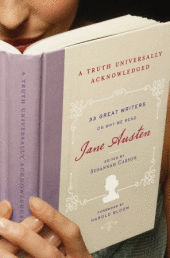
So what did I expect from a book entitled A Truth Universally Acknowledged:  33 Great Writers on Why We Read Jane Austen?

I admit, at first I thought it was a literary version of those lifetime achievement award presentations, where the honoree is showered with superfluous speeches by his/her peers, over champagne and frivolous dinner, something which Jane Austen herself would abhor.

I found out soon enough that between the modest and classic looking covers, Susannah Carson, the editor of the volume, had gathered the essays of 33 writers, not toasts or roasts, but detailed biographical notes, thoughtful musings, heartfelt admiration and in-depth analysis of Austen characters and works.  It is a collection of articles stemming from a balanced fusion of sense and sensibility, something that Austen herself would have approved.

Included are literary figures from the late 19th to 20th centuries like E. M. Forster, W. Somerset Maugham, C. S. Lewis, Eudora Welty and Virginia Woolf.  Contemporary contributors include writers, academics, Austen historian, and screenwriters.  There are views from Harold Bloom, Lionel Trilling, Janet Todd, Anna Quindlen, A. S. Byatt, Amy Bloom, to name a few.  All of them point to Austen’s inimitable humor, incisive observations of human nature and unwavering moral stance that make her works still relevant two hundred years later today.

The following are some samples from this smorgasboard of Austen delights.

Harold Bloom, writing the preface, concludes with these lines:

We read Austen because she seems to know us better than we know ourselves, and she seems to know us so intimately for the simple reason that she helped determine who we are both as readers and as human beings.

Anna Quindlen, defending the subject matter in Austen’s works being mainly about the family (it’s a pity that she even needs to do this):

…[Austen was] a writer who believed the clash of personalities was as meaningful as—perhaps more meaningful than—the clash of sabers.  For those of us who suspect that all the mysteries of life are contained in the microcosm of the family, that personal relationships prefigure all else, the work of Jane Austen is the Rosetta stone of literature.

Austen once referred her own writing as “the little bit (two inches wide) of ivory on which I work with so fine a brush, as produces little effect after much labour.”  In response, screenwriter and director Amy Heckerling, who has adapted Emma into the movie ‘Clueless’, compares Austen’s writing to a Vermeer painting:

“Sometimes the finest brushes paint the biggest truths.”

James Collins, a writer and editor, and frequent contributor to The New Yorker, shares a very personal view:

I find that reading Jane Austen helps me clarify ethical choices, helps me figure out a way to live with integrity in the corrupt world, even helps me adopt the proper tone and manner in dealing with others… Reading Austen I sometimes feel as if my morals are a wobbly figurine that her hand reaches out and steadies.

But she is not all didactic and stern… far from it.  Jane Austen has long been celebrated for her animated humour and witty ironies, the essence of her writing.  I love this analogy that Collins uses:

Her ironies swirl and drop like the cast of a fly fisherman. This rhythmic motion seems to me ideal for both accepting and rejecting the ways of the wretched world while maintaining balance.

Demonstrating the relevance of her satires for today, Benjamin Nugent, the author of American Nerd: The Story of My People, discusses the nerds in Pride and Prejudice, Mary Bennett and Mr. Collins, and why they miss out on life.

If you read sci-fi novels, you’ll generally read about worlds in which scientists and the technologies they create drive the plot; if you read Austen, you’ll read about a world in which technology means nothing and the triumphs and failures of conversational agility drive everything.

His advice for modern day nerds:

Young nerds should read Austen because she’ll force them to hear dissonant notes in their own speech they might otherwise miss, and open their eyes to defeats and victories they otherwise wouldn’t even have noticed.  Like almost all worthwhile adolescent experience, it can be depressing, but it can also feel like waking up.

It takes a sharp ear and intelligence to be a good humorist, and Austen shows that she has what it takes to be one at an early age.  About her prodigious talent, Virginia Woolf praises her first work, the novella Love and Friendship, written when Austen was only 15:

an astonishing and unchildish story… Spirited, easy, full of fun, verging with freedom upon sheer nonsense–Love and Friendship is all that…  The girl of fifteen is laughing, in her corner, at the world.

Indeed, as editor Susannah Carson has stated, any hint of ‘romance’ in her novels is merely the irony of it. About the seemingly unconvincing romantic plot in Northanger Abbey, Carson asserts:

What if Austen actually intended the romance plot to be unconvincing?  … It is probable… that Austen intended the failure of the romance plot, not to sabotage her own work, but to make a point about romance plots in general… that [they] are inherently artificial.

That Northanger Abbey is a satire on the gothic novel has long been noted.  Other writers also stress that Austen should not be labelled as a ‘romance writer’ because of the satirical styling behind her writing.  W. Somerset Maugham keenly observes:  “She had too much common sense and too sprightly a humor to be romantic.”

In his essay ‘Beautiful Mind’, writer Jay McInerney bravely admits that: “If my actual romantic life has sometimes been influenced by superficial considerations, as an Austen reader the basis of my affections has been almost entirely cerebral.

Amy Bloom sums it up succinctly about this common confusion about romance and love:

Jane Austen is, for me, the best writer for anyone who believes in love more than in romance, and who cares more for the private than the public. She understands that men and women have to grow up in order to deserve and achieve great love, that some suffering is necessary (that mewling about it in your memoir or on a talk show will not help at all), and that people who mistake the desirable object for the one necessary and essential love will get what they deserve.

To master such a distinction could well be one of the main reasons why we read Jane Austen.

**

A Truth Universally Acknowledged:  33 Great Writers on Why We Read Jane Austen, edited by Susannah Carson, published by Random House, NY, 2009, 295 pages.

**

[1] The first line of Pride and Prejudice goes like this: “It is a truth universally acknowledged, that a single man in possession of a good fortune, must be in want of a wife.”

Photos Sources: Book cover randomhouse.com, Jane Austen Portrait tvo.org, Jane Austen Centre, Bath, taken by Arti of Ripple Effects, Dec. 07.

This article has recently been published in the current Jane Austen Centre Online Magazine. Click to go there for other interesting articles on Jane and the Regency world.

**

Related Posts you might enjoy:

In Praise of Austen: Virginia Woolf’s A Room Of One’s Own

A Jane Austen Education by William Deresiewicz

**