Downton Abbey the movie not just for fans

At the end of every Downton TV Season, there’s a two-hour Finale. Downton Abbey the movie feels like one of those grand finish. If there’s any TV series that can move to the big screen with just a TV script, Downton Abbey will be it. The iconic Jacobean styled mansion, superb cast, beautiful costumes and set design, not to mention creator/writer Julian Fellowes’ screenplay are its assets. Nothing close to the caliber of Gosford Park (2001) which brought Fellowes a Best Writing Oscar, but this will do. Nothing deep and poignant as some of the TV episodes, but for two hours of viewing time in the theatre, there are a lot to see and savour.
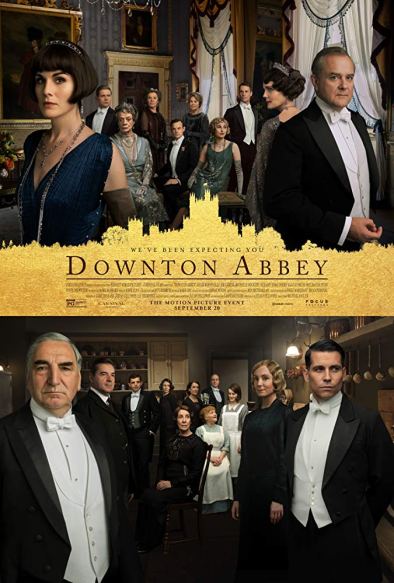
Downton.jpg

Just by listening to the rhythmic rumbling bringing out the single melody line of the theme music can send vibes of excitement. The majestic aerial shots in the setting sun (or is it rising sun?) establishing the grand manor Downton Abbey’s stature on the big screen is a thrilling experience for fans. In the theatre I was in, almost full house with fans obviously, laughing out loud at all the jokes and witty lines, embracing the film with a celebratory mood. After 6 Seasons, 3 Golden Globes and another 54 wins and 219 nominations (according to IMDb) plus three years of absence, a Downton movie is something worth celebrating.

But this isn’t just for fans. For those who come to Downton the first time, they might have missed six Seasons and 52 episodes of backstory, the movie could be an appetizer whetting their appetite for the full feast that’s offered in the PBS Masterpiece series. The estate that they must have heard in recent years called Downton Abbey, possibly wondering if it’s a cloister for monks or nuns, is now magnified on the big screen with stunning establishing shots. No medieval garbs or habits but 1920’s, Gatsby-styled fashion and hairdo. Inviting cinematography both exterior and interior familiarize them with the setting, albeit fans might find watching in a theatre is more dim with the cinematic mode, less vibrant than via their home TV which they can adjust the brightness.

Those not comfortable with the priggish social system of the past (and present to be sure, and not only limited to England) can look deeper into the series for some revelatory themes. While The Crawley’s are originally contented with their status quo and privilege, and some rejecting all forms of modernity, like Violet’s complaint about the ‘blinding’ electric lights or Mr. Carson’s fear of the telephone, the Great War (1914-1918) changes everything. Lady Sybil goes into nursing to contribute to the war effort, the whole Downton is turned into a convalescent hospital for the wounded (a historic fact of Highclere Castle), heir Matthew Crawley and footman William fight side-by-side in the trenches, and later Lady Edith venturing out on her own to start a journalism career. The most significant is probably Lady Sybil marrying Tom Branson, the driver of Downton who’s on the ‘wrong’ side of politics, Irish republican. In this movie, he reiterates his stand: “You can love people you disagree with.”

Director Michael Engler picks up from Season 6 Finale and set the time to a year later, 1927. The movie starts with a reminiscence of the very first episode in the first Season with a train pulling into the station and a telegram delivered to Lord Grantham (Hugh Bonneville). No Titanic bad news this time but earth-shattering nonetheless, King George V (Simon Jones) and Queen Mary (Geraldine James) will be coming to Downton Abbey  and stay for one night while on route to the Yorkshire area.

The household is in warp speed mode preparing for the royal visit in just two weeks. Before the arrival, the royal management team plus chef come to set up their commanding post, brushing away the Downton stalwarts downstairs. A coup is planned subsequently to offset such an invasion. Thus the movie diverge from its realist styling to a bit of a comedic/fantasy mode. That storyline lasts for the first hour. Then the subplots begin, allowing more interesting development.

Why Downton hasn’t lost its appeal through the years is highly due to the characters and how the actors slip into their skin so perfectly. Every character has his/her own back story, idiosyncrasy, viewpoint, and despite the class system that seems to segregate upstairs from downstairs, they are relatively free individuals who can and usually speak their minds. Take Daisy (Sophie McShera), for example, a kitchen maid, expresses her view against royalties, while Tom (Allen Leech), despite his stance for a republic Ireland, chooses to support his father-in-law Lord Grantham nonetheless. Just reflects the complexity of each individual character, a key asset of the TV series which a two-hour movie is impossible to delve into.

Thanks to scribe Fellowes, there are more duels of dialogues between Dowager Countess Violet Crawley (Maggie Smith) and Isobel Merton (Penelope Wilton), two darlings of opposing views. Here are some samples from the movie:

(Spoiler Alert: If you haven’t seen the movie, you might want to skip these lines so you can experience them first hand.)

______________________

When talking about the coming royal visit, Violet and Isobel have the following exchange.

Violet:  Will you have enough clichés to get you through the visit?
Isabel:  If not, I’ll come to you. (Not missing a beat.)

Or here, as the family talk about a relative who’ll be coming with the royalties:

Isobel:  You’re plotting something. I see a Machiavellian look in your eye.
Violet:  Machiavelli is frequently underrated. He had many qualities.
Isobel:  So did Caligula — not all of them charming.

_________________________

As with the finale of the last Downton Season, we see romantic pairings and the movie picks up where it left off.  Edith (Laura Carmichael) and Bertie (Harry Hadden-Paton) are happily married, so are Isobel and Lord Merton (Douglas Reith); Anna (Joanne Froggatt) and John Bates (Brendan Coyle) finally living in bliss, Tom meets a comparable mate, and that dancing scene outdoor with the two of them in silhouette is nicely shot. Downstairs Andy (Michael Fox) makes his intention known to Daisy, and Barrow (Robert James-Collier) finds a friend. While Molesley (Kevin Doyle) isn’t seen with Miss Baxter (Raquel Cassidy), he has the time of his life serving the King and Queen.

New members to the cast include Imelda Staunton (spouse of real-life Mr. Carson, Jim Carter) as the Queen’s lady-in-waiting Lady Bagshaw and Tuppence Middleton playing her maid Lucy Smith, a pleasant addition and a character with some significance. The short vignettes of Princess Mary’s (Kate Phillips) unhappy marriage to Henry Lascelles (Andrew Havill) has historic basis and it’s side stories like these that make the movie more interesting. Surprisingly, Tom Branson is the thread that weaves these characters together, and saves the day too.

An important conversation between Violet and granddaughter Lady Mary (Michelle Dockery) towards the end may have dropped a hint for the future. And what of Mary’s new hubby Henry Talbot (Matthew Goode)? He appears like a flash and cameo. I just wonder if Dan Stevens (Mary’s first love Matthew Crawley) ever regretted leaving Downton so soon.

Beautifully shot, classy costumes, and as always, top performance from a great cast, while not delving into deeper stories, the movie overall can satisfy fans’ longing and make a good introduction to pique the interest of first timers, hopefully prodding them to binge on the full-fledged episodes.


~ ~ ~ Ripples

***


I’ve a write-up for every episode beginning with Season 3 of Downton Abbey here on Ripple. The following post has the links to all of them plus some other related topics:

Quotable Quotes from Downton Abbey
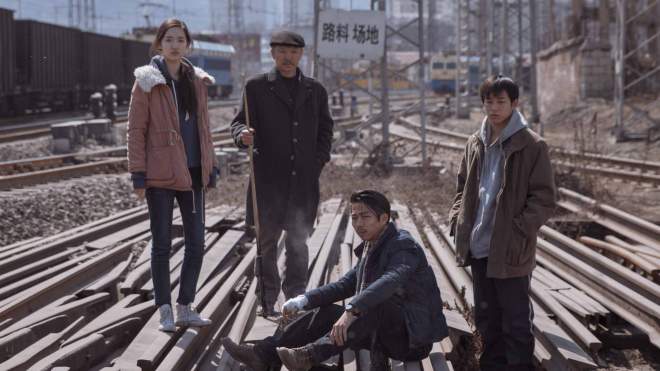
 

‘An Elephant Sitting Still’ is a last outcry of a young talent

ElephantSittingStill

I watched An Elephant Sitting Still while covering the Minneapolis St. Paul International Film Festival in April. It remains one of the most unforgettable films in my recent memory, the directorial debut of Hu Bo, a Chinese writer-turned-filmmaker. Hu’s incisive narratives of the human condition won Best First Feature and the FIPRESCI Prize at Berlin International Film Festival in 2018. Sadly, this is the young director’s first and last film, for his career trajectory ended abruptly in October, 2017. Hu took his own life during post-production. He was 29. The feature has since played in numerous international film festivals garnering accolades which Hu himself would never have known.

Hu Bo graduated from Beijing Film Academy majoring in directing. Later went to Taiwan to further his training and came under the mentorship of the venerable auteur Hou Hsiao-hsien (The Assassin, 2015) and subsequently the Hungarian art film director Béla Tarr (The Turin Horse, 2011). Other than making short films and writing screenplays, Hu had authored short stories and an award-winning novella. His debut feature An Elephant Sitting Still was adapted from his short story of the same name.

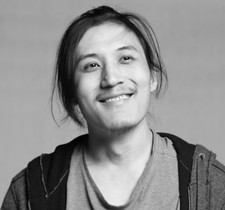
Hu BoAt the 55th Golden Horse Awards in Taiwan last November, An Elephant Sitting Still won Best Feature Film, Best Adapted Screenplay, and Audience Choice Award. The Best Film prize was presented to Hu’s mother by the Taiwanese American director Ang Lee (Life of Pi, 2012; Crouching Tiger, Hidden Dragon, 2000) who reached out to her with a poignant embrace.


An Elephant Sitting Still is a 230-minute cinematic allegory wrapped in haunting realism. In an unnamed town in Northern China, four characters struggle with their own personal predicament too messy to untangle, all in a day’s time. The four narratives intersect in Hu’s incisive screenplay.

A high school student, Wei Bu (Peng Yuchang), while defending a friend, accidentally pushes a school bully down the stairs leading to his death. Even more tragic, Wei later finds out he has been deceived by the very friend he tries to protect. Wei has to run away as the bully’s older brother Yu Cheng (Yu Zhang), a local gangster, is out looking for him. Yu himself is a man riddled with guilt as he has just witnessed his best friend dash out of the window to his death upon finding out Yu has been sleeping with his wife.

Meanwhile, Wei tries to persuade his unrequited crush, schoolmate Huang Ling (Wang Yuwen) to leave with him. Huang herself has to deal with her alcoholic single mother and is further troubled by the reverberation of her scandalous relationship with her school’s vice dean. The fourth character is a grandfather, Wang Jin (Li Congxi), who is pushed out of his son’s home as the young family needs to move to a smaller apartment in another place so to register their daughter for a better school. A dismal future awaits him away from his granddaughter.

Hu parallels the dilapidated urban environs with the inner world of his characters. Long takes and tracking shots place viewers right in the midst of relational conflicts. A Steadicam follows their uncertain footsteps; blueish-grey overtone transmits the bleakness of their situation. Hu takes time to let the camera linger on his characters’ faces, capturing their troubled psyche. Their seemingly emotionless appearance is reminiscence of Bresson’s ‘non-actors’. Often, their reticence conveys depths that words deem unnecessary.

There’s still another character which is mentioned but remains invisible, and that’s the Elephant. We’re told at the start of the film that it sits very still in a circus in the city of Manzhouli, a distance away. It’s indifferent to people’s taunting and objects thrown at it. The Elephant’s quiet composure exudes a mythical element these characters seem to yearn for. Here, realism is mixed with a touch of magic. As the four-hour film draws to an end, the sequence transcends rationale. Two young people, Wei and Ling, together with the grandfather Wang and his granddaughter depart on a journey to Manzhouli in search for the Elephant.

The ending shot is mesmerizing as the bus to Manzhouli stops temporarily in the night, the passengers get down for a stretch. From a distance, we see our protagonists stand in front of the beam from the bus and start playing hacky sack. The long stay of the camera on them is surreal but needed. The quest for the mythical being is motivational zeal for life, even just for a momentary pleasure. Then we hear off screen the sound of an elephant braying.

The Book Big Crack

Big Crack.jpgIn April I took a trip to Hong Kong and there in a bookstore I found the source material for the film, Big Crack*, written by Hu under his pen name Hu Qian. The book is a compilation of short stories, one of them being ‘An Elephant Sitting Still’, as well as Hu’s award-winning novella Big Crack’. I was eager to explore Hu’s worldview and compare his writing with his cinematic work.

‘An Elephant Sitting Still’ is a 15-page short story. Its protagonist is Yu in the movie, having slept with his best friend’s wife and struggling with guilt as he’s the reason for his friend’s suicide. Yu is drawn to search for the Elephant in Manzhouli, maybe for a redemptive reason. Towards the end, he finds the mythical beast, jumps into its cage and submits himself to let it deal a deadly blow to him, a fate he’s all too willing to accept, a soul that has been hinged on a meaningless existence. The other film materials are mostly philosophical concepts from the novella ‘Big Crack’

Hu’s writing is more direct and visceral than his cinematic creation. In the novella ‘Big Crack’, his characters are students in a bottom-tiered art college somewhere near a remote northern town. The term ‘waste land’ is used to refer to the campus and its adjacent town. The term is also used in the movie. In the book, the words ‘waste land’ are ubiquitous, together with Existential, nihilistic concepts like having no exit and nauseating stenches – as in the beginning of the film with Wei’s father’s furious complaint. In the novella, rampant violence is frequent among different dormitories of the school, often exploding in bloodshed. Violence is more restrained in the film, but often leading to tragic end.

I presume Hu’s use of the phrase ‘waste land’ is an allusion to T. S. Eliot’s epic poem. Eliot wrote ‘The Waste Land’ after WWI as the poet lamented the cultural and spiritual breakdown of Europe. Physical ruins could be rebuilt, but the collapse of moral and spiritual values was hard to replaced.

In what I think is a defying act in a country that monitors and censors Christianity in the public arena, Hu quoted the following verses from the Bible, words printed in bold:

“The Lord saw how great the wickedness of the human race had become on the earth, and that every inclination of the thoughts of the human heart was only evil all the time…. Now the earth was corrupt in God’s sight and was full of violence. God saw how corrupt the earth had become, for all the people on earth had corrupted their ways.”

The Invisible Elephant

Hu is piercing in his observation of the moral void and dry, cracked condition of the human soul; the meaninglessness of life as he saw it could have become too overwhelming for him. But what about the Elephant? Is there a sliver of light coming through that crack?

Some had interpreted the Elephant as a symbol of the government, but considering the way that the beast appeals and draws the protagonists to seek for it, almost like a pilgrimage, that parallel just isn’t probable. Some critics had attributed it to the endurance needed to forsake the world and confront troubles with passive resistance.

When I first came across the mention of the Elephant sitting still, the Beatles song “The Fool on the Hill” came to mind. The lyrics point to a similar quietude and peaceful being, some see the lyrics as a reference to God, “He was oppressed and He was afflicted, yet He did not open His mouth…” I incline to interpret as this, for evidence is overwhelming in Hu’s writing that he was troubled by the depravity of the world as he saw it and wanted to seek for what or who could have been the redemptive way.

As the closing credits roll to the end, we hear the mood has changed from the past three plus hours. We hear jubilant singing voices mixed with the theme music ‘Elephant’, sound of joy for the first time. And in the credits the following acknowledgement appears, ending the whole film:

“Original Acappella, Laomudeng Church Sunday Service Hymn”**

Before his death, a second feature was on the drawing board. Hu named it The Gate of Heaven. The spiritual yearning of this young talent is achingly apparent.


~ ~ ~ ~ Ripples

***


*It’s my understanding that the book comes in only its original Chinese edition. There has yet been an English translation.

** Upon online research, I found that the Laomudeng Christian Church is serenely situated on the top of a mountain in Yunan, famous for its secluded and peaceful environs. The high-pitched A Cappella singing of its congregants is well-known.

Photo Sources:

Film still from Ripple file originally from MSPIFF
Hu Bo photo from Festival Scope Pro
Big Crack book photo from Amazon.com


‘The Aftermath’ has all the right ingredients except…

From the beginning, all the ingredients seem to be in place for a satisfying period movie. Sumptuous set design, beautiful costume and makeup, even the rubbles and chaos are realistic. What more, three seasoned, popular actors under a helmer who had proven he could do war movies with his Testament of Youth (2014).

Director James Kent is all set to pull us into great expectations from the start. British military wife Rachel Morgan (Keira Knightley) arrives by train in Hamburg, Germany,  in the year 1946.  She is greeted warmly by her husband Lewis (Jason Clarke), a British Colonel stationed there to enforce order in the aftermath of the War.

The Morgans are staying in a mansion requisitioned from the Nazi’s. But due to Lewis’s benevolence, the former owner, handsome German widower Stephen Lubert (Alexander Skarsgård) and his troubled teenaged daughter Freda (Flora Thiemann) are allowed to stay until they are sent to the camp. Why the delay is not explained, an arrangement definitely isn’t going to be too comfortable. Just look here, Rachel, who has lost her young son in the war, refuses to even shake hands with the enemy, now cohabitant of the mansion.

The Aftermath movie still
Alexander Skarsgård, Jason Clarke and Keira Knightley in an early scene of ‘The Aftermath’. Photo: Fox Searchlight.

No sooner had they settled than Lewis needed to go away on military duties, leaving his wife behind. What ensues is predictable, but unfathomable: How a woman who still mourns her lost young son and holds animosity against the enemy, and a German widower who’d lost his wife during the war and with her memory still vivid in the house, can come together so quickly just days of living under the same roof. From refusing to shake hands to sleeping with the enemy in just a few scene changes, the unconvincing storyline abruptly stops any appreciation I’ve had of other cinematic elements up to that point. 

Adapted from the novel by Rhidian Brook, the screenwriters, Joe Shrapnel and Anna Waterhouse, must have thought celebrity actors have the power and charisma to jazz up a weak script. Fact is, even talented actors are bound by the writing, or, hampered by it. Just look at some other works by Knightley, for example, Atonement (2007) or her latest Colette (2018), comparing her performance in those films with her role here in The Aftermath seems like we’re watching the living in contrast to a pedestal decorative that can tear up on demand.

Alexander Skarsgård can release much intensity if the script allows, case in point is his role in Big Little Lies (2017), for which he won a Best Supporting Actor Golden Globe. Instead, his character as Stephen in The Aftermath is bland, driven by inexplicable motive, except maybe an act of violation to avenge. But no, he and Rachel, who are practically strangers, seriously mean love here. Whatever happened to his late wife’s memory at the piano? With Rachel playing her music still placed on the Steinway, even Debussy’s Clair de Lune can’t shine a light on the blurry motive.

Jason Clarke is repeating his demeanour as in Mudbound (2017), a husband oblivious of what’s going on with the affair of his wife. Here in The Aftermath, the underlying motivations of each character and backstory is just slightly touched on without much elaboration. Are the visuals in bed more important than the rational for modern viewers? I sure hope not.

Movies set during the World Wars work only if there are more to mull on rather than just the actions and the aesthetics. Complexity of characters and conflicts are what pull viewers in, eliciting empathy. Some thought-provoking or a bit challenging ideas and dialogues could help too. Several recent examples are Their Finest (2016) and Darkest Hour (2017), or director Kent’s own Testament of Youth (2014); the other end would be the emotionless The Monuments Men (2014).

I can’t help but think of a WWII classic. Why Casablanca (1942) works, among many factors, are the intelligent dialogues and a surprise ending, surprising to the character involved, but gratifying for the viewers, leaving them with much to mull on, values, priorities, and a lingering feeling for two star-crossed lovers. Unfortunately, that kind of  emotions, thoughts and admiration for the characters were not the aftermath as I left the theatre.

~ ~ 1/2 Ripples

***

‘Claire’s Camera’ is a Whimsical Look at Communication

A Korean director shooting a film while attending the Cannes Film Festival, with two prominent Korean and French actors in his cast, taking just days in shooting to make what seems like a spontaneous gig had resulted in this whimsical 69-minute dramedy. Looks like something only the prolific, Cannes-honored director Hong Sangsoo can pull off. The versatile Isabelle Huppert (Things to Come, Elle) in one of her interviews said it took her only five days to do Claire’s Camera with Hong, with no script, except a daily run-through of the day’s story and lines.

3
Kim Minhee and Isabelle Huppert in Hong Sangsoo’s Claire’s Camera. Photo courtesy of Cinema Guild.

This is Huppert’s second time collaborating with Hong. The parallels in Claire’s Camera with real life are the very elements that lends to the film’s subtle humour. Claire (Huppert) is a school teacher from Paris visiting Cannes for the first time, accompanying a friend to the Film Festival. While wandering alone in this seaside resort taking pictures with her camera, Claire bumps into a triangle entanglement: a Korean director So (Jung Jinyoung), his film’s sales rep Yanghye (Chang Mihee) who has more than just a business relationship with So, and separately, her sales assistant Manhee (played by Hong’s muse Kim Minhee, On the Beach at Night Alone), whom she fires as she finds out Manhee’s one-night stand with the director.

Claire makes fast friends with Manhee after they meet on the beach. Here we see two actors from different countries using English to communicate, a language that’s not their own mother tongue. The verbal limitations may be a bother for some watching the film, but apparently not a hindrance for the two of them striking up an instant, equal friendship. They seem to know what the other is trying to say, and they care to ask each other questions, some quite personal, in order to know the other more.

Contrast that to a conversation where Manhee has with her boss Yanghye over coffee when she gets the message that she’s fired. They share the same Korean language, yet their interlocution is marked by unspoken sentiments and the boss’s minimal attempt to make it a two-way flow. Here’s a realistic depiction of a lopsided communication, one that’s not exclusive to the Korean culture. Those in authority hold the key to conversations.

In another scene, the lack of communication is what makes the naturalistic, deadpan humor work. When Claire first meets director So, the two are sitting at adjacent tables outside a café. As conversation begins, So asks Claire if he can sit with her at her table. She agrees and he stands up and moves to sit by her. But then the two have nothing more to say to each other, maybe due to language limitations. Claire then goes on to Google him on her phone to find out more about this director who’s sitting beside her. One has to take this as a comedic scene to appreciate the irony.

1
Jung Jinyoung and Isabelle Huppert in Claire’s Camera. Photo courtesy of Cinema Guild. 

The film is breezy and leisurely as the Cannes seaside, refreshing as the yellow jacket Claire is wearing; incidentally, her ‘costume’ is the actual wardrobe Huppert had brought when she was attending Cannes at that time. The setting is scenic and pleasant, whether it’s the pounding waves or the small lanes winding along cafes. No, we don’t get to see the red carpet or any of the glamour of the Cannes Film Festival, but we’re led into the side streets of storytelling.

The pitfall for those not familiar with Hong’s eccentric style could be the naturalistic, seemingly unscripted demeanours of his actors and their haphazard dialogues, and in this case especially sound laboured when characters try to interact with each other in a foreign language. And speaking of communication, the usual hard-drinking of his characters—director So here—could well be a language of expression in itself.

As for the camera Claire is always carrying, one would wish Hong could have used that a bit more, cinematically and imbued with deeper meaning. Hers is a Polaroid, so the image appears slowly on a hard copy. But we don’t get to see this effect or be led to any deeper relevance. However, in one notable dialogue towards the end when Manhee finally asks Claire a question that must have been on her mind all along, we finally hear something revealing:

Manhee: Why do you take pictures?

Claire: Because the only way to change things is to look at everything again very slowly.

Manhee: That sounds very nice.

The unfinished part seems to be, “but do we do it?”

Considering Hong Sangsoo’s signature style of repeating his film sequences in a movie like we’re watching it all over again but towards different results, Claire’s words could be more layered than they appear, and the slow appearing of an image on the Polaroid print could well be a mirroring for reflection.

Premiered at the Cannes Film Festival in May, 2017, Claire’s Camera has since been playing in film festivals all over the world. Cinema Guild will be releasing the film on Blu-Ray and DVD beginning Nov. 6, 2018. For more details click here: http://www.cinemaguild.com/theatrical/clairescamera.html

~ ~ ~ Ripples 

 ***

Related Reviews:

Let Things to Come be a Cooling Respite 

Art Imitates Life in Hong Sang-soo’s ‘On the Beach at Night Alone’

‘The Day After’ is a re-enactment Hong Sang-soo Style

‘Burning’: From Short Story to Big Screen

Burning is based on the short story “Barn Burning” by the popular Japanese writer Haruki Murakami, the translated English version first published in the November issue of The New Yorker in 1992. Acclaimed Korean director Lee Chang-dong has fleshed out the minimalist narrative of Murakami’s story and created an extended ending, turning Burning from mere rumination into a dramatic suspense thriller, shedding traces of a myriad of literary allusions. That is the appeal of the works by the Korean novelist-turned-filmmaker.

Winner of the FIPRESCI Prize and a nominee for the Palme d’Or at Cannes this year, Burning had its North American premiere on September 9 at the Toronto International Film Festival. As well, South Korea has announced that Burning will be its official entry to the Best Foreign Language Film race at the 91st Oscars in 2019. The acclaimed film will be released in November in selective cities.

More than fifty years before Murakami’s short piece appeared in The New Yorker, back in 1939, a short story of the same name, “Barn Burning”, was published in Harper’s Magazine. Its author was William Faulkner. It was a dramatic story of class discrepancy in the American South, the chasm between the rich and the poor and the hateful revenge of a tenant farmer burning down the properties of his land owner. Interesting to note that Murakami made no mention of Faulkner in his story, which can be seen as a modern-day version of the American author’s work.

Director Lee’s adaptation shares similar meaning-imbued elements as his last feature Poetry from eight years ago. While his previous work is a character study of a grandmother trying to seek out a way to renew her life, in Burning, Lee focuses on the young, specifically, the millennials, and contrasting the social chasm between the rich and the poor with two characters.

burning_01
Yoo Ah-in as Jongsu in ‘Burning’. Photo courtesy of TIFF.

Jongsu (Yoo Ah-in) graduated from university majoring in creative writing. At present he is doing menial jobs as a living while trying to write a novel. On a delivery one day he comes across an old schoolmate, Haemi—impressive performance by newcomer Jun Jong-seo—working as a raffle promoter on the street. She recognizes Jongsu as according to her, they used to live in the same community when they were children. That brief encounter sparks off a precarious relationship between the two.

Due to some legal entanglement of his father’s, Jongsu has to leave the city to return to his father’s impoverished farm to look after it. He sleeps in a run-down shack, drives a rusty truck and clears the waste of the only cow left. At the same time, Haemi is going on a trip to Africa, and has asked Jongsu to go to her small apartment to feed her cat while she is away. This he gladly obliges.

But when Haemi returns after some time, she brings with her another man, Ben (Steven Yeun of the TV series ‘The Walking Dead’), a third person to the intimate relationship Jongsu had wanted to establish with Haemi.  Ben is more than just a disruptor but an enigma. He lives in a high-end apartment, dresses stylishly, drives a Porsche and exudes sophisticated tastes. He does not hold a job nor seem to mind Jongsu’s presence, but invites him home and brings him into his circle of friends. “The Gatsby in Korea” as Jongsu figures him, Ben is a man with a mysterious past and unsearchable intention.

burning_steven-yeun_1 (1).jpg
Steven Yeun as Ben, ‘The Gatsby in Korea’.

Things become more intriguing and uncomfortable when one night, Ben confides in Jongsu that he burns greenhouses for his own pleasure. He would scout out his target and set fire to it while watching from afar. The next one he has in mind actually is quite close to where Jongsu is staying, near his father’s farm. Here we see Murakami’s interesting flip of Faulkner’s story. Instead of a hateful man from a lower economic class driven by jealousy and bitterness to commit arson, we have the resourceful rich burning down greenhouses, but for what reason?

Unlike Murakami, Lee alludes to Faulkner, but also takes up Murakami’s suggestion that it is not only poverty or revenge that drives one to commit incendiary acts, but ennui, self-indulgence, or mere emptiness can also prod one towards inexplicable behaviour.

Steven Yeun, the Korean-American actor known for the TV series “The Walking Dead”, takes up his first major role in a Korean film. Yeun’s portrayal of an amoral, metrosexual may well be a modern-day parallel of Camus’s L’Etranger, The Stranger.  His often expressionless, but not unpleasant, face could well have conveyed the inner psyche of a rootless and purposeless existence.

One time at a social gathering, Haemi imitates the African ‘hunger dance’ in front of Ben and his friends. First, she acts with small, silent gestures showing the ‘little hunger’ of the literal, physical pang then changing to the ‘great hunger’ with her arms reaching upward and swaying to signify the empty soul reaching out in search of fulfilment. Watching her, Ben’s response is a yawn and a slight smile. Then a quick cut to a loud, electrifying night club scene with Haemi dancing wildly in a smoky, hazy atmosphere. Lee’s cinematic storytelling is stark and to the point.

The director’s rendering of passion and the human psyche is enhanced by Hong Kyung-pyo’s mesmerizing cinematography and the engaging score by Mowg and other incidental music, presenting sequences that are at times dreamlike, and at times, sadly realistic. In a stirring scene, Haemi dances again, this time against the setting sun out in Jongsu’s farm, her silhouette captivating her audience of two subtle rivals, one genuine, the other, unsearchable.

The plot thickens towards the last section when Jongsu tries to connect with Haemi after some time but finds her missing. Her apartment has been vacated, her phone disconnected. The next time he sees Ben, Ben is with another woman and admitted no knowledge of Haemi’s whereabouts. The disappearance of Haemi ignites Jongsu’s suspicion and drives the tension towards an explosive denouement which Lee adds to Murakami’s short story. It is an ending that is a surprise and yet also natural in context. Lee brilliantly brings his viewers full circle back to Faulkner with his layered storytelling.

Just like his previous works Poetry (2010) and Secret Sunshine (2007), Lee has shown once again that he is not only a masterful director but an astute observer of human psyche and behaviour.

***

~ ~ ~ 1/2 Ripples

Note: My review above was originally published in Asian American Press on Sept. 12, 2018. I thank AAPress for permission to repost here.

***

Update Nov. 16: “Burning” just nominated for Best International Film (South Korea) at the Film Independent Spirit Awards.

‘The Rider’ is Poetry on Screen

“The Rider” opens this weekend in selective cities. If it’s screening in your area, don’t miss it.

The Rider

What is a cowboy to do if he cannot live the cowboy life again? Too remote? Substitute ‘cowboy’ with any other activities you love to do, or a role that defines you. Take that away, and what do you have left?

The film focuses on the struggles of a rodeo star and expert horse trainer Brady Blackburn as he rebuilds his life and identity after a severe head injury. Upon the prognosis of his doctor, Brady should never go back to riding and rodeo again, for another injury would be fatal.

“The Rider” is an American feature, unique in its subject matter while its director is an unlikely candidate to share the insight. Chloé Zhao was born in Beijing, had studied in London, then Massachusetts and New York. “The Rider” is her second feature. In her short directorial career, she has gone to Cannes twice, nominated in 2015 for the Caméra d’Or (“Golden Camera”), Cannes’ award for the best first feature film, and winning The CICAE Art Cinema Award in 2017 with “The Rider”. That is, among other international accolades. Zhao is an exemplar of a global citizen in filmmaking.

Chloé Zhao

The actors for “The Rider” exude authenticity, for they are actual cowboys and their family, all playing themselves. Brady Jandreau takes the role of Brady Blackburn, reflecting his real-life persona, a cowboy who is much admired and respected in the rodeo community. His father Tim and sister Lily form the Blackburn family in the film. Zhao’s directorial skills shine forth as she leads the non-actors in front of the camera, capturing them in their natural speech and actions, in particular, offering viewers realistically the dexterity involved in the wrangling work. But the film goes much deeper than the actions.

Recovering from the near-fatal injury pits Brady into a precarious existence and conflicting relationship with his father Wayne (Tim Jandreau). As a tough cowboy himself, Wayne had all along brought Brady up to be resilient and competitive, but now father had to dissuade son from the risky pursuit of bronco riding and rodeo activities. Nursing a wounded body and a tormented mind, Brady has to deal with the painful task of redefining himself. Temporarily working in a supermarket and wearing a store uniform makes Brady a displaced person, a persona out of meaningful context, both to himself and to those who recognize him as they come into the store.

While there are tense undercurrents with his dad, Brady cherishes the intimate bond with his sister Lily (Lily Jandreau), who expresses herself from her own peculiar, internal world. Kudos to Zhao for casting the real-life brother and sister in the film, they need not be experienced actors to conjure up some genuine, moving scenes.

Much of the film’s effectiveness goes to the inspiring cinematography, exposing quietly Brady’s tormented soul. The opening sequence sets the stage right away with riveting close-ups of a horse and its breathing. As the camera turns from beast to man, we see the extent of the injury Brady sustains as he gets out of bed and follows the routine needed to care for his own body, striving to return to a past life and regain some sense of normalcy.

In other sections of the film, the camera pans the vast landscape of the South Dakotan plains with a tiny figure that is Brady walking or riding through. “The Rider” is visual poetry on a subject that is seldom explored, and cinematographer Joshua James Richards is most effective in transposing Brady’s internal quest lyrically on screen: “A horse’s purpose is to run in the prairies; a cowboy’s is to ride.”

Brady’s good friend Lane Scott (Lane Scott) is a painful reminder of the risks a cowboy takes. Paralyzed and brain damaged after a fall in a rodeo event, Scott now communicates barely by spelling out words one letter at a time signing with his fingers. Poignantly, Zhao depicts Brady’s every visit with Lane in the hospital as an encounter of love and hope without sentimentality.

Zhao is nuanced and eloquent in creating impressionistic scenes. And when horse and man are juxtaposed in such intimacy, the parallel is striking. As Brady puts it, when a horse is badly hurt it has to be put down, that is the humane thing to do; when a cowboy is badly hurt, he has to continue to live, for that is what humans are supposed to do. As we come to the turning point of the film towards the end, the presence of family love and support appear to be the key to moving on.

A rare gem of a film. Watch it with a quiet heart.

~ ~ ~ ~ Ripples


***

How Many Weeks Till Spring?

Who’s counting?

We’re having fun and really, enjoying ourselves.

DSC_0506


DSC_0839

DSC_0684.jpg

DSC_0810 (1).jpg

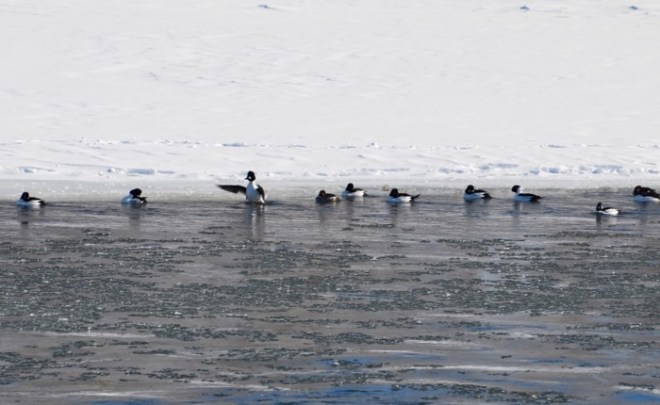
Indeed, considering the flooding problems some of you face south of the 49th, I’ve come to appreciate our snow, and the never-ending winter.

Here, makes me think of a Bruegel painting of winter scene, except replace the people with ducks and geese:

DSC_0824 (1).jpg


DSC_0828 (1).jpg


DSC_0670.jpg

Until then, we persevere.

***


Reading the Season: A Wrinkle in Time by Madeleine L’Engle

For the tenth year, I’m sharing a Christmas read here at the Pond. For the first time, it’s a book written for young readers but is ever so relevant for us grown-ups. Herein lies the ingenuity of writer Madeleine L’Engle. Time to dig out that copy that you might have read when you were a youngster. If you haven’t read it, now’s a good time.


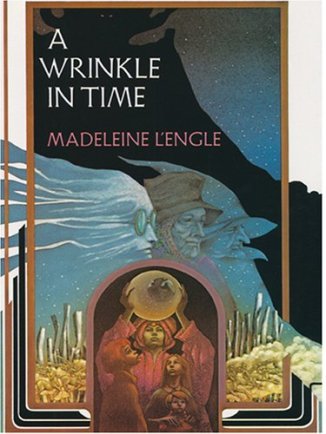
A Wrinkle in Time


Newbery Medal winner A Wrinkle in Time is the first book in the Time Quintet series of fantasy YA fiction about the Murray family, scientist parents and four children Meg, twins Dennys and Sandy, five year-old genius Charles Wallace, and that special friend of Meg’s, Calvin O’Keefe. The deceptively simple odyssey in time and space is packed with wonder and wisdom.

The book not only exudes insights but shows L’Engle’s remarkable foresights. Take this for an example, dematerializing and materializing  for easy transport. Published in 1962, the book came out four years before Scotty beamed Kirk up using the same method in the first season of Star Trek.

Or this fancy idea, ‘tesseracting’, that is, travelling through space and time via a wrinkle in time. The shortest distance between two points is not a straight line, but through a wrinkle when two points are folded. That’s fifty years before Christopher Nolan sends Matthew McConaughey interstellar travelling.

All concepts held in a simple plot. Meg, Charles Wallace, together with friend Calvin, go on an interstellar quest to look for Meg and Charles’ physicist father who had gone missing for almost a year while doing some classified scientific work for the government. This little, unequipped search party is initiated and aided by three celestial beings: Mrs. Whatsit, who’s much wiser than she appears, Mrs. Which, who doesn’t bother materializing but remains as a shimmering beam, and Mrs. Who, who speaks in quotes.

The more a man knows, the less he talks.

Their odyssey brings them finally to the planet Camazotz, where they find Mr. Murray confined by the evil Dark Thing, or IT (Surprise! 24 years before Stephen King’s book and now movie) The smart alecky Charles Wallace is easy prey and quickly influenced by IT. (And for Luddites, what better parallel to address our technology now, the evil IT) Ultimately, it’s Meg, our reluctant and timid heroine, who has to be the one to go fight IT to rescue her little brother.

The foolishness of God is wiser than men; and the weakness of God is stronger than men… God hath chosen the foolish things of the world to confound the wise; and God hath chosen the weak things of the world to confound the things which are mighty.

Meg knows Charles Wallace is not himself but trapped and deceived, and must be snatched from the evil force IT. She has just one weapon as her ammunition, given to her by Mrs. Whatsit, that one thing IT doesn’t have: LOVE. With her single act of bravery, she brings the family together again.

When I was a child, I read like a child, I thought like a child. When I became an adult, I can read like a child and like an adult too. That’s the joy of reading A Wrinkle in Time. One can find pleasure in the adventure and feel the vulnerability of the children, as well delve deeper into its symbolism and parallels, and ponder its layers of meaning.

L’Engle writes to the child and the adult in us. She can convey scientific and spiritual concepts at the same time and in a way that both young and old (and those in between) can enjoy. There’s no conflict between the cerebral and the spiritual; they co-exist comfortably in L’Engle’s work. Not only that, they fuse together and from that alchemy rises a whole new, inexplicable entity: Faith.

That first Christmas day when a baby was born in a lowly manger, the war against IT had started to win. Although the last, painful battle on the hill of Calvary had not been waged, the outcome was cast, just because LOVE came.

And the light shineth in darkness; and the darkness comprehended it not.


The Movie

‘Tis the Season to read or reread A Wrinkle In Time before the movie adaptation comes out in 2018. Helmed by Selma (2014) director Ava DuVernay, screenplay by Frozen (2013) scriptwriter Jennifer Lee, with some stellar beings including Rees Witherspoon, Oprah Winfrey, Mindy Kaling, Chris Pine et al.

***

Past Reading the Season Selections:

2016:  Silence by Shusaku Endo

2015: The Book of Ruth

2014: Lila by Marilynne Robinson

2013: Poetry by Madeleine L’Engle

2012: Surprised by Joy by C. S. Lewis

2011: Walking on Water by Madeleine L’Engle

2010: A Widening Light, Luci Shaw

2009: The Irrational Season 

2008: The Bible and the New York Times by Fleming Rutledge

2008: A Grief Observed by C. S. Lewis

Upcoming Books to Movies 2017

Half a year’s gone already. How’s your reading and watching coming along? Here are some movie adaptations I anticipate for the latter half of the year.

The Glass Castle by Jeannette Walls

the-glass-castle-bookFinally, the movie adaptation is completed. More than seven years on the NYT Bestseller list, Jeannette Walls’ 2005 memoir of resilience and delight – yes, the two can co-exist – is high on my TBW list. After receiving her Academy Best Actress Award in another book-to-screen adaptation, Room (2015), Larson is back with her Short Term 12 director Destin Cretton. Interesting cast for the parents, Woody Harrelson as dreamer dad Rex Walls and Naomi Watts as uncouth artist mom Rose Mary. Coming out in August. Should be a good summer movie.


Tulip Fever by Deborah Moggach

Tulip FeverMoggach’s best known book is probably The Best Exotic Marigold Hotel, among her many titles. Tulip Fever is the author’s first historical fiction set in 17th century Holland, evoking the paintings of Vermeer’s. The story begins with a rich merchant in Amsterdam commissioning a painter to paint his young bride. The rest is up to the further imagining of Moggach’s creative mind. From book to screen adaptation written by Tom Stoppard, directed by Justin Chadwick, who helmed the adaptation of Philippa Gregory’s The Other Boleyn Girl (2008) and the excellent TV mini series of Dickens’ Bleak House. Cast includes Alicia Vikander, Judi Dench, Christoph Waltz. Coming out in August. Should be another good summer pick.


Wonder by R.J. Palacio

Wonder Book CoverAnother one high on my TBW list. This is one YA novel that appeals to both young and old, for the theme of acceptance and empathy is so much needed in our time. A look at the trailer shows the film is well cast. Room’s breakout young star Jacob Tremblay as disfigured fifth grader, entering school for the first time in his life; Julia Roberts plays mom and Owen Wilson is dad. Stephen Chbosky (The Perks of Being a Wallflower, 2012) directs. To be released November, 2017.
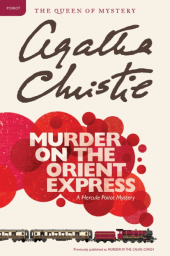


Murder on the Orient Express by Agatha Christie

Murder on the Orient Express.pngDame Agatha Christie’s famous work has gone through many renditions on the big screen, small screen and even a video game. But the classic has to be the Sidney Lumet directed 1974 production with Albert Finney, Lauren Bacall, Ingrid Bergman, John Gielgud, and a young Sean Connery, just to name a few. This 2017 version is directed by Kenneth Branagh who will, of course, takes up the role of Hercule Poirot. Cast include Johnny Depp, Michelle Pfeiffer, Daisy Ridley, Penélope Cruz, Judi Dench, Derek Jacobi, Willem Dafoe, a modern classic in the making? Coming out November, 2017.
 

EXTRA, EXTRA: Ordeal by Innocence by Agatha Christie

Ordeal by Innocence

Talking about Dame Agatha, the latest, yes just hours ago, it has been announced that the prolific writer – whose books have sold only less than The Bible and Shakespeare according to The Hollywood Reporter – will ring in yet another adaptation by BBC in time for the Christmas season. BBC touts a mighty cast with Bill Nighy, Catherine Keener, Matthew Goode, Eleanor Tomlinson among many talents. A jolly good Christmas for the Brits indeed. We’ll have to wait for Masterpiece to act.


***

Related Ripple Effects Posts:

The Glass Castle Book Review

Wonder by R. J. Palacio: Required Reading for All

The Best Exotic Marigold Hotel 

The Second, Best Exotic Marigold Hotel


Owl Babies’ Day Out

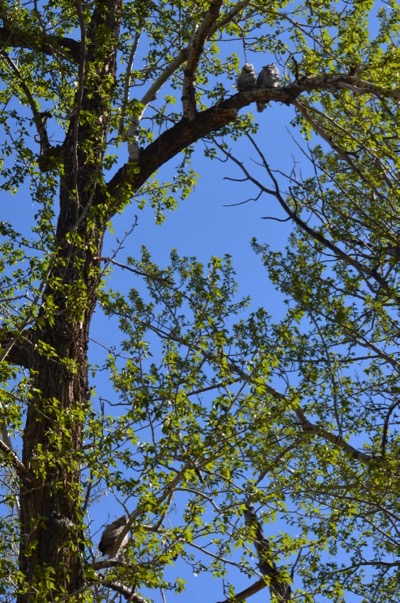
It has been three weeks since I last posted about a first sign of spring: Grizzly bear coming out of hibernation. Now, spring is in full force. Another sure sign in my neck of the woods is Great Horned Owlets out to enjoy the sunshine.

First, let me play a little ‘Where’s Waldo’ with you. Can you find the owls in this photo? How many do you see?

DSC_0613

The obvious ones are on the top branch, mom on the right with her baby, and in the lower, closer to the trunk, another owlet.

Some are just born to be more independent. Take a closer look at this cool, furry owl baby perching on her own branch. Seeing me eagerly snapping her photo, she sits still for me, giving me a big smile even:

Doll


She reminds me of those Ukrainian dolls.

Furry

But don’t think she’s all innocent and vulnerable, look at her claws:

Claws

And to the mother and the other baby in the upper branch, again, they know how to please us nature paparazzi, just by being themselves:

DSC_0607

Babe & Mom.jpg

And here, a little action for us, Mom preening her baby. The term of endearment is instinct:

Mom preening baby

Preening babe.jpg

I can hear the baby say: “Thanks Mom. Happy Mother’s Day!”

***


‘Our Little Sister’: A Respite from Summer Superhero Movies

The following is my review of the film “Our Little Sister” by the acclaimed Japanese director Hirokazu Kore-eda, published in Asian American Press. I thank aapress.com for allowing me to post it here on my blog.

For those who might think a Japanese film would never make it to your local cinema, check this list of U.S. screenings:

http://sonyclassics.com/ourlittlesister/dates.html

***

our-little-sister

Premiering last year at Cannes, and later screened at other international film festivals the world over, Hirokazu Kore-eda’s “Our Little Sister” finally trickles into the local theatres of North American cities, which is timely. In a world rocked by tumultuous strife and unrests, this latest from Kore-eda makes a quiet solace, offering a taste of the ideal in human relationships and harmony despite brokenness.

“Our Little Sister” is Kore-eda’s most recent work after his 2013 Cannes Jury Prize winning “Like Father Like Son”. Following his usual subject of relationships in various family situations, “Our Little Sister” sees Kore-eda at the helm as director, writer, and editor of this production based on the popular Japanese graphic novel “Umimachi Diary” by Yoshida Akimi.

The three Koda sisters have not seen their estranged father for fifteen years. Sachi (Haruka Ayase), Yoshino (Masami Nagasawa) and Chika (Kaho) are now adults, living in the family’s traditional home his father had long deserted in the seaside town of Kamakura. His recent death sends the sisters to his funeral, awkwardly, meeting the woman who had stolen their father’s heart. But it is an inciting incident that changes all their lives. They meet their half sister, 15 year-old Suzu (Suzu Hirose). Herein lies the turning point for the four sisters. Moved by her little step-sister’s mature and quiet demeanor, or maybe stirred by her own older-sister instinct, Sachi invites Suzu to come away and live with them in Kamakura. Suzu gladly agrees.

The new Koda household now is a haven of happy sisterhood. Living under one roof, we see minimal conflicts and constant congeniality. Viewers from a different culture may find the saccharine relationships unrealistic. Are there not any conflicts at all? Of course there are. Kore-eda deftly leads us to some slow revealing. After three quarters of the 120-minute film, we begin to see inner turmoil rise to the surface.

Suzu had to take care of her father in his illness and seeing him to his last breath due to the incompetence of her mother; here is a young teenager bearing the burden of an adult. Now living with three older sisters, Suzu can finally enjoy the childhood she has missed. She quickly captures the attention of other students in her new school with her soccer skills, congeniality and maturity.

In the Koda household, Suzu is the angel of harmony, stirring up love and life. Kore-eda may have spent too much time on the leisurely-paced, day-to-day living such that viewers might feel the lack of conflicts to move the story along. I credit the style to Kore-eda’s realism and a candid camera focusing on the subtleties of nuanced interplay among the characters. Like his previous films “I Wish” (2011), the yearning for family connections of a young boy is shown by his actions and not so much by words, or in “Like Father Like Son” (2013), wherein conflicts are portrayed by contrasts and parallels. Here, while still nursing a deep resentment towards her father for deserting them years ago, Sachi struggles with the moral parallel now as she carries on a relationship with a married doctor at the hospital where she works.

Moral dilemmas, what to choose, how to live, and the search for identity are the issues Kore-eda’s characters have to deal with, but in a way that is quiet and gentle. He introduces us to other endearing characters in the town, adding numerous episodes to build up a human mosaic of harmony in the presence of brokenness and even death.

The scenic seaside town of Kamakura provides a beautiful backdrop for cinematographer Mikiya Takimoto (“Like Father, Like Son”) to shoot the film, reflective of the idyllic life that can be had, even in an imperfect world. The arching branches of the cherry blossoms, landscapes and seascapes mark the healing power of nature. But also like the petals of the cherry blossoms, which third sister Chika likes to pick up and gather in her palm, life is ephemeral.

Reminiscent of Ozu’s films, the passing train is a visual metaphor for the passage of time, changes, and the transience of life. To enrich the visuals, Yoko Kanno’s original score sweeps us through with warmth and tenderness, as a supporting voice telling the story. “Our Little Sister” is a heartwarming film for the unhurried heart to savor.


~ ~ ~ Ripples

***

Related Posts on Ripple Effects:

‘Like Father Like Son’: A Parent and Child Reunion

Yasujiro Ozu and the Art of Aloneness

Summer Reading

The remaining summer month isn’t going to be long enough for a slow reader like me to finish all the books I’ve started. There are 7 titles on Goodreads that I’m ‘currently reading’, one of them has been there since the Jurassic Period. Ok, maybe not that long, but I haven’t given up The Guermantes Way just yet, so I won’t delete it. I’m sure Proust understands, for there are more pressing matters.

First off, the horrific terror attack and mass murder in Nice sparked off an urge in me to, somehow, in whatever way, connect with France. It’s a bit late to participate in the blog event ‘Paris in July’. But since Nice, I’d started two France related books. And then there’s Germany, and now a priest inside a church while conducting mass…

Here are two titles I’m reading with European connection:

The Angel of the Left Bank: The Secrets of Delacroix’s Parisian Masterpiece by Jean-Paul Kauffmann

Angel of the Left BankThis enticingly thin paperback has been sitting on the shelf quietly for years. I’ve long wanted to read it although I’d no idea what it was about, one of the hand-me-downs from my son’s college reads. Now that I’ve started it, I know this one’s going to be a slow cook. Even though just 217 pages, I know I can’t rush it. Exactly as the title denotes, the book is about one painting, Eugène Delacroix’s (1798-1863) ‘Jacob Wrestling with the Angel’, a wall mural in the Chapel of the Holy Angels inside The Church of Saint Sulpice in Paris. Why did Kauffmann write about this particular painting? Why did Delacroix choose to paint this enigmatic episode of the Bible? Who is the ‘Angel’? I want to find out the hidden story behind the creation of this masterpiece. Apparently there are secrets to be told.  I’m most curious to see the epiphany that both the painter and the writer must have experienced relating to it. Simply put, for us who feel there are days wrestling means nothing close to a TV pseudo sports program, maybe this book could be an enlightenment.
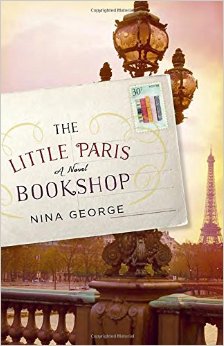
 

The Little Paris Bookshop by Nina George

Paris bookshopFirst published in Germany, now an international bestseller, The Little Paris Bookshop is a barge floating on the Seine River in Paris. Monsieur Perdu, the ‘Literary Apothecary’, is the owner. Now this is an interesting concept. M. Perdu prescribes books for any ailment his customers happen to be afflicted with. Bibliotherapy if you will. Not a bad idea. He has a book suggestion for everyone he encounters, so a clever way for German author Nina George to weave in her views on various literary works, her salutation to literature and reading. But of course, George isn’t just leading a book club discussion but telling a story. So she deftly brings us to learn more about M. Perdu’s past. While well-versed in bibliotherapy, M. Perdu has a wound that’s deep and sore, for he’s a victim of a lost love. Can the Apothecary heal himself? All signs point to a heartening, summer read.


Here’s one that I think I’ll finish first:

Words Without Music by Philip Glass

words-without-music-a-memoirThis one beats all my current reads in capturing my attention and interest. The contemporary composer Philip Glass (born 1937) is renowned as a ‘minimalist’ in his musical style, a label he frowns upon. Now about a quarter into Glass’s memoir, so mainly about his early life and the start of a career, I find what’s minimal is only the physical materials of life, the lack of money to pursue his dream. As for passion and talents, Glass is endowed with abundance, and the artistic milieu in which he immersed himself is astoundingly rich and fertile. Above all, the Bohemian living during his early days is idyllic. That’s why I’m mesmerized by his story, the pursuit of a dream driven by pure passion and inner drive.

Born in Baltimore to a middle-class, secular Jewish family, Glass left home at just 15 to enter the University of Chicago, majoring in philosophy and mathematics. After that, he knew he wanted a career, no, a life, in music, against the wishes of his mother and uncles, who ran a family building supplies business in his hometown and wanted him to take over some day. But Glass was determined to march to a different drummer. After Chicago, he went to NYC mainly to get into Juilliard, not knowing he wasn’t even qualified. So he started with an extension course to work his way in. Later as a full-fledged Juilliard student, he devoured every learning opportunity. He had earned his living doing all sorts of jobs, laborer, steel mill worker, taxi driver. Later to Paris, India, Glass shows us a life journey full of gratifying struggles and interesting encounters. What more, the memoir is a social history of the Beat Generation. Deeply immersed in the zeitgeist of the time, Glass’s personal connections with other musicians, artists, poets, writers, theatre actors and producers, and filmmakers make a fascinating insider’s story. His contact list a who’s who of the Beat Generation. Lots of ripples stirred up in me and definitely a future post coming.


This one patiently waits:

The Moviegoer by Walker Percy

The MoviegoerI had listened to the audio book a few years back, and wanted to reread it right away, but didn’t. After that, I forgot about it. By chance I saw it in the Bookstore at Regent College on UBC campus a couple months ago, I quickly took that single copy out from the shelf. There are few books I buy at regular price, this is one of them. I want to revisit it; with my own copy, I can write on the margin, and I know I will with this one. Despite the title, it has nothing to do with the glamour of Hollywood movies, or the pop entertainment culture of the day. Rather, this National Book Award winner (1961) is internal, reminiscent of European writers like Camus or today’s Tom McCarthy.
 

These two will take a while to get to:

The Truth According to Us by Annie Barrows

The Truth According to UsBarrows’ previous book is the wildly popular The Guernsey Literary and Potato Peel Pie Society published eight years ago. I’d enjoyed the lively characters in Guernsey amidst the troublesome setting of WWII, with the island occupied by German soldiers. Just curious to read children’s author Barrows’ first solo publication for adults. The Truth brings Barrows back to the home state of her aunt and primary writer of Guernsey, Mary Ann Shaffer, who died before completing the book. Family saga in small town West Virginia in 1938. If you’ve read this one, how is it compared with Guernsey? Should I even start it?
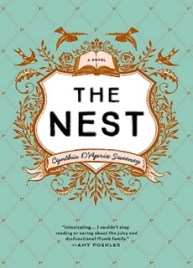


The Nest by Cynthia D’Aprix Sweeney

The+Nest+-+book+coverIf I want a breezy summer beach read, maybe I should start with this one. But this too can wait. I got it mainly because of the future film adaptation. Sweeney’s debut work reportedly fetched a 7-figure advance from Ecco; not surprisingly, film rights were snatched up soon after. What should be noted is: by whom? Well, as evidence of the booming book/movie enterprise, Amazon Film it is, and Jill Soloway (Transparent) will direct. Note also, just saying, here’s a book with Amy Poehler’s endorsement on the cover. Have you read it? Are you looking forward to its movie adaptation?


***

Related Review Posts on Ripple Effects:

Inside Llewyn Davis: A Serious Man in Greenwich Village

The Guernsey Literary and Potato Peel Pie Society

The Elegance of the Hedgehog

August: Osage County